
Lance Armstrong's Legacy Looks Cheap Compared to Cancer Champion Terry Fox
Believe it or not, before Lance Armstrong defied the odds and conquered cancer, hundreds of thousands of people also overcame the disease and went on to live unspectacular, but productive lives.
Tragically, countless millions more died from cancer too, and the death toll rises every day.
When Armstrong was nine years old, Cancer's victims included a young Canadian called Terry Fox.
TOP NEWS
Colorado State DC gets fired mid-game during blowout loss
.jpg?w=2560 "Saints Lions Football")
Rap: Lions, LaPorta End Contract Talks
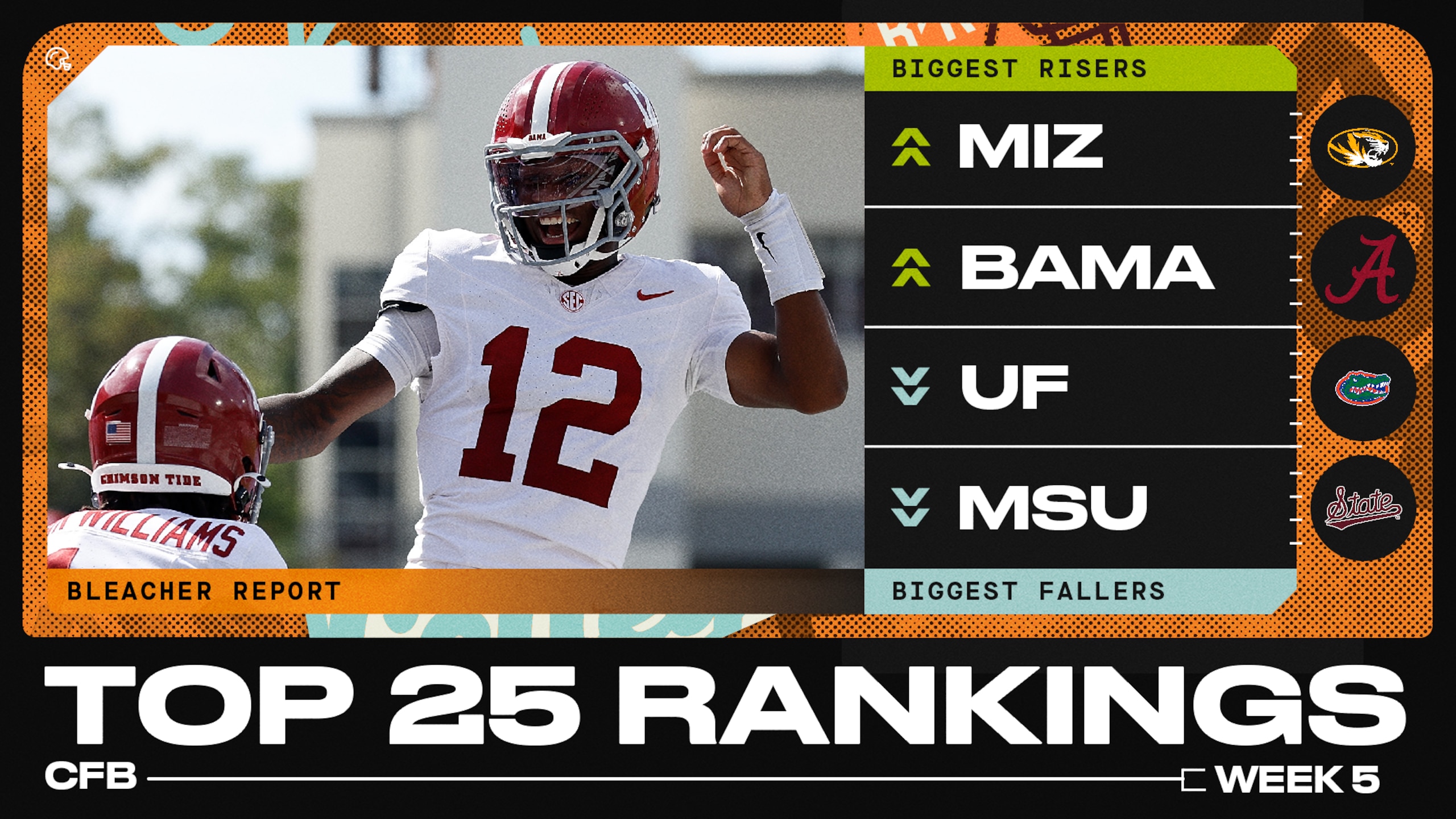
Massive Shakeup in CFB Top 25 List 🔢
Now there was an icon for the ages—a man who knew more pain than Lance would ever endure. (That “… on my bike, bustin’ my ass, six hours a day” Nike commercial notwithstanding).
Manitoba-born Fox was a first-year college student in British Columbia when he was struck down, at 18, with bone cancer in his right knee. His leg was amputated from six inches above the joint—the only way to save his life at the time—and he was fitted with a prosthetic limb.
Following 16 months of chemotherapy, his innate athletic ability and courage saw him excel at wheelchair basketball. He tried to live like a normal teenager, except only with a goal of raising funds and awareness to help people, especially kids, stricken by cancer.
Motivated by the tale of Dick Traum—the first amputee to complete the New York City Marathon—whom he read about the night before his own leg was removed, Terry plotted a 5,000-mile charity run, literally cross-country, which he called the ‘Marathon of Hope.'
He started it by dipping his artificial leg in the Atlantic Ocean at the furthest point of Eastern Canada at St John’s, Newfoundland. Setting a target to reach Vancouver on the Pacific west coast, he rose at 4 a.m. and ran 26 miles each day.
Having begun in anonymity in April 1980, his quest gradually took on a life of its own. As his profile grew to that of national stardom, Fox vowed to raise a dollar for every Canadian citizen—$24 million in all.
But, fatefully, after 3,339 miles and 143 days, disaster visited him a second time.
Feeling unwell, Terry asked to stop. He was taken to hospital, where he was diagnosed with tumors—one as big as a lemon, another the size of a golf ball—lodged in his lungs.
Flown home for treatment, he wanted to resume his mission and prayed for a miracle. He even received a personal telegram from Pope John Paul II.
It was to no avail.
Terry died, aged just 22, on June 28, 1981. To date, around $500 million has been raised for cancer research in Fox’s name.
Yet his remarkable tale of valor has been near-forgotten in the rush to acclaim Armstrong’s self-styled status as the greatest cancer survivor and spokesperson the world has ever seen.
The fact that life isn’t fair is something Lance probably figured out when he was diagnosed with stage-three testicular cancer in the mid-90s. The story of how he pulled through and went on to dominate the toughest event in sport is one of the most amazing ever told.
As sequels go, it was beyond-Hollywood.
Or as Don King would say: Only in America.
Then Armstrong retired to focus on his celebrity and globally-successful Livestrong foundation. He had seamlessly created a movement that shifted gears from symbolic yellow wristbands to an almost-evangelical way of life and a platform for his perceived political ambitions.
Yet the suspicions that hung over him stubbornly refused to yield. His unflinching response was simple: Look at the negatives, feel the vendetta.
Livestrong was held up as a Teflon shield of worthiness.
He also banked on the historic general apathy in the U.S towards allegations of doping in sports staying constant, with the continued endorsement of key partner Nike a case in point, perhaps.
But with many of his supporters having inferred he was the victim of anti-American sentiment overseas, it was Armstrong’s own compatriots—anti-doping investigators and ex-US Postal colleagues—who produced the smoking guns.
The Texan’s blustering bid to block the USADA’s case was thrown out of court in the Lone Star State. Tyler Hamilton’s explosive book, The Secret Race, allied to the testimony of nine other former teammates, saw Armstrong run out of road.
His arch-nemesis, Irish sports journalist and author David Walsh, is in the U.S this week, having interviewed Hamilton before moving on to Chicago to cover the Ryder Cup for The Sunday Times.
Walsh said via Twitter on Monday: “Traveling through midwest, thinking. No country except this one would have brought down its 7-time Tour winner. I tip my hat to the USA.”
Yes. Only in America.
Laughably, Walsh’s friend and fellow award-winning writer Paul Kimmage—a one-time pro cyclist whose book Rough Ride (1990) was a seminal exposé of the sport’s ugly underbelly—is being sued by the current and immediate past-presidents of cycling’s ruling body, the UCI.
Why?
For daring to question how—if the detailed allegations are true—Armstrong, and his ilk managed to brazenly and lucratively exploit the system for so long.
Since last Friday, individual pledges amounting to more than $35,000 (and counting) have poured into the Kimmage defense fund. “Something is happening here and it’s truly inspiring,” Walsh (@DavidWalshST) tweeted.
That “something” is clear: The disenchanted, if not downright disgusted global cycling community wants to know (if they don’t already) how certain people apparently became The Untouchables.
In his 2000 autobiography It’s Not About The Bike: My Journey Back To Life, Armstrong, an affirmed atheist, told how the night before he underwent brain surgery in late 1996, “I asked myself what I believed."
...Quite simply, I believed I had a responsibility to be a good person, and that meant fair, honest, hardworking, and honorable. If I did that, if I was good to my family, true to my friends, if I gave back to my community or to some cause, if I wasn’t a liar, a cheat, or a thief, then I believed that should be enough...
Somewhere along the way this remarkably-driven individual's capacity for self-punishment and immense mental fortitude—borne of an unhappy, underprivileged upbringing—possibly mutated into a skewed interpretation of honor and entitlement.
A ruthless, win-at-all-costs attitude would appear to have distorted the moral code and version of self-worth Armstrong clung to when his life hung in the balance.
Another soul given up to cycling’s extreme culture.
Now, with his legend terminally diminished but his devotees steadfast, the would-be human miracle persists in perpetuating what his accusers see as a myth: One of the greatest clean athletes of all-time and the foremost ambassador for cancer sufferers everywhere.
But for the majority of non-believers, the purveyor of faith in adversity comes across as a false propagandist.
At least Terry Fox’s legacy looks a lot healthier today, even if—as this story by The Globe and Mail’s Simon Houpt indicates—fiscal realities are prevailing upon The Marathon of Hope’s 30th anniversary efforts.
Up to now, Fox's foundation has never accepted corporate sponsorship. “Terry was all about fundraising for cancer research, and he didn’t want companies to directly profit from any kind of association with him,” Brett Kohli, the foundation's national director, told Houpt.
In the same article, Steve Ralph, the head of Adidas Canada—which has donated around $1 million over the years to the foundation, and is behind a new ad’ campaign supporting the cause—sounds a lot like Nike when he describes Fox as “an iconic hero,” who represents many of their brand values.
But he’s clever enough to make certain distinctions. As to what attributes he would most associate with the man from Winnipeg, Ralph offered: “I didn’t meet Terry, but I’d say—‘genuine’ and ‘real.’”
Compared to whom I wonder?
You can follow me on Twitter @jamie_okeeffe1
.jpg?w=2560 "Commanders Eagles Football")
_0.png?w=2560)


.jpg?w=2560 "EVERY Fantasy Football Update")
.jpg?w=2560 "Report: Baker May Miss Up to 6 Weeks")