The 5 Stingiest Teams in Major League Baseball
Major League Baseball has had some notoriously stingy and cheap owners in the past.
Gone are the days of Charlie Finley, Marge Schott and Calvin Griffith, three of the most thrifty owners in the game. Now, baseball is faced with an entirely new dynamic.
Television and media revenues strongly favor the big-market teams. With no salary cap in baseball, there is a huge disparity between the haves and the have nots.
In reality, the franchises that are always at the bottom of the spending scale are there because their revenues dictate it. Big-market teams with huge media revenue can far outspend the smaller market teams. In the current economy of baseball, this is simply the way it is.
Revenue sharing is not enough for these small-market teams to compete on a consistent basis. All they can realistically hope for is to catch lightning in a bottle for two or three years and have a short run of success.
When one of these small-market teams get good, they will ultimately lose some of their top players because they simply cannot afford to keep them. Salaries have skyrocketed, and the small-market clubs lose their top talent because of it.
Let's take a look at five of these downtrodden franchises that have an especially difficult time competing in today's baseball economy.
5) San Diego Padres
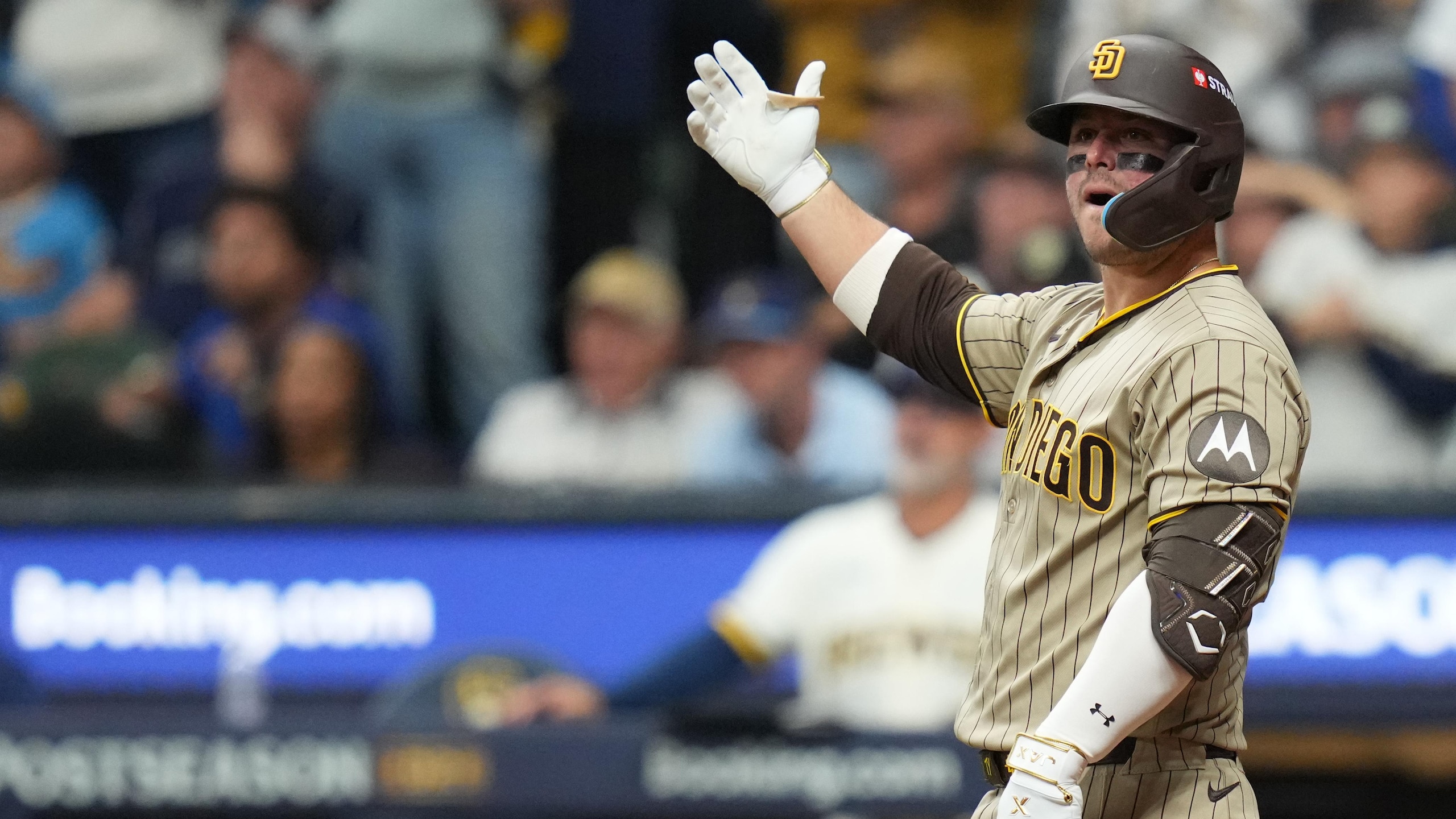
1 of 6The San Diego Padres had a payroll of less than $46 million in 2011, and that number will be much the same in 2012. The Padres were unable to keep All-Star closer Heath Bell, who left San Diego and signed with the Miami Marlins. Bell got a three-year contract worth $27 million.
At an annual salary of $9 million, Bell would have eaten up nearly 20 percent of the entire Padres' 2011 payroll.
This trend is not new for the Padres or their fans. Only one year before, the Padres were forced to trade superstar Adrian Gonzalez to the Red Sox in exchange for multiple prospects.
In the middle of the 2009 season, the Padres traded former Cy Young Award winner Jake Peavy to the White Sox for prospects. In the past three years, the Padres have lost their best hitter, their best starting pitcher and their top closer.
These were arguably their three best players over this time span, and San Diego was forced to move them for inexpensive prospects—many of whom will never develop into quality Major League players.
Looking at their 2012 roster, the Padres currently have only six players signed at a cost of roughly $22 million. This means they will need to fill in the rest of their roster and most likely spend only an additional $25-$30 million.
4) Cleveland Indians
2 of 6The Cleveland Indians have slashed payroll substantially over the past few years. In 2009, the Indians had a payroll of $81.5 million. 2010 was $61.4 million, and it fell to $49.4 million at the start of last season.
The Indians have signed only five players thus far, but have spent over $34 million. This means that, other than three additional and integral components of the team—Asdrubal Cabrera, Shin Soo Choo and Chris Perez—the remainder of Cleveland's roster will be made up of young and inexpensive players.
I still look for the Indians' payroll to hit only about $60 million. They are fortunate that they have some good, young talent and in the AL Central have a chance to compete for the division title.
3) Pittsburgh Pirates
3 of 6The Pittsburgh Pirates were once one of the most feared teams in baseball. Stars like Roberto Clemente, Willie Stargell and Dave Parker ensured that they were in contention almost every year.
Unfortunately, the Pirates have been hit hard with a poor economy in Pittsburgh and the resultant low attendance for the past several years. Not since 1992 have the Pirates made the playoffs, and they have not even finished above .500 since that time.
Their fans have suffered through 19 straight losing seasons. A main reason for the Pirates' drought is lack of talent brought on by the inability to spend money. Not since 2003 have the Pirates spent over $50 million in payroll.
In a weird twist, Pittsburgh went out and signed shortstop Clint Barmes to a two-year, $10.5 million contract. GM Neal Huntington felt a dramatic need to bolster the shortstop position, so he overpaid for Barmes, who owns a career batting average of only .252.
The Pirates have some exciting young talent in Andrew McCutchen, Neil Walker and Jose Tabata. Closer Joel Hanrahan was outstanding in 2011 and saved 40 games.
The key for Pittsburgh will be their starting pitching. They recently took a gamble and signed the oft-injured starter Erik Bedard to a $4.5 million contract. Still, the pitching is suspect, and I do not see the Pirates doing much more to strengthen this area.
For Pittsburgh to improve their pitching staff, they will need to spend over $50 million in salaries for 2012, and I don't see that happening.
In 2011, the Pirates were the surprise team in the National League in the first half of the year. They were in contention until a second half collapse ensured another losing season.
Pittsburgh has the young talent to contend in 2012, but almost everything must go right for them to make the playoffs. Their financial constraints simply do not allow them to make the moves necessary to be a winner.
2) Kansas City Royals
4 of 6The Kansas City Royals are the epitome of a small-market team. They began the 2011 season with a payroll of only $38 million. They are going to exceed that in 2012, most probably an increase to around $50-55 million.
The Royals have some good young talent in Eric Hosmer, Joakim Soria, Alex Gordon and Alcides Escobar. Their problem is they just don't have enough players of that caliber.
The Royals also need starting pitcher Jonathan Sanchez, who was acquired in a trade with the Giants for outfielder Melky Cabrera, to gain some consistency and emerge as the ace of this staff.
There are not enough financial resources for the Royals to go out and get top talent. They must hope that their youngsters improve together and they can make a run at the division title.
In reality, this is very unlikely. The Royals have had just one winning record in the past 17 seasons.
The inequality of the media revenues hurts Kansas City a lot. They simply do not have the financial ability to compete on a regular basis.
1) Oakland A's
5 of 6The Oakland A's get my vote for the stingiest team of 2012. They are hoping that Major League Baseball grants them the territorial rights to move to San Jose. This is currently the San Francisco Giants' territory, and they will not give it up without a protracted legal battle.
The A's desperately need a new stadium, as their current home in Oakland is unattractive and has way too much foul territory. Even fans in the first few rows of the first deck are a long way from the action.
Oakland GM Billy Beane has traded off his three top pitchers this winter in Gio Gonzalez, Trevor Cahill and Andrew Bailey. All of these pitchers have made recent All-Star appearances and none is over 27 years old. The A's received prospects in return.
Beane's approach seems to be that they are putting all of their eggs in one basket. Their hope is that they can relocate to San Jose with a sparkling new stadium. This is at least three or four years away, at best, which is the rationale for Beane's moves.
This does absolutely nothing to inspire any fan loyalty or interest in Oakland. Beane has basically told the fans of Oakland that they are not even trying to contend until they move to San Jose. If the A's do not get their wish to move, expect them to leave the Oakland area.
Oakland is an urban city in financial peril. Their city government has shown no ability to get things done, and the A's will not be there for much longer. It will either be San Jose or somewhere else for the A's, but do not expect them to remain in Oakland.
Major League Baseball Needs a More Balanced Salary Structure
6 of 6Major League Baseball players and owners signed a new Collective Bargaining Agreement this past November. The 10-year deal does not adequately address the competitive imbalance that pervades baseball with today's economic structure.
The luxury tax level is at $178 million, and only three teams out of 30—the Yankees, Red Sox and Phillies—have to worry about that. It will increase to a mark of $189 million in 2014.
The tax level is too high and the penalty is not stiff enough to really benefit the poorer organizations, like those mentioned in this article. A harsher tax, beginning at a lower level, is the only way some of these small-market teams can compete.
The ideal scenario would include a salary cap, but the players union fought that vehemently. In addition, a salary floor should be established to ensure that all teams pay a minimum amount in salaries in order to have a chance to compete. This can only be achieved by instituting a stiffer penalty on those teams that are spending the most.
These measures are the only way to establish competitive balance in baseball. It works in the NFL, and Major League Baseball should follow that model much more closely.
.jpg?w=2560 "OBJ Calls Out Giants After Release")