
Rule 5 Surprise: Potential Impact Arms For the Phillies In the Upcoming Draft
In recent years, the Philadelphia Phillies have made most of their offseason noise in big trades and free agent signings, bringing names like Roy Halladay, Placido Polanco, Raul Ibanez and Brad Lidge to the City of Brotherly Love. However, in the past, the Phillies structured their roster in different ways, including a plethora of minor league deals, trading big names for young potential, spending heavily on the first year player draft and taking a gamble in the Rule 5 Draft. Which, in recent years, has landed All-Star outfielder Shane Victorino and long-relief man David Herndon.
Though the Rule 5 Draft has changed over the course of Major League Baseball history, the concept has remained the same—prevent teams from stockpiling players in their minor league system when other teams are willing to give them a chance to play at the Major League level. When the following conditions are met, a player becomes unprotected, and is then exposed to the rest of the league.
- If signed at age 18 or younger and the player has been in the organization for five years, he is eligible.
- If signed at age 19 or older and the player has been in the organization for four years, he is eligible.
- The player is not added to the Major League organization's 40-man roster.
Drafting a player is not free, however. Any team that wants to take a gamble on a player must keep two very strategic conditions in mind: Are they willing to pay the $50,000 fee and are they willing to keep this player on their Major League roster for an entire season?
The rules of the Rule 5 Draft states that once a player is drafted, he must remain on the Major League club for the entirety of the forthcoming season. If a team wants to demote him, they must first offer said player back to his former team. If the former team denies to accept the player back, or a team keeps the player on their Major League roster for the entire season, they are then able to option him to the minor leagues.
The Rule 5 Draft is a calculated risk. Recent history has shown that the risk is well worth the reward, however, as names like Johan Santana, Evan Meek, Dan Uggla, Joakim Soria and Shane Victorino, all taken in the Rule 5 Draft, have flourished into all-stars.
So with that in mind, the following five pitchers could all contribute to the Phillies some way in 2011, but will any of them be a true diamond in the rough?
5.) Detroit Tigers: LHP Fu-Te Ni
1 of 5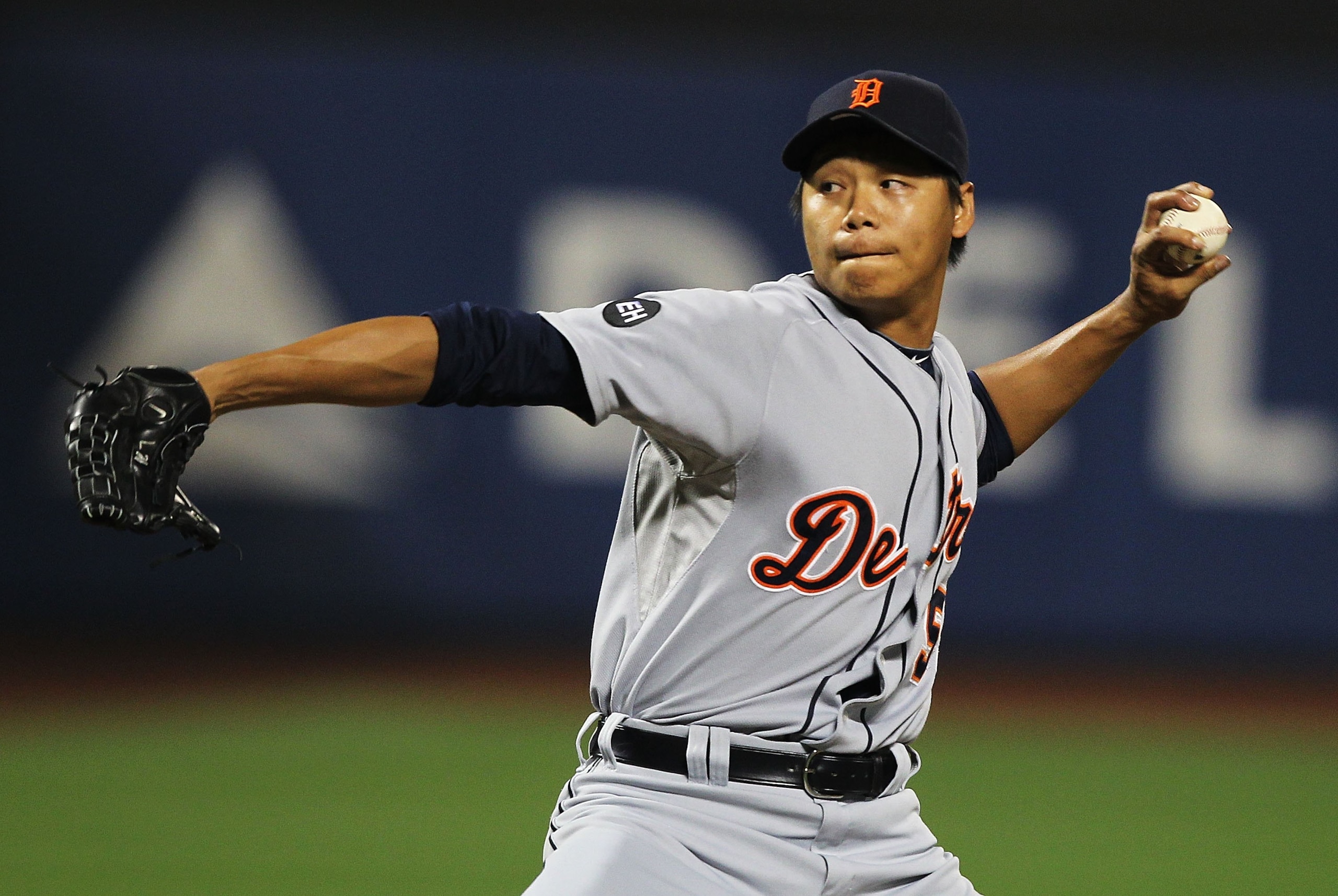
Despite breaking camp with the Detroit Tigers after Spring Training, Fu-Te Ni was incredibly unimpressive in 2010, forcing the Tigers to designate him for assignment at the end of June, and his AAA numbers were equally as bad. Why then, would the Phillies have interest in adding Ni in the Rule 5 Draft?
If Ni still has anything going for him, it is the simple fact that he is a left handed reliever. The Phillies, who are already in the market for left handed pitching, saw a quick decline in a thin market, when LHP Hisanori Takahashi signed a deal with the Los Angeles Angels of Anaheim. The top left handed relievers left on the market are Pedro Feliciano, Scott Downs, and Arthur Rhodes, and each has some concern. Downs is a Type A free agent, and the Phillies would be forced to surrender a draft pick in the First Year Player Draft (which is, by the way, actually called the "Rule 4 Draft") too sign him, something the Phillies would rather not do. Rhodes, despite a phenomenal 2010 campaign, is now 41, and many believe that he struggled through injuries at the end of the season. Feliciano, on the other hand, has been the model of health, and could command a large contract in a weak market. Though the Phillies have expressed interest in adding one of those three, they will look for other ways to improve as well. One possible method is adding a high potential reliever in the Rule 5 Draft.
Ni, 28, was the unfortunate target of bad luck in 2010, as his FIP of 5.04 suggests that his 6.65 ERA was not entirely his fault. Even still, he saw a sharp decline from a promising 2009 season, gathering a record of 0 - 1 with a 6.65 ERA in 22 games for the Tigers. Like most Asian pitchers trying to hack it in the MLB, Ni depends on a deceptive delivery instead of an overpowering fastball, and just like a hitter's swing needs to be fine tuned during a slump, any improvement in 2011 will be a direct result of finding a groove in his delivery.
Control was a major factor in Ni's downfall in 2010, as his BB/9 jumped from a slightly below average 3.19 in 2009 to an ugly 7.43 in 2010, despite a rise in his K/9 as well. While this may be an easy fix with an adjustment to his delivery, teams will be wary.
Ni's selling point may be his numbers against left handed hitters. In 28.2 innings against left handed hitters over the past two seasons, Ni kept them to a miniscule batting average of .207. Right handed hitters, on the other hand, hit .289 off of Ni in 25.1 innings over that same span. Any team looking to add Ni would be wise in keeping him as far away from right handed hitters as possible, maximizing his value as a lefty specialist.
4.) Tampa Bay Rays: RHP Aneury Rodriguez
2 of 5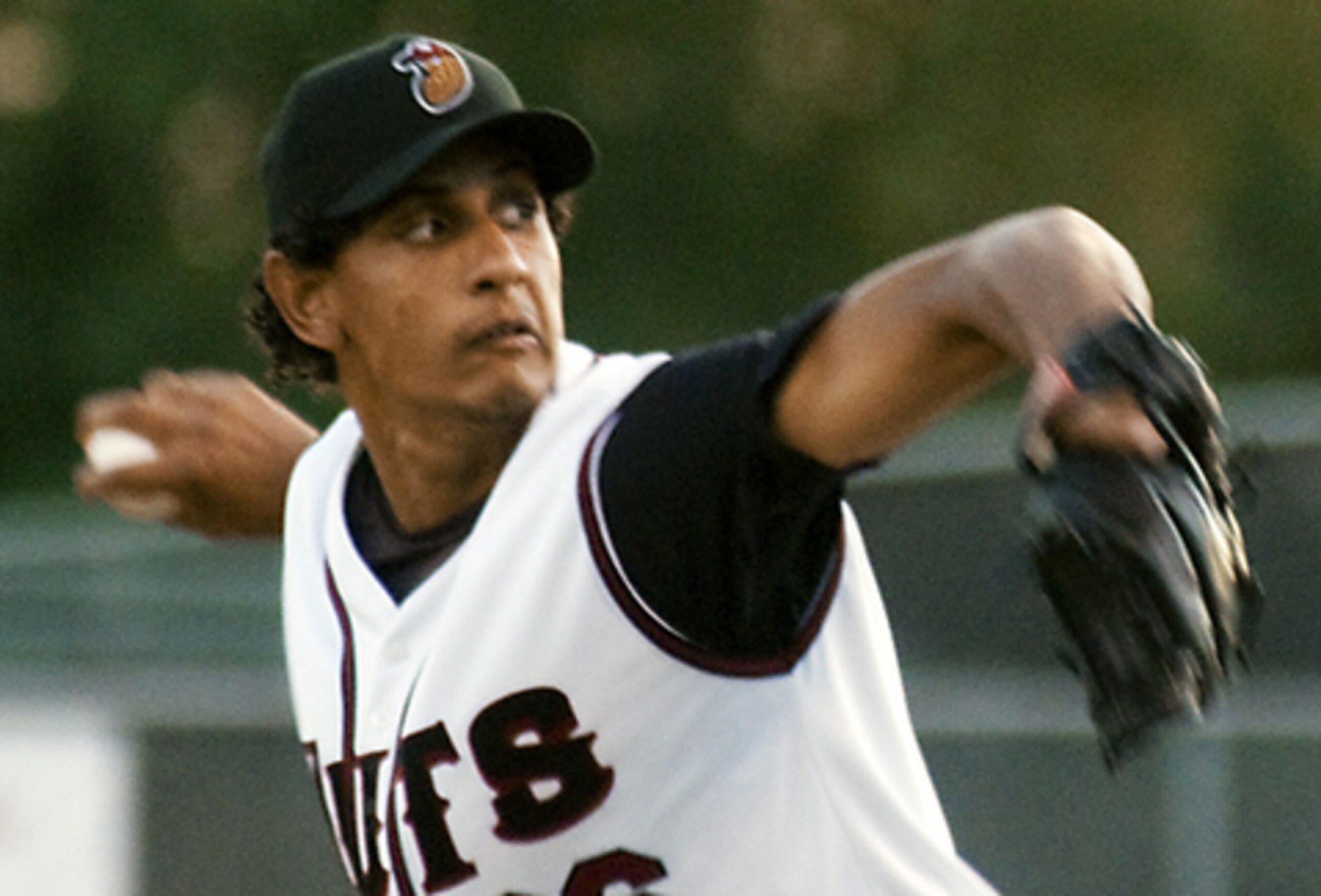
Don't be fooled by my listing Aneury Rodriguez as number four on this list, because it surely has nothing to do with his talent. In fact, many experts believe that Rodriguez will be taken within the first few picks of the draft, and for that reason alone, he isn't the best fit for the Phillies. However, the experts aren't always right, and if Rodriguez should fall to the Phillies, I'm sure they'd at least consider drafting him.
The Phillies will scour the left handed pitching market thoroughly, seeing as that is their greatest area of need in the bullpen. However, Chad Durbin's departure, despite interest in resigning him, opens up a spot in the bullpen for a right handed reliever.
Rodriguez, 23, is an interesting name to keep tabs on throughout the 2011 season. Once traded by the Colorado Rockies straight up for then Tampa Bay Rays starter Jason Hammel, Rodriguez has been nothing but streaky throughout his minor league career. For example, in 2008 with the Rockies A+ affiliate, he threw 156.1 innings and compiled an ERA of 3.74. When the Rays acquired him in the following off-season, they assigned him directly to their AA affiliate, where he threw 142 innings and put together an ERA of 4.50.
Despite that, he earned a promotion to the Rays AAA affiliate in 2010, and saw a slight rebound in his numbers, where in 113.2 innings (27 games; 17 starts), he compiled a 6-5 record and an ERA of 3.80. Considering his FIP was 4.04, the Rays decided against adding him to their 40-man roster, leaving him exposed to the draft.
Rodriguez's nay-sayers are going to immediately flock towards his control. In 2010, his BB/9 was 3.88. He still managed to put on a strong showing, striking out 7.44 batters per nine innings, and limiting his HR/9 to just 0.74.
His best pitch, which subsequently, he controls best, is his fastball. It sits consistently around 92 - 94 MPH, with the occasional 95 MPH lighting up the gun. It's his go-to pitch, and once he falls behind in the count, he will rely on it to get a batter out. His second best pitch is a slurve-like curveball, which was described as an "average MLB" pitch. Though not as well as the fastball, Rodriguez has shown good control over his curveball as well. The pitch most likely to get him into trouble is his changeup, which he has just had trouble mastering. In the long run, he'll likely move to the bullpen if his changeup does not develop, and become a fastball / curveball only pitcher.
He is one of those prospects a team may regret not adding to their 40-man roster in the future.
3.) Texas Rangers: LHP Kasey Kiker
3 of 5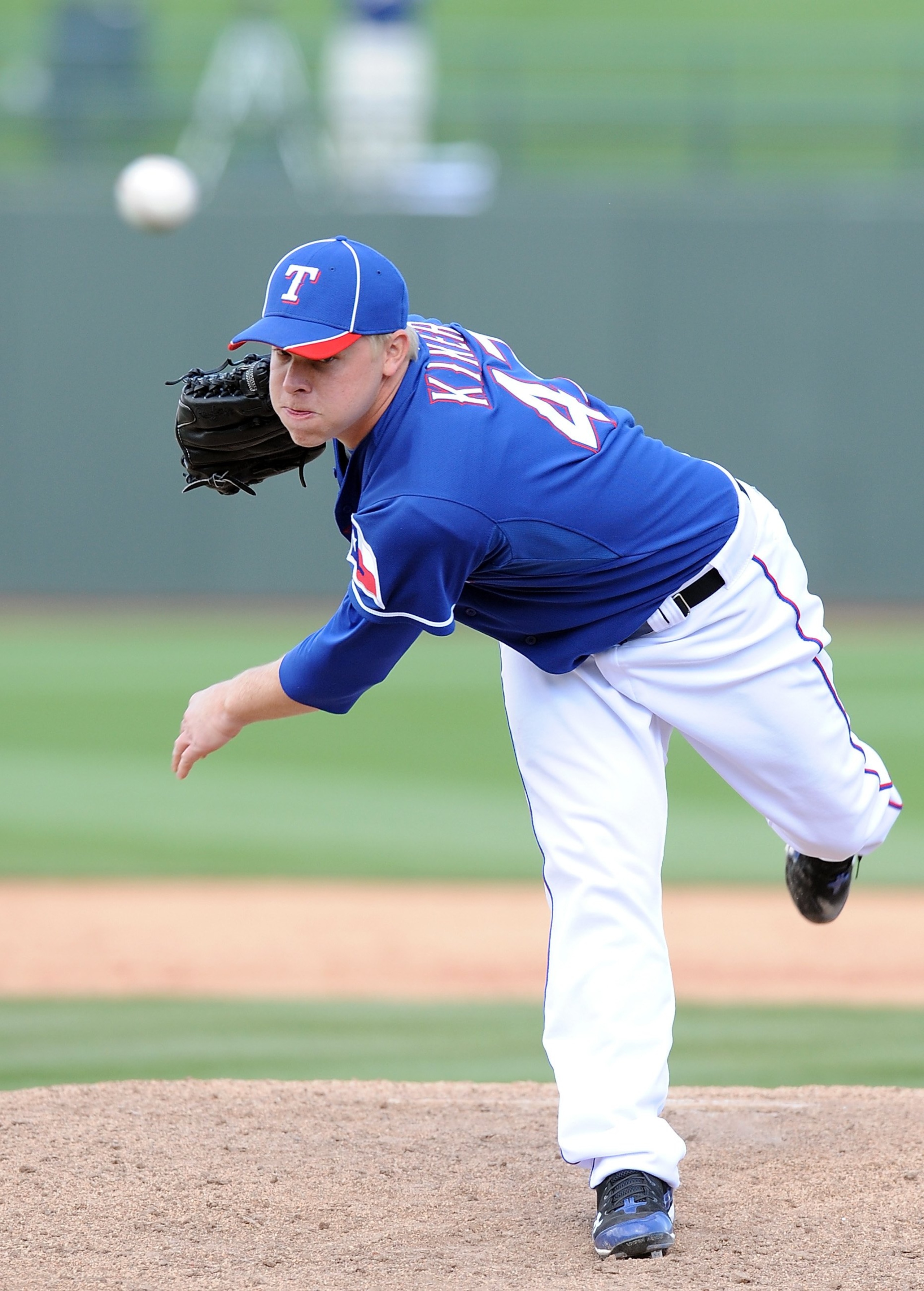
The 12th overall pick in the 2006 MLB First Year Player Draft, injuries and inconsistency have plagued the left handed Kasey Kiker throughout the course of his minor league career. All things considered, Kiker still remains a top prospect in the Texas Rangers organization, and any team willing to take a risk may be benefited with a nice reward.
Kiker, 23, is one of the more interesting players eligible for the Rule 5 Draft. His biggest flaws have always been two things that you never want to see in a young pitcher - bad control and injury concerns. However, Kiker has made strides in both flaws. He had one of his better seasons with the Rangers AA affiliate in 2009, going 7-7 with an ERA of 3.86 (4.20 FIP), in 126 innings. He struck out an impressive 8.57 batters per nine, despite walking more than four. Entering 2010, he was largely regarded as the fourth best prospect in the Rangers system, which effectively set up Texas' fans for a disappointing 2010 campaign. He managed to throw only 40 innings at AA in 2010, where he walked an astounding 10.35 batters per nine innings. He did, however, manage to punch out an impressive 9.45 batters per nine.
Though his 2010 numbers are very unimpressive, the talent is still there, and one thing may stick out to the Phillies like a sore thumb - this guy is a lot like Cole Hamels.
Though their skill sets aren't the same, Kiker largely depends on a very good changeup to get hitters out. Though his fastball sits between 88-94 MPH, his changeup is considered his best pitch, and he has good control over it. Kiker can be very deceptive, changing speeds using his fastball and changeup to get ahead in the count, right before he drops a good curveball over the strike-zone. That's where the Hamels comparison really stands out. Great changeup, good fastball, unpredictable curve.
Moving forward, Kiker will have to work on two specific areas of his game to break out in the Major League: increasing his ground ball rate and finding a pitch to help him get right handed hitters out. I hear the cutter worked out nicely for Cole.
He may not be at the top of many draft boards, but the Phillies may be interested in storing him in the back of their bullpen in hopes of developing a potential top of the rotation arm.


2.) Baltimore Orioles: RHP Wynn Pelzer
4 of 5
Once a top prospect in the San Diego Padres farm system, Wynn Pelzer found himself as trade bait in 2010, when he was shipped to the Baltimore Orioles for SS / 3B Miguel Tejada. Despite impressive strikeout numbers, he was left off of the O's 40-man roster and exposed to the rest of the MLB in the Rule 5 Draft.
Pelzer, 24, had an impressive 2009 season for San Diego's A+ affiliate, posting a record of 11-8 with a 3.94 ERA (3.30 FIP) in 150.2 innings as a starting pitcher. Those impressive numbers earned him a promotion to the Padres' AA affiliate in 2010, where he remained a starting pitcher, but struggled to find his groove. In 94.1 innings, 6-9 with a 4.20 ERA, and unimpressive strikeout (7.92 K/9) and walk (5.34) ratios. Now seen as expendable, the Padres traded him to Baltimore at the trade deadline. The first thing the Orioles did was send Pelzer straight to their bullpen in AA, and they saw immediate returns. In 20 innings, Pelzer was 1-0 with an ERA of 4.50 (3.70 FIP), and impressive strikeout (9.00 K/9) and walk (3.15 BB/9) ratios. Seen as a work in progress, the O's left him off of their 40-man roster.
I find it hard to believe that Pelzer will not be selected in the draft. He seems to be built for a role in the bullpen, bringing a fastball that sits consistently at 91 - 93 MPH and can reach 95 MPH with heavy sink, and a very good, sharp slider to the table. While his control is only average, scouting reports indicate that he brings a very focused, intense demeanor to the mound, something that is very favorable among relievers.
The Phillies already have a left handed fastball / slider guy in Antonio Bastardo, and just by reading the reports, Pelzer seems very similar. Like Rodriguez, I'd be surprised to see Pelzer fall to the Phillies, but if he does, I think he would be well worth the fee, out of the bullpen. He could be a very solid middle innings reliever.
1.) Pittsburgh Pirates: RHP Michael Dubee
5 of 5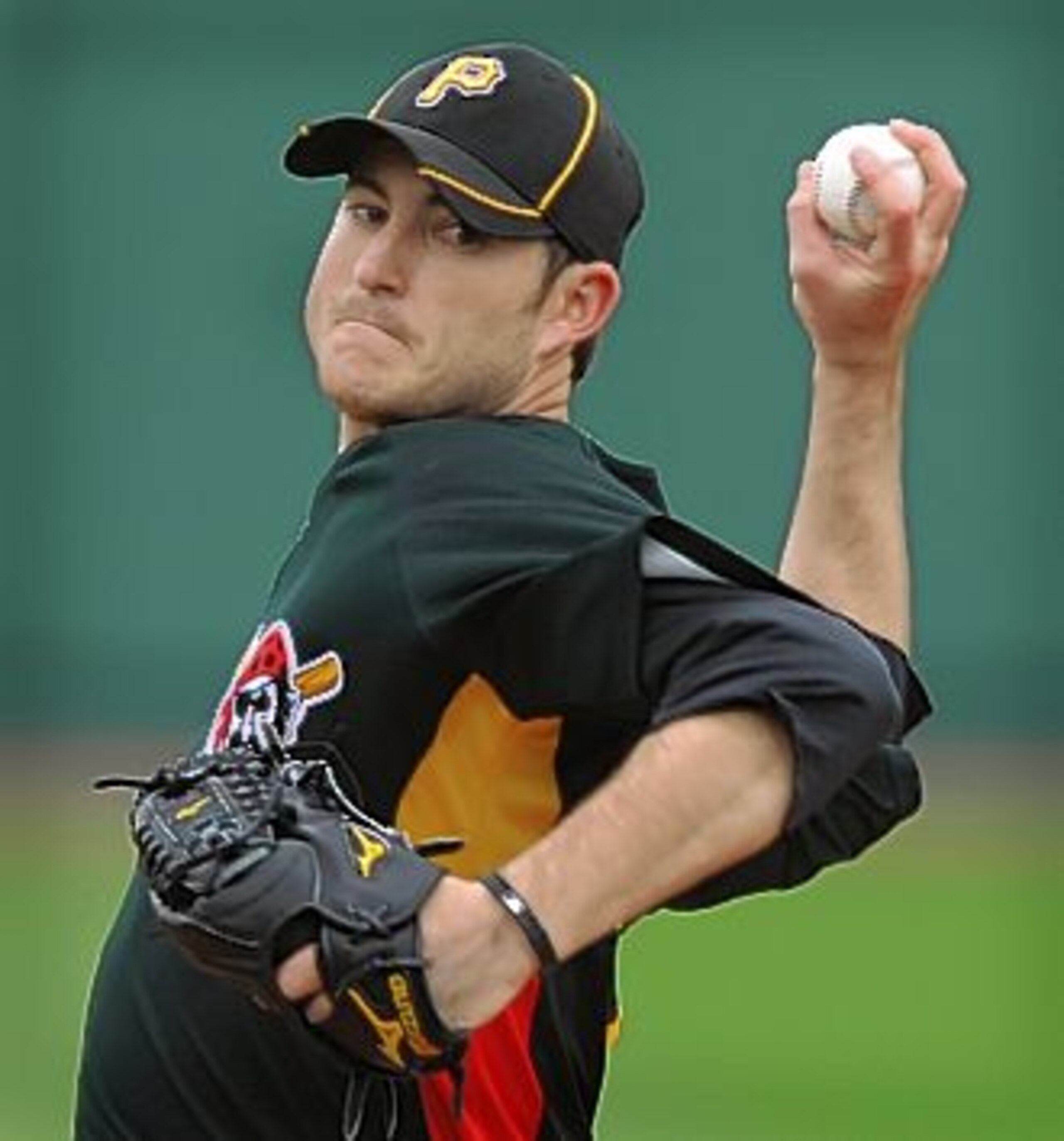
If the name Michael Dubee sounds familiar to Phillies fans, it should. Not only is Dubee a former Phillies prospect, but his father, Rich Dubee, is also the team's pitching coach. As hard as it was for Rich to hear his son was traded, how enticing is the possibility that he could return?
Dubee, 24, was an average pitcher in the Phillies minor league system after they drafted him in the 18th round of the 2006 First Year Player Draft, and when the Chicago White Sox asked for him in return for much needed second baseman Tadahito Iguchi, the Phillies simply couldn't refuse, despite the fact that he was pitching coach Rich Dubee's son. After a few mediocre seasons with the White Sox, he was traded to the Pirates, where he quickly began to flourish into a quality reliever.
In 34 innings with the Pirates' A+ club, Dubee was 2-0 with a 1.05 ERA and an even better 0.81 FIP. He was quickly promoted to AA, where he continued to show improvement over past years, posting a record of 3-0 with a 2.91 ERA (4.52 FIP). He started the 2010 season at the same level, and with a full season at AA under his belt, he was 6-2 with a 2.24 ERA (2.96 FIP). Dubee has shown good control over the course of his minor league career, and in 2010, his BB/9 remained at an impressive 2.24, while he struck out more than eight batters per nine.
For various reasons, neither the White Sox or Pirates saw Dubee as much of a prospect, which is why neither added him to their 40-man rosters. He brings a standard repertoire of pitches to the table, and has good control over all of them. He'll be 25 when the season begins, so their isn't much more experience to be gained at the minor league level.
The Phillies are more than familiar with Dubee, and it would be wise to give him a chance to step in and fill the role that Chad Durbin vacated after 2010.
.png?w=2560 "Early 2027 NFL Mock Draft ✍️")


.jpg?w=2560 "Donald's Wife Shares Meme About Return Saga")