Featured Video
Man Utd Rebuild Continues 🛠️

Is Swarbrick the Right Man at the Right Time?
The Rock NDNation.com
Jul 17, 2008"Under White, it seemed as if Notre Dame was constantly scheming new marketing and revenue generation methods that brought in small dollars at the expense of the Golden Goose. What Notre Dame's incoming Athletic Director has to understand is that Notre Dame's market value is ultimately found in the uniqueness of Notre Dame. So, yes, we absolutely need someone who "gets it."
This is home because this place defines who I am. Don't let my last name confuse you. The other three names that contribute to my family heritage are Comie (phonetic), O'Brien and McGuiness. It is an Irish heritage, and a pretty typical one in that regard: Irish Catholic immigrants who came to this country in the late 1800s seeking a better environment, a grandfather who became police commissioner of New York's second largest city. I grew up steeped in the tradition of this university, at least as steeped as you can be in it in a family that never got within 800 miles of it.
We also need someone who understands what that means in the larger, changing landscape of college football and our other sports. Whomever the new AD is, he (or she) will have to be able to navigate an increasingly factionalized world of athletics dominated by superconferences, which means the new AD will have to bring a very CEO like level of skills to the table (after all it is akin to running a small company.)
Along with that understanding of Notre Dame and its place in the landscape and competence in athletic administration, the new AD will have to quickly build credibility both within Notre Dame and in the larger NCAA community in order to wield influence. As we've seen before, the blunt hammer doesn't work and neither did the "let's all be friends" approach of White. That's why being able to bring credibility into many situations is a key component in this equation. Arrogance is not an asset, but neither is acquiescence.
My experiences have run very deep in the sports world. They started in the Olympic movement, working with a number of national governing bodies, consulting with an Olympic Games, running Pan‑American games, most importantly from my perspective, to help athletes achieve their Olympic dreams. It extended in the past decade to be focused much more heavily on intercollegiate athletics, a special form of athletics in the United States where the goals of education and sport are so directly intertwined. Those experiences have given me insight into the nuts and bolts of collegiate athletics.
But perhaps more importantly they've helped me build the relationships which I think are critical to success in this job. I am proud to count among my friends and colleagues many of the leaders in college sports in America today and I know I can count on them to continue to be friends and allies in the years ahead. The challenges here are significant. I would argue to you they're even bigger than those. But they're challenges of the best kind. They're challenges born not of problems, not of shortcomings, but of great striving, of high goals. I believe that I accept this job on the threshold of extraordinary change in intercollegiate athletics in America. I have my theories, as Father suggested, about what that change may entail and where the industry is headed. But I think it will be enormous. I think there's much about this industry you won't recognize in 10 years. We must be at the forefront of that. We must participate in leading that change. Notre Dame cannot have that dictated to it. And I love the challenge of accepting the responsibility for trying, with the other members of the athletic team, staff, coaches, student‑athletes, to be part of shaping that future.
In a recent seminar I worked on with executives we focused on the differentiating factors of great leaders. In the world of credibility, character and competence are of course paramount, but the key differentiating features for credibility were courage, emotional intelligence and the ability to influence others.
We need athletic administration competence, someone who gets Notre Dame, understands the strategic landscape now and where we're headed in the future, changing media and marketing and someone who will be viewed at as a leader both internally at Notre Dame and externally in the world of college athletics."
"How can Notre Dame help dictate that change to the rest of the intercollegiate athletic world?
JACK SWARBRICK: I think it's essential we play that role. And that's not being hubristic. It's the importance of schools that have Notre Dame's values leading that change. I don't mean to suggest by that that we would lead it alone. But I hope we will lead it with other institutions that share our values, share a view of how intercollegiate athletics ought to be fully integrated into the academic mission of a university. I'll stay away from the specifics of the crystal ball, other than to say I would suggest to you they're a convergence of forces. It's hard to imagine them playing out without change, significant change, happening. Part of that's what's going on in the world of broadcast and media, the grand experiment that is in the NCAA Network and the incredible significance I think that has for college sports down the road. I think the issues surrounding the financing of college athletics in the United States, a clear division among schools as to ability and approach to that topic. I think shifting allegiances and alliances among schools and conferences. So I think it's a very dynamic list of factors.
"

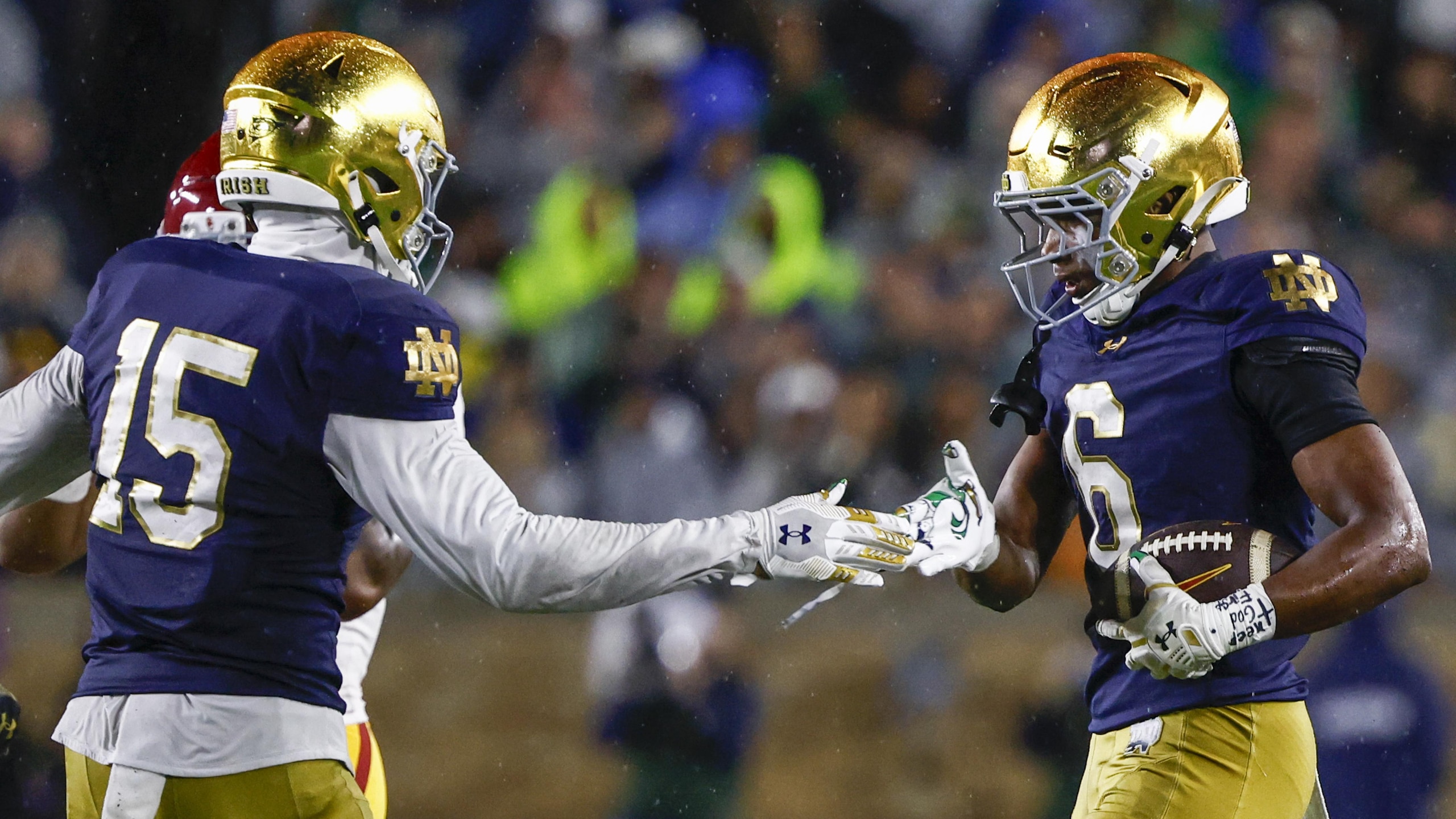
"Father Jenkins and the executive team and the trustees have set out on a mission, a grand experiment that has never been attempted before. They are committed to building an institution which is at the very top rank of academic institutions in the world, not just a great place to educate young people, but a great place for research, for discovery, for intellectual curiosity. They are committed to do that at the same time they intend to stay true to the core mission of the university: to advance the Catholic faith. And, finally, they are committed to do those two things while continuing to be among the finest and most successful athletic programs in the country.
I'm not here to just do sports right. I love the competitive environment of sports. Don't step on the field if you don't want to win. We want to win. We want to be a great academic institution that furthers research in this country. We want to be a place of faith. And we want to be a place that wins on the athletic field and turns out extraordinary student‑athletes.
In the three legs of that stool I think there might be a tendency to treat sports as the stepchild. I think that nothing could be further from the truth. Sport is an integral, not a secondary, part of that success. It is integral for two particular reasons. One is sport is how you celebrate the success of the university. It would be great to gather 70,000 people to cheer an important patent, but it's not going to happen.
But we can bring our community together to celebrate what we are on a football Saturday or on a basketball evening. We can gather around our television sets and share the common bond of watching the remarkable journey of the hockey team this year or the women's basketball team when it went to its national championship. Sport allows you to build community and celebrate all that's great about the school, not just sport. "
Notre Dame Football, Charlie Weis, Sugar Bowl
Man Utd Rebuild Continues 🛠️
.jpg?w=2560 "Predicting NFL Roster Cuts ✂️")
.jpg?w=2560 "Browns Name Deshaun Watson QB1")
.jpg?w=2560 "Report: Saints Trade for 49ers RB")
.jpg?w=2560 "Look: Ravens Reveal 'White Noise' Unis")
.png?w=2560 "Latest MLB Power Rankings 📊")
.jpg?w=2560 "49ers Owner Pleads No Contest to Misdemeanors")