Ranking the Top 50 All-Time Notre Dame Fighting Irish
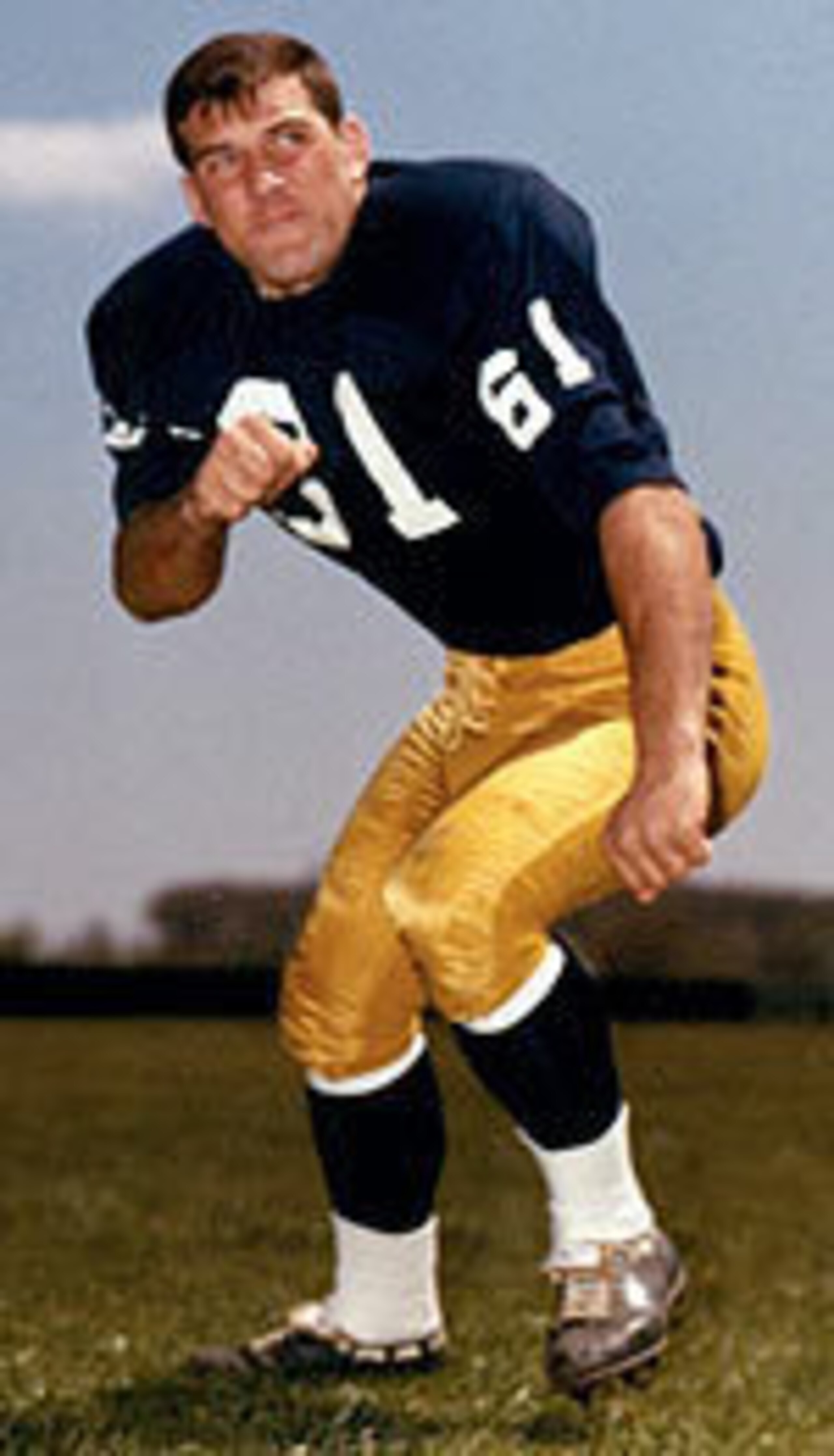
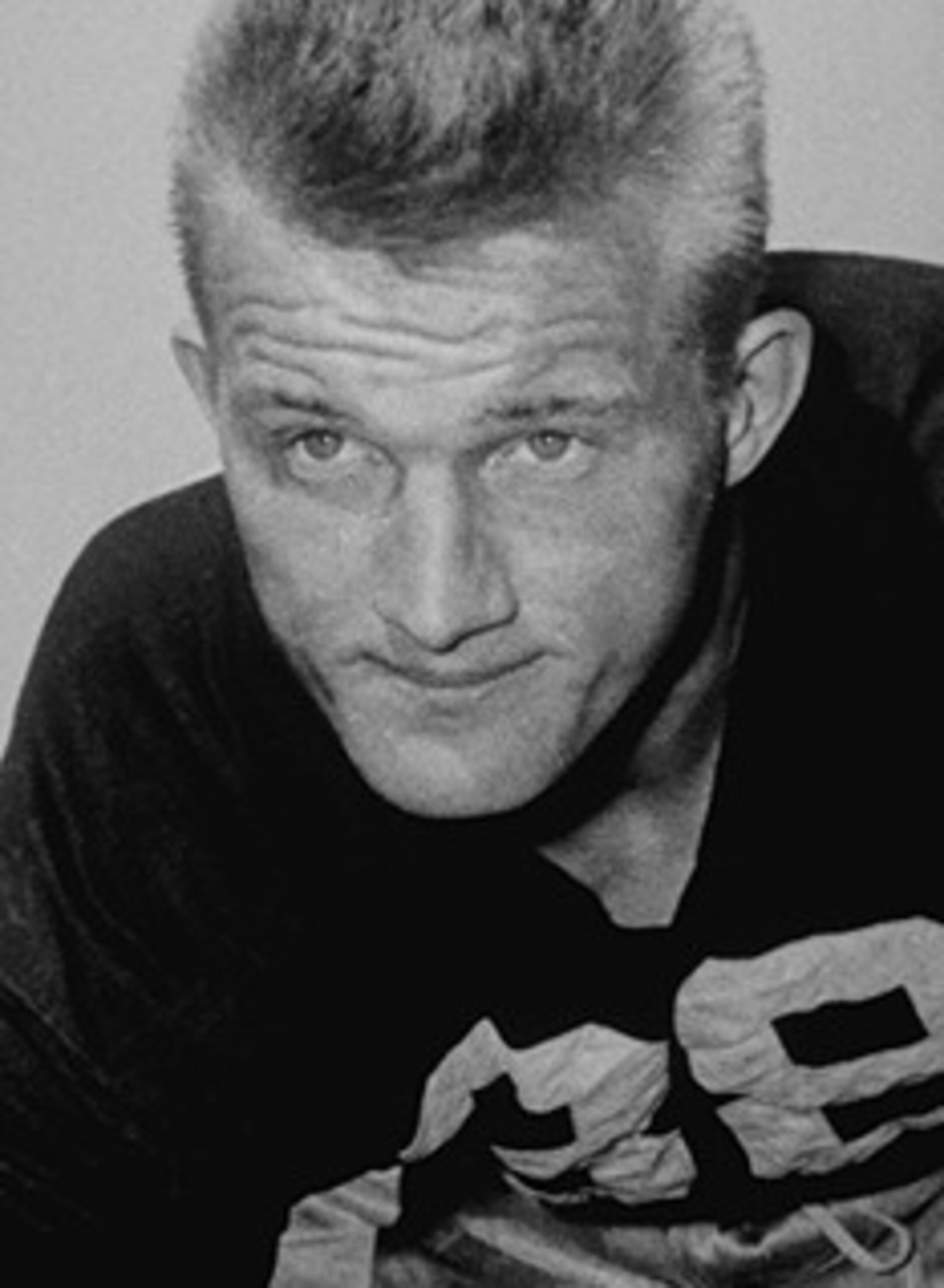
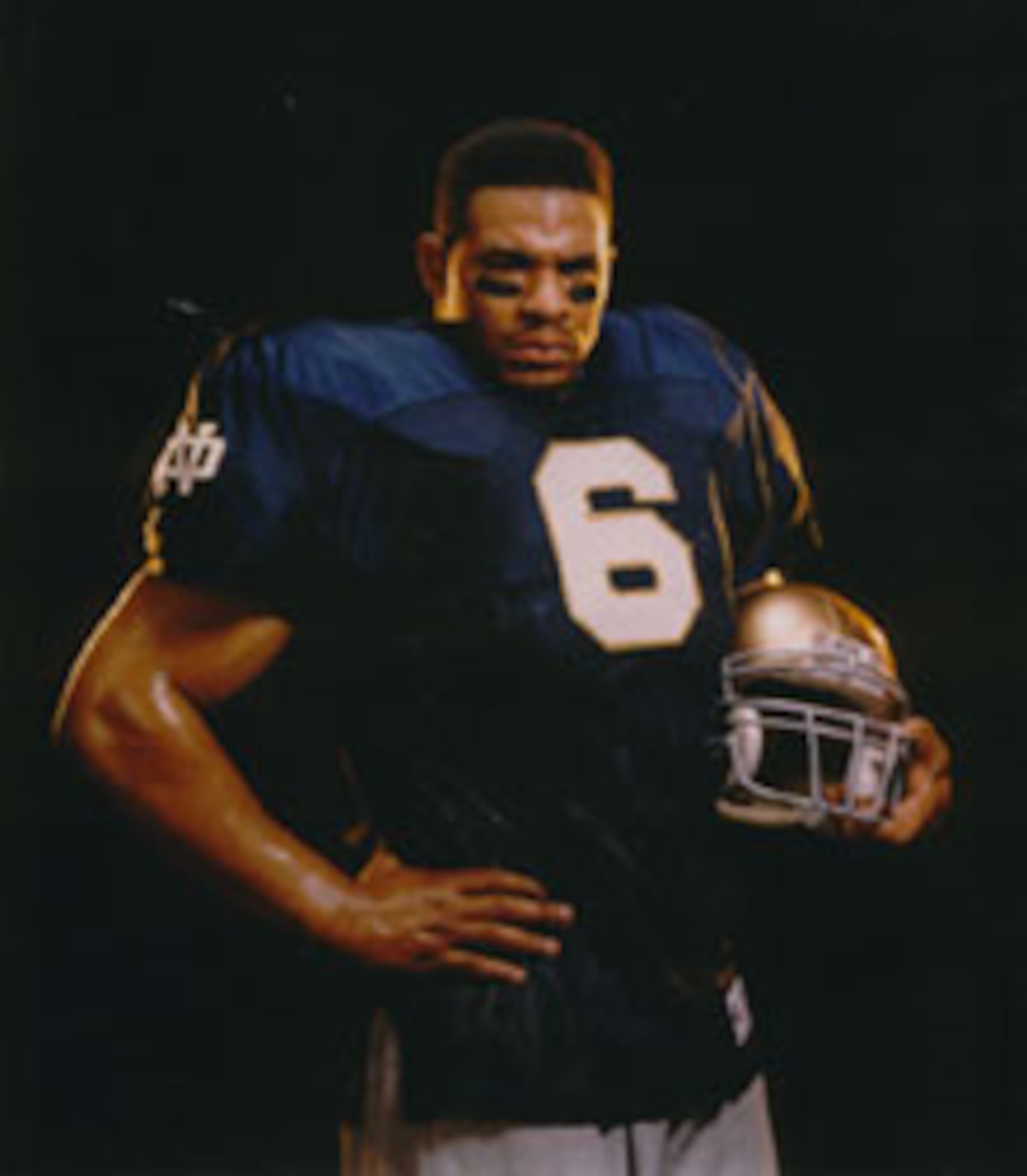
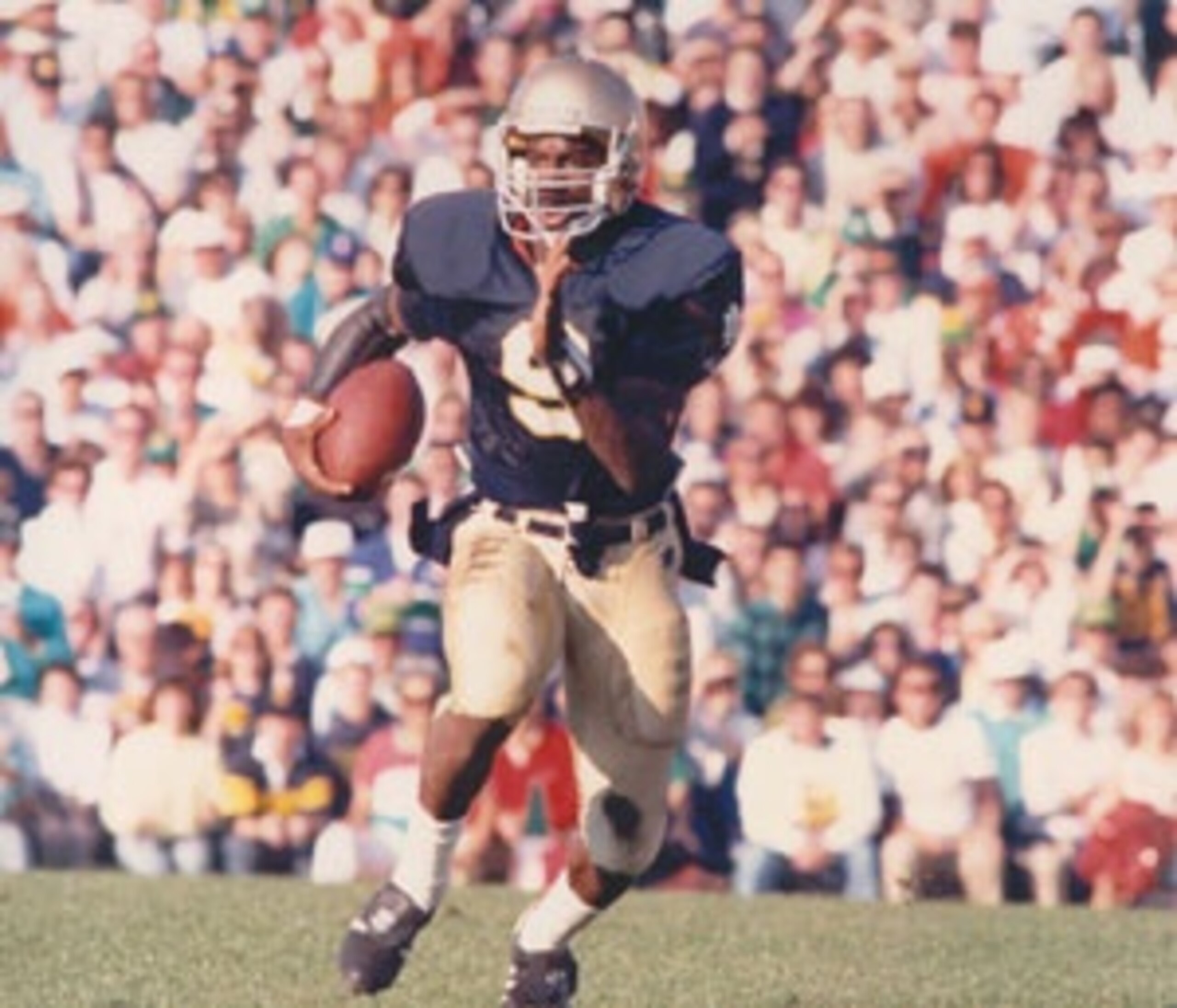
The Notre Dame football program is simply dripping in tradition and excellence. Trying to rank the top 50 best players in history to wear the Blue & Gold is one serious task.
Consider that the school has more national championships and All-Americans than any other program in the country. In addition, Notre Dame has taken home seven Heisman trophies.
In compiling this list it was necessary to provide some guidelines in order to rank each player properly because in reality, there are nearly 100 players who could make a case to be on this list.
Therefore, I believe individual statistics and awards to be paramount, but team success and winning are also key components as well. Also note that NFL and professional success is not part of the ranking formula.
Brace yourself for a list of some of the greatest football players in college history!
Here are the top 50 all-time Fighting Irish!
The Best of the Rest
These players just missed the cut, but there's no shame in that.
Harry Stuhldreher (1922-24) QB
William Shakespeare (1933-35) HB
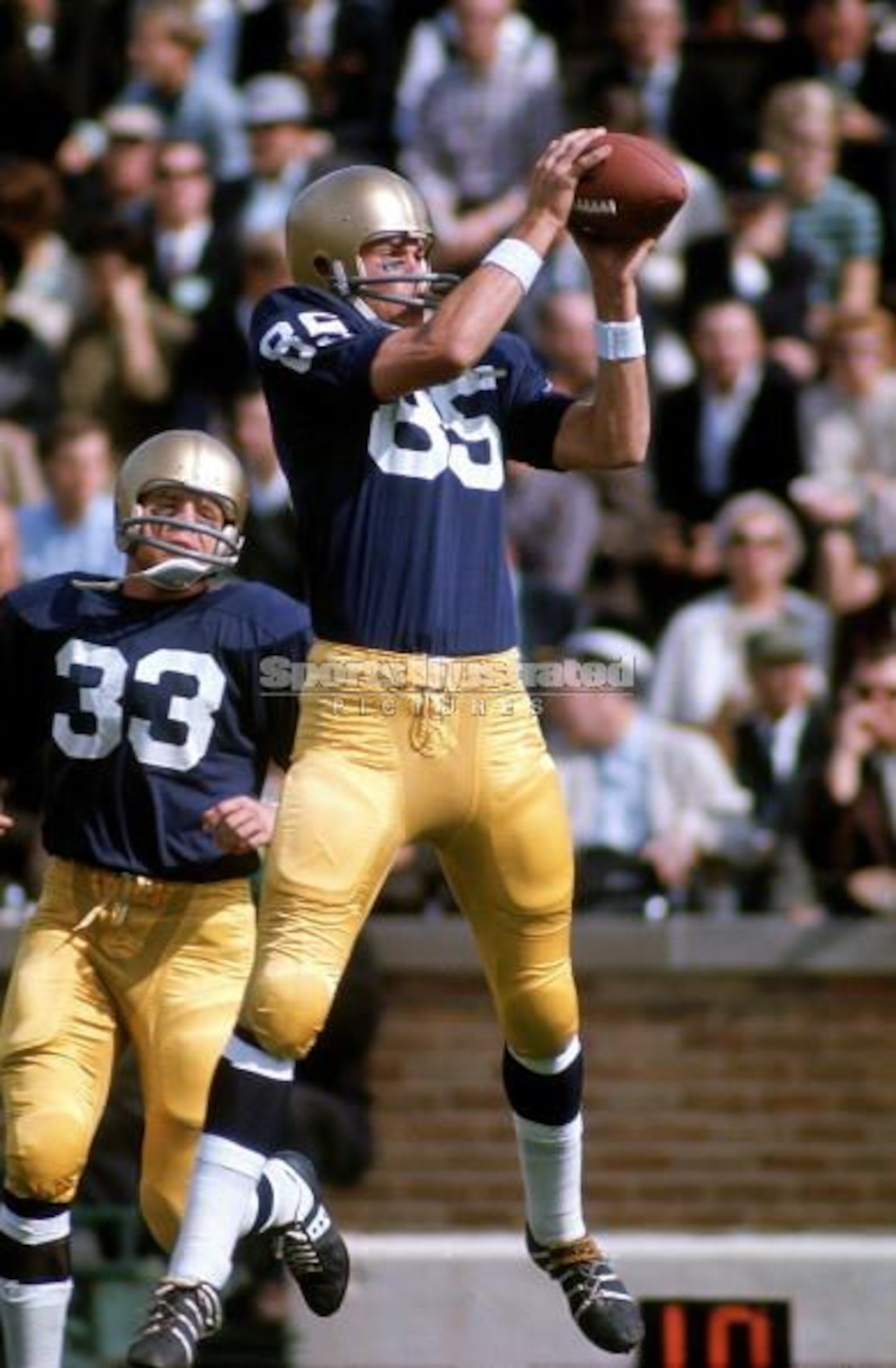
Jack Snow (1962-64) WR
Ricky Watters (1987-90) RB
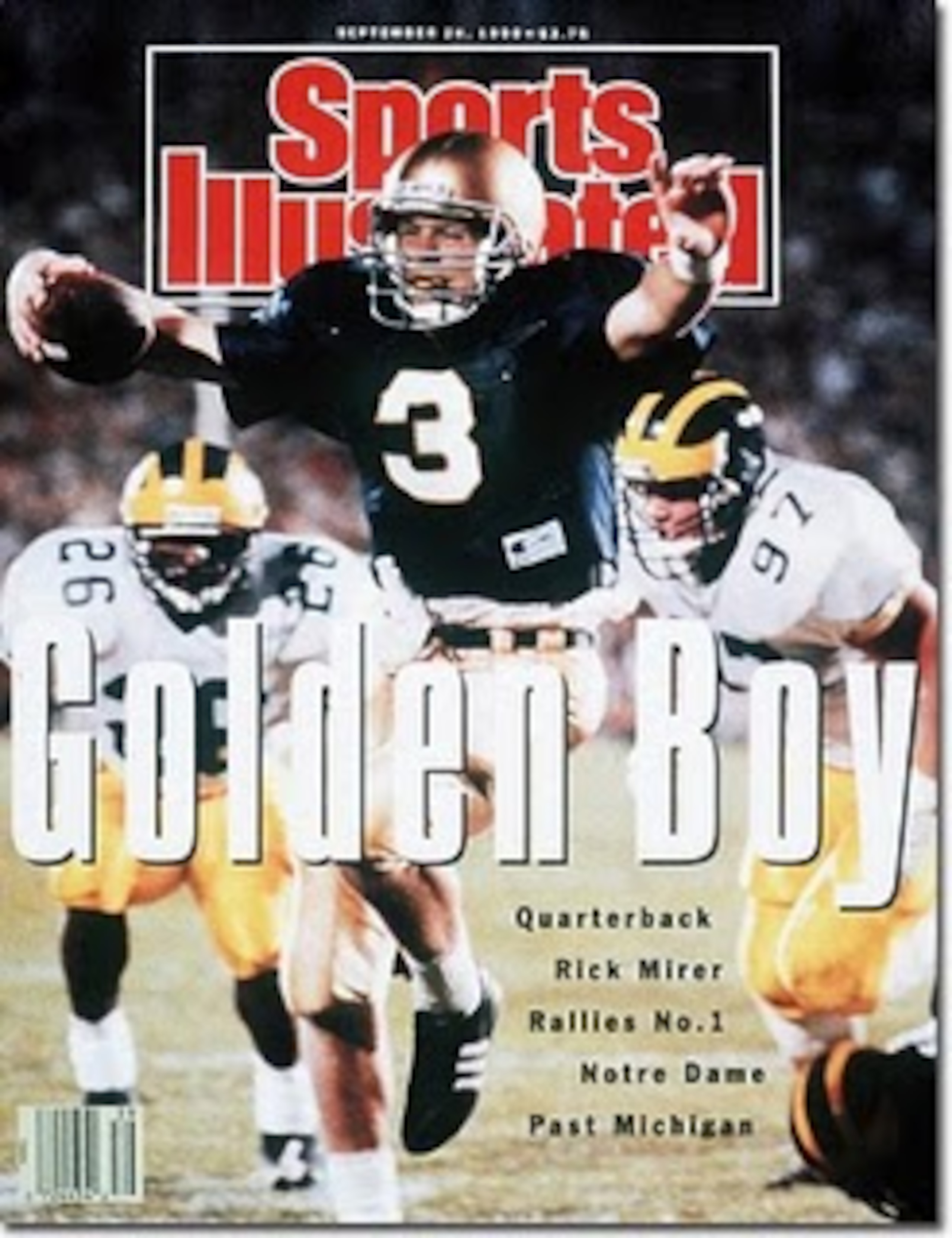
Rick Mirer (1989-92) QB
Bryant Young (1990-93) DT
Bobby Taylor (1992-94) CB
Derrick Mayes (1992-95) WR
Autry Denson (1995-98) HB
No. 50 Jim Seymour (1966-68) WR
A record setting wide receiver who flourished under Paresghian’s passing offense, Seymour left Notre Dame as one of the most accomplished offensive players in history.
A member of the 1966 national champion team, he set an Irish record that has yet to be broken with 276 receiving yards in the season opener against Purdue.
Seymour was an All-American during his junior and senior seasons in 1967 and 1968.
No. 49 Justin Tuck (2001-04) DE
One of the greatest athletic freaks to ever wear an Irish uniform, Tuck initially struggled during his first two seasons in South Bend.
After redshirting as a freshman and playing sparingly as a sophomore, he broke out and became one of the best pass rushers in the nation as an upperclassman.
A Super Bowl winner with the Giants, Tuck holds the career mark for most sacks and tackles for loss in Notre Dame history.
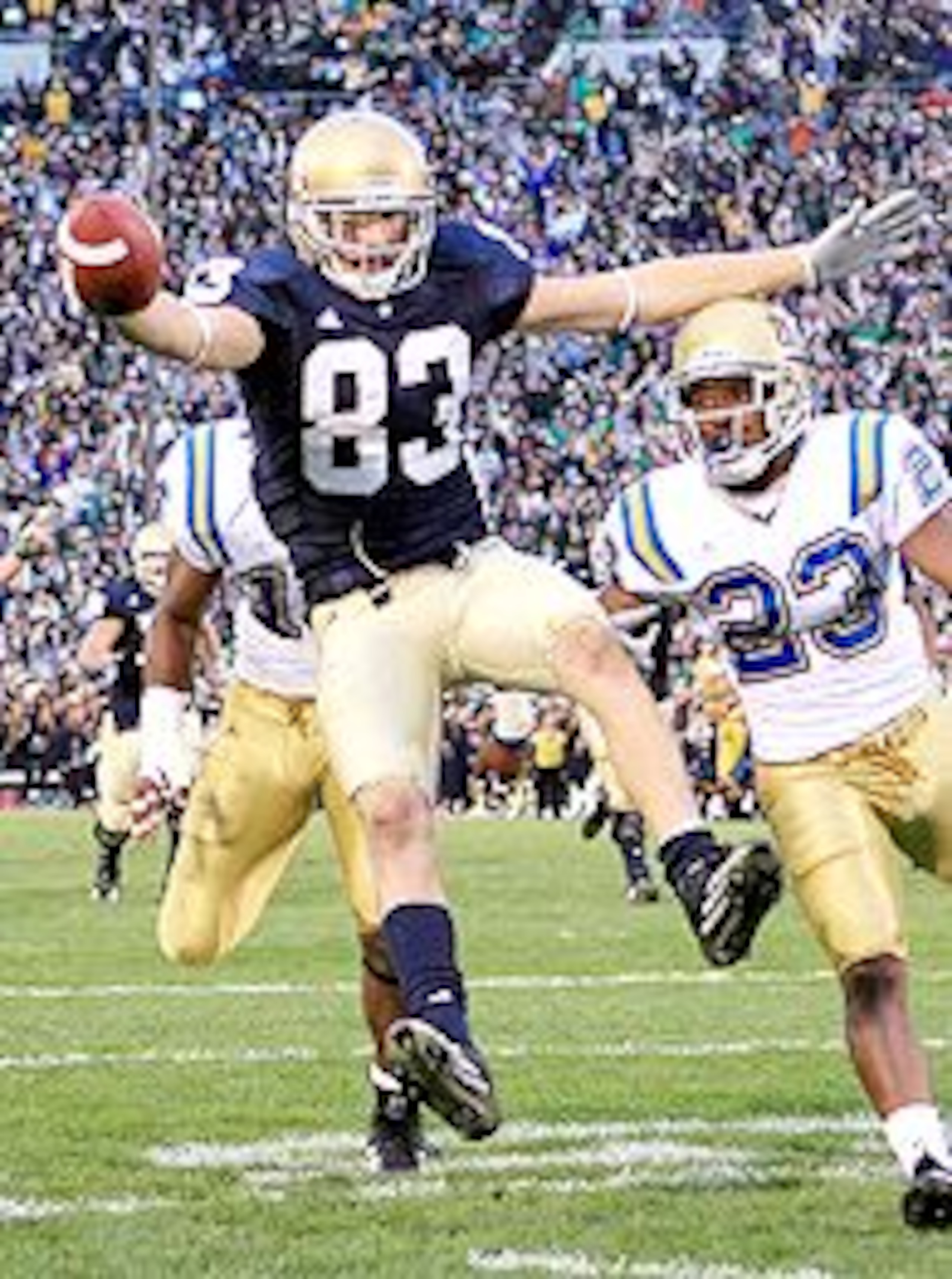
No. 48 Jeff Samardzija (2003-06) WR
While also a star pitcher on the Irish baseball team, Samardzija came into his own and broke many school records as a receiver as a junior and senior.
A two-time All-American as a junior and senior, the “Shark” was one of the nation’s best receivers under Charlie Weis’ pro-style offense.
A possible NFL pick, Samardzija instead opted to stick with baseball and is in the Chicago Cubs system, a route George Gipp wanted to take before his untimely death.
No. 47 Mike Stonebreaker (1986-90) LB
Stonebreaker was one of the best linebackers in Irish history and was a major piece to the dominance of the Lou Holtz era.
A two-time All-American, he anchored some of the best defenses in recent Notre Dame memory.
He may have been the best defender on the 1988 national championship team.
No. 46 Tom Gatewood (1969-71) WR
The leader in most career receiving categories until the Charlie Weis era, Tom Gatewood was about as consistently great as a receiver can be.
Leading the Irish in receiving for three straight years, he was the primary target on most passing plays and a big and strong athlete who created mismatches all over the field.
An All-American as a junior in 1970 and co-captain in 1971, Gatewood left South Bend with 157 career receptions.
No. 45 John Huarte (1962-64) QB
Terribly misused during his first three years on campus, Huarte broke out as a senior in Ara Parseghian’s first year as coach and remains the greatest one-year wonder in school history.
During the 1964 season, Huarte re-wrote the Notre Dame record book with an unstoppable passing game and led the Irish to a surprising 9-1 record.
For his efforts, Huarte was awarded the Heisman trophy and still remains one of the most unlikely recipients in the history of the prestigious award.
He was inducted into the college football Hall of Fame in 2005.
No. 44 Bob Dove (1940-42) DE
One of the best defensive ends to ever play for Notre Dame, Dove made an impact almost immediately once on campus.
After a slow freshman campaign, Dove became the first sophomore starter at Notre Dame in 11 years and became a dominant pass rushing specialist for the next three seasons.
A consensus All-American in 1941 and 1942, Dove was a key player in the reemergence of Notre Dame as a national powerhouse in the early years of the Frank Leahy era.
Dove was inducted into the college football Hall of Fame in 2000.
No. 43 Todd Lyght (1987-90) CB
A phenomenal athlete who played almost four full years in South Bend, Todd Lyght has to be considered one of the best corners in Irish history.
A two-time All-American and co-captain as a senior, Lyght finished his career with 161 tackles and 11 interceptions.
A member of the 1988 national championship team, he was drafted in the first round by the Los Angeles Rams and would have a very productive pro career.
No. 42 Bob Williams (1948-50) QB
The youngest player on Leahy’s dominant post-war teams, Bobby Williams led Notre Dame to a national championship in 1949 while posting some of the best statistics from a quarterback in school history.
His 161.4 passer rating was a school record until 2009 when it was tied by Jimmy Clausen. Williams was also an adept runner and punter for the Irish.
For his career, Williams was a two time All-American and had two top six finishes in the Heisman balloting to go along with his one championship.
Williams was a first round selection of the Chicago Bears in 1951 and was inducted into the college football Hall of Fame in 1988.
No. 41 Elmer Layden (1922-24) HB
Another member of the famed “Four Horseman” backfield, Layden was the heaviest of the group and played the hard nosed position of fullback.
Although he was not the best runner of the group, Layden excelled at driving into the line of scrimmage and also as a tremendous defender in the Notre Dame secondary.
An All-American in his senior season of 1924, Layden intercepted two passes and brought both back for touchdowns in the Rose Bowl against Stanford and added another on the ground in the 27-10 victory.
A member of Notre Dame’s first national championship team, Layden totaled 1,841 yards rushing for his career (the same as fellow teammate Jim Crowley) and was inducted into the college football Hall of Fame in 1951.
He was also head coach at Notre Dame from 1934-40.
No. 40 Heartley Anderson (1918-21) OL
A four year letter winner, Anderson was described by Knute Rockne as the best lineman he ever coached and was a member of Rockne’s first four teams in South Bend.
A punishing and brutal blocker, Anderson created holes for the immortal halfback George Gipp and helped create a legacy of winning that would continue throughout the Rockne era.
An All-American as a senior at guard, Hunk Anderson led Notre Dame to two undefeated seasons and an overall record of 31-2-2.
After playing professionally with the Chicago Bears, he got into coaching and eventually took over at Notre Dame after Rockne’s untimely death following the 1930 season.
Anderson was inducted into the college football Hall of Fame in 1974.
No. 39 Jimmy Clausen (2007-09) QB
The number one recruit coming out of high school, Clausen struggled early in his career but just finished one of the more amazing seasons for a quarterback in Notre Dame history.
A highly skilled and accurate passer, he currently stands in first or second place in most Irish career passing records. Clausen’s 2009 season culminated in a 161.4 passer rating, tying Bob Williams for the best on year performance in school history.
A likely top 15 pick in this year's NFL draft, Clausen could be the highest drafted Golden Domer in well over a decade.
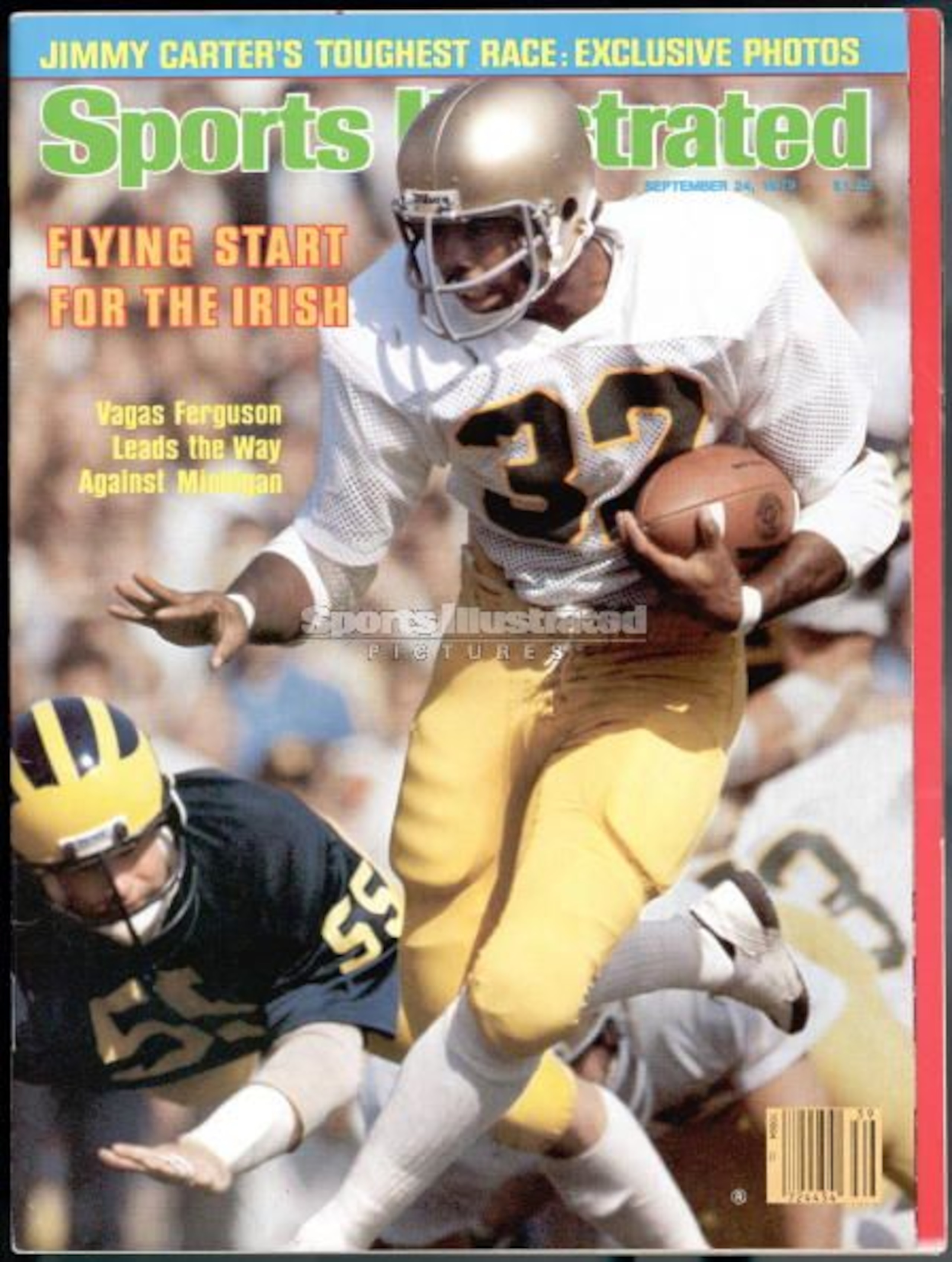
No. 38 Vagas Ferguson (1976-79) HB
A workhorse tailback with a nose for the end zone, Ferguson set numerous records as a member of the Fighting Irish.
The first runner to total back-to-back 1,000 yard seasons, he would leave Notre Dame as the school’s all-time leading rusher and record holder for most career touchdowns with 32.
An All-American in 1978, Ferguson won one national championship at Notre Dame, was the MVP of the 1978 Cotton Bowl and was a first round draft pick of the New England Patriots.
No. 37 Aaron Taylor (1990-93) OL
Possibly the best offensive lineman in modern school history, Taylor was a magnificent blocker at guard in 1992 and tackle in 1993.
A two-time All-American, Taylor was the winner of the Lombardi trophy in 1993 and proved to be a durable blocker who could rip open huge holes.
A first round draft pick by Green Bay, Taylor won a Super Bowl with the Packers in 1997 and will likely become a college football Hall of Fame candidate in the future.
No. 36 Golden Tate (2007-09) WR
A converted running back from high school, Tate just re-wrote the school record books with a sensational 2009 season.
A likely top 40 pick in the NFL, Tate leaves Notre Dame first or second in nearly every receiving statistical category for a career.
Blessed with strong hands, great speed and toughness he won the Biletnikoff award as a junior and is one of the best receivers to ever play for the Fighting Irish.
No. 35 Jim Crowley (1922-24) HB
One of the key members of Rockne’s early offensive attack, Crowley was the left half-back in the famed “Four Horseman” backfield.
Nicknamed “Sleepy Jim” because of his laid back attitude and droopy eyelids, Crowley exhibited astonishing agility but was extremely tough for a 160 pound runner.
Named an All-American as a senior in 1924, Crowley helped Notre Dame finish the season 10-0 including a Rose Bowl victory over Stanford which clinched the school’s first national championship.
Crowley’s 1,841 career rushing yards was fairly impressive given that he shared carries with many other players. When he graduated he left behind a career record of 24-2-1.
Crowley was elected into the college football Hall of Fame in 1966.
No. 34 Jerry Groom (1948-50) OL
A versatile player, Groom played center, linebacker and tackle over a three year period in which he was a consummate leader and hard worker.
An All-American as a senior in 1950, Groom captained that squad and would later become a first round draft pick in the NFL.
He was inducted into the college football Hall of Fame in 1994.
No. 33 Don Miller (1922-24) HB
Out of all of the Four Horseman, perhaps Don Miller was the most gifted athlete. Despite coming to South Bend with little fanfare, Miller racked up the most impressive statistics among his fellow teammates.
An All-American as a junior in 1923, the irony is that Miller was the only member of the Four Horseman not to be named All-American in 1924 despite leading the team in rushing in both years and leading the team in receiving for three straight years.
Described by Rockne as the best open field runner he’d ever had, Miller glided his way to 1,933 yards rushing at a 6.8 per carry average, to go along with 17 touchdowns over his career.
He was a member of the 1924 national championship team and inducted into the college football Hall of Fame in 1970.
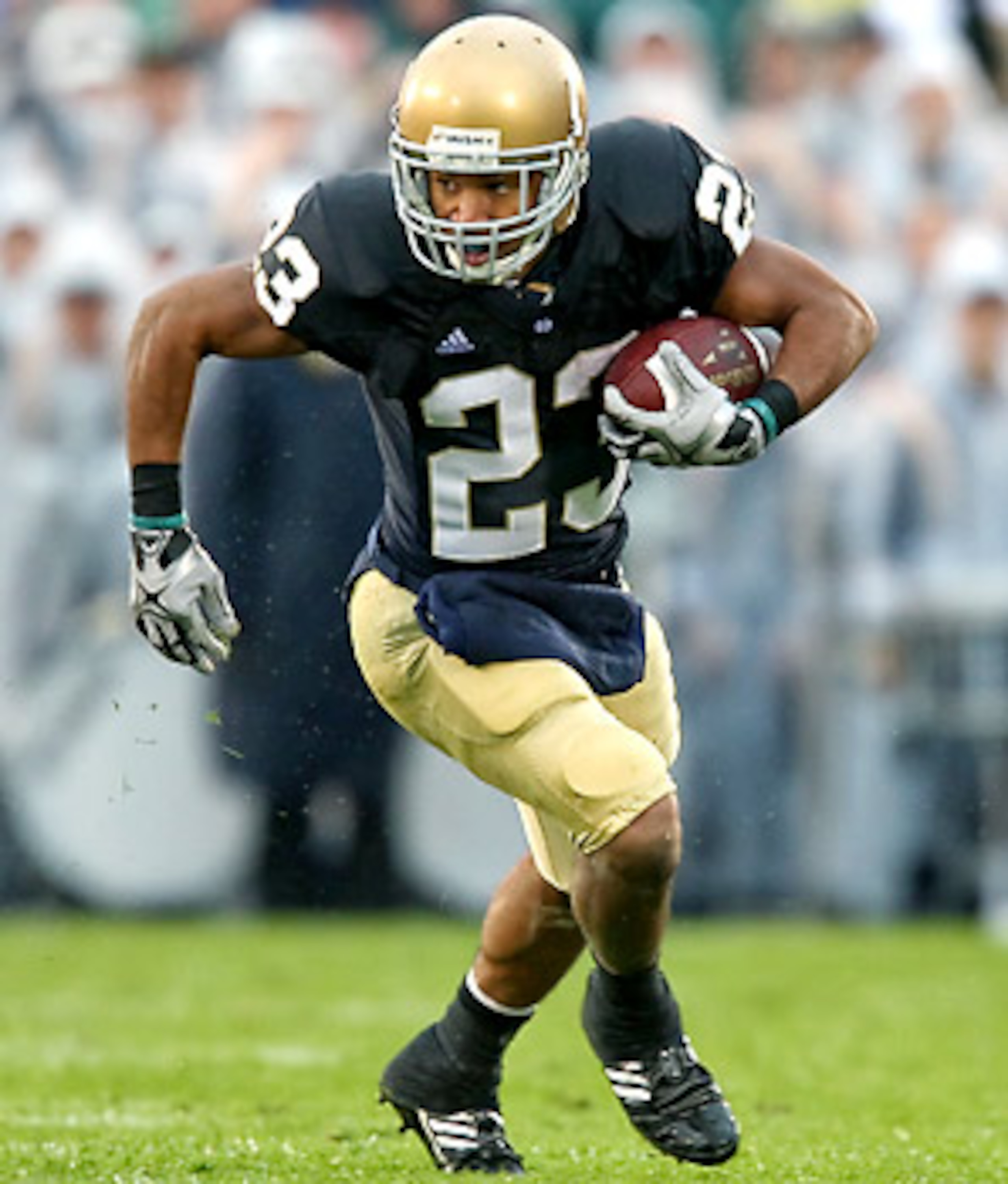
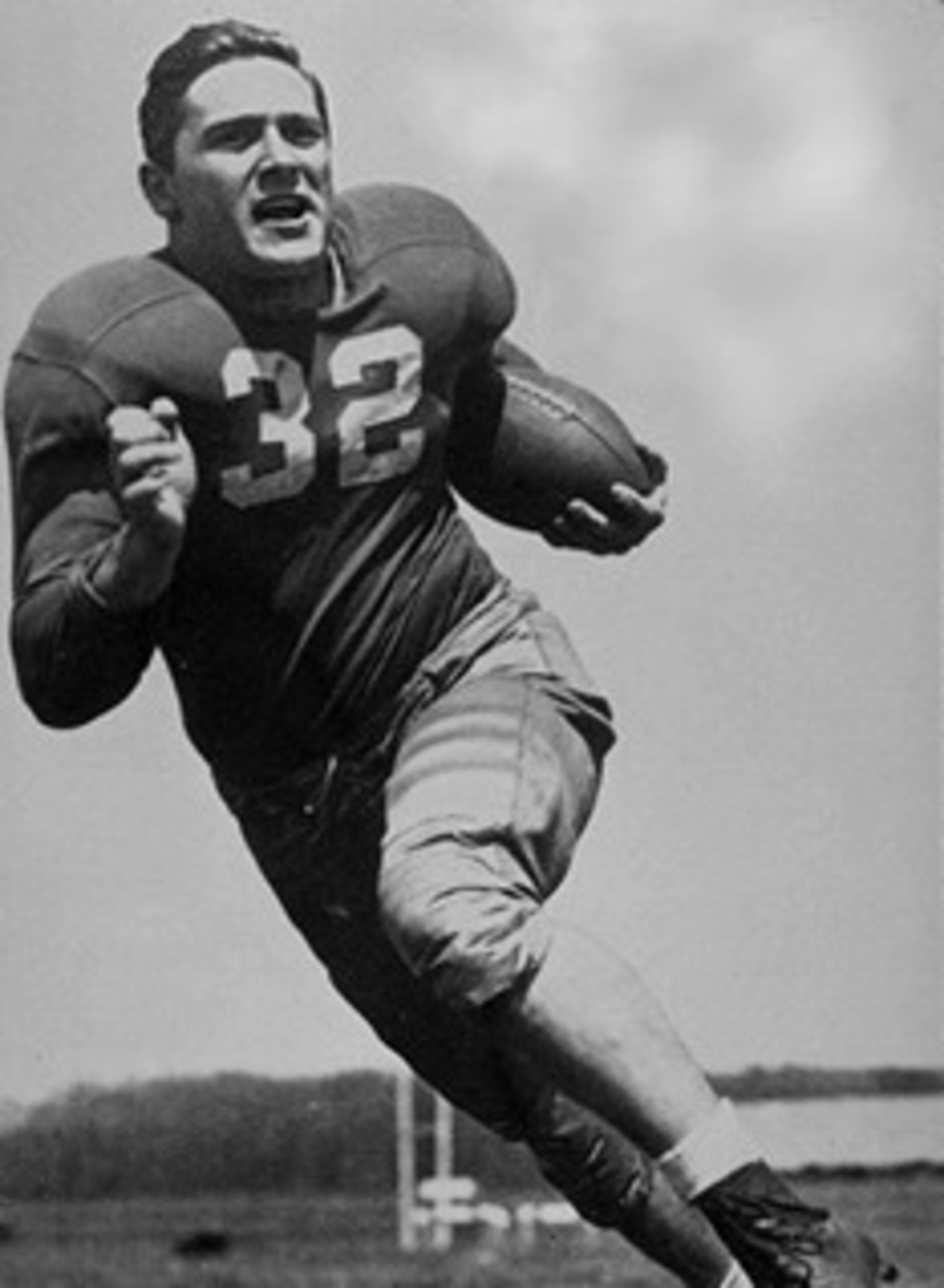
No. 32 Allen Pinkett (1982-85) HB
A small but tough runner, Pinkett was a bright spot during an otherwise dark period in Notre Dame history.
A two-time All-American, Pinkett rushed for over 1,000 yards in three straight seasons to end his career under the Golden Dome.
When he left Notre Dame, he was the school’s all-time leading rusher with 4,131 yards.
No. 31 Brady Quinn (2003-06) QB
After becoming a starter during his freshman year, Quinn would go on to lead the Irish for the next three years as quarterback.
The all-time leader in most school passing records, he benefited immensely from a coaching change heading into his junior season. In fact, his junior season (32 TD’s and 3,919 yards) could very well stand unchallenged as the best statistical season for a signal caller in Notre Dame history.
A team captain as a junior and senior, Quinn left South Bend in 2006 as one of the school’s greatest leaders.
No. 30 Dave Casper (1971-73) TE
An outstanding athlete, Casper played tackle for two seasons before switching to tight end for his senior campaign in 1973.
That year, he co-captained the Irish to the national championship while earning All-American honors.
Described by head coach Ara Parseghian as the best athlete he’d ever coached, Casper went on to a successful pro career in the NFL and was elected to the Hall of Fame in 2002.
No. 29 Luther Bradley (1973-77) DB
A big strong cornerback with speed and skill, Bradley is one of the best defensive secondary players to ever wear the blue and gold.
A member of two national championship teams in 1973 and 1977, he was awarded All-American status for his achievements as a senior.
A first round draft pick of the Detroit Lions, Bradley totaled 153 tackles and still holds the school record for most interceptions in a career with 17.
No. 28 Reggie Brooks (1989-92) RB
Somewhat of a forgotten star as the years have passed, Reggie Brooks was one of the best tailbacks in Notre Dame history.
A converted defensive back, Brooks would have to wait three years before earning a starting spot at halfback for the Irish. When he finally grabbed the spot in 1992, he had one of the best seasons in Notre Dame history.
His 1,372 yards that season is still the third best in Irish annals and he also scored 13 touchdowns to go along with an average of 122.1 yards per game.
Brooks’ 7.6 yards per carry remains a Notre Dame record.
No. 27 Bill Fischer (1945-48) OL
Another tough and talented lineman from Leahy’s post-World War II teams, Bill Fischer continued the tradition of excellence established by guys like Connor, Walsh and Metzger before him.
Fischer started at guard for three seasons, winning a national championship in both 1946 and 1947, all while establishing himself as one of the best young lineman in the country.
A two time All-American during his junior and senior seasons, Fischer also captained the 1948 Irish squad and took home the Outland trophy as the nation’s best interior lineman.
Fischer was inducted into the college football Hall of Fame in 1983.
No. 26 Ralph Gugliemli (1951-54) QB
The starting quarterback at Notre Dame for nearly four full seasons, Guglielmi was described by coach Leahy as Notre Dame’s greatest passer. Not only could he throw the ball with accuracy and timing, but Guglielmi was also a threat to run the ball as well.
An All-American as a senior in 1954, Gugleilmi was also a strong defender who finished his career with ten interceptions. After Notre Dame, he was a first round pick for the Washington Redskins.
He was inducted into the college football Hall of Fame in 2001.
No. 25 Ken MacAfee (1974-77) TE
Has there ever been a more perfect tight end in college history? MacAfee stood 6’4” and weighed 250 pounds and was a premier blocker as well as a receiver.
A three-time All-American, MacAfee is still the top statistical tight end in Notre Dame history. He finished third in the 1977 Heisman voting, but took home the Walter Camp award.
A key member of the 1977 national championship club, MacAfee was inducted into the college football Hall of Fame in 1997.
No. 24 Joe Theisman (1968-70) QB
Perhaps the greatest Notre Dame player to not win a title or Heisman trophy, Joe Theismann took the Fighting Irish passing game to a whole new level as a junior and senior.
Passing for over 4,000 yards and 31 touchdowns over his career, Theismann led Notre Dame to an impressive 20-3-2 record as starting quarterback.
Finishing second in the 1970 Heisman race, Theismann was nevertheless an All-American selection who would go on to have a highly successful pro career.
He was inducted into the college football Hall of Fame in 2003.
No. 23 Adam Walsh (1922-24) OL
Walsh is without question one of the toughest and greatest leaders to ever put on a Notre Dame uniform. A multi-sport athlete, he was the captain of the 1924 national championship team and was the best blocker as a center for the Four Horseman.
In addition to his blocking skills, Walsh was also a talented defender. During the 1924 contest against Army, he played the game with two broken hands but still intercepted a pass and made numerous tackles.
An All-American as a senior, Walsh was inducted into the college football Hall of Fame in 1968.
No. 22 Chris Zorich (1988-90) DT
One of the strongest players to ever put on the golden helmet, Zorich was a converted linebacker who turned into a dominant defensive tackle during his sophomore campaign.
A key member of the 1988 national championship team, Zorich won the Lombardi award in 1989 to go along with his unanimous All-American status.
One of the feel good stories in Irish history, Zorich went on to a long career in the NFL. He was inducted into the college football Hall of Fame in 2007.
No. 21 Bob Golic (1975-78) LB
Golic totaled 146 tackles during the 1977 run to the national championship having one of the greatest seasons for an Irish linebacker along the way.
A sure and steady defender, Golic was a unanimous All-American in 1978 as a senior and finished his Notre Dame career with a whopping 479 tackles.
Golic was also one of the best collegiate wrestlers of the late 1970’s and went on to a long and productive career in the NFL.
No. 20 Bert Metzger (1928-30) OL
Tipping the scales at only a paltry 155 pounds, Bert Metzger was nevertheless the most aggressive and ruthless blocker of the late-Rockne era.
A two-way player, Metzger excelled as a guard, blowing holes up for Notre Dame’s talented backfield, but he also was a powerful tackler and leader on defense.
An All-American as a senior in 1930, he was a member of two national champions and was one of the main reasons Notre Dame outscored opponents 410-112 over his last two seasons.
Metzger was inducted into the college football Hall of Fame in 1982.
No. 19 Angelo Bertelli (1941-43) QB
An enormous talent and one of the greatest pre-modern passers in football history, Bertelli led Notre Dame to the 1943 national championship despite being called into service and not finishing the year.
Nevertheless, Bertelli’s talents were too much for voters to dismiss as he won the school’s first Heisman trophy while at boot camp in preparation for World War II. He completed an unheard of 69 percent of his passes in 1943 and led an offensive onslaught that had never been seen before.
A two-time All-American, Bertelli was also a talented running back as a sophomore before switching to quarterback. Nicknamed the “Springfield Rifle” Bertelli was one of the greatest signal callers in Notre Dame history.
He was inducted into the college football Hall of Fame in 1972.
No. 18 Tim Brown (1984-87) WR
One of the most gifted athletes in Irish history, Tim Brown made an immediate impact by setting school receiving records for a freshman. Before long he would break even more records.
A deadly receiver, Brown was also one of the game’s best punt and kick returners who broke Notre Dame single season records for all-purpose yardage.
An All-American in 1986 and 1987, Brown became the first receiver to win the Heisman trophy while also taking home the Walter Camp award. He would go on to nine Pro Bowls in the NFL.
Brown was inducted into the college football Hall of Fame in 2009.
No. 17 Jim Lynch (1964-66) LB
One of the best linebackers in school history and also one of the best people, Lynch was the captain of the 1966 Notre Dame that won the national championship.
Lynch was a great tackler who had a nose for the ball and was described by coach Parseghian as the best player he ever coached.
A consensus All-American and Maxwell award winner in 1966, Lynch finished his career with 255 tackles.
He was inducted into the college football Hall of Fame in 1992.
No. 16 Jim Martin (1946-49) DL
After completing duty as a Marine during World War II, Martin entered Notre Dame as a 22 year old freshman and positively one of the meanest SOB’s in school history.
A four year starter, Martin played at defensive end for three years before switching to offensive tackle his senior season. And he was part of the incredible Notre Dame class that never lost a game over a four year period.
A member of three national championships and co-captain of the Irish in 1949, Martin was inducted into the college football Hall of Fame in 1995.
No. 15 Jerome Bettis (1990-92) FB
There may be no greater bruising fullback with the halfback skills than Jerome Bettis.
A key member of Lou Holtz’s early 90’s ground attack, Bettis would finish his career with a respectable 1,912 yards rushing at 5.7 per carry while sharing carries with other runners.
After scoring a school record 20 touchdowns in 1992, Bettis moved on to the NFL as a first round draft pick of the Los Angeles Rams and later won a Super Bowl with the Pittsburgh Steelers.
No. 14 Tony Rice (1987-89) QB
There could be no better quarterback to run Lou Holtz’s option attack than Tony Rice.
One of the most underrated leaders and winners in college football history, Rice quarterbacked the Irish to the 1988 national championship.
A fleet of foot runner, Rice also possessed a cannon of an arm that fueled the dangerous Notre Dame passing attack. He also has some of the greatest victories for a quarterback in school history and one of the most impressive records as starting quarterback in NCAA history.
No. 13 Frank Carideo (1928-30) QB
Quite possibly the most underrated and under-appreciated talent in Notre Dame history, Carideo can lay claim to being the most successful quarterback in school history.
Known as a tremendous play-caller and passer, Carideo also excelled at punting and was a fantastic defender. He was also a heavily feared punt and kick returner holding many school records when his career was over.
Undefeated as a starting quarterback, Carideo was a two-time All-American in 1929 and 1930 and led Notre Dame to back-to-back national championships as the last field general Knute Rockne ever coached.
Carideo was inducted into the college football Hall of Fame in 1954.
No. 12 Bob Crable (1979-81) LB
A linebacker coach’s dream, Crable can lay claim to being one of the best defenders in Notre Dame history. A first round draft pick of the New York Jets, Crable was a tackling machine and superb run stopper.
A two-time All-American during his last two seasons in South Bend, Crable shares the NCAA record for most tackles in a game at 26.
His career 521 tackles may never be matched by a Notre Dame player again.
No. 11 Raghib Ismail (1988-90) WR
The most electrifying athlete in school history, Ismail may be the greatest player to never win a Heisman trophy.
Nicknamed the “Rocket” for his blazing fast speed, Ismail was a threat to take it to the house any time he touched the football.
A two-time All-American in 1989 and 1990, Ismail also won the Walter Camp award as a junior and his 22.0 yards per reception is still a school record.
In three short years, the “Rocket” tallied over 4,000 all-purpose yards and played in the CFL before joining the NFL in 1993.
No. 10 Alan Page (1964-66) DE
No Notre Dame football player has achieved more on and off the field than Alan Page.
Without question one of the best defensive ends in college and NFL, Page is now a member of the Minnesota Supreme Court.
An All-American as a senior in 1966, Page was one of the most disruptive forces and was a tremendous tackler and pass rusher.
He was inducted into the college football Hall of Fame in 1993.
No. 9 Emil Sitko (1946-49) HB
Emil “Red” Sitko is another candidate for the most underrated players in Notre Dame history. A four year starter at full back and then half back, Sitko led the Fighting Irish in rushing in every single season.
Known for his blazing fast speed, he picked up the nickname “Six-Yard Sitko” because of his running abilities. His 6.1 yards per carry average is one of the best in school history and Sitko still remains near the top of many school rushing records.
A two time All-American and a member of a class that never lost a game (36-0-2), Sitko was also the winner of the 1949 Walter Camp award given to the best player in the country.
He was the tenth overall pick by the NFL’s Rams and was inducted into the college football Hall of Fame in 1984.
No. 8 Ross Browner (1973, 1975-77) DE
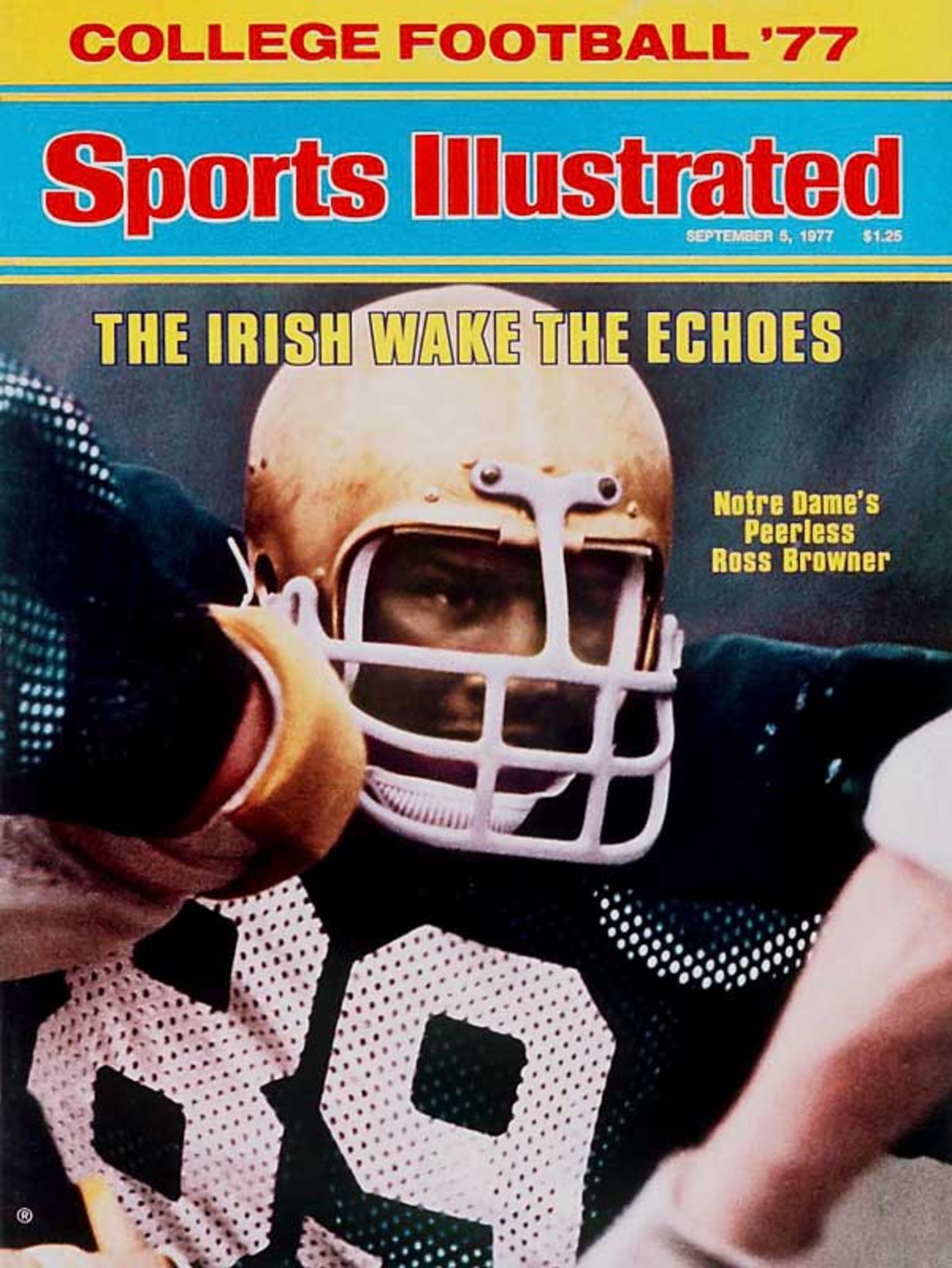
The best defender in modern Notre Dame history, Ross Browner was an absolute beast on the field.
A four year starter and member of two national championship teams, he was the Outland winner in 1976 and Lombardi and Maxwell winner in 1977.
As a junior and senior, Browner was a consensus All-American and his career 340 tackles is an amazing figure for a defensive lineman.
Browner was inducted into the college football Hall of Fame in 1999.
No. 7 Joe Montana (1975, 1977-78) QB
Quite the underdog for his first two years on campus, Joe Montana turned into “Joe Cool” once he had the opportunity to start for Notre Dame.
Although he doesn’t have out of this world statistics, Montana nevertheless engineered some of the greatest moments in school history. He led some miracle comebacks throughout his career including an improbable turn around late in the fourth quarter against Houston in the 1979 Cotton Bowl.
The starting quarterback for the 1977 national championship team, Montana is without a doubt the most famous football player in Notre Dame history.
No. 6 George Connor (1946-47) OL
One of the best tackles in collegiate history, Connor was a transfer from Holy Cross who made his way to South Bend after World War II. Before long he was opening holes for some of the best Irish runners in history.
A two time All-American at Notre Dame, Connor was also an unstoppable force on the defensive side of the ball. During his two years, Notre Dame never lost a game and Connor won two national championships.
Connor was also the first recipient of the Outland trophy in 1946, given to the nation’s best interior lineman, and also captained the 1947 squad, which many consider the greatest Notre Dame team of all-time.
After graduation, Connor was the number five overall selection in the NFL draft by the New York Giants.
He was inducted into the college football Hall of Fame in 1963.
No. 5 Johnny Lattner (1951-53) HB
Perhaps the greatest all around player in college football history, Lattner excelled as a running back, receiver as well as a defender and punt returner. Lattner was even one of the better punters in the country.
Although he never put up crazy numbers, Lattner did end up setting the career all-purpose yardage mark for all Irish players and his 13 career interceptions is one of the best in school history.
A two-time All-American and Maxwell award winner, Lattner won the Heisman trophy in 1953 in Frank Leahy’s last year as head coach. The Irish finished the season 9-0-1.
Lattner was inducted into the college football Hall of Fame in 1979.
No. 4 Paul Hornung (1954-1956) QB
Widely considered the best all-around athlete in Notre Dame history, Paul Hornung left South Bend as the only player in history win the Heisman trophy while playing for a losing team. The Irish went 2-8 in 1956, but Hornung was simply amazing as a senior.
Originally a fullback-halfback hybrid during his first season, Hornung eventually became starting quarterback for his last two seasons and scored nearly half of Notre Dame’s points over the remainder of his career.
Not only was Hornung a great runner, passer, and offensive threat, but he also took on the kicking duties and was one of the most accurate and lethal kickers of his time.
If that’s not enough, Hornung also played on the other side of the ball leading his team in pass break ups and finishing second in tackles and interceptions his senior season.
Nicknamed the “Golden Boy”, Hornung also played basketball until his junior season in college when he decided to focus entirely on football.
A member of the college football Hall of Fame, Hornung was the No. 1 draft pick for the Green Bay Packers.
No. 3 Leon Hart (1946-1949) DE
You could make the case that Hart is the most decorated player in Notre Dame history and someone whose achievements were larger than life.
At 6’4” and 245 pounds, Hart was incredibly strong yet nimble as a running back. As a defensive end, he was one of the most feared pass rushers in history, but also lined up on the offensive line as a bruising blocker, played full back and caught passes as well.
Hart ended his career with 49 receptions, 751 yards and 13 touchdowns, which is an absolutely insane set of stats for that era and given his tenacity and dominance on defense.
He was a four-year letter winner, three-time All-American, three time national champion and a member of an Irish class that never lost a game over their career going 36-0-2.
One of only two linemen to ever win the Heisman, Hart took home the award after his senior season in 1949 while also earning the Maxwell award and AP Male Athlete of the Year honors.
A member of the college football Hall of Fame, Hart was also the No. 1 draft pick of the Detroit Lions.
No. 2 George Gipp (1917-1920) HB
There may be no more famous of a personality and character in Notre Dame history than George Gipp.
Originally enrolled at Notre Dame on a baseball scholarship, the “Gipper” was spotted playing football one day by head coach Knute Rockne who convinced the superb athlete to join the varsity squad.
Over the next three years, Gipp turned into the most electrifying player on the team and in the nation, one who could run, pass, punt and play outstanding defense. In fact, he was such a great defender, it is claimed a pass was never completed on his side of the field.
In the second to last game of his senior year, Gipp contracted strep throat and suddenly died only three weeks later. His famous deathbed words spoken to Rockne were the inspiration for one of Notre Dame’s biggest victories over Army eight years later and remain perhaps the greatest story in college football history.
At the time of his death, Gipp was named an All-American, led the team in rushing and passing each of his last three seasons, compiled a career record of 27-2-3 (including 19-0-1 in his last two seasons) and held Notre Dame’s career rushing mark (2,341 yards) for over fifty years.
George Gipp was inducted into the college football Hall of Fame in 1951.
No. 1 Johnny Lujack (1943, 1946-47) QB
There may be no more decorated player in college football history with the combination of individual and team success like Notre Dame’s Johnny Lujack.
Filling in for soon-to-be Heisman winner Angelo Bertelli at quarterback in 1943, Lujack guided the depleted Irish in a huge victory over powerhouse Army to secure a national championship just as World War II erupted.
After serving in the Navy, Lujack came back to Notre Dame and never lost a game as quarterback and defensive back. In fact, his touchdown saving tackle against Army in 1946 is one of the best defensive plays in college football history.
Lujack won the Heisman in 1947 and left Notre Dame as a two-time consensus All-American and three time national champion.
What is the duplicate article?
Why is this article offensive?
Where is this article plagiarized from?
Why is this article poorly edited?
Flag This Article


75 Comments
Loading comments...
This comment and all replies have been deleted This comment has been deleted Undo delete