How The UFC Does Busniess
UFC President Dana White has gained a lot of attention in the MMA community lately for his bold prediction that within twenty years his company and sport will be the biggest thing in the world. He's suggested that it’ll be more popular than football. While this isn’t going to happen for a number of reasons, you have to like the fact that he’s ‘aiming high’. The problem is that the last thing the UFC wants to do is mess with their current business model.
The UFC is the first professional sport perfectly geared to the 21st century economy. Now, I’m not talking about MMA itself which is a fine sport but irrelevant to this discussion. Instead, the UFC’s business model is a perfect fit for the ‘post modern’ consumer economy. Despite recent concerns about the quality of UFC PPVs and what some perceive to be a softening in demand for the product, the reality is that everything is working perfectly and will continue to do so indefinitely as long as they don’t screw it up.
TOP NEWS
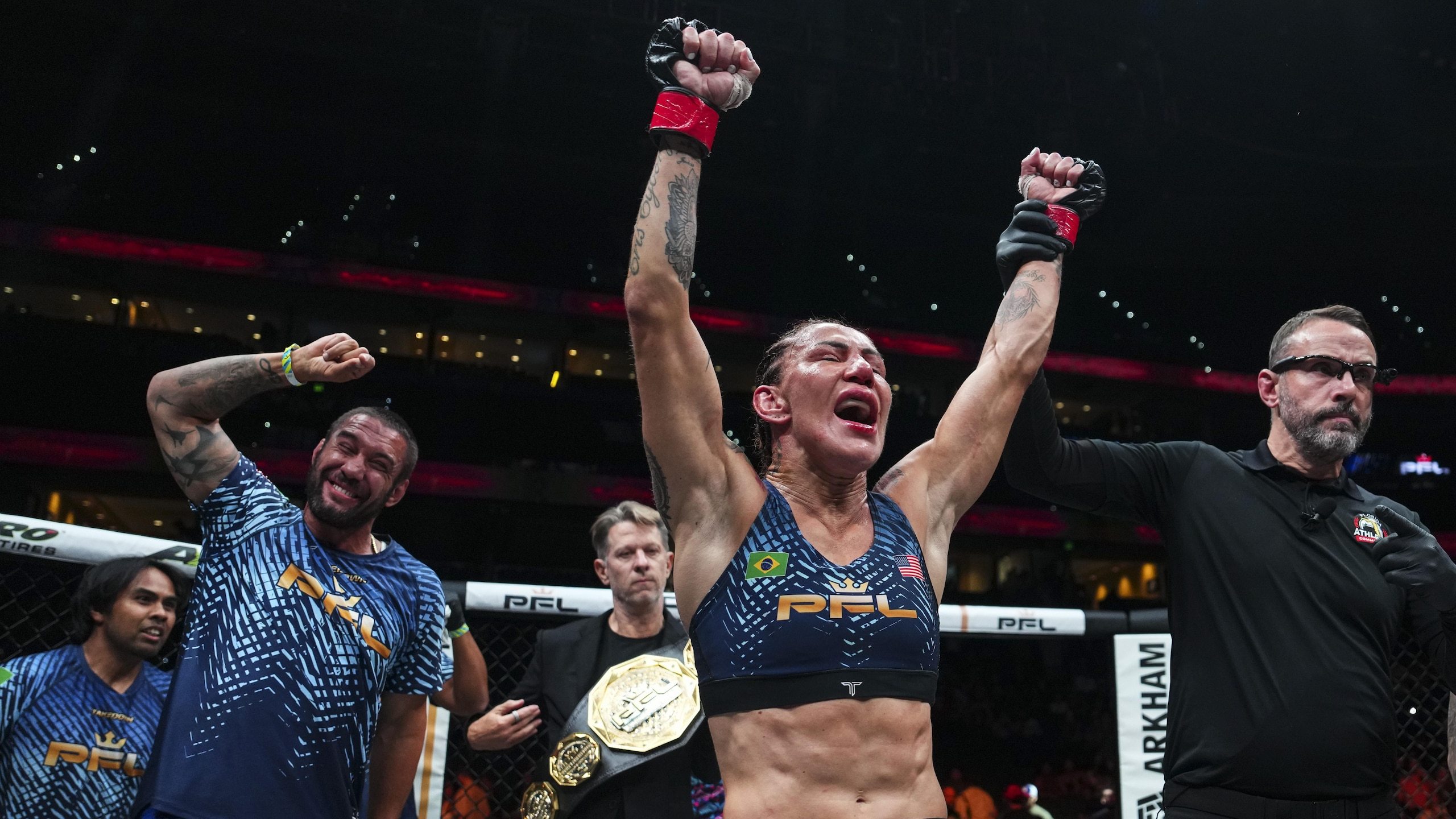
Cyborg Calls Out GWOAT 🗣️
Preseason Week 2 Winners & Losers 📊
.jpg?w=2560 "49ers Chargers Football")
Report: Saints Trade For 49ers RB
I’m in the process of doing a multipart series on the future of the MMA business with a specific focus on the UFC. As part of this, I’ve done a thorough examination of UFC PPV buyrates dating back to the purchase of the company by the current ownership group in 2001. While there have been several shows that far exceeded the usual buyrate level, historically UFC PPV’s have attracted an average buyrate of just over 500,000 purchases. This has confirmed my long held view that despite ebbs and flows in the mainstream coverage of the sport, that there is a core audience of 500,000 MMA fans who’ll pull the trigger to purchase any PPV event the UFC wants to sell them.
There’s been a lot of discussion in the MMA world about a ’slump’ in UFC PPV sales. This line of reasoning suggests that since UFC 100 did a record 1.6 million buys and more recent shows have returned to the 500k range there’s some sort of ‘problem’. While Zuffa no doubt wonders what encouraged 1.1 million more people to buy that show than their ‘average’ PPV in the big picture of the company its no big deal.
The UFC is doing what many successful entertainment and media properties have done in the Internet era. They’ve identified a ‘hardcore’ audience and derive the bulk of their revenue selling to them rather than to expand the product to embrace a more mainstream audience. Some have criticized the UFC for running *more* PPVs with weaker lineups, suggesting they should run fewer shows with ’stacked’ cards. Looking at the numbers, this is a very difficult notion to rationalize. Say the UFC were to cut their number of PPV events in half. Based on their consistent 500k buyrates, they’d have to do a minimum of 1.1 or 1.2 million buys to earn the same amount of revenue. As they’d also lose the smaller but not insignificant live ticket sales from doing fewer events, simply doubling the buyrate won’t cut it. Even assuming a higher buyrate for theoretically stronger cards, there’s little to suggest that they could do a million plus buys for each PPV. If anything, the UFC should look to do *more* PPV events–as many as possible as long as they can keep pulling in that 500k average buyrate.
Ironically, most other professional sports are now trying to become less dependent on the mainstream and re engineer their business model to be more like the UFC’s. Even the biggest pro sports leagues such as the NFL and NASCAR realize that they’re much better off servicing their hardcore fans rather than subjecting themselves to the whims of TV networks and advertisers. That’s why every major sport now has a cable TV ‘network’ and offer packages where you can watch every game for a couple hundred bucks a year. NASCAR, in particular, has done much to generate additional revenue from their most passionate fans. You can now buy packages online and through cable and satellite companies that offer multiple views of a race, camera positions inside cars of specific drivers and channels devoted to back and forth radio chatter between drivers and their crews.
It’s no secret that media is becoming more fragmented and specialized, and this trend will only increase as the Internet and television continue their convergence. Broadcast networks are becoming less powerful, and professional sports leagues are scrambling to prepare for a day when they’re completely irrelevant. The UFC is already way ahead of the curve with their PPV based revenue model. It may have been in place when Zuffa bought the company, but they’ve continued to develop it. At this point, the worst thing they can do is focus too much of their attention on the nebulous ‘mainstream’ when they’re already sitting on a license to print money that is the envy of every other US professional sports organization.
.jpg?w=2560 "Raiders Camp Football")
.png?w=2560 "MLB Playoff Picture Shaping Up")
.png?w=2560 "New-Look Luka Dončić 👀")