
Why Are Referees Not Required To Maintain Fitness?
How often do you watch a college football game and look onto the field and wonder to yourself, what is that fat-ass doing out there?
If Mike Leach looked around the Big 12 conference, he might have made better use of his of his salty sarcasm by complaining about the fat-assed, aged referees populating the officiating corps rather than the fat little girlfriends of his players.
The same can be said in every conference. The officiating crews are peppered with fat, out of shape, aged men who can't get into proper position to make a call and can't get out of the way of a speedy running back or would be tackler. It's unacceptable.
TOP NEWS
Browns TE Making Historic CFB Return
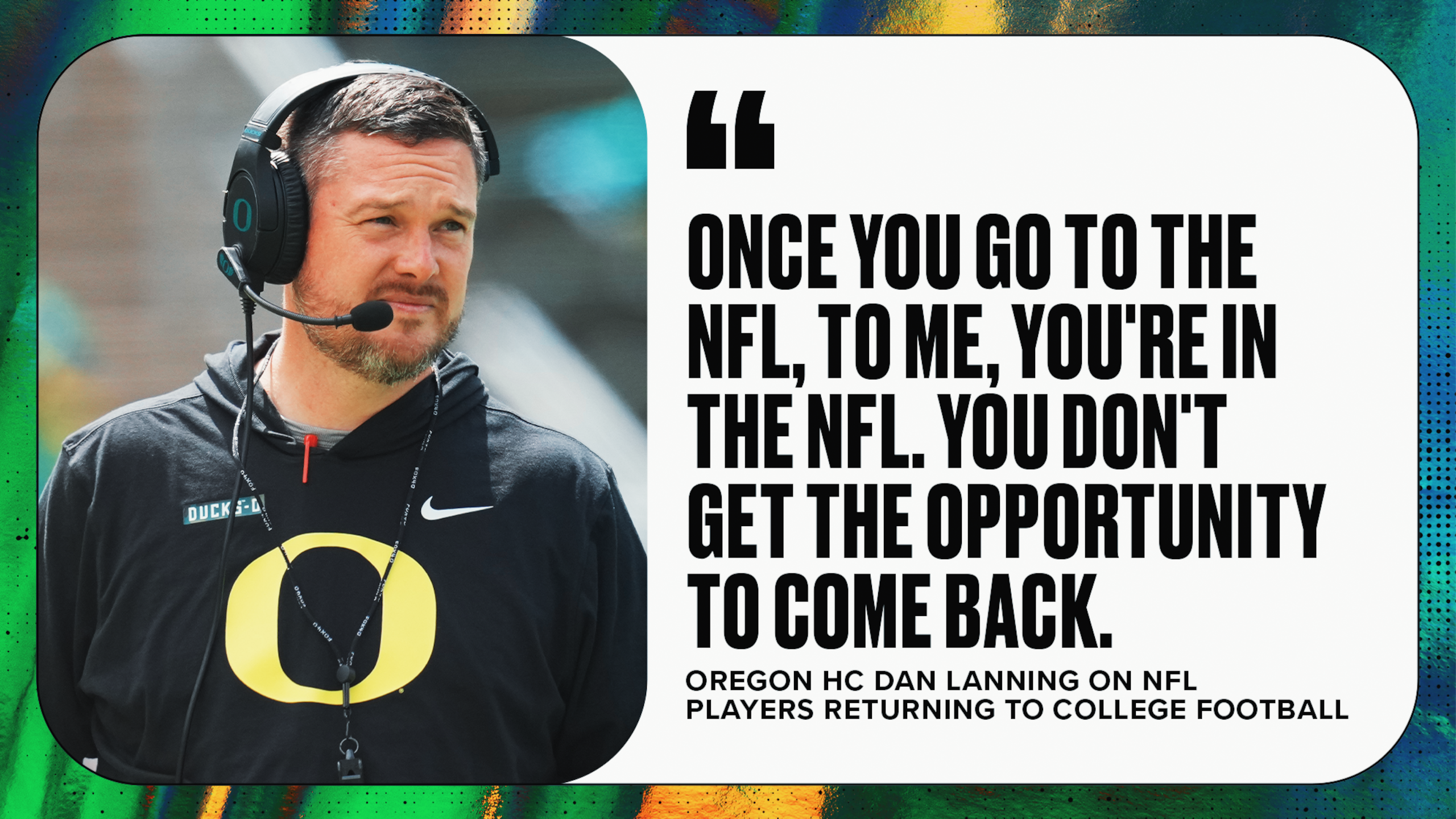
Oregon HC Blasts CFB Returns 😡
Texas LB Dismissed From Team
The officials have more to say on the field than any of the players or coaches who prepare for the games week in and week out. The players are the most highly conditioned, nimble, athletic human beings on the face of the planet (with exception to the Olympic gymnasts).
Yet year in and year out the NCAA fields their officiating crews with some of the most out of condition, over-weight, non-athletic, and slow footed lard-asses they can find. In fact, it seems that there is a prerequisite to have at least one on each crew.
The exception to the lard-ass is the 75 year old, well-conditioned but demented official. How can they expect an octogenarian with advanced demyelination to make decisions on a game that is so fast-paced? Even in the best of circumstances, it often requires replays to make the correct call.
Yet the NCAA will place the potential outcome of a game in the hands of an official with an ataxic gait, slow speed intra-cranial processor, and the eyesight of a sloth.
It's time the NCAA sets some standards that have as much to do with athletic prowess than what the referee can do on a standardized test. The games should be reviewed by a head official every week who makes decisions regarding each official's performance.
Criteria should include how well the official places himself in the proper position to make a call, if in the correct position whether the decision was a correct call, whether it required a replay to settle the issue, and whether the replay officials used every angle available to settle a dispute.
Did the official affect the outcome of a play by incorrect positioning? Was the official doing his best to get out of the way of a developing play, and how well does the official perform under duress?
I know it's a tough job, but there are many well-trained men and women waiting in the lower tier systems who are ready to move up. Many of the long term NCAA officials are like Supreme Court Justices. They won't step down until they have one foot in the grave.
Unfortunately, the good job done by many in the position of referee gets overlooked by the buffoons, lard-asses and aged that maintain a position in the ranks.
Improving the quality of the officiating would make a statement to the general public and fan bases across the nation that the NCAA cares about the integrity of the game. The NCAA benefits greatly from the on field play of these remarkable athletes. Show them the same respect by fielding a worthy officiating crew for every game.
.jpg?w=2560 "Jeanty Avoids Major Injury")
.jpg?w=2560 "Report: Saints Trade For 49ers RB")
.png?w=2560 "MLB Playoff Picture Shaping Up")
.jpg?w=2560 "Bucs Rookie's 'Bane' Face Mask 😈")