From Boxing To MMA: Race and Racism In American Sport
Politics cut across all social institutions, even those which we too frequently feel are immune from political underpinnings, such as athletics. Obviously, this will be all the more transparent when this summer’s Olympic Games commence in Beijing, China.
Among the innumerable variables that have played into American sporting politics, race has always been a major factor, and boxing exemplifies this racialized history as well as any other sport.
At the turn of the twentieth century, Jack Johnson won boxing's heavyweight crown, making him the first African American to do so. With his athletic success, Johnson found himself the most hated man in America.
TOP NEWS
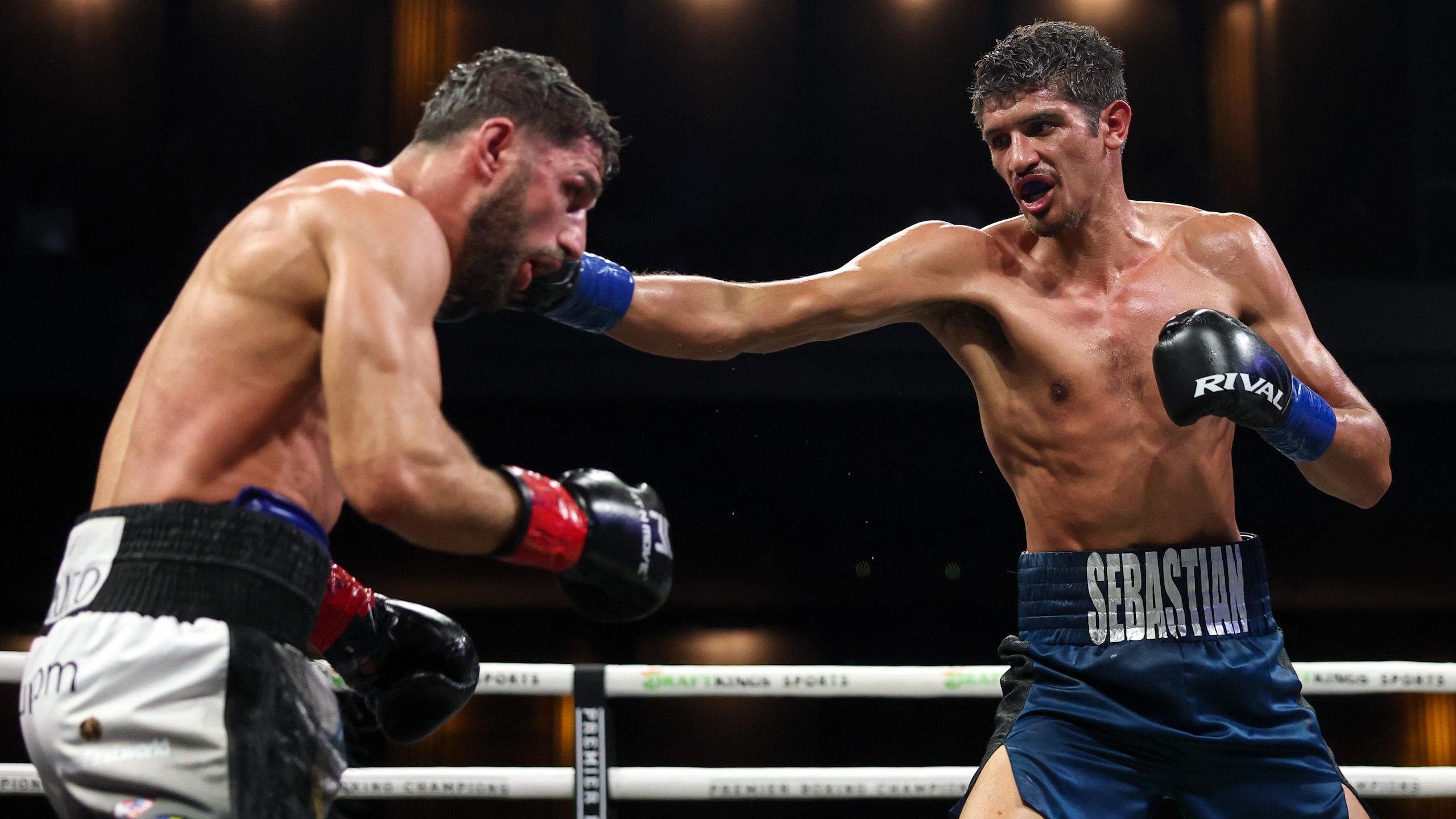
Watch: Buzzer-Beating Boxing KO 😲
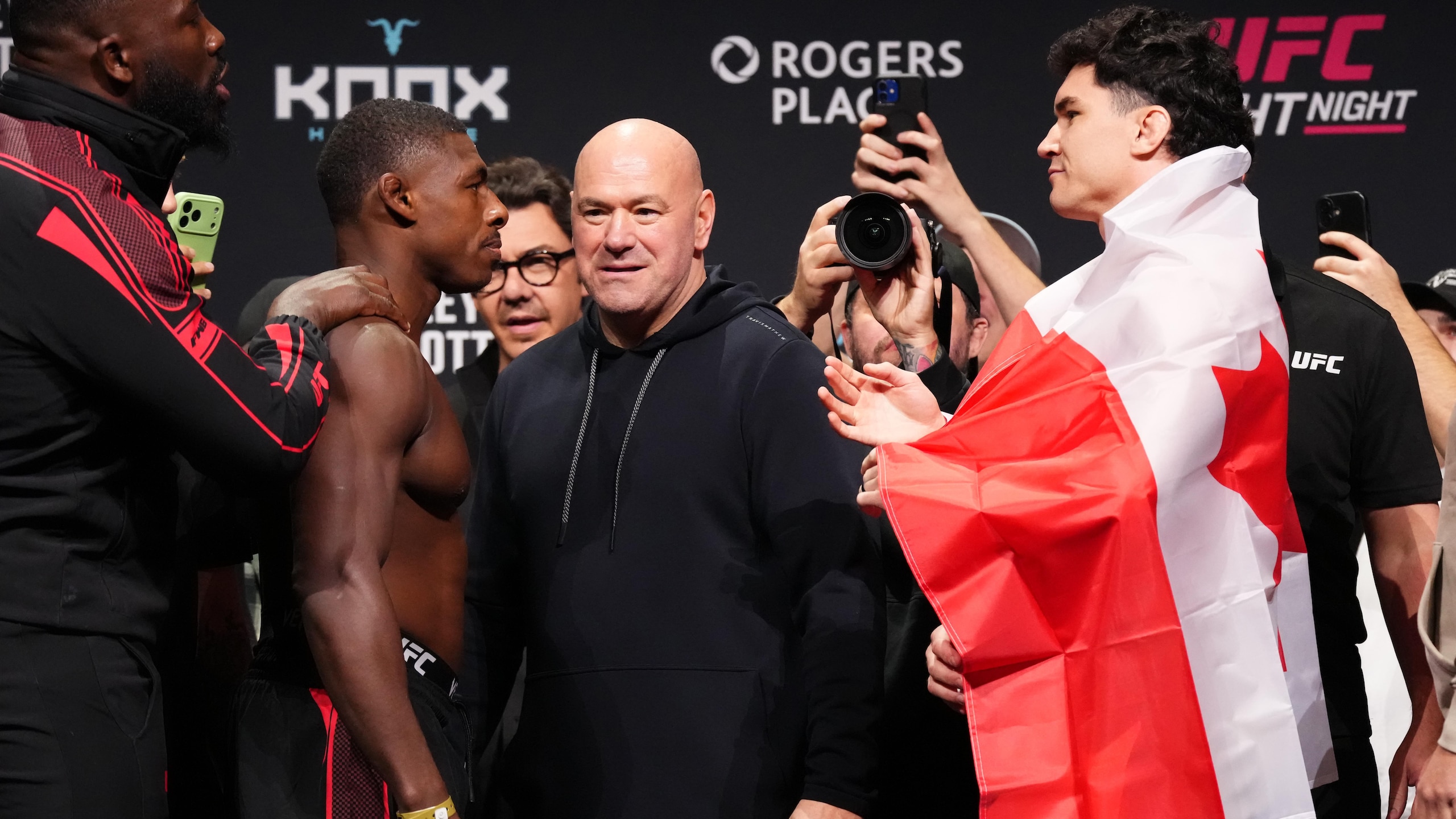
Malott KOs Buckley at UFC Edmonton

Fundora-Hadribeaj Main Card Results 🥊
Flaunting an affinity for white women, Johnson was characterized by white America as an example of African Americans’ so-called danger in society as a whole to white women’s “purity.” Thus, boxing promoters at that time worked desperately to find “the great white hope” who could dethrone Johnson and symbolically prove African Americans’ alleged racial inferiority.
They were unsuccessful. Instead, Johnson was arrested in 1913 and charged with offenses falling under the White Slave Traffic Act of 1910, known more commonly as the Mann Act.
According to Sammons (1990), “the law was so worded that any man who crossed a state line with a woman other than his wife and had sex with her could be prosecuted” (p. 43). Not surprisingly, white men committing the same offense were never charged with this crime.
Skip up to the 1960s and the era of Muhammad Ali. Like Johnson, Ali was initially despised by conservative white America. Ali, however, was hated more for his open disdain for American prejudice and his association with the Nation of Islam.
Hence, the strategy used to bring down Ali was to identify a more politically compliant African American heavyweight boxer who would defeat Ali and symbolize what conservative Americans wanted from the general African American populace during the Civil Rights Movement.
After the U.S. government stole what would likely have been Ali’s best sporting years, Joe Frazier (who was hardly patriotic) and George Foreman were utilized, ultimately unsuccessfully, in this manner.
By the time the 1980s rolled around, boxing began to expand in racial dynamics, seen first through the emergence of Mexican and Chicano boxers. From Roberto Duran to Oscar De La Hoya, boxing saw a huge surge in the number of prominent boxers whose familial ties were rooted in Mexico.
And in the years following, boxing’s international composition grew to the point where today, the average American sports fan barely recognizes names of those who hail as champions in the “sweet science.”
Moving from heavyweight (the Ukranian, Wladimir Klitschko) to junior lightweight (the Filipino, Manny Pacquiao), boxing’s various organizations are comprised of many athletes who do not resonate strongly with large pockets in American society.
It is in this internationally-based era that mixed martial arts (MMA) has entered the mainstream combat sport world. If one looks through the ranks of the Ultimate Fighting Championship (UFC), currently the largest and most successful MMA organization, one can clearly see the racial and international diversity that characterizes MMA:
* 155 lb. Champion: “The Prodigy” B.J. Penn (Native Hawaiian)
* 170 lb. Champion: Georges “Rush” St. Pierre (French Canadian)
* 185 lb. Champion: Anderson “Spider” Silva (Brazilian, of African descent)
* 205 lb. Champion: Quinton “Rampage” Jackson (African American)
* Hwt Champion: Antonio Rodrigo “Minotauro” Nogueira (Brazilian)
When we account for the athletes’ composition and the organization’s relatively small size, the UFC could very well be the most racially and internationally diverse sporting organization in the world. Of course, the UFC is not the only MMA organization.
On Saturday May 31, 2008, we witnessed an over-hyped but widely viewed match between Kevin “Kimbo Slice” Ferguson and James “The Colossus” Thompson. Slice, an African American from Miami, toppled the British Thompson in controversial fashion.
For the purposes of this discussion, however, it is critical to examine how through Slice, the MMA organization, EliteXC, is nurturing horrendous racial stereotypes in order to drive ratings. Touted for his underground street fights posted on the video sharing network, YouTube.com, EliteXC has literally referred to Slice as an “internet sensation.”
Furthermore, EliteXC President, Gary Shaw, even made the claim that Slice was "...the closest I've come to Mike Tyson" (Arritt, 2008). Unfortunately, Tyson’s history in and out of sport cannot be separated. Together, Tyson’s feared athleticism and criminal behaviors have perpetuated deleterious images of African American men that rest in Darwinian (i.e., supposed innate) racial stereotypes.
The Darwinian drama has been kept alive by black athleticism in general and by black prizefighters in particular. What the public career of Mike Tyson has cost black Americans is incalculable in the literal sense of the term, but it is reasonable to assume that his well-publicized brutalities in and out of the ring have helped to preserve pseudo-evolutionary fantasies about black ferocity that are still of commercial value to fight promoters and their business partners in the media. (Hoberman, 1997, p. 209).
The obvious tie between Slice’s street fighting past and his current endeavor in MMA further cements unfair notions of African American men – that those who are big and athletically gifted (a stereotype in itself) are also a menace to society (see also Granderson, 2008).
Even more noteworthy about Slice’s introduction to mainstream America was that his competition against Thompson was marketed by EliteXC and CBS and shown as the main event on MMA’s first live broadcast on network television to over six million viewers.
While the more savvy MMA aficionado knows how intelligent and insightful Slice is (he went to college on an academic scholarship), the inexperienced MMA viewer was introduced to Slice and MMA predominantly via Slice's violent masculinity and physicality.
True, other men and women competed on this fight card who are of various ethnic backgrounds, but it was Slice who competed as the main attraction.
African American intellectuals have long held mixed feelings about their ethnic group’s perceived success in certain sports. Elijah Muhammad, for example, felt that sport “harmed the black community ... that white America had intentionally encouraged blacks to participate in games in order to divert their attention from the real source of their problems and keep them from advancing...” (Wiggins, 1997, p. 166).
And as hinted at above, the over-representation of African Americans in some sports carries on the belief that African Americans can make it athletically but not intellectually.
The danger with Slice is that his marketing revolves almost exclusively around a violent identity and directly ties his past and present together as one continuous and inseparable violent trajectory. Therefore, dismissing Slice’s intellectual capabilities and continually mentioning his violent street fights still watched on YouTube does the African American community a horrible disservice.
In fact, many in the MMA community feel that when traditional values of martial arts are infused in MMA, the sport can have positive effects on society that discourage street violence (Mayeda, Onzuka, & Onzuka, 2008).
Clearly, however, Slice is not being promoted in this manner. Instead, promoters are simply using Slice to increase viewership—largely by relying on violent, racist impressions of African American men that still resonate with far too many Americans.
It is absolutely crucial that MMA organizations and media partners think more clearly about the ways they are selling their sport. If in fact they are arguing that MMA should be respected as a sport and not correlated with ugly street violence, then they must stop making such associations.
In fact, they need to tangibly illustrate the opposite—the numerous ways in which MMA is starkly different from street violence. Moreover, MMA promoters and organizations need to think more critically about the ways such violent associations further racism and other forms of discrimination.
Yes, violence sells and racism sells. That's precisely the problem, so stop perpetuating the problem simply to rake in more money.
David Mayeda, PhD, is lead author of the book, Fighting for Acceptance: Mixed Martial Artists and Violence in American Society, the first politically- and research-based book on MMA, based on interviews with 40 mixed martial artists, including Randy Couture, Quinton Jackson, Dan Henderson, Guy Mezger, Antonio McKee, Jason Miller, Frank Trigg, and Chris Leben.
Non-internet References:
Hoberman, J. (1997). Darwin's Athletes: How Sport Has Damaged Black America and Preserved the Myth of Race. New York: Houghton Mifflin Company.
Sammons, J.T. (1990). Beyond the Ring: The Role of Boxing in American Society. Chicago: University of Illinois Press.
Wiggins, D.K. (1997). Glory Bound: Black Athletes in a White America. Syracuse, New York: Syracuse University Press.

.png?w=2560 "CFB Top 25")

.jpg?w=2560 "AEW WrestleDream Live Grades 🔠")
.jpg?w=2560 "Myles Garrett Got Warning 👀")
.jpg?w=2560 "Ex-NFLer BLASTS Fitzpatrick🤬")