Last Chance High
In a matter of months, Christian Darrisaw will be a part of the Virginia Tech football program and free to wake up when he pleases. But for now, every morning begins like this.
At 6 a.m., the familiar military bugle call reveille jars him awake, starting a day at Fork Union Military Academy that’s scheduled down to the second. He eases his 6'4", 290-pound body out of his twin bed before putting on his Class C summer uniform: black polo, black hat, black boots and green military fatigue pants. He meticulously makes his bed, ensuring there are no wrinkles and the Fork Union logo is centered on his blanket. Then he sweeps his section of the tile floor.
TOP NEWS
NFL Season Shaping Up To Be Unpredictable 🗣️
.jpg?w=2560 "Texans Titans Football")
Cam Ward Says He's Not A Loser
.jpg?w=2560)
Texans Trade for MHJ
At 7:45 a.m., in Fraley’s Circle at the center of Fork Union’s campus, his postgraduate teammate Sterling Palmer stands at attention. A black briefcase containing Palmer’s computer and textbooks rests at his feet. As the national anthem plays, he and the rest of the cadets salute the American flag flying at half-staff days after the Las Vegas shooting. A cannon fires when the anthem ends, a Friday ritual, creating a boom so loud it seems to shake the concrete on which they stand.
At 6'7" and 230 pounds, Palmer towers over the rest of Delta Company—55 young men who have come to Fork Union in a small window between high school and college in hopes of becoming the next Plaxico Burress or Vinny Testaverde or Eddie George or Cardale Jones or any one of the many NFL players who once stood here.
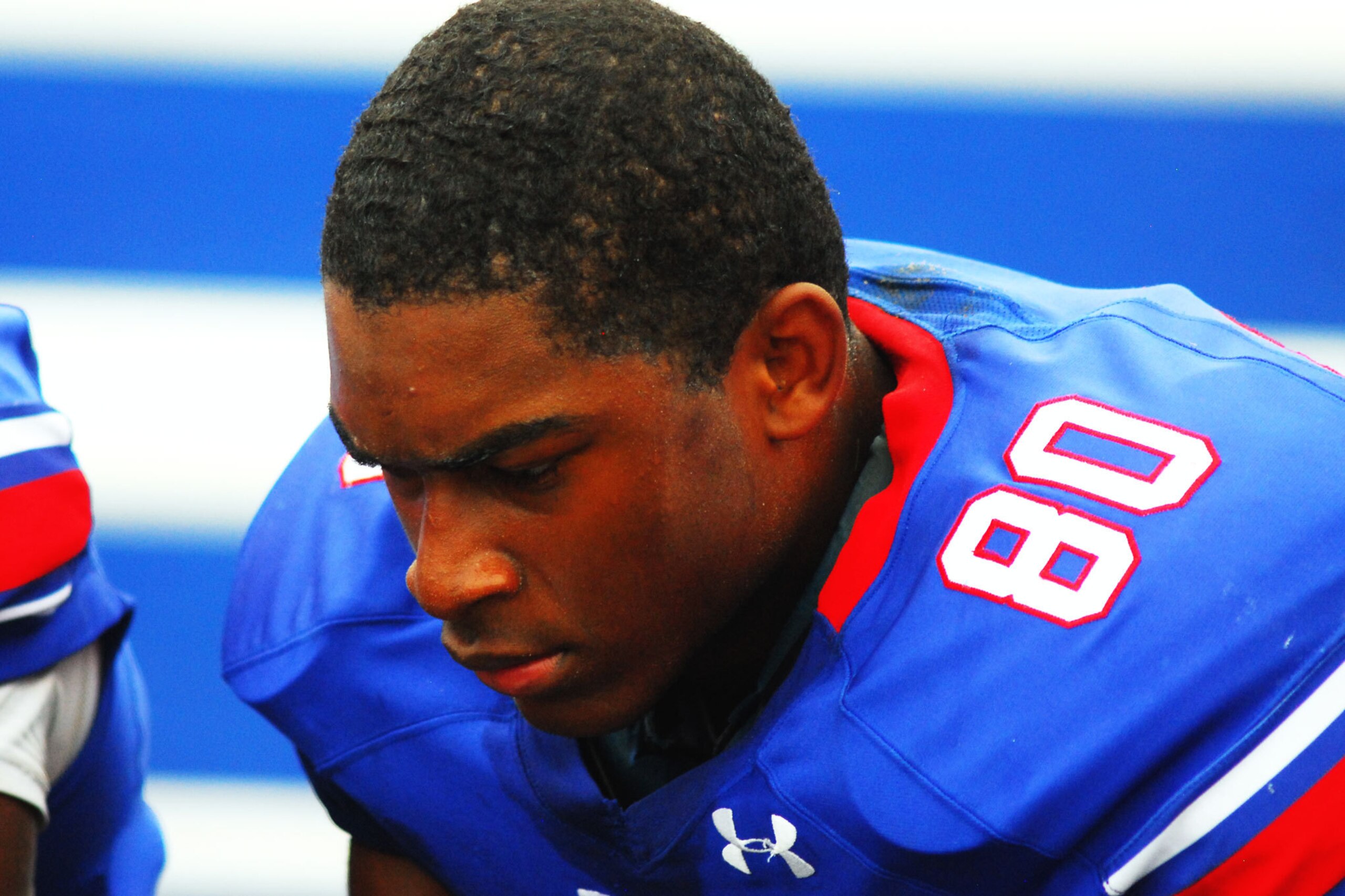
But first, Palmer is in search of a scholarship offer from a Division I football program. For the wide receiver transitioning to tight end, this could well be his last chance.
At 8:05 a.m., teammate D’Andre Thomas sits in a writing class. He listens to the announcements over the intercom. A voice ends them with, “Thank you and carry on.”
He sits down in a maroon chair and begins to study. In 24 hours, Thomas, who was ruled academically ineligible his senior year in high school, will take the SAT for the fourth time.
For the 6’2”, 208-pound quarterback with a strong right arm who’s perhaps the most gifted football player at Fork Union, these next few days could mean everything.
Located an hour west of Richmond, the sleepy town of Fork Union, Virginia, houses a Dollar General, post office, two restaurants and spotty cellphone reception. It is also home to a football-rich pipeline that over the past four decades has produced Heisman winners, Hall of Famers and a No. 1 overall NFL draft pick.
Al Testaverde took a right turn out of Fork Union’s front gates and pulled off the road. After visiting with his son, Vinny, one of the nation’s most gifted prep quarterbacks, he knew this was where his son had to be.
He turned around and looked directly at him. “Son, you’re going there,” he said.
Vinny needed something. His grades were holding him back from playing major college football, and he struggled with discipline. But he hated the idea of this level of structure.

“It was the single best decision my father has ever made for me,” Testaverde says now. “It wasn’t just the education from a schooling standpoint, but the education of how to prepare for life.”
In his time at Fork Union, Testaverde improved academically and eventually accepted a scholarship offer from the University of Miami. In 1986, he won the Heisman. And in 1987, just a few years removed from the back seat of his father’s car, he was the No. 1 pick in the NFL draft.
It’s 10:30 a.m. on Friday, and a large black trash bag sits inside John Shuman’s otherwise artifact-free office. His filing cabinets and desk are a faded steel gray. Both have imperfections and rust along their outer surfaces, the result of years of overuse. Loose papers and notebooks are scattered throughout.
For 30 years, Shuman has coached the postgraduate football team and taught math at Fork Union. He attended the school in 1975, arrived as an assistant coach in 1980—the same year as Testaverde—and was named the head coach in 1987.
“It’s the only job I’ve ever had,” Shuman says from his desk chair, days removed from his 60th birthday.
The trash bag at his feet is filled with the belongings of a player who left Fork Union days prior, citing asthma and an iron deficiency, according to the head coach. He plans to mail the contents of his locker to him the following week.
Departures are by no means unusual. Some leave with injury. Others leave because they’re homesick. Many more simply cannot tolerate the structure, intensity and all-male student body of this military boarding school.
Although Fork Union has middle and high school programs on campus, Shuman is the architect of the school’s final stop: its postgraduate season that stretches from August to December.
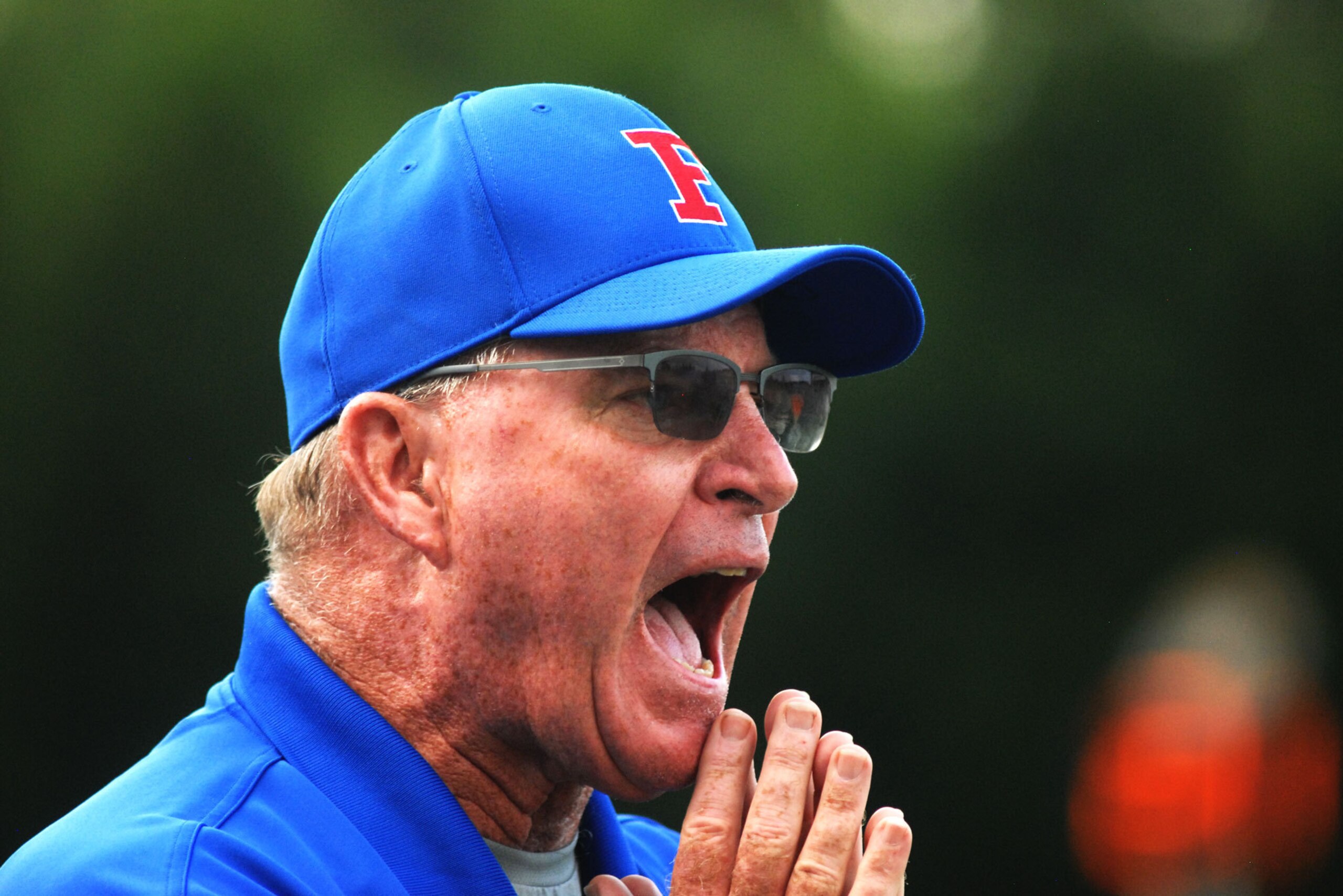
In that time, he is both teacher and football coach. Some players need help in the classroom and on college entrance exams. Some need structure. Some need further development on the football field. Shuman provides it all.
“If you come in and do what we ask, something great is going to happen,” Shuman says. “If you’re off the tracks, you can still get back on. We do not make excuses for our grind. We want it hard. We want college easy.”
The rules at Fork Union are as follows: no cellphones, no social media, no facial hair and no cursing. All computer and internet usage is monitored. Beds must be made. Clothes must be folded and hung neatly. Room inspections take place daily.
Violations are punishable through demerits and tours—aka marching. More serious offenses can result in expulsion.
Inside Shuman’s filing cabinets are confiscated cellphones in plastic bags. He also keeps an electric razor handy.
“If you can’t shave yourself,” he says, “we will for you.”
Eddie George still thinks about Fork Union. He remembers the long, impossible days that came at first. He dreams about the better ones that came later—when he and his teammates used to sing and dance to Tom Petty in the barracks.
Unlike most, George arrived at Fork Union as a junior in high school—a decision his parents made after watching him struggle at Abington Senior High School in Pennsylvania, both in the classroom and with discipline.
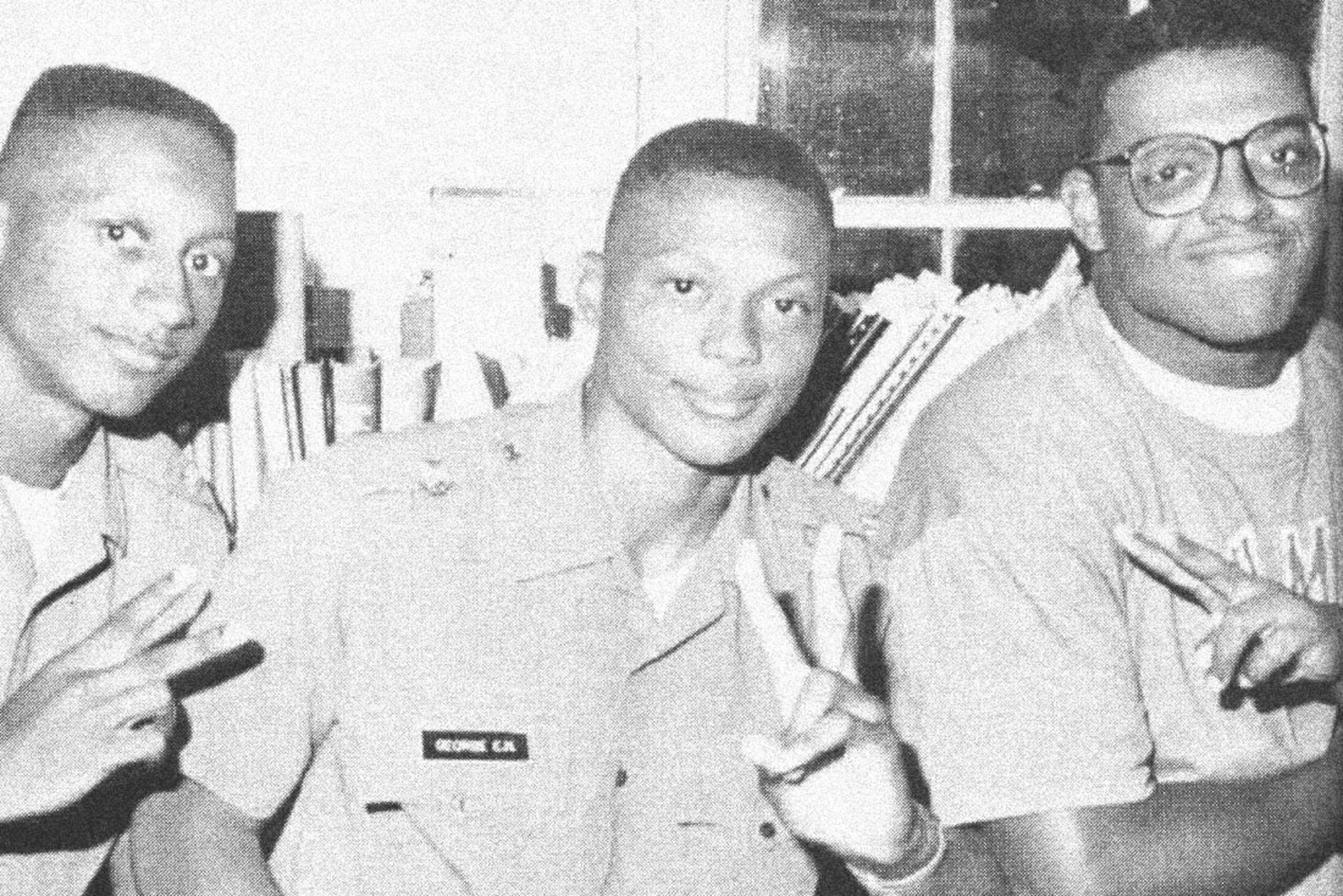
“This was the cornerstone for where I am today,” George says. “There’s no doubt about it. This was a life-changing moment that evolves as I get older. That’s how much Fork Union means to me.”
After his senior year, the 6’3”, 218-pound running back held only a partial scholarship offer from Edinboro University—a Division II program in Pennsylvania. Hoping to resurrect his recruitment, George stayed at Fork Union as a postgraduate in 1991.
A strong but abbreviated season was enough to generate interest from Ohio State, where he committed. In 1995, he won the Heisman. In 1996, after being selected by the Houston Oilers in the first round of the NFL draft, he was the NFL Offensive Rookie of the Year.
It’s 1:45 p.m. on Friday, two days before Fork Union will take on Georgia Prep at home. The team is hard at work on this week’s game plan on the practice field, a patchy area of green grass that backs up into the baseball diamond. Although this is a far cry from major college football, this is the players’ sanctuary.
Shuman and his four assistants, the complete postgraduate staff, do not scream. “Being out here really is our vacation compared to everything we do,” Shuman says from the sideline, wearing a gray Fork Union T-shirt and a bucket hat.
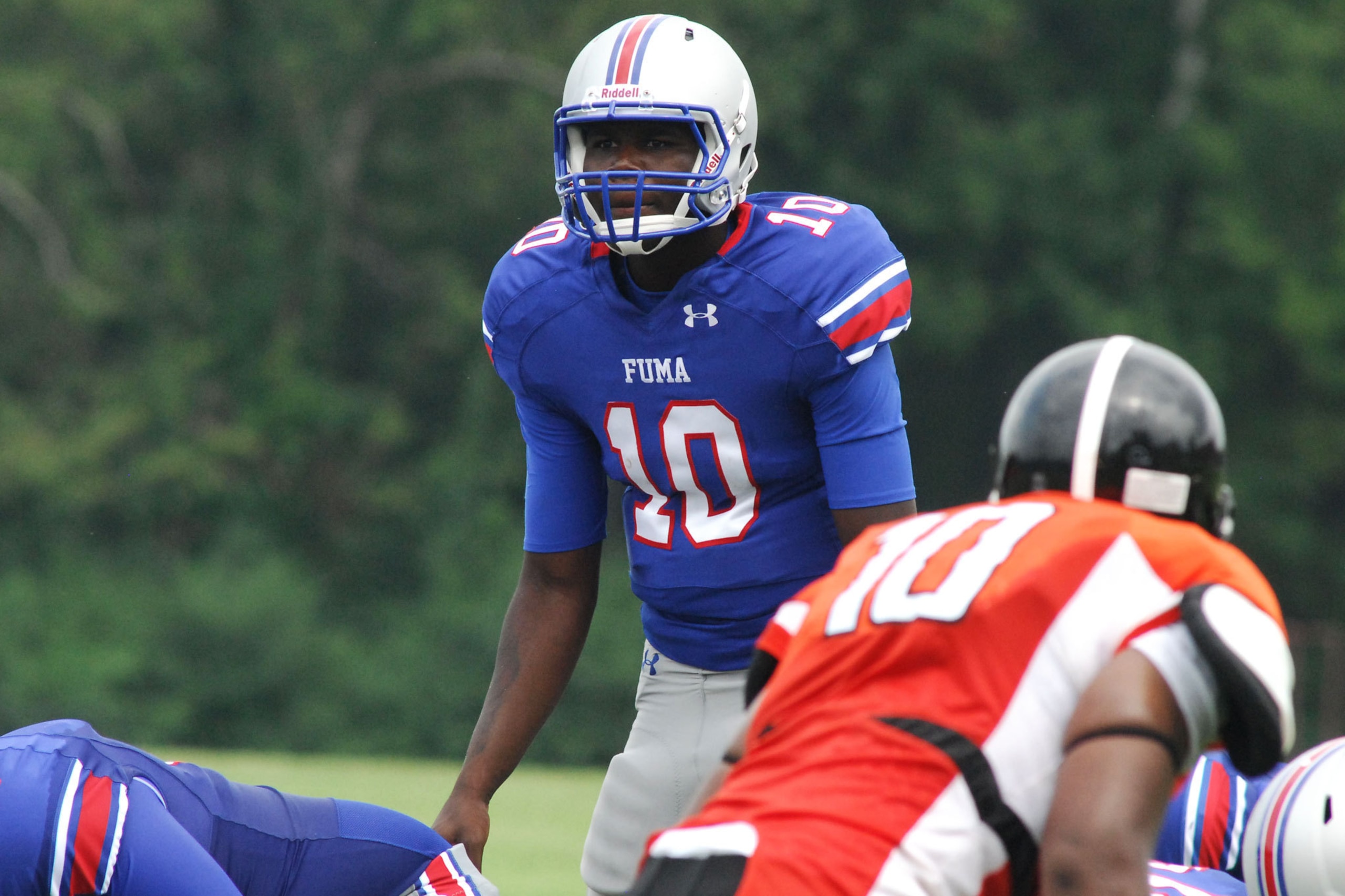
He studies his players, in particular his starting quarterback. He watches as Thomas easily throws the ball 60 yards. His motion is crisp and refined.
Thomas wears a protective cover on his non-throwing hand, the result of a dislocated thumb from earlier in the year.
“That’s our next pro,” Shuman says after another long completion. “We just have to get him eligible.”
Just a few years ago Thomas, who grew up in Washington, D.C., and played at Briar Woods High School in Ashburn, Virginia, was talking to coaches at Clemson and Virginia and elsewhere who recognized his talent. But that was before he sat out his senior year due to subpar grades. After that, his recruitment all but stopped.
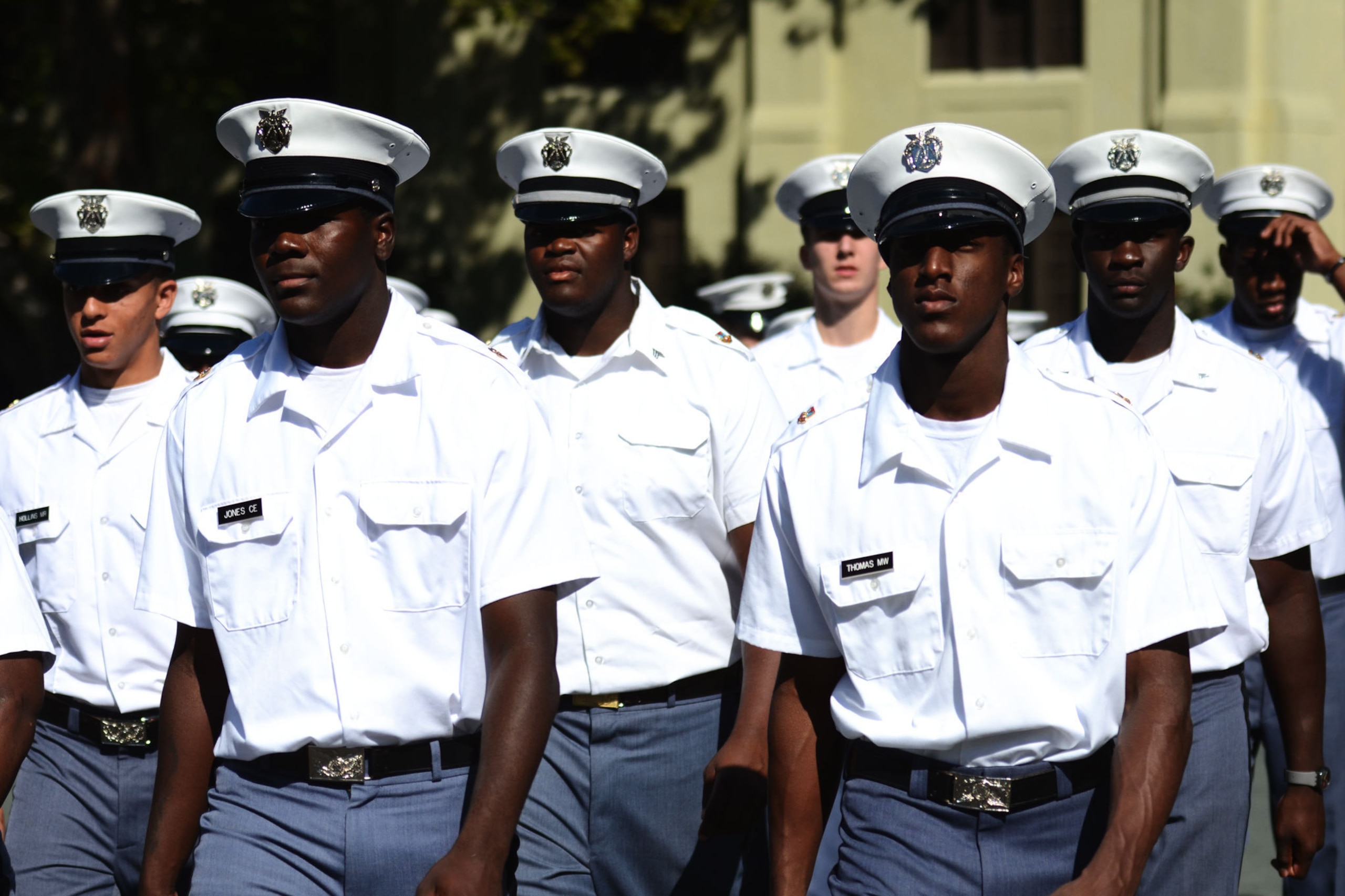
“I can say that this place probably saved my life,” Thomas says. “If I wasn’t here, I would still be out there in a bad environment. I just want to go to college, get out of D.C. and do something for my family that’s positive.”
Many of his throws land in the enormous hands of Palmer, one of his favorite targets. Palmer has added roughly 15 pounds since he arrived as he attempts to make the transition to tight end—a product of Fork Union’s having a strength coach on site for the first time. There is no one on the field capable of guarding the 6’7” pass-catcher when the ball is thrown high enough.
Adapting to Fork Union wasn’t as taxing for Palmer as it was for so many others. He attended Benedictine College Preparatory in Richmond, an all-boys military school. He had the grades and test scores to qualify for college, although the majority of the recruiting interest in him came from Division II schools. Despite Palmer’s 4.6-second 40-yard dash at a college camp, the offers never rolled in.
To draw interest from programs such as Virginia Tech and Florida State, his dream school, he came here. “Seeing the people who came before me showed me the sky is the limit,” Palmer says.
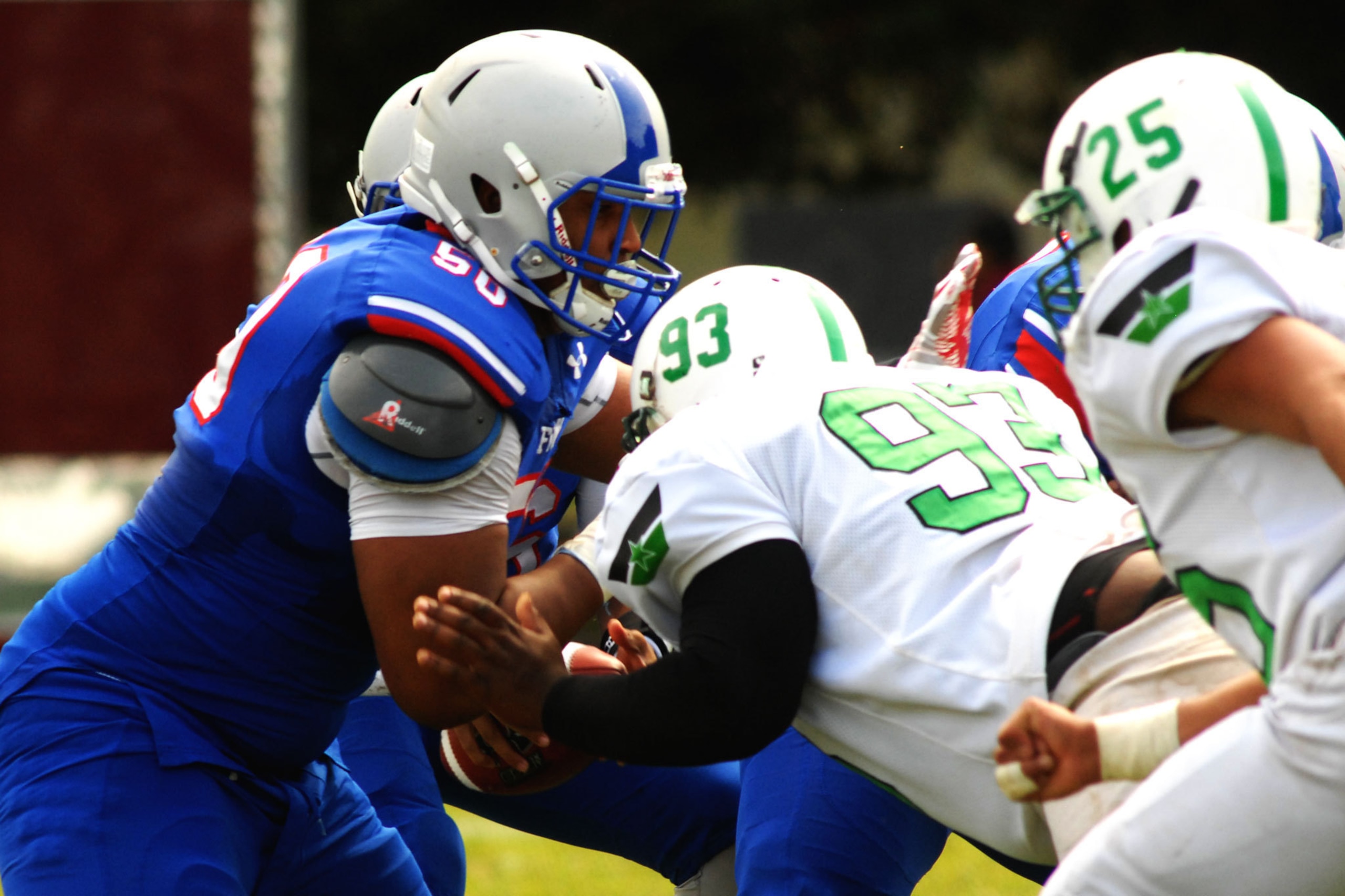
Darrisaw, an offensive lineman, is the unicorn of this class. Even at 290 pounds, his movements are smooth and natural. He is the only player who committed to a Division I school before arriving.
He played at Riverdale Baptist in Upper Marlboro, Maryland, and signed with Virginia Tech in February. He had the SAT score necessary to join but still needed improved grades to qualify—something that is by no means uncommon here.
While his teammates are all hoping to get noticed by someone, Darrisaw’s football fate has been decided. In January, assuming he gets the grades he needs, he will officially enroll.
“Some days I didn’t want to get out of bed at first, but I got through that,” Darrisaw says. “After about a week-and-a-half, everything else was smooth. I see what others have done here and it motivates me to get where they are."
“I’m glad I came here.”
Cardale Jones had told friends that he would be attending a prep school in Virginia. But he knew something was amiss his first few hours at Fork Union when he didn’t see a single female student. At first, he also assumed the uniforms everyone seemed to be wearing were tied to an athletic team. By the end of his first day, however, the reality set in. He was at a military school.
“I’m not going to tell you I snuck a cellphone in there,” Jones says. “But if a cellphone was floating around our barracks, you still couldn’t get damn service on that thing.”
Jones was one of many eventual Ohio State players to find his way to Fork Union. It was not an easy four months for Jones, who missed his family and struggled with the structure.
“The format of school and the lifestyle were completely different,” he says. “It opened my eyes and gave me a new perspective.”
In 2014, Jones led Ohio State to a national championship after spending most of the year as the team’s third-string quarterback. In 2016, despite only starting 11 games at the collegiate level, he was selected in the fourth round of the NFL draft.
At 8:30 a.m. on Saturday, the next day’s game hangs in sudden limbo. Although Shuman agreed to pay for Georgia Prep’s nine-hour bus ride to Fork Union, the payment for the transportation won’t process on his university credit card. He has hit his max.
A little more than 24 hours before kickoff, Shuman’s credit limit is increased. The game will go on as planned.
Shuman’s next concern is beyond his control. As he sits inside his office a few hours before the team’s walkthrough, nearly two dozen of his players take the SAT.
The wait is excruciating, as always. For many, this day will be far more important than what they do on the field the following day. While October is “highlight season,” according to Shuman, the time on the calendar when players can put together their best tape to send to coaches and schools, it’s also a critical point for those in need of a classroom boost.
“If we can hurry up and clean up some academics, we could have a really, really good year,” says Shuman, who measures his success by his ability to place his players in college programs.
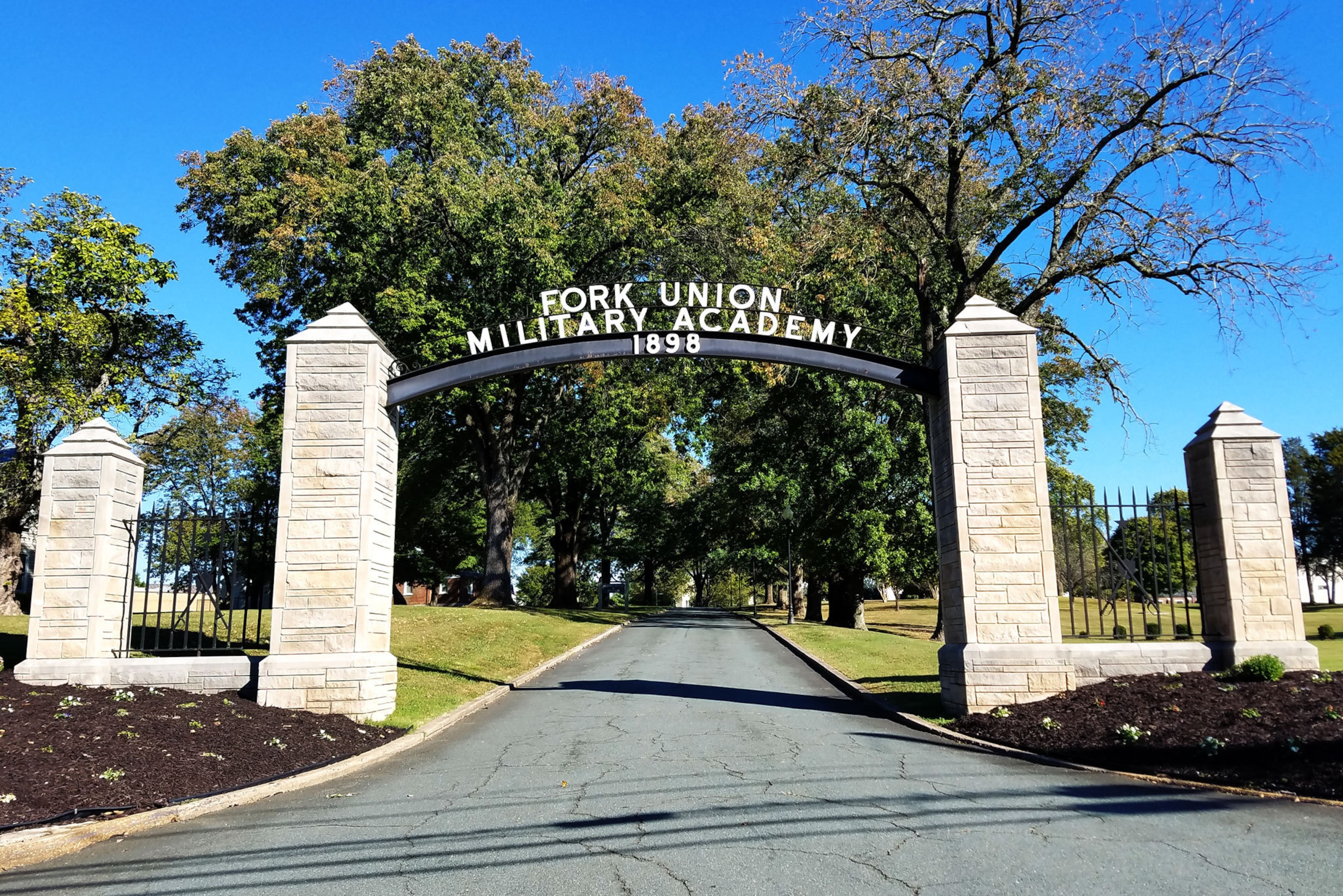
Shuman has put much of the daily burden of Fork Union on himself. When a player fails to pay the $19,700 in fees and tuition, a cost Shuman says is often at least partially defrayed by scholarships, he is often the one who has to make a call to find out why.
When a player misses class or sneaks a cellphone into the barracks or curses, it’s up to Shuman to determine an appropriate punishment.
“When I look at my phone to see what disciplinary issues came in overnight or wait for my guys to come to the classroom, I’m nervous,” he says. “Every single day. I get up expecting nine problems. If there are only two, it’s a great day.”
It was the lack of bathroom stalls that hit Anthony Castonzo the hardest—those first few weeks he sat on unenclosed toilets, side by side with Fork Union teammates he had only just met.
Castonzo’s decision to leave the Chicago suburbs for rural Virginia had nothing to do with academics. His concern following his senior season in high school wasn’t his grades, but a complete lack of interest from college coaches.
At 6'7" and only 215 pounds, the offensive lineman held zero scholarship offers out of high school. But at a football camp in North Carolina, Castonzo met the head coach of Fork Union. Shuman promised Castonzo he would be a Division I football player if he enrolled.
“I would never be where I am right now if he was not in my life,” Castonzo says of Shuman. “He’s had such an influence on me. You’re going to be there and it’s going to be a grind nonstop, but the sacrifice will pay off later.”
In 2007, having left Fork Union at around 250 pounds, Castonzo was the first true freshman to start at Boston College in a decade. In 2011, he was drafted by the Indianapolis Colts and celebrated the moment at home with Shuman by his side.
It’s 2:30 p.m. on Sunday, and roughly 100 people are present to see Fork Union’s first touchdown against Georgia Prep—a short pass from Thomas to Palmer that helps give the home team a 7-0 lead.
On this gray, humid afternoon, with NFL games underway, the stands at Fork Union are about a quarter full.
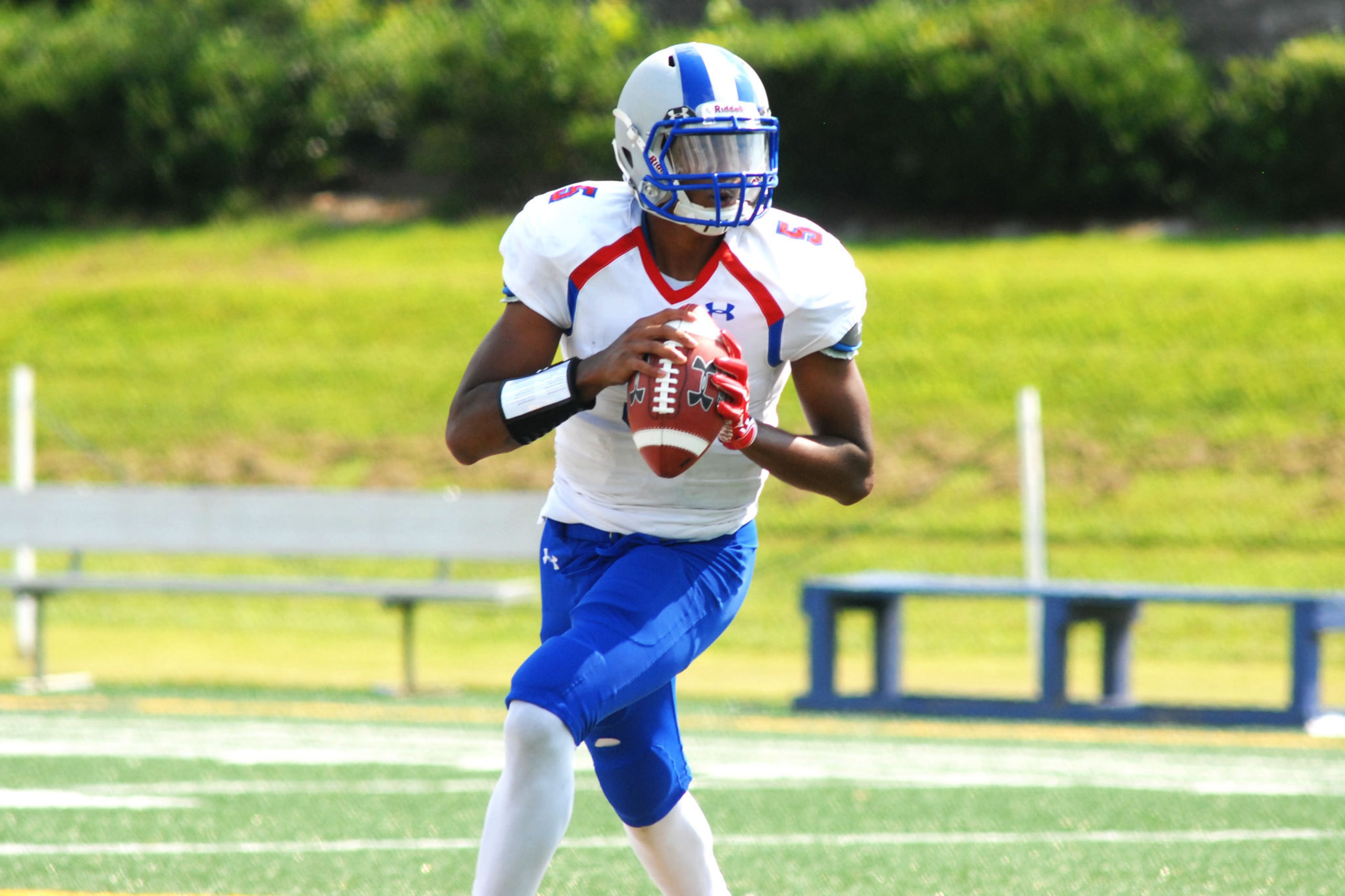
Thomas, who has “Mama’s Boy” written in marker on his undershirt that dangles below his blue uniform, follows up his first-quarter score with touchdowns in the three subsequent quarters—showing glimpses of what he could become.
Behind his arm and legs, Fork Union cruises past Georgia Prep 35-18, improving its record to 6-0.
Minutes after the win, the team surrounds Shuman near the far end zone. With only three games remaining—three opportunities to show colleges they are worth a scholarship—time is running short.
“Thank you,” Shuman says to his team as it gathers around him. “I didn’t want to pay for their bus and lose this game.”
The hardest part wasn’t necessarily the structure or not having a cellphone. It was the fact that Morgan Moses, then 6’5" and 325 pounds, was taking orders from a 14-year-old—back when the school allowed ninth- and 10th-graders to be squad leaders over postgraduates.
The hardest part wasn’t missing out on playing in the ACC and being a part of major college football. It was stepping off the team bus after a long ride to a Fork Union game and being handed a $5 bill and a $2 bill to assemble a lunch that had to feed an offensive lineman.

Talent was never the question for Moses, who didn’t have to travel far from Richmond, his hometown, to attend Fork Union in 2009. His grades forced him to take a different avenue before he joined Virginia the following year.
“It changed my life. The discipline and the structure, things people take for granted, helped me succeed while I was there and after. Fork Union provides something most people don’t have, and that is discipline.”
Washington selected Moses in the third round of the 2014 NFL draft. Earlier this year, he signed a five-year contract extension with the team, making him one of the highest-paid right tackles in the NFL.
At 5:15 p.m., Darrisaw waits in line for dinner in Dorothy Thomasson Estes Dining Hall, a short walk from the football stadium. He grabs his tray and silverware, pours himself a glass of orange juice and waits to see what’s on tonight’s menu. He hopes for chicken fingers.
At 6:20 p.m., Palmer stands at attention in front of the American flag, in the same place his day began. With the cadets in formation, the flag is lowered and folded as the sun slowly begins its descent. Tomorrow morning, it will be raised again.
At 7:20 p.m., Thomas, still in uniform, sits down at his desk in his barracks. With his door open, he spends the next few hours studying the day’s material. He will learn his latest SAT score soon.
At 9:15 p.m., the players unwind. Some fall asleep instantly, having been on their feet for more than 14 hours. Others watch television, typically sports, on the 24-inch screen inside their room. Some talk quietly to each other, friends who were perfect strangers just a few months ago.
At 10 p.m., taps is played over the intercom. It’s lights out. All laptops are tucked away and televisions are turned off. Those who aren’t already asleep finally lie down.
Tomorrow will be here soon enough.
Adam Kramer is the national lead college football writer and CFB video analyst at Bleacher Report. Follow him on Twitter: @Kegsneggs
Click here to get B/R Mag on the go in the new B/R app for more sports storytelling worth your time, wherever you are.
.jpg?w=2560 "Broncos Chargers Football")
.jpg?w=2560 "Grading MHJ Trade 📝")