To put it kindly, the New York Jets have not enjoyed great luck with their second-round picks in recent years.
Ohio State receiver Devin Smith, taken in the second round of the 2015 draft, has played in just 14 games through his first two seasons, and was given a waived/injured designation in May after suffering a torn ACL in April that will cost him the entire 2017 season.
Texas Tech tight end Jace Amaro, selected in the second round the year before, had a nice rookie season with 38 receptions for 345 yards and two touchdowns, but missed the entire 2015 season with a shoulder injury and didn’t make final cuts in 2016. He signed with the Tennessee Titans, for whom he caught three passes for 59 yards in three games.
.jpg?w=2560 "Bills Rams Football")
.jpg?w=2560 "Cowboys Texans Football")
In 2013, there was Geno Smith, the alleged quarterback of the future who never panned out and is now with the Giants. Stephen Hill came in 2012. The Georgia Tech speed receiver couldn’t get past injuries and off-field issues, and lasted two seasons.
Massachusetts power lineman Vlad Ducasse was in 2010 and never played more than 331 snaps in a season for the Jets from 2010 through 2013. He has filtered through five teams in the last four years—New York, Minnesota, Chicago, Baltimore and now Buffalo.
When a team consistently spends high picks on players who turn out to be journeymen at best and cautionary injury tales at worst, it affects the roster to an extreme degree. It’s one of the reasons general manager Mike Maccagnan and head coach Todd Bowles are currently steering a roster that may be the NFL’s weakest overall.
In 2017, the Jets are desperately hoping that quarterback Christian Hackenberg can buck this disastrous second-round trend. It might be a curse at this point. In any event, with a quarterback depth chart that has veteran Josh McCown up top as a Band-Aid until a younger prospect can take over, Hackenberg, selected in the second round of the 2016 draft, would help by showing the potential the Jets saw in him during his collegiate career.
To date, that hasn’t happened. Despite a Ryan Fitzpatrick/Bryce Petty/Geno Smith quarterback trio that combined for a 56.5 completion percentage, 6.6 yards per attempt, 16 touchdowns and 25 interceptions last season, Hackenberg didn’t see a single snap—and this was after a preseason in which he completed just 17-of-46 passes for 160 yards, one touchdown and two interceptions. His yards-per-attempt total (3.48) was just as bad as his quarterback rating (36.5).
One NFL scout who spoke off the record to ESPN.com’s Rich Cimini was aghast at how many off-target passes Hackenberg threw in warm-ups last season, and Maccagnan himself wasn’t exactly conclusive in January as to whether he had second thoughts about selecting a quarterback in the second round that the team never even put in a meaningless game.
"You make the best decision at the time," Maccagnan said, per Manish Mehta of the New York Daily News. "I’m not necessarily in the business of looking back. We’re focused on making sure Christian can develop into the player and fulfill the potential we think he has."
Things don’t look much better now as the Jets start their 2017 OTAs, where Hackenberg appears to be the third quarterback in drills, though new offensive coordinator John Morton has said that McCown, Petty and Hackenberg will get equal reps throughout the process.
If Hackenberg is going to make a serious leap forward in his second NFL season, especially in a West Coast offense like Morton’s, he’s going to have to transcend several glaring faults that go back to his college days.
To start, Hackenberg is not consistently accurate on passes in which he must hit his target with timing and rhythm. After watching every snap he took in the 2016 preseason, it was clear that the Jets just wanted him to get his confidence together. There were a ton of easy, short passes, and of his 46 attempts, only six went longer than 20 yards in the air, per Pro Football Focus. Hackenberg completed two of those for 53 yards. Both came against the Giants in the third preseason game, and both were fairly easy open reads.
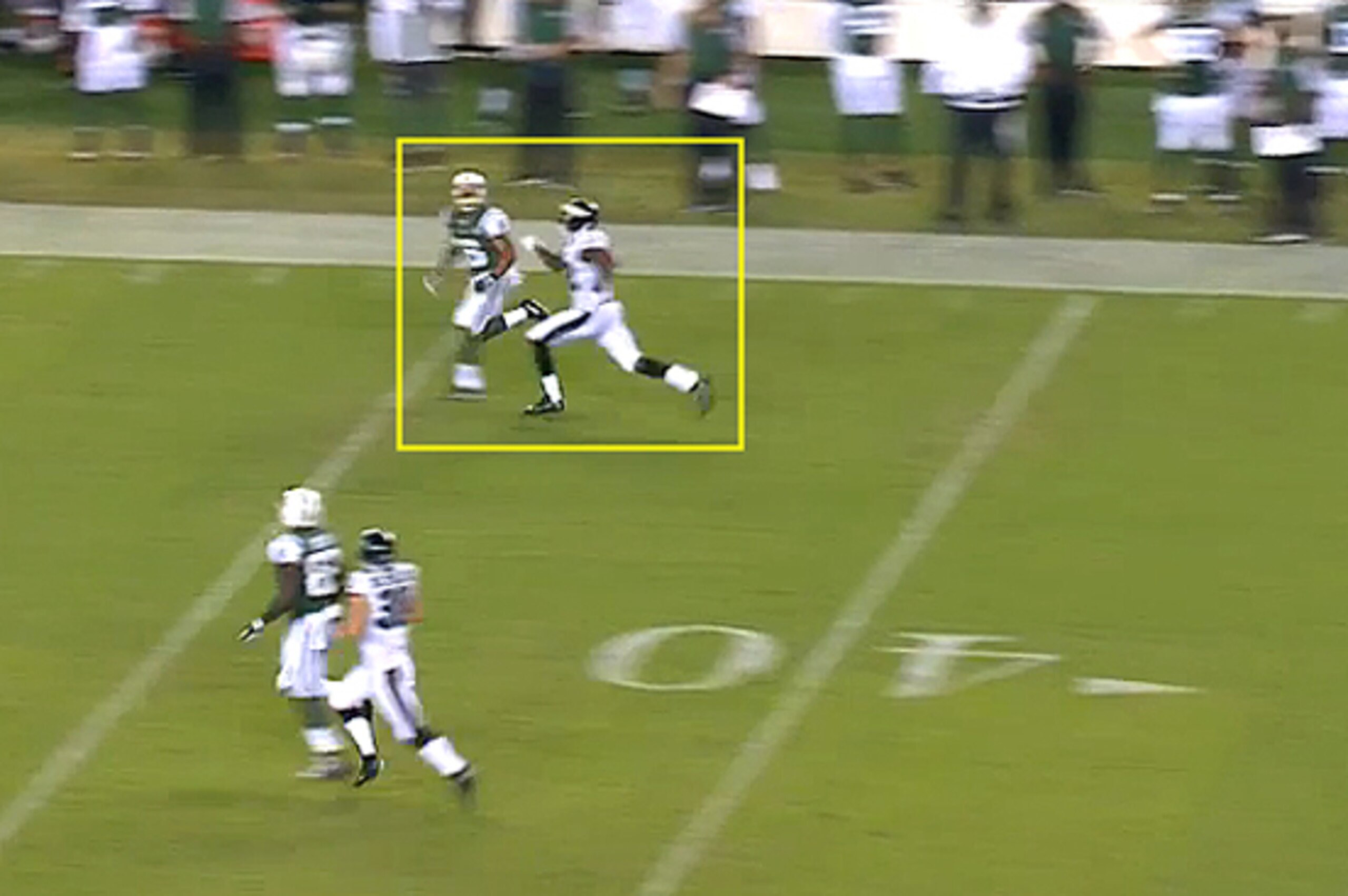
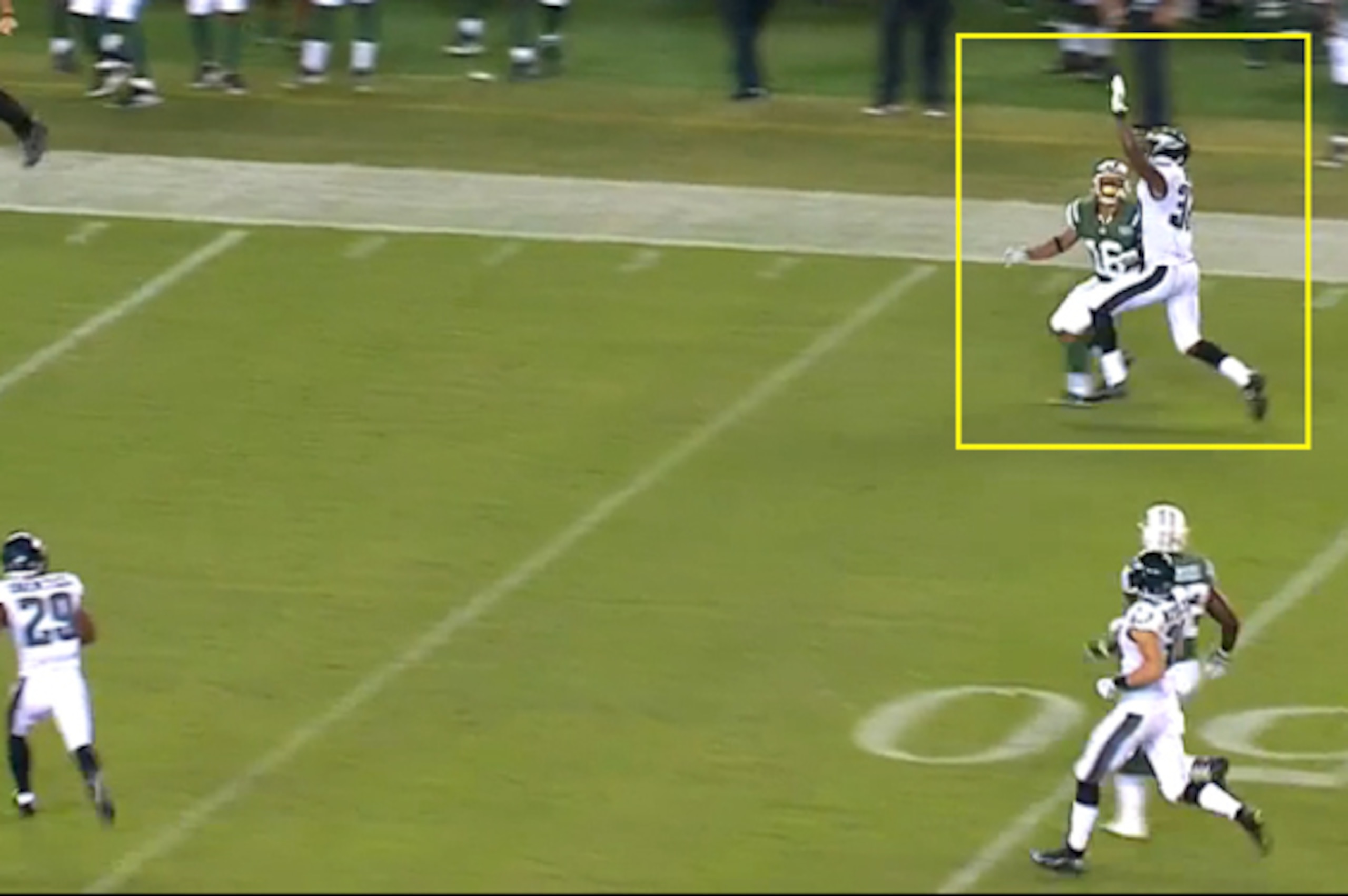
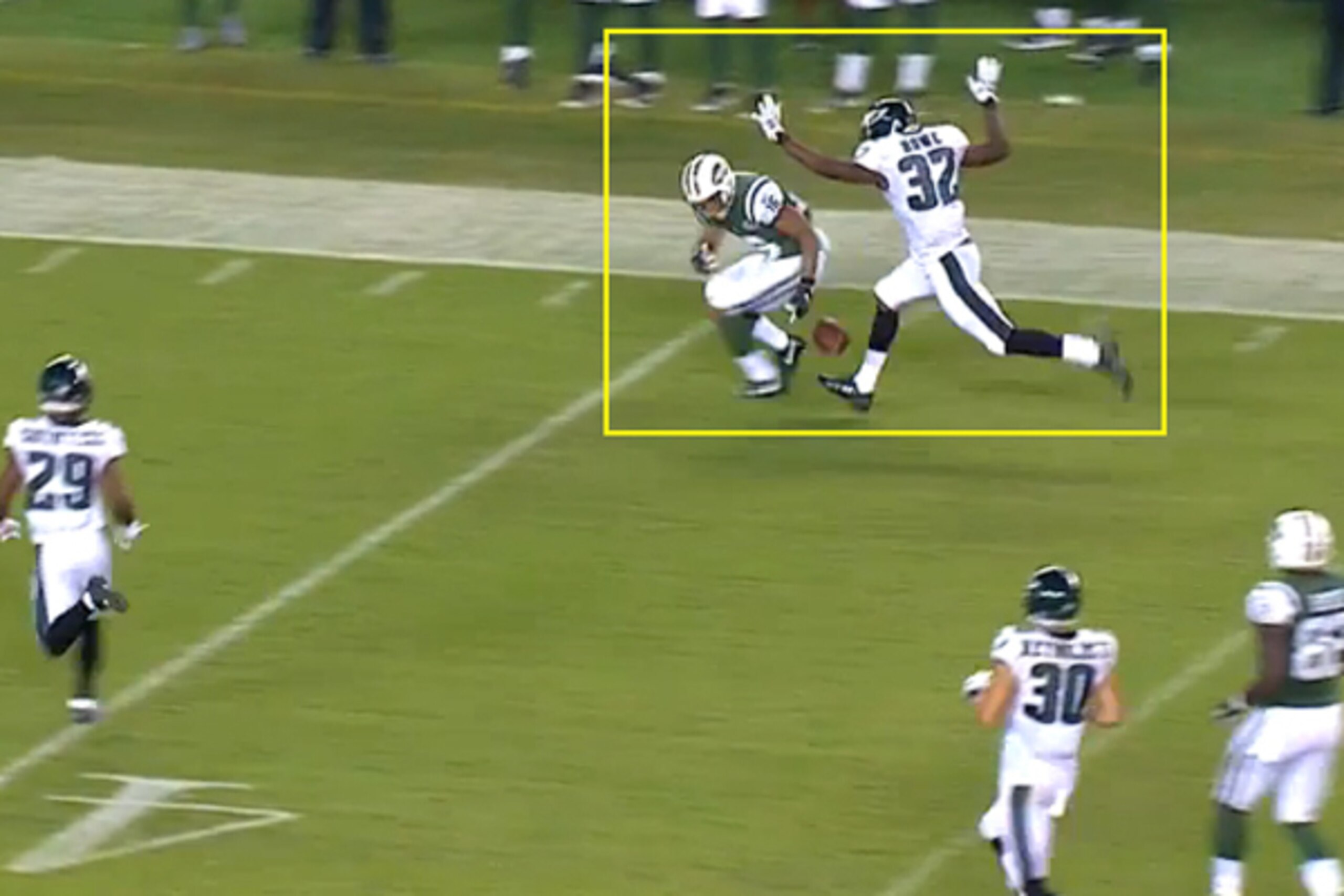
This deep right-side fade to receiver Chandler Worthy with 11:16 left in the third quarter of the Jets’ preseason finale against the Eagles is a good example. This was a 35-yard positive play because Eagles defensive back Eric Rowe was penalized for pass interference, but Hackenberg forced Worthy to wait on the ball because he didn’t do what he was supposed to on such a throw: get enough air underneath the ball to put Worthy in a position to catch it in stride. With the appropriate arc and velocity, that happens. This is an example of what occurs when it doesn’t.
In the second screencap, you can see that Worthy has a bit of separation on Rowe, but a step later, in the third screencap, that separation is gone, and the ball isn’t even in Worthy’s vicinity yet. The incompletion was caused primarily by the fact that Worthy was given no advantage by his quarterback. Had Rowe turned his head around, there wouldn’t have been an interference penalty, and it would have been a simple incompletion—or, an interception.

Hackenberg’s second major problem is that he falters far too easily under pressure, and this is borne out by the stats. In his 2015 season for Penn State, he completed just 34.7 of his passes when under pressure—41 completions in 118 attempts for 642 yards, three touchdowns and five interceptions. Last preseason, the numbers were even worse: Just three completions in 16 attempts for 25 yards, no touchdowns and one interception. Whether in college or in the NFL, Hackenberg consistently fails to re-set himself to the target after he’s flushed out of the pocket, and he’s picked up a dangerous habit of throwing the ball wildly as he’s being sacked.
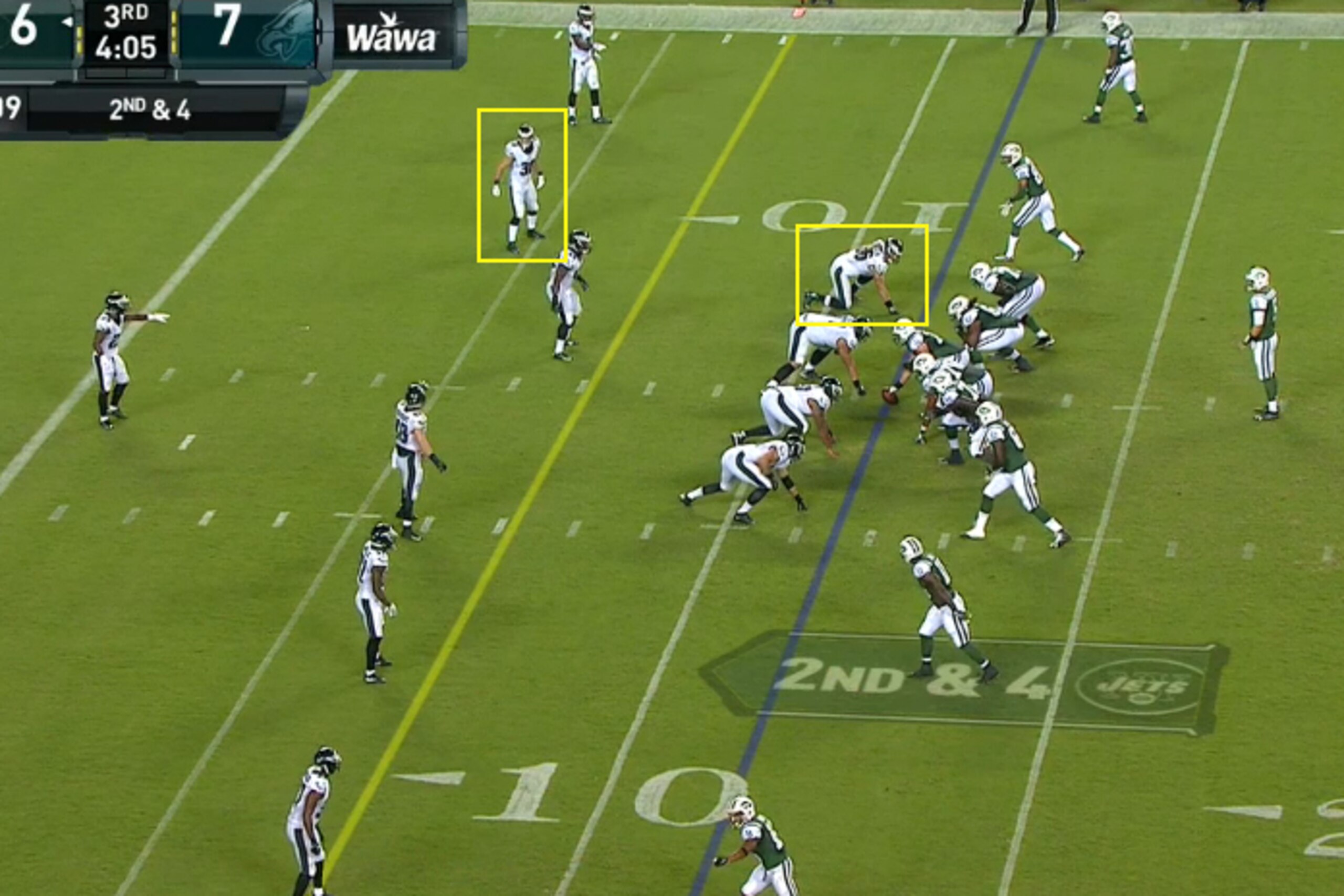
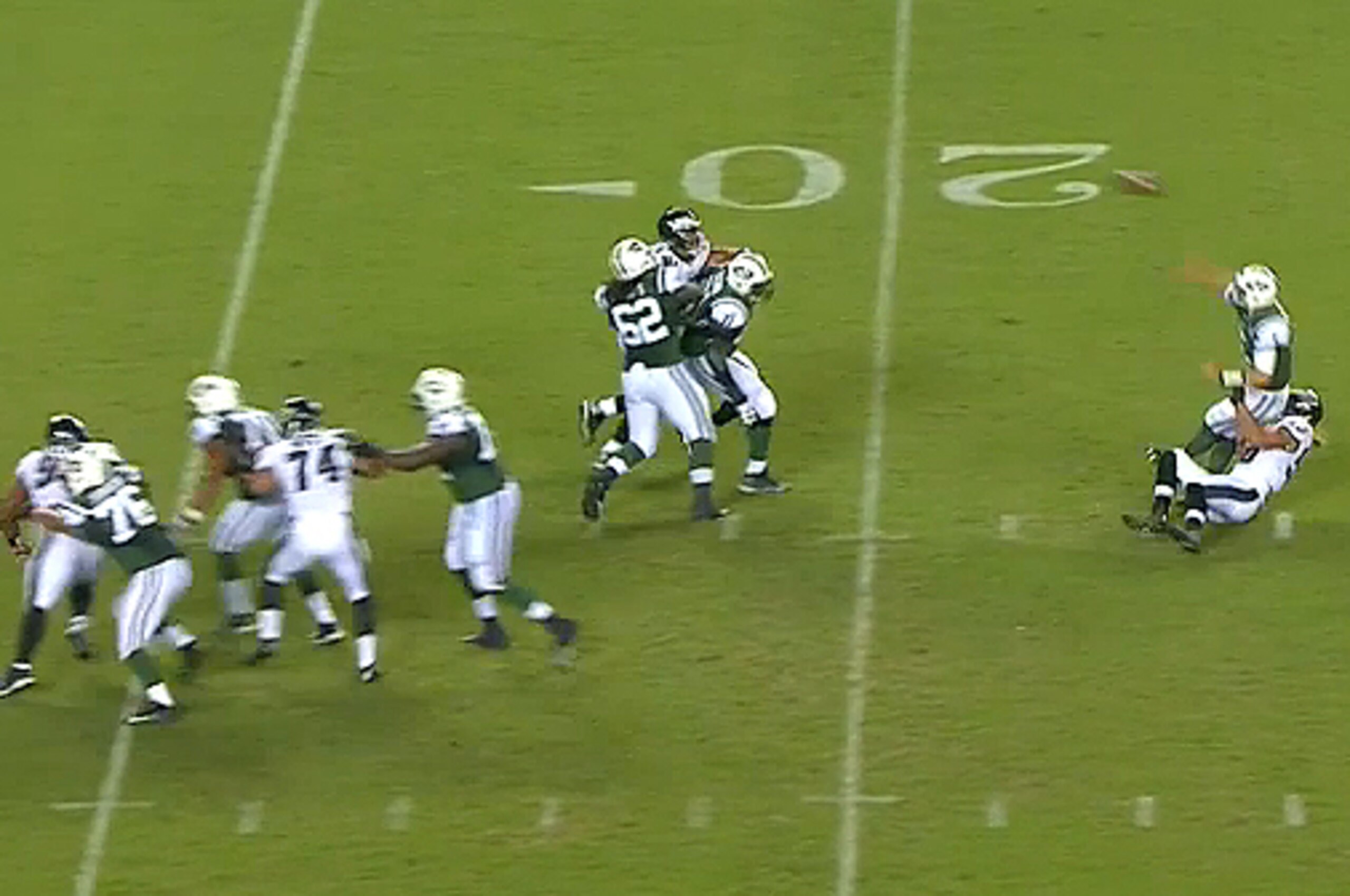
He did just that later in the third quarter against the Eagles. This is a really bad example of situational football. It was 2nd-and-4, and the Jets were down by one point deep in Eagles territory. There’s absolutely no reason for Hackenberg to go off-script after he’s pressured and nearly sacked, but that’s where he goes with it. Right tackle Ben Ijalana lost his center as left defensive end Bryan Braman hit him with an inside counter, and Braman rolled through the pocket unobstructed.
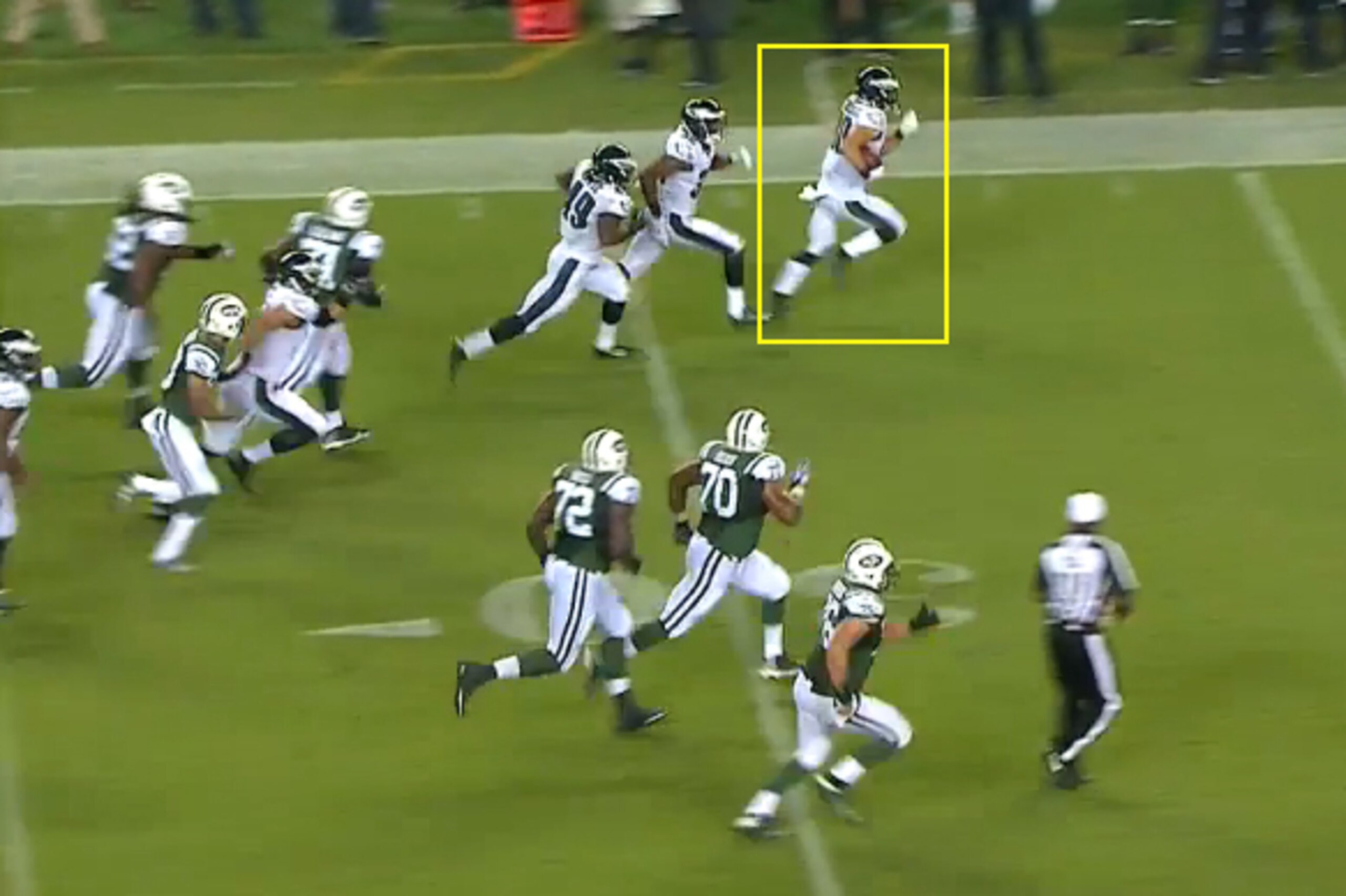
Hackenberg should have taken the sack there, but he threw the ball up at the last second in the general vicinity of receiver Robby Anderson, and the result was that Eagles safety Ed Reynolds enjoyed the easiest 90-yard interception return touchdown he’ll ever have as he took the low pass all the way back for the score.
Quarterbacks need to be cognizant of the situation at all times and act on what that situation tells them. Hackenberg was playing schoolyard ball in an instance where it was not warranted under any circumstances. The best thing that could be said of Hackenberg’s acumen on this play is that he did his best to keep up with Reynolds as he ran the errant throw to the opposite end zone.

Hackenberg’s best throw of the preseason probably came in the fourth quarter of the Week 4 game against the Giants. Here, Giants cornerback Trevin Wade (No. 31) switched coverage with safety Justin Currie (No. 36) pre-snap, leaving receiver Charone Peake (No. 17) open over the middle. Hackenberg benefited from a clean pocket, but still, this was a nice throw to Peake with good timing.
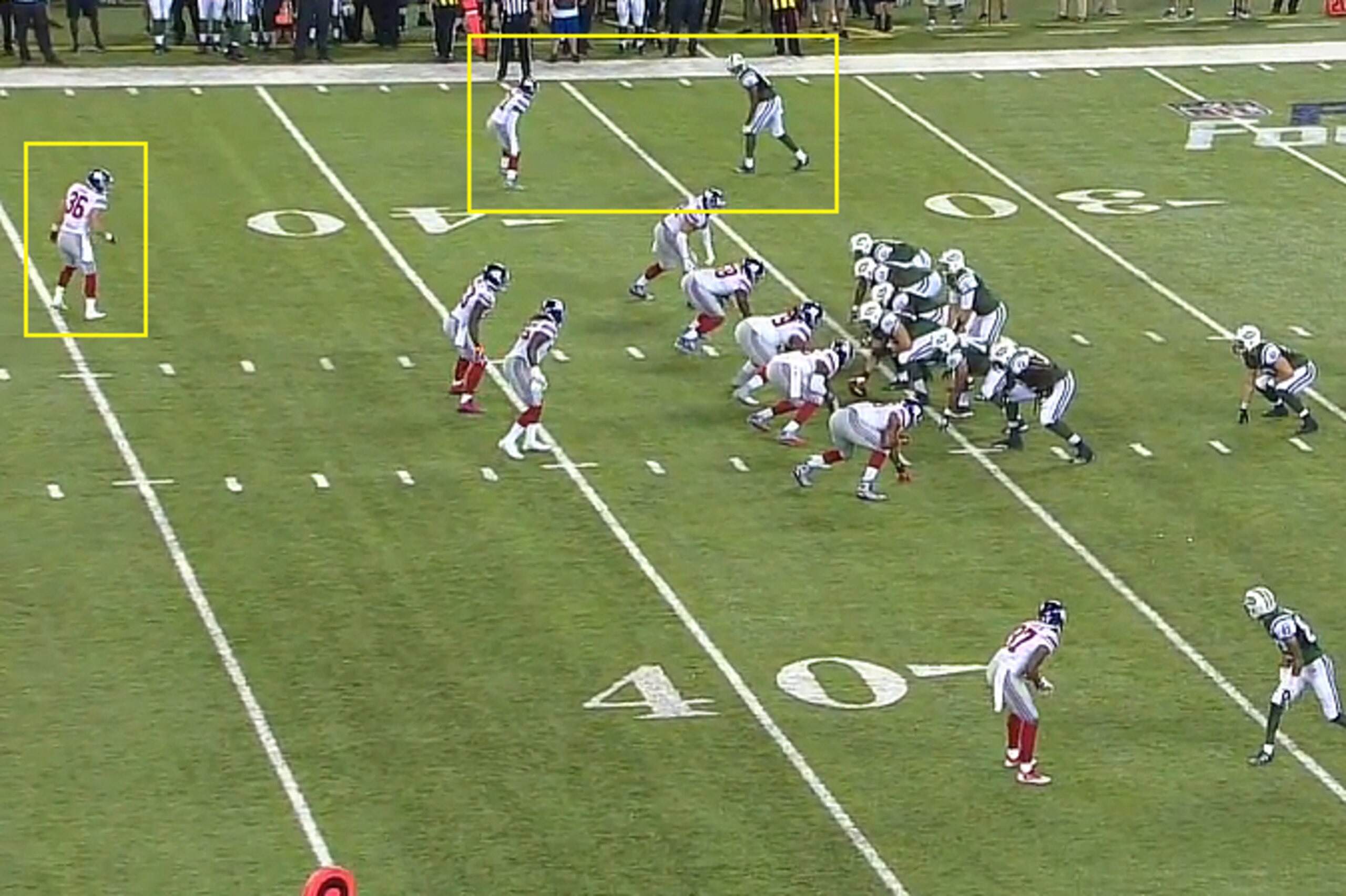

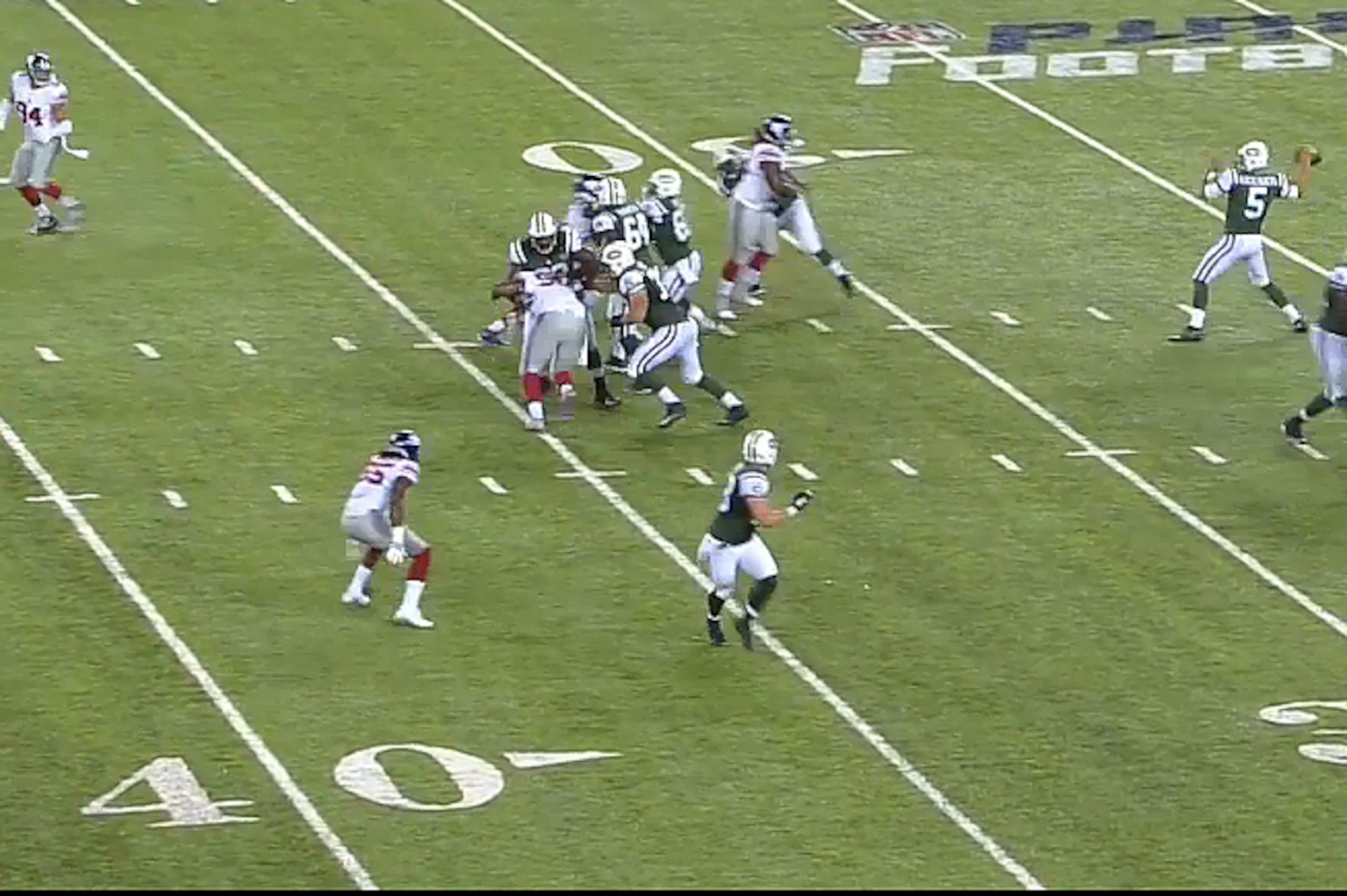

Hackenberg followed this up with a good out-route throw to Robby Anderson, and his lone NFL passing touchdown, a 10-yard fade to Anderson that was a bit high, but Anderson brought it in. None of these were tight-window throws with defenders converging, but he showed an sense of timing and placement on this drive.
And then, two drives later, Hackenberg regressed with the first interception of his NFL career, which stemmed from a deflection because Hackenberg failed to read a simple drop by a defensive lineman. With 2:43 left in the game, Hackenberg took the snap from his own 5-yard line, looking to throw an underneath pass on 3rd-and-7 just to get something going. What he missed completely was defensive tackle Davon Coleman (No. 62) backing out to the intermediate level on a drop in coverage. Hackenberg threw the ball right into Coleman’s area, Coleman deflected it and safety Andrew Adams came down with the interception.
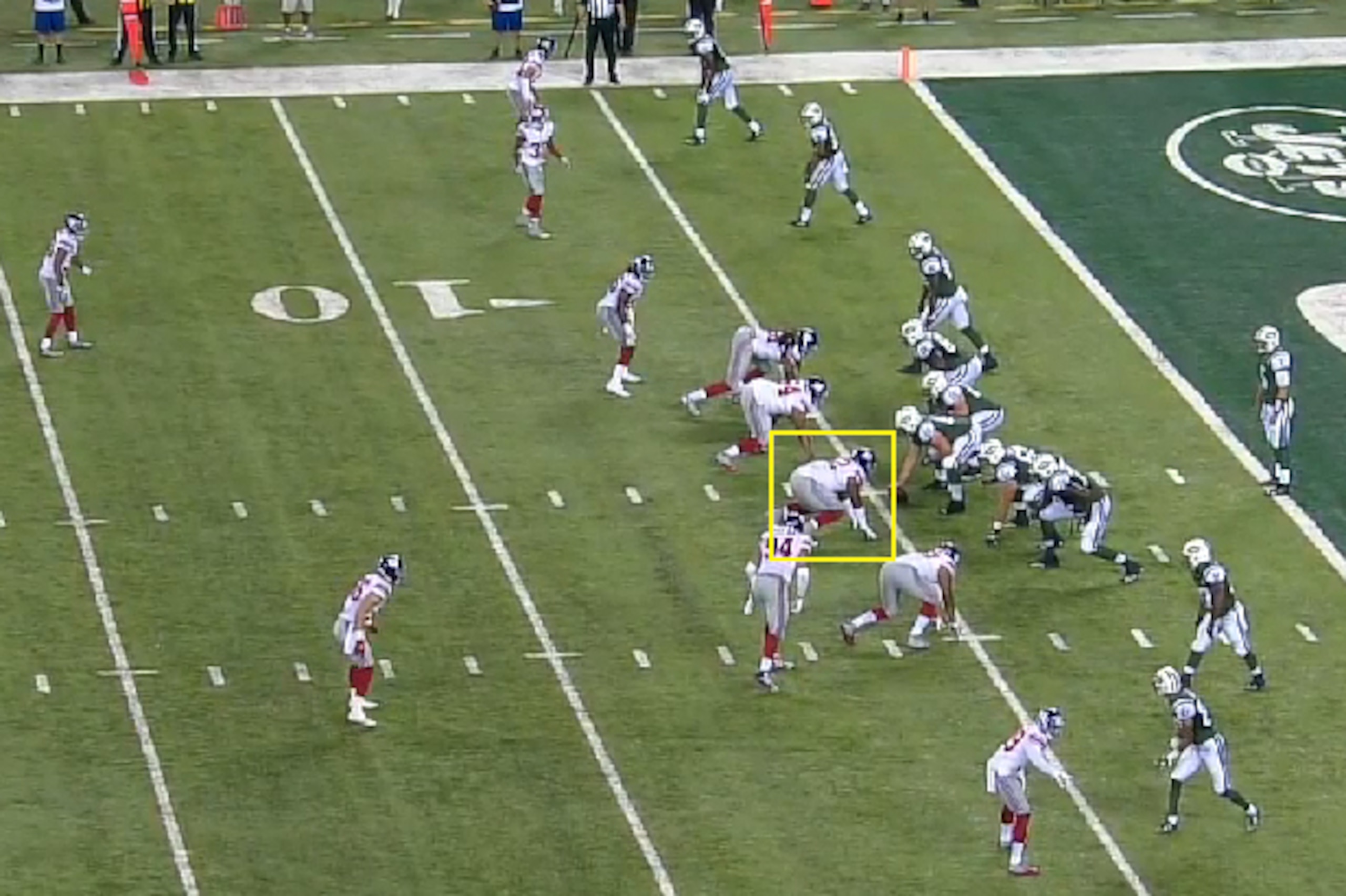
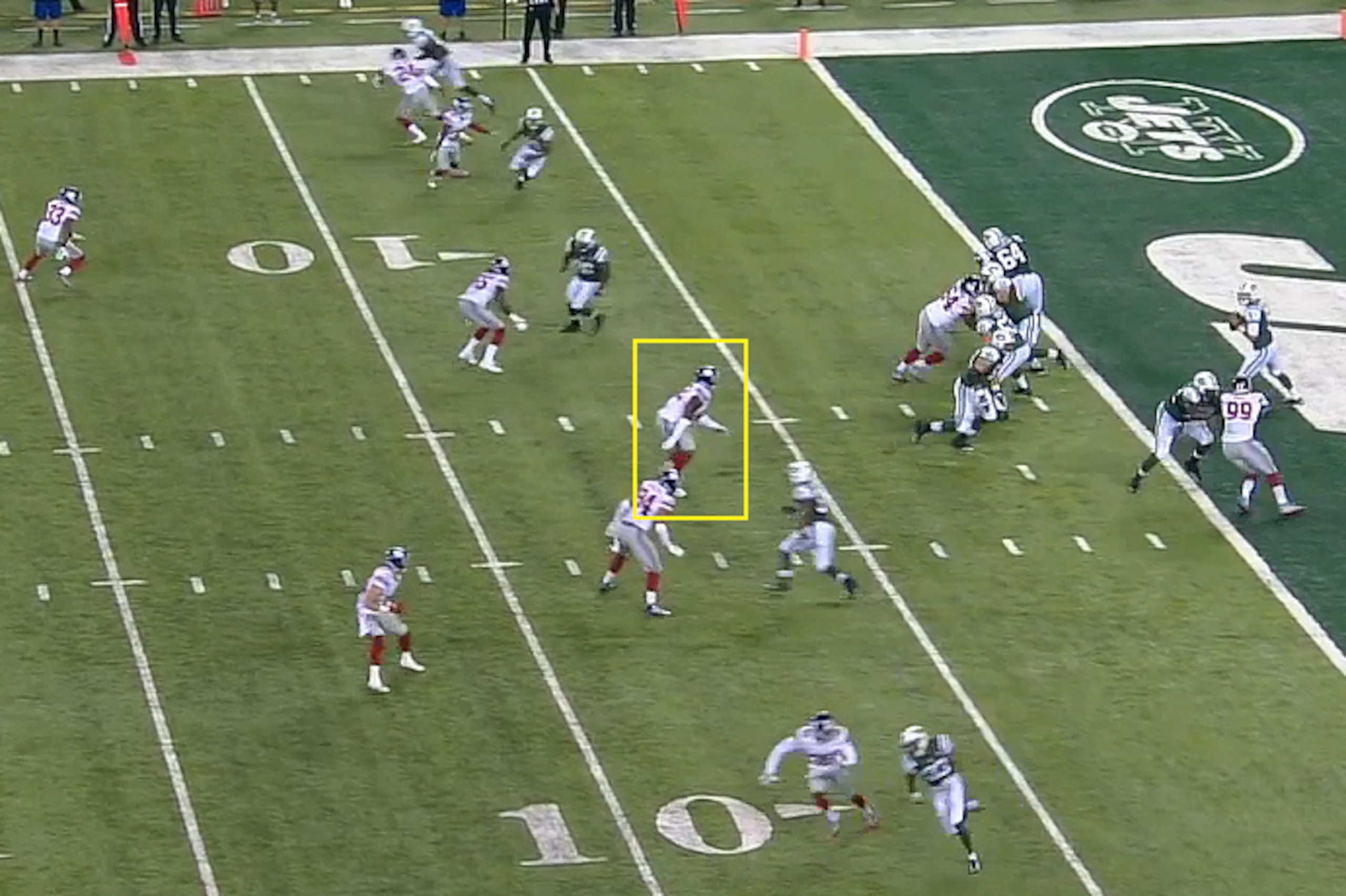
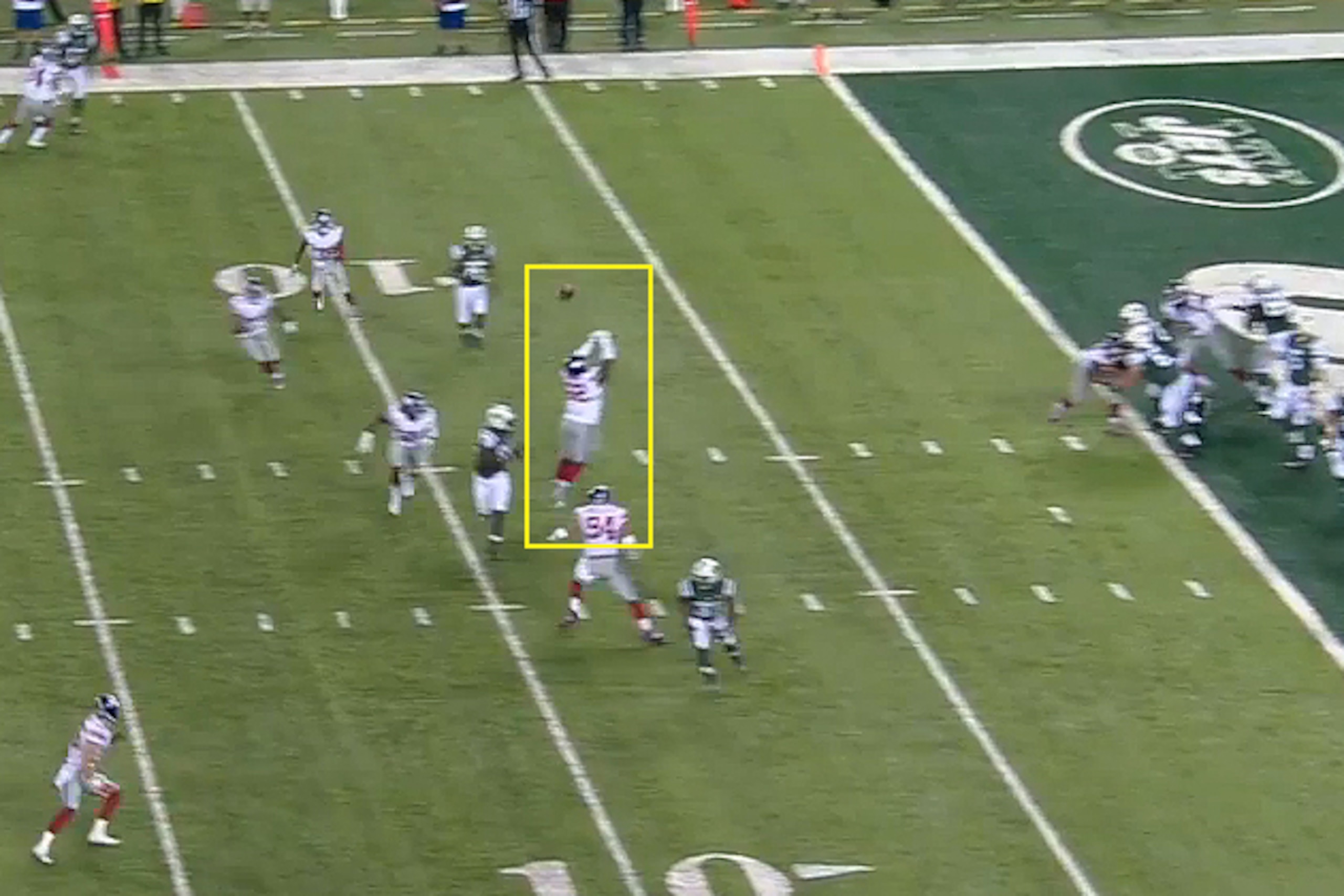
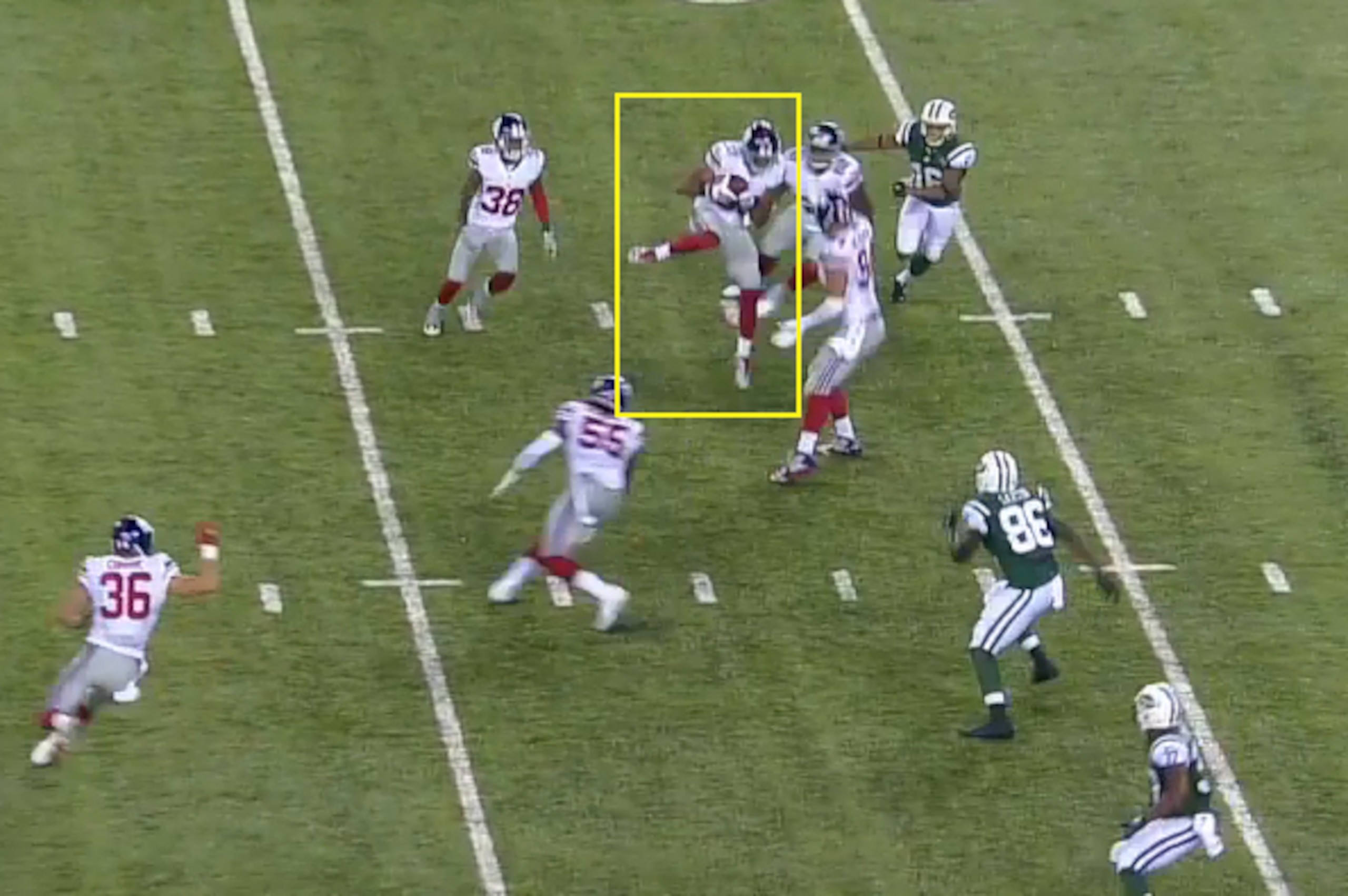
Needless to say, if Hackenberg is ever going to play in the NFL at a credible level, he's going to have to adjust his reads and throws for elementary changes in defensive coverage.
Most of the hype surrounding Hackenberg came from his 2013 season when, as a true freshman, he threw for 20 touchdowns and 10 interceptions under the tutelage of current Texans head coach Bill O’Brien. Hackenberg set a school record with 2,955 passing yards—a record he broke the next season with 2,977—but when O’Brien returned to the NFL before the 2014 season, Hackenberg’s regression was obvious. He threw 12 touchdowns and 15 interceptions in 2014, and though his 2015 season was a bit of a turnaround with 16 touchdowns and six picks, there is plenty of college tape which shows conclusively that he was not ready for prime time.
That the Jets selected him in the second round doesn’t make it any less true. It just puts more pressure on the franchise to try and validate what looks like another unfortunate second-round pick. Maybe if Hackenberg and O’Brien had reunited in Houston with a later pick, things would be different. Maybe that will happen in time.
This is not intended to crucify the player; more to detail and indicate just how far Hackenberg is right now from having the attributes required to be a successful starting quarterback in the NFL. Perhaps if he had been selected in the fifth or sixth round, which would have been commensurate with his talent, it wouldn’t be such a big deal. He’d be rightly tagged as a developmental quarterback and brought along as such. That appears to be how the Jets are handling this, but after watching the tape, the question looms larger.
Just how much is there to develop?
.jpg?w=2560 "Browns Buccaneers Football")
.jpg?w=2560 "Eagles Bears Football")

.jpg?w=2560 "Trade for NFL's Best Teams 📦")