Will Return of the Knicks' Triangle Offense Push Carmelo Anthony Away?
GREENBURGH, New York — So here's an image that perfectly paints where the New York Knicks now stand, where Carmelo Anthony fits in and how all this is headed once again in the direction of lather, rinse, repeat.
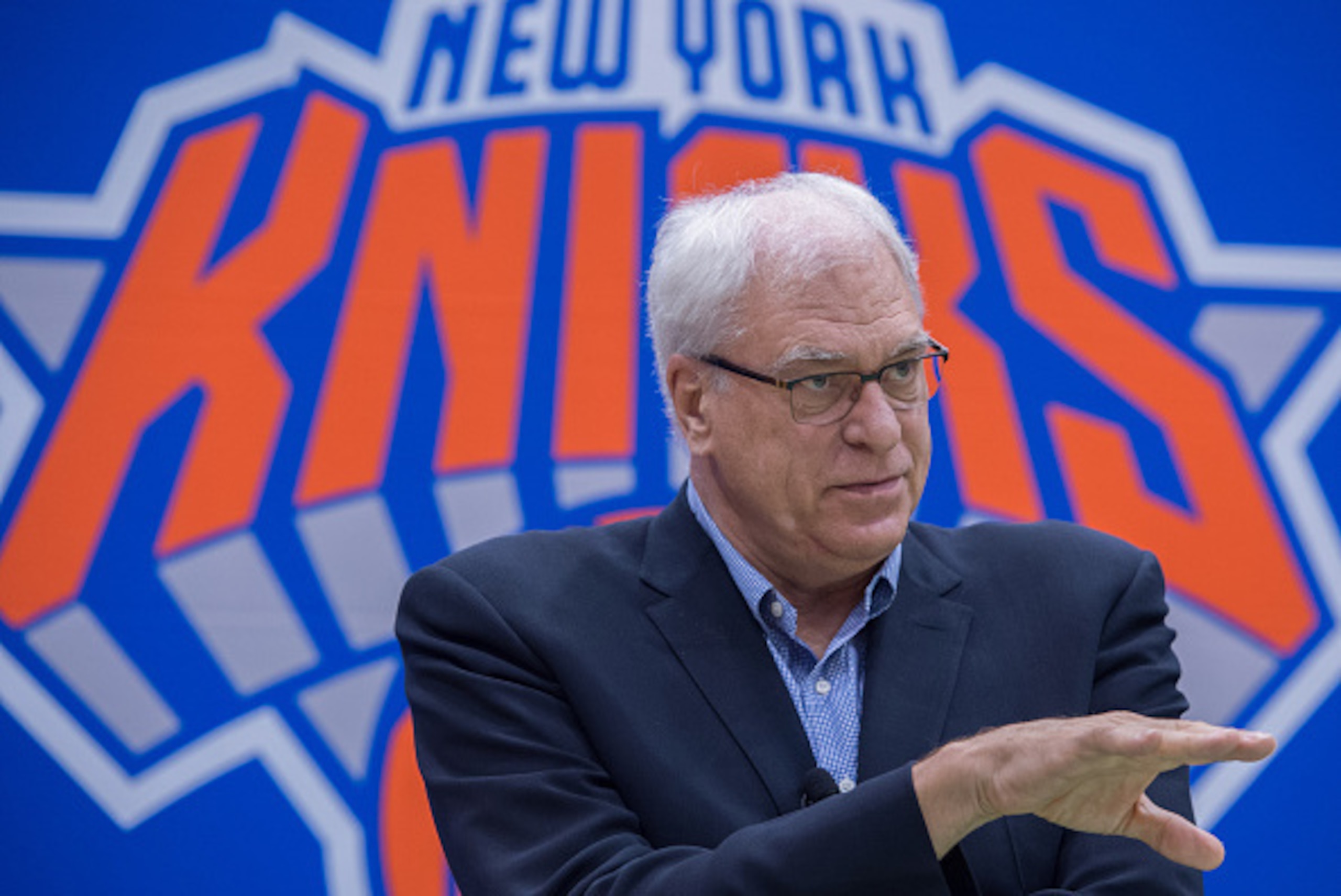
The Knicks practiced Tuesday afternoon. Like most of the team's practices since the All-Star break, the majority of time was dedicated to working on the triangle offense.
By now you're familiar with this scheme and how Knicks team president Phil Jackson adores it. So does Kurt Rambis, his lieutenant and the team's associate head coach. Players seem to despise it. No other team runs it. There must be a good reason for that. The Knicks, 24-36 (five games behind the eighth-place Detroit Pistons), are owners of the league's seventh-worst point differential and haven't done much to prove those naysayers wrong.
TOP NEWS
Silver Wants Team in Portland 📍
NBA Vegas expansion bids nearing $10B

NBA's All-Overpaid Team 💸
The team was scrimmaging on one side of the court at MSG's Westchester practice facility. There was Rambis, in his usual John Stockton-length blue gym shorts and a gray T-shirt, enthusiastically pointing and waving, sharing thoughts with head coach Jeff Hornacek and fellow assistant Corey Gaines. Two competing teams of Knicks players exchanged pinch post passes, made weak-side cuts and performed other triangle actions.
Meanwhile, on another hoop, there was Anthony, gray T-shirt soaked with sweat, hoisting feathery jumpers. From the short corner and elbow, wing and top of the key.
The buzzer sounded. Hornacek and Rambis—like the uncle who keeps showing up—gathered the team in a circle for some last-minute words. Anthony made his way over, but slowly. He lingered on the outside as players and coaches put their hands in the middle then shouted out some sort of cliche before splintering into their individual workstations.
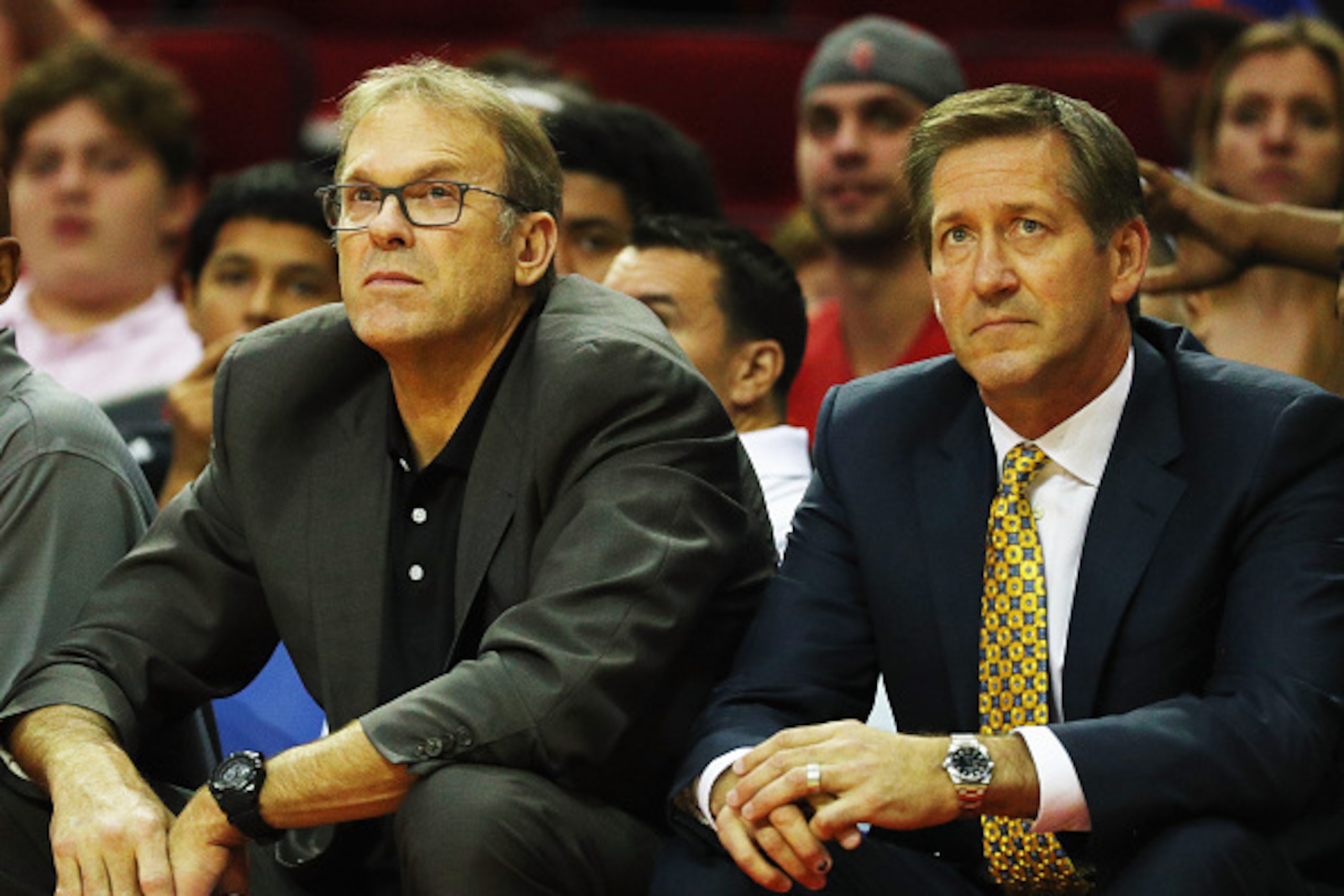
Afterward, Hornacek stood in front of reporters and fielded questions about the return of Jackson's beloved attack. He said he still wants the Knicks to play with pace but, if quick shots aren't there, to settle into the offense. He was then asked whether players' fit in the triangle will indeed determine if they're eventually brought back.
"When the end of the year comes and we're having our discussions 'Can this guy play this offense?' we'll say yay or nay, or he's getting it, he's getting better," Hornacek said. "So I'm sure that's part of the evaluations this summer."
Was there anything to read into the fact that just a few minutes earlier, Anthony had been absent during the team's Triangle 101 session?
Probably not. He played 39 minutes the previous night against the Toronto Raptors, and the Knicks play Wednesday night in Orlando. Chances are Hornacek wanted to give Anthony's legs a bit of a rest. Derrick Rose was also off to the side when the media was allowed into Tuesday's practice.
As far as metaphors, though, you can't get much more substantive than a surly Anthony off to the side while Jackson's antiquated system is once again implemented. And can you blame Anthony for looking surly? Or for instituting a "thou shalt not refer to the triangle" rule during his media scrums? Did we mention the surly part?
And can you blame him for not being happy with the goings-on in Knicks-land? Anthony has certainly played a role in the losing. His scoring (23.5 points per game) and shooting have picked up (36.9 percent from deep), but his defense is still suspect (to be nice). Statistically, the team has been better with him off the floor this year.
Which brings us back to where we were a month ago. Remember those pre-Charles Oakley times?
Jackson was reportedly shopping Anthony to teams like the L.A. Clippers and Cleveland Cavaliers while simultaneously appearing to hit his star with not-so-veiled public shots. For a moment there, it looked like Anthony's time in New York was about to come to an end, too.
But Anthony's no-trade clause made that a nearly impossible task. Also, Anthony has said repeatedly that no one with the Knicks ever approached him about working out a possible trade. Either way, he's now stuck playing for a team that pretty clearly doesn't want him around.
The question, of course, is what comes next. The easy response would be to say that Anthony—wanting to break free of his triangle-shaped shackles and desperate to finally link up with a contender—waves his no-trade clause and accepts a deal in the offseason. That's where all this seems to be heading, right?
Then again, Anthony isn't like the majority of the NBA's stars. His priorities often seem to vary from those of his peers.
Others typically seem to value winning championships and #ringz above all else in their lives. Sure, Anthony is competitive, but there are other things he seems to take into account when considering where to work and live: He's talked about not wanting his kids to have to change schools. He's repeatedly mentioned how much he loves New York. He's leveraged his platform into becoming an advocate on social issues.
"Family is, of course, No. 1, regardless of what situation you're in or what genre you're in, family comes first," Anthony said Tuesday. "Championship is always at the top of the list when it comes to my everyday job and what I'm trying to accomplish. I don't want those two to compare or come close.
"Both of those are my priorities, just in different ways. My family will always be my priority; as long as I'm playing basketball, championship will always be a priority."
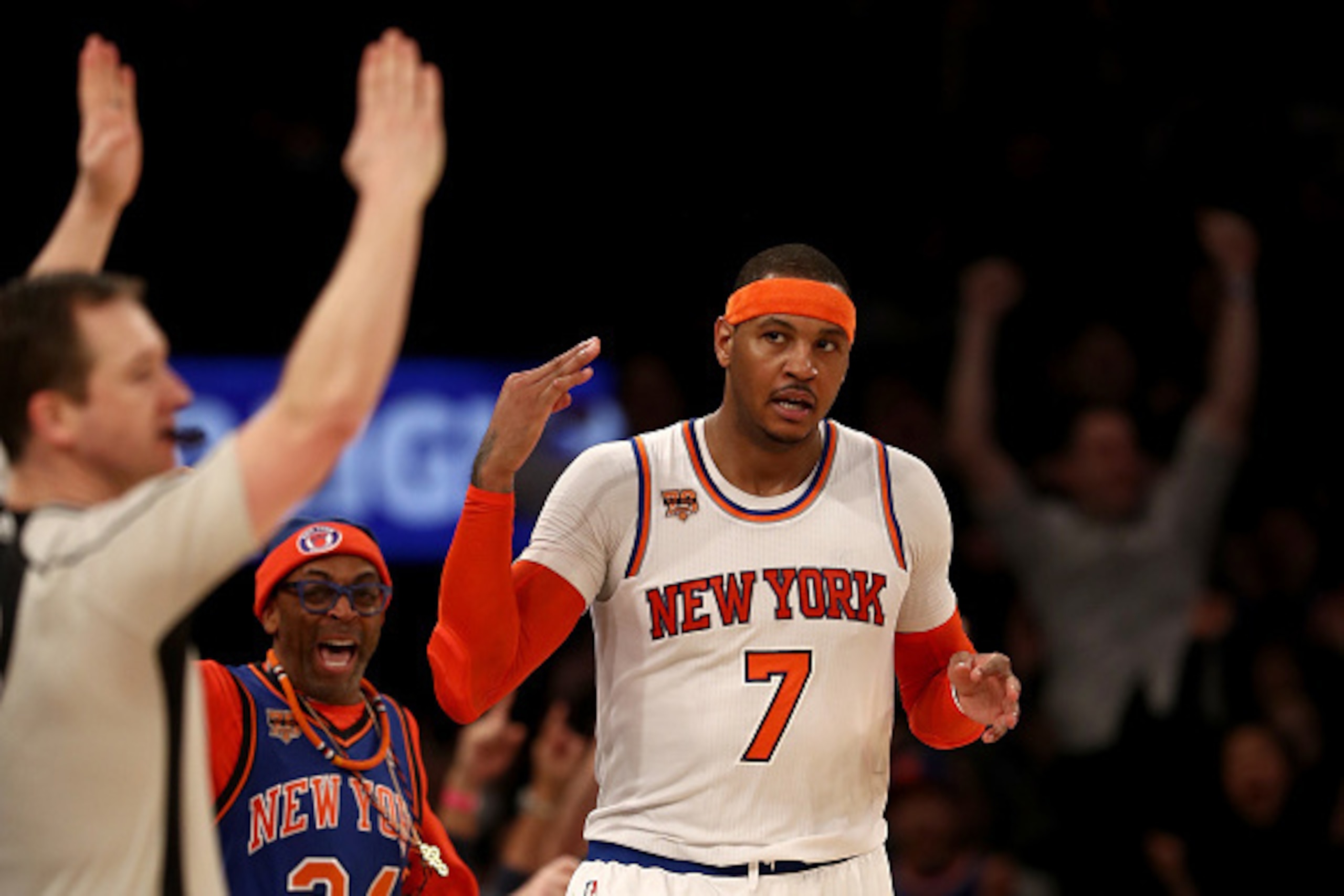
But what happens when those two priorities don't work in unison? What happens if the city that brings Anthony off-court happiness can't deliver the same feelings when he's on the floor?
And what happens when a person has to choose between the two?
The Knicks have 22 games left this season. That's 22 games to chase a playoff spot they likely won't reach. Then it will be time to hit the reset button once again.
Does that mean shipping Anthony out to another city?
From a basketball perspective, a trade makes sense for all involved. The Knicks could build around Kristaps Porzingis and defense (remember defense?), and Anthony could play for a team that values him and actually has a title shot.
But Anthony, don't forget, is also the one with power, the one who gets final say thanks to his no-trade clause. So yeah, it's easy to say right now there's no chance he's still a Knick come summer time, that he'd be crazy to stick around.
That is unless he wants to. There's nothing crazy about a player using his earned power to do what he wants, even if the men ostensibly in control prefer he didn't.
KNICKS INSIDER NOTEBOOK
Best for Last?

Knicks fans are acutely familiar with the team's ability to erase large fourth-quarter deficits, only to fall just short.
So maybe it shouldn't come as a surprise that, statistically, the Knicks this season have been one of the top fourth-quarter teams in the league.
On the year, New York is scoring a mediocre 105 points per 100 possessions and surrendering a ghastly 108.7. Yet when games reach the final quarter, both its offense (110.2 points scored per 100 fourth-quarter possessions) and defense (105.2 allowed) suddenly morph into solid units. The Knicks are outscoring teams by five points per 100 possessions in fourth quarters, which is tied for the fourth-best mark in the league.
This begs an obvious question: What are the Knicks doing differently over the final 12 minutes of games?
"I think the guys, they may just see we're down and pushing it more," Hornacek said. "We've been better at executing some plays lately. That's been a positive sign for us. The fourth quarters, at least scoring-wise, have been petty good."
Put in more simple terms: He has no idea why this has been so.
Neither, for that matter, do Knicks players.
"We just got to come out and stop letting teams get confident early," Courtney Lee told Bleacher Report. "But I don't know why that is. Maybe by the fourth quarter of the game, we're settled in."
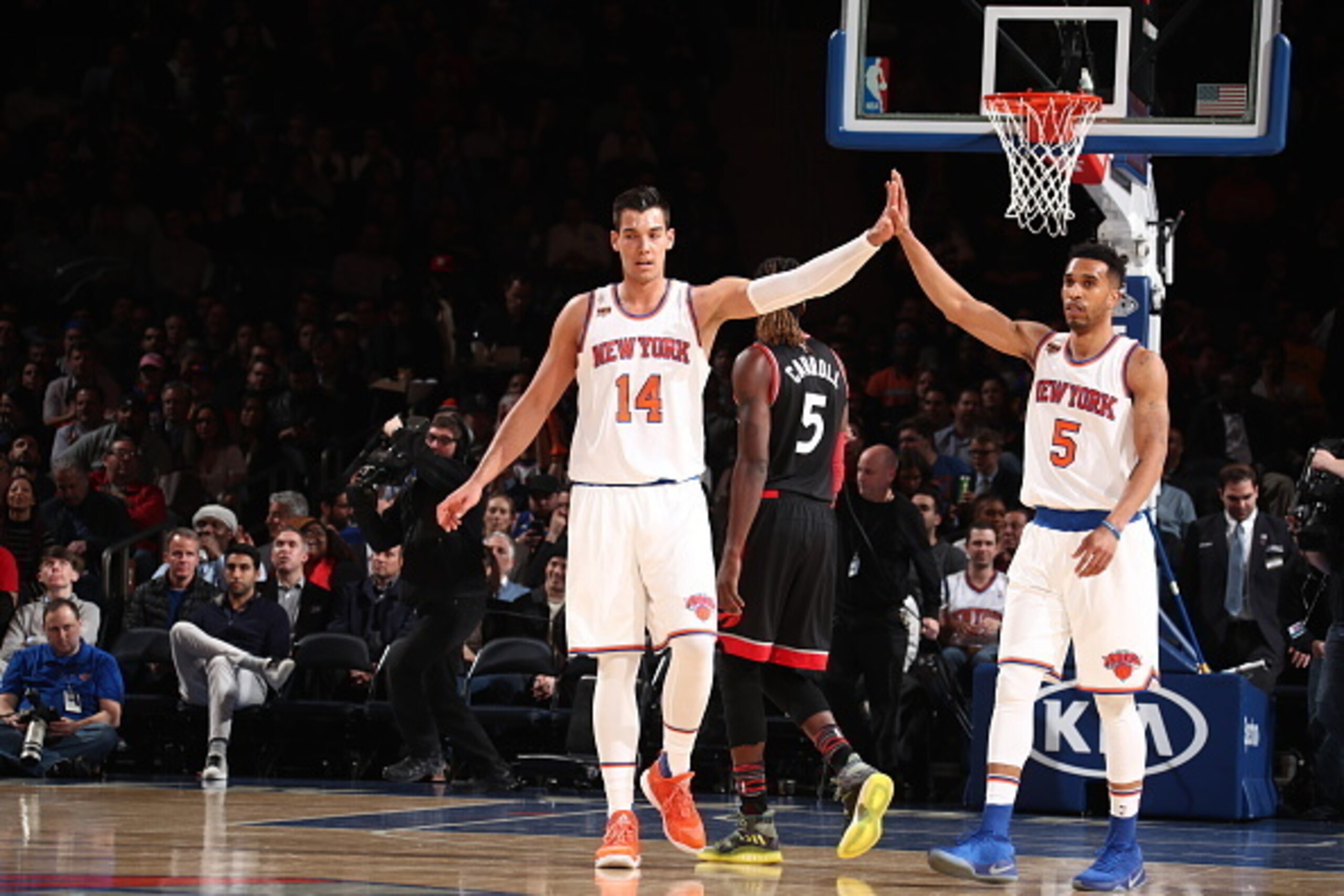
It could be the lineups the Knicks were using in crunch time—at least until Brandon Jennings was waived. For example, the five-man grouping that has gotten the most fourth-quarter run this season is Rose, Jennings, Lee, Anthony and Porzingis. They played 36 fourth-quarter minutes together and outscored opponents by a blistering 15.2 points per 100 possessions.
That sample isn't a large one, but giving that lineup more run—and moving Porzingis to center, where he should be playing anyway—could have been a way for Hornacek to get the Knicks off to better starts.
Hornacek has mentioned a number of times this season—including Monday when asked about the decision to waive Jennings—that he wasn't a fan of what he had seen from lineups featuring the team's two point guards. Why that's the case is not only unclear but also strange, considering the Knicks outscored opponents by 1.7 points per 100 possessions in the 167 minutes Rose and Jennings shared the floor, a considerable improvement over the Knicks' normal output.
It no longer matters now. But Hornacek's rigidity with lineups and positions hasn't done the Knicks any favors this season.
A Thorny Rose
The Knicks defense stinks, and there are myriad reasons why. One of them: Rose, who has spent the season coasting on that end of the floor.
Let's start with the numbers, and they're not pretty. The Knicks are allowing 6.2 fewer points per 100 possessions when Rose sits. He also ranks an embarrassing 83rd out of 87 point guards in ESPN's defensive real plus-minus statistic.
If you watch Knicks games on a regular basis, none of this should come as a surprise.
Rose reacts as if he just ran into an electric fence anytime he gets hit with a screen. He often seems unwilling to snake over picks and many times appears to give up on plays after absorbing the blow.
His off-ball work has been just as suspect.
He's blown basic assignments, often at the most inopportune times.
Lapses like these are a major reason why the Knicks rank in the bottom third of the league in both fouls committed and offensive rebounds allowed. The defense is always in scramble mode.
You'd live with all this if Rose were scoring at a Russell Westbrook-like level, but he's not. He doesn't shoot three-pointers and rarely gets to the foul line. All of which is why missing out on the opportunity to flip him for Rubio and get restarted on the latest rebuild was a mistake.
All quotes obtained firsthand unless otherwise noted. All stats from NBA.com unless otherwise noted and accurate as of Feb. 28.
Yaron Weitzman covers the Knicks, and other things, for Bleacher Report. Follow him on Twitter @YaronWeitzman and listen to his Knicks-themed podcast here.
.jpg?w=2560 "AP: Leagues Ask for Bettor Threat Protections")
.jpg?w=2560 "Report: Darnold Could Miss 3-6 Weeks")