

Meet the Tennessee Football Treasure, 93-Year-Old Gus Manning
There's no cheering allowed in the press box, but an exception was made as Tennessee began its football season against Appalachian State when Gus Manning was honored for attending his 71st consecutive home opener.
One-by-one, the scribes and television personalities who'd entered "Gus Manning Gate" to get to the press box stopped typing and started clapping. Some even stood.
After all, 93-year-old Charles Augustine Manning may not be the most famous Manning around Knoxville, but he's got Peyton and pretty much everybody else on longevity. Since General Robert R. Neyland hired Manning when he was a student in 1946, he's been a pillar in the stadium named for his old boss.


_0.png?w=2560)
Manning hasn't missed a home opener since 1945, and the 1994 inductee into the Tennessee Sports Hall of Fame has attended 455 consecutive home games. His total-games streak was in the 600s before breaking his leg prior to a Kentucky road game a few years ago.
He still never misses a teleconference from Vols football coach Butch Jones or basketball coach Rick Barnes, and Barnes rarely walks in a room to speak where he doesn't shake Manning's hand first. He still has an office in Thompson-Boling Arena and still goes to work most days.
The living legend predates the Vol Walk, Running through the 'T' and "Rocky Top."
"Gus is one of the all-time icons, I guess you'd say," former Tennessee football coach and star tailback Johnny Majors told Bleacher Report, "of Tennessee's great football and great athletics."
Added friend and UT professor Rob Hardin, who is a longtime staple around the athletic department: "He's the institutional history of Tennessee athletics. He was the first non-coach male employee of the athletic department, so that gives you some perspective.
"He was the original sports manager. He did it all; ticket office, business office, facility management, event management. He did the whole thing basically by himself for years. The General was the athletic director, and Gus was his right-hand man."
Early years
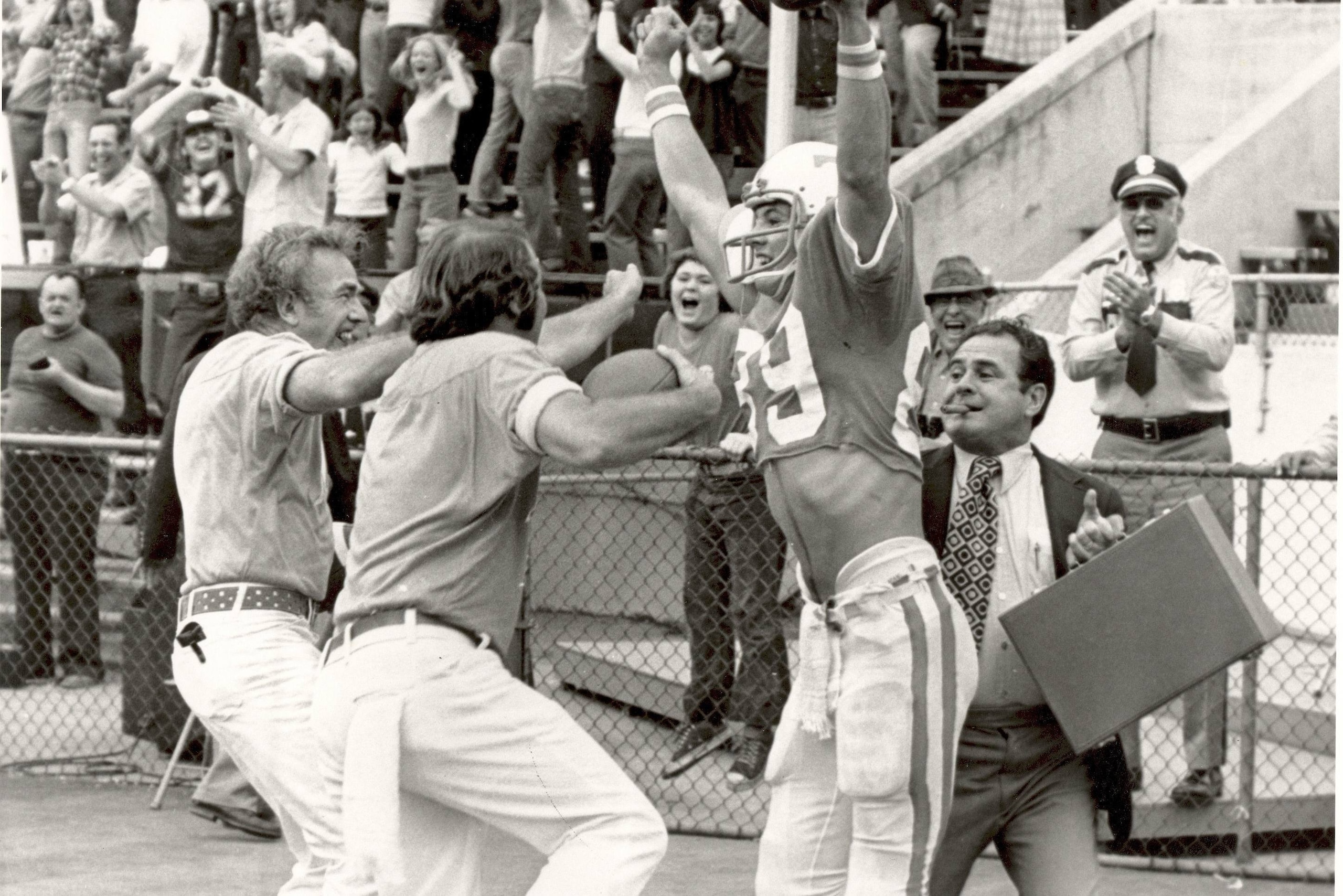
Growing up in the shadow of Neyland Stadium, Manning's dream was to play for the Vols. But the future "Godfather of Tennessee athletics" had a humble beginning at UT.
A former Vol, Johnny Butler, helped sneak him into games back in the 1930s, so he watched his hometown heroes from the stands.
Even then, UT football was a big deal around Knoxville. The stadium held 46,000 people—a far cry from the monolith that stands now by the river—and Neyland had begun building his reputation as one of college football's most brilliant minds after establishing himself as a war hero.
Neyland was the maestro for the Single-Wing offense that made the Vols so successful during his career, and Manning wanted to play for him.
"He was a genius, you know," Manning said. "He was so damn smart, it was unbelievable. He was a great guy to work for. He expected you to do your job, and as long as you did your job, you got along well with him. But you didn't want to cross his path.
"Actually, he was so well-organized that all the assistant coaches would carry out the practices. They'd have staff meetings and tell them what they were going to be doing at that particular time. Then, on game days, he took over."
In Manning's high school days, he became the area's first T-formation quarterback. But that style didn't fit Neyland's, so after serving three years in the Pacific during World War II, Manning didn't last long as a walk-on at UT.
Yearning to stay around the program, Manning worked for the athletic department as a practice-field guard, keeping potential opponent spies and media out of Neyland's closed practices. When the sports publicity director left in 1951, Neyland promoted Manning.
At night, he'd do bed checks in the East Side Dorm that is still part of Neyland Stadium to this day. He'd eat at the training table with UT greats such as Hank Lauricella, Dick Huffman and Majors.
The job expanded, as did Manning's role. Soon, his plate became full.
Coaches came and went. Manning never did.
"I just grew with it, you know," he said. "I've been through 11 football coaches."
Power of the ticket
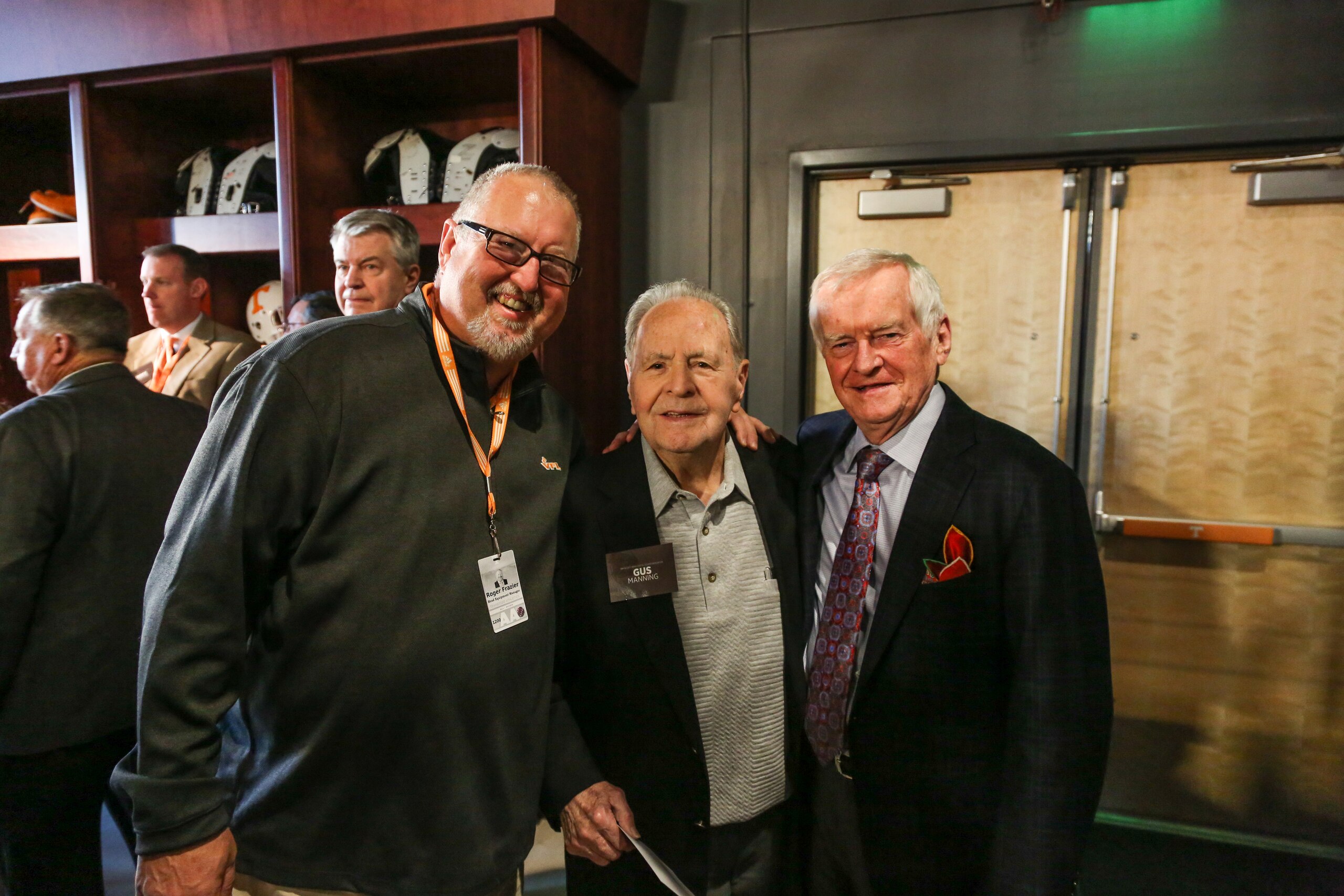
To chat with Manning is to take a trip back in time through those coaching eras, from the halcyon days to lean times and back again.
When he started, college football was far from the booming business of today. To grow UT football during a time when there were no television contracts—and few televisions, for that matter—he traveled the state, logging countless miles across the Tennessee highways.
When he was on campus, he logged even more miles in the "Gusmobile," a 1990s-model Cushman that has more than 15,000 miles on it. Former athletic director Bob Woodruff got him his first one in 1962 to drive prospective season-ticket buyers to the stadium when Neyland's west upper deck opened.
Mile-by-mile, handshake-by-handshake, Manning and former sidekick Haywood Harris built the Big Orange brand across the state by going to newspapers and radio stations and generating interest in the Volunteers along with Vol Network legend John Ward.
"We got out in the bushes and got people to join the various clubs and enticed them to buy season tickets," Manning recalled. "It helped grow the program."
When longtime sports information director Bud Ford came on in 1966, he joined up with them, as did promotions manager Bill Petty. Ford had been Manning's paper boy when he was young, and when a student-assistant position came open, Manning informed him.
The athletic staff was growing with the program, and as business manager now, Manning held the key to the season tickets.
Important folks around the program became acclimated with Manning quickly because of those precious season tickets.
One of those was legendary Tennessee high school coach Shirley Majors, who wound up having some boys (Johnny, Bill and Bobby) who became legends for the Vols.
"He and my dad had a great relationship," Johnny Majors said. "They were both cigar smokers, and when my dad would come up to check on his season tickets and some tickets for friends of his, he'd always bring Gus a box of Cuban cigars. They were pretty hard to get at that time; I don't know where he got them.
"But my dad never did forgive him for one thing when Bill or Bob was playing. Gus never has lived this down. He got dad some tickets, and he was stuck behind a big metal support pole, and he never forgave Gus for that, in good nature. It was an ongoing battle until my dad died."
Majors paused and chuckled, conjuring up some of the wit that made this summer's roast of Manning a must-see occasion when the old friends traded barbs on stage.
"I don't know anybody who dislikes Gus," Majors continued. "But sometimes, he could be a little Napoleonic because he had the power of the ticket, and that's a strong power at a place like Tennessee when you're selling out all the time."
At least one Tennessee legend always stayed on him about coming up with tickets for family to watch him play.
"Reggie White, he was always bugging me to get more tickets for his family," Manning recalled. "He'd come to me and say, 'I've got my grandmother who's never seen me play. I need some tickets!' Reggie was a great guy."
A Tennessee waltz through the generations
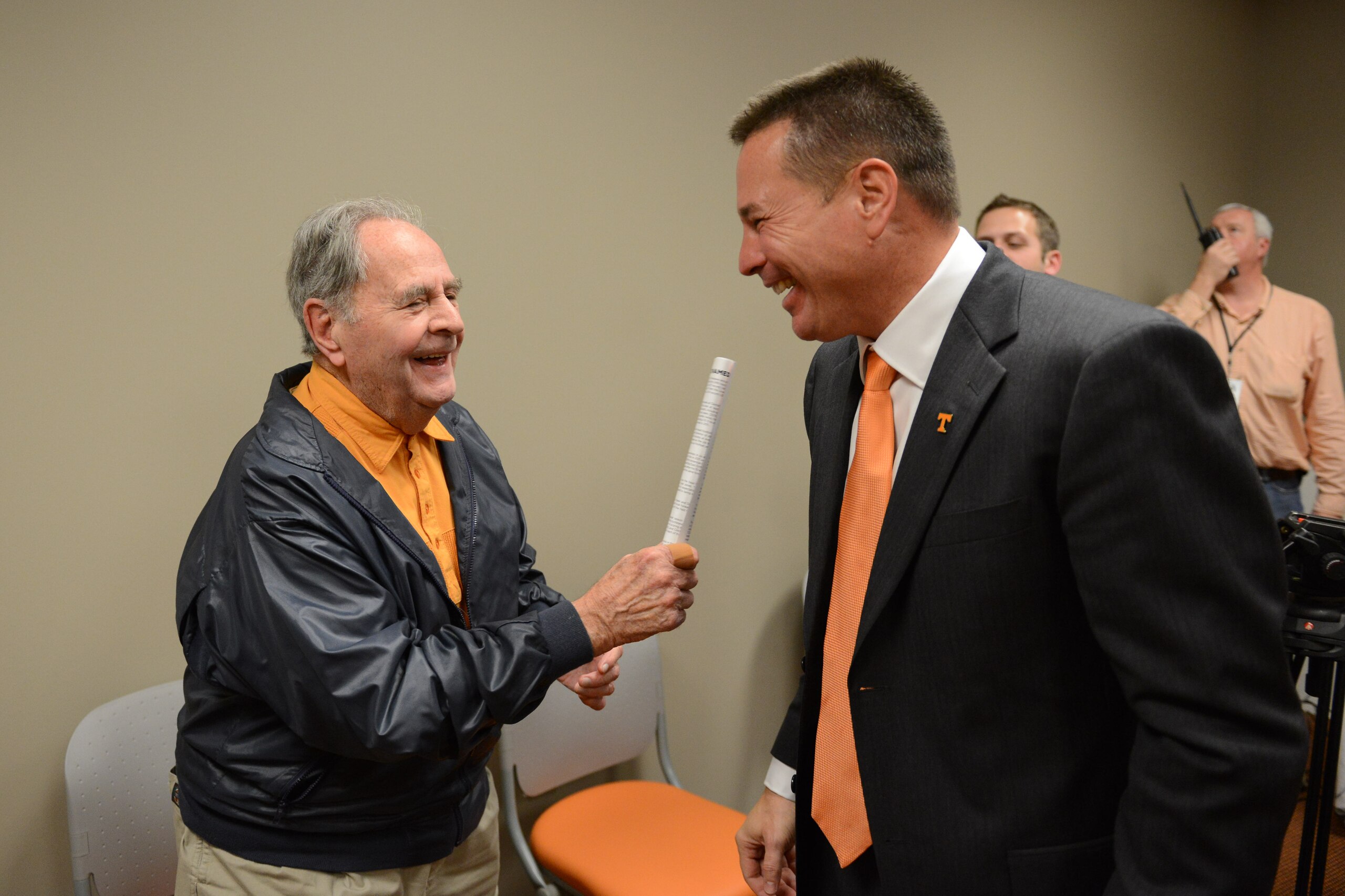
Everyone who knows Manning raves about his sharp memory.
Right away, he can tell you a player's name, where he's from and what years he played. He also vividly remembers snapshots in time long forgotten.
Manning's stories are a reason he's highly sought after when people are in town for a Tennessee game.
Longtime CBS broadcaster Verne Lundquist spent several minutes with Manning before a game this year, and many other SEC luminaries have followed suit over the past couple of decades.
"Everybody knows him," said former Tennessee beat writer and current ESPN.com college football writer Chris Low. "I don't care who they play. If it's Alabama, you've got [UA athletic director and former Vols coach] Bill Battle coming by to see him. When [former SEC commissioner] Roy Kramer comes back for Tennessee games, he's right there with Gus.
"He's a magnet. Everybody wants to see him because everybody knows him, especially those who've been around the league for a long time. People know what he means to Tennessee and that he's the last remaining link to the General there at Tennessee and what a treasure he is."
Added Ford: "Gus and Haywood were probably as well-known as anybody in the Southeast."
Low recalls a meeting at this year's UT-Alabama game where he, Manning, Kramer, the Tuscaloosa News' Cecil Hurt and Knoxville sports personality Jimmy Hyams sat at a press box table prior to the game, discussing how many "Third Saturdays in October" they'd witnessed.
Hurt said it was his 40th straight game, and when Low asked Manning if he could top that, Manning searched his memory and recalled the 1939 game where Butler had a touchdown in a UT win.
"You're talking to a guy who was at that game," Low said. "I love those stories, man. When you're around him, you hear more and more of those stories. That's why he's so revered. People know he's been Tennessee through and through his entire life."
Manning's fingerprints are all over campus, the athletic department and even in iconic Neyland Stadium.
Back when General Neyland's plan to expand the stadium was orchestrated, Neyland relied on Manning's updates as he lay dying in a hospital bed in New Orleans. Neyland and former UT Dean of Engineering Nathan W. Dougherty planned for expansion, and Manning helped coordinate it.
From meeting with former Tennessee students who were employed at Birmingham's Rust Engineering Co., to letting Neyland know by phone the number of caissons being built and the daily progress of the stadium, Manning talked him through the build.
"I was not an engineer," Manning recalled, "but I felt like I was after we got through with it."
Neyland never got to see the expansion to completion, dying in 1962. When he died, Manning lost his boss and a close friend.
As the years melted away, Manning lost more friends. In 2010, Harris died, which was difficult for Manning to deal with considering they'd been so close since even before he'd hired Harris in 1961.
Just this year, legendary women's basketball coach Pat Summitt died from complications from dementia. She and Manning had offices close to one another in the Thompson-Boling Arena, and their friendship was longstanding dating back to the days the Lady Vols played for sparse crowds in Alumni Hall.
"I'd say we'd play a game over there and wouldn't have 50 people in there," Manning said. "I followed her all through her career. She and I were very close. Always admired the job she did for us at Tennessee. She was a great lady, and she was awfully nice to me."
Throughout the years, Manning has seen a lot of change. But he's still here, as strong as one of those pillars holding up the stadium.
"Gus burned both ends of the candle pretty good, and here he is at 93 going strong," Low said. "The bottom line, I think, Gus is probably going to outlive us all."
A living history book
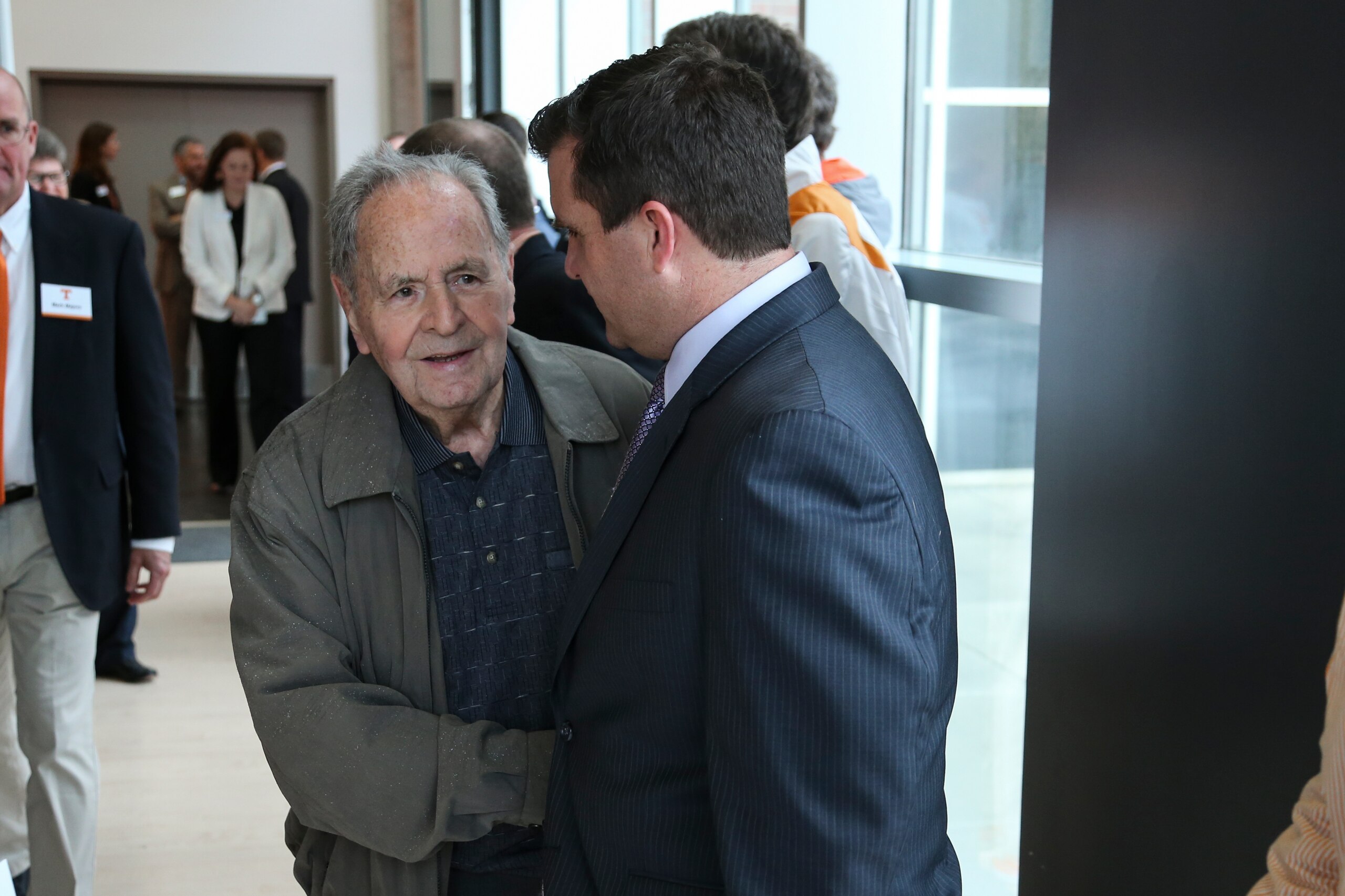
Perhaps the best way to describe Manning's living legacy to a generation of college football fans who can't appreciate how things used to be is to link him to the Vols' most recognizable name—Peyton Manning.
When the future NFL Hall of Fame quarterback was in Knoxville, he developed a close relationship with the elder Manning. Then, while at Indianapolis, Peyton would invite Gus to games and tell the Colts brass he was his grandfather. He was treated like "royalty."
The quarterback and his wife gave the university a large sum of money in 2015, and he could have chosen anybody to name anything after. Peyton elected to rename Gate 16 "Gus Manning Gate" to honor his years of service to UT.
"Gus Manning defines what being a Tennessee Volunteer is all about," Peyton Manning told UTSports.com's Brian Rice at the time. "His spirit of volunteerism, flexibility to fulfill many jobs, he has done jobs that it takes 50 people to complete now. He defines what service to the university is, so Ashley and I wanted to honor him in a way that is deserving."
He's meant so much to so many around Tennessee.
Majors has many stories, but the most humorous may be the running joke he keeps with Manning and good friend Paul Hornung, who beat Majors for the 1956 Heisman Trophy despite UT being 10-0 and Notre Dame finishing 2-8.
"(Gus) likes to say, 'I never could understand, when I'd go to the Kentucky Derby, Hornung always bought me a couple of mint juleps, and Majors never would buy me one,'" Majors recalled. "I said, 'You know, Gus, you did all that publicity for me getting second. I couldn't afford you, because you were so big in your profession.'"
Manning likes to shoot back that he had to "work his tail off" just to get Majors in second place.
There are countless stories to tell, and the best thing is that Manning is still around to tell his share.
Manning's words still can be heard by the Vol Nation each week in the regular season when he and Ford do The Locker Room, a show that airs on game day where they discuss the UT opponent with the sports information director. He hosted the show with Harris prior to his death.
Ford, like everybody who cherishes their time with Manning, is amazed at the living, breathing Tennessee history book he's had the fortune of working beside for the better part of 50 years.
"To this day, Gus is still as sharp as he's always been," Ford said. "God has blessed him with a great, great life here. In my mind, he is Tennessee. Gus and Haywood are Tennessee."
Quotes and information gathered firsthand unless otherwise noted.
Brad Shepard covers SEC football and is the Tennessee lead writer for Bleacher Report. Follow Brad on Twitter: @Brad_Shepard.

.jpg?w=2560 "NFL investigating 2 referees for separate viral exchanges")
.jpg?w=2560 "Report: Chiefs Contact Hill's Agent")
.jpg?w=2560 "OBJ Calls Out Giants 😳")
.jpg?w=2560 "Tyreek makes another cryptic post amid Chiefs rumors")


