
5 of the Most Interesting Radio Messages from 2016 Brazilian Grand Prix
After months of speculation, one of the most intriguing driver moves of the 2016 Formula One season was confirmed at the Brazilian Grand Prix.
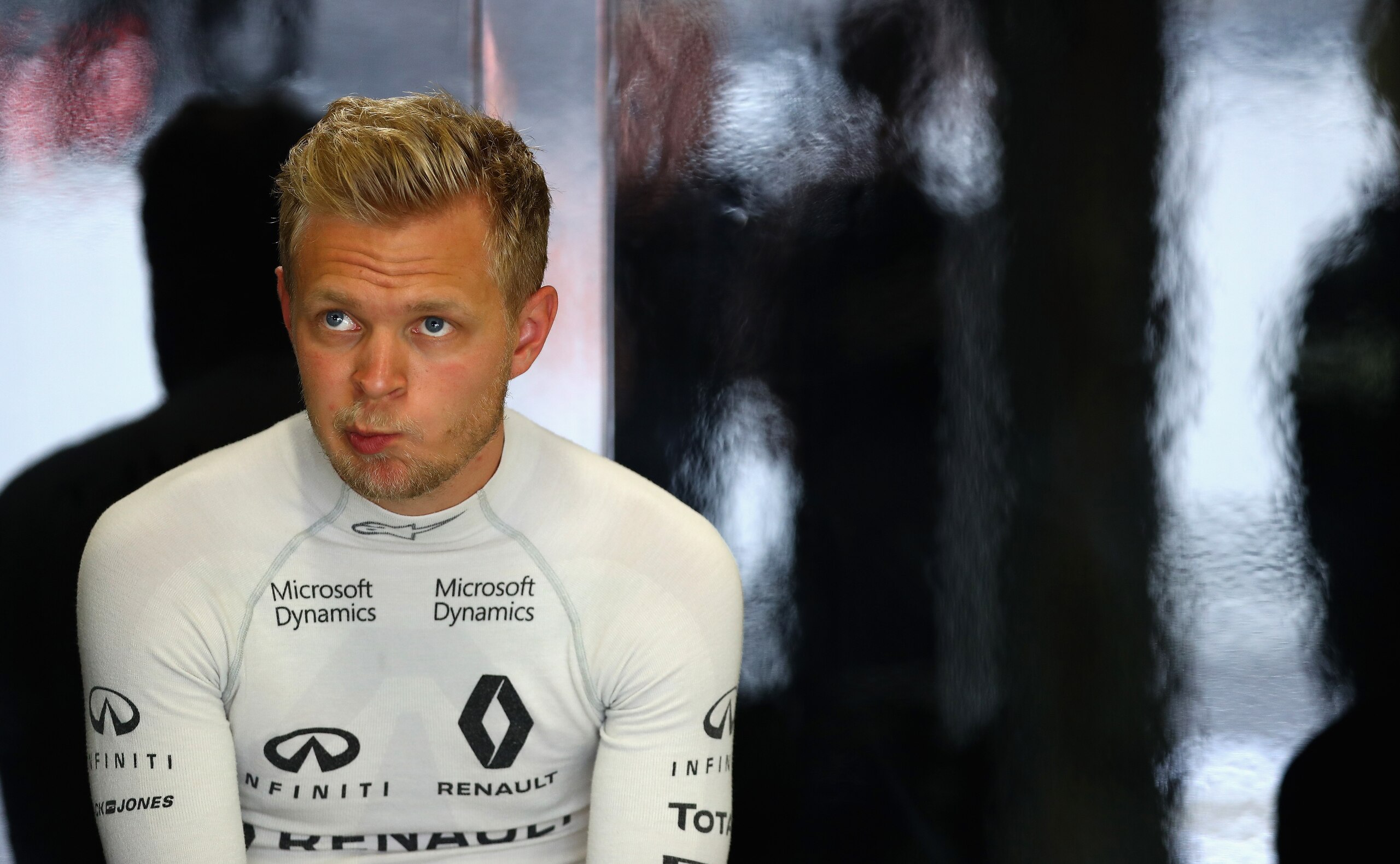
Having spent a single season with Renault, Kevin Magnussen will partner Romain Grosjean at Haas in 2017 as he attempts to kickstart his stalling career.
With Renault set to improve considerably under the upcoming regulation changes, walking away from Team Enstone is a huge risk. But Magnussen's desire for more long-term security—or, put another way, his desperation to feel wanted—is behind his decision to join Haas.
After all, Renault have spent much of this year trying to replace him and team-mate Jolyon Palmer, with Carlos Sainz Jr., Sergio Perez, Valtteri Bottas and Esteban Ocon all linked to the team at various points, per Sky Sports' Matt Morlidge.
And even if the Dane did accept their offer of a contract extension, the team would have probably dropped him at the end of next season regardless.
However, one team-radio conversation between Magnussen and the pit wall at Interlagos explained why Renault were not particularly keen to keep him anyway.
Magnussen's message leads our analysis of the best of the Brazilian GP radio, with McLaren-Honda's Jenson Button, Ferrari's Sebastian Vettel, Red Bull's Max Verstappen and race winner Lewis Hamilton all featured.
Kevin Magnussen Ignores Renault's Request for Feedback
1 of 5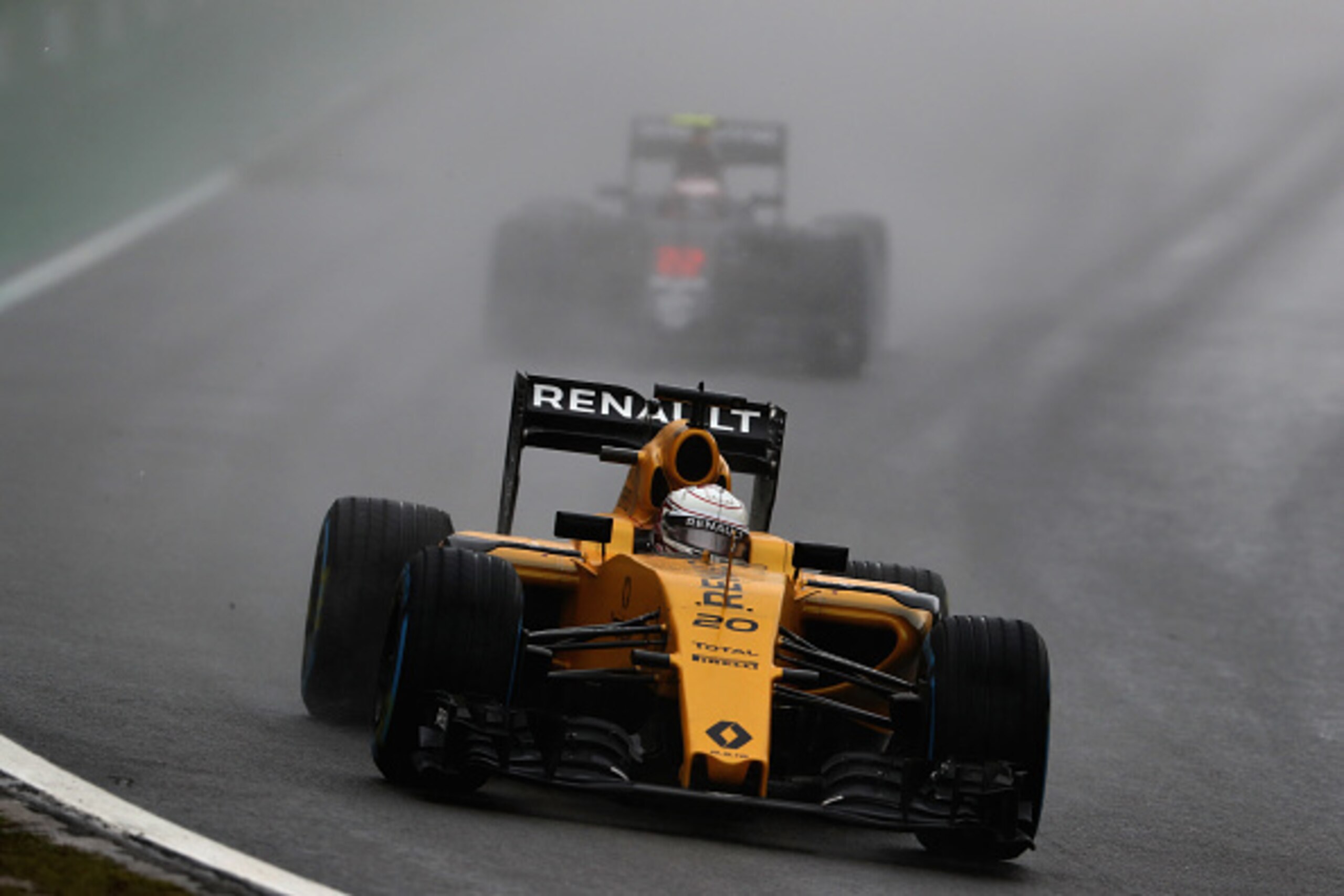
In the last race to be affected by rain, July's British GP, we witnessed the difference between a future world champion and an ordinary F1 driver.
While Verstappen needed no invitation to offer clear, concise feedback to the Red Bull pit wall at Silverstone, Magnussen had to be prompted by his Renault team to discuss the track conditions.
And when he was asked, the little information he did provide was useless.
Without a car capable of scoring solid points on merit, Renault had to take a risk or two in Brazil, where Magnussen became the first driver to switch to intermediate tyres at the exact moment the safety-car start ended on Lap 7.
An aggressive, adventurous strategy required good, constant communication between driver and team, but Renault once again found it difficult to retrieve valuable information from the cockpit to assist their calculations.
When the safety car disappeared at the beginning of Lap 32, Magnussen immediately came under pressure from Nico Hulkenberg for 13th place and was in no mood to talk.
"Talk to us about the conditions, Kev," said his race engineer, Chris Richards, on Lap 34.
"Just leave me alone for a bit," responded Magnussen—recycling Kimi Raikkonen's classic Abu Dhabi 2012 line—who later faded away to 14th place following an ill-advised decision to revert to inters on Lap 41.
On a weekend Magnussen's transfer to Haas was formally announced, this interaction revealed exactly why the Dane will be driving for a third different team in three seasons in 2017.
As reported by a print edition of F1 Racing magazine, Renault felt Magnussen was generally faster than team-mate Palmer in 2016, but the 24-year-old's apparent lackadaisical attitude—the exact attitude he displayed in Brazil, you might say—led to them having second thoughts.
That was why Renault—reluctant to commit to him for the long term—insulted the former McLaren driver by only offering him a one-year contract extension, as he told Motorsport.com's Jonathan Noble.
And it is why Magnussen, rather than leading a full-blown factory team alongside Hulkenberg, will be driving a Haas in 2017.
Jenson Button Struggles in the Wet as His End-of-Career Countdown Continues
2 of 5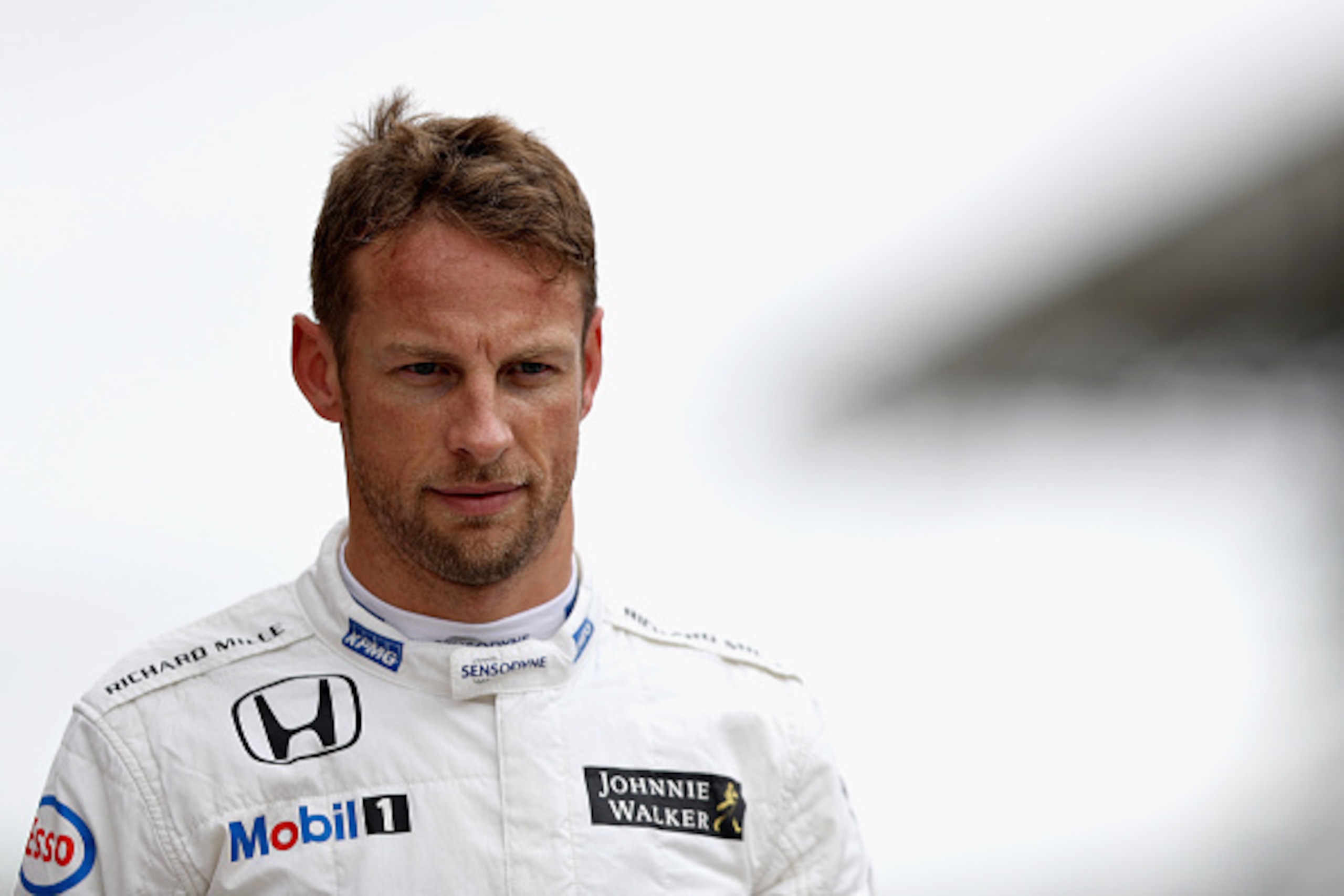
Watching Button in the final weeks of his F1 career is akin to spending time with a much-loved elderly relative approaching the end.
Everyone knows the end is nigh, and as heartbreaking as it will be to let go and say goodbye, there is a quiet acceptance that the time has come.
As he recently told Motorsport.com's Adam Cooper, Button has been counting down the days until his final grand prix, until he can quietly slip away into the afterlife known as rallycross and Super GT.
His enthusiasm for F1—his determination to fight on—suffered a fatal blow at Interlagos, where he was eliminated from the first segment of qualifying for the third time in four races and later told Sky Sports' television coverage of his relief that he has just one race left to go.
Four years since his last grand prix victory, the rain of race day offered Button a hand for one last dance in the conditions in which he was once unbeatable.
But even a juicy, slippery track couldn't provoke a response from the McLaren-Honda driver, one of the lost souls who flirted with the intermediate tyres on two separate occasions during the race.
"Struggling on both tyres!" he complained while running last on Lap 37, three laps after switching from extreme-wets to inters. "Just can't get the tyres working."
"Copy, Jenson, copy. Pace is OK, matching wet runners," replied race engineer Tom Stallard, reassuring his driver that while the tyres didn't feel great, they were delivering respectable times.
Those times were nowhere near fast enough, however, with Button still rooted to the rear of the field as the rain intensified.
"I think we're gonna have to come in and put wets on. Aquaplaning is really bad."
"Jenson, other cars are going to inter. Other cars are still going to inter," Stallard said on Lap 44, a lap after Verstappen gambled on the green-striped rubber.
"I don't care! I cannot drive through the last two corners with this tyre," Button snapped back, encountering the same rivers that had caught out so many of his rivals on the hillclimb toward the start-finish straight.
Button's wish was granted at the end of that lap, when he switched back to wets, yet he was still utterly helpless in the conditions.
Trundling behind the safety car after Felipe Massa's crash on Lap 51, Button—whose sensitivity to a car's handling is both his greatest strength and his biggest weakness—even felt compelled to insist the car, not the driver, was behind his poor performance.
"Yeah, seriously! The car is just not working, guys. I've not suddenly forgotten how to drive in the wet! It just comes from qualifying, the car's the same."
As reported by Autosport (h/t Eurosport), Button later suggested his car had developed a fundamental problem between Friday and Saturday, once again dismissing the notion that he—to put it bluntly—was past it.
The very fact he felt he had to deny his powers have faded proved it is time for Button to be put out of his misery.
The Best and Worst of Sebastian Vettel
3 of 5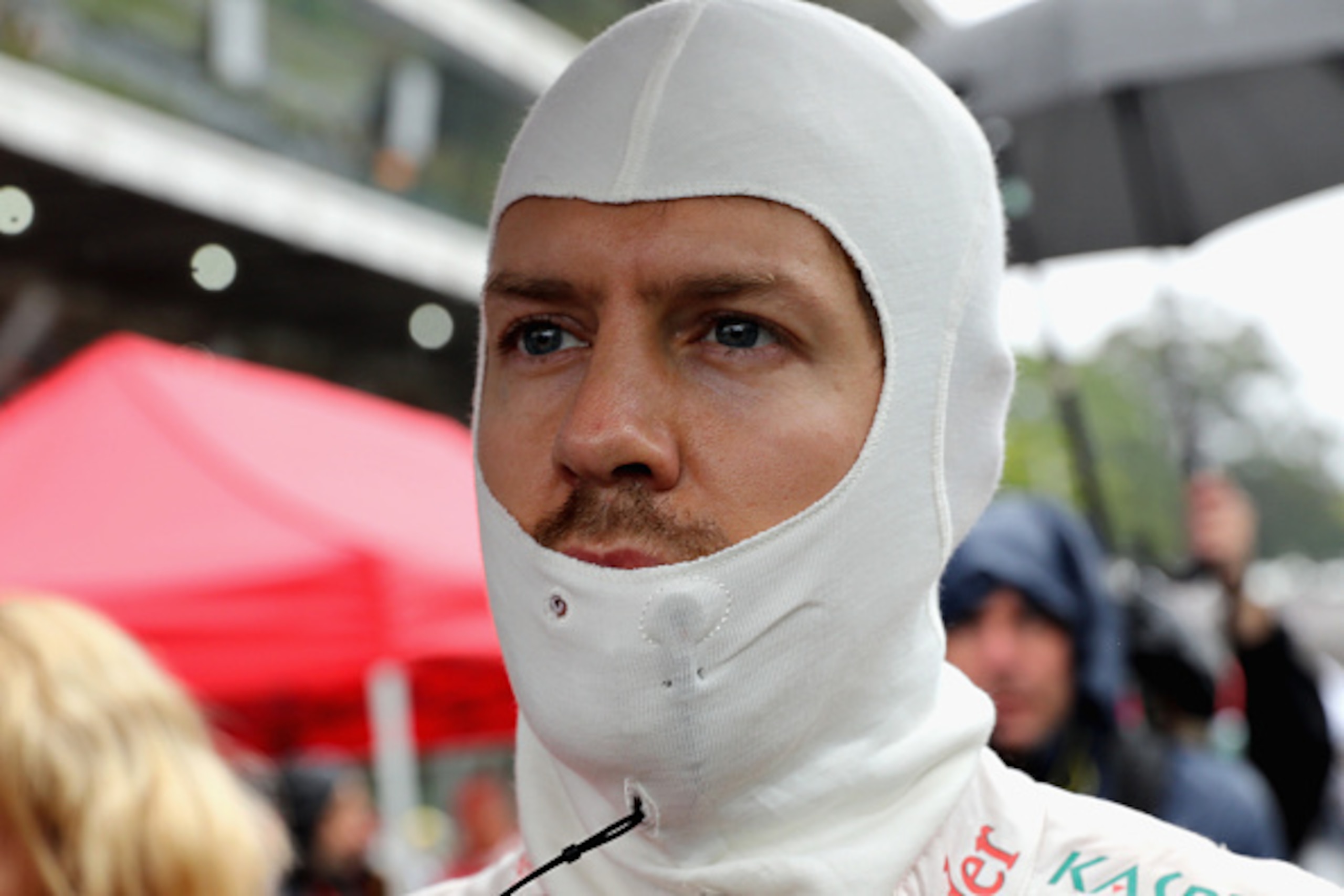
As his difficult second season with Ferrari draws to a close, it has become quite fashionable to criticise Vettel.
According to F1i.com's Phillip van Osten, some members of the Italian media appear to be scapegoating him for the Prancing Horse's second winless campaign in three, while many have grown tired of his constant calls for blue flags and general petulance over team radio.
That was illustrated by the overblown response to his radio rant in Mexico, where an F1 driver had the utter cheek to show his emotions in the cockpit.
But as the four-time world champion might tell you, sometimes a driver has to shout a little in order to get their point across, which is what Vettel did when he watched Raikkonen, his team-mate and long-term friend, suffer a huge crash after aquaplaning on the main straight on Lap 20.
"I mean, this is just, this is just mad," Vettel cried, having earlier seen Grosjean and Marcus Ericsson crash at the same part of the circuit. "Honestly. It's just stupid. Red flag! That's what it, that's what this needs. It needs red flag."
"Cool the brakes and how about extremes? You think extremes are better now?" replied his race engineer, Riccardo Adami, still focused on his driver's tyre strategy.
"Yeah, we need extremes. We need extremes, first of all. Second, we need to stop the race. It doesn't work. How many people you want to crash? I nearly crash into Kimi! In the middle of the straight! Couldn't see anything!"
For all the complaints about his conduct in recent weeks, Vettel's leadership—as the only driver to openly criticise the officials for allowing the race to continue in those conditions—was there for all to see at that stage.
And the FIA clearly listened to the four-time world champion's calls, with the red flag waving moments after he gave them the hint.
Unfortunately for him, the officials weren't quite so willing to listen on Lap 66, when he went wheel-to-wheel with Verstappen once more.
With the events of Mexico still fresh in his mind, Vettel was reluctant to concede fifth place to the Red Bull driver without a fight, and when the inevitable move came, he stubbornly held the outside line at the final corner.
That gave Verstappen an open invitation to simply run him out of road and ease him onto the grass, but although it was a naive move by Vettel, he was convinced he was again the innocent victim of the teenager's uncontrolled aggression.
"He pushed me off the track. I was a little bit ahead with my nose. And he just pushed me off the track," he stated calmly, aware that he couldn't rant, rave and swear over the airwaves so soon after Mexico.
After taking a stand earlier in the afternoon, Vettel had let himself down with his anti-racing stance.
.png?w=2560)


Max Verstappen Survives High-Speed Spin with Save of the Century
4 of 5
It was Monaco '84 all over again, Spain '96 with a modern twist.
As reported by Motorsport.com's Noble, Red Bull team principal Christian Horner felt it was "right up there" with the finest wet-weather performances in the history of F1, the natural result of bringing grassroots techniques to the very summit of the sport.
His own father told Sky Sports television it even took him by surprise, while three-time world champion Niki Lauda felt compelled to take his hat off as Toto Wolff admitted it overshadowed his title-winning team's best result of the season, per Noble.
But it—Verstappen's flurry in the final laps of the Brazilian GP, during which he surged from 16th to third—very nearly didn't happen.
Running within two seconds of Hamilton on Lap 38, Verstappen made his only mistake of the afternoon on the uphill climb toward the pit straight, touching the painted white line on the inside of the final kink.
As he lost control of the rear, it seemed he was heading straight to the accident site where Grosjean and Ericsson had earlier deposited fragments of carbon fibre, but a swipe of opposite lock transformed the full spin into a half-spin.
The only problem, though, was that rather than heading for the concrete wall on the outside of the track, he was now sliding toward the armco barrier on the inside as that eerie silence of inevitability descended on the No. 33 car.
Yet with a wriggle or two of the steering wheel, Verstappen somehow managed to twitch the car away from the wall, saving the day in the nick of time and continuing on his merry way, even keeping Nico Rosberg behind.
"OK, well held, Max. Well held," came the congratulations from his race engineer, Gianpiero Lambiase.
"Yep, heartbeat went a bit higher there," Verstappen chirped in the calmest fashion imaginable.
Even when his race flashed before his eyes, even when he had to resort to acrobatics to keep his car in one piece, the boy wonder still dealt with it with charm and humour—and then delivered the best individual performance in years for good measure.
What a star.
Visor Issue Forces Lewis Hamilton to Swap Brazil-Inspired Crash Helmet
5 of 5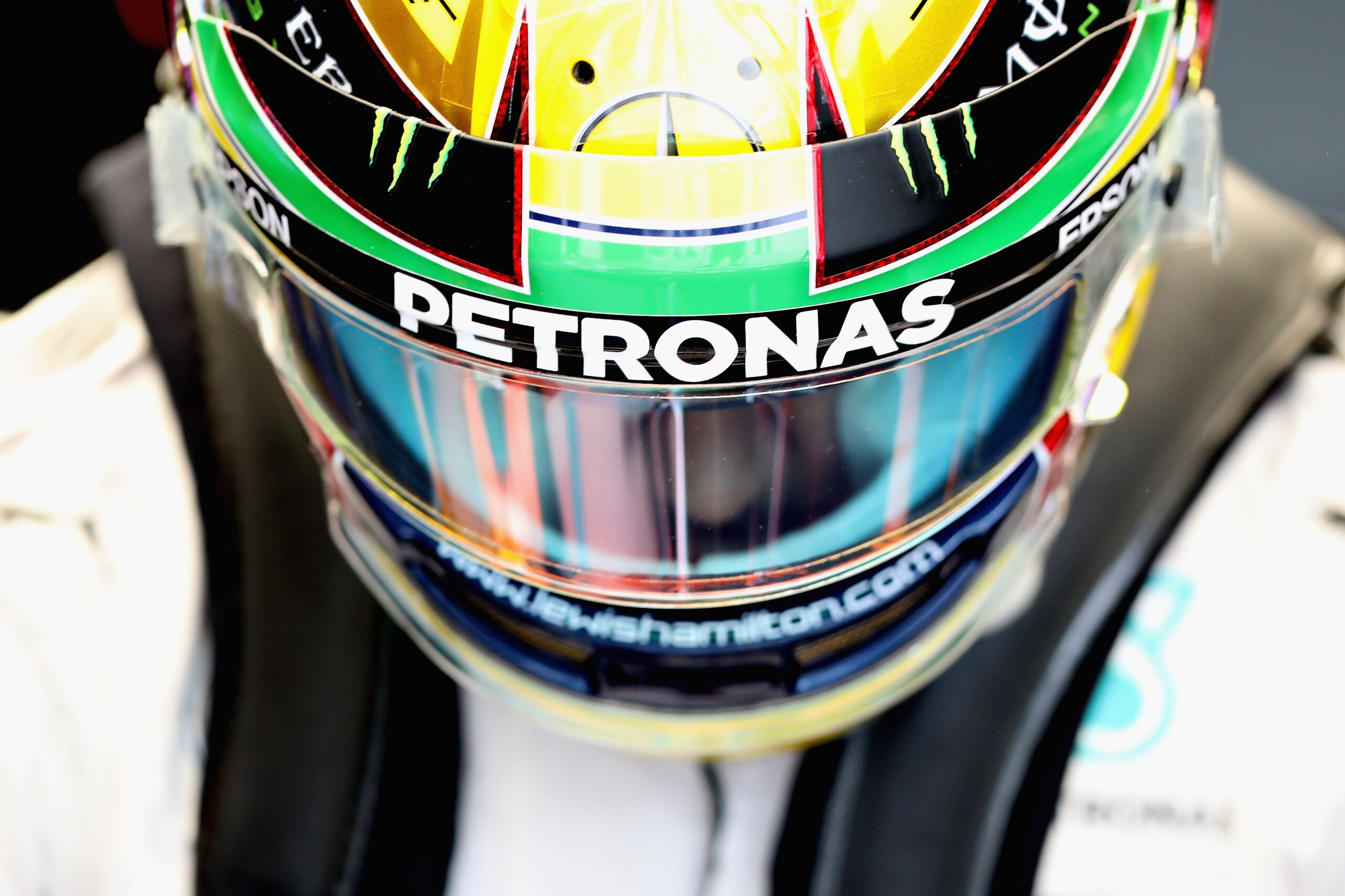
It felt just like old times on Thursday at Interlagos, where Hamilton unveiled a one-off crash helmet for the Brazilian GP.
Hamilton's official Twitter account revealed the design was inspired by Brazil, where the locals have come to treat him as one of their own, and three-time world champion Ayrton Senna, his boyhood idol.
But it also resembled the design he used from his karting days all the way until the beginning of 2014.
After three seasons of wearing a mostly white helmet, Lewis Hamilton finally looked like Lewis Hamilton again, and the sight of a yellow lid bobbling around in a silver car just felt right.
It seemed to bring him good luck, too, with Hamilton channeling the spirit of Senna to claim a comfortable pole position—only his second at Interlagos—in qualifying.
At a circuit that also took Senna several seasons to crack, Hamilton would no doubt have loved to have claimed his maiden Brazilian GP victory wearing the colours of his fellow three-time world champion.
Yet an unusual issue prevented him from doing so, with Hamilton getting all watery-eyed as he led the field behind the safety car at the start.
"When I stop later, if there's any way you can block the top of my visor...There's so much water coming in. Big, big chunks have just landed in my eyes," he reported nervously on Lap 6.
Having been distracted enough to report the problem at slow speed, you can only imagine how disturbing the constant stream of water would have been when the safety car disappeared and the race really began, although Hamilton seemed to manage it well to establish a healthy early lead.
It would have been fascinating to observe how—if it all—the Mercedes mechanics would have attempted to resolve the problem during the No. 44 car's first pit stop, but the gaffer tape was never required.
The first red-flag stoppage for Raikkonen's crash gave Hamilton the timeout he needed to swap his helmet and revert to his white design for the rest of the race, which he won with ease.
Given F1's spoilsport stance on helmet-design changes, however, it was almost surprising that Hamilton's mid-race change of headgear didn't attract the attention of the stewards.
Timing and tyre data, as well as team-radio quotes, sources from the official F1 website, the FOM television feed and Pirelli's official race report.
.jpg?w=2560 "Eagles Football")