

Cubs vs. Indians: Keys for Each Team to Win World Series Game 6
The Chicago Cubs did their part to make this World Series look a lot more interesting.
By winning Game 5 at Wrigley Field, Chicago sent the series back to Cleveland for a pivotal Game 6. The Cleveland Indians lead the series 3-2.
It's a series that has been largely defined by pitching, as both teams have played erratic offense at best. So many of the keys to Tuesday’s game lie at the plate.
But that’s not all that will determine whether or not this series goes a full seven games.
Indians: Get to the Cubs' Middle Relievers
1 of 6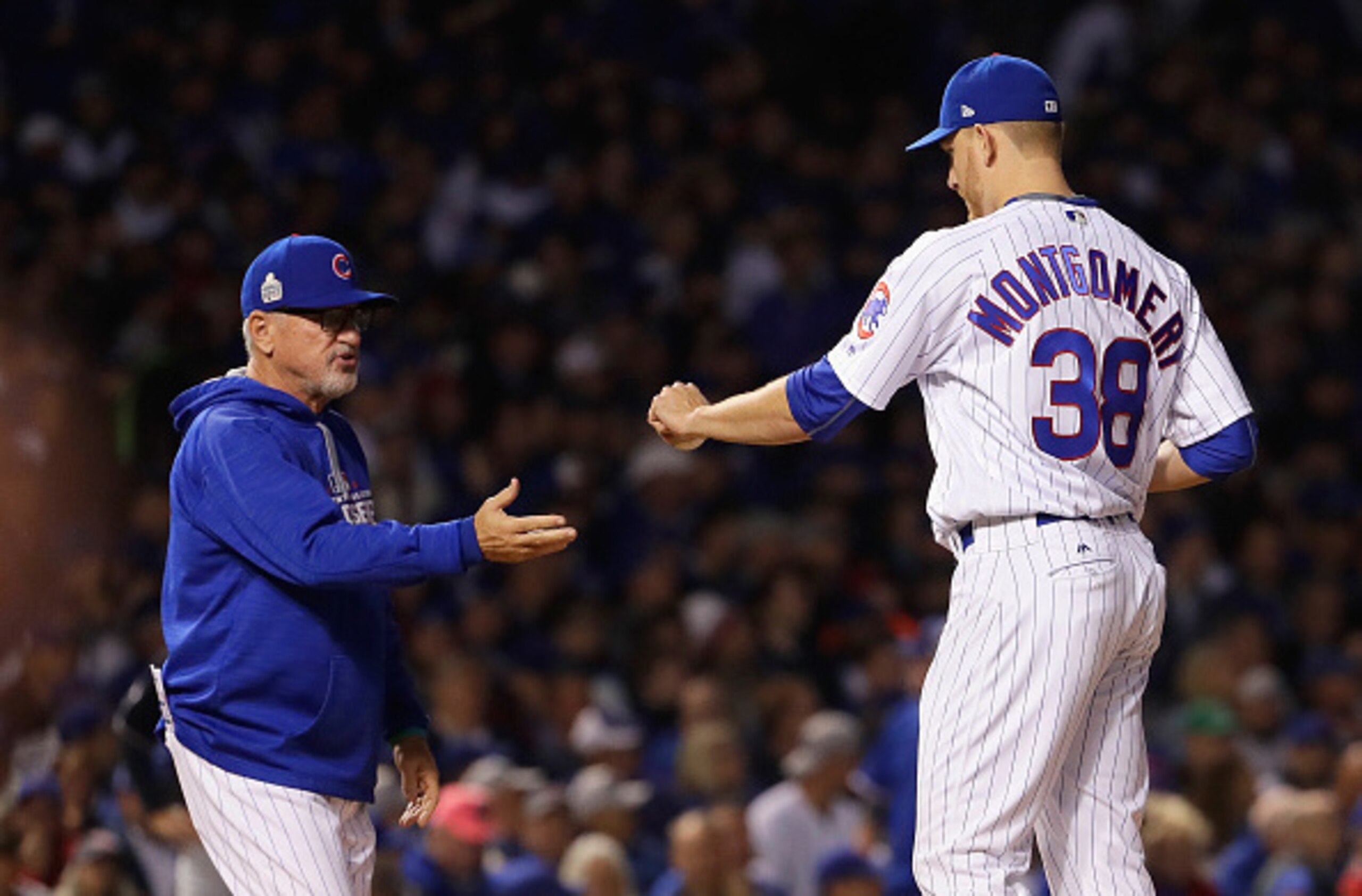
Unquestionably, the weakness of this Cubs team is its bullpen, namely its middle relievers.
The team tried to remedy the situation by acquiring righty Joe Smith and left-handed specialist Mike Montgomery at the trade deadline. But Smith flopped and isn't on the World Series roster. Montgomery has been good at times during these playoffs, but he struggled in his last outing.
Montgomery allowed a run, a hit and walked two in 0.2 innings pitched in Game 4. Likewise, fellow relievers Justin Grimm and Carl Edwards Jr., both righties, have been unreliable.
Grimm has an 18.00 ERA in three appearances this series, which have totaled two innings. He has allowed three hits, four runs, walked a batter and has struggled with his command. Edwards got an out for the Cubs in Game 5 but allowed a run in Game 3.
Given the collective struggles of the group, it's important that the Indians get as many at-bats as possible against them. That means running up the pitch count on Chicago starter Jake Arrieta, drawing walks and taking advantage of the right-hander's slow delivery by attempting steals.
By driving up Arrieta's pitch count, Cleveland will force Cubs manager Joe Maddon to lean heavily on that group of middle relievers.
Indians: Hit with Runners in Scoring Position
2 of 6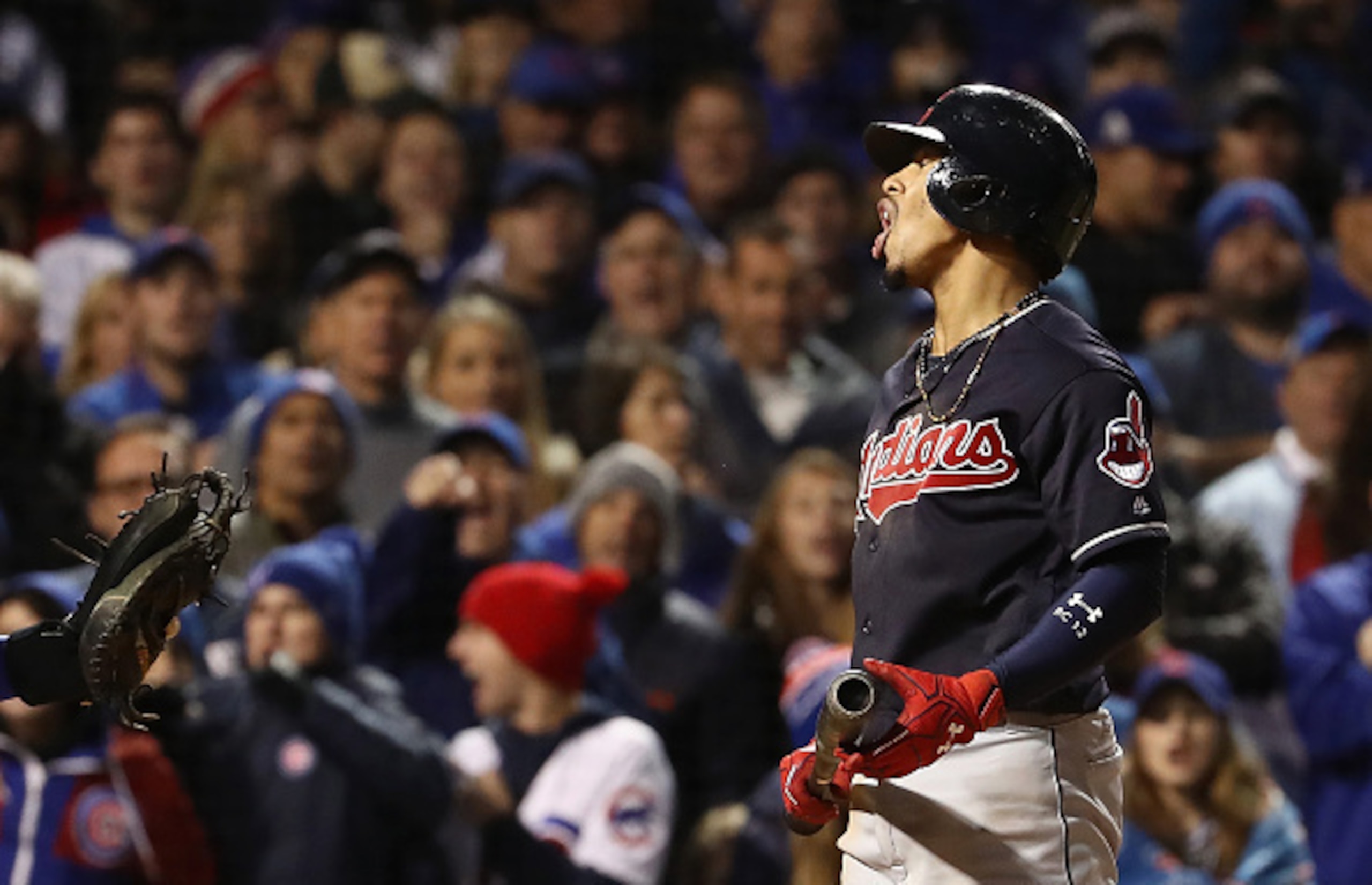
The World Series might already be over if it weren't for Cleveland's terrible hitting with runners in scoring position.
In a potential series-clinching Game 5, the Tribe went 1-for-10 in that situation. By comparison, the Cubs hit .300.
That was unquestionably the difference in a game that Chicago won 3-2. Given the inconsistency with which both teams have hit this postseason, it's important not to squander run-scoring opportunities.
Shortstop Francisco Lindor had Cleveland's lone hit with runners in scoring position. That scored center fielder Rajai Davis. Third baseman Jose Ramirez drove in the other run, hitting a solo homer in the second inning, but he failed on both his at-bats with runners in scoring position. Second baseman Jason Kipnis and catcher Roberto Perez also had two opportunities.
Given that Chicago has struggled at the plate this series, capitalizing with runners in scoring position could blow Game 6 wide open for Cleveland. In the Indians' 7-2 Game 4 win, they were 3-for-8 with runners in scoring position.
Indians: Free Bases
3 of 6
During the regular season, no pitcher was harder to hit than Arrieta, whose .194 batting average against was the best in MLB.
Yet, his WHIP was 1.08.
That's because Arrieta has a tendency to issue walks. He issued 76 free bases this season, which was tied for ninth in baseball.
That's the way to beat him. Be patient at the plate, test his command and understand that a walk is as good as a base hit.
Especially for the Indians.
Perhaps no team in baseball is able to punish opposing pitchers for issuing free bases more than the Indians. Cleveland stole 134 bases this season in an era when running has been discouraged by some organizations.
That ability to move runners into scoring position without getting an official hit (a walk then a steal) could help the Indians spark their offense. In Game 5, Cleveland failed to draw a walk.
That is among the reasons the Indians only scored two runs.



Cubs: Arrieta’s Efficiency
4 of 6
There may not be a player in Tuesday's Game 6 who can impact the outcome more than Arrieta, the Cubs' scheduled starter.
Given Chicago's aforementioned bullpen issues, it's paramount that Arrieta pitch deep into the game. An ideal scenario would be for Arrieta to hand the ball to closer Aroldis Chapman, skipping over Chicago's middle relievers altogether.
But Arrieta has struggled with his efficiency throughout most of the season.
He has not had an outing of more than six innings this postseason and only pitched 5.2 innings in his last start, Game 2 of this series.
Though Arrieta only allowed two hits and one run in that outing, he threw 98 pitches, which forced Maddon to use his relievers heavily.
It's an issue that plagued Arrieta throughout most of the season, causing him to lose his status as the team's ace. But the 2015 NL Cy Young Award winner certainly is capable of pitching deep into this game. It's just a matter of being more efficient.
Arrieta needs to focus on getting ahead of hitters and challenge Cleveland's batters on the edges of the strike zone. His ability to do so is crucial to the Cubs' success.
If Arrieta is able to manage his pitch count in the early innings, expect Maddon to try to ride him deep into the game.
Cubs: The Bottom of the Order
5 of 6
Throughout this series, the Cubs have been searching for someone at the bottom of their order to get timely hits.
Right fielder Jason Heyward, second baseman Javier Baez and shortstop Addison Russell have all looked lost at the plate. Likewise, catchers Willson Contreras and Miguel Montero have struggled.
It's unclear which players Maddon might hit at the bottom of the order. But it's likely to be three of the four aforementioned positions.
Given Chicago's offensive struggles, Maddon could elect to start Contreras, who has more offensive potential than Montero. But Tuesday's starter, Arrieta, is more comfortable when Montero is catching, which complicates the decision.
Regardless, whomever hits in the bottom third of the lineup needs to produce.
Baez has looked the worst among the bunch, swinging at wild pitches and others way outside the zone this series. Heyward's .273 average during the World Series is deceiving and the result of a pair of seeing-eye singles. He has struck out four times in 11 at-bats this series.
If the final three players in the order are ineffective again Tuesday, as has been the case for that part of the lineup all series, the Cubs will essentially be conceding an inning each time through the order.
Cubs: Score Early
6 of 6
Generally this is a goal for any team playing any baseball game. Playing with the lead is always advantageous. It allows a team's pitchers to be more aggressive and allows a manager to take more chances by sending runners and playing small ball.
But in the case of Tuesday's Game 6, early runs might be more of a necessity than a luxury.
Cleveland's bullpen has been outstanding this postseason. Manager Terry Francona isn't afraid to use his relievers to pitch the majority of a game. Left-handed reliever Andrew Miller, the ALCS MVP, has been nearly unhittable and can easily pitch three innings in Tuesday's game.
Right-handed closer Cody Allen has been untouchable this series. In three appearances he has allowed three hits and struck out 10.
Chicago has not scored on him.
In the Cubs' Game 5 win, the Indians bullpen pitched four innings, allowed one hit and struck out seven. And Miller didn't even pitch.
Given how good the group has been, Chicago's best chance at scoring will be with starter Josh Tomlin in the game. But that might only be in the first few innings, considering Francona, understandably, likes to go to his bullpen early.



-(1).jpg?w=2560 "Grading WWE Raw 🔠")
.jpg?w=2560 "🔴 Live: Monday Night Raw 👊")

.jpg?w=2560 "Waiver-Wire Pickups 👀")
.jpg?w=2560 "Week 1 Rankings 📊")
.jpg?w=2560 "Best Fantasy Team Names")