Cam Newton's Roughing-the-Passer Complaints Open Pandora's Box of Questions
Could the NFL be sitting on a trove of data about blown penalties and officiating errors? If so, then this is information that teams, players and fans need to see. But they won't, and that's a shame.
Cam Newton complained about the officiating after Sunday's Panthers-Cardinals game after absorbing a pair of un-flagged hits that looked a lot like roughing the passer. Newton even said that he would seek a meeting with Roger Goodell to talk about his status as the league's human pinata.
The NFL has vowed to review the matter, but a source told Pro Football Talk that officials have only missed three roughing calls on Newton since 2013. That's right. Three...in over three seasons.
TOP NEWS
.jpg?w=2560 "Seahawks Chiefs Football")
Trevon Diggs Cut by Seahawks
.jpg?w=2560)
B/R's Expert Week 7 NFL Picks 🔮
Picking Each NFL Division Winner 🔮
Eleven other quarterbacks have had it worse, according to the source. Call them Newton's Eleven: Jay Cutler, Alex Smith, Geno Smith, Josh McCown, Andrew Luck, Matt Ryan, Kirk Cousins, Joe Flacco, Ben Roethlisberger, Case Keenum and Ryan Tannehill, in the order listed by PFT.
It's an eclectic list which raises many questions that we will get to in a moment. But first, the big questions:
- Since when does the NFL have uncalled roughing-the-passer penalties since 2013 lying around to be referenced the moment a quarterback raises an objection?
- Does the league also keep track of penalties that should not have been called? Does it keep track of missed penalties and inappropriate flags for personal fouls, holding, pass interference and other infractions? Is it all on a spreadsheet, collated by team, player and officiating crew?
- And if so, why aren't we allowed to see it?
The answers to those questions aren't clear. Former vice president of officiating Mike Pereira has described the intensive, meticulous process of grading every official on every play to me several times in the past.
"I would track calls both made and missed by an official and the tracking would have included who the foul was called on or who it should have been called on," he told me in an email Monday.
But there was no long-range database or ability to track the victim of a blown call during Pereira's tenure, which ended in 2010. Perhaps it's a new feature, as evidenced by the "since 2013" limit on the Newton roughing data.

So either (A) there are three years of tabulated data that the NFL uses solely to evaluate officials and win proxy arguments with disgruntled quarterbacks; (B) someone in the league keeps track of uncalled roughing-the-passer penalties for personal satisfaction; or (C) someone in the league made up a number and a list to circulate in the media as an excuse for not picking up the phone when Newton calls.
Options B and C sound preposterous, even by NFL standards. But option A raises a whole stack of questions.
Do Newton's three missed roughing calls include regular season and postseason games? What about the preseason? If the NFL determines that it missed two roughing fouls on Newton on Sunday, does that total of five move him into ninth place among the Newton 11? Sixth place?
Who holds the three-year record for getting socked without repercussions? Is it Cutler? The list includes several journeymen with relatively few pass attempts (McCown, Keenum, Geno) and some starters with unpopular public personas (Cutler, Geno, arguably others). Might there be evidence of a perceptual bias hidden in the blown roughing-the-passer calls? If I were an oft-injured quarterback like Geno Smith, my career was going south and there was evidence that I was the victim of a disproportionately high number of potentially-injurious hits that were not properly officiated...
Maybe that's why the NFL doesn't want us to know about its blown-call data. Except that it just let us know it keeps blown-call data.
There's a whole Pandora's box in that bad-penalty data. There could be evidence that a cornerback got jobbed for extra pass interference penalties, or that a wide receiver lost a handful of big receptions to uncalled contact. Come free agency, the blown calls could cost them millions of dollars.
Say a coach on the hot seat has to justify a disappointing season to the owner. The NFL happens to know that his team was victimized for the most blown calls in the NFL. It sits on the data, a whole staff gets fired and an organization risks making a potentially bad decision due to lack of complete evidence.
When all of the missed calls and erroneous flags are theoretical, or matters of opinion, and a player or coach loses a game or an opportunity, them's the breaks. But when the league is keeping an official record, then the penalties become no different than yardage totals or touchdowns, except that they are hidden within the league's Airplane Hangar of Secrets.

Granted, there's a downside to letting Josh Norman know the exact results of last week's internal officiating review about illegal contact penalties. So the NFL can scrub the names of the crews and officials. It can also only make the data available annually to prevent in-season complaints about specific plays or games. The data could be released during the Super Bowl parade so the 31 other fanbases have something to gripe about.
The blown-penalty data can affect careers and player safety, so it must at least be available to teams and the NFLPA. But why is the bad-penalty data our business, except for the fact that we are the customers and we would love a gander at it?
The reason comes down to the NFL's two least-favorite concepts: transparency and accountability.
The bad-penalty data might confirm some widely held suspicions: The Broncos get away with extra goonery, the Seahawks extra contact, the Cowboys line lots of uncalled holding, while opponents in Foxborough endure unwarranted flags for sneezing. Or maybe the data debunks some or all of those theories. Heck, local fanbases will probably pick and choose what they want to believe, anyway.
Either way, the data is out there. But we don't know what the NFL calls correctly and incorrectly, by its own estimation, as well as what situations lead to officiating errors and which players and teams felt the greatest impact.
That transparency leads to accountability. Instead of falling back on "the refs blew it," coaches, players, fans and media can point to, say, a 10 percent error rate on holding, or a 20 percent increase in uncalled roughing against a scrambling quarterback, or real home/road or late-and-close biases toward incorrect calls. The more we know what to look for, the easier it is to make the kind of corrections that can make the games both safer and better played.
Alas, if the NFL really has such a mountain of data, it will never share it with the public. In lieu of embracing glasnost for once in his career, Roger Goodell should at least hold his meeting with Newton. Newton asked nicely, after all. What sort of CEO refuses a meeting with one of his most successful employees?
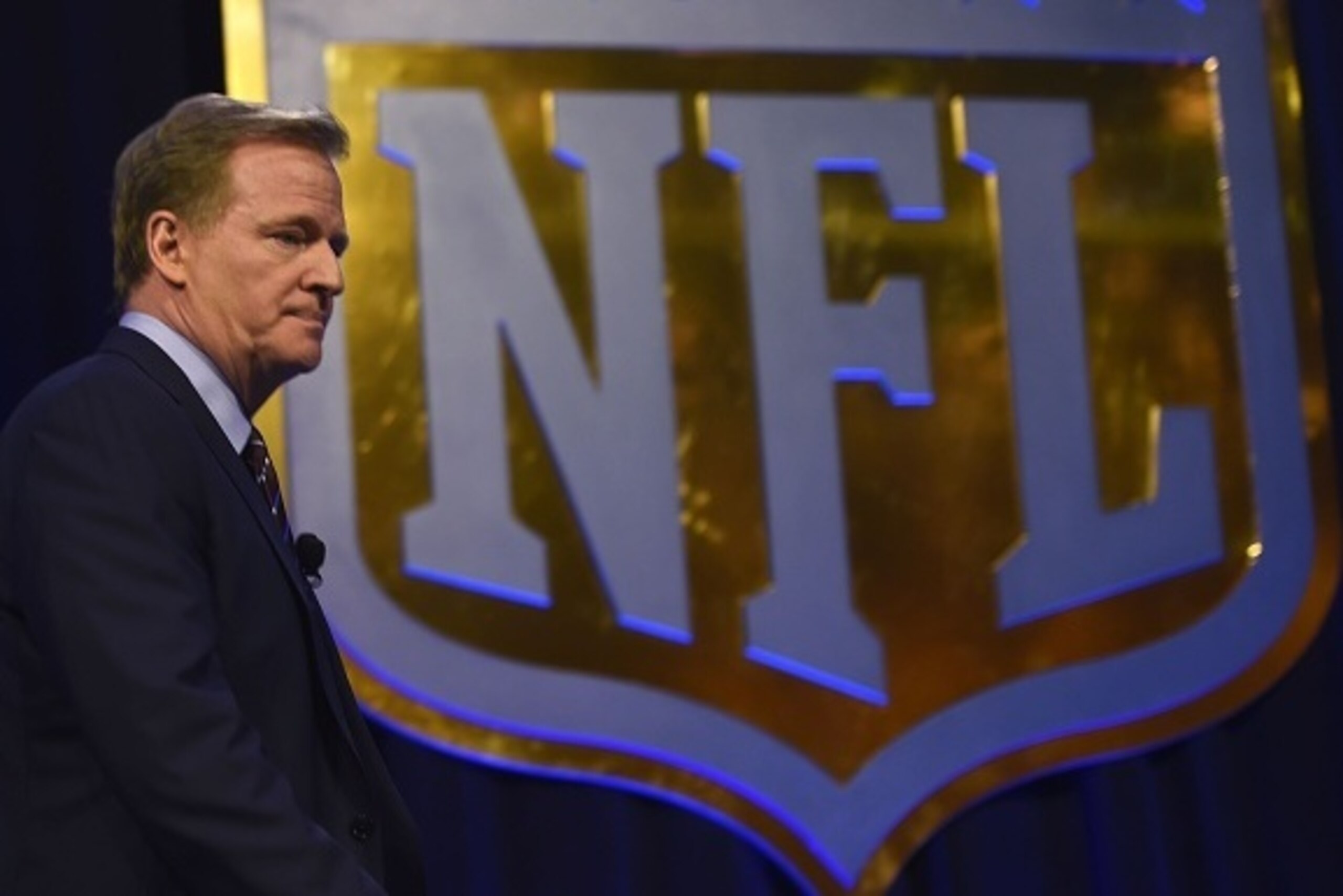
Goodell can hear Newton out, then he and current officiating chief Dean Blandino can show Newton all three of his roughing no-calls on Game Pass. It would only take an hour and 45 minutes to log in, and 15 more to review the plays. (Game Pass users all nod here.) Then Newton can show the plays he has questions about, starting with Sunday's after-the-throw knee lunges.
If the league's data and reasoning are complete and airtight, Newton will probably find the league's decisions satisfactory. He may even spread the good word about the NFL's ability to course-correct its officiating internally.
But if the "three mistakes" story and face-to-face explanations amount to a load of horse fritters, well...Newton usually tries to avoid controversy. But word will get out pretty quickly that the NFL makes up some of its most important penalties as it goes along and that even internal consistency is a major issue.
That's why the NFL probably won't host a Goodell-Newton summit.
And it's precisely why we will never get a real look at the blown-calls data.
Mike Tanier covers the NFL for Bleacher Report. Follow him on Twitter @MikeTanier.
.jpg?w=2560 "Chargers Chiefs Football")
.jpg?w=2560 "Grading SmackDown 🔠")