England's 2014 World Cup Campaign and How It May Influence Their Euro 2016
For a couple of moments, England's 2014 World Cup campaign felt not just full of promise but alive.
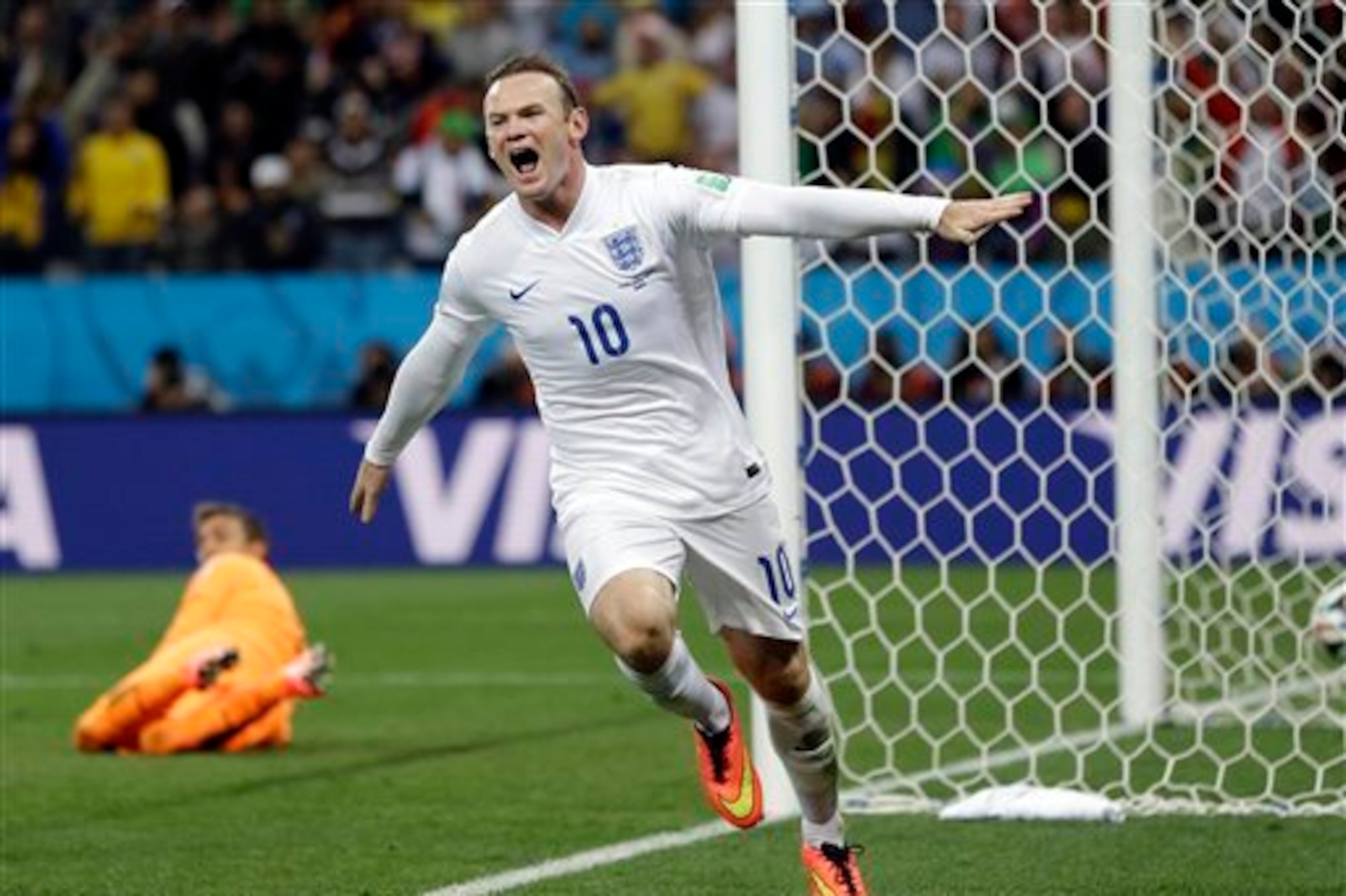
Pre-tournament build-up and anticipation—the kind we are in the midst of ahead of Euro 2016—is exciting, but it has nothing on seeing your country actually deliver on such a big stage. Daniel Sturridge and Wayne Rooney's respective equalisers against Italy and Uruguay ignited England's participation in Brazil, creating that intoxicating, shared rush of joy so unique to international competition.

TOP NEWS

Soccer Stock Check 📈📉

New NFL contenders starting to emerge after Week 4
.jpg?w=2560 "Cardinals Giants Football")
NFL investigating 2 referees for separate viral exchanges
Rather than fan the flames of a summer to remember, though, they were to prove an all-too-brief flickering. England left South America resigned to looking to the future, Roy Hodgson's men not sufficiently equipped for present requirements.
Two years on, it is fascinating to watch the Three Lions' group games in Brazil again—especially as we wait to find out how Hodgson's side will compare closer to home in the expanded European Championship. That World Cup experience is in the past, but it inevitably has a bearing on what is ahead—as it did on the subsequent journey that has taken England to this point.
Removed from the emotion of the time, the positives of England's performances certainly hold up. However, the excitable and one-note assessments of the coaching staff (at least in places) read as narrow as they did then too.
"The football we played in that game was some of the best I’ve seen in 10 or 15 years in a competitive World Cup match or European Championship match," assistant coach and ex-international Gary Neville said of their 2-1 loss to Italy, per the Mirror's Martin Lipton.
"It’s a bit tough to accept that we lost the game, especially considering there were so few shots on our goal in the second half," Hodgson said to Jamie Bradbury of the Football Association's website.
This ignores how Italy were content to sit back on their lead. Even then, the manager would proceed to go back and forth on his take on the game, betraying concern that more accurately represented what went on.
Some of England's attacking work did warrant Neville's enthusiasm.
The still-teenage Raheem Sterling took the fight to the Italy defence, his skillfully penetrative runs evoking still-fresh memories of his contributions to Liverpool's Premier League title near-miss that season. His Reds team-mate Sturridge was lively around the penalty area while Danny Welbeck's willingness in the wide role brought some much-needed balance (his absence this time around is the cause of much of the uncertainty relating to England's forward selections).
Their aforementioned reply to Claudio Marchisio's opener highlighted what the team was capable of.
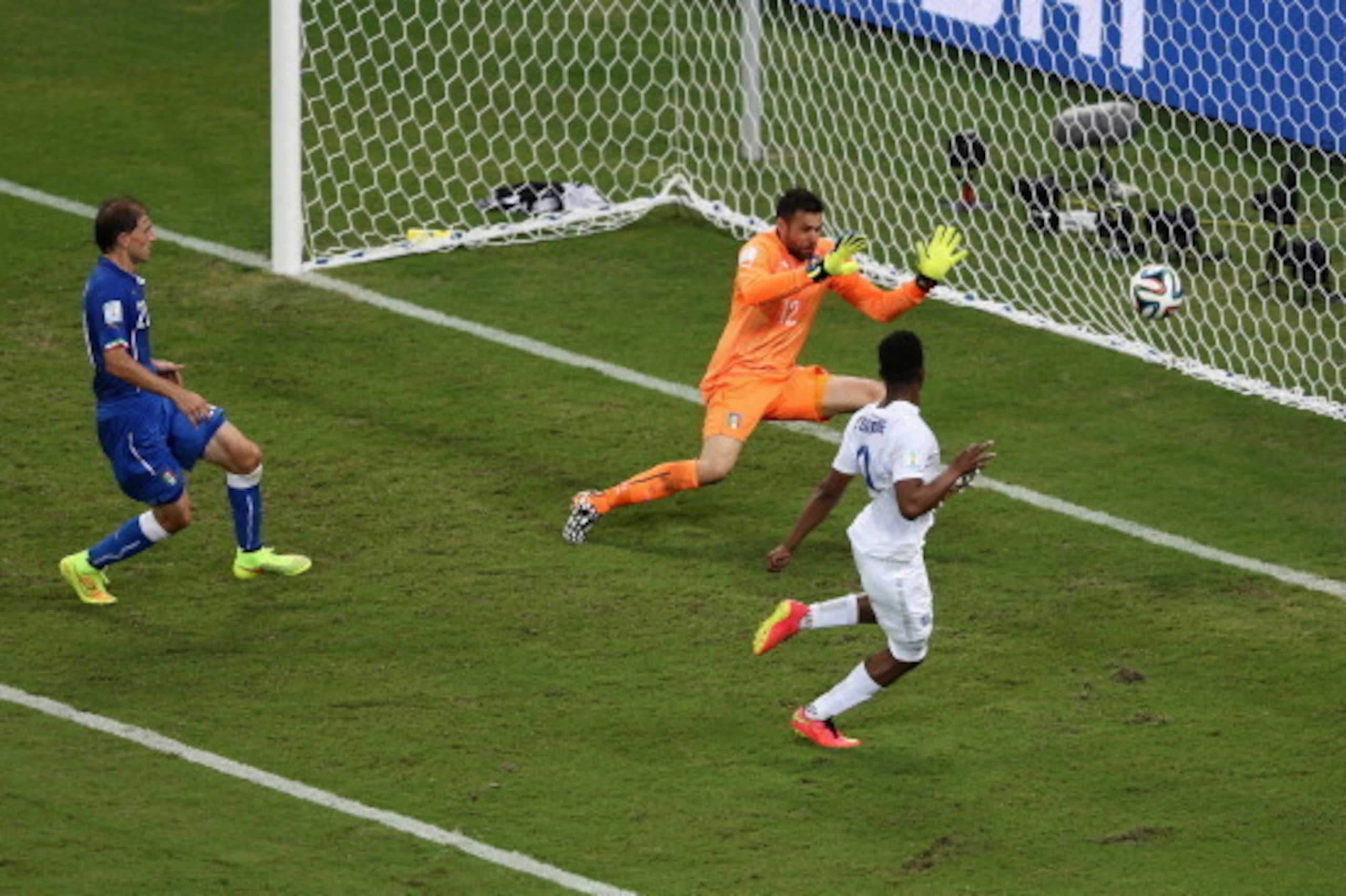
Sterling recovered a poor pass by captain Steven Gerrard, turned quickly and sent Wayne Rooney forward down the left. Capitalising on the space he would see little of otherwise, the wide man's assured control and prompt cross allowed Sturridge to finish a thrilling break.
England had chances beside (18 shots to Italy's 13, as tallied by BBC Sport) but were unable to capitalise. Although a consequence of profligacy in places, the failure to score more and their ultimately being caught out again was more damningly entwined with an erratic defensive display and the misguided strategy that informed it.
The latter had its roots in Euro 2012 when, facing Italy in the quarter-finals, England were spellbound by playmaker Andrea Pirlo. Hunting him down in midfield, he was too clever for them, his feet operating a good second or two ahead.
"If you look back to the game against Italy in Euro 2012, I felt we were on the ropes with our gloves up, defending for 12 rounds but losing on points," Neville said of the penalty-shootout defeat, again per the Mirror. "But the other night we won a few rounds."

The rounds England did win were consolatory at best. They were not caught out advancing on the Pirlo-led midfield but instead stood back and allowed themselves to be gradually softened by cumulatively damaging jabs.
The logic of not completely committing themselves to charging at Pirlo, as well as Daniele De Rossi and Marco Verratti, was sound. But there needed to be some engagement to ensure they did not have things all their own way. Alas, neither Gerrard and Jordan Henderson in central midfield nor Sterling and Sturridge further forward (unrestricted by the wing responsibilities Rooney and Welbeck had) got anywhere close to halting them.
In this instance, not even a sturdy defensive midfielder like England have now in Eric Dier would have made too much difference. Italy were allowed to slowly but surely batter them into submission, with Antonio Candreva and Matteo Darmian particularly enjoying great freedom on the right up against Leighton Baines and Rooney.
Both goals originated from there—a short corner leading to Marchisio's long-range strike, and then Candreva and Darmian combining to tee up Balotelli with a cross—but they firmly had their roots in England's submissive midfield retreat.
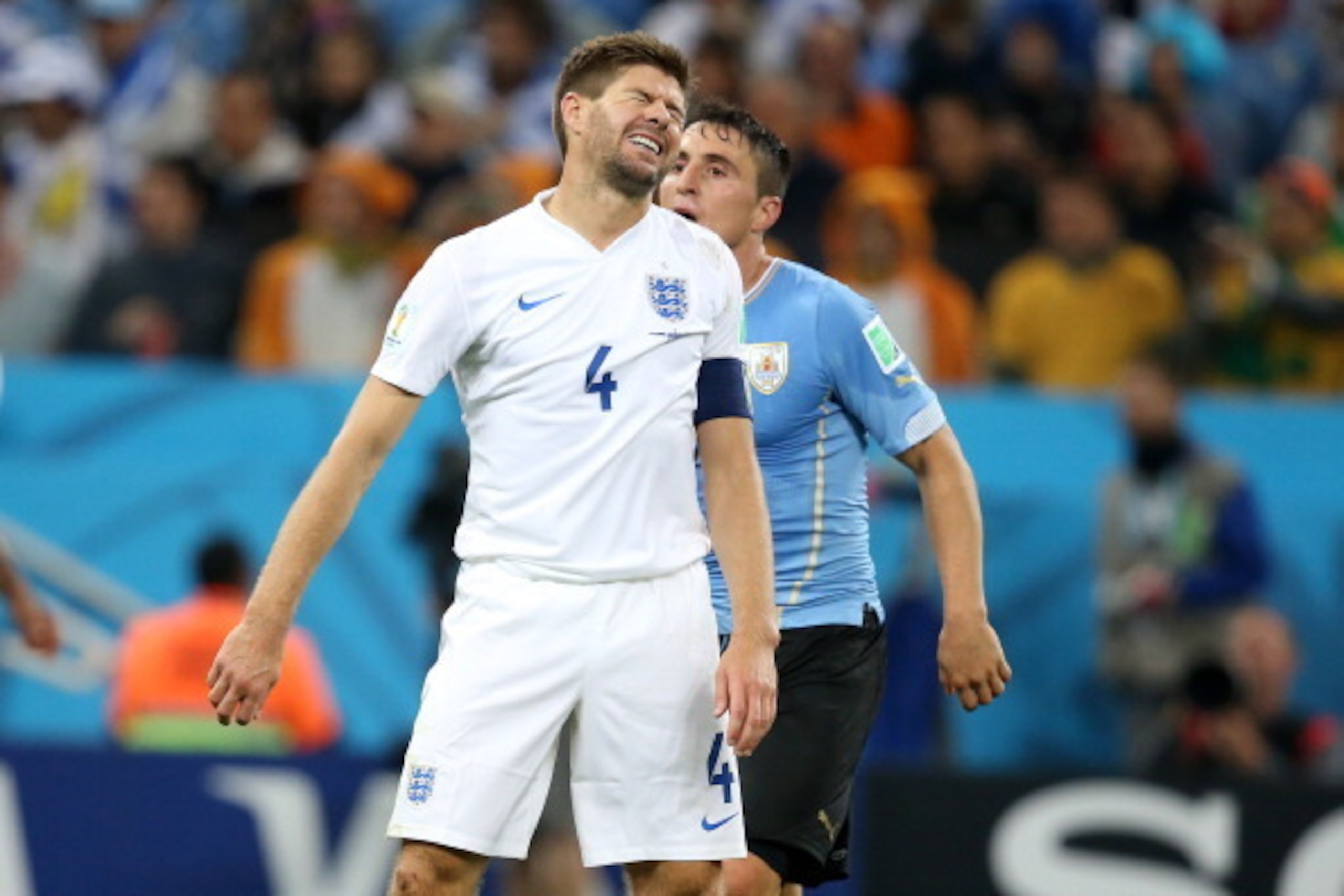
The following 2-1 defeat to Uruguay had more in common with an all-action Premier League contest than the more tactical previous game—something that made their general inferiority (save for a strong middle period in the second half around Rooney's goal) all the more frustrating.
England were still ineffectual in midfield. Admittedly, they were pinned back for long stretches (that more protective presence would have been useful here up against the likes of Edinson Cavani and Luis Suarez), but their inability to influence much going forward was demoralising. Henderson was straining at the leash and offered some energy, but Gerrard offered little more than the occasional nice pass.
The most troubling holdover from Italy was England's unfocused defence once again failing to take responsibility, especially at centre-back. They will certainly need much better from the only remnant from it, Gary Cahill, in France this summer than was seen in Brazil.
Against Italy, he tried to pass Balotelli on to Glen Johnson, except the right-back was already tracking a Marchisio run. The striker gleefully took advantage.
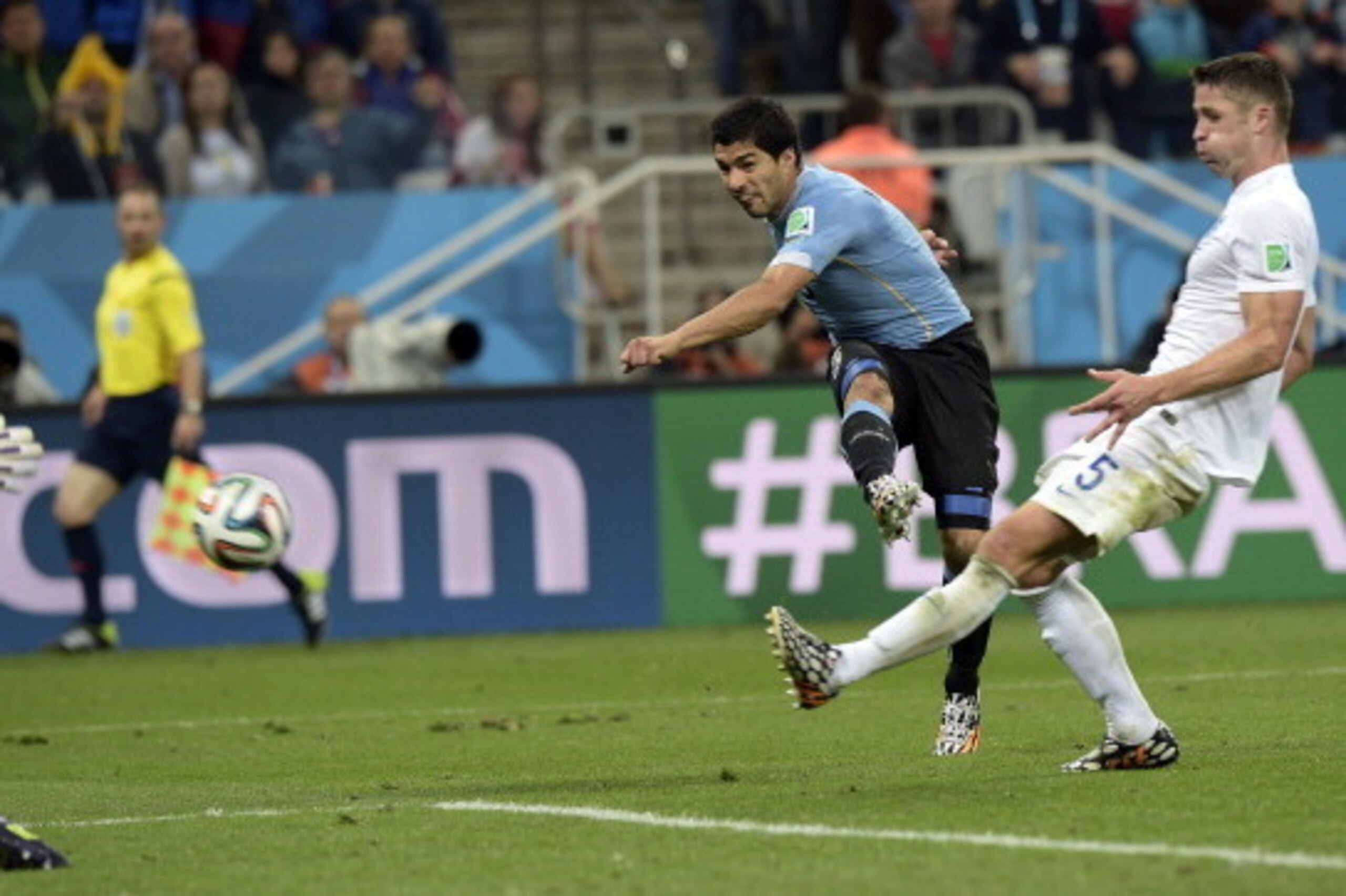
The even more blatantly ball-watching Phil Jagielka was to blame for Suarez's opener for Uruguay, but the preceding move's progression was emblematic of a disorganisation Cahill was doing little to address.
The same issues were there for the second. Jagielka was caught out anticipating a header Gerrard poorly got to first. It flew behind both to Suarez, Cahill allowing the Uruguayan a baffling amount of space to charge on and score.
As noted, there was a more familiar pace to this clash. When they were not under the cosh, this helped England attack at greater frequency and as well as they did at times against Italy. Rooney was certainly happier playing off Sturridge rather than to his side.
Ultimately, though, they lacked the quality and composure—perhaps even the courage of conviction—their opponents did.
It is why there is rightly so much hope new faces such as Dele Alli, Harry Kane and Jamie Vardy can improve England this time around.
The excitement stems not just from their club performances but how fearlessly they have already applied their abilities to international football (albeit in less important occasions than a European Championship). All this without the star names so many managers have constantly deemed more important to winning than a healthy, balanced team.
Well, except one: the enduring/lingering enigma that is Rooney.
England's final group game back in 2014 summed up a fear in Hodgson to try new things his approach to their last friendly against Portugal suggests still exists.
If his starting Frank Lampard against Costa Rica was a concession to allowing the veteran one last game representing his country, the second-half introductions of Gerrard and Rooney unnecessarily impinged on the supposed progression Hodgson was also claiming.
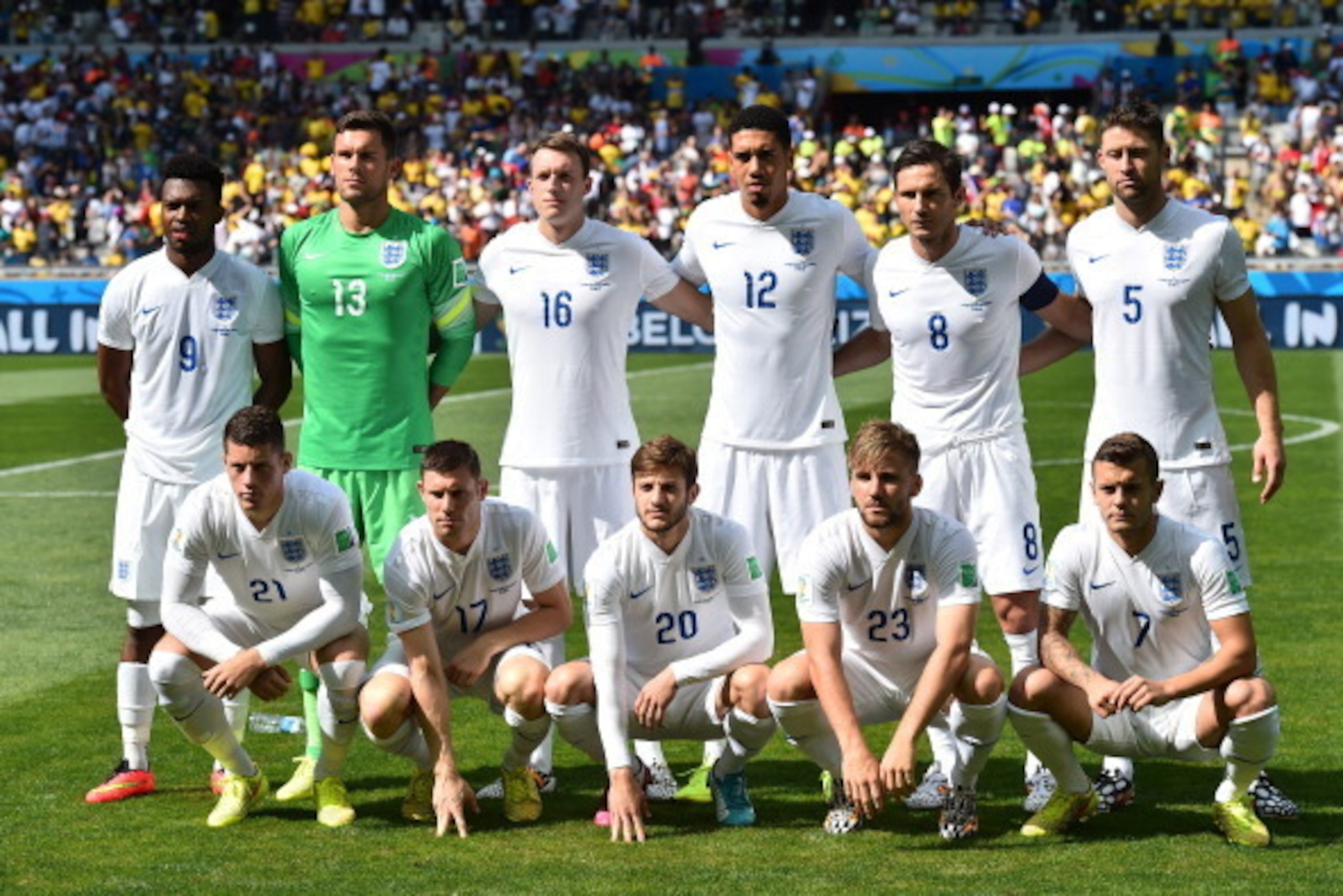
Ross Barkley, Phil Jones, Adam Lallana, Luke Shaw, Chris Smalling and Jack Wilshere were all given starts (the previously impressive Sterling also coming off the bench). They played positively—encouragingly even. Hodgson talked of his plans to build around them, per BBC Sport, but even then he could not close the door on Gerrard and Lampard (who took it out of his hands by retiring).
Rooney is the unfortunate scapegoat here in the present. He cannot have done much more since the last World Cup (and even in that tournament itself), leading the team's scoring in qualifying, as well as netting in enjoyable wins over old rivals Scotland and Australia.
But Hodgson's need to start him at all costs feels like an unwelcome concession to the England of that tournament.
The manager paid lip service to a bold, adventurous style but the team was held back. In the little efforts that make up the big moments, the players fell short of their Italian, Uruguayan and Costa Rican counterparts too.
The England squad—the aforementioned new hopes as well as better experienced holdovers such as Lallana, Smalling and Wilshere—is good enough to progress at Euro 2016. It is up to Hodgson to get out of their and, consequently, his own way.

.jpg?w=2560 "Hill Injury Update Football")
.jpg?w=2560 "OBJ Calls Out Giants 😳")
.jpg?w=2560 "Tyreek makes another cryptic post amid Chiefs rumors")