

Successful Coaches of Tomorrow Are Paying Their Dues on Alabama's Staff Today
TUSCALOOSA, Ala. — For those who have been around the University of Alabama football program for a while, he’s already a familiar face.
Ed Marynowitz has been at the football complex a lot this spring, including during the Crimson Tide’s pro day, and even though he isn’t listed as having a position with the program, no one would be surprised if that changes in the near future.
Marynowitz used to be Alabama’s director of player personnel. Most football fans outside of Tuscaloosa are more familiar with his last job, running the personnel department for the Philadelphia Eagles when Chip Kelly was the head coach.
TOP NEWS

Report Card for Top 20 CFB QBs 📝
B/R's 2026 Heisman Trophy Rankings after Week 5 🔢
Top Overreactions after Week 5 of CFB Season 😧
There’s a reason why Alabama has the reputation of having the best support staff in college football. It’s almost certainly the biggest, yet it is usually in flux because so many people use it as a springboard.
That's normal for a major college football program, although just a quick glance at some of the staff directories in the Southeastern Conference demonstrates how no two are alike.
For example, Arkansas’ athletic department has a director of clinical and sport psychology on staff, Dr. Michael Johnson. The Ole Miss football staff has its own graphic designer. Texas A&M has sports performance coaches, a fancy term for the weight room staff.
When it comes to staff limitations, the NCAA mandates that a football program can have nine coaches and four graduate assistants. There’s no limit on anyone else.
“I think that there is a place for 10 coaches on a staff,” said head coach Nick Saban, who would like to see the maximum raised by one. “The numbers just work out better with a special teams coach, that you could have nine and a special teams coach.”
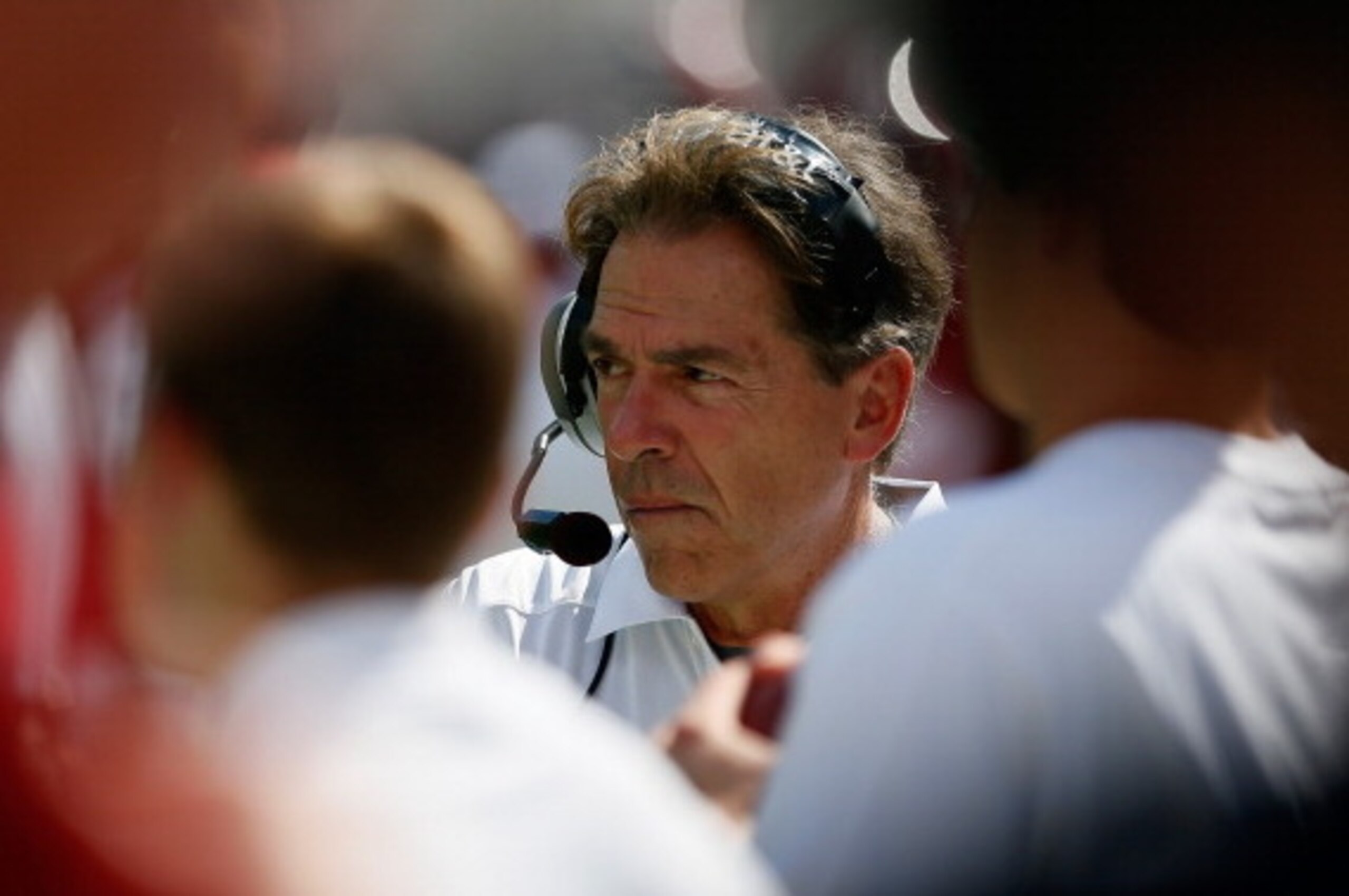
For 2016, Alabama has tweaked the staff’s responsibilities, with Bobby Williams stepping down and Brent Key being added as an offensive line coach. While he’s overseeing the guards and centers, Mario Cristobal is responsible for the tackles and tight ends.
Although his job title hasn’t changed, running backs coach Burton Burns is overseeing special teams, but he’s getting a lot of help.
"Me and Coach Burns, we'll meet sometimes and just kind of talk about special teams and stuff,” punter JK Scott said. “We really don't meet a lot with Coach Burns just because he's got running backs and stuff. We usually meet with Coach Farrell. But Coach Burns, it's been good so far with him."
If you’re wondering who Coach Farrell is, Scott was referring to Brendan Farrell, who is one of the Crimson Tide’s analysts. Among his previous positions are the assistant head coach, special teams coordinator and tight ends coach at Northwestern State, which competes at the FCS level.
They’re the guys who take care of everything so the coaches can focus on doing just that—coaching. Alabama has eight, and each one sees his time in Tuscaloosa as an investment in his future:
- Dean Altobelli: The former Michigan State player put his legal career on hold to work for the Crimson Tide. The attorney was a principal member at Miller Canfield, a Detroit-based law firm.
- Shea Tierney: Most recently was an analyst for the Philadelphia Eagles.
- Wes Neighbors: A familiar name for Alabama fans, the former defensive back was a third-generation player for the Crimson Tide, and his grandfather, Billy, is in the College Football Hall of Fame.
- William Vlachos: The former Alabama center was a three-year starter who initially rejoined the Crimson Tide as a graduate assistant.
- Charlie Weis Jr.: You may have seen his father celebrating on the field after Alabama won the national championship. Weis held a similar position for him at Kansas.
- Garrett Cox: Former linebackers coach at Texas Southern.
- Mike Locksley: Former Maryland offensive coordinator and head coach at New Mexico from 2009-11.
If you’re thinking Alabama is simply throwing money at them to stack the deck, it’s not. According to figures Jon Solomon of CBS Sports acquired from the University of Alabama Division of Financial Affairs, their positions paid just between $23,462-$47,409 last year.
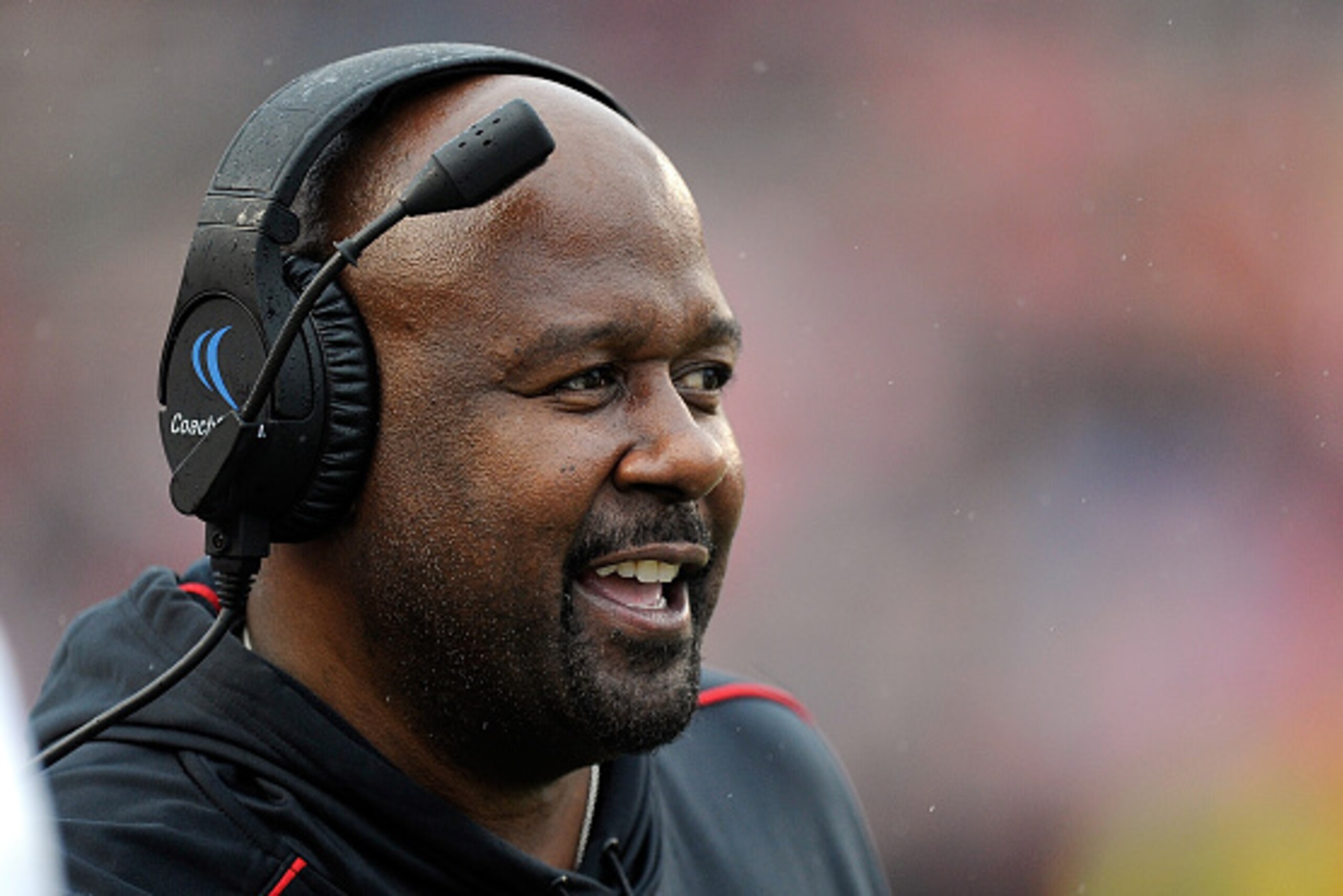
“We love it that we can have some extra guys around that are young guys that aspire to be coaches, and I think one of the most difficult things about our profession is how do you get experience so that you can grow and develop as a coach,” Saban said.
Despite the low wages, the analyst jobs and other low-level positions in the program are highly sought.
For example, in 2013, Joe Palcic accepted the special teams coordinator job at Miami (Ohio), his alma mater, but resigned for an opportunity to serve as an Alabama analyst. Jake Peetz did that as well. He went from that to joining the Washington Redskins as an offensive quality control coach to quarterbacks assistant with the Oakland Raiders last year.
In 2015, former Kansas offensive coordinator Eric Kiesau was on the Alabama payroll. At the end of last season, he was named Fresno State’s offensive coordinator. On the defensive side, Glenn Schumann followed Kirby Smart, who called him his “right-hand man,” to Georgia to become his linebackers coach.
“Regardless of where they need to start professionally, I think this is a great thing for our profession, to be able to help develop coaches, and I think those guys now have created a role and a niche for themselves that's very important to every program because we all depend on them,” said Saban.
Some even come back to Tuscaloosa.
Before he was hired as a graduate assistant in 2010, Derrick Ansley had five years of coaching experience at Division III Huntingdon College. He left to be the secondary coach at Tennessee (2012) and Kentucky (2013-15), where he was named co-defensive coordinator in January. A month later, he returned to coach the defensive backs.
Similarly, Bill Napier was Alabama’s offensive quality control assistant in 2011 before following Jim McElwain to Colorado State to be his quarterbacks coach. In 2013, Jimbo Fisher hired him to be Florida State’s tight ends coach and recruiting coordinator, but then Saban needed a receivers coach.
As for Marynowitz, he was a scouting assistant for the Miami Dolphins under Bill Parcells, but he joined the Alabama staff in December 2008. He left at age 30 to join the Eagles’ scouting department.
"Ed did an outstanding job for us when he was here and made a great contribution to our program as director of player personnel,” Saban said in a release when Marynowitz was promoted last January. “The thing I was most impressed with was how much he wanted to learn in the area of player evaluation, and his knowledge in that area really expanded during his time at Alabama.”
Marynowitz has the kind of organized football mind that Saban likes to have around, regardless of his position, and is already well-versed in how the coach does things.

When he left, Saban initially hired someone from the outside to replace him, which didn’t work out so well. Paul Gonnella departed after one year, went to South Florida and has since started his own recruiting service named (and I swear I’m not making this up) “The Process.”
The next person to hold that job turned heads, as it was one of Saban’s former defensive coordinators, Kevin Steele.
Needless to say, having worked for Saban in any capacity stands out on a resume.
Quotes were obtained firsthand unless otherwise noted.
Christopher Walsh is a lead SEC college football writer. Follow Christopher on Twitter @WritingWalsh.






.jpg?w=2560 "Weather Channel Trolls Texans-Titans 💀")

.jpg?w=2560 "Grading WWE Raw 🔠")