Real Madrid Resist Temptation and Avoid Damage to Return Buoyed from Manchester
Both sets of players were emerging from the tunnel after half-time, and the substitute board shot into the chilly Manchester air. As it did, Zinedine Zidane emerged as well, hands in pockets, head down in thought, an intense expression saying it all: This wasn't exactly the plan.
Up on the board, "9" was in red and "20" was in green. For Manchester City, it might as well have read "woohoo" with flashing lights and fireworks coming off of it. At that moment, City had 45 minutes in front of them against a Real Madrid stripped of the pieces that make this outfit what it is. This was now a watered-down version. Real Madrid Lite.


As opportunities go, it was massive for the hosts.
But in a sense, it was an opportunity for the visitors, too.
In the buildup to City and Madrid's clash on Tuesday at the Etihad Stadium in the first leg of their UEFA Champions League semi-final tie, talk had centred on how the contradictory identities of these teams—powerful but vulnerable, explosive but flawed, talented but troubled—would create a contest of goals, buzz, moments and freneticism. It was easy to envisage a scoreline like 2-2 or 3-2, with 15 shots at either end.
Instead, what unfolded was a tense and cagey 0-0 draw, with barely any shots at all.
Surprising? Definitely.
A good result for both? Well, perhaps not quite.
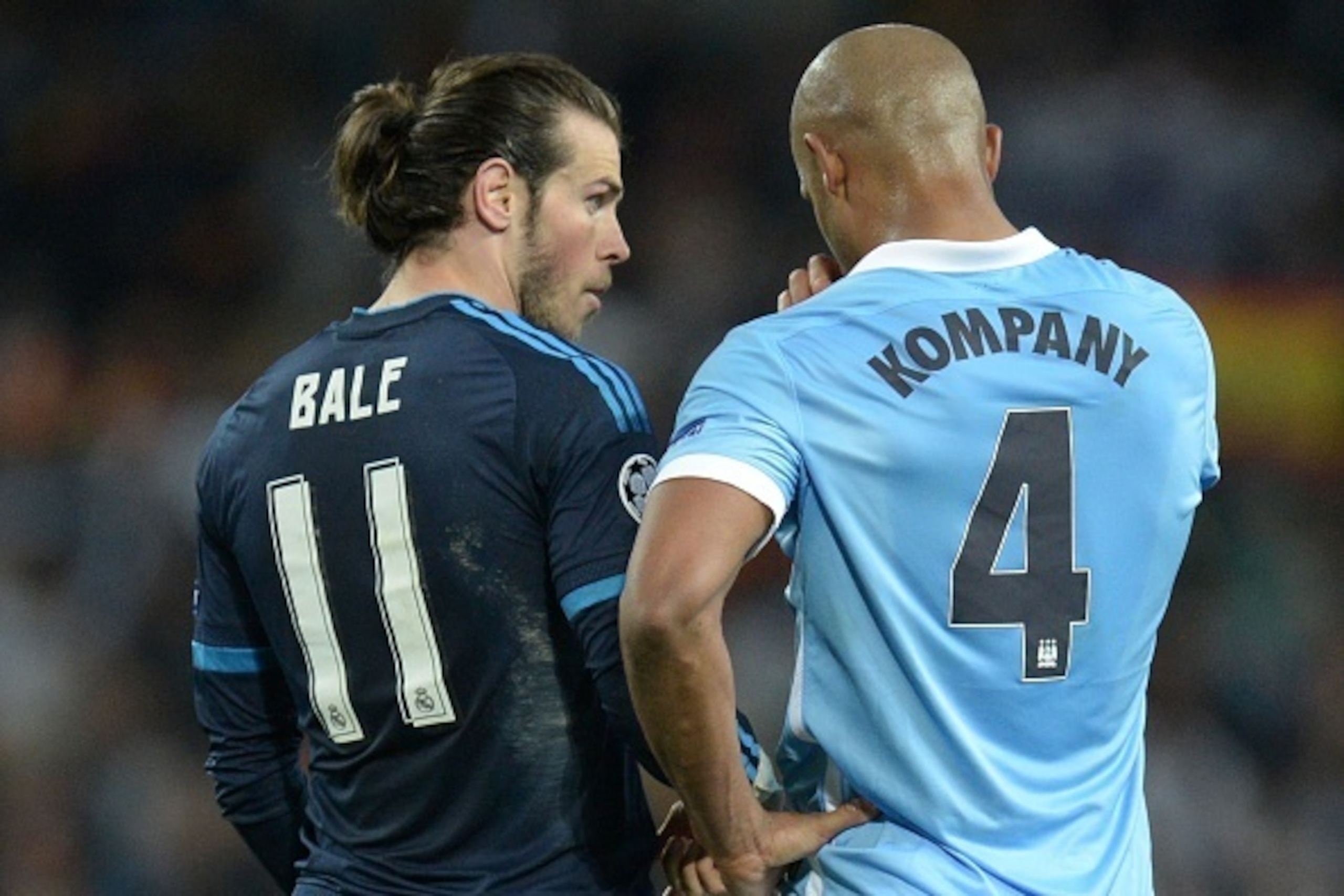
For City, this struck as an opportunity blown.
In an interview with AS's E.F.-Abascal over the weekend, manager Manuel Pellegrini admitted his side had "wanted to be drawn against Real Madrid," and here, because of niggling injuries, they'd got them without Cristiano Ronaldo for 90 minutes and Karim Benzema for 45.
This was it, you thought, but "it" never came: the goals, the aggression, the pressure, the seizing of the chance. A 0-0 has kept City's hopes intact, of course, but now they carry "what ifs" with them.
For Real Madrid, though, this did them just fine.
As Zidane's men travelled to Manchester, Marca outlined their task as to "banish their awful first-leg record of recent years." And awful is right.
Prior to Tuesday, Madrid had lost four of their last five semi-final first legs: In 2015, they lost 2-1 to Juventus; in 2013, they lost 4-1 to Borussia Dortmund; in 2012, they lost 2-1 to Bayern Munich; in 2011, they lost 2-0 to Barcelona.
More recently, too, they'd lost 2-0 to Wolfsburg in the first leg of their quarter-final tie in this season's edition, a display described by AS as simply "bad, bad, bad."
As such, the focus on Tuesday for Madrid was a narrow one. Away from home, shorn of their stars, the duty of Zidane's men was to avoid damage, to resist the temptation to try to kill the tie early and risk exposing themselves.
Indeed, too often in recent years, the club has returned to the Santiago Bernabeu having done that and failed, needing to channel into the fabled but mythical "remontada," the comeback, and the spirit-of-Juanito narrative that goes with it.
In such a respect, however, the reality is different from the reputation. Madrid haven't completed the comeback very often at all. But now they don't have to. "We [are] going to try and not concede," Marcelo had said ahead of Tuesday.
And they didn't.
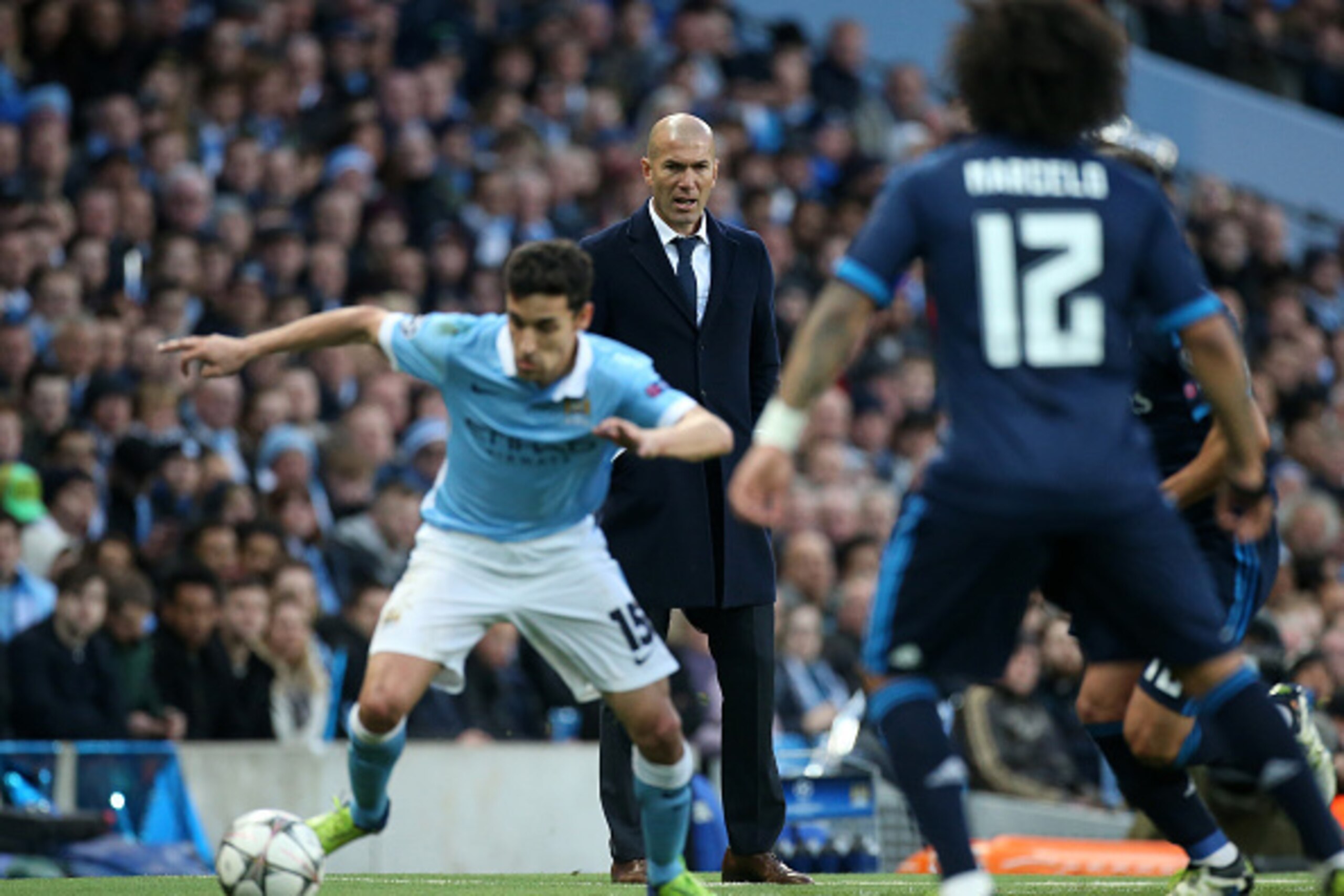
From Madrid, Tuesday's showing was an uncharacteristic one, but also very much the sort they needed.
At kick-off, one wondered how the visitors would cope without Ronaldo, and ditto after half-time without Benzema. And yet, as the game unfolded, there was a sense the absence of that pair was, in a way, almost helpful: Less explosive, more limited, Madrid had clarity created for them because the possibilities were less, their capacity for knockout blows not what it normally is.
Thus, the men from the Bernabeu turned to structure and a degree of conservatism, building further on some of the elements that have been evident as Zidane's tenure has extended.
In midfield, after a slow beginning, Luka Modric and Toni Kroos established a restrained control for the visitors, probing, passing and searching for openings without ever becoming reckless. From Modric especially, it was a masterclass of how to run a game, and behind him Casemiro continued to do very Casemiro things: clean up, tackle, protect, mark at set pieces.
Behind the Brazilian, Pepe (who almost scored a surprise winner) and Sergio Ramos were rarely troubled as a result, nor was Keylor Navas, but most notable was the approach of the full-backs, Dani Carvajal and Marcelo. On the right, Carvajal rarely ventured forward; on the left, Marcelo did so with something like a quarter of his typical frequency.
It was emblematic of Madrid's mentality: controlled, thoughtful, a regard for consequence evident.
"I'm pleased with the game because it wasn't easy," said Zidane afterwards. "We defended very well and in the second half we had more of the ball and chances to score."
Both Zidane and a number of his players lamented their inability to grab a crucial away goal, but the task they've left themselves looks good: win at home.
It's something they do well, too.
In Europe this season, Madrid have won all five of their home games by an aggregate score of 18-0. In all competitions, they've won 20 of 23 at the Bernabeu this term, scoring 85 goals in the process. In 13 of their last 15 games there, they've scored three goals or more, too.
The record is fearsome, their history too. But this time no extraordinary heroics are needed. The remontada isn't necessary. The equation isn't quite so complicated.
"If you were given the option at the start of the season to be playing in front of your own fans to get into the Champions League final, you'd take it all day long," said Ramos late on Tuesday night.
That's now exactly what Real Madrid have.


.jpg?w=2560 "Report: Darnold Could Miss 3-6 Weeks")
.jpg?w=2560 "Breaking News")