
The Top 5 Renault Formula 1 Liveries
Over nearly 20 years in Formula One, the Renault team has produced several beautiful (and a few not-so-beautiful) liveries.
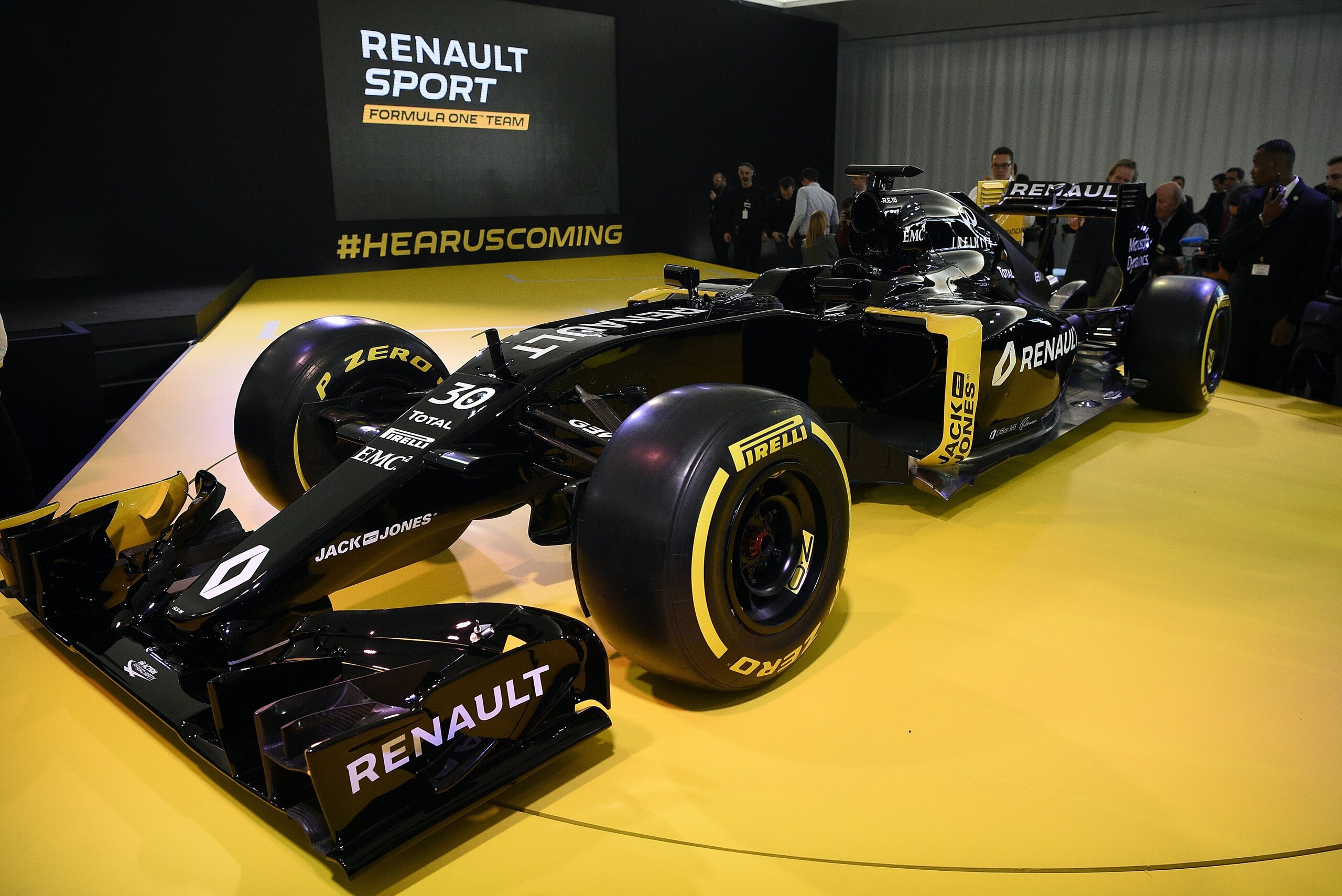
The colour scheme unveiled this week in Paris—as part of the launch ceremony reintroducing the French team as a constructor, rather than solely an engine supplier—definitely falls in the not-so-beautiful category.
While the current trend is for teams to introduce their new cars online or in the pit lane at the first winter test session, Renault decided to actually hold a launch event. And the response was, well...meh.
The big story—that Kevin Magnussen is replacing Pastor Maldonado in one of the race seats—had already broken. We did learn that Renault are re-establishing a driver development program, which is good news, but not earth-shattering.
And then there was the moment everyone was waiting for: the unveiling of the new car. Sort of.
Actually, it was pretty much a 2015 model with a new paint job. All the teams are furiously building their 2016 challengers to be ready for the first test on February 22, so Renault, understandably, did not have one ready to show. But hey—how about that new paint job!
Actually, that fell flat, too. The "new" car is almost completely black, with a couple splashes of yellow. Not exactly what fans were hoping for, given Renault's rich livery history. It's not ugly, but it is uninspired.
But then Renault Sport president Jerome Stoll said the new colours were, perhaps, only temporary. "Will it be black in Melbourne?" he asked, per F1i.com's Chris Medland. "Guess... You are going to see the elegance of the livery will remain the same."
The Renault Sport F1 Twitter account also suggested that the black livery would change at some point this year.
"@F1Photographer We're not bloody, we're black...! For now :-) #AllColouringInSuggestionsWelcomed
— Renault Sport F1 (@RenaultSportF1) February 3, 2016"
"@SilverstoneUK We'll be a different colour by the time we get to you!
— Renault Sport F1 (@RenaultSportF1) February 3, 2016"
But if you can't wait for the Australian (or British) Grand Prix to see a(nother) new Renault livery, we have the next best thing.
After combing the archives, we have put together a list of the five best Renault liveries from the company's two previous stints as an F1 constructor (from 1977 to 1985, and from 2002 to 2011).
Don't worry, there's no ING orange here.
5. Renault RS10 (1979)
1 of 5The 1979 F1 season was Renault's third as a constructor and Jean-Pierre Jabouille took the team's first-ever victory at home. However, that French Grand Prix at Dijon is better remembered for the fantastic second-place battle between Jabouille's team-mate, Rene Arnoux, and Ferrari's Gilles Villeneuve (see above).
What you might have missed during all that wheel-banging is that the Renault RS10, introduced for that year's Monaco Grand Prix, was a great-looking car.
It was mostly white and yellow, with a black band wrapping around underneath the cockpit. Other than the prominent Renault and Elf names, the RS10 was relatively sponsor-free, giving it a clean look.
The livery also gets high marks for fun little quirks, like the two different colours used for the driver numbers (red for Jabouille, blue for Arnoux). The front wing was also asymmetrical, with the Renault name on the right side and Michelin on the left.
4. Renault R30 (2010)
2 of 5
Not even the awful shark fin-style engine cover could hold the Renault's 2010 car out of our top five. The R30 is the team's yellowest car, with a bit of black and some red Total highlights rounding out a very strong livery.
Robert Kubica drove this car to three podium finishes in what would prove to be his last F1 season.
One of the nicest features of this package was the decision to convert all the sponsor logos to fit within the colour scheme: black on yellow, and white on black and red. That is in sharp contrast to the decision made the previous three years to mash Dutch bank ING's colours together with the traditional Renault yellow. The results were not pretty.
Lotus bought shares in the team for 2011, reviving the classic John Player Special livery from the original Lotus team, so we never got to see the evolution of the R30's paint job. However, it still stands out as one of the best Renault liveries.
3. Renault R25 (2005)
3 of 5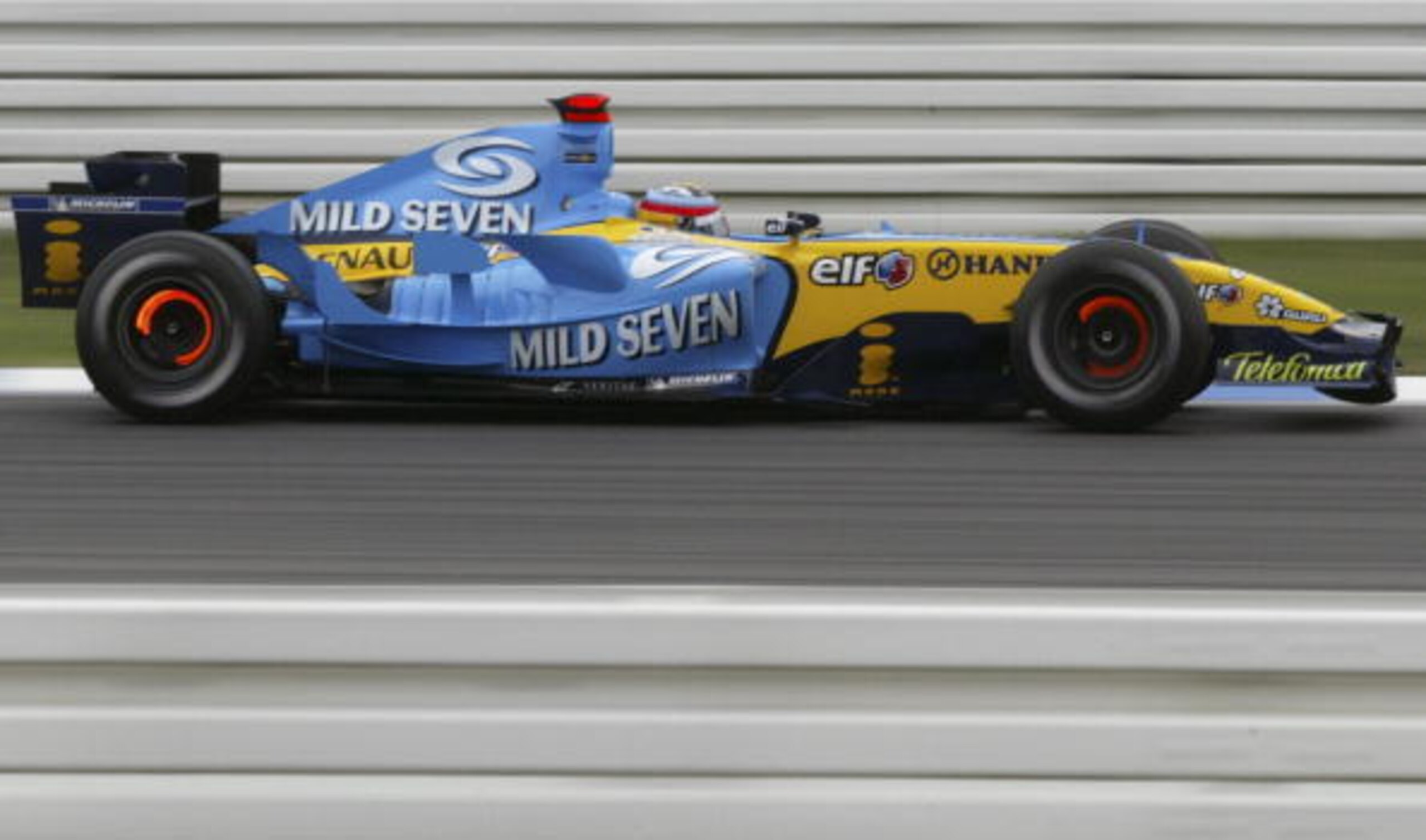
The R25 brought Renault its first constructors' championship, in 2005.
Its livery might have scored even higher on our list but for a couple of unfortunate decisions. First, the navy blue front wing endplates and rear wing did not match the rest of the car. Also, the swerving Mild Seven logo on the sidepods just looks weird.
Aside from that, though, the light blue and yellow are fantastic together. There are also some nice, subtle touches, like the red highlight at the tip of the nose cone.
Still, there's not much to complain about here.
2. Renault RE40 (1983)
4 of 5When the F1 Colours blog counted down the 25 best liveries of all time, the Renault RE40 came in second—not just among Renault cars, but every F1 car in history.
Not only did the 1983 car have a beautiful colour scheme (although we think there is still one better-looking Renault), it was also very quick.
Alain Prost won the French Grand Prix that year (see above), as well as three other races, and Renault finished second in the constructors' championship—their best finish until taking the title in 2005.
Of all the yellow, black and white Renaults, the RE40 balanced the three colours the best. The sidepods and wings are black, the engine cover is white and the nose is yellow. As with the RS10, the sponsors are non-intrusive.
The large driver numbers on the engine covers look great, but that is also prime sponsorship real estate. Perhaps McLaren should consider something similar to take up some space on their cars this year if they still haven't found a title sponsor.
1. Renault R202 (2002)
5 of 5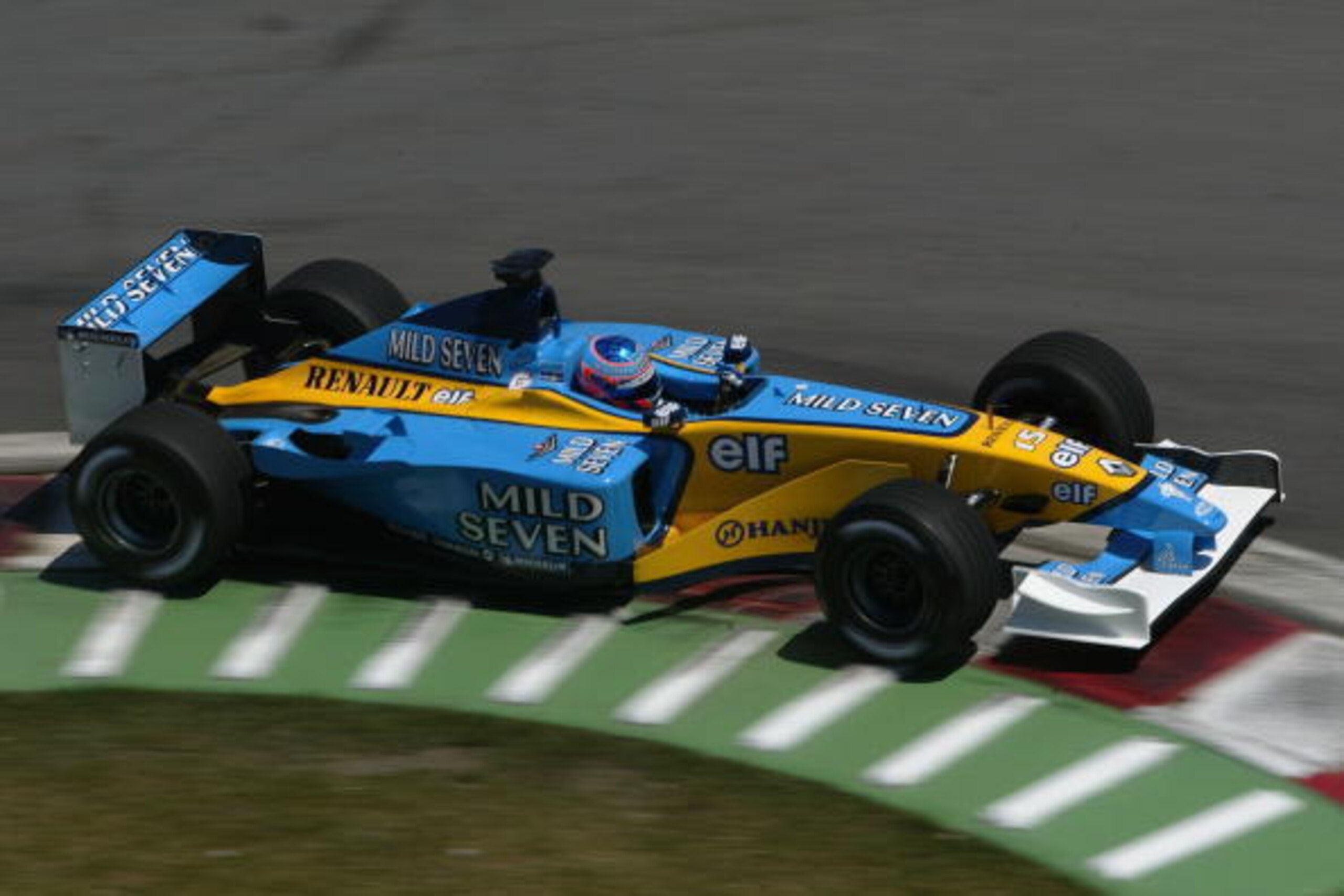
All of the blue and yellow Renaults looked amazing. The original one, the R202 from 2002, just looked a bit better than the others.
Yes, Mild Seven appeared in about 10 different places, but the yellow and light blue went together perfectly. Even the white front wing and rear wing endplates seemed to fit nicely (although they might have looked even better coloured blue or yellow).
Unlike the cars that followed it, the R202 did not win any races, but when you looked that good, does it even matter?
Follow me on Twitter for updates when I publish new articles and for other (mostly) F1-related news and banter:

.jpg?w=2560 "Breaking News")
.png?w=2560 "Landing Spots for Top Free Agents 📍")