Why Carlos Sainz Jr. Is the Driver to Watch in the 2015 Abu Dhabi Grand Prix
Carlos Sainz Jr. entered Formula One at the start of 2015 on the back of a highly successful, record-breaking season in Formula Renault 3.5. The Red Bull-backed youngster won seven races and took seven pole positions to beat Pierre Gasly to the title by 35 points.
But his junior career prior to 2014 was mixed. Sainz finished on the podium in his first single-seater race on his way to fourth in the 2010 Formula BMW championship, and the following year—his first full season in the series—he won the FR2.0 NEC title.
He also finished second in the 2011 FR2.0 Eurocup, and his future looked nothing but bright.
TOP NEWS
.jpg?w=2560 "F1 Ecclestone Auto Racing")
Breaking News

Will a non-QB be 2027's No. 1 pick? New NFL mock draft
B/R Experts Week 1 NFL Power Rankings 🔢
However, a difficult—and perhaps too busy—2012 campaign saw Sainz fail to win a single race in the Formula Three Euro Series on his way to ninth, and he was only sixth in British F3 as team-mates Jack Harvey and Jazeman Jaafar fought over the title.
A change of scenery in 2013 brought with it no improvement; Sainz was a winless 10th in GP3 as team-mate Daniil Kvyat clinched the title at the final round of the year.
That bright future looked to be dimming as Kvyat was promoted to Toro Rosso, but the results didn't necessarily give a true reflection of Sainz's abilities. Red Bull knew this and moved him to FR3.5—and their faith was repaid.
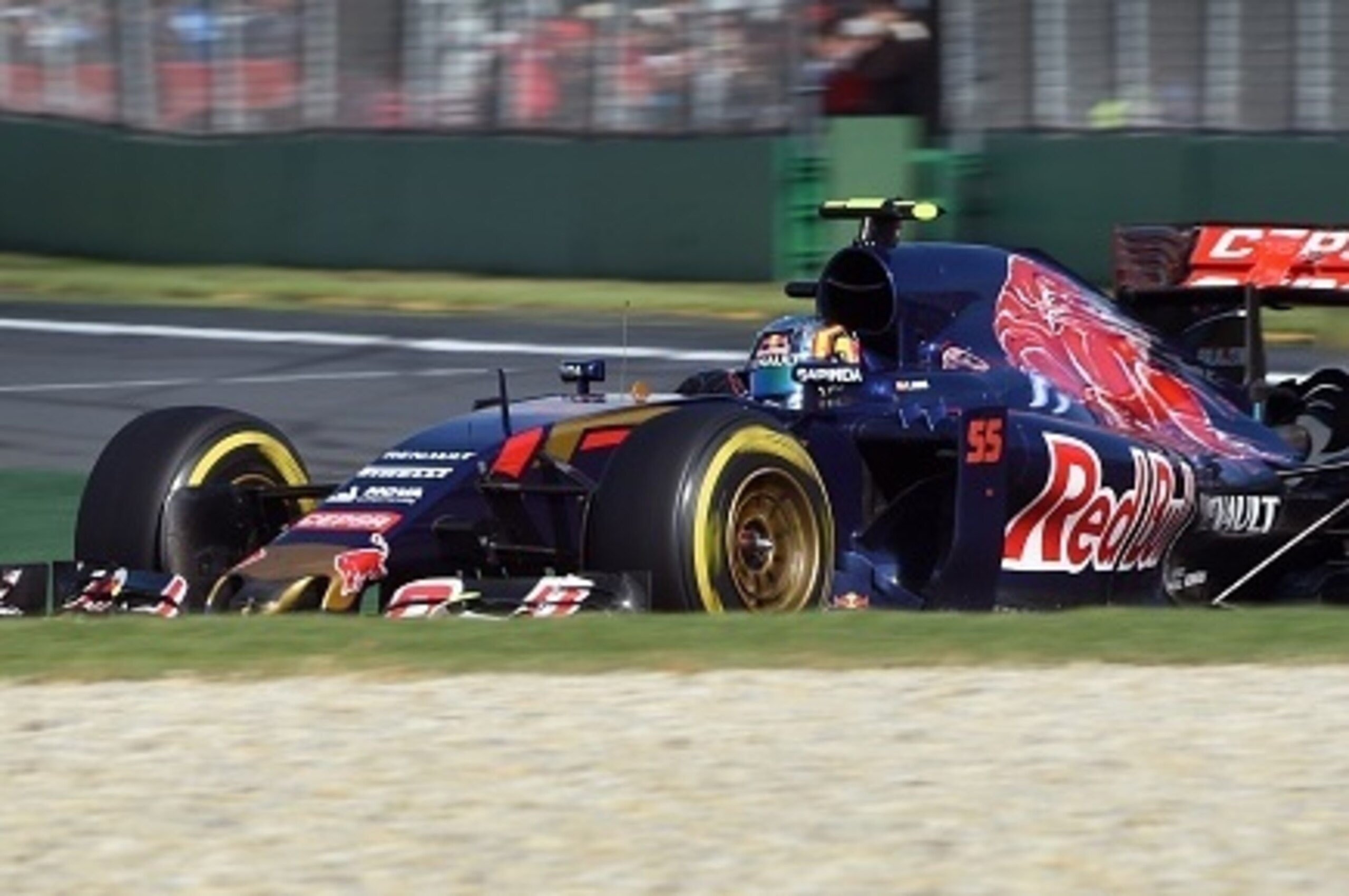
Sainz made a strong start to his life in F1, qualifying eighth and scoring points in his first race for Toro Rosso. He was also in the top 10 at the next race in Malaysia, but a spin and gearbox issues saw his good early run end in China.
He got back on track with more points in Spain and Monaco, and though his car had robbed him of a number of potential points finishes, he left the ninth round of the season with nine points—one fewer than team-mate Max Verstappen.
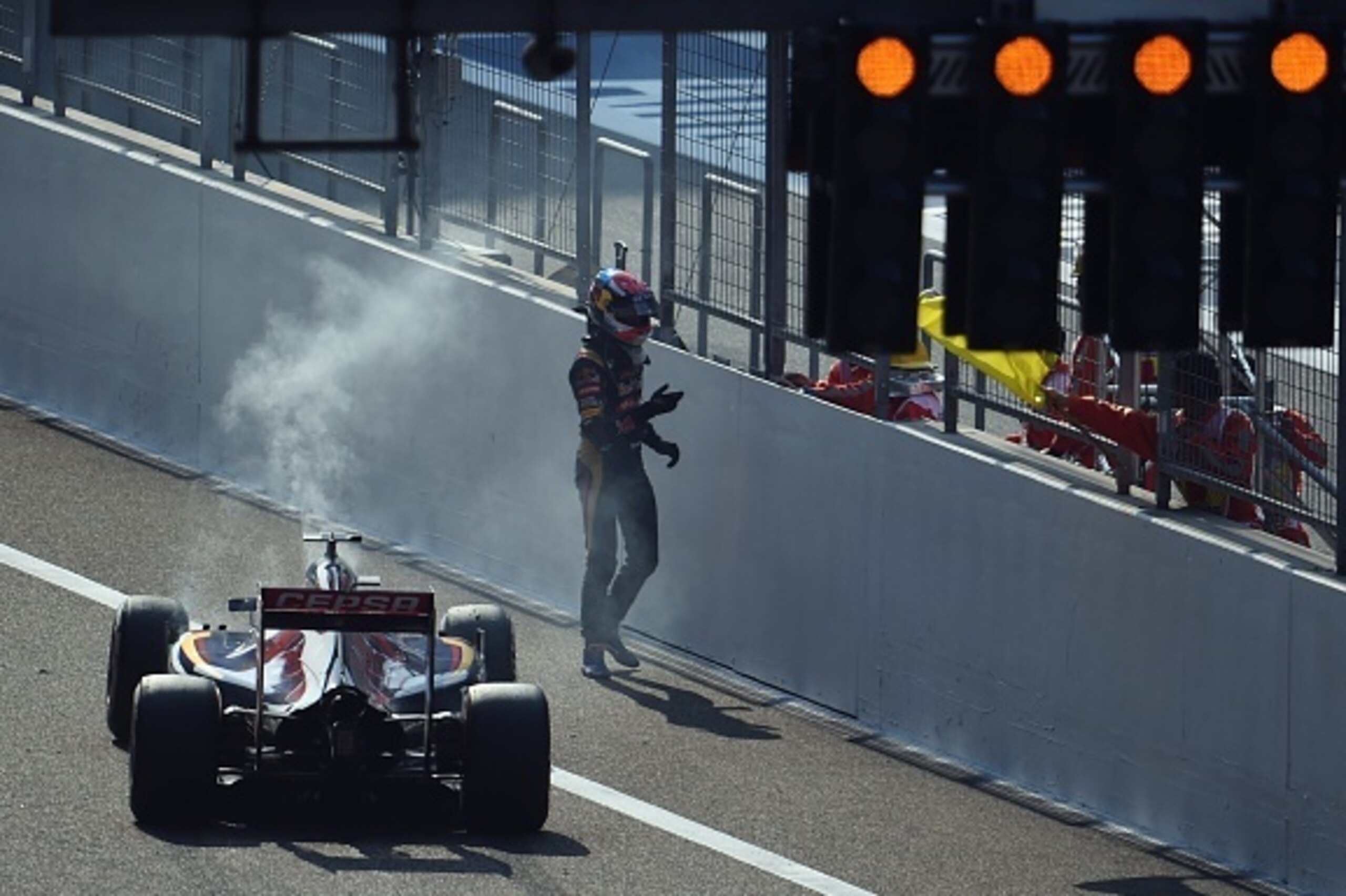
For his part, the Dutchman's start to F1 life had been more spectacular but a little less consistent. Like Sainz, he had lost a number of points finishes due to reliability—most cruelly when his car broke down four laps from the end of the Chinese Grand Prix.
Verstappen's overtaking caught the eye, but he looked to be trailing Sainz in certain areas. The Spaniard was leading the Toro Rosso qualifying battle 6-3 after five Q3 appearances to Verstappen's four, and with nine races down, he was yet to crash out of a race due to his own mistake.
This had happened twice to Verstappen, at Monaco and Silverstone.
So it probably comes as no surprise that, after nine rounds, the two Toro Rosso rookies had exactly the same number of overall points in the B/R driver rankings—though Sainz was ahead in the post-Silverstone edition on recent form.
Then something changed.
Verstappen qualified ninth for the Hungarian Grand Prix and followed it up with a brilliant fourth in the chaotic race. Sainz—who had qualified 12th—didn't drive quite as well but looked set to finish somewhere in the region of sixth before his car once again let him down.
It failed again in Belgium, robbing Sainz of more potential points. Verstappen, who had only qualified 15th at Spa to Sainz's 10th, came home in eighth for another points finish.
The next race, in Italy, marked the last time (to date) that Toro Rosso failed to score a point. It was also the start of a sequence which has seen Sainz miss out on Q3 for seven races in a row—twice due to heavy crashes in either practice or qualifying.
In the same period, Verstappen has had five top-10 grid slots; if we include the sessions in which Sainz failed to set a time, the qualifying battle in the "back nine" is 6-3 in the Dutchman's favour.
The story in the races is even more significant.

Verstappen's points tally in the most recent nine races stands at 39, with fourth-placed finishes at Hungary and the United States standing out as the highlights. Only once—in Italy, where he started 20th after his STR9's bodywork blew off at the start of qualifying—has he failed to score.
Sainz, who has only finished ahead of Verstappen once in that period, has managed just three points finishes since the halfway point of the season; his total haul from Hungary onward is a mere nine points.
Bad luck has played a major part in the Spaniard's slump, and he certainly hasn't been driving badly. His Toro Rosso has failed him in five of the nine grands prix and after his latest retirement—in Brazil, where he only managed five corners—he appeared close to losing patience, telling Autosport's Ben Anderson:
"I'm honestly very p--sed off and angry with the situation, because I think we had a great opportunity to score points. It's the seventh time in the whole season. It means 50 per cent of the races not finishing.
Obviously, it being my rookie year it's not what you want and it's not what you're here for. You're here to gain experience and to learn, so it's clearly not a good balance of retirements this season.
You just hope that next year you have a clean season and that's it.
"
He makes a fair point, but there's no getting away from the fact that, whether the car has been reliable or not, Verstappen has without question been the better driver since Hungary. The mistakes appear to have been ironed out of his driving and he seems to have found an extra gear.
Sainz, on the other hand, has started to make more mistakes—most notably in practice in Sochi, qualifying in Austin and in the race at Suzuka. His overall performance level hasn't really dropped from the start of the year—he just hasn't been able to kick things up a level in the way Verstappen has.
The Dutchman has been one of the very best drivers on the grid in the second half of the year; Sainz has been merely a good, well-performing rookie. The B/R driver rankings put them 12 points apart for this period, the third-largest gulf between team-mates.
The championship table, meanwhile, shows them separated by 31 points. Sainz has just 36.7 percent of Verstappen's 49 points—the second-worst percentage (behind Marcus Ericsson at Sauber) in the field.

Sainz has not driven badly in 2015 and will retain his Toro Rosso seat for 2016, so his immediate future in the sport is not in doubt.
But Red Bull have a history of being ruthless when selecting drivers to make the step up to the big time; Toro Rosso kids usually have just two seasons to prove they have what it takes to move to a front-running squad.

Verstappen has done that already. Sainz, as even his biggest supporters would probably admit, has not.
No driver wants to head into the winter break feeling like he has been overshadowed by his team-mate. But aside from Pastor Maldonado and Kimi Raikkonen—and maybe Nico Rosberg, despite his recent upturn in form—Sainz is the man most at risk of feeling that way.
That kind of self-assessment is bad for an experienced campaigner; for a rookie, it could be disastrous.
Sainz, more than anyone on the grid, needs to beat his team-mate and chalk up a good result at the Abu Dhabi Grand Prix. So providing his car doesn't break down again, he's our driver to watch.
.jpg?w=2560 "Patriots Browns Football")


.jpg?w=2560 "Giants React to Mentalist 🫨")
.jpg?w=2560 "Waiver-Wire Pickups 👀")
.jpg?w=2560 "🚨 Falcons Name Tua QB1")