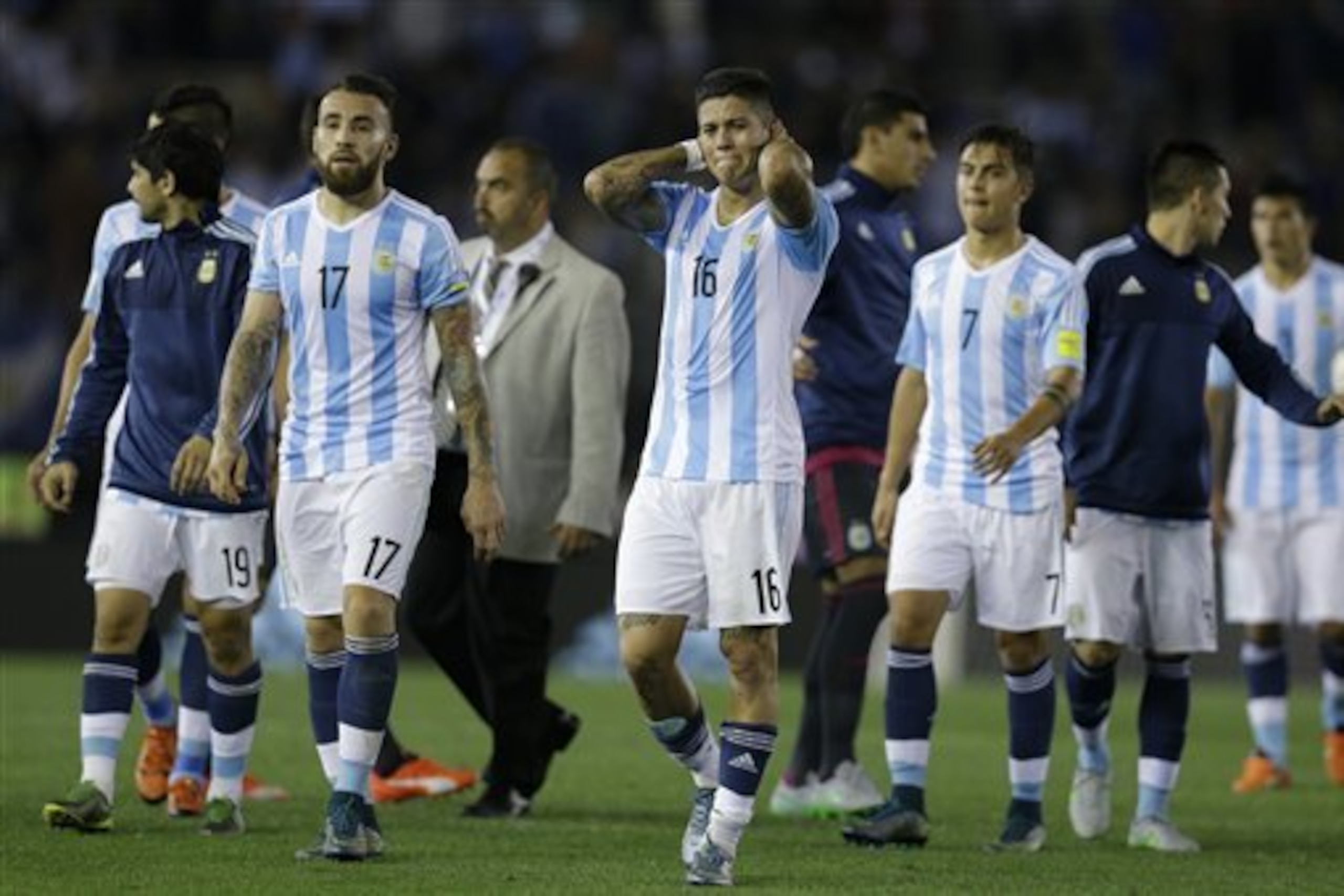

Gerardo Martino Must Find Key to Argentina's Attack If They Are to Flourish
There is still a long way to go. Argentina have 15 games to put right their World Cup qualifying campaign, but three games in, they lie second bottom of the CONMEBOL standings with just two points and one goal.
They have Lionel Messi, Sergio Aguero, Carlos Tevez, Pablo Zabaleta and Ezequiel Garay all to return—although not before Tuesday’s game against Colombia—so there is reason to believe that things will improve, but equally it’s only natural that there should be a level of concern. And that means that pressure is mounting on the coach, Gerardo Martino.
Argentina were the better side in Friday’s 1-1 draw against Brazil at El Monumental, but as so often in the recent past, they paid for a lack of incisiveness.
TOP NEWS
Ranking UCL Jerseys 📊

Way-Too-Early Transfer Picks 🔮

Will a non-QB be 2027's No. 1 pick? New NFL mock draft
In another context, the draw could be written off as one of those things, but after a home defeat to Ecuador—who, surprisingly, lead qualifying with three wins from three games—and a draw in Paraguay, it represents a significant missed opportunity.
A defiant Martino said at his post-match press conference:
"The draw against Brazil gives us a positive outlook for the future, but we can’t fail to see that we have two points out of nine.
Colombia at home won’t play the same game as Brazil. Yes, we will try to control the game but I understand that this is going to be a team that attacks us much more.
In the dressing room, the boys know what kind of game they played, that our opponent attacked once and achieved the draw. We didn’t get the result we deserved. We know the way to what we’re searching for and the league table doesn’t change our vision.
"

The oddity is that it feels that, generally speaking, Argentina are in a far healthier position than Brazil, whose football since Dunga took charge after the World Cup has been largely joyless.
Neymar, around whom the World Cup side was built, was noticeably quiet on Friday on his return after a four-game ban for his red card and subsequent protests in the Copa America group game against Colombia.
Brazil were dreadful in that tournament, squeaking through to the quarter-final, where they were largely outplayed by Paraguay before losing on penalties. There’s no great evidence of any improvement since then, even if circumstance has at least begun to reduce the over-reliance on Neymar.
Argentina, meanwhile, after a scruffy start in Chile, caught light in the quarter-final with a penalty shoot-out win over Colombia that did little justice to how well they’d played, before a 6-1 demolition of Paraguay.
The lack of cutting edge that has been such a problem for so long—and a mystifying one given the attacking resources available to them—came back to haunt them in the final, a 0-0 draw against Chile and penalty shoot-out defeat. It’s the potential of the forward line that Martino must unlock.
The one major positive of qualifying so far has been the form of Everton’s Ramiro Funes Mori, who has played the last two matches and looked excellent. Garay’s absence may, in that sense, have been an unexpected bonus.
However, the problem still is turning possession into chances, finding a way of unleashing a forward line that, even with the injuries, remains formidable.
Gonzalo Higuain has been in fine form for Napoli this season, scoring nine goals in 12 games, but his international performances always seem haunted by the major chance he missed in the World Cup final—something confounded by an even worse miss in the Copa America final and his subsequent failure from the penalty spot.
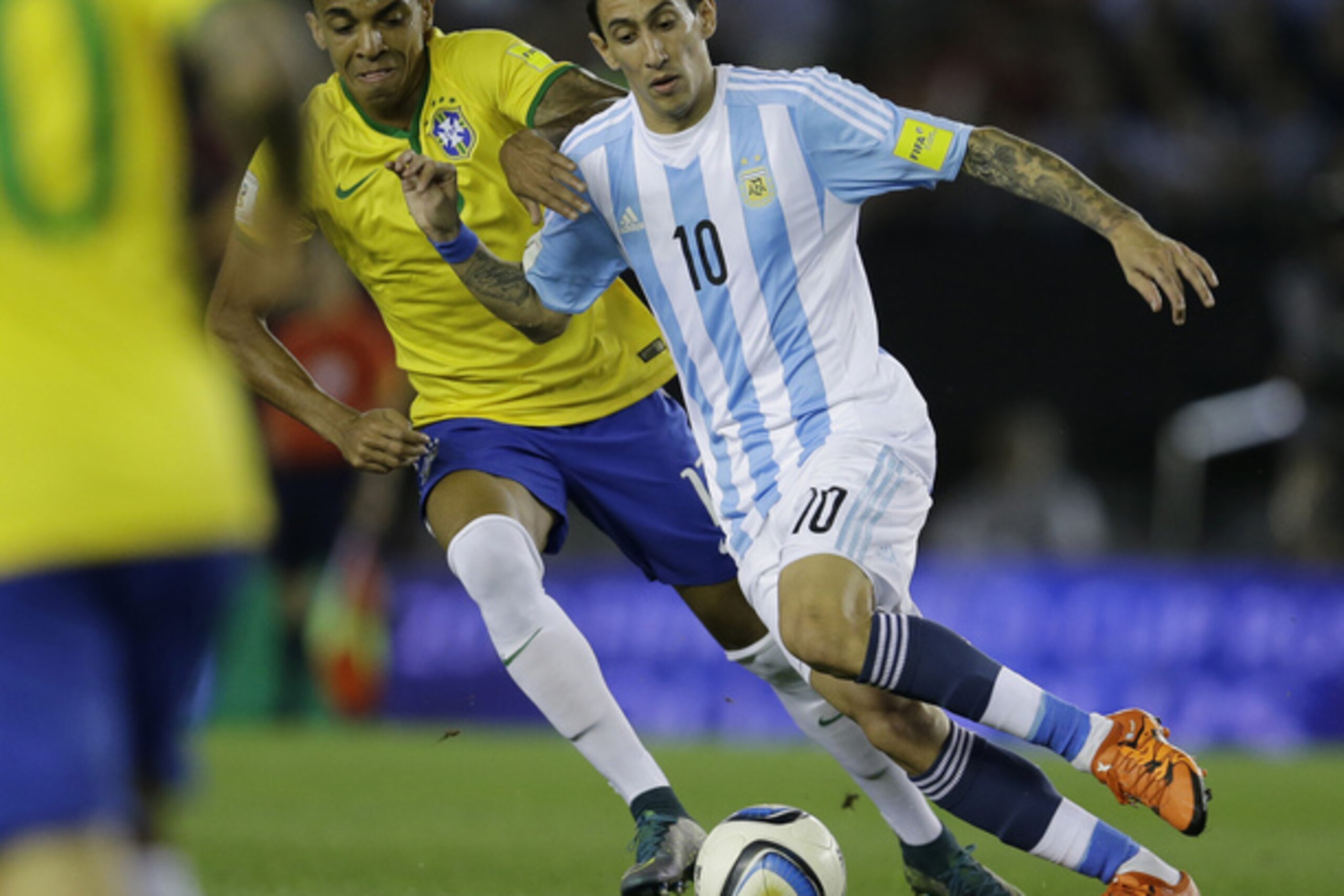
Ezequiel Lavezzi, who scored the goal against Brazil, always works hard although not necessarily with great focus. And there’s always a sense with Angel Di Maria that he may be better playing deeper with the national team so he can burst into space ahead of him.
Perhaps the biggest criticism of Martino, though, is how rarely his substitutions make a positive contribution to the game, something that was apparent during the Copa America.
In both the draws against Paraguay and Brazil, he brought on Erik Lamela, Paulo Dybala and Nicolas Gaitan. On neither occasion did it make much difference, and the repetition suggested these might perhaps be pre-programmed moves rather than responses to the way the game was going.
Martino has spoken of having to win in Colombia, but that is more a matter of perception and holding off his critics than a necessity in terms of qualification. Argentina may be ninth, but they’re only two points behind Brazil in fourth.
Here, perhaps, the order of fixtures plays a part.
Previously, the fixtures in CONMEBOL qualifying had followed a set order, and as Sergio Levinsky argued in Issue 18 of The Blizzard, the feeling was that that favoured the big three of Argentina, Brazil and Uruguay.
The decision to randomise the order this time round is a sign of the rising power of the rest, Chile and Colombia in particular. To be asked to play Brazil at home and then Colombia away in the space of five days—or, as it turned out because of the 24-hour postponement of last week’s game, four days—is tough. (Then again, if Argentina hadn’t messed up the ostensibly easier pair of Ecuador at home and Paraguay away, it wouldn’t matter so much).
Luis Segura, the president of the Argentinian Football Association, has issued a half-hearted statement of support for Martino, but that could change with a poor result in Barranquilla.
AFA’s presidential elections are scheduled for December, and the last thing Segura will want is to be burdened by association with a failing coach. Significantly, Segura’s rival in that election, the television host and producer Marcelo Tinelli, has made no statement at all about the coaching position.
Four years ago, Argentina also faced Colombia in Barranquilla in their fourth game after a stuttering start to qualifying. Then, they won 2-1 to restore morale and set Argentina on their way to topping the group. Now, they must do the same.
The difference is that this time they’ll have to do it without the two goalscorers that day, Messi and Aguero.

.jpg?w=2560 "Waiver-Wire Pickups 👀")
.jpg?w=2560 "Giants Release Darius Slayton")
.jpg?w=2560 "Week 1 Rankings 📊")
.jpg?w=2560 "🔴 Live: Monday Night Raw 👊")
.jpg?w=2560 "NFL coach loses 50th birthday on flight to Australia")