Jose Mourinho Is Chelsea's Greatest Boss, but He Could Be Their Biggest Problem
Usually when managers are under pressure, the temptation is to reflect on how impatient modern football has become, on how quickly the credit a manager seems to have built up can be swept away, on how nobody is allowed to make a mistake any more or learn on the job, on how short-termism reigns, on how whenever a team hits a run of bad form that lasts a month or so, the modern tendency is to fire him. What is happening at Chelsea is different.
Usually a run of poor results can be attributed to a couple of key players being out of form or injured, or luck turning against a side, or a team going a little stale and needing a rejuvenating jolt. Often it’s just cyclical.


A manager is often just a useful scapegoat, somebody to be sacrificed so a board can give the impression of being in control. Chelsea have been struck by a remarkable array of problems, but it’s becoming increasingly hard not to feel that the major issue at the club is Jose Mourinho.
This presents the club with a major dilemma, for Mourinho was right on two key points in his extraordinary seven-minute monologue on Sky after the 3-1 home defeat to Southampton. He is the best manager the club has ever had, and to sack him would send out a message that Chelsea are still a club that chews up managers.
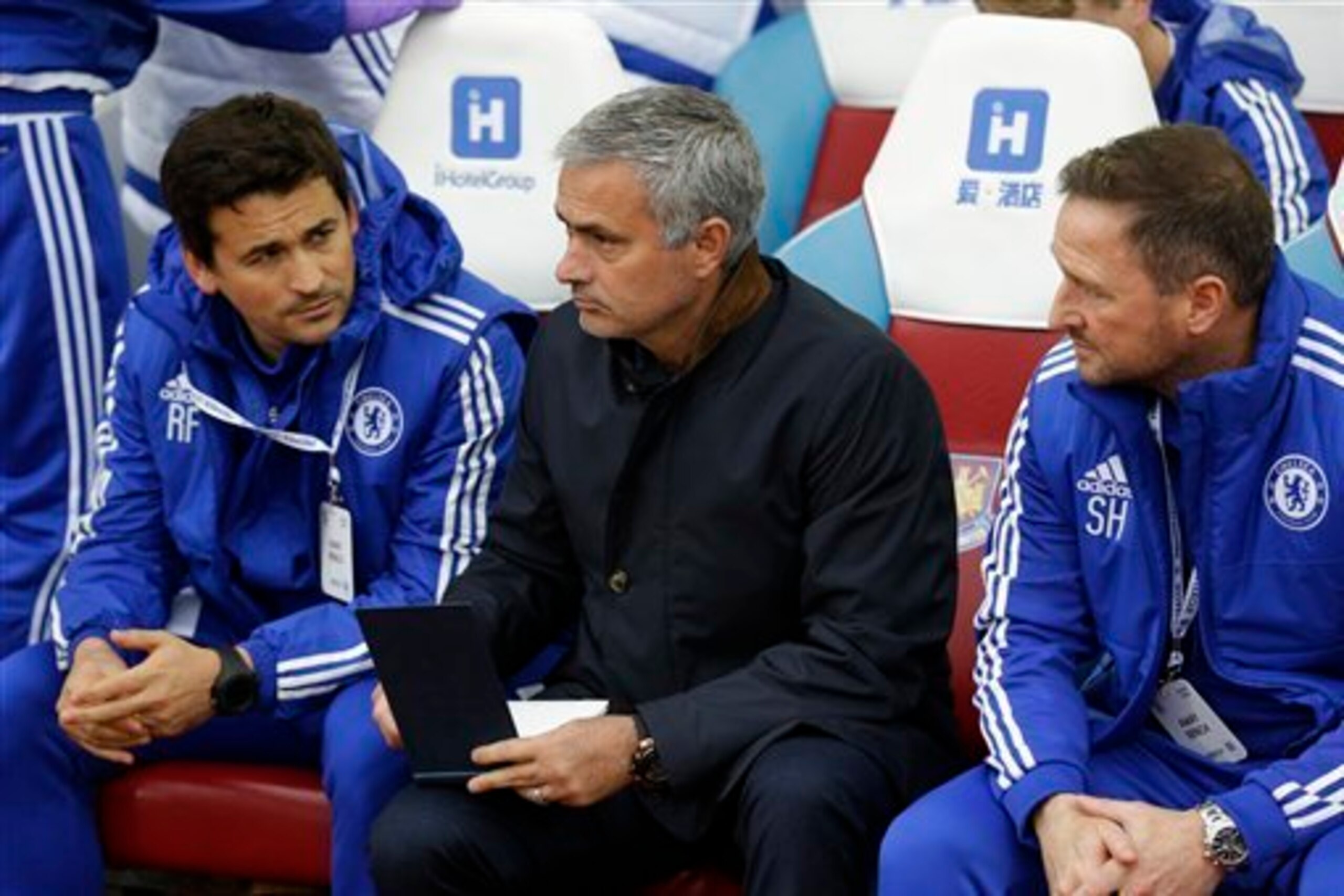
If Chelsea get rid of Mourinho, the risk that he will go elsewhere and be successful is immense. He has won three of the five league titles the club has won. You can argue about whether he’s the best manager in the world, but it’s hard to deny he’s in the top five.
Given he signed a four-year contract shortly before the start of this season, there are also financial reasons why Chelsea may be prepared to give him more time.
But what happened at Upton Park on Saturday would seem to confirm that third-season syndrome has struck Mourinho again. This is only the third time he’s reached a third season at any club—following Chelsea the first time round and Real Madrid—and, on both occasions, the mood has rapidly turned rancorous.
Maybe—maybe—Chelsea were a little unfortunate to see Nemanja Matic sent off for a second yellow card in quick succession, but that does not excuse two players being booked for protesting, not Mourinho’s assistant Silvino Louro being sent from the touchline, nor Mourinho himself then berating the referee Jon Moss in the tunnel.
A manager’s role in such circumstances must be to calm his players down, to try to get from the game what they can. Here, though, Mourinho apparently lost his discipline just as much as his players did. Either that, or he was trying to get sent to the stands.
Diego Torres’ biography of Mourinho, The Special One: The Secret World of Jose Mourinho, was rubbished by Mourinho and his apologists when it came out, but the parallels between what he describes happening at Real Madrid in that third season and what is currently going on at Chelsea are striking.
One Manchester United executive reportedly told Jorge Mendes’ agency Gestifute that, “when things do not go well for Mou, he does not follow the club’s line. He follows Jose’s line,” according to Torres. It was felt at Madrid there were times when Mourinho constructed conspiracies so as to deflect blame from himself; being sent from the bench meant he was no longer in control and he could point once more to the referees he claims have always had it in for Chelsea.
If Torres’ book is to be believed, at Madrid, that became part of the problem. Mourinho, supposedly, told players to complain in interviews and press conferences about the fixture list, saying that Madrid were being disadvantaged by tougher fixtures after European games.
Players felt it was paranoid nonsense and disliked the culture of negativity it created, wondering whether Mourinho was really trying to generate a siege mentality that might give them a greater togetherness, or whether he was making excuses to protect his own reputation.
There have been suggestions from insiders at Chelsea that something similar has been going on since February, when Mourinho attacked Sky for supposedly obsessively showing clips that portrayed the club badly, most notably Diego Costa’s stamp on Emre Can that earned him a three-game ban, per Paul Doyle of the Guardian.
There have since been reports that the incident which led to the doctor Eva Carneiro leaving the club and a sense that Mourinho was singling out scapegoats within the squad have further soured the relationship between the manager and his players.
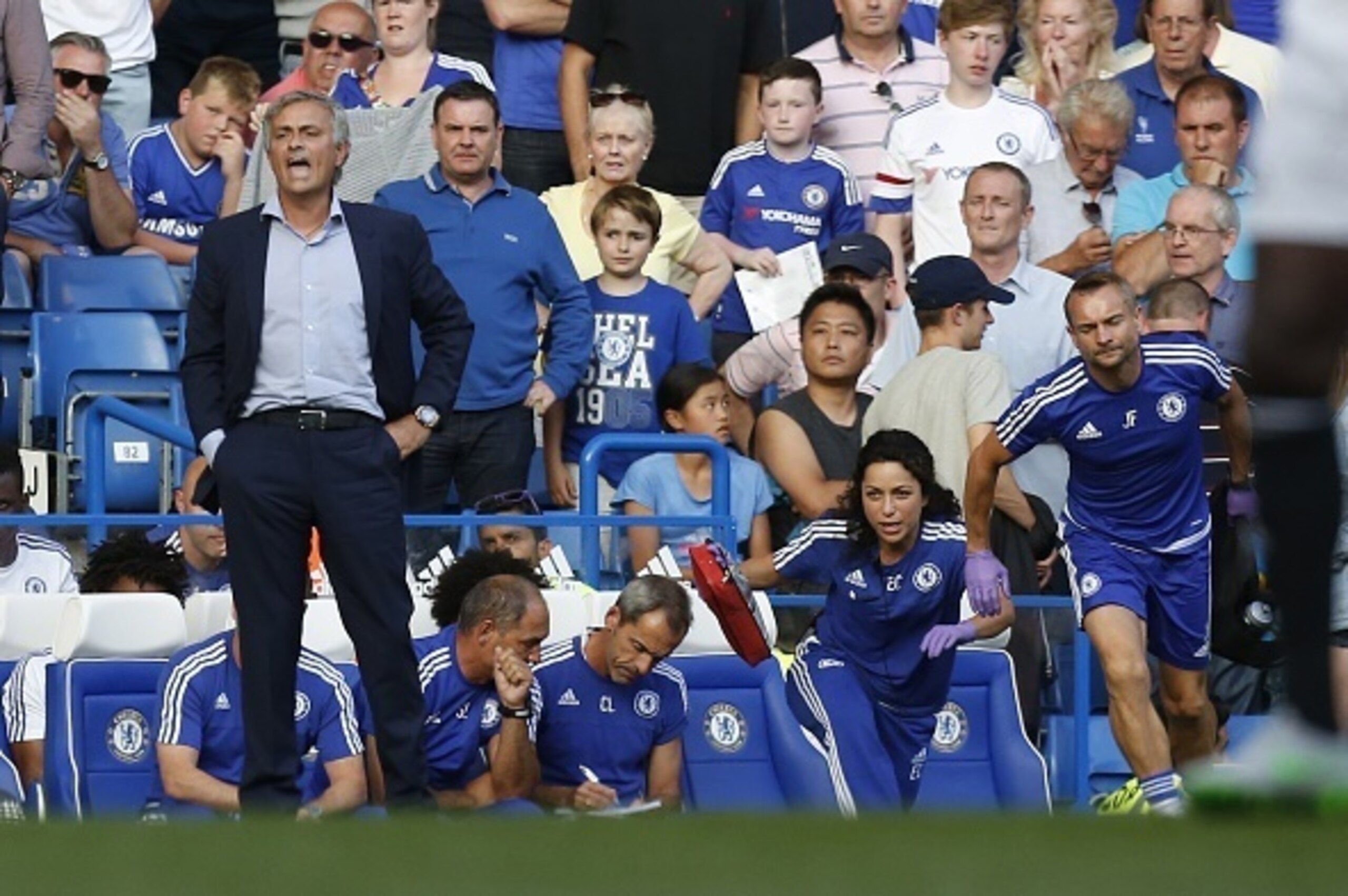
If players were disturbed by their manager’s reaction to the Costa stamp on Can, then what, you wonder, have they made of his recent antics: The dismissal at Upton Park and, before that, the attack on the referee Bobby Madley after the 3-1 home defeat to Southampton, when Mourinho raged against a penalty he felt should have been given while ignoring two better claims Southampton had?
It may be that, after two years, Mourinho’s method of seeking out conspiracies everywhere, of constant attrition and intrigue, becomes not inspiring but wearisome.
It’s not just Mourinho, of course. There are a multitude of other factors in Chelsea’s decline. Thibaut Courtois’ injury has cost them a commanding presence at the back, who, at times, could salvage games single-handed. A number of key players have lost form simultaneously—Cesc Fabregas, Eden Hazard, Branislav Ivanovic and Matic most notably. Diego Costa has not been at his sharpest. John Terry suddenly looks his age.
Mourinho, fairly evidently, was not happy with how the summer transfer business turned out. He wanted a new centre-back—ideally John Stones—and a new central midfielder—ideally Paul Pogba—and he got neither (and saw Petr Cech depart to strengthen a rival).
The new arrivals have hardly shone. Papy Djilabodji hasn’t played and seems unlikely ever to do so. Radamel Falcao looks just as clapped out as he did at Manchester United last season and for Colombia during the summer.
After a promising debut away at West Bromwich Albion, Pedro has looked flat. Baba Rahman seems already to have joined the list of players—already including Mohammed Salah, Andre Schurrle, Juan Cuadrado and Filipe Luis—whom Mourinho decides early he simply doesn’t fancy.
At the same time, Mourinho is reluctant to give younger players their head, despite the consistent success of Chelsea in youth tournaments.
Dressing-room dynamics are strange and delicate, and it may be there has been no fracture that would not be healed by three or four wins in a row.
After Saturday’s game against Liverpool, Chelsea’s fixtures do get easier. Perhaps Mourinho will survive. Perhaps Chelsea, the prototype of the modern club, will show an old-fashioned patience and faith in a manager whose record of success is astonishing.
But at the moment, it feels increasingly as though the only solution to Chelsea’s malaise is a second break with their greatest manager; that Mourinho cannot solve the problem because Mourinho is the problem.
*All quotes obtained firsthand unless otherwise indicated
.png?w=2560 "West Ham United v Arsenal - Premier League")
.jpg?w=2560 "Grading Smackdown After SummerSlam")
.jpg?w=2560 "Maxx, Kirk Get Chippy at Practice")
.jpg?w=2560 "Harden Gun Charge Dismissed")