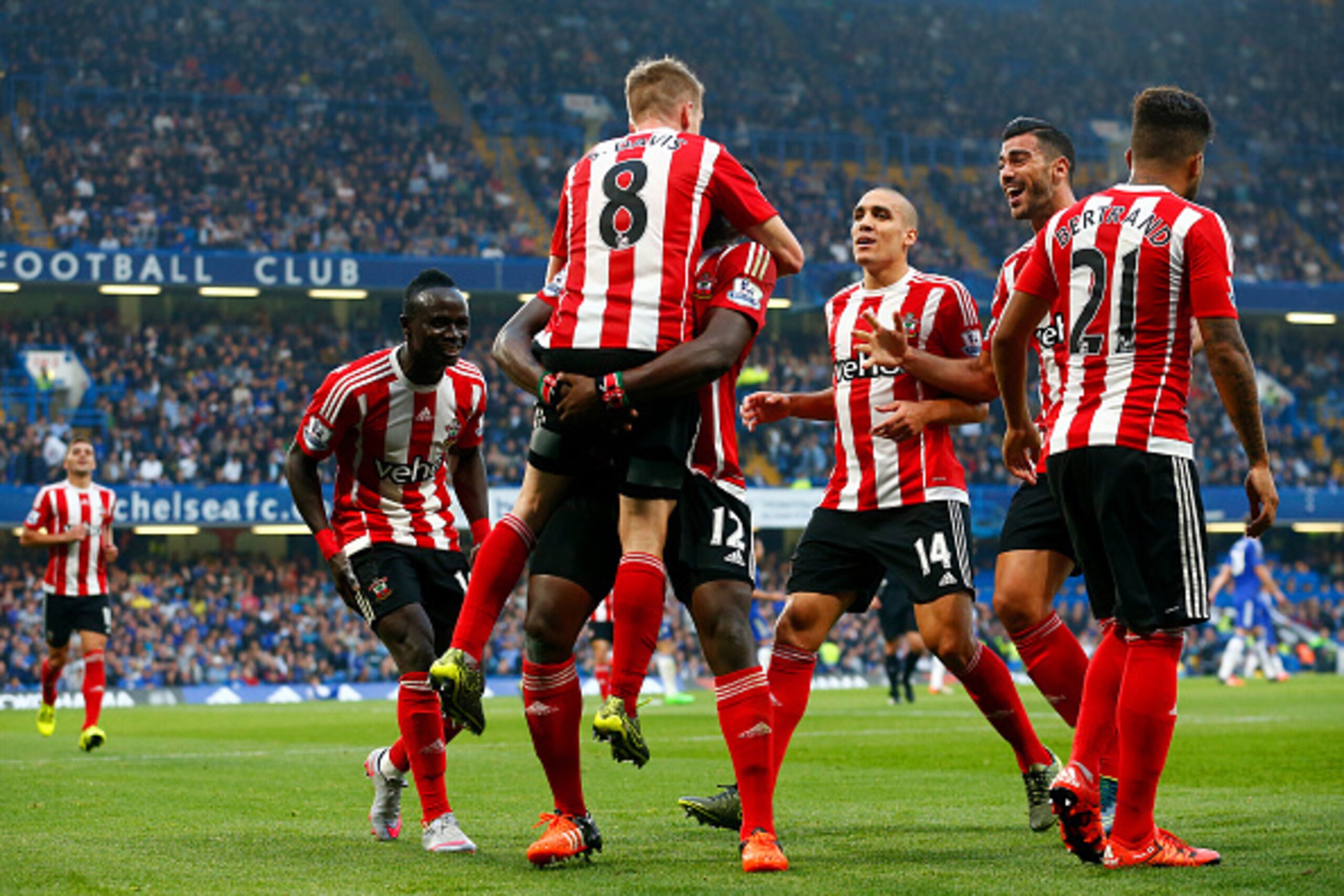

Southampton Defying Expectations Thanks to Impressive Tactical Balance
Everyone’s definition of a “tough job” is different, and it’s often said that being a manager of a football club is as tough and stressful as it gets.
Be it keeping Coventry City out of the red and in the Football League or desperately trying to win “La Decima” to stop Florentino Perez sacking you, every job as the figurehead of a football club leaves you battered, bruised and gasping for air.
Down on the south coast of England, Ronald Koeman is grappling with a very, very tough job. When the sun shines and St. Mary’s Stadium sparkles, it can look as inviting as a football environment can possibly get, but don’t let the glossy exterior fool you: Managing Southampton Football Club can be as tough as it gets some weeks.


Take a look at the above picture and take a stab at what’s missing. If you said “players,” you’re spot on; grab yourself a cold beverage, on the house. This now-infamous picture Koeman posted on Twitter just days after taking the reins at Southampton last summer accurately sums up the fear fans of the club have welling in their bellies during every transfer window: “Will we have any players left by next month?”
Unless you’re Real Madrid or Barcelona, you’re a selling club, and Southampton too often fall foul of the vultures.
In the last 18 months, they’ve sold an astonishing number of key players—including Adam Lallana, Luke Shaw, Morgan Schneiderlin and Rickie Lambert—yet somehow managed to survive. Yes, they’ve pocketed hundreds of millions of pounds from the player sales, but replacing those who are good enough to leave for the likes of Liverpool, Manchester United and Arsenal is, once again, a very, very tough job.
In the summer of 2014, after the spine of a team who finished eighth was ripped out and manager Mauricio Pochettino had departed for Tottenham Hotspur, fans feared the worst.
Koeman in, a host of new players in, but predictions of struggles and relegation abounded. Not so. They finished seventh on 60 points and gave the Champions League chase a right good go, in the end finishing two points behind Liverpool and four off Spurs.
In the summer of 2015, Schneiderlin and Nathaniel Clyne headed north and Toby Alderweireld joined Pochettino at Spurs. Surely now, with the linchpin of the midfield gone, England’s first-choice right-back departed and a rock-like figure in the league’s second-best defence now plying his trade for a rival, they’d tumble down the table?

Again, not so, and aside from an iffy start—largely due to inbound transfer business occurring rather later than planned—they’re clicking once again.
Their latest performance, a 3-1 victory over Chelsea at Stamford Bridge, will linger fresh in the minds of football fans as the slumber of the international break commences.
For the third season running, against all odds and in defiance of expectation, Southampton are mixing it with the big boys and dealing out the damage.
Back in August, it seemed as though Koeman and Saints’ knees were wobbling; an early exit to FC Midtjylland in the Europa League and an opening run of three Premier League games without a win spelled danger.
Koeman had pursued depth in the market but few signings had been made, and with injuries haunting the opening few fixtures—in addition to a mini-Victor Wanyama holdout—things looked a little bleak.
But the retention of both Wanyama and Sadio Mane, the latter of whom was linked to Manchester United, per BBC Sport, reignited the club.
Bowing out of Thursday night football also appeared to streamline the objectives, clearing the path for a speedy resurgence and return to expected form.
Now Southampton are purring, with Koeman defying the odds to preside over a wonderfully balanced, tactically astute side who can beat anyone if the cards fall in their favour.
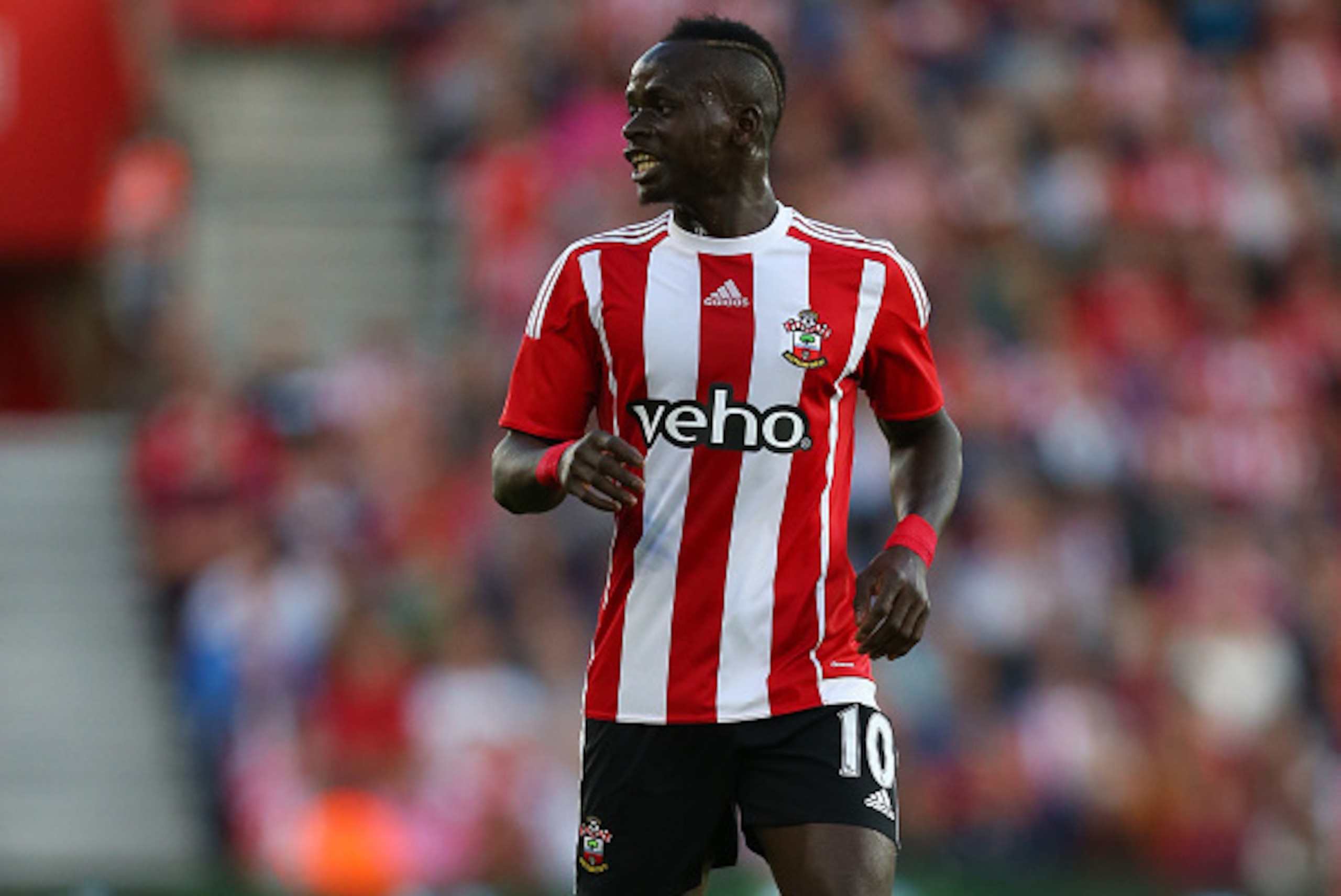
The defensive line is now finding its groove after a rocky, injury-hit start. Ryan Bertrand has hit the ground running, literally, after a three-month absence, adding the same width to the left side’s attacking play that new arrival Cedric Soares does to the right.
Bertrand excels at linking playing and overlapping, while Cedric prefers to cross from a little deeper toward Graziano Pelle’s towering physique in the box. They complement each other well.
Virgil Van Dijk had a horror debut against Anthony Martial but has recovered in style since, dominating against Chelsea and scoring against Swansea City. A robust, strong, yet calm figure on the ball, Koeman will hope he can be 2015-16’s Alderweireld, and the ideal partner for Jose Fonte.
In midfield, Koeman has undertaken the reinvention of James Ward-Prowse—a player whose football IQ is clearly sky high, but has so far failed to visibly, tangibly and statistically impact games. Playing deeper in a midfield two in home games, with Steven Davis pressing like a maniac just ahead of him in the No. 10 position, has given him the chance to see more of the pitch, spend a little more time on the ball, and settle into the rhythm of games.
Wanyama-Oriol Romeu is a muscular, robust pivot for tougher away games, capable of shielding the defensive line and creating a battle zone in the centre when required.
But it’s up top where Southampton really are shining, and it’s the retention of progression of Mane that’s perhaps tipping the club over the edge in terms of raw quality. Dusan Tadic-Pelle-Mane is one hell of a front three, boasting the sort of balance any trident worth its salt requires.
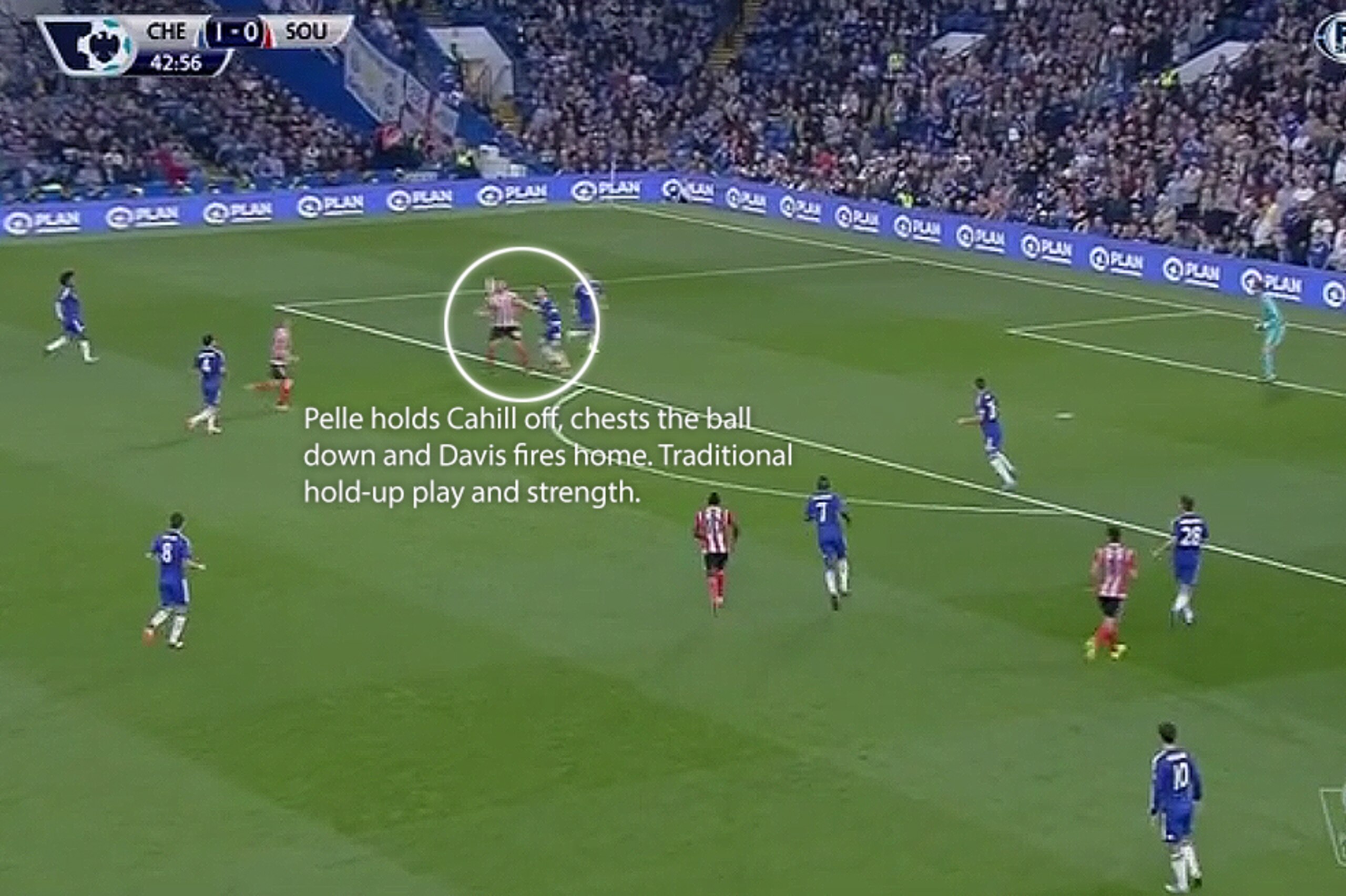
Pelle is as traditional a No. 9 as you will find in 2015, boasting strength, neat hold-up play and good distribution. Mane is all pace and burst, but has the technical ability to drop your jaw—particularly when you see him live. On the other flank, Tadic is slower than Mane but even more skilful, rarely losing the ball, constantly winning set pieces after luring in challenges and delivering accurate crosses from the left.

Tadic, in fact, is quite an atypical player; a rare phenomenon in the world of football. He stays touchline wide to stretch the pitch and create space for himself and others, and still manages to beat defenders down the outside despite being slow.
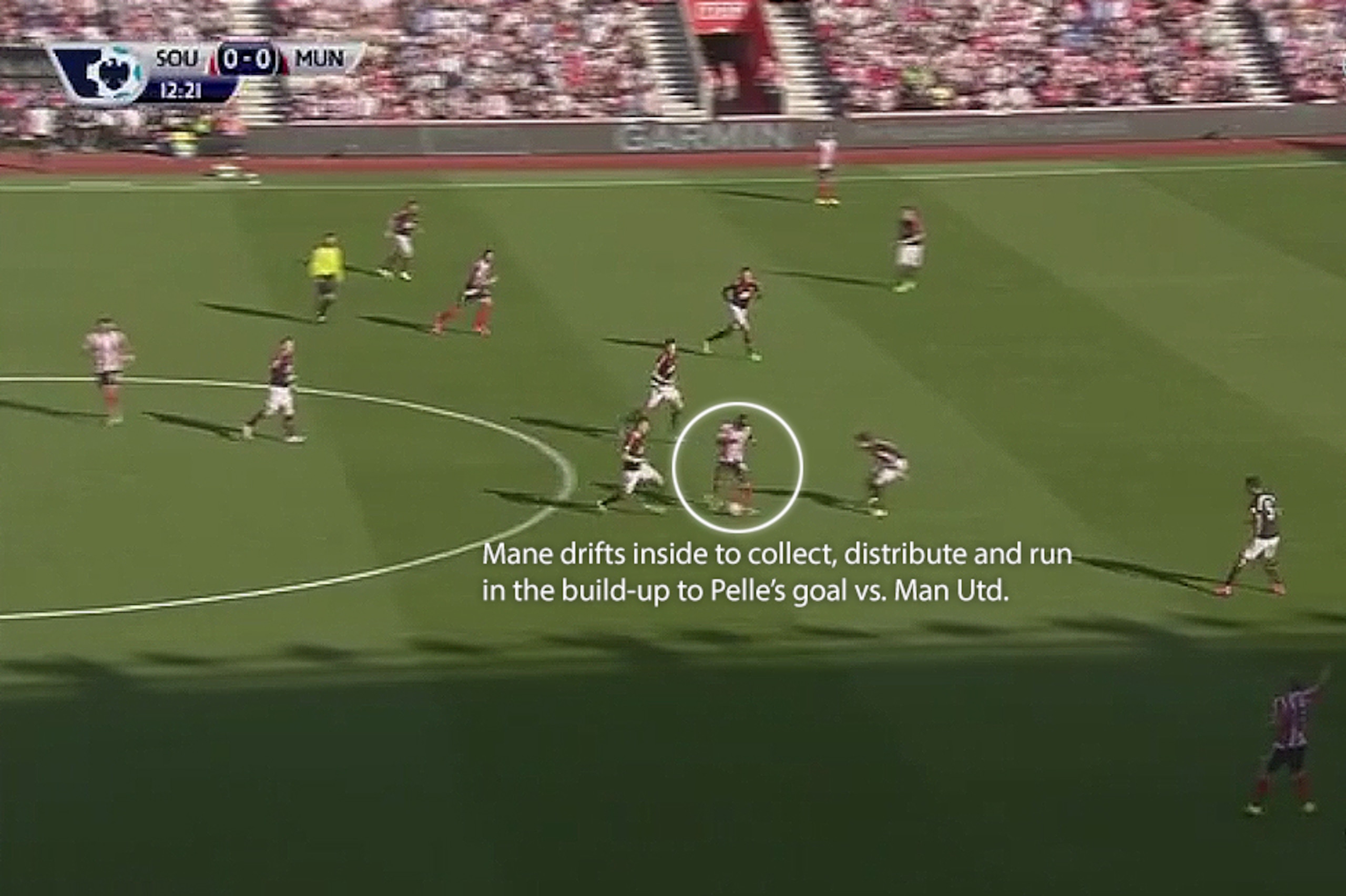
The Serbia international cuts in far less regularly than you’d expect, which is a positive, as Mane drifts all the way into the No. 10 position from the right in order to see more of the ball—a move which would ordinarily clog the zones, but it doesn’t.
Davis shielding Ward-Prowse in his deeper role whilst learning; Tadic stretching the pitch for Mane; Mane making the runs off Pelle; Cedric preferring to cross from deep as Bertrand pierces further forward. It’s all balanced. It’s all thought through.
Koeman makes the job of manager of Southampton look like a waltz in a sunny south-coast park, but it’s not.
The ridiculous turnover of players, fears over who may leave next and regular requirement to act late in the market would sweep the feet of most clubs in world football. Just look at Aston Villa, who have gone from a position slightly above Southampton’s back in 2010 to relegation candidates four years in a row, as proof.
Koeman has a very tough job, and to create such a well-balanced, tactically stable side out of the parts he is given is astounding. Yes, he has the free roam of the Scottish and Dutch markets, and that English core Southampton were once founded upon is splintering, but all things considered, his work may have been underestimated.
Once again this summer, Southampton were written off and consigned to the bottom half of the Premier League table, and while they enter the international break in ninth, right on the cusp of it, they've hit their stride and are surging upward.
So long as Koeman continues to work his magic and serious injuries are avoided, there's no reason the Saints can't make another tilt at European football this season, contesting Liverpool, Tottenham and Swansea City for fifth, sixth and seventh place.
Confounding expectation and defying the narrative appears to be what Koeman's club do best.
.jpg?w=2560 "Grading Smackdown After SummerSlam")
.jpg?w=2560 "Maxx, Kirk Get Chippy at Practice")
.jpg?w=2560 "Harden Gun Charge Dismissed")
.jpg?w=2560 "Follow WWE SmackDown 🔵")