Singapore GP Pole Shows Sebastian Vettel Is Still Fastest F1 Driver over 1 Lap
It was at the Singapore Grand Prix in 2012 where Lewis Hamilton's love story with Mercedes first began.
Pole position at Marina Bay, a fortnight after his third win of the campaign at Monza, appeared to paper over the cracks forming in his increasingly strained relationship with McLaren.
But his retirement from the lead of the race after just 22 laps widened those cracks beyond repair—it wasn't the first time his car had ruined his good work that year.
TOP NEWS
.jpg?w=2560 "Raiders Camp Football")
Biggest Rumors Ahead of Roster Cuts 👀
.jpg?w=2560)
Grading WWE Raw 🔠
.jpg?w=2560 "Fever Sky Basketball")
Source: Freedom, White Not Eligible for WNBA Draft (AP)
As he walked away and into the shadows, Hamilton knew this was the final straw, that the people who turned him into the youngest-ever world champion just four years earlier were now obstructing him from further success.
Mercedes knew it too and acted quickly and opportunistically, selling him a dream and offering Hamilton the inspiration, the sense of purpose and possibility he had been starved of at McLaren.
A deal to join the Silver Arrows for 2013 was announced just five days later.
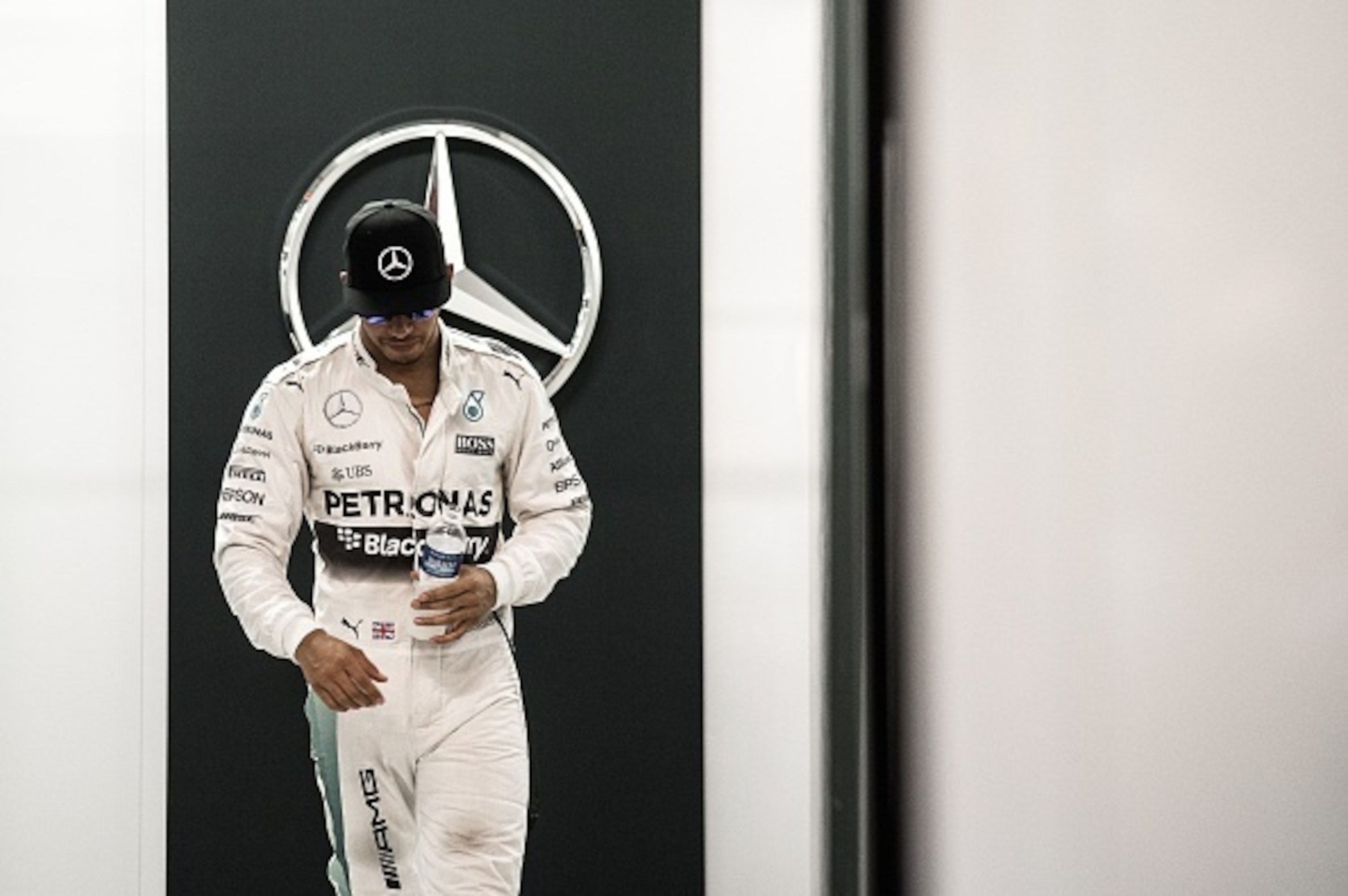
Making a crucial, potentially career-defining decision in the immediate aftermath of a crushing disappointment carries a huge element of risk for any athlete, particularly one as emotional and impulsive as a 27-year-old Hamilton.
Yet as they returned to the scene of where it all started for this weekend's race, both driver and team had the chance to reflect upon how far they'd come in such a short period of time and how much they have achieved since their three-year plan was established in September 2012.
And, of course, it offered them the opportunity to underline their recent success by equalling two of the most coveted, long-standing qualifying records in F1, per Sky Sports' live commentary.
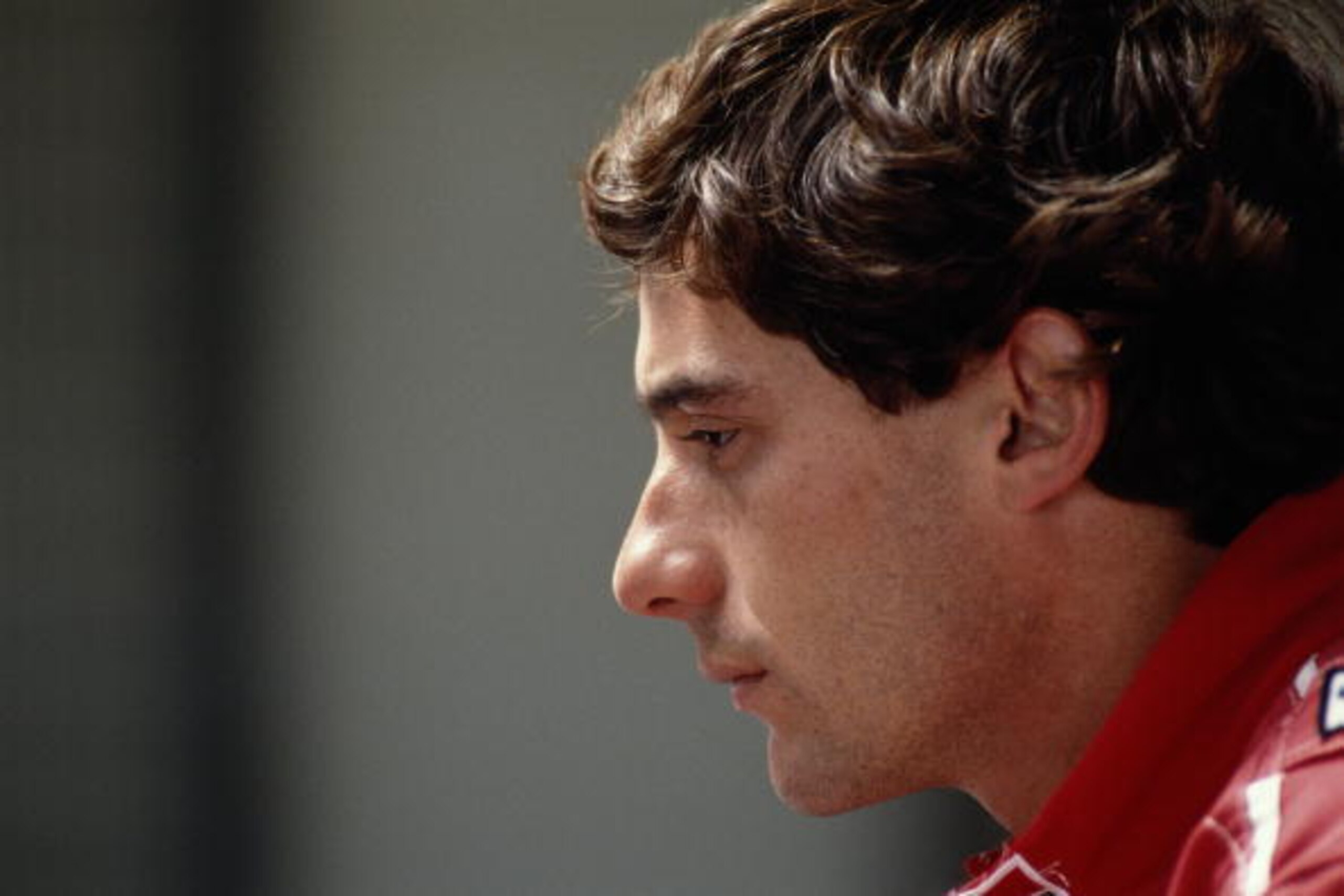
Hamilton, now one short of equalling his boyhood idol Ayrton Senna's tally of 41 grand prix victories, entered the one-hour session with a shot of matching the Brazilian's record of eight consecutive pole positions, having started every race since May's Monaco GP from the front of the grid.
With Mercedes dominating every Saturday since July 2014, the German manufacturer could have equalled a team record of 24 straight poles, first achieved by Williams over the course of 1992 and '93 with what, until recently, were regarded as the most technologically advanced cars the sport had ever seen.
Yet just like Singapore 2012, the evening didn't go to plan.
Mercedes' bizarre lack of pace in the arena in which they've excelled since the beginning of the V6 turbo era—as a result of tyre troubles, Hamilton told Sky Sports' Mike Wise—left the reigning world champion, restricted to just a single flying lap in Q3 after a mistake ruined his initial run, fifth on the grid.
And just like Singapore 2012, it was Sebastian Vettel who claimed the result supposedly reserved for Hamilton.
Vettel's first pole position for Ferrari—the team's first dry-weather pole in exactly five years—is hugely significant for a number of reasons, not least because, as Jenson Button told Sky Sports' Pete Gill, a competitive field is "exactly what the sport needs" at a time F1 risks becoming a one-man show.
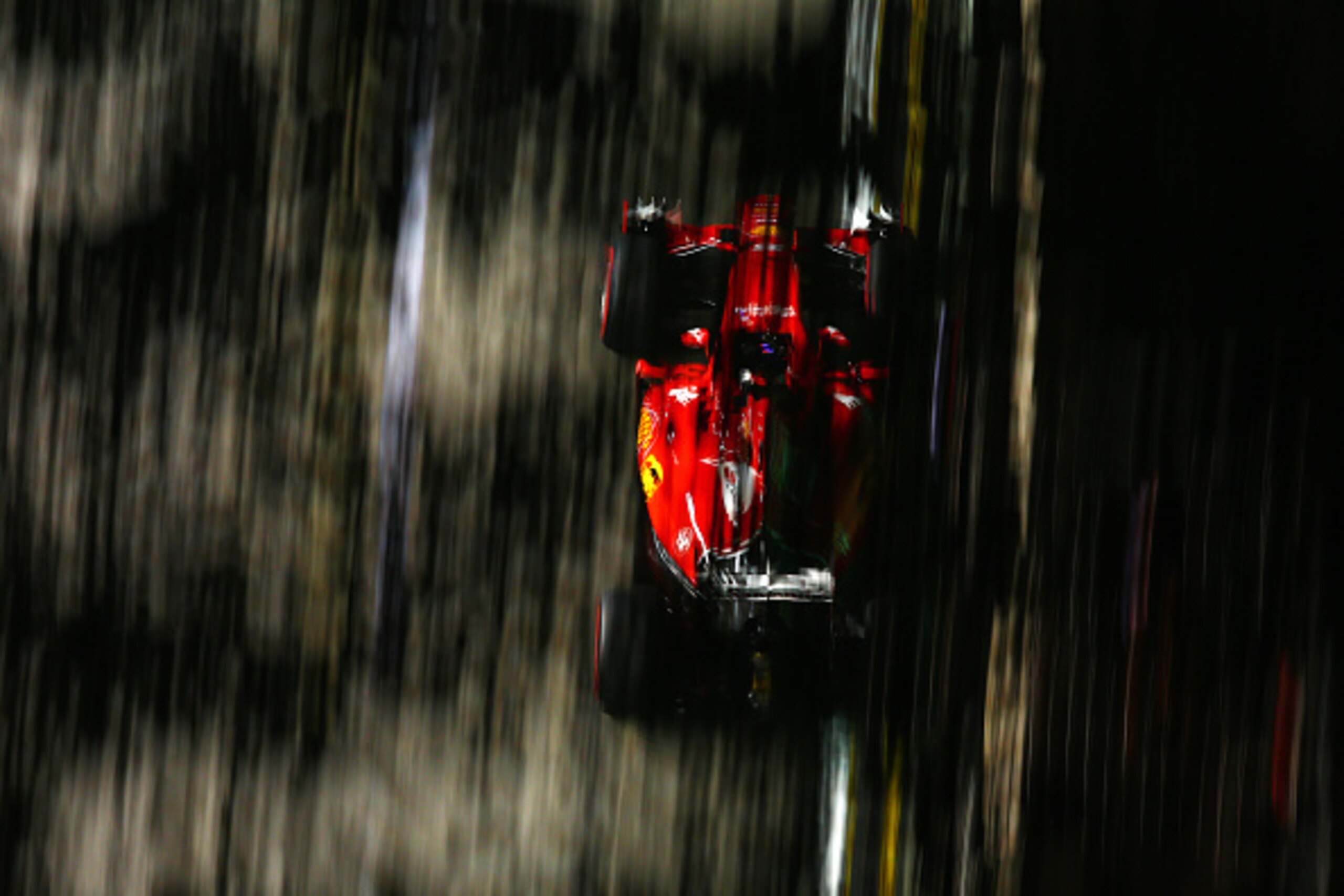
Yet the German's return to the very tip of the grid was the final act in terms of repairing his reputation.
After suffering the first winless season of his career in 2014, Vettel, in the eyes of many, entered 2015 needing to prove that his four championship triumphs with Red Bull Racing between 2010 and '13 were not the acts of a passenger behind the wheel of the fastest car but of a supremely talented racing driver.
And after returning to winning ways in just his second race for the Prancing Horse, in Malaysia, and proving that was no fluke by claiming victory from third on the grid in Hungary—as well as producing several other impressive performances—a first pole position since 2013 sealed his redemption, leaving him with nothing to prove to anyone.
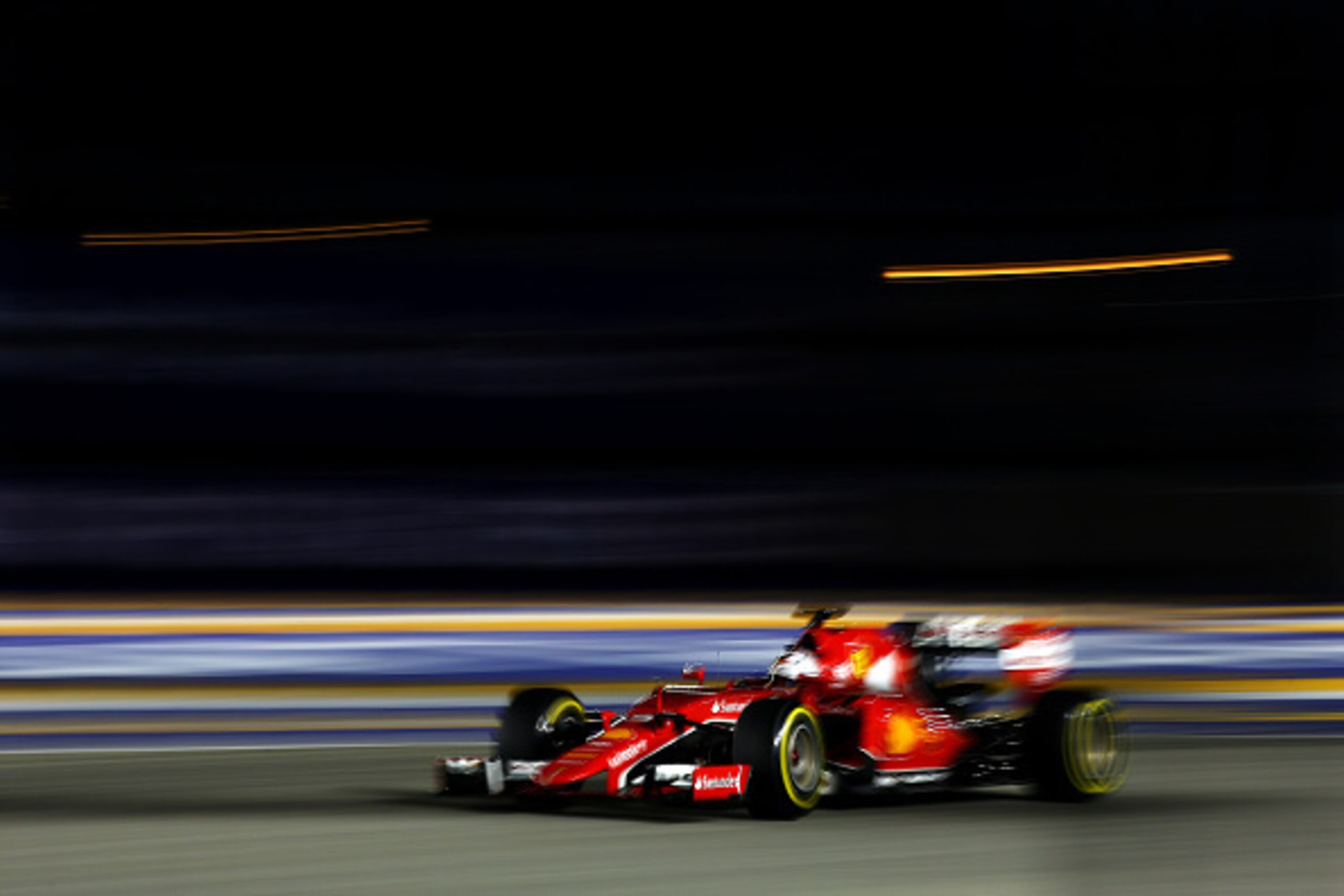
It has also offered a timely reminder that Vettel remains the fastest driver in F1 over a single lap.
Watching a Vettel pole lap, there is a calm restlessness, a flamboyant smoothness and a certain sense of seamless speed that is unrivalled by any current driver.
The sheer sight of Vettel hustling his car, attacking the kerbs and swishing his steering wheel, especially in Singapore—where, in 2013, the German was so relentlessly quick that former team owner Giancarlo Minardi suggested his car may have been running with traction control—rubbishes the notion that modern F1 struggles to stimulate the senses.
Unlike other drivers, who sometimes claim strong results with unspectacular-looking laps, the visual clues provided by Vettel always translate into the eventual lap time. His pole-setting effort—"a near perfect lap," he told Motorsport.com's Pablo Elizalde—was an astonishing but unsurprising 0.543 seconds quicker than second-placed Daniel Ricciardo, per the official F1 website.
With 11 pole positions in the first 12 races of 2015, Hamilton may have already secured this season's FIA Pole Trophy, and he may have come within touching distance of Senna's record—the kind of accolade his partnership, his journey and his dominance with Mercedes deserves to be associated with.
But it is Vettel, a pole-setter again, who is F1's real King of Qualifying.




.jpg?w=2560 "Report: Texans Trade for Pats WR")