B/R CFB 250: Top 31 Wide Receivers
Bleacher Report's CFB 250 is an annual ranking of the best players in college football, regardless of NFL potential. Through interviews with B/R experts Matt Miller, Michael Felder, Barrett Sallee and Adam Kramer, authors Brian Leigh and Brian Pedersen have studied, ranked and graded the top athletes in the country, narrowed that list to 250 and sorted by position. Today, we present the Top Wide Receivers.
Other CFB 250 Positions
Quarterback play remains an integral part of any effective offense in college football, but without some capable guys to make catches, there's not much that can be done through the air.
We have another strong crop of wide receivers for 2015, even after seeing six taken in the first round of the 2015 NFL draft. All told, nine of the top 11 from our last ranking of the nation's top wideouts have moved on, but in their wake is a crop of pass-catchers who are just as good, if not better.
The following ratings are based primarily on players' skills as college players rather than how they'd fare in the NFL. Though they may be using this time to develop their games for the pro level, they should be focused on helping their teams succeed first and foremost.
The rankings consist of a tabulation of six different categories (hands, route running, blocking, release, speed and run after catch). They also consider evaluations made by our writers in conjunction with Bleacher Report football experts.
Note: Any ties in overall grade were broken based on which player would give a hypothetical college all-star team the best chance to win.
31-28. Lucas, Wilson, Listenbee, Dudek
1 of 24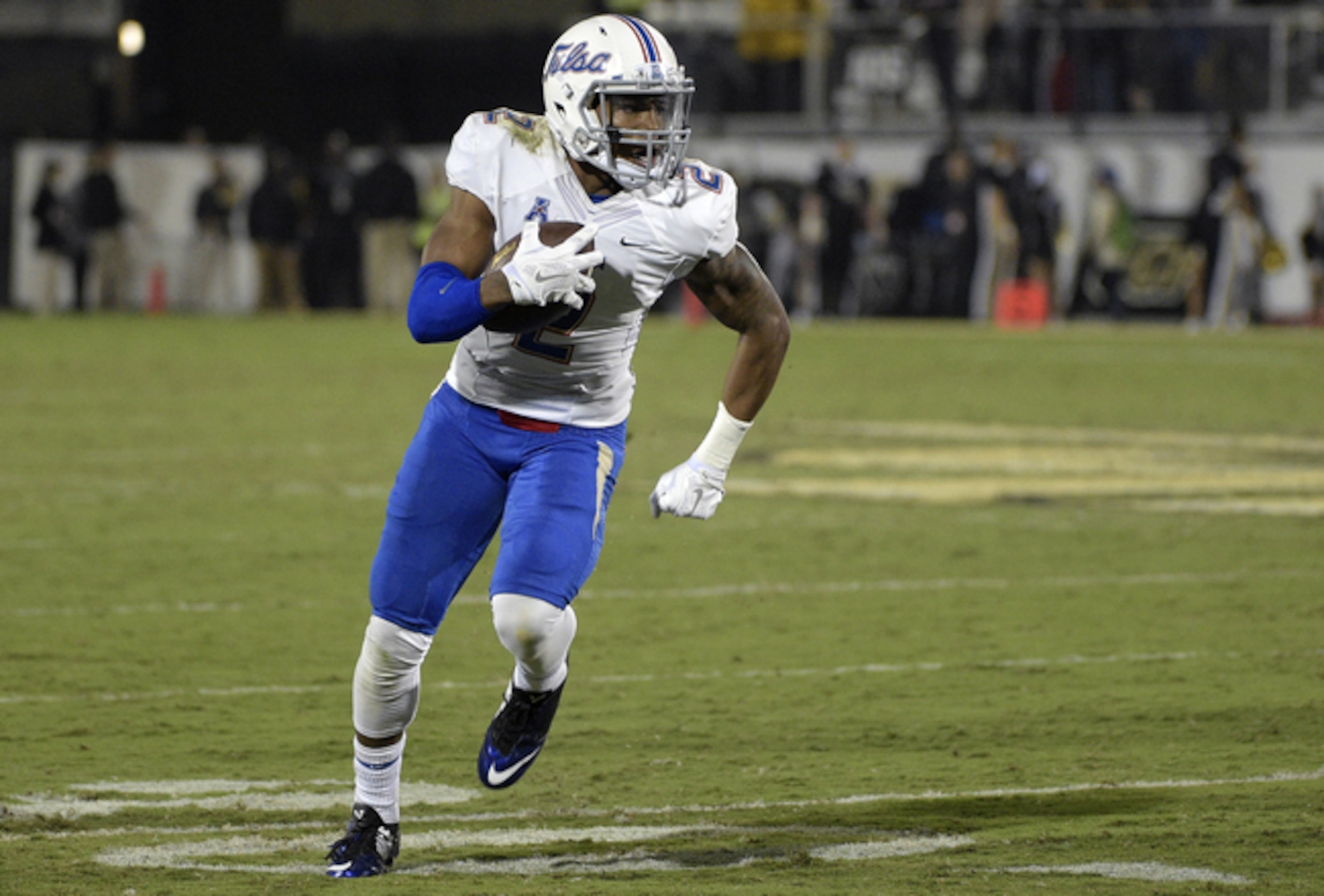
31. Keevan Lucas, Tulsa
Hands: 22/25; Route Running: 16/20; Blocking: 2/5; Release: 16/20; Speed: 13/15; Run After Catch: 12/15.
Stuck on a 2-10 team that had one of the worst defenses in the country, Keevan Lucas thrived as Tulsa's top weapon. His 101 receptions were second in the American Athletic Conference as a sophomore, and he had five games with at least 10 catches.
30. De'Runnya Wilson, Mississippi State
Hands: 22/25; Route Running: 16/20; Blocking: 3/5; Release: 16/20; Speed: 12/15; Run After Catch: 12/15.
Though Dak Prescott got most of the attention for Mississippi State's strong offense last year, he couldn't have done it without De'Runnya Wilson's contributions on the outside. The wideout had nine touchdown receptions and performed his best down the stretch with 25 catches for 313 yards and three scores over his final three games.
29. Kolby Listenbee, TCU
Hands: 21/25; Route Running: 14/20; Blocking: 3/5; Release: 16/20; Speed: 15/15; Run After Catch: 13/15.
The fastest player in college football, Kolby Listenbee has managed to convert his sprinter speed into a deadly weapon. He averaged 18.4 yards on 41 receptions last season and figures to be even more involved in 2015 as a deep threat.
28. Mike Dudek, Illinois
Hands: 22/25; Route Running: 17/20; Blocking: 3/5; Release: 16/20; Speed: 12/15; Run After Catch: 12/15.
A star in the making following a great freshman year, Mike Dudek begins this season in street clothes after tearing his ACL in spring practice in April. Illinois is hoping to get its leading receiver back by October, and his absence will have a negative effect on the passing game.
27-23. Robinson, Hamilton, Payton, Jones, Noil
2 of 24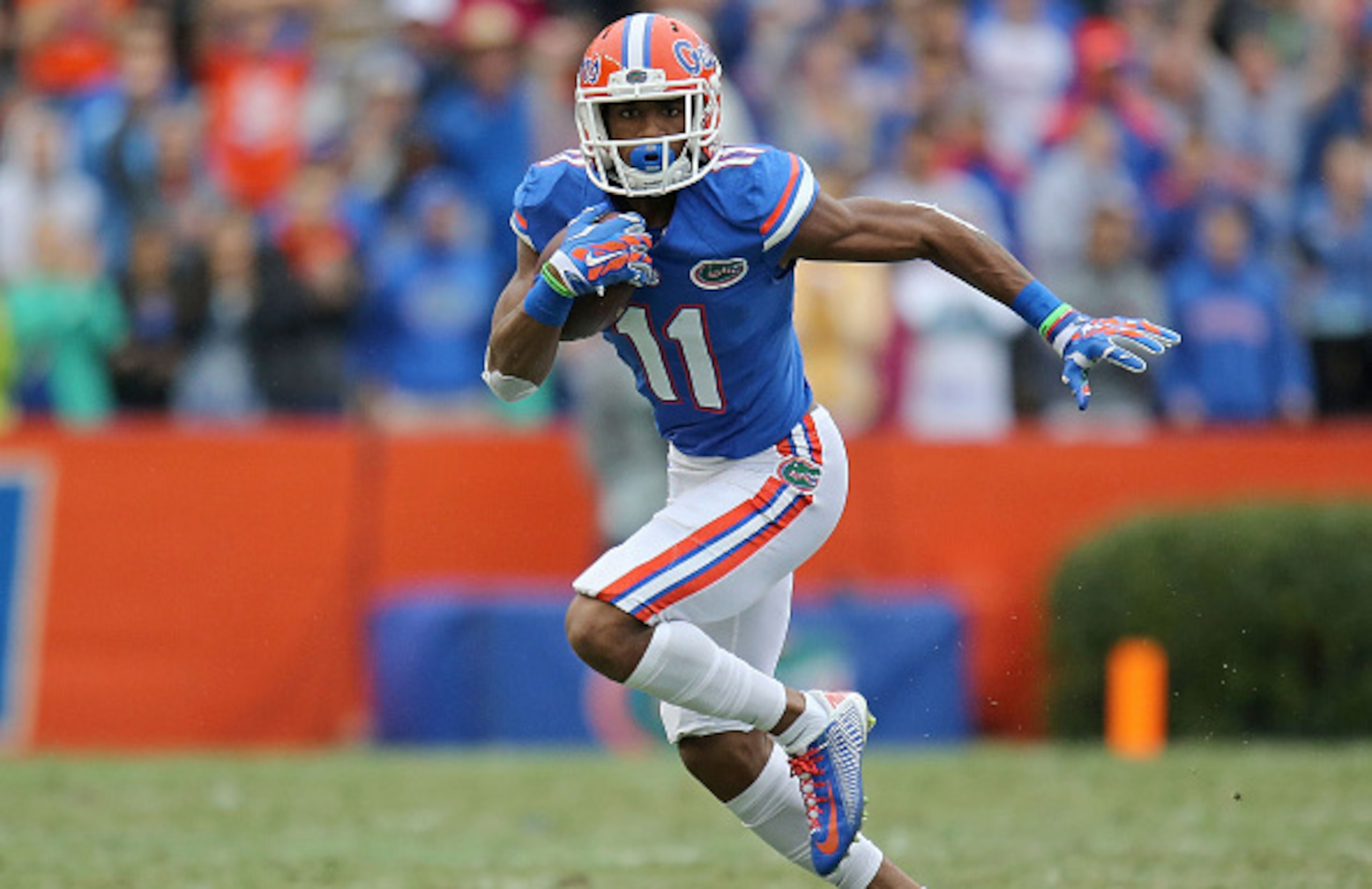
27. Demarcus Robinson, Florida
Hands: 22/25; Route Running: 15/20; Blocking: 3/5; Release: 17/20; Speed: 13/15; Run After Catch: 12/15.
On a Florida offense that often couldn't get out of its own way and managed to set back passing prowess in the Swamp a decade, Demarcus Robinson still had a big year. His 53 receptions, 810 yards and seven touchdowns were more than any other three Gators had combined.
26. DaeSean Hamilton, Penn State
Hands: 22/25; Route Running: 16/20; Blocking: 3/5; Release: 16/20; Speed: 12/15; Run After Catch: 13/15.
The only consistent weapon Penn State had last year was DaeSean Hamilton, and he was a doozy. The true freshman had 82 catches and 899 yards. But because the Nittany Lions had no running game, opponents stifled him in the red zone, holding him to two touchdowns.
25. Jordan Payton, UCLA
Hands: 23/25; Route Running: 16/20; Blocking: 3/5; Release: 16/20; Speed: 12/15; Run After Catch: 13/15.
Jordan Payton broke through as UCLA's top target last year, catching more passes (67) than in his first two seasons combined (56). He had three 100-yard games and at least five receptions in nine of 13 contests.
24. Cayleb Jones, Arizona
Hands: 22/25; Route Running: 16/20; Blocking: 3/5; Release: 17/20; Speed: 12/15; Run After Catch: 13/15.
Arizona's potent offense enabled Cayleb Jones to become a star in 2014. After sitting out the 2013 season following a transfer from Texas, the 6'3”, 215-pound beast had team highs in receptions (73), yards (1,019) and receiving touchdowns (nine).
23. Speedy Noil, Texas A&M
Hands: 21/25; Route Running: 16/20; Blocking: 3/5; Release: 16/20; Speed: 14/15; Run After Catch: 14/15.
The ultra-deep Texas A&M receiving corps kept Speedy Noil from being as productive as he could have been in 2014, but there's no denying the sophomore has the tools to be a star. He also serves as one of the Aggies' key punt and kick return men.
22. JuJu Smith, USC
3 of 24
B/R Expert Scouting
“I love what I saw as a freshman. Insanely athletic. He's a guy that's pretty tough, too. I'd be shocked if he doesn't get 1,100 yards.”
—Adam Kramer
Hands
Working with one of the most accurate quarterbacks in the country in Cody Kessler helped JuJu Smith during his freshman year. But the talented receiver also had good technique while bringing the ball in and didn't try to make flashy catches.
Route Running
USC didn't give Smith the elaborate routes as the second option behind Nelson Agholor in 2014, but this season he'll move into that role. He can become crisper and more defined on the line he takes and stop floating as much.
Blocking
Smith is a big body at 6'2” and 215 pounds and can push corners out of the way on run-blocking assignments.
Release
A physical approach works best for Smith, who when pressed will attempt to go through his man as much as around him.
Speed
The sophomore has speed but doesn't show it on a straight line very often. He can change direction well and stay on a fast pace.
Run After Catch
If he has some space to work with, Smith can pick up the extra yardage for a first down or break off a long run and go the distance. In traffic, though, he tends to get taken down pretty easily.
Overall
Smith used last year to get his feet wet in USC's system, though he still made big contributions. Now he has to be the go-to receiver, which he'll be able to do with continued development of his routes.

.jpg?w=2560)
21. Josh Reynolds, Texas A&M
4 of 24
B/R Expert Scouting
“On a team full of receivers, he was by far the best one. Great hands, physical at the line of scrimmage, tremendous speed. It's hard for a receiver to stand out at Texas A&M, but for him to do that is amazing.”
—Barrett Sallee
Hands
Texas A&M had four players catch at least 40 passes last season, but Josh Reynolds was the one making the biggest plays. En route to setting the single-season school record with 13 receiving touchdowns, he showed off hands that worked best when in the air.
Route Running
Reynolds had a knack for knowing the right time to cut back or fake out, which often let him get a large cushion on his defender as he continued the route. This was why he had so many wide-open receptions last season.
Blocking
Like all of A&M's receivers, Reynolds handled the blocking part of the job well as a sophomore. There weren't any significant flaws in his technique, but there's still room to get better.
Release
Reynolds has strong early moves that help him turn the defender in the wrong direction, which lets him tap into his speed to get more open than he otherwise would've been.
Speed
One of his best attributes, Reynolds' speed comes as much from quick feet and the ability to change direction in a hurry as it does from outright pace.
Run After Catch
Reynolds is tall and rangy at 6'4” and 195 pounds, and his long arms come in handy when fending off defenders after the catch. One of his two TDs against Rice in September came after he shoved his defender to the ground en route to the end zone.
Overall
Reynolds and quarterback Kyle Allen clicked late last season, connecting on five TD passes in the final four games. That tandem will be a big one this year for A&M, and Reynolds will again be the first place Allen looks for big plays.
20. Leonte Carroo, Rutgers
5 of 24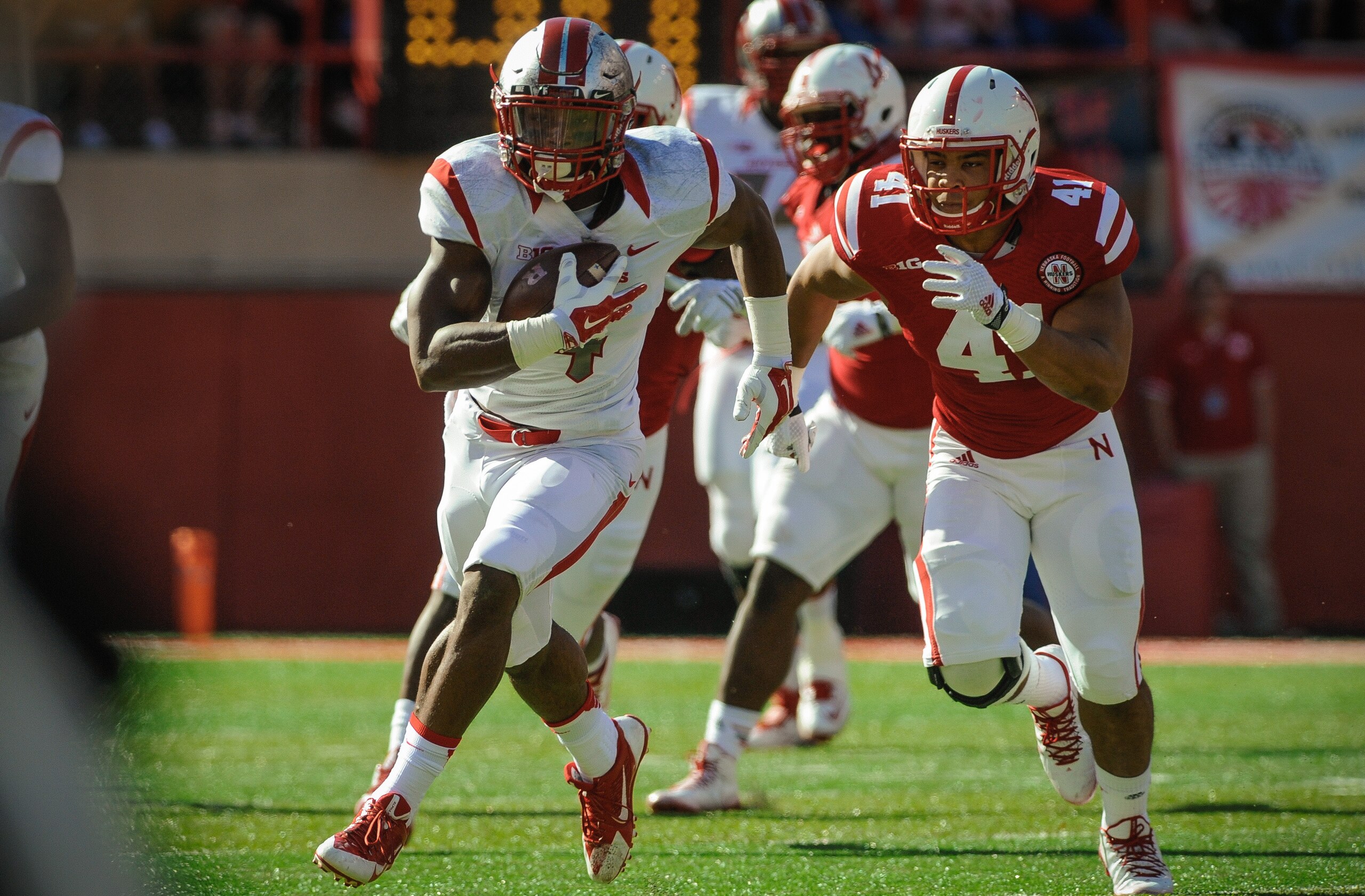
B/R Expert Scouting
“I don't where Rutgers keeps getting these 215-pound monsters. He's not going to get a ton of love for who he plays for, but he's tremendously productive.”
—Adam Kramer
Hands
Leonte Carroo's hands are valuable, since many of his catches last season came with a defender all over him or close by. A 50-50 ball usually went his way, since he could outleap and outmuscle the opponent.
Route Running
Many of the routes Carroo ran last season were of the straightforward variety, with a few twists and turns to help get some separation.
Blocking
Carroo could be a real asset to the run game with a little more dedication to his assignment. He was better on the second level if he could drive the defender downfield by sticking to his route.
Release
Opponents tended not to line up too closely against the 6'1”, 215-pound Carroo for fear he'd overwhelm them and get a step. This forced him to have to do more further up the field, but his moves worked most of the time.
Speed
Carroo's speed is deceptive in that he's not someone who looks like he's going to be able to get by you, and then he's slipping through a gap. Much of what he does is on a straight line without too much wiggling.
Run After Catch
Because he's strong and physical, Carroo can get big chunks after the catch in traffic. More often, though, those yards came because he'd gotten some space and could use that to establish a stiff arm.
Overall
Carroo averaged 19.8 yards per catch last season and was a consistent threat to break off a big play. Rutgers' offense will go as far as he's able to take it, as long as he continues to beat his man.
19. De'Mornay Pierson-El, Nebraska
6 of 24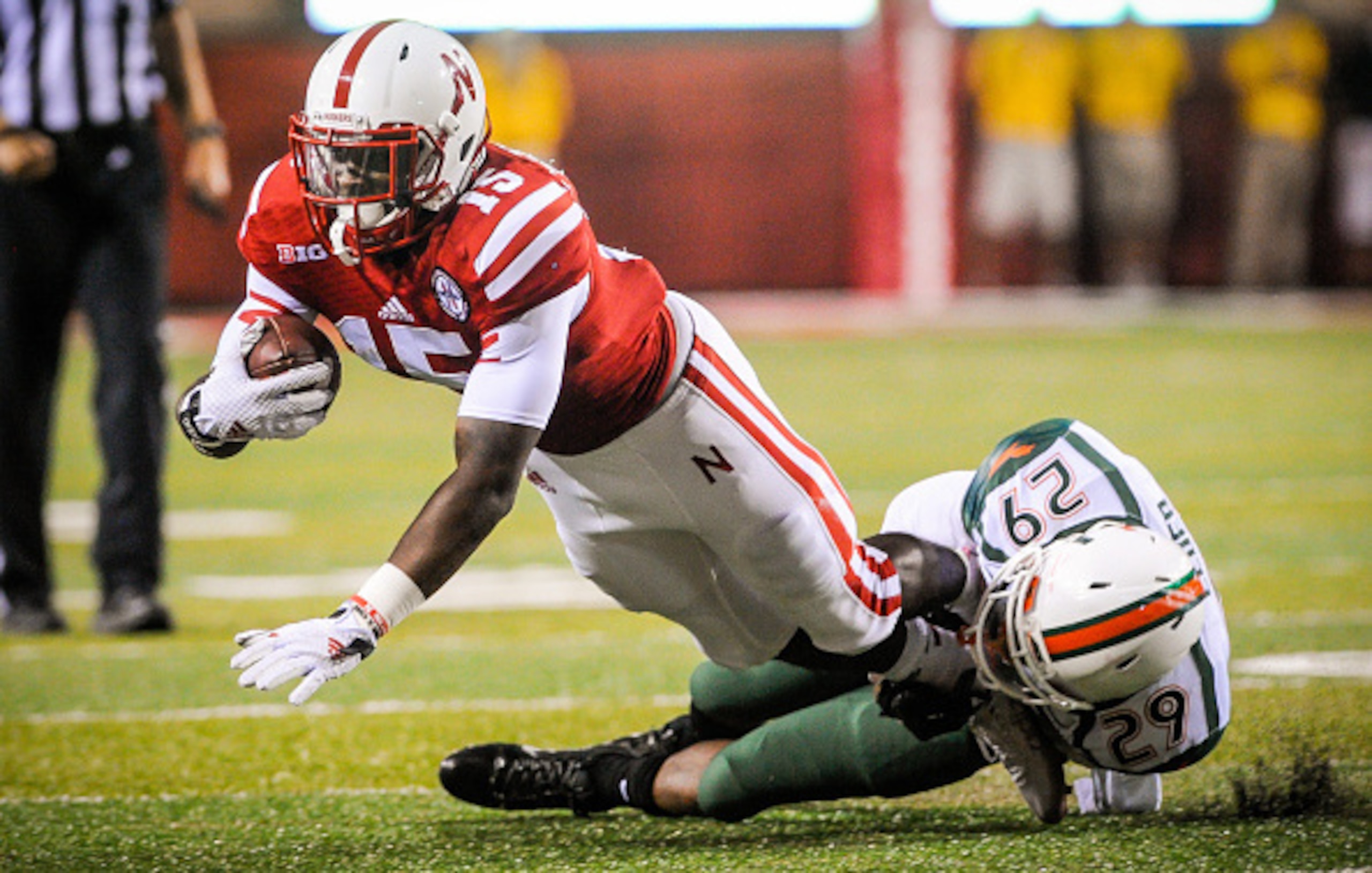
B/R Expert Scouting
“As they adapt to a pass offense, they need to find someone to catch balls and make safe catches, and he's a perfect outlet for that. Somebody's got to suck up catches, and he's the guy to do it.”
—Adam Kramer
Hands
De'Mornay Pierson-El's biggest impact for Nebraska as a freshman was as a punt returner, but he got plenty of snaps at receiver as well. He didn't have nearly as much success holding on to the ball after catches, though, most notably during a key November loss to Minnesota in which he fumbled two of his four receptions.
Route Running
Last year, there was a little too much of the freelancing that comes with being a return specialist. However, this figures to improve after Pierson-El gets work running routes in new coach Mike Riley's pro-style offense.
Blocking
When on the field for run plays, Pierson-El was serviceable as a blocker. But he'll never be lauded for his skills in this area.
Release
Pierson-El can get better at creating on offense by using those same return moves to break free from defenders early in his routes. This will come over time.
Speed
His blazing speed was on display whether he was getting the ball thrown or punted to him, which makes him a strong contender to be Nebraska's deep threat in the passing game.
Run After Catch
Pierson-El averaged 17.5 yards on punt returns and brought three back for touchdowns. In all three cases he had to elude defenders at various levels and sometimes weave through traffic and take a bump or two. He'll eat up big chunks after the catch.
Overall
Despite having a strong freshman year, Pierson-El could see even bigger returns in a breakout 2015 thanks to the change in offensive scheme. If he can get down the technical part of being a receiver, his speed and athleticism will do the rest.
18. Braxton Miller, Ohio State
7 of 24
B/R Expert Scouting
“He's going to be one of the biggest wide receivers in the country. He's such a great athlete, and he plays with a coach that knows him better than anyone. There's no reason to believe he won't make a significant contribution.”
—Adam Kramer
Hands
The extent of Braxton Miller's experience catching the ball to this point in his career has been on shotgun snaps as a quarterback, so his ability to haul in passes will depend on how he adapts during training camp. He took care of the ball well at his old position and should make a smooth transition.
Route Running
Miller is starting fresh in so many areas, but this might be where he has the most to learn. He knows what kind of routes will make for big plays, but he still has to show he can stay on that line and be where the quarterback is expecting him to be.
Blocking
Another area that will take Miller some study and reps to get down is the running game. He blocked occasionally over the years when following a play upfield, but this will be more involved.
Release
When ESPN covered Ohio State's first day of training camp, it had former Ohio State receiver Joey Galloway work with Miller to see what he could do. One place where Galloway provided the most feedback was in the ability to get past a defender off the line without it affecting the route.
Speed
He was one of the fastest quarterbacks in the country from 2011 to 2013, and the shoulder injury that kept him out last season had no impact on his speed. Miller figures to be a great option as the Buckeyes' deep threat.
Run After Catch
Miller has run for 3,054 yards in his career, and quite a bit of that came after taking a hit or two. This could be his biggest asset in making the switch from quarterback.
Overall
Miller is a work in progress as a wide receiver, but his amazing athleticism and dedication to the game is a big reason why his position change should be wildly successful. Not only will it provide OSU with a much-needed home run hitter, but it will set up Miller for a pro career, since quarterbacking doesn't seem to be in his future anymore.
17. Travin Dural, LSU
8 of 24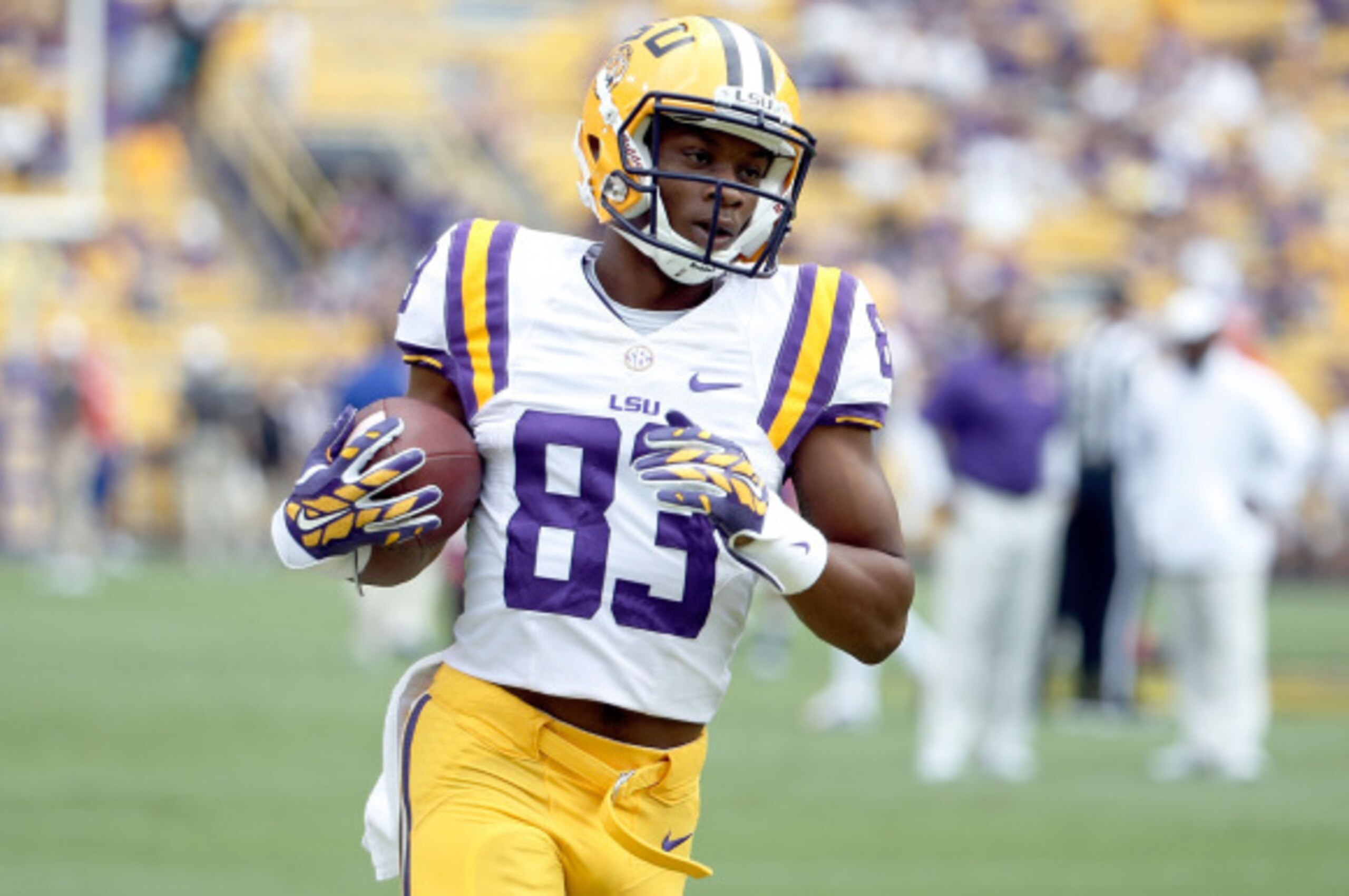
B/R Expert Scouting
“He's got all of the potential in the world. He's just got to find a quarterback to get him the ball. He can basically do it all. Watch out for him; he's going to be one of the best in the country.”
—Barrett Sallee
Hands
Travin Dural has been a deadly weapon on the outside but hasn't carried that over to the middle, where he's not as able to cradle passes into his body and thus struggles with using his hands to make the catch.
Route Running
With the struggles LSU had last season at quarterback, route running wasn't a priority, and Dural didn't do much to stand out in this area. If he's got someone who can get the ball to him, the Tigers might try to be more creative.
Blocking
Blocking is not a strong suit. Dural does just enough to get by when jamming up a defender or sealing off a route for another teammate.
Release
Longer-than-normal arms work to Dural's advantage when he's trying to get off the line. They help him maneuver himself past a defender without needing to go into his body and risk getting off balance. A quick first step also stands out.
Speed
A Louisiana state champion in the 200-meter relay when in high school, Dural has that lightning speed that teams look for in their deep receivers. That enabled him to average 20.5 yards per reception last season.
Run After Catch
Most of Dural's biggest gains came by running a great distance before the catch, but he can add yardage to short routes as well if he's able to get the edge and turn upfield.
Overall
One of those receivers who almost seems wasted in the system he's in, Dural can become a major weapon if LSU can just get the ball to him.
16. Michael Thomas, Ohio State
9 of 24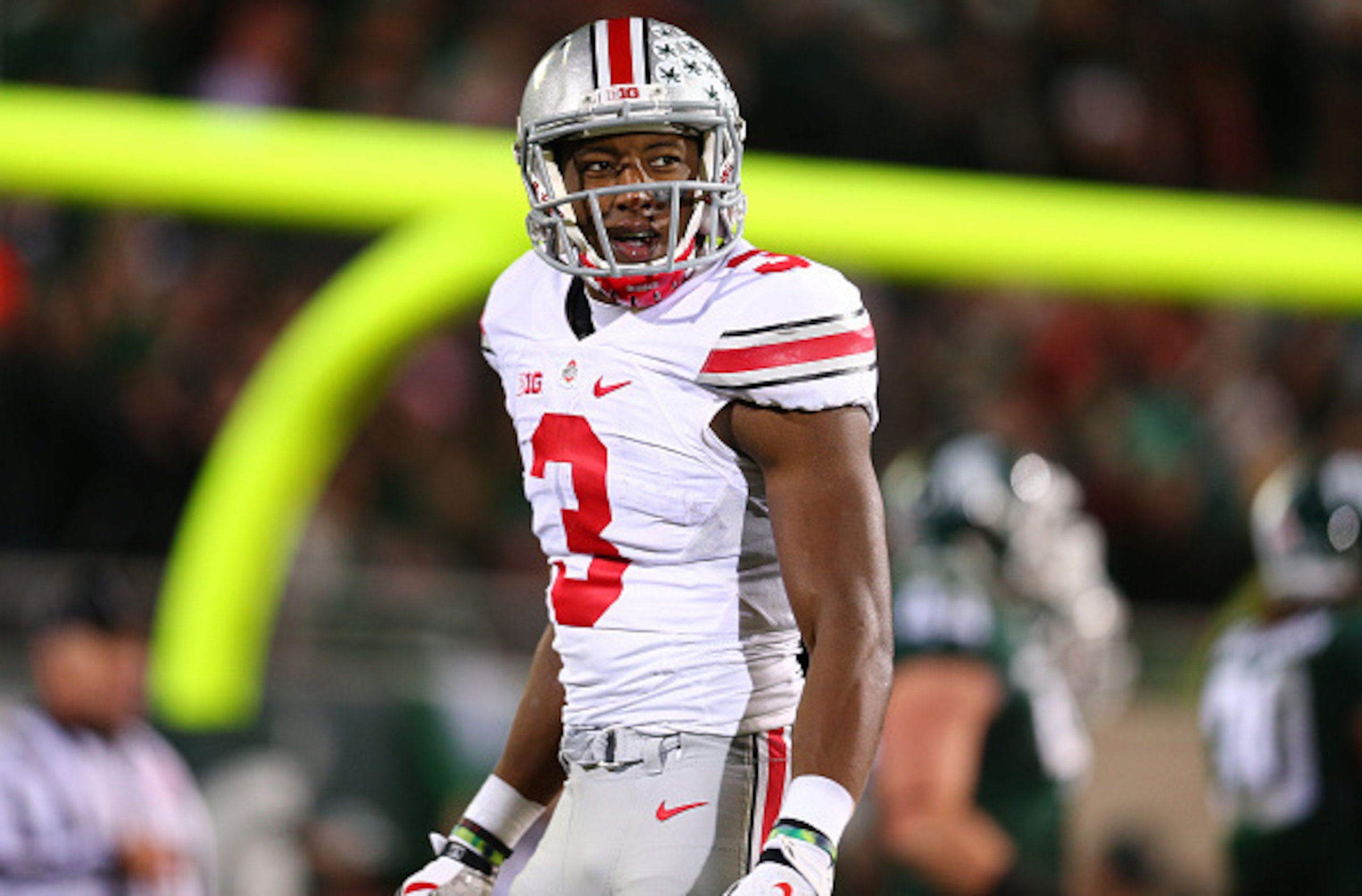
B/R Expert Scouting
“He became like a catch machine at the end of the year. He's great in the air. Athletically, it would not shock me to hear him be someone NFL scouts are talking about at the end of the year.”
—Adam Kramer
Hands
So many of Ohio State's pass-catching options last year were specialty players, while Michael Thomas was the most traditional of the group in all areas. That included being the one to go to for tough catches, which he routinely hauled in thanks to great hands.
Route Running
Thomas can get better at sticking to his routes and not tailing off, but he's able to handle most assignments well. He got better as the season went on and should continue to progress heading into his junior year.
Blocking
Ohio State's use of H-backs and mobile quarterbacks put a premium on having good blockers outside. Thomas was very good at being able to drive his man away from the action or contribute to blocks downfield.
Release
At 6'3” and 215 pounds, Thomas used his size to get position early in the route and put his body between the ball and the defender.
Speed
You'd see Thomas' speed more on longer routes than underneath, where he tended to jitterbug and weave more than try to run around defenders. The straight-line speed was solid enough to create separation.
Run After Catch
Thomas was good but not great at being able to extend plays if he got into traffic. Sometimes he'd pull up and try to change course rather than fight past a tackler, which would allow others to get into the mix.
Overall
Thomas was a consistent threat throughout Ohio State's national title run and will be the top weapon in the passing game this season. With more emphasis on using his physicality, he could put his name on the NFL scouting radar.
15. Nelson Spruce, Colorado
10 of 24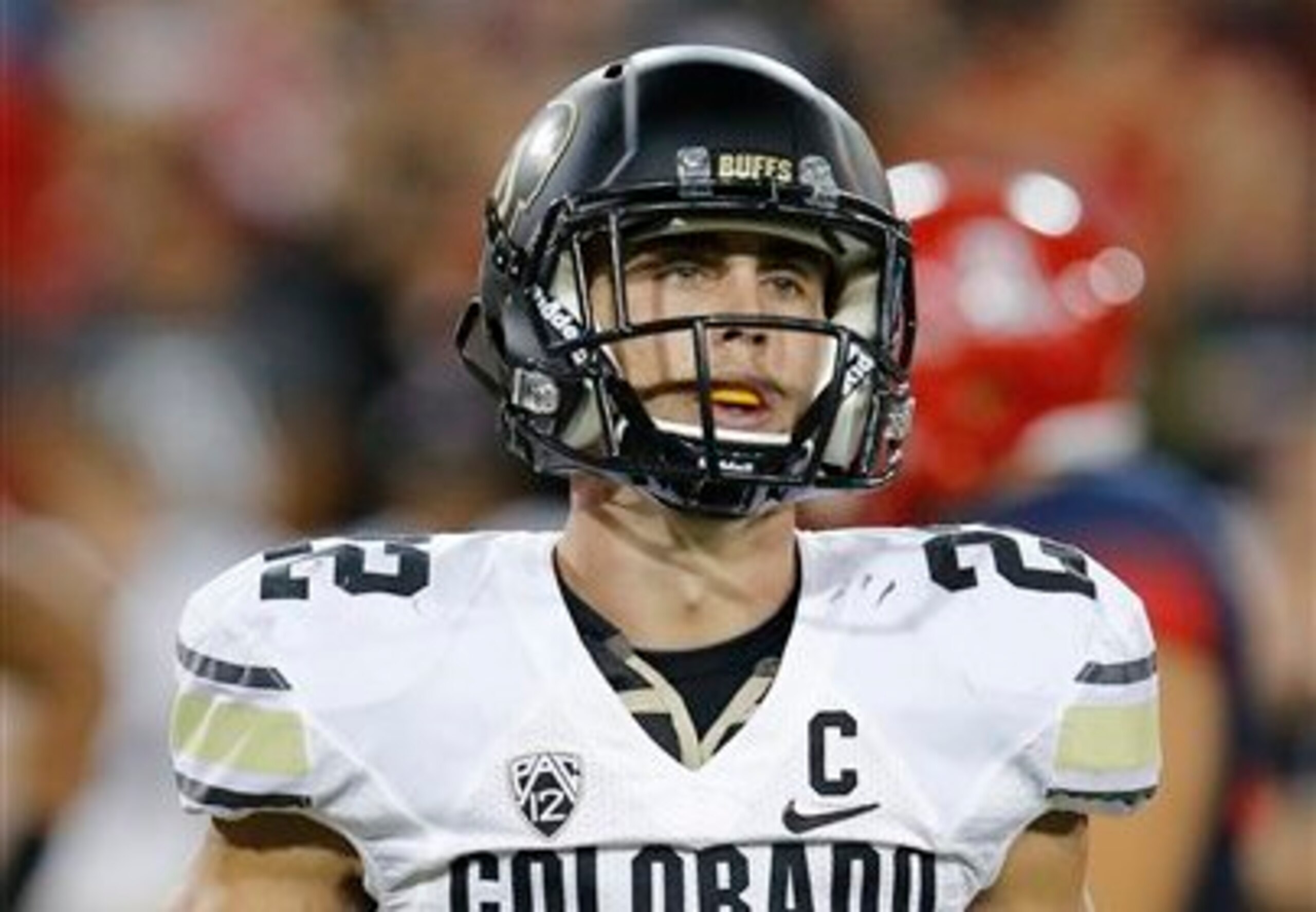
B/R Expert Scouting
“His catch radius is pretty much off the charts. Just throw it in his direction and watch him work.”
—Adam Kramer
Hands
Nelson Spruce has some of the best hands in the game, which is essential for a possession receiver whom Colorado went to for nearly every big play last season. He had 106 receptions, with 20 of them resulting in a third- or fourth-down conversion.
Route Running
Colorado gives Spruce a spot to run to, and he's almost always there when needed. One of the crisper route-runners in the country, he isn't asked to go deep much but excels at the short and intermediate assignments.
Blocking
Good enough to get in the way for the right amount of time to keep his man from getting to the play, Spruce did well as a blocker and had to do it quite a bit, since he was almost always on the field.
Release
Many of Spruce's routes involved making an early cut to help him get away from the defender, which was one of his strengths. He isn't going to fight his way through coverage.
Speed
Not known for his speed, Spruce can elude defenders with his lateral quickness but usually isn't going to beat them deep unless he can fake them out beforehand.
Run After Catch
For a No. 1 receiver, Spruce doesn't do as much as you'd expect after the catch. He's an anomaly in this respect, because he's the primary target but often ends up not going much further beyond where he hauls in the pass. Only 19 of his 106 catches went for at least 15 yards.
Overall
Spruce is an incredibly reliable receiver who will catch whatever is thrown his way. But he might be better served as a slot receiver if Colorado can find someone else to play outside. He's great in traffic and isn't afraid to take a hit, which works better over the middle.
14. William Fuller, Notre Dame
11 of 24
B/R Expert Scouting
“He had probably the most underrated, monster wide receiver season we've seen in recent memory. Why aren't we talking about him more?”
—Adam Kramer
Hands
Will Fuller had a breakout year in 2014, going from six catches the season before to 76 as Notre Dame's primary receiver. He caught most of what came his way, using a style that let his hands guide the ball into his body rather than plucking it out of the air.
Route Running
Fuller handled both short and intermediate routes well. But he stood out best on the deep balls by juking his defender with great footwork.
Blocking
Used more as a decoy on run plays rather than someone Notre Dame would run toward, Fuller did fine with this aspect of the position but didn't excel.
Release
Fuller isn't big enough at 6'0” and 184 pounds to be the kind of receiver who outmuscles defenders for the ball, so he has to get a step on them. He's very fast but also gets off the line quickly without needing to make much contact.
Speed
It takes a little while for him to get up to full speed, but once Fuller turns on the jets he's often untouchable. This stands out most when he goes up the seam or catches a screen pass.
Run After Catch
Fuller gets a lot of his yards after the catch by outmaneuvering defenders with his speed and footwork. On jump balls he can also come down in position to continue forward if needed.
Overall
Fuller made himself a known quantity last season, but now he'll be playing with a target on his back. He's coming off one of the best campaigns for a receiver in Notre Dame history, and the Irish will count on him to make big plays all year long.
13. Byron Marshall, Oregon
12 of 24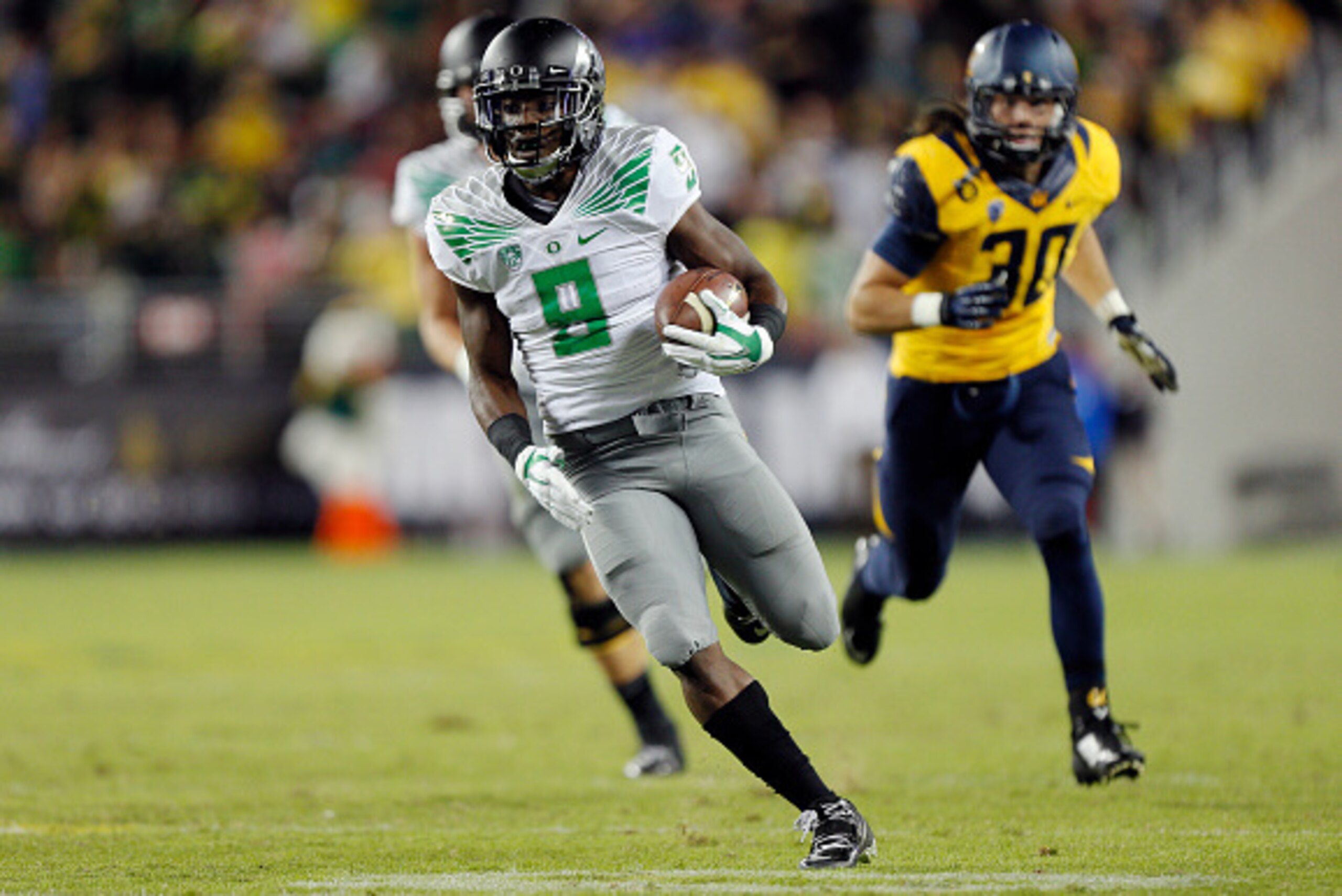
B/R Expert Scouting
“Defensive coordinators lose sleep over this guy. An exceptional weapon. They needed him to fill a role, and he did it expertly.”
—Adam Kramer
Hands
A converted running back who had to move to receiver after injuries ravaged Oregon's depth there, Byron Marshall showed off good hands for a player just learning the position. He parlayed that into 1,003 yards and six touchdowns in 2014.
Route Running
Marshall's running back skills came in handy here in that he could read the defense in front of him and adjust his line to find openings. He got away with this with Marcus Mariota throwing the ball, but with a new quarterback in 2015 he will need to be better at sticking to the script.
Blocking
With a background in pass blocking, Marshall handled his assignments well enough to extend plays. He needs to be better at pushing his man further away from the action.
Release
Marshall does fine with getting separation when he's got some room to work, but muscling past a cornerback isn't his specialty.
Speed
At 5'10" and 200 pounds, Marshall is a downhill runner who relies more on strength than speed. He moves well enough but isn't going to blow past the secondary often.
Run After Catch
Marshall was exceptional at powering through tackles when running the ball, and he's carried this over to receiver. He's both strong enough and elusive enough to make the first guy miss.
Overall
The loss of No. 2 running back Thomas Tyner to a season-ending shoulder injury could force Marshall to split time between the backfield and lining up out wide. He's shown he can do both, so this might actually make Oregon's offense even harder to defend.
12. Artavis Scott, Clemson
13 of 24
B/R Expert Scouting
“He has that jitterbug mentality that makes him a perfect complement to [Mike] Williams. Playing with Deshaun Watson for two more years, he's going to put up huge numbers.”
—Adam Kramer
Hands
Artavis Scott hauled in some very difficult balls during his first year in 2014 but also dropped a few that shouldn't have been a problem. He's good in traffic, which bodes well for the future.
Route Running
He can cut well and do so without getting off balance, which gives him an advantage against defenders who are playing tight. Scott also shows a strong willingness to go over the middle despite being just 5'11".
Blocking
Scott is an adequate blocker, which came in handy when his quarterback, Watson, would take off and need help beyond the line of scrimmage. It's not what Scott's in there for, though, so his blocking can still stand to improve.
Release
The sophomore is most successful when he's got a built-in cushion to start the play, whether if the defender plays off the line or he steps back to catch a screen or a short out. When pressed Scott can get the edge, but it takes him a bit.
Speed
A very swift receiver who benefits as much from quick feet as any in the country, Scott has a stride that allows him to change direction easily and accelerate immediately after a cut.
Run After Catch
Scott only averaged 12.7 yards per reception, but many of his catches began at or behind the line of scrimmage. On a few occasions he would get a shovel pass after going in motion and turn it into a huge gain by getting around the edge so quickly.
Overall
Scott's freshman year was sensational and is just the start of what should be a great career. Clemson keeps finding playmakers at the wide receiver position, and this one could end up being the best of the lot before it's all over.
11. KD Cannon, Baylor
14 of 24
B/R Expert Scouting
“Coming into last year, he was the most exciting freshman I was interested in watching, and he delivered. One of the best deep threats in the college game. He can be that ultimate home run threat.”
—Adam Kramer
Hands
Most of what KD Cannon did in his first season of college was to go long and let the ball fall into his hands thanks to Bryce Petty's deep-ball accuracy. His hands didn't stand out in any spectacular way, though he didn't have many significant drops, either.
Route Running
Cannons aren't meant for pinpoint targeting, so it's fitting that this receiver didn't show much in terms of being an advanced route-runner. This should improve over time, but for now he has been more of an up-and-out kind of player.
Blocking
A thin receiver at 6'0” and 175 pounds, Cannon does his best to block on run plays or get in the way of tacklers upfield.
Release
Cannon's first step is great, which helps him overcome a lack of strength to push past defenders. His footwork also provides space to get into the route cleanly.
Speed
The sophomore is a burner, but he's still not the fastest receiver on the Bears because of Corey Coleman. He's still among the quickest in the game and can get downfield in a blink.
Run After Catch
Most of Cannon's post-catch yards are due to the fact he's already a step or two past his receiver when he catches the ball. When side-by-side with a tackler he has shown a good stiff arm but can be taken down relatively easily.
Overall
Cannon's 1,030 receiving yards were the third-most by a freshman in 2014, and those included nine catches that went for at least 40 yards. He disappeared at times last year but could become one of the best in the country with a little more consistency.
10. Corey Coleman, Baylor
15 of 24
B/R Expert Scouting
"He's certainly a guy that fits the system well. He has a really great knack for finding space.”
—Adam Kramer
Hands
Corey Coleman doesn't have hands so much as he has what seems like a catching pouch, based on the way he allows the ball to come into his body and holds it there. Only on quick outs and bubble screens does he reach out for the ball, but that is done well also.
Route Running
Because of his pure speed, Coleman doesn't need to be too tricky with his routes. Just send the junior up the field and let him outrun everybody. But when he can't get behind the coverage he ends up having no moves to get away from defenders.
Blocking
Coleman is above-average at containing his man on the outside, and he's effective at picking up blocks downfield to help other receivers get extra yardage.
Release
Most teams didn't try to press Coleman because of his speed, but when met with contact at the line he sometimes needed a little longer than normal to get separation.
Speed
Highlight films of Coleman's 2014 season are pretty much like watching a football player run track. It's a lot of deep balls that are lofted only a few seconds after the snap, but there's Coleman behind his receiver and waiting to haul in a touchdown.
Run After Catch
With a body frame (5'11", 190 lbs) that makes him look like he'd fit in well as one of Baylor's running backs, Coleman can fend off most tacklers for a few extra yards. That's assuming they were able to get a hand on him in the first place.
Overall
Coleman led Baylor's three-headed receiving group last season despite missing three games with a hamstring injury. He'll again be the Bears' deep threat and one most defensive backs won't be able to keep up with.
9. Josh Doctson, TCU
16 of 24
B/R Expert Scouting
“He's kind of a possession receiver, which maybe undermines his ability because he's really athletic. He's just your perfect throw-it-seven-yards-and-watch-what-he-can-do-with-it kind of guy.”
—Adam Kramer
Hands
TCU had several strong wide receivers last season, but Josh Doctson was the one it turned to for a big catch. Of his 65 receptions, 18 came on third or fourth down and resulted in 14 first downs and four touchdowns.
Route Running
Last year was the first for Doctson and his teammates in an uptempo system. And while it was successful, it came with its share of headaches. Doctson wasn't particularly flashy on his routes but got the job done.
Blocking
The running game was essential for the Horned Frogs, and when TCU asked him to help in this area Doctson was able to help keep defenders from cutting toward the ball-carrier too easily.
Release
Doctson was a master at getting early separation with a mix of footwork and long arms that he could use to slap away a defender. He often got a quick jump on his route and had his man chasing him.
Speed
Sprinter Kolby Listenbee is TCU's fastest wideout, but Doctson isn't far behind. The senior can stretch the defense well or make quick cuts to split a pack closing in on both sides.
Run After Catch
Doctson gets his feet moving soon after coming down with the ball and does well to maintain forward momentum even when the throw takes him off his route.
Overall
The top receiving threat in a balanced, explosive offense, Doctson thrived in the new system and figures to keep getting better with more preparation and practice. He needs 81 receptions, 1,282 yards and eight touchdowns to become TCU's all-time receiving leader.
8. Mike Williams, Clemson
17 of 24
B/R Expert Scouting
“He reminds me a bit of [former Clemson receiver] Martavis Bryant. He's a little more polished but still raw. If he's not the best deep threat in the country, he's close. He's a guy that really can run pretty much any route because he has the speed and size to do it.”
—Adam Kramer
Hands
With a big body (6'4", 220 lbs) that enables him to bang around in traffic, Mike Williams has the hands to ensure he comes down with the ball. His catch radius is such that the passes don't always have to be perfect for him to make the reception.
Route Running
Williams isn't the kind of player who stretches the field, though he does run a good route and gets to his spot on time without being blanketed.
Blocking
There's room for improvement in this area, but Williams isn't a liability in run blocking. He just needs to be able to hold his blocks slightly longer to help ensure a play can extend.
Release
Williams handles press coverage very well, pushing back more than he's bumped. The added cushion he's able to provide himself helps make up for a lack of breakaway speed.
Speed
He's fast enough that he isn't going to get chased down from behind often, but Williams' speed is that of a stretch-the-field player. He's better laterally than vertically.
Run After Catch
Williams gets some decent yardage after making the catch, but not to the level of some of the top players in the game. Because of his tendency to end up in jump-ball situations, he's often not in position to continue the play after making the catch.
Overall
Williams, a junior, continues Clemson's trend of having big, strong wide receivers who can catch anything. He worked very well with quarterback Deshaun Watson last season, and the duo could end up being the best in the country.
7. D.J. Foster, Arizona
18 of 24
B/R Expert Scouting
“I view him in kind of that Byron Marshall role [at Oregon], except more explosive. He's so dynamic, it wouldn't shock me at all for him to have 80 or 85 catches, and they're going to hand off to him some. He's going to be the focal point of the offense.”
—Adam Kramer
Hands
D.J. Foster was Arizona State's leading rusher in 2014 with 1,081 yards but also one of the top pass-catching backs in the country. His ball security, which made him such a great ball-carrier, is one of the main reasons the Sun Devils had no problem switching him to a slot wideout for his senior season.
Route Running
This will be a work in progress for Foster until he's through a full regimen of workouts as a receiver. He's spent spring ball and training camp learning to do more than just slipping out of the backfield and finding an open spot.
Blocking
Foster was a solid blocker when in the game on passing downs, and the hope is that his skill can translate into cutting off defenders and creating mismatches over the middle.
Release
Foster is going to need to use his quickness more than strength to get off the line as a receiver. He's 6'0” and 195 pounds and has slimmed down in an effort to become faster.
Speed
The role of a slot receiver isn't to outrun the defense. It's to elude it with cuts and footwork, things Foster showed proficiency at both as a rusher and when catching outlet passes. His speed is deadly in open space, and he can get around plenty of defenders.
Run After Catch
Foster keeps his feet going as he comes down with a pass and doesn't break stride, which enables him to extend plays beyond just the first few yards. Last year, nearly one-third of his 62 receptions went for at least 15 yards.
Overall
With the versatility to be either a featured back or a primary receiver, Foster is Arizona State's most valuable weapon other than quarterback Mike Bercovici. Look for the Sun Devils to use him in numerous ways each game, sometimes in the same series, as he'll challenge the 2,000-yard mark for all-purpose production.
6. Laquon Treadwell, Ole Miss
19 of 24
B/R Expert Scouting
“He can basically do everything. They used him in a variety of ways, and if he's healthy he's the best receiver in the game.”
—Barrett Sallee
Hands
Laquon Treadwell possesses some of the biggest, strongest hands in FBS, making it a near certainty that when the ball comes into that zone, he's pulling it down. This came into play quite often last year when he had to fight off defenders for a poorly thrown ball from Bo Wallace.
Route Running
Strong enough to take the ball away from cornerbacks and safeties, Treadwell could get away with just having a rudimentary ability to run a route. But he's among the crispest in the game, using cuts and fakes to put himself in space.
Blocking
Treadwell is 6'2” and 210 pounds, not much smaller than Ole Miss tight end Evan Engram (6'3”, 227 lbs). In that respect, when Ole Miss asks Treadwell to block, he's almost like someone who should be lining up between the hash marks on run plays.
Release
It's a rare occasion that the junior isn't able to get free off the line, not because he's blowing past his defender but because he's blowing through him. Bump-and-run coverage is not a good idea against this guy.
Speed
Treadwell will never get confused with one of those speed wideouts who sprint downfield and haul in 50-yard passes. His speed comes from his footwork and not from long strides, which makes him better closer to the line than on deep routes.
Run After Catch
Only five of Treadwell's 48 catches last season went for 25 or more yards, but many of the 10- to 20-yard receptions were ones that came off a five- or seven-yard route. His physicality makes it possible to turn those short passes into big gains.
Overall
Treadwell's horrific leg injury in November against Auburn ended his season and devastated Ole Miss' offense. He's essential to the Rebels' passing game this year, and assuming he's able to play at the same level as before, he'll be a force.
5. Sterling Shepard, Oklahoma
20 of 24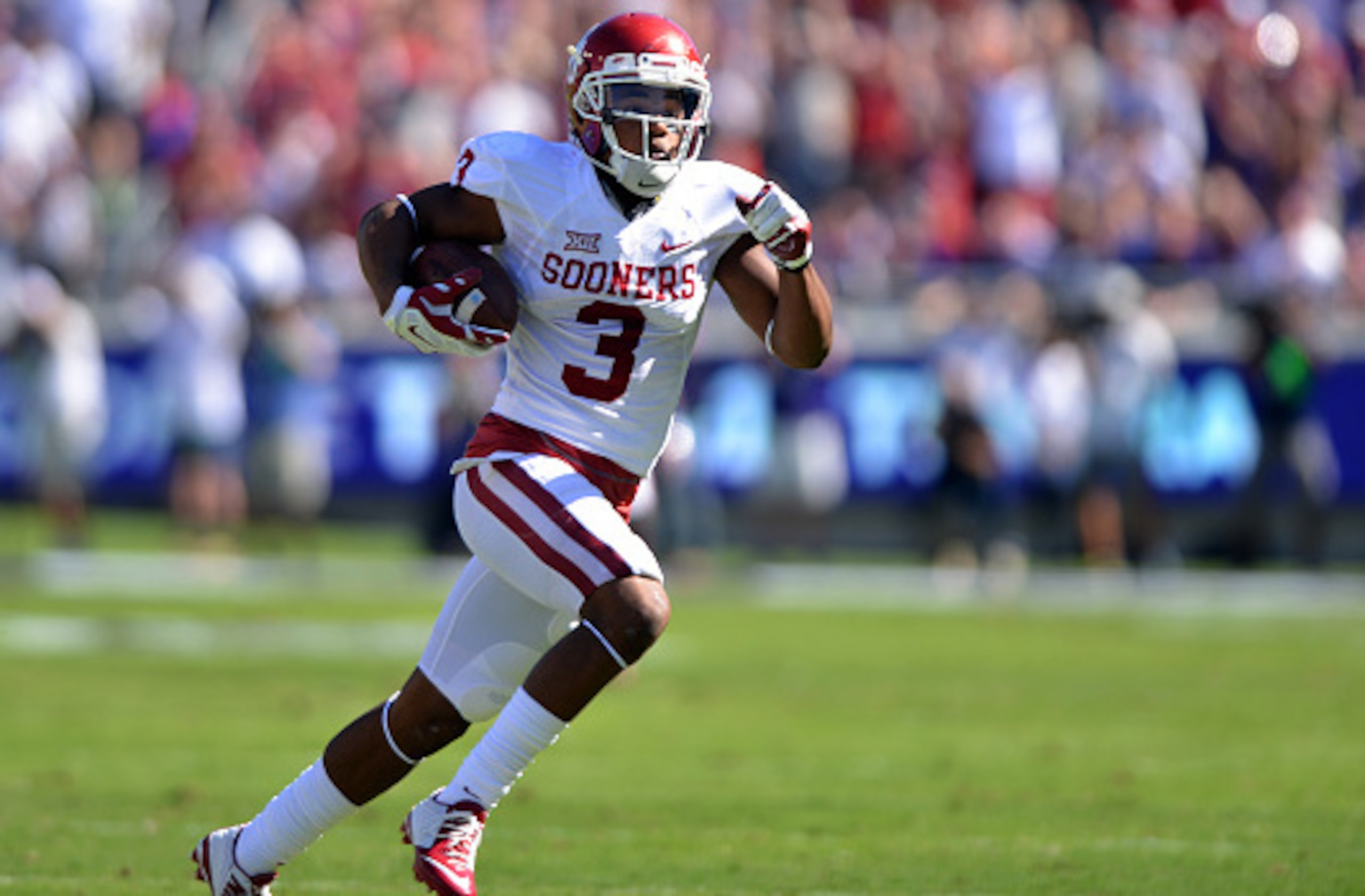
B/R Expert Scouting
“Injuries have gotten in the way, and he hasn't benefited from great quarterbacks, either. We've seen smaller wideouts like him make a big difference, so let's see what he can do. I'd like to see what [quarterback] Baker Mayfield can do with him.”
—Adam Kramer
Hands
At only 5'10," Sterling Shepard isn't going to regularly outleap defenders. That puts a premium on his hands, which are among the best in the business. He secures the ball tightly without risk of it being knocked away by contact.
Route Running
The last two seasons have seen some of the worst passing from Oklahoma in Bob Stoops' 17-year tenure, and Shepard wasn't immune to letting this impact his play. Some routes would get cut off early, so he needs to address this in the new air raid system.
Blocking
Shepard became adept at sealing off defenders for running back Samaje Perine last season, and he's turned himself into a receiver whom the team can run toward on the outside.
Release
Shepard doesn't go the physical route to create separation and instead uses an amazing first step to catch his shadow off guard. He then employs his speed to keep his distance.
Speed
This isn't the receiver you send deep hoping he'll get behind the defense. He's the one who can weave through traffic and carve up a zone or quickly cut across the middle to break away from a defender.
Run After Catch
If someone gets a good grip on him, Shepard is likely going down. But that's the hard part: The senior has such a knack for changing direction and cutting that he often fakes out the first few would-be tacklers.
Overall
The Sooners will have plenty more balls to catch this season with a change in scheme, and Shepard has the tools to thrive in such a system. He just has to stay healthy and remain consistent.
4. Pharoh Cooper, South Carolina
21 of 24
B/R Expert Scouting
“He's the best all-around offensive player in college football. He can catch for 1,000 yards, he'd run for 1,000 yards if you need him and he can pass the ball. He could probably shoot a 68 at Pebble Beach if you asked him to.”
—Barrett Sallee
Hands
Pharoh Cooper is South Carolina's go-to receiver, gets valuable carries in the backfield and has thrown touchdown passes. He also handles some punts. You need to have good hands to be able to do all of those things and do them as effectively as Cooper has in the past two seasons.
Route Running
Because he handles so many different duties, Cooper is a jack of all trades but a master of few. He's not faking out defenders as much as he's doing his best to keep them away from the ball by making the right cuts to be in the right spot for the throw.
Blocking
Cooper's blocking is solid if not spectacular, as South Carolina's running game didn't frequently go outside. But he understands what's needed when the Gamecocks call on him to shield a defender from making the tackle or when he has to create lanes for other receivers.
Release
At 5'11" and 207 pounds, Cooper's build is closer to that of a running back than a receiver. He uses that strength to avoid getting bumped at the line, which enables him to get into space quicker than most.
Speed
The one place Cooper doesn't hold back in is the speed department, as he goes full out on every play no matter what the assignment.
Run After Catch
Thanks to his work as a running back, Cooper treats each time he touches the ball like it's a carry. His ability to catch passes in stride or change direction without much hesitation has helped him turn plenty of short routes into long gains.
Overall
There's plenty of uncertainty on South Carolina's offense this season, but Cooper isn't part of that. He's the most versatile skill position player in the country. Don't be shocked if head coach Steve Spurrier finds even more unique ways to utilize Cooper's talents.
3. Rashard Higgins, Colorado State
22 of 24
B/R Expert Scouting
“I'm excited to see him paired up with a legitimate play-caller [new head coach Mike Bobo]. They're probably going to go to him early and often. He has NFL potential; it would not shock me to see him sneak into the conversation of top draft picks.”
—Adam Kramer
Hands
Throw the ball anywhere in Rashard Higgins' general vicinity, and the 6'2”, 190-pound junior is likely going to catch it. He was working with a future-NFL quarterback last season in Garrett Grayson, but Higgins was just as responsible for his 73.3 percent catch rate, a stat noted by Bill Connelly of SB Nation.
Route Running
Jim McElwain was the top choice to be Florida's coach this season because of his ability to develop offensive stars, which was noticeable in how he got Higgins to become such a good route-runner in his sophomore year. He rarely misses assignments.
Blocking
It's not his primary concern, but Higgins does a fair enough job in blocking for ball-carriers as well as clearing lanes for other receivers upfield.
Release
He's had some trouble at times getting off the line when being pressed, but Higgins improved his ability to separate by using his hands to create space and get into his route.
Speed
One of the fastest receivers in the country, Higgins can blow away defenders by going up top. He can also fake them out with quick footwork to throw them off balance. He tends to get wide open quite often because of this speed.
Run After Catch
Higgins either led FBS or tied for the national lead in receptions that went for 20-, 30-, 40- and 50-plus yards. Though he was often sent on deep routes, Higgins also frequently turned short catches into long gains.
Overall
Higgins put up numbers in 2014 (96 receptions, 1,750 yards, 17 touchdowns) that few receivers could boast of. Had he been eligible, Higgins might have ended up being the first receiver taken in the 2015 draft. Instead, he's a big reason that Colorado State should contend in the Mountain West despite losing several key players.
2. D'haquille Williams, Auburn
23 of 24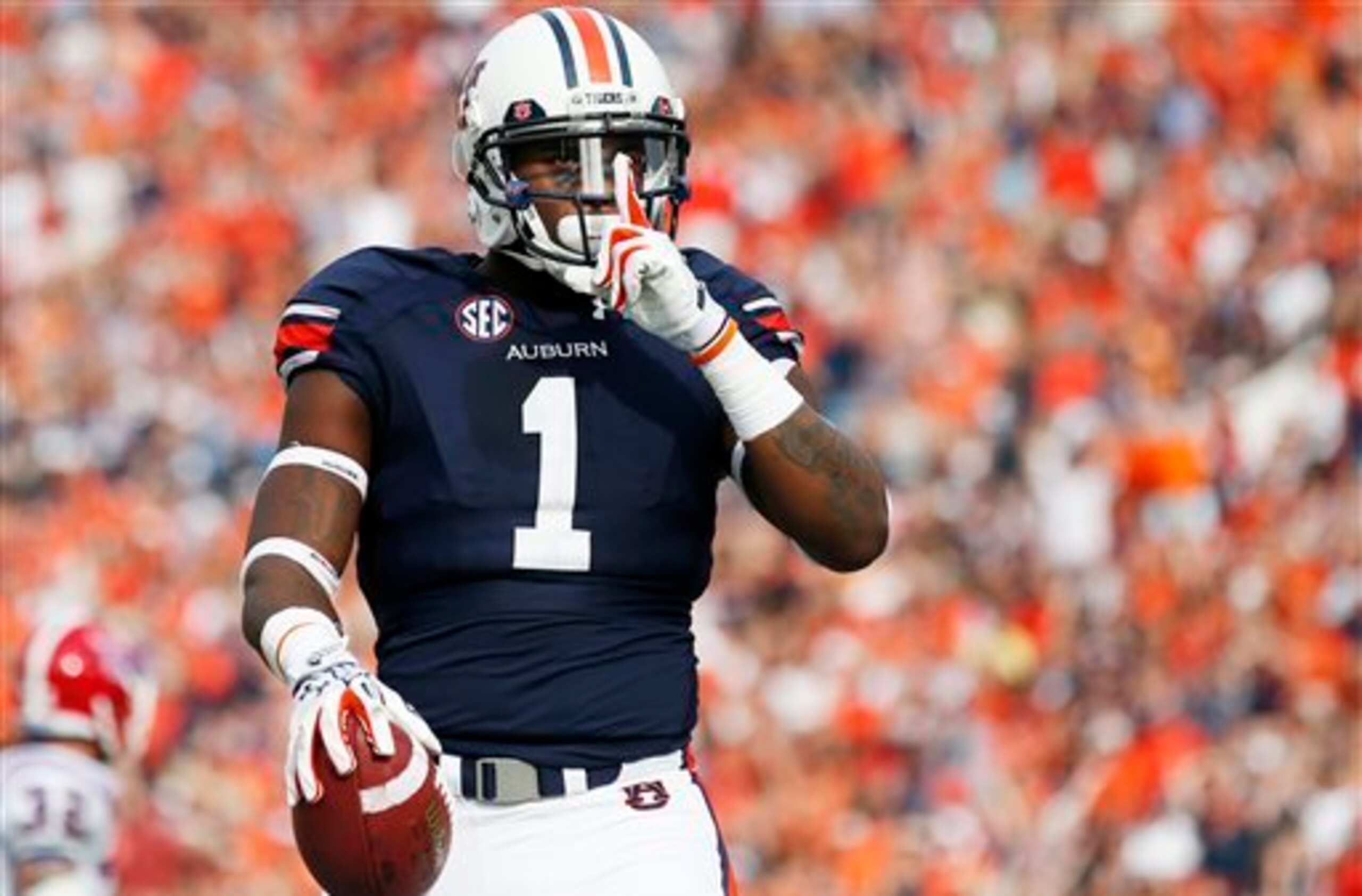
B/R Expert Scouting
“He's got huge shoulders, and his wingspan is enormous. It's kind of hard to defend that. He isn't the fastest guy in the world, but they're not asking him to be a burner and go deep a lot.”
—Barrett Sallee
Hands
The run-first offense that Auburn implemented in D'haquille Williams' first season out of junior college last year didn't allow him to show his full repertoire, but we did get to see how strong he was at hauling in tough catches. On the other end of the spectrum, though, he had some notable drops that were the result of not pulling the ball in carefully.
Route Running
The senior might be the best slant runner in the game, which is how Auburn used him best in 2014. He needs to be able to handle other assignments just as well to live up to high praise from those such as ESPN's Mel Kiper, who listed him as his top receiver for the 2016 NFL draft (h/t James Crepea of the Montgomery Advertiser).
Blocking
This is an area in which Williams excelled last season, quickly picking up the assignments that came with Auburn's run attack. Though the Tigers will throw more this year, he must still keep up with being an effective blocker to maintain his high value.
Release
Because of his strength and athleticism, the 6'2", 224-pound Williams has little trouble getting away from his defender. He has a variety of moves that keep him from getting stuffed at the line or from being unable to create separation.
Speed
Williams isn't likely to be the fastest player on the field on most plays, but he doesn't have to be. He's swift enough to break away when needed or to be able to get the inside step on his patented slant move.
Run After Catch
The majority of Williams' post-catch yards come from his ability to stay on his feet even as the first tackle comes in. He averaged 16.2 yards per reception, but only eight catches went for more than 25.
Overall
The talent and ability is unquestionable with Williams, which is why he's held in such high regard from NFL scouts and draft experts. But what could keep him from reaching his potential are character problems. He was banned from Auburn's bowl game in 2014 and also missed the start of this year's training camp because of what coach Gus Malzahn characterized as a “discipline issue,” via Brandon Marcello of AL.com.
1. Tyler Boyd, Pittsburgh
24 of 24
B/R Expert Scouting
“On the field, he does everything well. His body control is probably the biggest thing, how he tracks the ball. He's one of those guys last year that you knew the ball was going his way and you couldn't stop him.”
—Matt Miller
Hands
It seems like Tyler Boyd would prefer to have all of his receptions be contested ones, because there are few guys who are better in traffic than him. Quarterback Chad Voytik didn't always throw him the best ball, yet Boyd found a way to pull it away from defenders thanks to his great hands.
Route Running
Boyd is getting better with his footwork in order to be able to fake out cornerbacks on double moves. But for the most part he's best suited to make one cut then run to create separation.
Blocking
Pittsburgh's strong running game gave Boyd plenty of opportunities to show off his blocking skills in 2014, and while they're not perfect, they do the job well when trying to contain a defender.
Release
Boyd has a knack for getting separation at the last moment, thus luring defenders into a false sense of security when they think they have him blanketed. The back shoulder and the fade are where this approach works great for him.
Speed
The 6'2”, 200-pound receiver has the kind of speed you'd expect from someone a little smaller, though he doesn't look like he's moving that fast because of his size. He gets around defenders very well and then turns on the jets.
Run After Catch
Because of his experience as a return man, Boyd has a keen eye for reading what's in front of him and anticipating what defenders will do. This enables him to rack up big chunks after getting the ball, accounting for a good portion of his 1,261 receiving yards.
Overall
Boyd is set to shatter whatever remains of the school records that Pittsburgh great Larry Fitzgerald set. Though every defense game-plans to stop him, Boyd rarely gets shut down and remains the most consistent receiver in the country.
Note: All slides written by Bleacher Report featured columnist Brian Pedersen. Stats provided by CFBStats.com. Follow the author on Twitter at @realBJP.


.jpg?w=2560 "NFL House in Paris Closes for Protests")
.jpg?w=2560 "Trevon Diggs Cut by Seahawks")