B/R CFB 250: Top 31 Linebackers
Bleacher Report's CFB 250 is an annual ranking of the best players in college football, regardless of NFL potential. Through interviews with B/R experts Matt Miller, Michael Felder, Barrett Sallee and Adam Kramer, authors Brian Leigh and Brian Pedersen have studied, ranked and graded the top athletes in the country, narrowed that list to 250 and sorted by position. Today, we present the Top Linebackers.
Other CFB 250 Positions
Other than maybe running back, linebacker is the best position group in college football.
Although some great players left for the NFL this offseason—Eric Kendricks, Paul Dawson, et al.—so much talent returns that it was hard to find an order for this list. Any way we ranked it, multiple players felt too low.
Included among this year's linebackers are the reigning Bronko Nagurski Trophy and Chuck Bednarik Award winner (both of which are given to the nation's top defender), the No. 1 overall prospect on Matt Miller's NFL draft board, a converted safety with All-American potential and a pair of reigning national champions.
And that's just the tip of the iceberg.
But before we dig into that, a disclaimer: We graded these linebackers as college prospects, not as NFL prospects.
Targeted skills such as run defense are important at both levels, but there is a difference between college run defense and professional run defense. If a linebacker can set the edge and make plays in the SEC or the Big 12, it doesn't matter if he can do so in the NFC North. At least not here, it doesn't.
This is all about college performance.
Note: If two players finished with the same grade, a subjective call was made based on whom we would rather have on our team right now. Also, all recruiting info refers to the 247Sports composite rankings.
31-26. Forrest, Fields, Hollins, Kelsey, Frost, Fackrell
1 of 22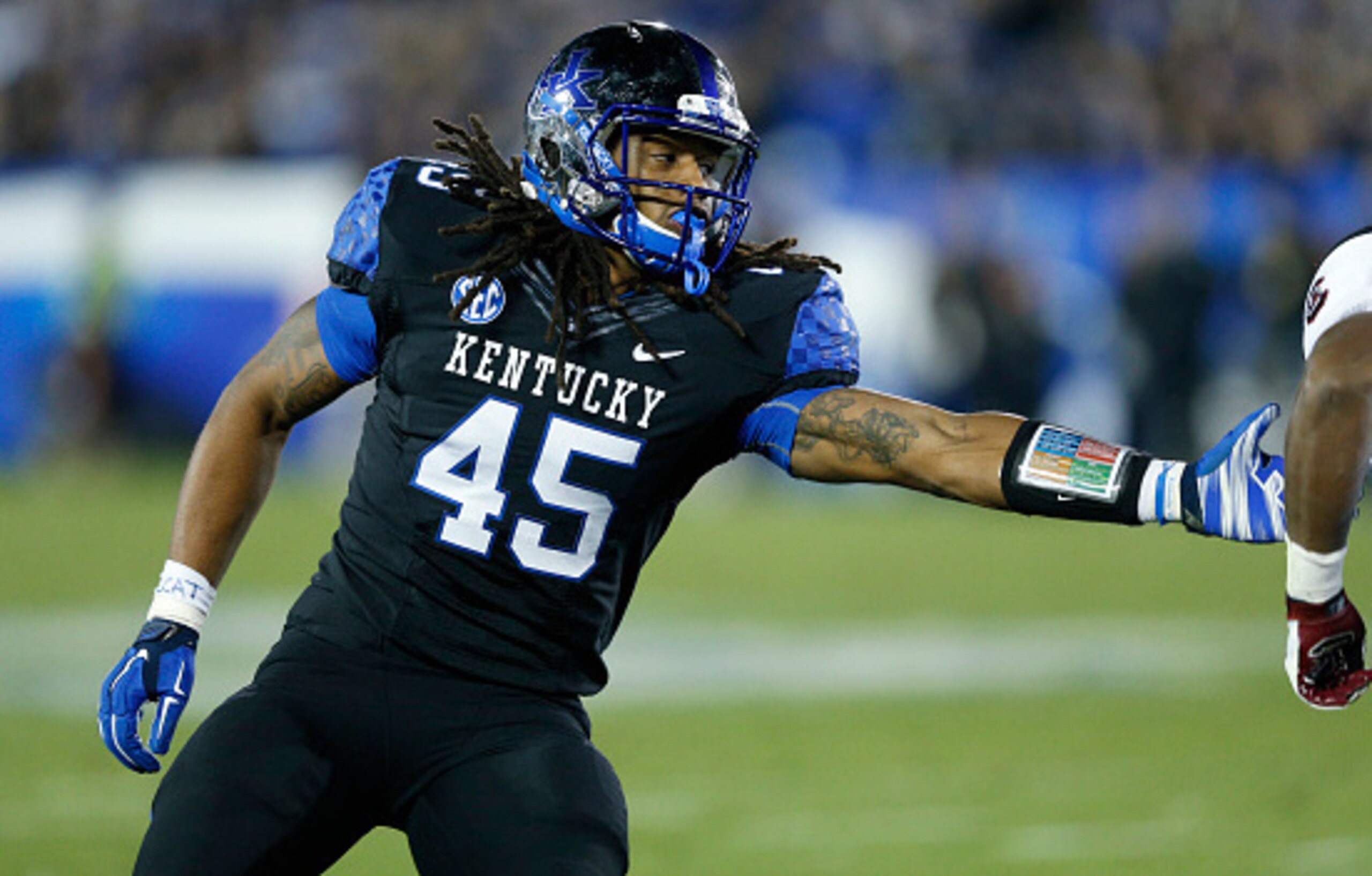
31. Josh Forrest, Kentucky
Tackling: 23/25; Pass Rush: 17/25; Run Defense: 20/25; Pass Coverage: 20/25.
Josh Forrest is the best player on a young and improving Kentucky team. He finished fifth in the SEC with 110 tackles last season and second with 64 solo tackles. His game film is worse than his numbers but only because his numbers look so good. He's on the short list of All-SEC linebacker candidates.
30. Devonte Fields, Louisville
Tackling: 19/25; Pass Rush: 23/25; Run Defense: 20/25; Pass Coverage: 18/25.
What are we supposed to make of Devonte Fields? He was the Big 12 Defensive Player of the Year as a true freshman in 2012, but since then his career has taken him from TCU to junior college—where he did not look like the same player—and now to Louisville. It's also taken him from defensive end to the hybrid linebacker spot in Todd Grantham's defense. There are too many questions to rank him higher, but it wouldn't be a shock if he exploded and finished in the top 10. It's not like he lacks the talent.
29. Deon Hollins, UCLA
Tackling: 19/25; Pass Rush: 23/25; Run Defense: 19/25; Pass Coverage: 20/25.
Deon Hollins is the next great UCLA pass-rusher. He enters the year with substantially less hype than former Bruin Anthony Barr, but he could easily match Barr's production. The rest of his game needs to catch up with his pass rushing, but for now he does one thing exceptionally well. He doesn't have the longest frame (6'0", 230 lbs), but he's an explosive athlete who last year posted six sacks in his final four games.
28. Keith Kelsey, Louisville
Tackling: 21/25; Pass Rush: 21/25; Run Defense: 21/25; Pass Coverage: 19/25.
One of three Louisville linebackers on this list, Keith Kelsey flies deep (and inexplicably) below the radar. Never mind that he finished last season with 87 tackles, seven tackles for loss, six sacks and seven QB hurries for the No. 6 total defense in the country—it's easier to overwrite Louisville as a fluke. Keep a close eye on Kelsey, Fields and the linebacker-to-be-named-later when the Cardinals take on Auburn in Week 1 on Sept. 5.
27. Kris Frost, Auburn
Tackling: 22/25; Pass Rush: 21/25; Run Defense: 19/25; Pass Coverage: 20/25.
Kris Frost has the tools to be great but has struggled with inconsistency. He has impressive size (6'2", 240 lbs) and almost never misses tackles, but he suffers too many mental lapses. New defensive coordinator Will Muschamp gets the most out of his players in terms of energy. If he can do the same with Frost in terms of discipline, you're looking at an All-SEC linebacker.
26. Kyler Fackrell, Utah State
Tackling: 20/25; Pass Rush: 23/25; Run Defense: 20/25; Pass Coverage: 20/25.
Kyler Fackrell was one of the hottest prospects in college football before tearing his ACL last season in the season opener. He ranked No. 18 on ESPN analyst Mel Kiper Jr.'s preseason big board—the result of posting 82 tackles and 13 tackles for loss as a sophomore in 2013—but has fallen off the radar since his injury. If he comes back and regains his explosion, there's a lot to like about him as a prospect. He's massive (6'5", 250 lbs), long and bouncy when he comes off the edge.
25-21. Martinez, Norris, Chubb, Morrison, Smith
2 of 22
25. Blake Martinez, Stanford
Tackling: 21/25; Pass Rush: 20/25; Run Defense: 21/25; Pass Coverage: 21/25.
Blake Martinez did an admirable job replacing Shayne Skov last season and finished with 101 tackles. This year he loses another one of his mentors, A.J. Tarpley, and will be counted on as one of the only veterans left on Stanford's defense. He doesn't stand out in any one area, but he's solid across the board and plays with the seething intensity of all Cardinal defenders.
24. Jared Norris, Utah
Tackling: 22/25; Pass Rush: 19/25; Run Defense: 22/25; Pass Coverage: 20/25.
Jared Norris led Utah with 116 tackles last season. The next-closest player (Nate Orchard) had 84, and the next-closest returning player (Gionni Paul) had 61. Norris gets no love on a national level, but he's a sturdy run defender (6'2", 240 lbs) and one of the undisputed leaders of Utah's defense. Considering how good that defense looked at times last season, that is not a bad thing to be.
23. Brandon Chubb, Wake Forest
Tackling: 22/25; Pass Rush: 20/25; Run Defense: 21/25; Pass Coverage: 20/25.
Maybe you've heard more about his cousin, a running back who plays down in Georgia, but Brandon Chubb deserves praise on his own merit. He's a big (6'1", 245 lbs), physical, energetic presence in the middle of a small Wake Forest defense. The Demon Deacons have not been good in recent seasons, but they did produce Nikita Whitlock, one of the best defensive tackles in the country in 2013. Chubb can accomplish the same feat at inside linebacker.
22. Antonio Morrison, Florida
Tackling: 23/25; Pass Rush: 18/25; Run Defense: 22/25; Pass Coverage: 20/25.
Antonio Morrison led Florida with 101 tackles last season but tore up his knee in the Birmingham Bowl. It's unclear when he will return to the lineup or how he will move once he does, which are the only things preventing him from rising any higher on this list. When healthy he's a tackling machine and one of the five best inside linebackers in the country. The way he played last season, on the heels of a down sophomore year, was inspired.
21. Terrance Smith, Florida State
Tackling: 22/25; Pass Rush: 19/25; Run Defense: 21/25; Pass Coverage: 22/25.
Bigger-name teammates have overshadowed Terrance Smith the past two seasons, but there's a reason he's played so many snaps for such a good squad. He's a tall (6'4", 230 lbs), lean athlete who doesn't stand out on tape but has experience and football instincts to spare. You may not hear his name a lot this season—and even if you do, it's so anonymous you might forget it—but his leadership will be vital on a young Florida State defense.
20. Nick Kwiatkoski, West Virginia
3 of 22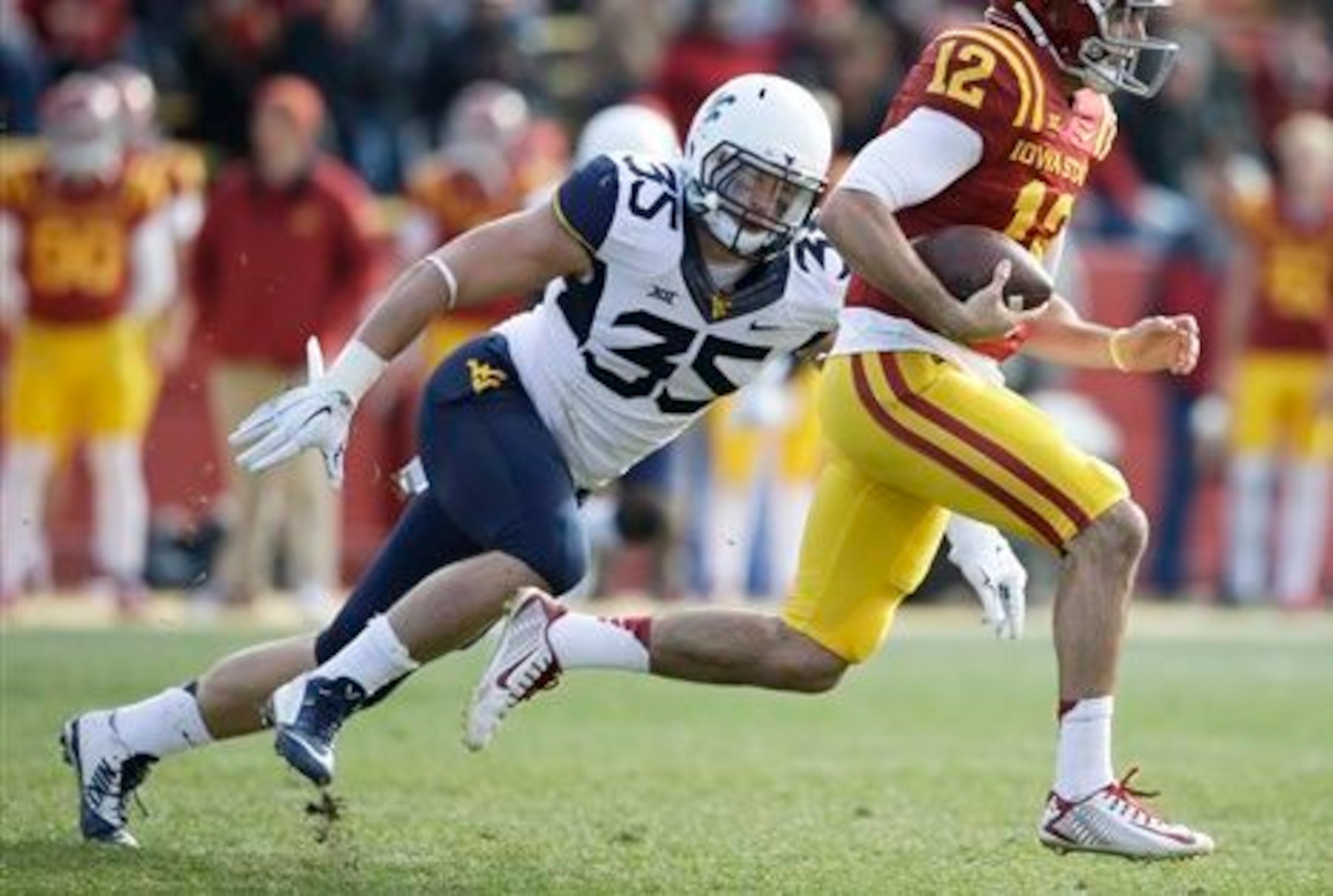
B/R Expert Scouting
"Great nose for the football. He understands how to diagnose what’s going on in front of him, and then he gets from Point A to Point B. He’s sort of like [former Baylor linebacker] Bryce Hager."
—Michael Felder
Tackling
Nick Kwiatkoski led West Virginia with 103 tackles last season and 86 tackles in 2013. He's a hunter in the middle of the defense with an eye for open gaps, a nose for the football and two big arms for dragging offensive players to the ground. He combines decent size (6'2", 235 lbs) for an inside linebacker with sound technique and form as a tackler.
Pass Rush
Kwiatkoski can blitz when necessary, but for the most part he sits back and reacts. He didn't record his first half-sack of last season until the Liberty Bowl loss against Texas A&M. That half-sack came on a delayed blitz in which no blocker even came close to touching him. He can make things happen based on timing and instincts, but he doesn't have the burst to consistently reach the passer.
Run Defense
West Virginia finished with the No. 17 run defense in the country last season, per Football Outsiders' S&P+ ratings. Getting there was obviously a team effort, but Kwiatkoski played a bigger role than most. This year he moves back to outside linebacker after spending last season on the inside. That move might decrease his tackle numbers. But as long as former starter Jared Barber, who missed last year with a torn ACL, recovers his form up the middle, having Kwiatkoski on the outside will help the Mountaineers run defense.
Pass Coverage
Kwiatkoski is an underrated athlete who can swivel his hips and chase tight ends in coverage. He's not someone you game-plan around when throwing in the slot, but he can hold his own in two-linebacker nickel packages. There's no situation in which he has to come off the field.
Overall
Despite its reputation as an offense-only powerhouse, West Virginia will be led next year by its defense. And its defense will be led by the man in the middle. "There were games last year where it felt like he was the only guy out there," defensive coordinator Tony Gibson said of Kwiatkoski, per Brandon Chatmon of ESPN.com. "You look around and he's all over the field."


19. Malik Jefferson, Texas
4 of 22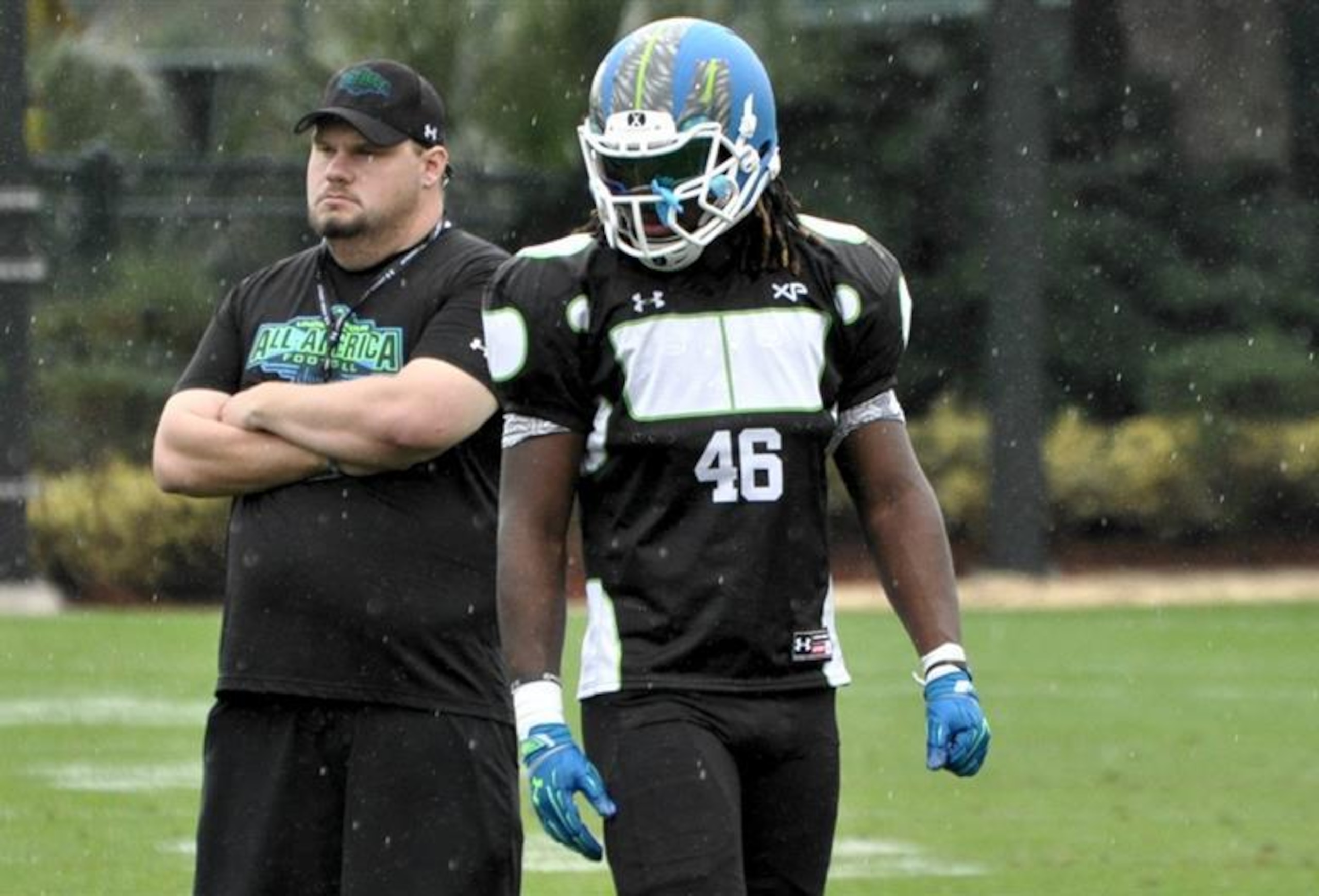
B/R Expert Scouting
"I would not be surprised if he’s an actual All-American. Not a Freshman All-American—a regular All-American. He’s that good."
—Michael Felder
Tackling
The first and hardest part of making a tackle is catching someone. If you're beaten off the edge or can't chase down an offensive player, who cares that you know how to wrap up? Malik Jefferson hasn't stepped on an FBS field yet, but he already earns high marks in this department. He ran a 4.38 40-yard dash at The Opening in July 2014, per Burnt Orange Nation's Wescott Eberts, which is fast for an NFL skill player and insane for a then-high school linebacker.
Pass Rush
Expect Texas to utilize Jefferson as a pass-rusher. He has a big, long frame (6'3", 232 lbs) to go with speed off the edge and should be able to rip through offensive tackles. Head coach Charlie Strong's defensive philosophy involves getting after the quarterback, and Jefferson will be a weapon from Day 1.
Run Defense
Jefferson has the tools to be a dominant run defender. In Strong and defensive coordinator Vance Bedford, he also has the perfect pair of coaches. We'd like to rank him higher on potential but can't until he proves it at this level. There's no reason to think he can't, but freshmen rarely get the benefit of the doubt in terms of run fits, discipline and all the mental aspects of run defense.
Pass Coverage
Jefferson combines the speed of a safety with the size of a linebacker and should excel, theoretically, in coverage. He didn't cover much in high school but showed well in seven-on-seven tournaments, which doesn't mean a lot but still means something. We'll grade him conservatively until he proves he can hang with FBS tight ends or make correct reads in zone coverage. But it would not come as a shock if he outplays this grade considerably as a freshman.
Overall
Jefferson was a difficult player to grade. He's done everything right since enrolling for spring camp and is already a key player on Texas' defense. Combine that with his off-the-charts measurables and pedigree—he was the No. 10 overall recruit in the class—and it's easy to get carried away with his projections. If ranking him this high seems premature, you should have seen how high he wanted to rank him. A grade of 84 was us trying to rein things in.
18. Jalen Reeves-Maybin, Tennessee
5 of 22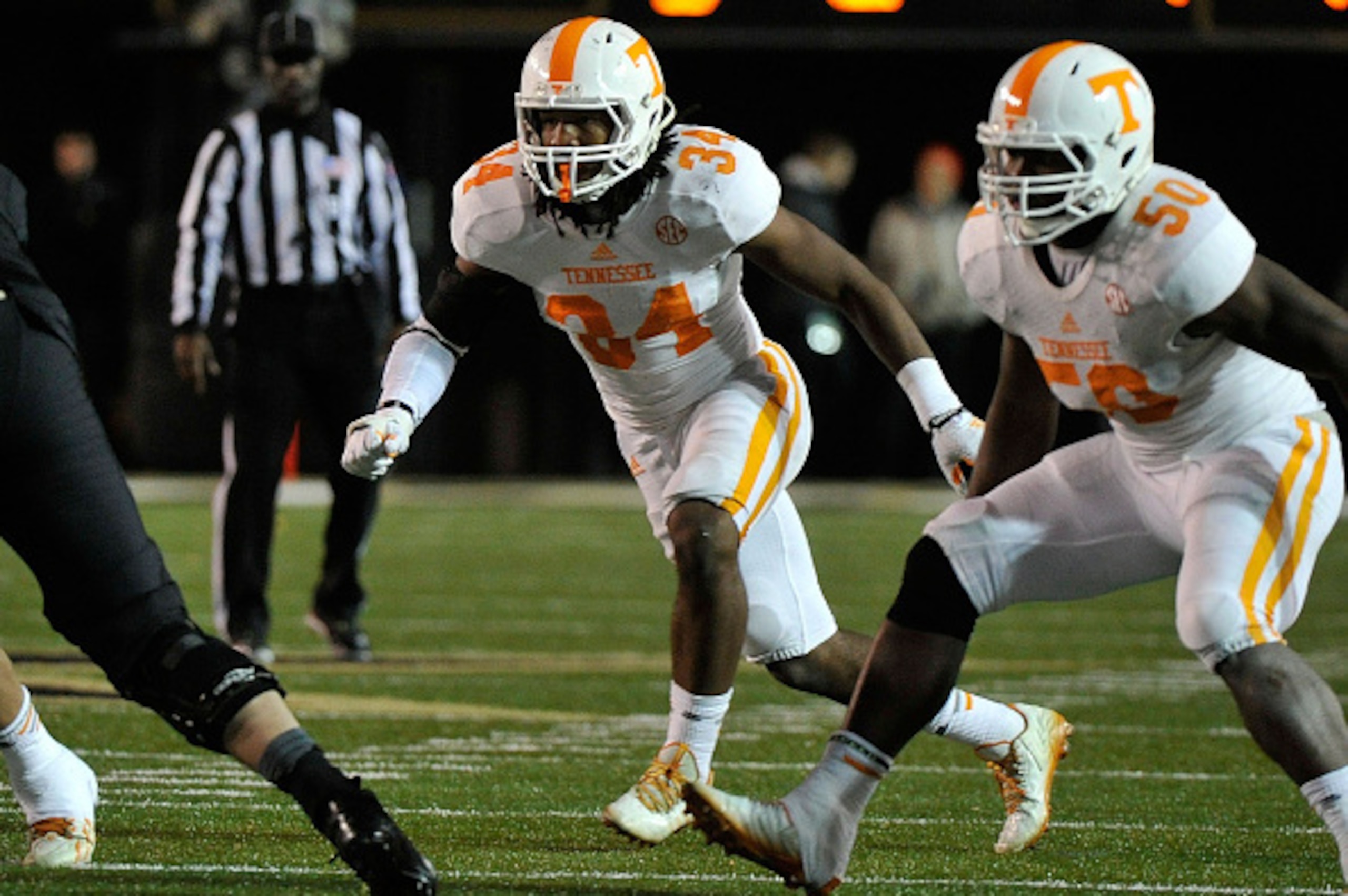
B/R Expert Scouting
"He just does so much for them. I think he was their best linebacker last year. Seriously, A.J. Johnson stinks compared to him."
—Barrett Sallee
Tackling
Jalen Reeves-Maybin recorded 101 tackles last season. He had his most productive games against some of the best teams on Tennessee's schedule (nine tackles against Oklahoma, 10 against Georgia, nine against Ole Miss), as well as after the school's dismissal of A.J. Johnson (13 tackles against Iowa). He needs to drop his pads lower and miss fewer tackles, but he still earns high marks for his performance. Whenever the Vols most needed him, he showed up.
Pass Rush
One area where the Vols did not need Reeves-Maybin was in the pass rush. He posted only two sacks—both of which came in September—and one QB hurry last season. He's better than those numbers make him look, but not by much. He needs to add some countermoves to his repertoire.
Run Defense
Reeves-Maybin plays bigger than his size (6'0", 225 lbs) and is a productive force in run support. He makes quick reads on running plays, sifts through the traffic and explodes through the hole to reach the tailback. He had nine non-sack tackles for loss last season, including 3.5 against Georgia in September. The Bulldogs had (and have) one of the best run-blocking lines in the country, but Reeves-Maybin made it look slow and confused.
Pass Coverage
Reeves-Maybin is a true three-down linebacker who fares just as well in 3rd-and-8 as he does on 1st-and-10. He has smooth hips, quick feet and sound coverage instincts. Although he was only a sophomore last season, he reads quarterbacks' eyes like a senior. He doesn't have the ball skills to always finish those plays, but he typically keeps receivers in front of him.
Overall
Reeves-Maybin isn't the best player on Tennessee's defense, but he's probably the most important. He was criminally overshadowed by Johnson, whose box score oversold his production. NFL scouts will yawn because Reeves-Maybin is short and thin and doesn't do anything extraordinary. But Tennessee fans know how versatile he is and how vital he's become to the team's success.
17. Cassanova McKinzy, Auburn
6 of 22
B/R Expert Scouting
"Extremely underrated. He's a really hard hitter, and he always seems to be in the right place. When it comes to this year with Will Muschamp, who puts a lot of stress on his linebackers, it'll help to have a guy like this who really knows the game."
—Barrett Sallee
Tackling
Cassanova McKinzy recorded 91 tackles last season and has 189 for his career. He led the team in tackles (75) the year it made the BCS National Championship Game (2013). Although he does his best work on the inside, where he lowers his head and drives ball-carriers backward, he also has enough speed to make plays on the edge.
Pass Rush
McKinzy is not a huge pass-rusher, although he's capable when the situation calls for it. He posted 1.5 sacks and three QB hurries last season, all of which came against SEC opponents (Arkansas, Mississippi State, Ole Miss and Texas A&M). If the Tigers turned him loose more against nonconference opponents, his stats might look considerably better.
Run Defense
Auburn fared surprisingly well against the run last season, ranking No. 19 in the country on Football Outsiders' S&P+ ratings. McKinzy was the team's best run defender and the biggest reason for all that success. He is built like a defensive end (6'3", 253 lbs) and attacks any open gap he sees. He finished last year with 9.5 non-sack tackles for loss and the highest run-stop percentage among SEC inside linebackers, per Jack Farrell of Pro Football Focus.
Pass Coverage
McKinzy isn't much of a cover guy, and Auburn doesn't ask him to be one. He is stiff in his breaks and allows receivers too much open space. If he improves as a pass-rusher, he could probably stick his hand down in passing situations, which mitigates this problem, but for now he is a two-down linebacker.
Overall
McKinzy has played well the past two seasons and still has considerable upside. A player with his size and strength should emerge under defensive coordinator Will Muschamp. He already plays with a Muschampian attitude, which will endear him to the new defensive coaching staff. Expect him to flirt with a 100-tackle, 15-tackle-for-loss type of season.
16. Vince Biegel, Wisconsin
7 of 22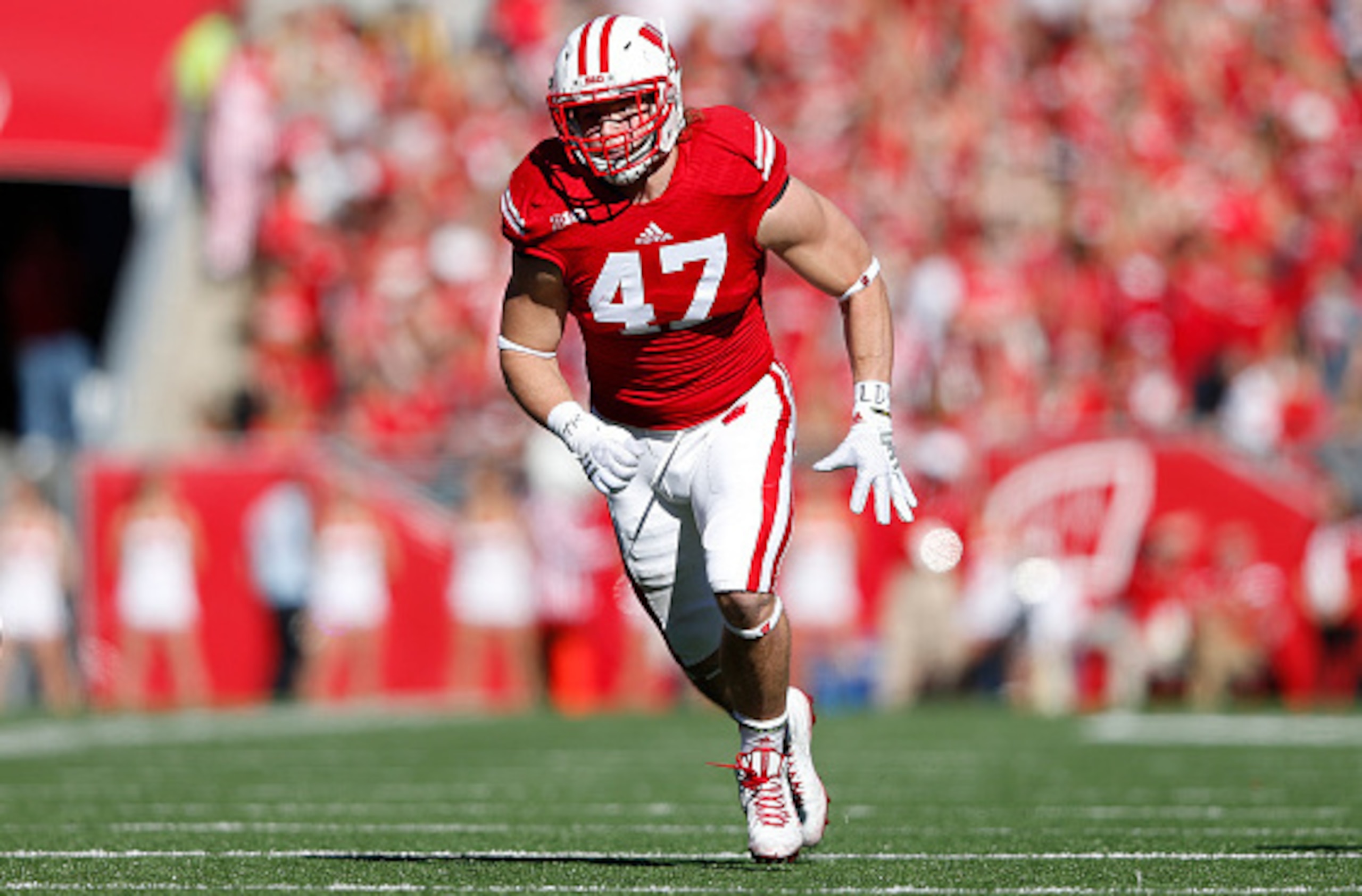
B/R Expert Scouting
"I hate to say it, but he's one of those standard-issue Wisconsin linebackers. He fits into the mold of a Chris Borland: another guy who lines up, does his job and doesn't make a lot of mistakes."
—Michael Felder
Tackling
Vince Biegel recorded 56 tackles last season. That might seem low compared to the other players on this list, but it's fine for a 3-4 outside linebacker. Wisconsin asks Biegel to make big plays, not frequent plays, so this isn't quite where he excels. Still, he can get the job done when necessary.
Pass Rush
Biegel posted 7.5 sacks and four QB hurries last season. His three sacks for 19 yards against Purdue helped Wisconsin escape what looked like a potential upset. He has a big, long frame (6'4", 246 lbs) and enough speed to rip past tackles on the edge. His energy when the Badgers ask him to blitz stands out on game film, too.
Run Defense
More than just a pass-rusher, Biegel also forces negative plays in run support. He finished last year with nine non-sack tackles for loss and made a home in opposing backfields. But what makes him such a complete run defender is that he also does a lot of the little things. He understands his run fits and will gladly slide into a blocker.
Pass Coverage
Biegel looked stiff in coverage last year and needs to show more consistency. His instincts defending the run did not always translate against the pass. To the Badgers' credit, they understand and are working to correct this. According to Zach Heilprin of ESPN.com, Biegel took extended snaps in coverage in spring camp.
Overall
Wisconsin began last season with a new cast of linebackers, but what started as a weakness slowly developed into a position of strength. Biegel was the biggest reason for that, although his castmates—Marcus Trotter, Derek Landisch and Joe Schobert—deserve credit, too. Only Schobert and Biegel return from that foursome, but they're good enough to carry the load.
15. Kendell Beckwith, LSU
8 of 22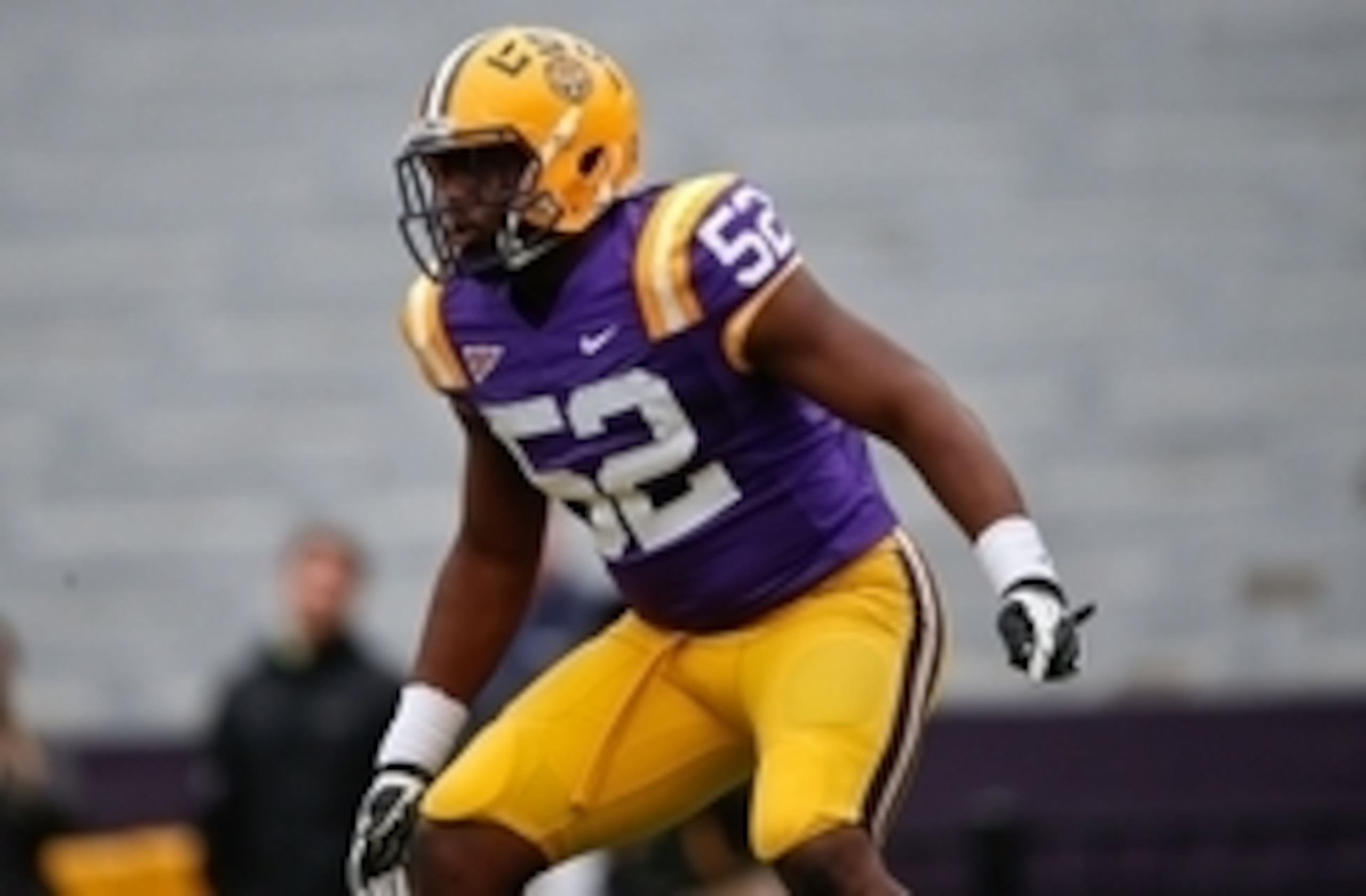
B/R Expert Scouting
"I thought he really solidified that defense last year. They were not very good when D.J. Welter was in, especially up the middle, but Beckwith came in during the Auburn game and fixed things."
—Barrett Sallee
Tackling
Kendell Beckwith finished last season as LSU's No. 2 tackler despite only starting seven games. He relieved D.J. Welter in the middle of the Auburn game Oct. 4 and ran with the job from there, in large part because he was such an upgrade in this area. Never was he better than in LSU's upset of then-undefeated Ole Miss, a game in which he recorded 11 tackles and earned SEC Defensive Player of the Week honors. He finished the year with 77 total tackles.
Pass Rush
Beckwith is a true inside linebacker and therefore rarely rushes from the edge. He posted two sacks and two QB hurries last season, but his only full sack came against FCS side Sam Houston State. He is decent when rushing hard through the A-gap but is too squat to consistently shed blockers with his arms.
Run Defense
Beckwith has outstanding size (6'2", 252 lbs) and plays as big as he is. He knows that his strength is his power, and he's happy to exploit that advantage. He does tenacious work up the middle with his head down and can hit the edge when necessary. LSU has had some great run defenders at linebacker, but Beckwith has the upside to match them.
Pass Coverage
No one is going to confuse Beckwith with a safety. He's an old-school 4-3 linebacker who plays downhill and struggles when asked to drop. He has the speed to be decent in coverage, and he definitely has the work ethic to get there. But for now he's a liability on passing downs. Fortunately, that's not where LSU needs him.
Overall
Wisconsin, Mississippi State and Auburn had their way with the Tigers up the middle last season, which is why head coach Les Miles called on Beckwith. He quickly transformed the defense into something more recognizable: a unit that held Alabama (20) and Texas A&M (17) under 21 points apiece in November. With defensive coordinator John Chavis gone to College Station, the Tigers will count on Beckwith to keep this defense rolling in 2015.
14. Leonard Floyd, Georgia
9 of 22
B/R Expert Scouting
"People view him as just a pass-rusher because he's so long and lanky, but he's stronger than people give him credit for. In order to get all those outside linebackers on the field, Floyd's the one who's probably gonna play in the middle."
—Barrett Sallee
Tackling
Leonard Floyd has recorded 55 tackles in each of the past two seasons. He posted 34 solo tackles and 21 assisted tackles in 2013, and then he reversed those numbers with 21 solo tackles and 34 assisted tackles in 2014. Any way you swing it, though, Floyd is an average tackler with good range but a thin frame (6'4", 231 lbs) that makes it hard to bring down big-bodied offensive players.
Pass Rush
Like Sallee said, Floyd is more than just a pass-rusher. But this is still what he does best. He has the long, bony frame that typifies the modern edge-rusher, and he knows how to use his arms to win with leverage. He's "only" posted 12.5 sacks the past two seasons combined, but in that span he's also posted 28 QB hurries. That second number is thoroughly impressive.
Run Defense
Floyd may be stronger than he's given credit for, but he doesn't always show it in run support. Bigger, more compact offensive linemen pave him out of the hole, and he doesn't display consistent energy. Although he does solid work on the edge, he'll need to improve his physicality up the middle if he plans on playing inside linebacker—like Sallee mentioned—at times this season.
Pass Coverage
The reason Georgia would use Floyd at inside linebacker, despite his flaws in run support, is to utilize his skills in coverage. Jordan Jenkins and Lorenzo Carter can rush the backfield on obvious passing downs, while Floyd can drop and patrol the middle of the field. His length and fluid hips allow him check any SEC tight end and will be integral to Georgia's 2015 defense.
Overall
Floyd is a work in progress (no one is denying that), but when he flashes, he shows the traits of an All-American. If nothing else, he already excels on passing downs, where he can rush the quarterback or drop into coverage at an All-SEC level. If he shows up more consistently and improves his functional strength, he's a first-round draft pick waiting to happen. As it stands, he is more of a specialist—albeit a very good one—than an every-down linebacker.
13. Tyler Matakevich, Temple
10 of 22
B/R Expert Scouting
"I dig this kid. He's got an old-school feel to him as a traditional downhill linebacker. When he hits people they go backward; he is not just dragging guys down."
—Michael Felder
Tackling
You want production? Tyler Matakevich gives you production. His 354 career tackles are the most among active FBS players, and it's not even close to being close. (The No. 2 tackler behind him, Illinois' Mason Monheim, doesn't even have 300!) If Matakevich matches his career-best 137 tackles from 2013, he'll finish his career with 491. That would be one of the 10 highest totals in FBS history (since tackles became official in 2000).
Pass Rush
One reason Matakevich accumulates so many tackles is that he rarely rushes the passer. Temple prefers to play him in the middle of the field, where he can react to the run or pass and hunt whoever ends up with the ball. In three years as a starter he's posted just 2.5 sacks.
Run Defense
Matakevich blends aggressiveness with instincts, which is a rare, useful cocktail of skills. He diagnoses runs and picks the right moment to leave his mark and shoot through the hole. He's posted 19.5 non-sack tackles for loss the past two seasons, which reflects his ability to get into the backfield. But he's just as comfortable making plays at the second level.
Pass Coverage
Here's another area where Matakevich needs work. He's a straight-line player who does his best work cutting down angles, not twisting his hips and changing directions. Running backs can shake him pretty easily, although he's better in zone coverage than in man. He's built more like a fullback (6'1", 235 lbs) than a safety, so it's probably best to leave him to what he does best.
Overall
Matakevich comes with obvious downsides, but his strengths outweigh his weaknesses tenfold. The stats are obviously inflated by whom Temple plays and whom he's surrounded by—who else is going to make those tackles?—but they aren't inflated by much. The way he senses plays as they happen is like a power forward who always knows which way the ball will bounce off the rim. Basically, he's Kenneth Faried.
12. Jordan Jenkins, Georgia
11 of 22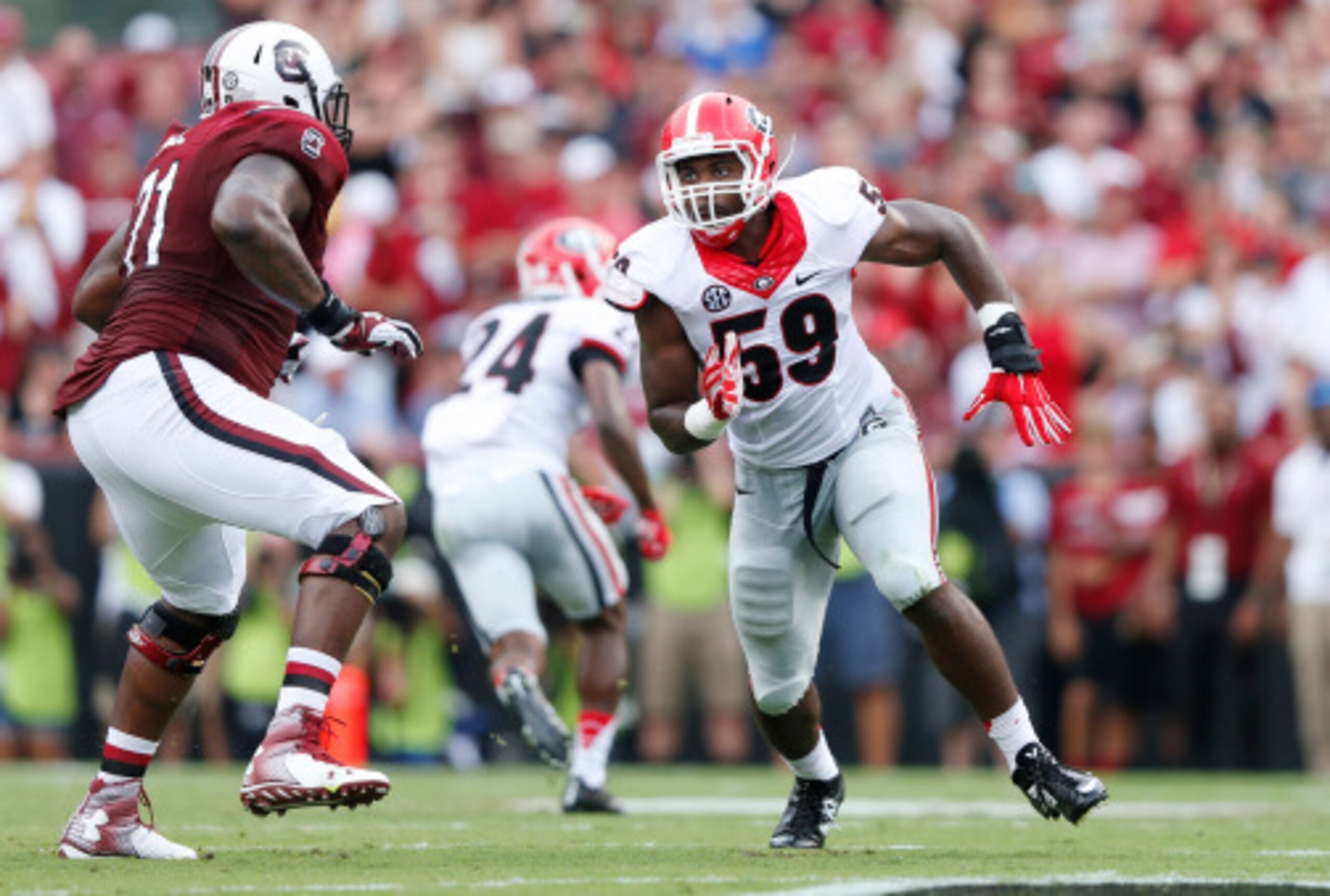
B/R Expert Scouting
"Of all the great linebackers they have at Georgia, he probably gets talked about the least. But he deserves to be talked about the most because he's the best one they have."
—Barrett Sallee
Tackling
Jordan Jenkins improved from 45 tackles in 2013 to 70 tackles last season. More impressively, he improved despite spending occasional snaps at defensive end, where it's harder to make a tangible impact. He doesn't have the long speed to chase offensive players sideline to sideline, but he accelerates into gaps and makes sturdy tackles near the line of scrimmage.
Pass Rush
Jenkins posted five sacks last season, but his 21 QB hurries were one of the highest totals in the country. He may not always finish the play, but he's a constant source of stress for opposing quarterbacks. He's thicker than the prototypical edge-rusher (6'3", 253 lbs) and doesn't have explosive speed, but he's savvy with his hands and consistently gets tackles off balance.
Run Defense
Jenkins is a rugged defender who does the dirty work to win in the trenches. His willingness to play with his hand down, fire out of his stance and set the edge for his teammates is rare for someone who technically plays linebacker. His ability to line up at multiple positions without sacrificing intensity or confidence makes him a vital cog in Georgia's run defense.
Pass Coverage
Georgia rarely asks Jenkins to cover, which is good because it's definitely not his strong suit. He is more of an explosive athlete than a fluid one, which basically means he accelerates better than he changes directions. He holds his own in simple zones but can be crossed up in man coverage.
Overall
Leonard Floyd and Lorenzo Carter earn more press because they have higher ceilings. And it's true: If they develop properly, they'll eventually be better than Jenkins. But this list is all about right now, and right now Jenkins is the best linebacker at Georgia. He's the toughest and the most consistent, and his ability to play two positions unlocks a lot of what the 'Dawgs do on defense.
11. James Burgess, Louisville
12 of 22
B/R Expert Scouting
"The best thing that happened for Burgess is that he played for [former Louisville head coach] Charlie Strong. So he's very well-taught, and he's carrying that over. He reads his keys, he gets downhill and then he strokes opposing ball-carriers."
—Michael Felder
Tackling
James Burgess is one of the hardest hitters in college football. He's an attacking inside linebacker who whaps offensive players in the hole. He recorded only 71 tackles last season because he doesn't make an impact on the edges, which caps his potential as a tackler. But the things he does well, he does very well.
Pass Rush
Burgess posted three sacks and six QB hurries last season. He is limited in what he can do as a pass-rusher—again, he doesn't make an impact on the edges—but succeeds when he shoots inside gaps. He's a good fit for Louisville's 3-4 defense, which always plays two outside linebackers wide.
Run Defense
It's a pleasure watching Burgess play run defense. He's a short but burly linebacker (6'0", 229 lbs) who attacks the line of scrimmage with conviction and never takes a play off. Whether he is taking on a blocker, filling a cutback lane or making a tackle, he plays with the same intensity. He had seven non-sack tackles for loss for 22 yards last season.
Pass Coverage
Although he doesn't look like a normal coverage linebacker—the ones built like safeties or cornerbacks—Burgess has always fared well in the passing game. He gains depth off the line of scrimmage and does a good job tracking the quarterback's eyes in zone coverage. He finished last season with three interceptions and five pass breakups, so the ball skills are there as well.
Overall
Burgess started six games as a freshman in 2012 and never relinquished the job. He's a leader in the middle of Louisville's defense who kept the unit together after losing head coach Charlie Strong and defensive coordinator Vance Bedford to Texas. The arrival of highly touted transfers Devonte Fields and Josh Harvey-Clemons gives the Cardinals a high defensive ceiling, but that's only if the veterans make sure everyone is on the same page. With Burgess, there's a good chance they will be.
10. Kentrell Brothers, Missouri
13 of 22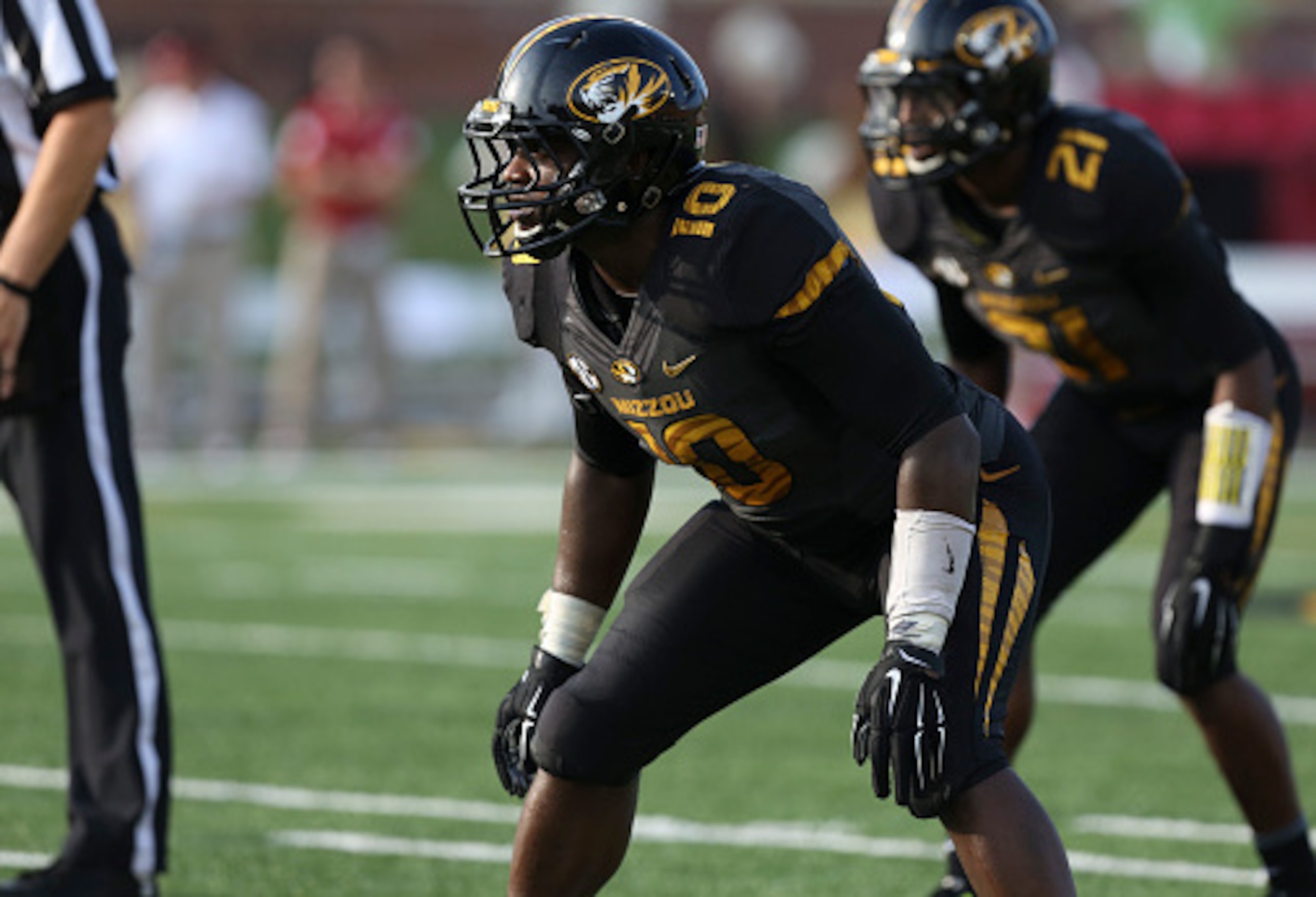
B/R Expert Scouting
"Defense is Missouri's identity, and Brothers is the perfect fit. He forces his teammates to play disciplined football, gets them all lined up right and really deserves more credit for what he does."
—Barrett Sallee
Tackling
Kentrell Brothers ranked No. 2 in the SEC with 122 tackles last season. No returning player in the conference had more. Those numbers might have been inflated by one of the best defensive lines in college football, which occupied blockers and kept Brothers free to make plays; but the tape says he was as good as advertised. He's a sound wrap-up tackler with strong arms and hands that prevent offensive players from slipping away from him.
Pass Rush
Brothers has posted one sack in each of the past two seasons. The first came against Murray State in 2013; the second came against an even more hapless opponent: Florida during last year's six-turnover slopfest on October 18. Basically, Brothers does little to contribute as a pass-rusher. He's a pure 4-3 weak-side linebacker who only preys on overwhelmed offensive lines.
Run Defense
Missouri ranked No. 12 in the country in run defense last season, per Football Outsiders' S&P+ ratings, which again had a lot to do with the defensive line but also a lot to do with Brothers. He's a physical presence at the heart of the Tigers defense with enough size (6'1", 235 lbs) to take on smaller blockers. He also has the balance to slip past bigger blockers when necessary. Brothers doesn't play middle linebacker, but he plays like a middle linebacker in run support.
Pass Coverage
One reason Brothers posts so few sacks is that Missouri prefers to use him in coverage. He moves well despite his square frame and only takes smart chances when playing zone. He posted three interceptions in the first six games of 2013, and while he hasn't had an interception since then, he did record four pass breakups last season.
Overall
Even within a team that flies under the radar, Brothers flies under the radar. Defensive ends Kony Ealy and Michael Sam stole the show in 2013, and then their replacements, Shane Ray and Markus Golden, did so in 2014. But those who watch the SEC closely know how important Brothers has been to Missouri's surprising success. This year this defense is his, so if the Tigers stay competitive, he won't fly under the radar for long.
9. Eric Striker, Oklahoma
14 of 22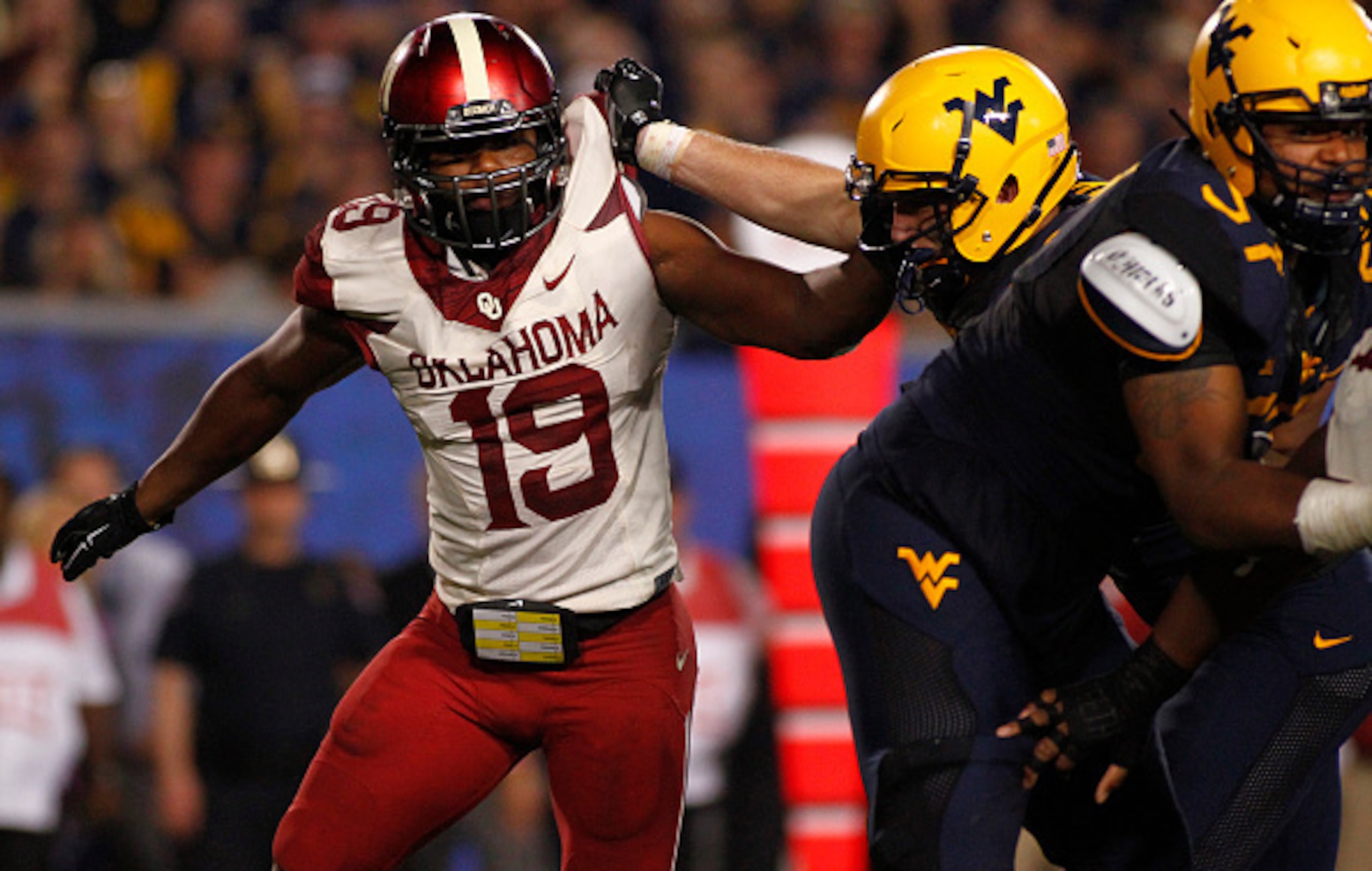
B/R Expert Scouting
"I'm a Texas fan, and he has destroyed us. I know he's not real big, but it just seems like he's all over the field. It seems like there are two of him out there."
—Matt Miller
Tackling
Eric Striker recorded 68 tackles last season, which is not great but respectable production for a player his size (6'0", 222 lbs). He has a nose for where to go around the line of scrimmage but does not make many plays in space. If he uses his speed as a weapon at the second level, he could boost that total up near 80 or 90. For now, though, he's a one-dimensional tackler.
Pass Rush
Striker is a menace off the edge and one of the best pure pass-rushers in America. He posted nine sacks and five QB hurries last season and pushed the pocket countless more times. The best game of his career came in the 2014 Sugar Bowl, when he recorded three sacks in an upset of Alabama. The last of those sacks forced a fumble that led to the game-clinching touchdown.
Run Defense
Striker makes a difference in run support despite being undersized. He can't set the edge or get a push on offensive linemen, but he uses his speed and instincts to make plays in the backfield. He finished last season with eight non-sack tackles for loss, including four in his final four games.
Pass Coverage
Oklahoma uses Striker at nickelback on certain occasions because he's athletic enough to hang with anyone. He's better in man coverage than in zone, where he's still learning the little things such as when to jump versus when to sink. But his ceiling as a cover linebacker is considerable.
Overall
Striker is like the 5'11" wide receiver with average speed who always seems to be open and no one understands how. It's difficult to pinpoint what makes him so good, but then you flick on an Oklahoma game and there he is again wrecking shop in the backfield. He's a player opponents dread facing because he makes them look silly.
8. Nick Vigil, Utah State
15 of 22
B/R Expert Scouting
"He's an attacking, downhill tackler and shows the speed to play in space in coverage. He projects as a three-down pro linebacker."
—Matt Miller
Tackling
Nick Vigil recorded 123 tackles last season. Only 61 of those were solo, but gang tackling is just the method of Utah State's defense. You won't find many 6'2", 235-pounders with the speed to moonlight on offense at running back. Vigil is that rare specimen, and it shows when he is flying around the field.
Pass Rush
Vigil is a gifted athlete who improved throughout last season as a pass-rusher. He posted two sacks in his first six games before five in his final seven. He blossomed once he realized he could take on blocks in multiple ways. More than half of his seven sacks came against the three best teams on Utah State's schedule (Tennessee, Colorado State and Boise State).
Run Defense
Utah State led the Mountain West in rushing yards allowed per game and yards allowed per rush. Vigil and his older brother, Zach, who started beside him at inside linebacker, were the two biggest reasons why. The lessons Nick learned at running back seemed to help him read holes and gaps. He finished the year with 10 non-sack tackles for loss, including 4.5 in his final four games.
Pass Coverage
Here is where Vigil needs work. His speed is more explosive than fluid, and so he struggles to turn his hips and cover in space. He has the speed to check running backs and receivers and should improve as he refines his core agility. Until then, however, this is closest thing he has to a weakness.
Overall
Vigil is a special player with a long career ahead of him. Even though he earned lower marks in coverage, there's no reason to think he can't improve. He was miles ahead of the curve for a sophomore last season, and the return of Kyler Fackrell should prevent teams from game-planning around him. Do yourself a favor and watch this defense at least once in 2015.
7. Darron Lee, Ohio State
16 of 22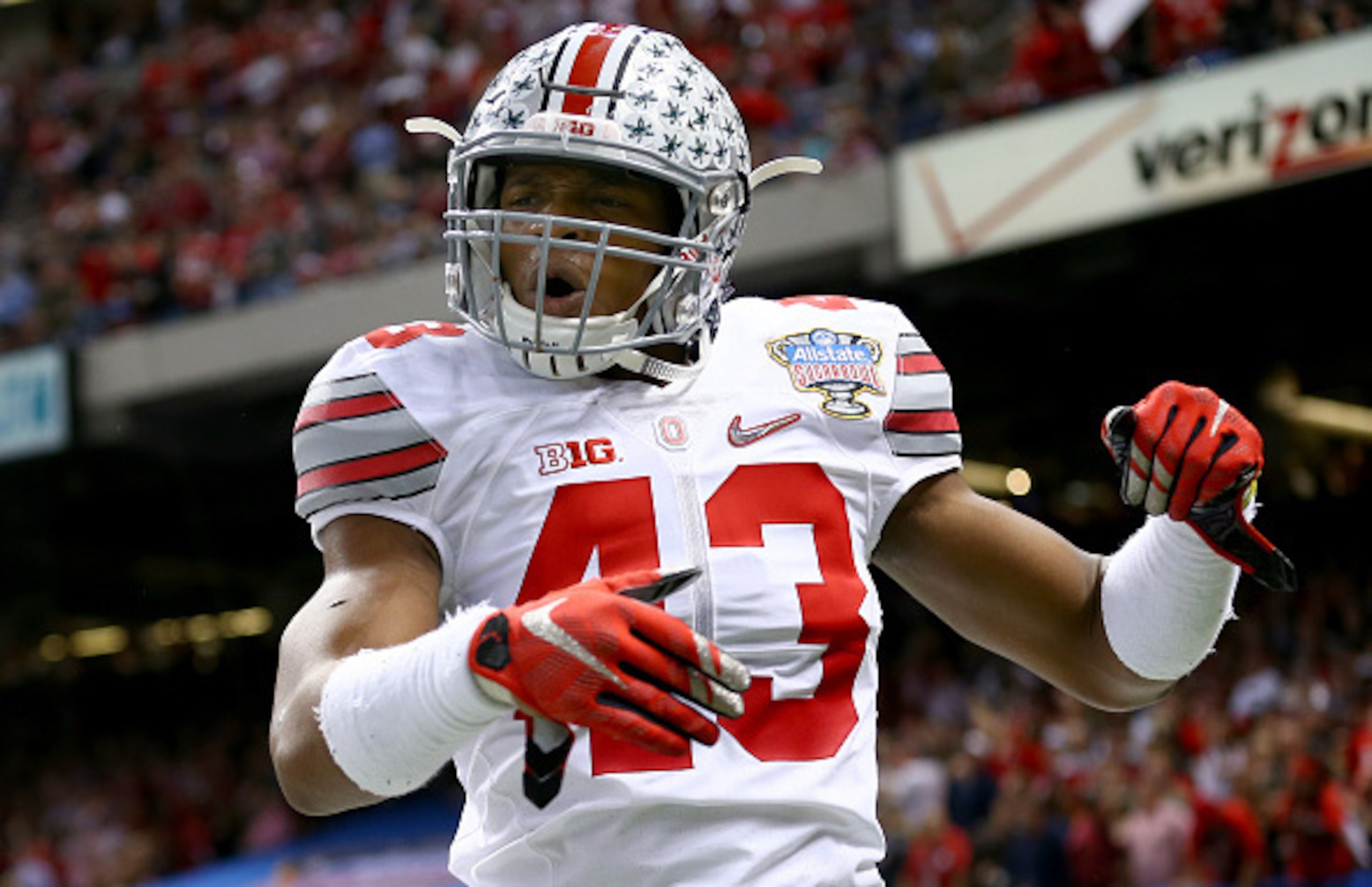
B/R Expert Scouting
"He's another of those—he just does everything well. I'd like to see him fill out his frame a little more, but otherwise he's a prototypical weak-side linebacker."
—Matt Miller
Tackling
Darron Lee recorded 81 tackles last season. He never had a double-digit game but improved throughout the year and finished with nine tackles, seven tackles, seven tackles and eight tackles in his final four appearances, respectively. He has excellent pursuit speed and only needs to fill out his frame (6'2", 235 lbs) and gain more experience with his mechanics.
Pass Rush
The excellent pursuit speed mentioned in the tackling section also helps Lee as a pass-rusher. He posted 7.5 sacks and three QB hurries last season, causing problems as he dipped past tackles and stuck his long arms into the faces of quarterbacks. Former Alabama QB Blake Sims, whom Lee sacked twice in the Sugar Bowl, learned the hard way how good he can be.
Run Defense
Lee is an attacking linebacker whose playmaking translates to run support. He had nine non-sack tackles for loss last season and made a habit of crashing into backfields. He doesn't have the strength to plow through blockers, but he's so quick and shifty that for the time being he doesn't need it. Why plow through blockers when you can simply go around them?
Pass Coverage
Prior to the College Football Playoff, it was unclear how good Lee was in coverage. But he proved his worth against Alabama and Oregon, allowing Ohio State to play its base 4-3 defense against a pair of teams that prefer facing nickel. His quick feet and hips are obvious, but Lee also has surprisingly good size to cover tight ends up the seam. His ability to fill multiple roles unlocks so much of what the Buckeyes do defensively.
Overall
Lee was the breakout defensive star of the College Football Playoff. Cardale Jones and Ezekiel Elliott stole the headlines, but Buckeyes fans know Lee was just as important. He didn't reach his peak until the end of the season, which is why he doesn't rank higher on this list, but it's not far-fetched to think he could land at No. 1 by December. His upside is that considerable.
6. Reggie Ragland, Alabama
17 of 22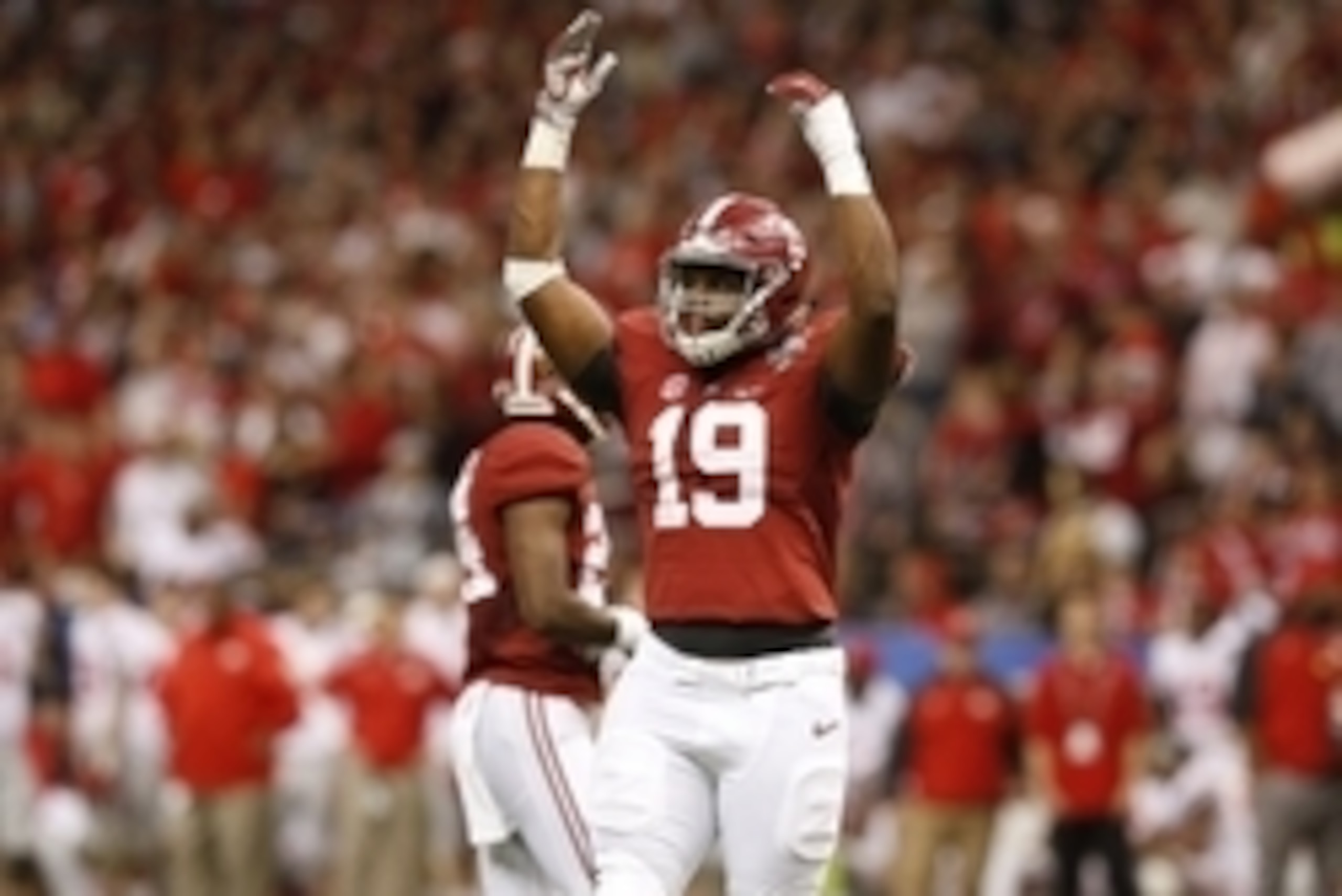
B/R Expert Scouting
"Monster hitter. I mean, he hits you, and it hurts for weeks. He's smart; he knows when to attack; he just plays like a missile."
—Barrett Sallee
Tackling
Reggie Ragland is a monster hitter who also knows how to wrap up. He finished last season with 93 tackles, or one tackle per 7.7 snaps. He also has better speed than he's given credit for and can make plays in open space. The fear he instills in offensive players who know his reputation as a hitter causes them to run timidly and functions as a self-fulfilling prophecy.
Pass Rush
Ragland is a non-factor in the pass rush. He posted 1.5 sacks last season, only 0.5 of which came against Power Five competition (Texas A&M), while the other came against Florida Atlantic. Part of this has to do with the way Alabama uses him—namely that he sits sometimes on passing downs—but he still needs to improve this part of his game.
Run Defense
Is Ragland the best run-defending linebacker in the country? If not, he's on the short list of candidates. He uses his massive frame (6'2", 252 lbs) to take on offensive linemen and smash through blocks—a technique that blows up runs before they even get started. Alabama finished last season with the No. 1 run defense in the country, per Football Outsiders' S&P+ ratings, and Ragland was a big reason why.
Pass Coverage
Ragland needs to get better in coverage, but he's not as bad as one might expect. He moves well for a 252-pounder, which doesn't mean he moves well, per se, but it does mean he's deceptively fluid. His leaping interception against Texas A&M, which came in more of a spying role than a coverage role, showed a glimpse of what he can do. Now he just needs to harness that athleticism and prove he can drop consistently.
Overall
Ragland is an old-school linebacker who understands the ethos of Alabama football. He is physically imposing, subtly athletic and plays as if his hair is on fire. He is not former teammate C.J. Mosley—that's a totally different type of player. But he has a chance to be just as good. And no, that is not hyperbole; his ceiling is legitimately that high.
5. Joshua Perry, Ohio State
18 of 22
B/R Expert Scouting
"The most underrated linebacker in the country. Some of these other Ohio State guys get all the credit, but Perry's the one who led the team in tackles. I'd say he’s the epitome of a 'lunchpail guy.'"
—Michael Felder
Tackling
Joshua Perry led Ohio State with 124 tackles last season. The next-closest player (Vonn Bell) had 92. He didn't post huge stats in the College Football Playoff, which is why he's earned less fame than Darron Lee, but he was a beast throughout the regular season. The Buckeyes would not have even made the playoff without his 18-tackle performance at Penn State on October 25.
Pass Rush
Perry posted three sacks and two QB hurries last season. He does not play a huge role in Ohio State's pass rush, although he holds his own on the rare occasion he blitzes. Even if he doesn't make a play, his size (6'4", 254 lbs) forces blockers to take him seriously, which frees up the rest of the defense.
Run Defense
You can't record 124 tackles as a weak-side linebacker unless you have terrific instincts. Perry diagnoses plays in the backfield before they even get started and accelerates to find and fill the hole. He also uses power to hold the edge and funnel plays back inside. He's the quiet key to Ohio State's run defense.
Pass Coverage
Although he looks big and seems clunky, Perry moves well in space. He has fluid hips and keeps the ball in front of him; he might give receptions here and there, but he won't allow yards after the catch. Pro Football Focus graded Perry the top coverage linebacker in the Big Ten last season. He's the rare blend of size and speed who can hang with "modern" tight ends.
Overall
Lee is the name everyone talks about. Raekwon McMillan is the one with the upside. Perry flits along below the radar despite being the best linebacker on the team. He might need to fire his PR guys, but on the field Perry is the truth. Last year's tape doesn't lie.
4. Myles Jack, UCLA
19 of 22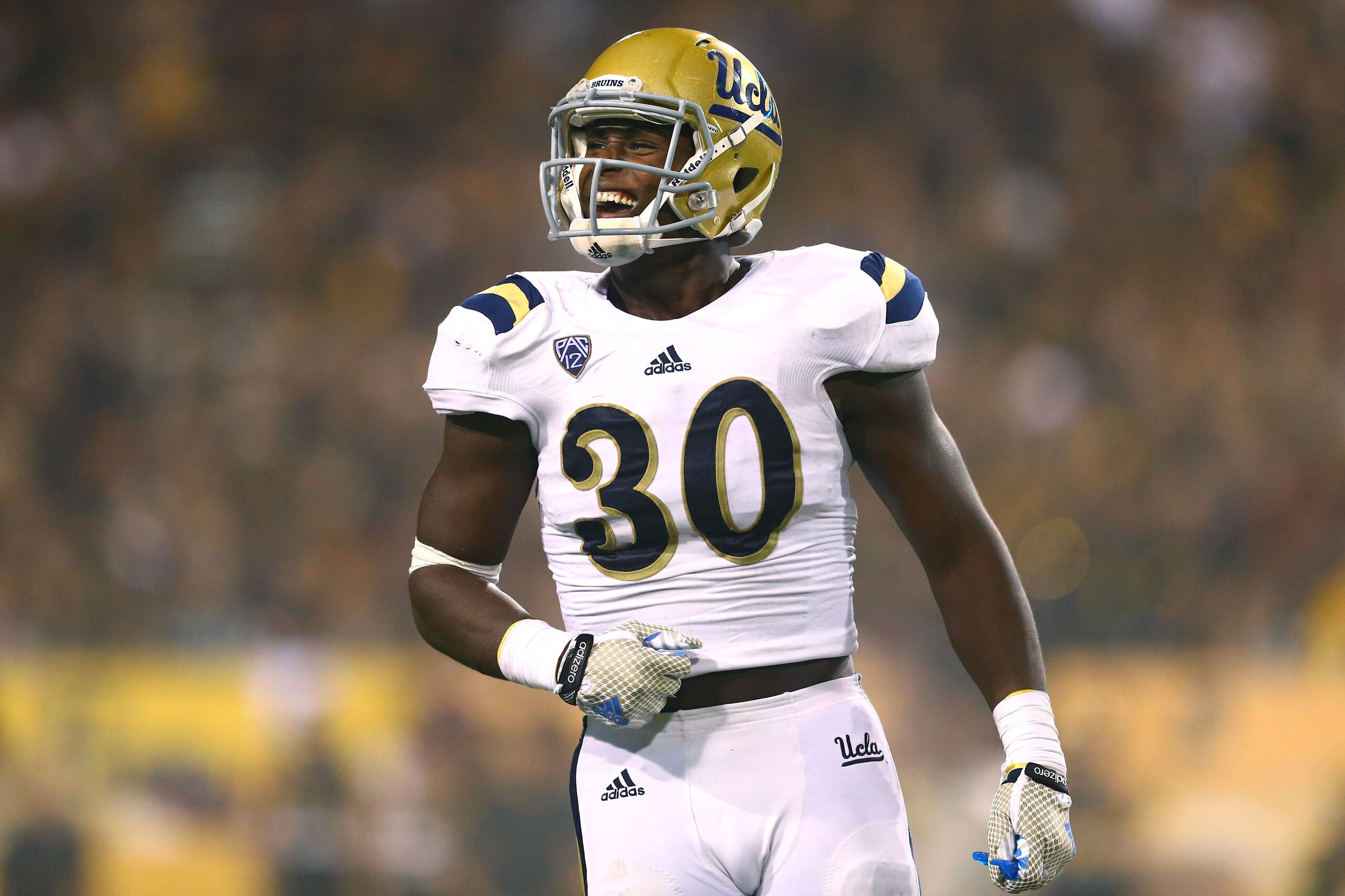
B/R Expert Scouting
"I love that he's not worried about playing running back anymore. It's beautiful that he realizes, his coach realizes, even UCLA fans are starting to realize that there's no need for him to waste time on offense. Please just let him only play defense because he needs to make plays on that side of the ball."
—Michael Felder
Tackling
Myles Jack finished second on the Bruins with 87 tackles last season. He's one of the best in college football at making tackles in open space, when his speed is on full display. Last year he missed only one tackle per 18.6 attempts, according to Pro Football Focus. He's a strong blend of raw tools and production.
Pass Rush
UCLA does not ask Jack to rush the quarterback, preferring to use him more as a coverage linebacker. Former teammate Anthony Barr and current teammate Deon Hollins are the pass-rushing specialists at linebacker. In two years Jack has posted one sack and three QB hurries.
Run Defense
Jack complements his speed—his greatest weapon—with a 6'1", 245-pound frame. He's added weight this offseason and should be even better at filling gaps and annihilating blocks. UCLA is at its best when other players do the dirty work, allowing Jack to run free and make tackles. But Jack doesn't mind doing anything he's asked.
Pass Coverage
Jack is the best cover linebacker in college football, and it's not all that close. Despite his size, he moves like a cornerback and can check any player in the slot. Pro Football Focus graded him the No. 1 cover linebacker in the country last season with a grade of plus-91.5.
Overall
If not for his lack of pass rushing, Jack might rank No. 1 on this list. He understands his role in UCLA's defense—which includes just about everything except pass rushing—and performs it to near perfection. He earned fame the past two years for moonlighting at running back, but now he should settle on defense. The emergence of starting running back Paul Perkins (1,575 yards), who last year led the Pac-12 in rushing, will be great for Jack's development.
3. Su'a Cravens, USC
20 of 22
B/R Expert Scouting
"On defense I like guys who play pissed off and are a little crazy. That's why I loved [former Arizona State linebacker Vontaze] Burfict. And I think Cravens fits that mold really well."
—Matt Miller
Tackling
Su'a Cravens recorded 68 tackles last season. He started the year at safety before moving to linebacker and is still feeling out the nuance of his new position. He has great speed for a linebacker and can track offensive players from sideline to sideline; all he needs to work on is making plays in tight quarters. There's no reason to think he won't improve.
Pass Rush
USC doesn't ask Cravens to blitz much, but that doesn't necessarily impugn his pass rushing. It has more to do with something we'll cover later: his value in coverage. He still posted five sacks last season—a big improvement over zero as a freshman—so there's a chance the Trojans unleash him more in 2015. He's quick off the edge and smart, so he should be able to make an impact.
Run Defense
Cravens loves to creep toward the line, slice into the backfield and force negative plays. He finished last season with 12 non-sack tackles for loss despite the majority of his reps coming at safety. There might not be a better college player with regard to attacking downhill. USC started slow last year in run defense but allowed just 3.06 yards per rush after September.
Pass Coverage
It's redundant to say Cravens "covers like a safety" because he basically is a safety. He earned high marks in coverage as a defensive back—where the standard is even higher—and so he naturally earns high marks as a linebacker. He finished last season with three interceptions and nine pass breakups.
Overall
Cravens took well to last year's position switch and gives USC a versatile weapon. He can line up in the box and stick his nose into the running game. He can line up in the slot and cover tight ends and scatbacks. He can even line up on the outside if needed. There's nothing Cravens can't do physically, and he matches those raw tools with an aggressive mentality. It's hard to ask for more in a defender.
2. Jaylon Smith, Notre Dame
21 of 22
B/R Expert Scouting
"Smith is my No. 1 player right now. I think he has amazing instincts and speed and strength. He reminds me of [former Ole Miss linebacker] Patrick Willis; everyone on the field knows that he's the guy you have to account for."
—Matt Miller
Tackling
There were questions about Jaylon Smith's production after he "only" recorded 67 tackles as a freshman in 2013. He silenced those questions in a big way by recording 111 tackles in 2014. With the speed of a free safety but the size (6'2 ½", 240 lbs) of an inside linebacker, Smith has all he needs to lead the FBS in tackles. He might as well have been built in a lab.
Pass Rush
Notre Dame doesn't ask Smith to rush much, but when it has, he's done an adequate job. After finishing with no sacks and one QB hurry as a freshman, he posted 3.5 sacks and seven QB hurries in 2014. His quickness off the edge makes him dangerous, although he hasn't shown as much skill shedding tackles as he has shedding guards, centers and fullbacks in run support.
Run Defense
For emphasis: Smith shows tremendous skill shedding guards, centers and fullbacks in run support. He gets off blocks as well as any linebacker in college football, which frees him to showcase his speed and make tackles most players wouldn't dream of. As a team, Notre Dame has been merely average in run defense, but Smith is not what's holding it back.
Pass Coverage
Smith doesn't only run like a free safety; he covers like one, too. He can turn his hips and chase tight ends or slot receivers, and he exhibits impressive instincts in zone. Quarterbacks know not to throw in his direction, even if a receiver seems open, because he moves so well for a 240-pounder. Like an object in a car's rearview mirror, he is closer than he appears.
Overall
Miller ranks Smith as the No. 1 overall draft prospect in college football. Based on what Smith has shown his first two seasons, it's hard to disagree. You'd like to see Notre Dame's defense perform better on the whole, but it could have been worse considering all the injuries, suspensions, etc. Smith helped hold the pieces together and will continue to do so this season.
1. Scooby Wright III, Arizona
22 of 22
B/R Expert Scouting
"I'm interested to see him with the weight he added, because last year [former Miami linebacker] Denzel Perryman added weight, and it didn't really help what he did. But gosh, he's just so instinctive, and he's such a smart kid."
—Matt Miller
Tackling
Scooby Wright led the country with 163 tackles last season. Ninety-nine of those tackles were solo, which ranked No. 2 behind Eric Kendricks. He posted 10 games with double-digit tackles including an 18-tackle performance against California and a 19-tackle performance at UCLA. No need to break this down further—he's a machine when he gets after the ball-carrier.
Pass Rush
Wright posted 14 sacks last season, which misleadingly ranked No. 3 in the Pac-12. We call that stat misleading because it also ranked No. 3 in the country and first among returning players. As a freshman Wright posted zero sacks, but as a sophomore last year Arizona unleashed him. He paid back his coaches' confidence with four multi-sack performances—all during Pac-12 play.
Run Defense
Wright plays inside linebacker and spearheads Arizona's run defense. He has the size (6'1", 246 lbs), speed and instincts to fill gaps or scrape to the edge. He does his best work as a run-through defender and had 15 non-sack tackles for loss last season. Despite being known for its offense, Arizona finished the year with a top-25 run defense, per Football Outsiders' S&P+ ratings.
Pass Coverage
Coverage is the only aspect where Wright needs work. We hesitate to call it a "weakness"—it's not something teams actively exploit—but compared to the rest of his skill set, that's what it is. He's clunky with his hips, and agile route combinations can turn him around.
Overall
Wright swept last year's major national defensive awards and is exactly as good as advertised. The way he sheds blocks and makes plays is second to none in college football. He needs to fix his coverage to become a true three-down linebacker, but the work he does on standard downs is so good that that doesn't matter. If Arizona repeats as Pac-12 South champion, Wright will almost definitely be a Heisman Trophy finalist.
.jpg?w=2560)
.jpg?w=2560 "Breaking News")
.jpg?w=2560 "McCarthy 'Not Surprised' to Be QB1")

.jpg?w=2560 "Porziņģis Trade Packages 📦")