Real Madrid's Rout of Man City Showcases New Attack Built on Positional Fluidity
"What a difference six days makes," was the overriding feeling in Melbourne, local newspaper The Age celebrating the sort of Real Madrid the city had hoped to see.
"Real simply ran riot," the Melbourne-based outlet declared following a 4-1 victory over Manchester City. Over at the Herald Sun, the city's other major newspaper, Madrid were described as "scintillating," the performance leaving a crowd of 99,382 "delighted."
The reaction was in stark contrast to that which followed Real's lustreless opener against AS Roma, a performance that had prompted sections of the Melbourne Cricket Ground to channel its inner Bernabeu and jeer the glamorous tourists.
TOP NEWS

New NFL Power Rankings 📊
.jpg?w=2560 "Commanders Eagles Football")
2 NFL Officials Suspended
.jpg?w=2560 "Texans-Mixon Released Football")
Injury-stricken Seahawks signing veteran RB
Melbourne, you see, is renowned for its sporting culture. It's home to nine of Australia's 18 professional teams playing the local game, the nation's dominant A-League club, the country's dominant rugby league club, a tennis Grand Slam, a Formula One grand prix, the iconic Boxing Day Test and the world's second-richest horse race.
Despite not being a city with a strong connection to European football, Melbourne's colossal stadium demands the best from those who grace it. It's no stranger to royalty. The MCG has hosted the Olympics, Cricket World Cups and Muhammad Ali; the Queen and the Pope; the Rolling Stones, Michael Jackson, Elton John and Paul McCartney. The "G," as it's known to locals, wanted to add Cristiano Ronaldo and Real Madrid to that list in style.
The previous Saturday hadn't done so; Friday did. Marca called it Rafa Benitez's "lift-off."
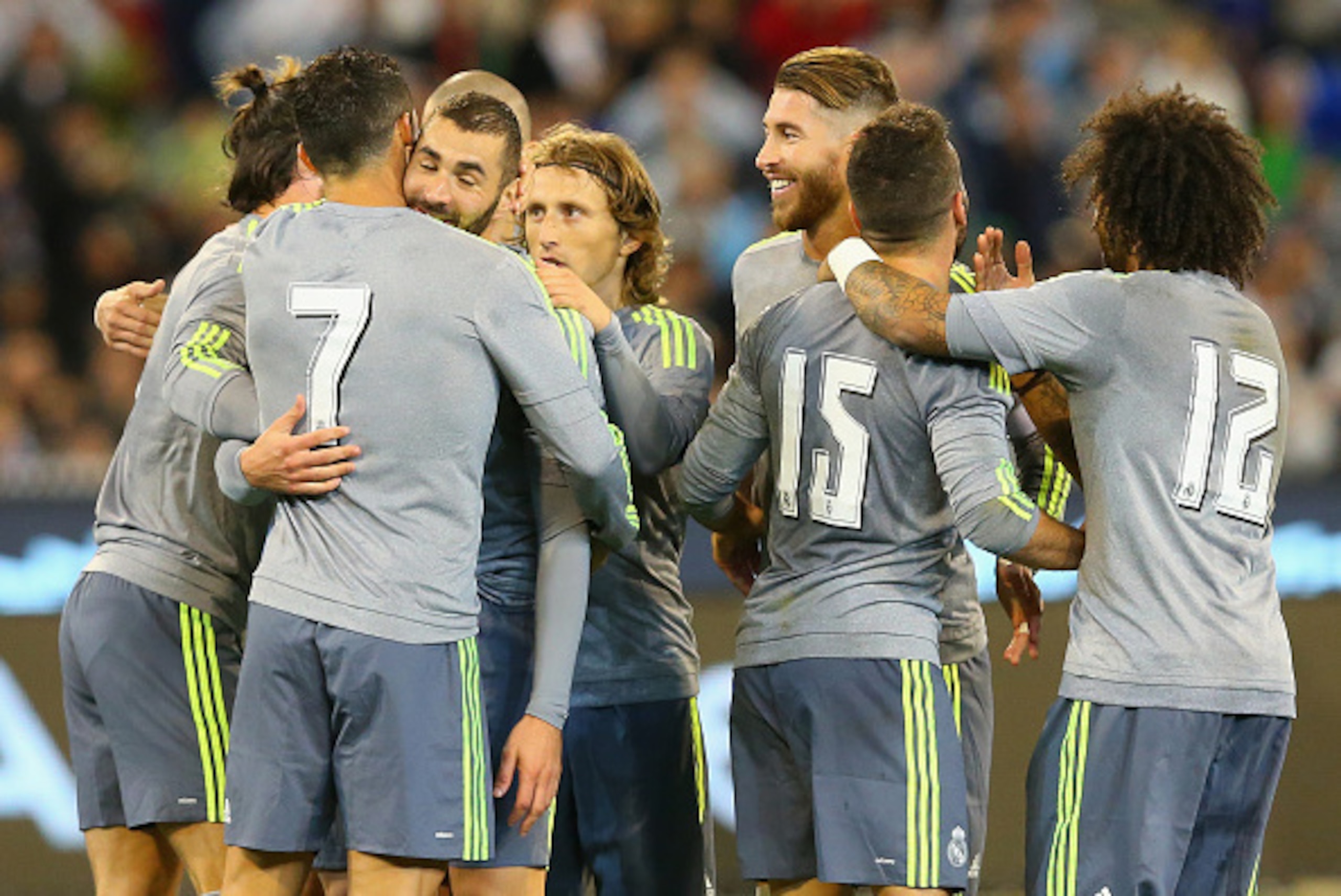
For Benitez, the night was significant. Though pre-season games are often drab affairs that tell us little, this was different. Los Blancos played with intent, grace. Swagger. Living up to their billing, Real went some way to dispelling the cynicism surrounding them, Benitez's team operating with an attacking verve many had said he was incapable of creating.
Six nights earlier, Real Madrid had been flat, almost disinterested. Concurrently, the attack felt awkward, Ronaldo strangely peripheral as Benitez experimented with Gareth Bale in the hole behind the striker. Benitez chopped and changed—as managers do in pre-season games—but found no spark. The resulting 0-0 scoreline felt symbolic of what a large portion of the club's fans think of him.
Yet snap judgments on Benitez's Madrid need to be shelved. This is a team undergoing immense change, for Benitez is essentially the antithesis of his predecessor, Carlo Ancelotti. Whereas the Italian is about harmony, diplomacy and natural, flowing football, the Spaniard is about order, discipline, tactical awareness and organisation. In a single changeover, Real traversed the managerial spectrum.
For many, the situation doesn't sit comfortably, but Friday's display should have somewhat quietened the critics and encouraged the few believers. Question marks over the composition of the attack were settled; Real were dangerous. Cohesive. Fluid.
The team's second goal was the most notable event of the evening, one giving a glimpse into the potential of a new-look attack Benitez is building. From his position at centre-forward in a 4-2-3-1, Karim Benzema pushed up beyond the halfway line to receive from Luka Modric, playing a one-two with Ronaldo in the centre circle before bolting out to the left wing. City, admittedly lacking experience and unsure whom they were marking, lost their shape, Ronaldo drifting into the space vacated by Benzema to get on the end of an exquisite pass from Toni Kroos. Goal.
The goal before it had, in a sense, been similar: Bale, operating centrally, made a quick switch with Isco, moving out to the right and allowing the Spaniard to briefly drift into his preferred No. 10 position. Like it would be for Ronaldo's goal, City's marking was disrupted, allowing Daniel Carvajal to get down the right and feed Bale, the Welshman sending in a cross that found Benzema. Goal.
What we were seeing, therefore, was a change in mentality in regard to the roles of the team's dominant forwards. Under Ancelotti, each was clearly defined: Ronaldo played from the left, Bale on the right and Benzema as the central fulcrum. Rarely did the plan deviate. In Melbourne, the story couldn't have been more different.
At times, Benzema dropped into the hole, allowing Ronaldo to move up front and Bale to drift out to the left—a classic three-man interchange. But we saw more than just that: Isco swapped places with Bale; Bale swapped with Benzema; Benzema swapped with Ronaldo; Ronaldo swapped with Bale.

The interchanges were often fluid and seamless, allowing each man a heightened sense of freedom. Whereas their roles had previously been specific, here they weren't. They were broad. Diverse. Instinctive. The lineup basically featured a defined six from defence to midfield, with a loose front four in front of them whose roles couldn't be pigeonholed.
Essentially, Benitez had awarded an attacking quartet a licence to use their own intelligence and judgement to determine their positioning—to determine the composition of the attack. It wasn't flawless—at times, two of the four found themselves occupying the same space—but it was significant, Benitez showing a willingness to cede total control and allow the biggest names he's ever worked with to figure out some of it themselves.
Benitez's team, therefore, looks to be adopting an altered attacking philosophy, a philosophy the Madrilenian will hope can reverse the steady evaporation of chemistry evident in the latter stages of last season between Ronaldo, Benzema and Bale.
After Friday's game, Benitez said the trip to Australia had helped to "hammer home ideas." Inevitably, the process will take time—periods of evolution always do. But with Marca happy to declare Real Madrid had "all guns blazing" in Melbourne, the time necessary might be less than many had initially thought.


.jpg?w=2560 "Mahomes' Wife Trolls Kubiak 💀")