Martavis Bryant Has Potential to Be NFL's Next Superstar WR
Martavis Bryant is an X-factor.
"X-factor" is a term that can be used in different ways, but for this situation, it will be defined as "an unknown individual who can have a huge impact on his team depending on where his performance goes." Bryant perfectly fits that description.
The Pittsburgh Steelers offense is built on established players such as Ben Roethlisberger, Antonio Brown, Le'Veon Bell, David DeCastro and Maurkice Pouncey. Bryant isn't the only unknown commodity expected to play a significant role, but he is the one with the highest potential impact.
TOP NEWS
.jpg?w=2560 "Titans Giants Football")
OBJ Calls Out Giants After Release

Live Live: Updates from every NFL game
Lamar Exits with Injury
The 23-year-old receiver was a fourth-round pick last season. He didn't enter the regular season as a starter, but he made his presence felt once he did get on the field.
Justifying the Steelers' patience to refine his technique, Bryant exploded for 26 receptions, 549 yards and eight touchdowns in just 10 games. According to Pro Football Focus, Bryant ran just 200 routes and averaged 2.75 yards per route, third-best in the league.
For a couple of reasons, that alone doesn't do Bryant's threat justice.
His efficiency numbers are bloated by him being an outstanding deep threat. However, he still could have produced significantly more yards than he did. On a couple of occasions, Roethlisberger missed him when he was open for potential long-range touchdowns.
Bryant himself also limited his production with a couple of drops, but those were less of an issue when considered against his full line of work.
Even more significant than what Bryant did as a deep threat, he has the potential to develop into an all-around receiver. Unlike other effective deep threats in the NFL, Bryant has a wide skill set. He truly has the potential to be one of the best receivers in the league.
With Brown across from him and Bell behind him, that is a terrifying prospect for all who expect to face the Steelers over the coming years.
Deep Threat
From the moment Bryant stepped on an NFL field, he was an impressive deep threat. He didn't catch his first target during his debut—the ball was uncatchable—but he did show off his talent; talent that expands past his obvious athletic ability.

Appreciating Bryant's combination of size and speed is easy. Understanding the importance of his fluidity and precision of his movement is not as simple but just as crucial. His ability to make subtle movements is what separates Bryant from other athletic receivers in terms of route running.
Route running is important even if it's become less of a focus for analysts and teams in recent years. Not only does good route running allow the offense to attack different areas of the field, but it's also crucial when setting up deep shots downfield.
Against A.J. Bouye of the Houston Texans on this play, Bryant showed off subtle movement and timing to come free downfield.

Bouye put himself in position to press Bryant at the line of scrimmage. This would likely have been difficult for the smaller defensive back, but it didn't matter because Bryant lined up off the line to create a pocket of space between them.
This pocket of space is important for how the play develops.
For the route Bryant is running, he doesn't want Bouye to drop back immediately at the snap. Therefore, to hold the cornerback's position, Bryant hesitates during his release. He does this by shuffling his feet and crouching while moving forward.
The movement draws the attention of Bouye, holding him from retreating too quickly, while Bryant is closing off the space between the two by moving forward at a slower-than-expected pace.

Once he has advanced to the other side of the line of scrimmage, Bryant opens his stride. As he does this, he angles toward Bouye's outside shoulder. This angled stem is subtle but still important, because it forces Bouye to twist his hips and shoulders slightly toward the sideline.
As Bryant advances further downfield, the defensive back continues to turn with him. At this point, Bryant is in danger of taking away his own space because he is too close to simply run past the defensive back's outside shoulder.
Bryant needs to create more room to work in instead of looking to run directly past or through the defensive back.
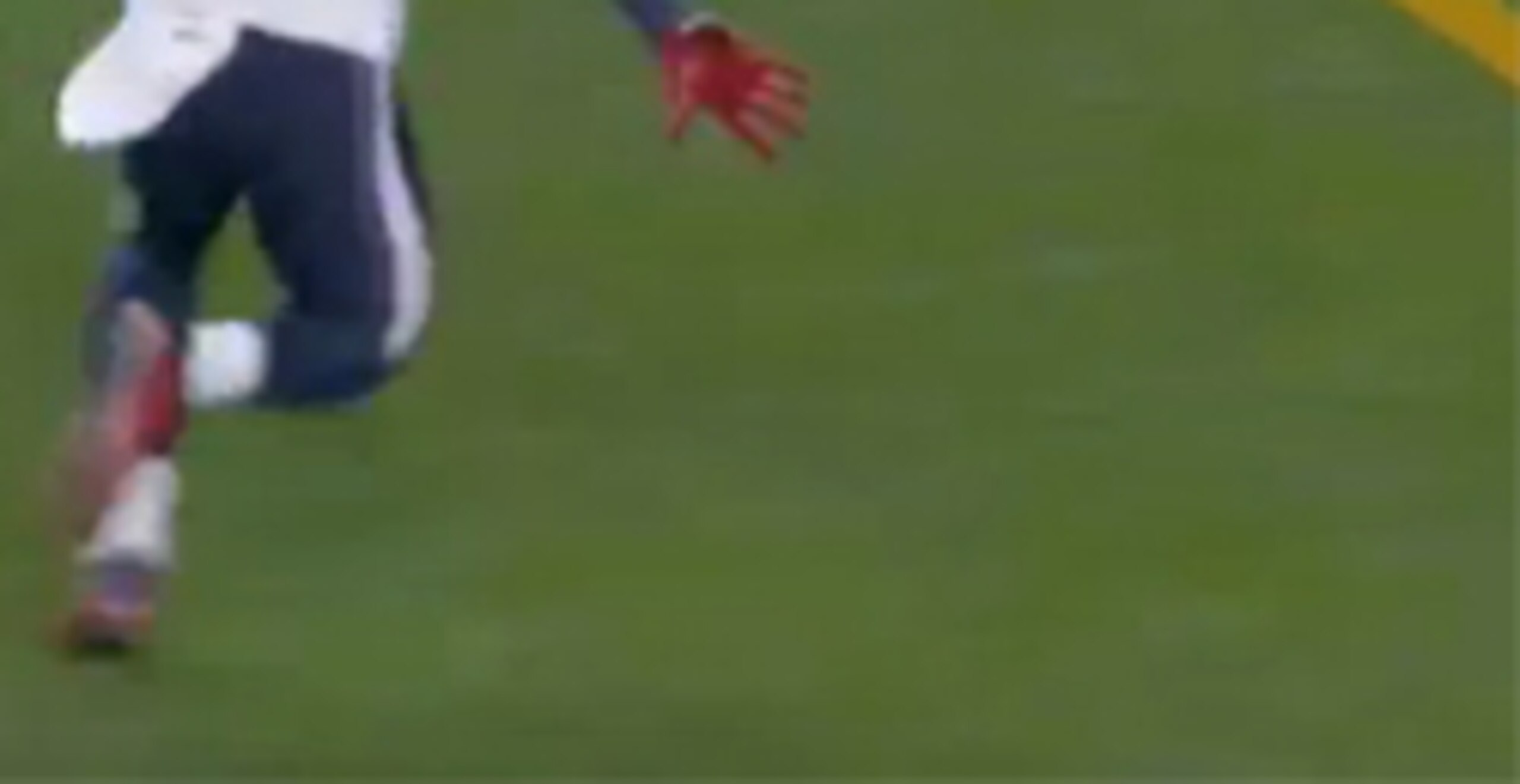
Showing perfect timing, Bryant waits for Bouye's shoulders and hips to turn almost parallel to the sideline before altering his movement. Bryant is putting Bouye in a position where it will be difficult for him to turn with the receiver on any in-breaking routes.
This wouldn't be a concern for Bouye if Bryant was going to run directly down the sideline, but the receiver isn't going to do that.
Instead, he turns his hips and head so they are facing toward the defender's inside shoulder. Bryant slows down, but he doesn't make an aggressive plant or change direction. This combination of movements suggest to Bouye that Bryant is entering a break to work infield.
The movement is subtle enough not to alter Bryant's direction, but it is strong enough to force Bouye to react.
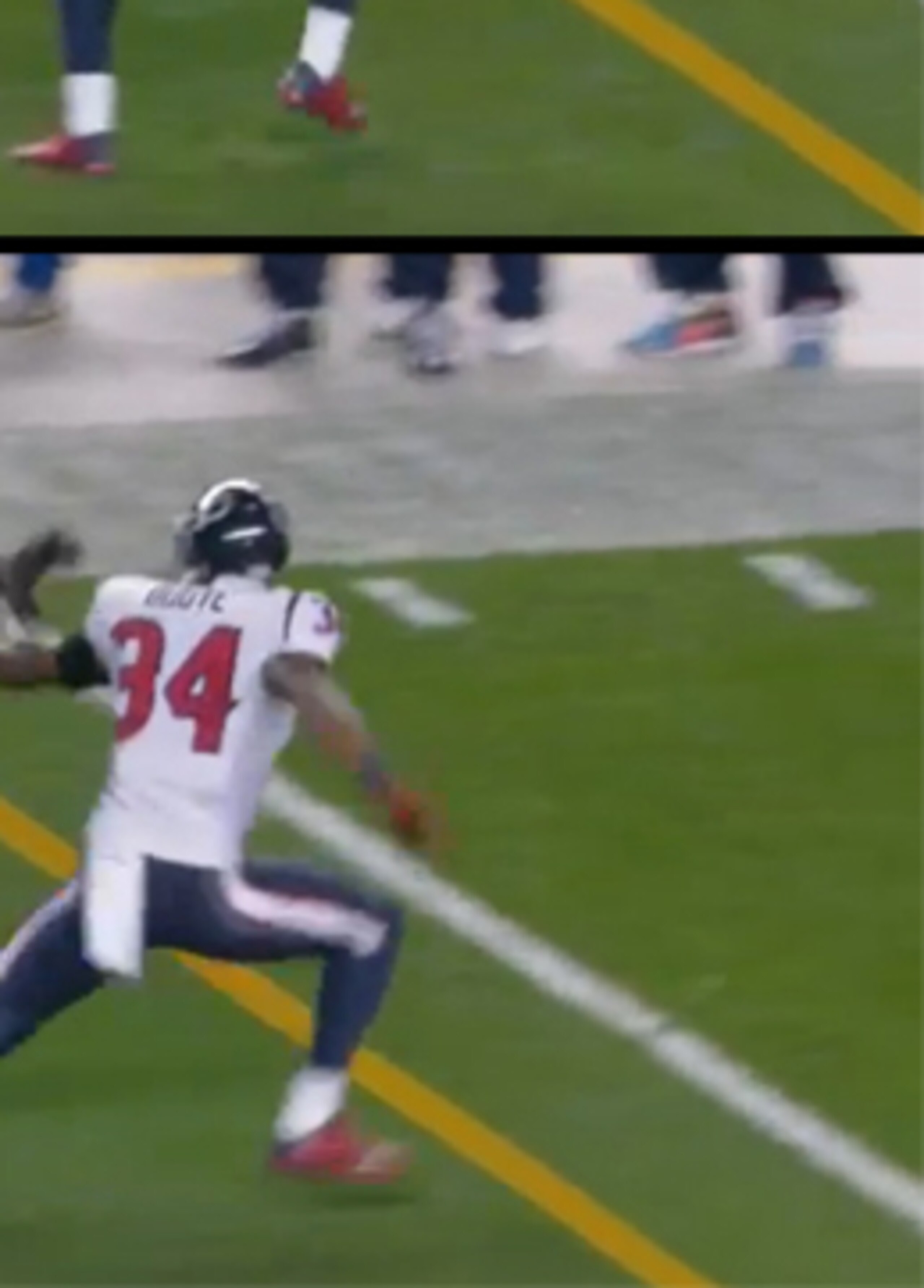
Bouye must shift his weight to switch his momentum and turn inside with Bryant. He stops his feet as he does this, which is the moment when Bryant re-accelerates and redirects himself toward the sideline. Bouye's only chance of stopping Bryant now is if he can get his hands on the receiver.
Raw receivers typically don't understand how to use their hands. Bryant can be too aggressive with his, but with how NFL officials call offensive pass interference, that is likely a good thing.
As he advances downfield, Bryant extends his inside hand to swat away Bouye's attempts to slow him. He doesn't push the defensive back away, he just knocks his hands down. This creates a clean passage for Bryant to the sideline.

Getting to that stage of the route so cleanly turned the play into a simple foot race. Bryant ran a 4.42 at the combine. Combine 40s aren't always indicative of how fast a player is on the field, but in Bryant's case, it is. It may even undersell his speed.
The receiver will expect to beat every defensive back he faces in this situation.
It's not a fair foot race between receiver and defensive back. Bryant is balanced and further along in his stride because he didn't make a strong plant to sell the fake infield. Bouye is recovering his balance and must re-accelerate to catch up to the receiver.
An accurate pass on this occasion would have given Bryant an opportunity to score a 56-yard touchdown. Roethlisberger's pass landed out of bounds, though.
If put in situations such as this where Bryant needs to create safe passage downfield, he can get open consistently. If the defense overplays his deep threat by dropping defensive backs into off coverage and having them play cautiously from there...he can still get free deep.
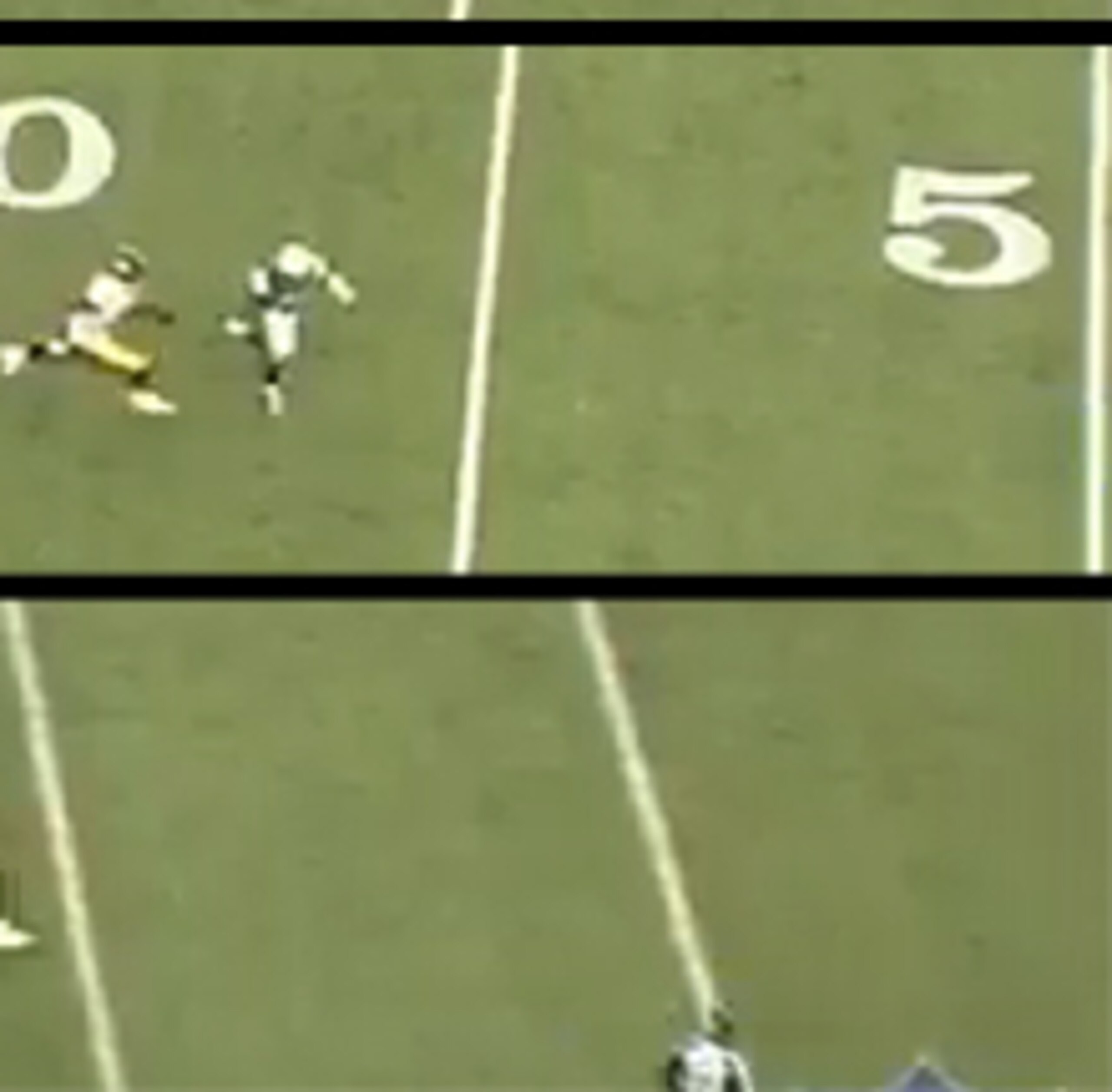
On this play against the New York Jets, the defensive back across from Bryant lines up in off coverage at the beginning of the play. He backpedals when the ball is snapped, hoping to turn and run with Bryant as he advances downfield.
Bryant closed the space off between the two so quickly that the defensive back didn't try to turn and run with him.
Instead, the defensive back tried to get on top of Bryant's route and slow him down with physical coverage. Bryant simply angled his route and continued down the sideline. He was pulling away from the defender as soon as he was level with him. Unfortunately, he didn't get a chance to make a reception.
As soon as Bryant passed the cornerback, he looked back for the football. When he did, he stopped in his route and tried to work backward through contact. Roethlisberger's pass floated inaccurately and way short of where Bryant was headed.
Even though this play resulted in an incompletion, you could still see Bryant's sheer ability to run past defenders in space. Fortunately, the same situation occurred against the Cincinnati Bengals.

Bryant caught a 94-yard touchdown pass on that occasion. He did so with unnatural ease, breaking into a canter with 20 yards left between him and the end zone. Despite sprinting so far, not a single defender could even pressure him into finishing the play strong because of his speed.
There is an air of inevitability that surrounds Bryant and the end zone when he runs deep routes.
Rounded Receiver
Bryant's skill set is wide for a deep threat. He can make big plays down the field with his athleticism, route running or his ability to adjust at the catch point. Because of his fluidity and subtle technical precision, that versatility extends into more assignments.
Although on a relatively small sample, as a rookie, Bryant highlighted his ability to attack the defense in different ways from different alignments at every level of the coverage.

Working the sideline is where Bryant will do most of his damage. His wide catch radius makes him a very dangerous receiver on back-shoulder throws. Back-shoulder throws are very difficult for cornerbacks to defend against average receivers, so they are especially tough against a player such as Bryant.
In similar fashion, Bryant is also very difficult to stop on fade routes because of his ball skills, fluidity and size.
These kinds of plays, along with screen passes and end-arounds, are primarily about Bryant's athleticism rather than his technical ability. It's when he looks to work infield against different kinds of coverages that the rest of his skill set becomes more stressed.
With his constant long-ball threat, running quick underneath routes will be important for Bryant. Defensive backs are going to drop deep off the line of scrimmage to prioritize the sideline routes, opening up opportunities for Bryant to take advantage of the space underneath.
His size and quickness will make him a dangerous receiver on slant routes.

Slant routes aren't difficult in theory. Carrying a 6'4", 211-pound frame makes them tougher, though. Bryant has to show controlled footwork and timing to maintain his balance on these kinds of quick plays. And he has to do it while acting very quickly.
If he can get between the cornerback and his quarterback, he should be able to make plenty of comfortable receptions by walling off the defensive back.
This is a simple element of offense for a receiver. It's an important one, though, because it creates easy yardage for the quarterback while also putting pressure on cornerbacks to be more aggressive on the outside. When cornerbacks are forced to be more aggressive against Bryant, he can release past them.
Getting off the line of scrimmage against press coverage is crucial for any wide receiver. Bryant has to prove himself over the coming years, but his rookie season offered reasons to be optimistic.

Bryant uses his hands in everything he does. He has the strength and length to push defensive backs off of him at the line of scrimmage. Most defensive backs will be smaller than him, but size alone doesn't translate to success.
A player such as Cordarrelle Patterson has a built-in passive mindset that prevents him from making use of his size and athleticism.
That aggressive mindset is something Bryant uses to attack the ball in the air when working down the sideline, and also when putting his body in positions to absorb hits over the middle of the field. He fully extended for high passes with defenders closing in on him on a number of occasions last season.
Making tough, punishing receptions is a requisite for any well-rounded receiver, but the quicker receivers who understand how to set up their routes over the middle of the field can avoid hits also.
Despite his large frame, Bryant can do that in certain scenarios.

For this touchdown reception against the Indianapolis Colts, Bryant initially lines up tight to the left side of the formation. The defense shows quarters coverage before the snap, and Bryant's route will send him down the seam.
Although his route will ultimately direct him down the seam, Bryant initially releases toward the outside.

The end-zone camera angle captures perfectly how Bryant angles directly toward the right cornerback's outside shoulder. By pushing his route so wide, he is threatening the pylons, pylons the cornerback is responsible for.
Bryant's initial release forces the right cornerback to drop backward and slightly to the outside.
This widens the gap between that cornerback and the safety to his side of the field. Because the defense is in quarters, the gap between the two wasn't large to begin with. That safety is distracted by the tight end's route just inside of Bryant, but that likely wouldn't have mattered if the ball was thrown on time.
Because of his quickness through his route and the precision to push the outside cornerback further to the outside, Bryant gave himself an opportunity to catch the ball cleanly with his route.
Asking Bryant to run complex routes over the middle of the field isn't necessary. He is a receiver who boasts great fluidity, a catch radius that extends around his body, precision as a route-runner, toughness and outstanding athleticism.
Rounded receivers aren't excellent at everything they do. They are good enough in their weaknesses to not restrain their strengths. Bryant certainly looks set to become that type of player moving forward.
For the Steelers in 2015, the former Clemson prospect doesn't need to be great. With so many weapons around him who can work the underneath and intermediate routes, Bryant could be a major difference-maker as just a deep threat.
Still, if he does become great or close to it, it suddenly becomes almost impossible for defenses to match up with an offense that can strike in every possible way.
Taking added coverage away from Brown isn't necessarily the goal here, because he is already extremely productive when defenses focus in on him. But sending extra attention to both Bryant and Brown exposes the running game to Bell, while Heath Miller and Markus Wheaton are no slouches.
The Steelers offense is set up to be one of the best in the NFL next season. Bryant could be the piece that makes it the best by a comfortable margin.
.jpg?w=2560 "Saints Lions Football")
.jpg?w=2560 "Vikings Buccaneers Football")