

Jose Aldo vs. Conor McGregor: A Fight 25 Years in the Making
Jose Aldo vs. Conor McGregor is already a big deal.
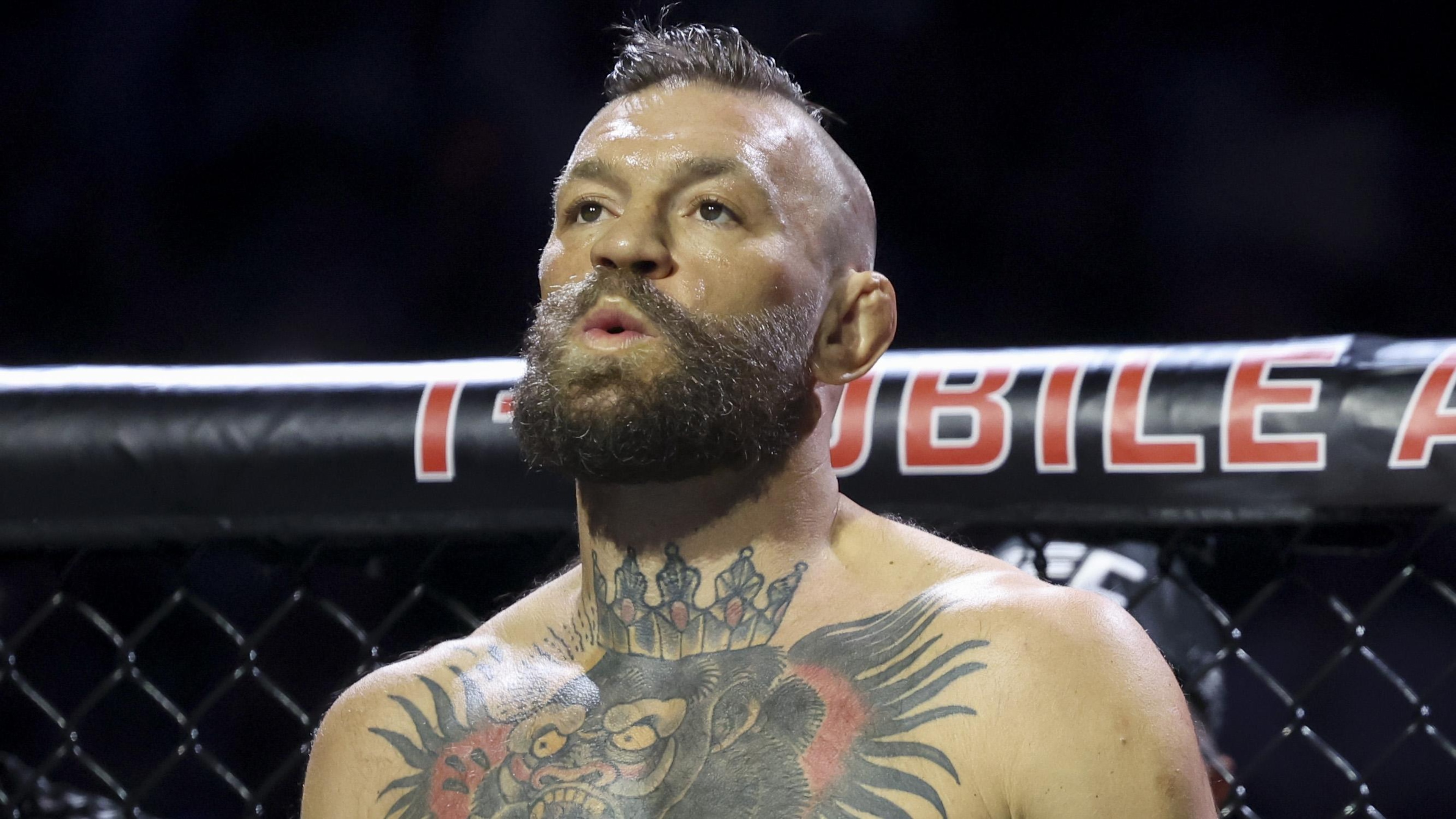
Aldo has been seemingly unstoppable since joining the UFC in 2011. McGregor, however, is a stylistically troublesome opponent for him. Add in a steady stream of smack talk and you have a main event that speaks to both casual and hardcore fans.
But what if there's more to it than that? What if names like Norifumi Yamamoto, Urijah Faber, Alexandre Franca Nogueira and Gilbert Melendez were a part of the Aldo vs. McGregor discussion? What if the build to Aldo vs. McGregor has been going on for 25 years?
.jpg?w=3840 "Trump UFC FBI Arrests")
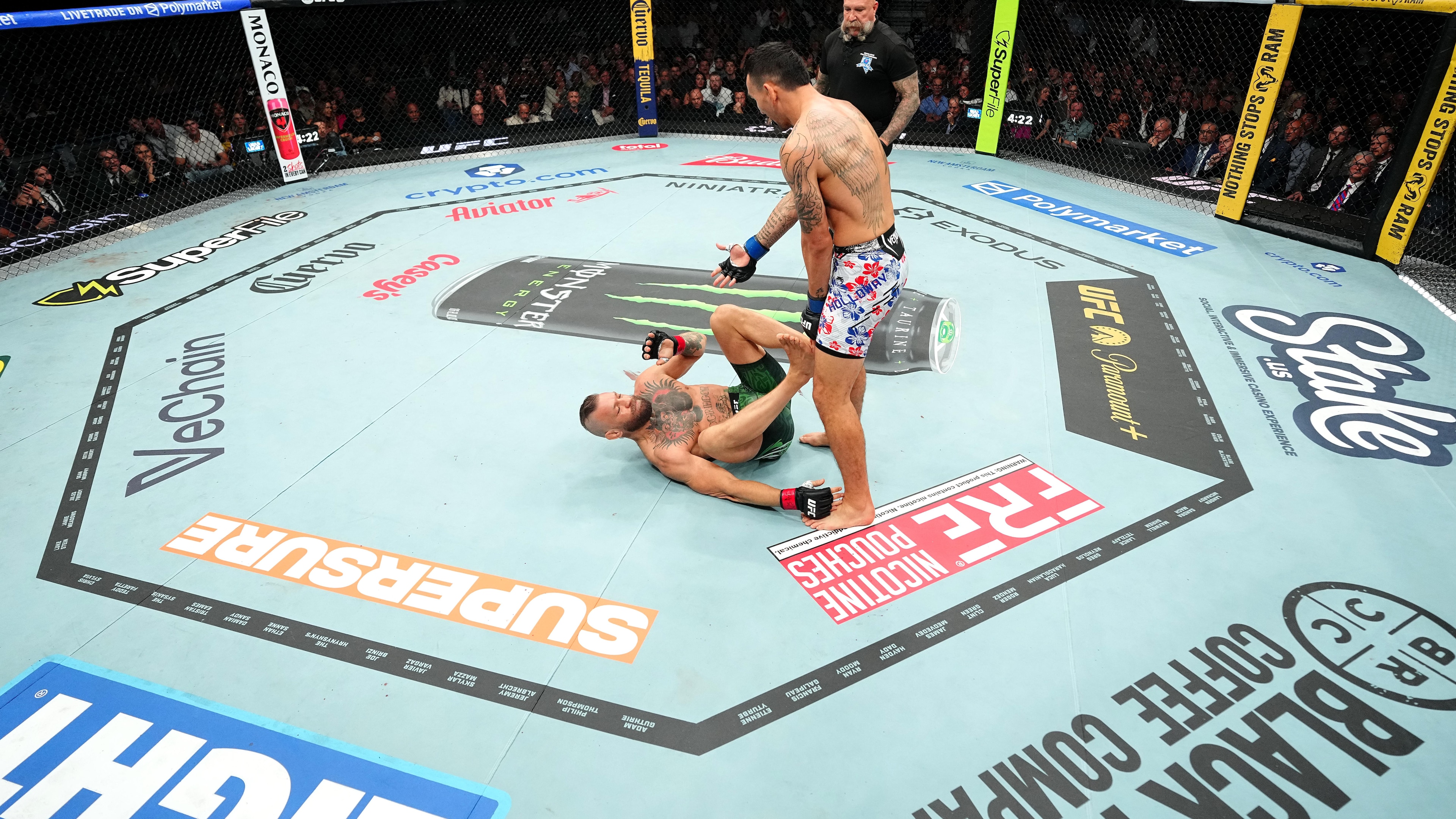
Well buckle in, boys and girls, for this dive into the depths of MMA history. Get ready for a look back to the days before McGregor and Aldo, before the WEC, before Zuffa, before the UFC...all the way back to the days when MMA existed only in whispers and imported VHS tapes. Back to the very beginning of the featherweight division.
What Are Lineal Titles?
Lineal titles are championship lineages that transcend the barriers of individual promotions. They ignore the physical belt and are instead based purely on wins and losses, regardless of where the fight took place.
Look to the original UFC heavyweight title, which was first held by Mark Coleman and later by Randy Couture. When Couture decided to leave the promotion to compete in Japan, the UFC stripped him of its belt and later named Bas Rutten its heavyweight champion. But the lineal title remained with Couture until he lost to Enson Inoue in Vale Tudo Japan.
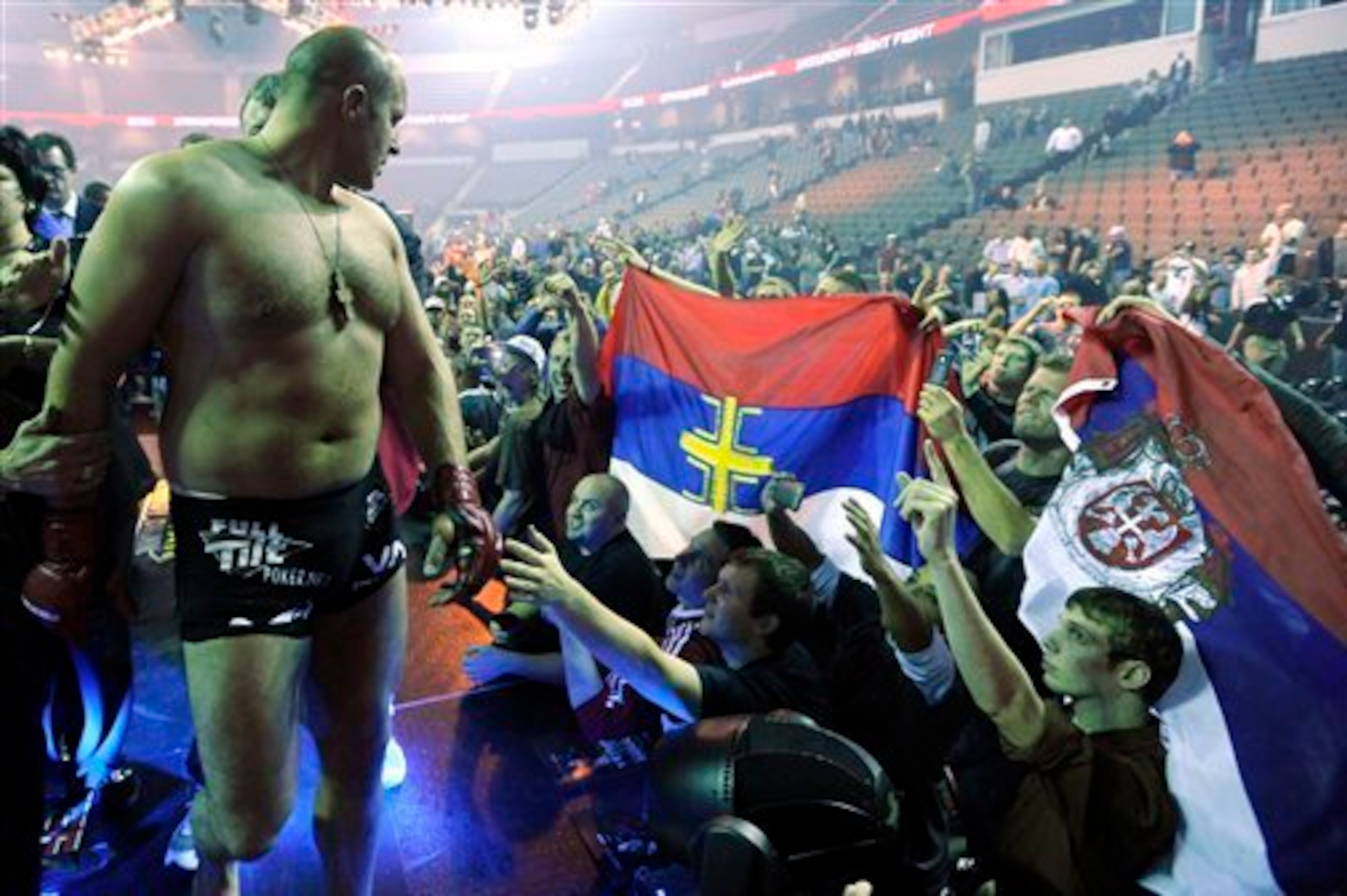
The lineal title wound its way to Pride legend Fedor Emelianenko, who held it until 2010, when he lost to Fabricio Werdum in Strikeforce. It did not return to the UFC until Alistair Overeem joined the promotion to face Brock Lesnar in 2011 and was not unified with the official UFC title until 2013, when UFC heavyweight champion Cain Velasquez defeated lineal titleholder Antonio "Bigfoot" Silva at UFC 160.
Need a more recent example? Look to Georges St-Pierre, who went on an indefinite hiatus while still holding the UFC welterweight title, or Dominick Cruz, who had his title stripped due to repeated injuries. While neither man is the UFC champion today, they remain the lineal champions of their divisions.
While lineal titles are more frequently discussed in the context of boxing (pugilists can more easily bounce between weight classes and promotions), they still hold relevance in MMA.
In addition to providing a more objective, more pure progression for MMA's historic championships, lineal titles help to preserve the legacy of great fighters and pioneer promotions that fans may not remember. Historic titles like those from Shooto and Pancrase, both Japanese promotions that predate the UFC, endure to this day through fighters one would not expect, and early greats like Mamoru Yamaguchi, Masakatsu Ueda and Dokonjonosuke Mishima achieve relevance as the forerunners to Demetrious Johnson, Rafael dos Anjos and other champions of today.
Which Titles Matter?
Not all titles are created equal. The prestige of a promotion, depth of a division, historical relevance of the championship and pound-for-pound greatness of the champion can add to or subtract from the value of any title.
Determining which titles are worth being traced across decades' worth of fights is rarely an easy task and is a highly subjective endeavor. The Pride heavyweight title, for example, can be viewed as one of the top prizes in MMA history given the size of the promotion, the strength of the division and its link to Emelianenko. The Dream light heavyweight title, on the other hand, is forgettable by comparison due to the promotion's lack of prestige and the relative shallowness of its 205-pound division.
That in mind, there are just two featherweight titles worth tracking at this point: the WEC/UFC featherweight title and the historic Shooto featherweight title.
While those are the only two worth much today, that could change in the future. Bellator MMA, for example, has a deep featherweight division that may pan out to be a great one. That, however, will be determined in the future.
Kickin' It Old School: The Shooto Lightweight Championship
Eight years before the UFC became a reality and 16 years before WEC put on its first show, there was Shooto. Founded in 1985 by the legendary Satoru Sayama (better known as the original Tiger Mask), the Japanese promotion was the first true MMA organization and was introduced as an unscripted alternative to professional wrestling.
Shooto started promoting amateur bouts in 1986 before featuring professional bouts in 1989. It established titles not long after. On Sept. 8, 1990, it belted its first 145-pound champion, Kenichi Tanaka. (Note: Shooto refers to its 145-pound division as its lightweight division.) While the distinction of becoming the first 145-pound champion is an accomplishment that will live on, the title did not become a legitimate prize until it was held by Noboru Asahi.
For most MMA fans, Asahi isn't a recognizable name. But his tree-trunk legs, hyperactive guard and massive arsenal of submissions made him one of the top fighters of MMA's formative years. His reign as Shooto champion from 1992 to 1999 is the longest in MMA history, checking in at 2,718 days (Anderson Silva's run as UFC middleweight champion, by comparison, lasted 2,457 days).
Asahi retained the lineal title until 1998, when he was defeated by Nogueira. Asahi then lost the physical belt to Nogueira in 1999.
Shooto, at that point, had adopted a pro wrestling-like approach to its titles. Its champions were as active as any other fighter but were allowed to compete in non-title bouts, with fighters earning a title shot by either beating the champion or fighting him to a draw. While Nogueira stumbled on a few occasions, he held the lineal title fairly steadily from 1999 until 2005.
| Name | Reign | Successor |
| Noboru Asahi | 1992-1998 | Alexandre Franca Nogueira |
| Alexandre Franca Nogueira | 1998-2005 | Hideo Tokoro |
| Norifumi Yamamoto | 2005-2009 | Joe Warren |
| Robbie Peralta | 2011-2013 | Akira Corassani |
| Conor McGregor | 2014-Present | N/A |
Nogueira left Shooto and vacated its featherweight championship, taking the lineal title to K-1's MMA sister promotion, Hero's. His career hit the skids, as he lost to Hideo Tokoro in his debut. That sparked a chain reaction in which the lineal title bounced around the Japanese scene before settling down with "Kid" Yamamoto.
Yamamoto held the title for two years, but the disbanding of Hero's coincided with the end of his athletic prime. While Yamamoto established himself as the best Japanese fighter of that era, and one of world's best fighters under 170 pounds, his promising career was derailed by a catastrophic knee injury in early 2008. He returned in spring 2009 a shadow of his former self and turned the lineal title over to future Bellator champion Joe Warren.

Warren held the lineal title for just four months, dropping it to Bibiano Fernandes. While Fernandes has since proved himself as an elite fighter, he lost the lineal title to Hiroyuki Takaya not long after that. It was through Takaya that the lineal Shooto title reached American shores. And Robbie Peralta, who defeated Takaya in what seemed like a throwaway featherweight fight in Strikeforce, kept it there.
Peralta moved from Strikeforce to the UFC and held the lineal title for two years before losing to Akira Corassani. Corassani promptly surrendered the title to Dustin Poirier, and Poirier gave it over to McGregor.
Cyanopsia: The WEC Featherweight Title
WEC was a special promotion in many ways. It housed a slew of amazing fighters, delivered more than a few of the greatest fights in MMA history and served as the first steady home for Western fighters under 170 pounds.
WEC history, and the lineal flow of its featherweight title, can be split into two eras: before the Zuffa buyout and after it.

The first WEC featherweight champion was Cole Escovedo, who was belted in 2002 when he defeated Phillip Perez at WEC 5. Because WEC was functionally a regional promotion at that point, it had few exclusive contracts. That caused many of its fighters, including Escovedo, to take fights in other promotions.
Escovedo lost to journeyman Bao Quach in 2003, and the lineal title went to Japan, eventually finding its way to Shooto 145-pounder Gilbert Melendez. That ended up being a dead end. Melendez left Shooto in 2005 to join Strikeforce, where he competed at 155 pounds, and he has been there ever since.
While that marked the official end of the lineal title, there is an unofficial workaround in which it's returned to the 145-pound division. Melendez remained undefeated until 2007, when he lost to Mitsuhiro Ishida at Yarennoka! The lineal title then made its way to Dream, winding up with Joachim Hansen before landing with Shinya Aoki. Aoki gave it back to Melendez at Strikeforce: Nashville, and Melendez kept it until losing to Benson Henderson, who folded the unofficial lineal WEC featherweight championship into the existing UFC lightweight championship.
As John Cena would say, however, the title does not make the man...the man makes the title. While Escovedo was solid for his time, the title—and arguably WEC as a whole—did not gain true credibility until the rise of Faber.
Faber's success speaks for itself, and his reign as WEC featherweight champion was defined by impressive finishes over big names. Thanks to Faber making his relationship exclusive with the now-Zuffa-owned WEC, the lineal history is clear. Faber lost to Mike Brown, Brown lost to Aldo and Aldo has been perfect ever since.
A Fight 25 Years in the Making

Come Sunday morning, lineal titles will turn into a thing of the past for the foreseeable future. The previously divergent histories of classical Japanese MMA and the booming regional days of American MMA that followed the sport's legalization in California will be entwined with the framework of the UFC.
Make no mistake, though. While Aldo vs. McGregor is an exciting fight on its own, we will never again see another fight that brings together two lineages as strong as these.
No title has a history as enduring as the lineal Shooto lightweight title, and it's unlikely that any future title will remain separate from its respective UFC counterpart for anything close to 25 years. While it's easy to dismiss Shooto based on its iffy modern reputation and the flimsiness of the other titles it introduced in the early 1990s, there is no denying or dismissing the amazing list of fighters that the lineal title flowed through.
Though the WEC/UFC championship doesn't have the history of Shooto's, the fact that two all-time greats have sat atop Zuffa's mountain speaks for itself. And of course, while MMA history is unique, there is no ignoring the prestige attached to that belt.
Two distinct lineages will converge Saturday night. While both will be swallowed up under the UFC letters, it will still be fun to see which wins out.
.png?w=3840 "Every City's 2000s Mt. Rushmore 🤩")
.jpg?w=3840 "Jerry Rice CHASES Heckler 😳")
.png?w=3840 "Offseason Moves Sure To Backfire 💥")