The Highs and Lows of Gareth Bale's 2 Seasons at Real Madrid
Gareth Bale sat quietly in the dugout, his Real Madrid team-mates busy ripping a lacklustre, visiting Getafe to shreds out in the middle of the Bernabeu.
Alongside him sat Lucas Silva, Keylor Navas, Isco, Raphael Varane, Daniel Carvajal and Martin Odegaard, the last three of which would eventually see some playing time on La Liga's final day.
But Bale remained in place, in his seat, taking in the action from the sideline. It was exactly how his Bernabeu career had started.
Twenty months earlier, in his maiden home outing after his switch from Tottenham, the Welshman, having sustained a thigh injury in the warm-up, looked on from the bench as his new club handed out a thrashing to the very same opponent, Getafe.
That occasion had been one of stymied expectation in Chamartin. But this one had a peculiar, ponderous feeling in relation to Bale; it was a kind of "what's next?" juncture. There was Real Madrid bullying an inferior opponent; Cristiano Ronaldo signing off in style on a fine personal campaign; Los Blancos aweing an audience with staggering power. Yet Bale was a peripheral figure as Real put on their display—one of force but not amounting to anything greater.
It felt like a microcosm of Real Madrid's season. Of Bale's season.
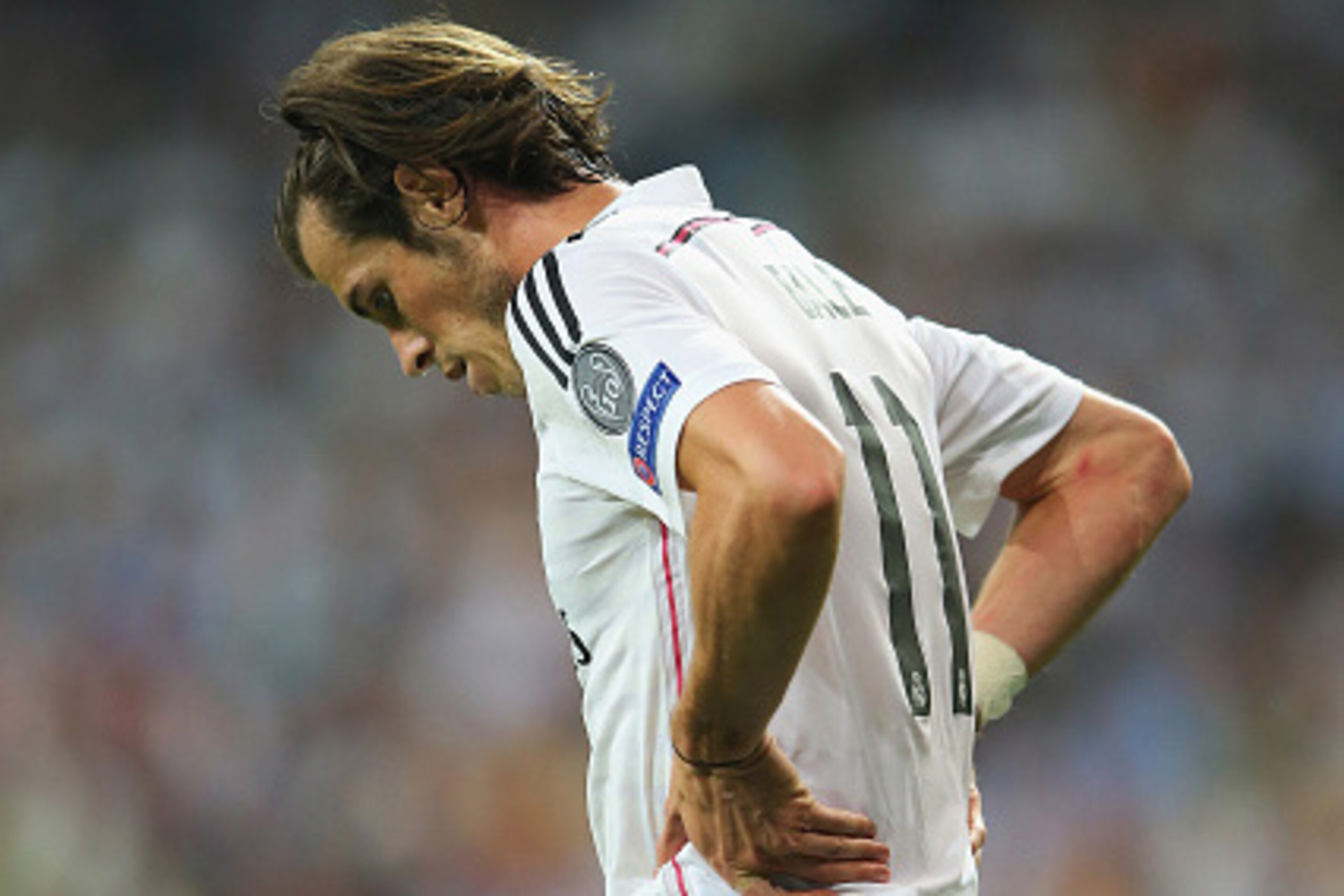
Little more than a week later, following the sacking of Carlo Ancelotti, Marca didn't hesitate when declaring new manager Rafa Benitez's primary task: "Job No. 1: Getting Bale's mojo back."
Real Madrid dress up their player unveilings like no others. Designed as showcases of grandeur and power, the occasions essentially serve as a form of advertising, building Real's modern brand and excitement among a fanbase.
Yet these extravagant presentations can also be rather tedious affairs. The routine is now so familiar, the statements offered by the club's newest stars so often bland and generic. Rarely is anything insightful or revealing said, and rarely do the players speak in specifics.
But Bale did.
"I just want to say that it's absolutely amazing to be here—a dream come true—and I hope I can help the team bring success to the club," he began, after embracing president Florentino Perez. "Hopefully this year we can win the 10th European title."
Labelling it a statement of intent is perhaps overblowing it. But it was still significant.
Nine months later...well, you know the story.

Barcelona. El Clasico.
For those on both sides of the Madrid-Catalonia divide, such clashes can represent the pinnacle of careers. In the Clasico, both legends and villains are born; rigid reputations are reinforced; legacies are established. Becoming a great at either club demands excellence in the Clasico.
But Bale's journey to his first experience of club's football biggest game was a bumpy one. An interrupted pre-season had left him a considerable distance from peak condition, curtailing the explosiveness that defines his game.
He'd quickly scored on debut against Villarreal—AS dubbed him the "Welsh Usain [Bolt]" that evening—but in the five games prior to the visit of the Camp Nou, Bale had completed just four second-half cameos and had sat out the home clash with Getafe.
Clasicos are not for the underdone. Clasicos eat up and spit out such players. But Bale was thrust into it anyway, with Marca declaring before the game: "It's Bale o'clock in Barcelona."
Ancelotti deployed the Welshman as a centre-forward—some saw his positioning as that of a false nine—in a lineup that featured Sergio Ramos and Sami Khedira in midfield (unthinkable in 2014-15, huh?). It didn't work. It never looked like working.
Bale became almost detached from the game, completing the fewest passes of any player to start the contest, his struggles perfectly understandable given that his Clasico debut saw him playing half-fit and out of position.
But the Clasico defines you at Real Madrid; backlash followed anyway.
"This is not the Bale we've seen on YouTube," said Marca afterwards, with the most spectacularly modern headline imaginable.

Just four days after the first Clasico of 2013-14, Real Madrid faced Sevilla at the Bernabeu. In the capital, the loss to Barcelona hadn't been taken well (they never are), and patience was running thin for a €100 million player to deliver something that looked worthy of €100 million.
"Bale and 10 others" read the front page of AS in the buildup, the Madrid-based daily focusing its attention on just one man of Ancelotti's XI.
When the evening began against the Andalusians, Bale and Co. heard whistles from sections of the Bernabeu. The mood was tense. Frustrated. Understandably so. Ninety-three minutes later, the same crowd was jubilant, breathless and satisfied.
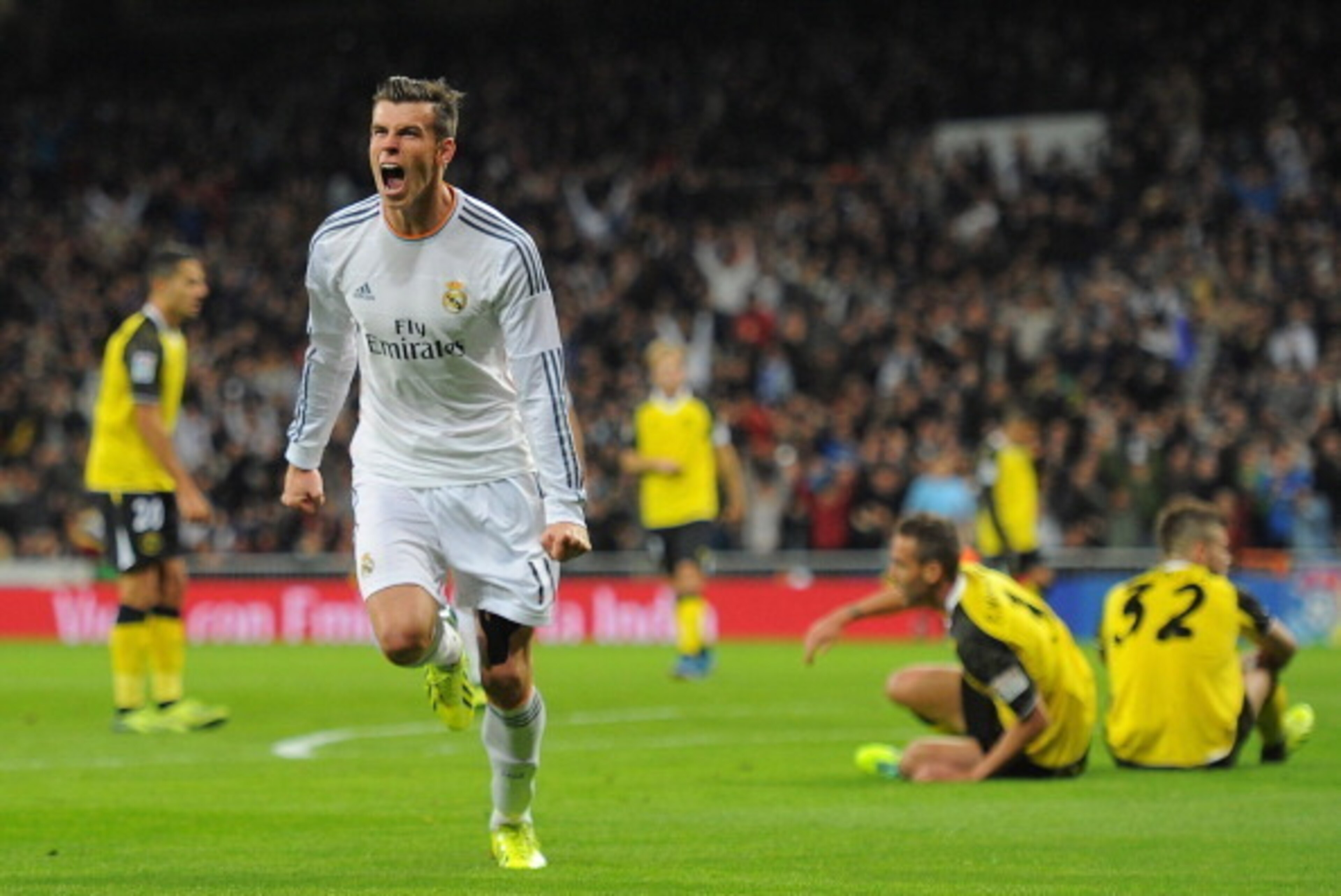
Bale had opened the scoring when he thumped home a ball he received from Karim Benzema in a swift move forward, opening his account at the Bernabeu. Fourteen minutes later, the Welshman doubled Real's lead when his free-kick deflected into the net before he set up both Ronaldo and Benzema in the second half.
Real Madrid won 7-3. And as part of a dazzling forward setup, Bale had sparkled, with members of the Madrid press, according to Sid Lowe of the Guardian, dubbing him "Canonito [little cannon] Bale."
The following week, he struck a stunning goal away to Juventus in the Champions League. "He's more than settling into Real Madrid life" boomed out of Sky Sports' broadcast.
Goals against Almeria and Galatasaray quickly followed—a run that culminated in his first Real Madrid hat-trick at home to Valladolid. "Bale has silenced all of his doubters," beamed Marca, declaring the former Spurs star a "Commander" and worthy of the "Galactico" tag.
For Bale, 2013 had concluded in style.
Carlo Ancelotti has a knack for cup competitions. In his managerial career, the Italian has claimed three European Cups, three UEFA Super Cups, two Club World Cups, one FA Cup, one Italian Cup, one Italian Super Cup, one Spanish Cup and one UEFA Intertoto Cup.
Ancelotti has enough cups to host dinner for an entire team and its coaching staff and have every man drinking out of his own. He's the master of cups.
But in 2014, Ancelotti met his match. Or perhaps his perfect cup companion.
Last year, Real Madrid contested five cup finals in the cities of four countries—the Copa del Rey in Valencia, the Champions League in Lisbon, the UEFA Super Cup in Cardiff, the Spanish Super Cup in Madrid and the Club World Cup in Marrakesh.
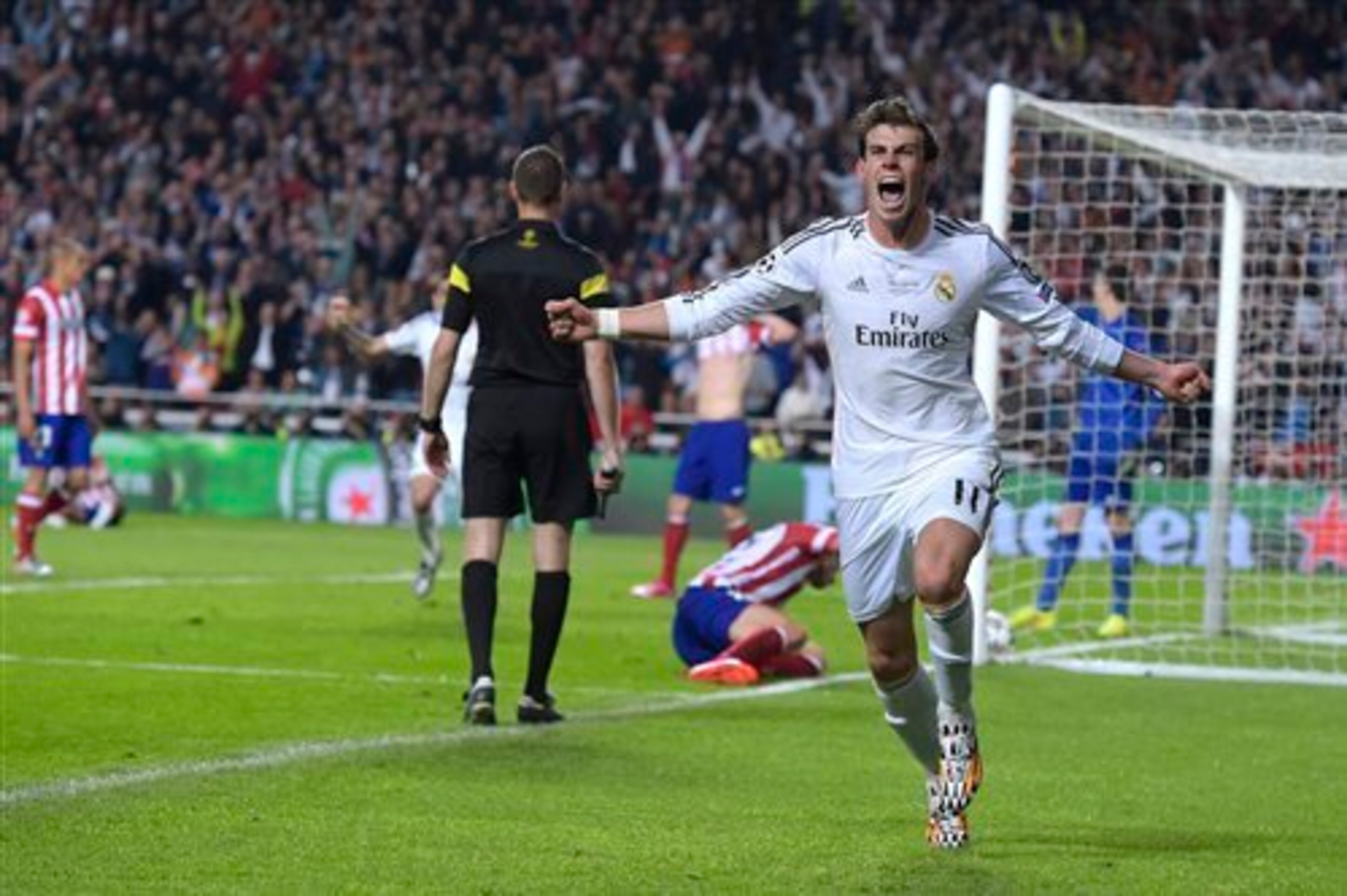
Of the five, Real Madrid won four. In the four victories, Bale scored in three and provided two assists in the other. But it was the first two that were unforgettable, as the Welshman completed a 50-yard slalom at the Mestalla to clinch a cup-final Clasico before notching the go-ahead goal in extra time of the all-Madrid European final at the Estadio Da Luz.
"I don't think I've ever seen anything like it," Xabi Alonso said of the first.
"He turned up when he was needed," Ancelotti said of the second.
Bale had become Ancelotti's cup master, making good on the words of his unveiling nine months earlier in the process.
"Ronaldo goes ballistic at Bale again," roared one Marca headline. "Bale's Bernabeu backlash," shouted another.
The start to the new year for Bale had been in stark contrast to the one prior. Against Espanyol, the Welshman had opted to go it alone when through on goal, drawing a furious reaction from a wide-open Ronaldo and the Bernabeu crowd when his close-range shot missed right.
Inside the capital's arena, whistles poured down on the Welshman (never mind the fact he'd created the first goal of the afternoon and scored the second), those in attendance jeering the club's record signing each time he touched the ball thereafter.
On the pitch after the game, Isco was forced to answer questions on the matter. Not long later, it was Ancelotti attempting to quell the furore: "Bale is a fundamental player for us, like Cristiano. So the fans demand more than others. That is normal, and fair, to me."
But the incident hadn't come in isolation; there'd been an uneasy tension building in the weeks prior.
In Real's clash with Celta Vigo in early December, Ronaldo was visibly frustrated with his forward team-mate on three occasions. When Los Blancos travelled south to Almeria before La Liga's short winter break, it was evident again.
And when Bale botched a similar situation to one against Espanyol during his side's tense loss to Valencia at the Mestalla to start the new year, both Ronaldo and Benzema were seen furious on camera.
Suddenly, it felt that two of Bale's strong relationships—with Ronaldo and the Bernabeu—were fracturing. His form was fading, fans and members of the press were accusing of him of being selfish and Real Madrid were slipping.
Two months later, Bale snapped a nine-game scoreless run with a brace against Levante, running toward the corner flag with his hands over his ears. Marca, in the middle of a dispute with the BBC over its treatment of Bale, labelled it his "release."
If it was, it was temporary one.
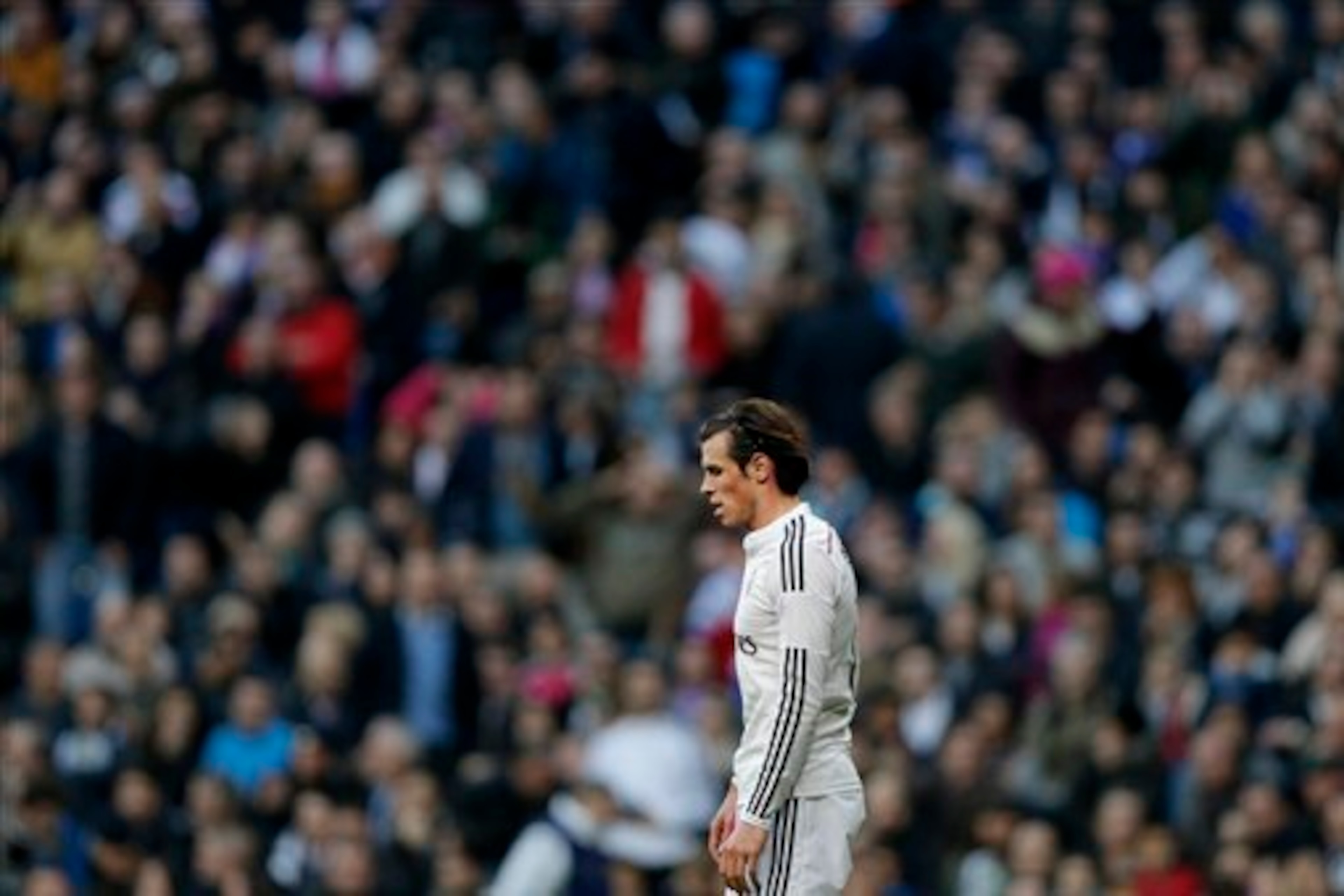
It had started with Barcelona, and now it was reaching its boiling point with Barcelona.
"Some 68.3 percent of fans want Bale out of the starting XI," announced AS after the Welshman's peripheral Clasico display in March. Marca called it "Bale's disappearing act," refusing to give the Welshman a rating in its match report.
In the days that followed, fans attacked the 25-year-old's car outside Real Madrid's training ground in Valdebebas. In similar circumstances, abuse unfolded little more than a month later following Real's Champions League exit at the hands of Juventus, two seasons of staggering extremes culminating in frustration. Exasperation. Rage.
For both Bale and Real Madrid, 2014-15 was a campaign that once bubbled with promise but closed in anguish.
"Job No. 1: Getting Bale's mojo back."
.jpg?w=3840 "Watch: Jerry Rice Chases After Heckler")

.png?w=3840 "Kuz Calls Out Athlete Spending")