The Story of One Man's Inspired 1,142-Mile Walk from Florida to Yankee Stadium
Seated comfortably (finally) 35,000 feet above the ground, Richard Albero retraced the steps of his tremendous voyage. It took him a magnificent and exhausting 86 days to walk the 1,142 miles from Tampa, Florida, to Yankee Stadium; it only took him two hours and 55 minutes to fly back.
In the process, Albero endured the elements. The blisters. The hills. The physical and mental anguish. The six pairs of shoes. He even threw his 65-year-old body into a ditch to avoid a car that almost ended his trip and maybe his life early.
Surprisingly, he finished at the exact weight he started, although he looked and felt much different.
TOP NEWS

CFB Top 25 After Week 3 ↕️

Top CFB winners and losers after dramatic slate
NASCAR Crash Leads to Fight 🥊
When he touched down in Tampa late last week, he eased into his car and pulled out of the parking garage, the final step of the journey. He fired up the engine for the first time since March 2 and returned to his normal life.
“It feels weird driving,” Albero told Bleacher Report. “I’ll tell you that much. The first thing I want to do is play with my dog. I haven’t seen her in such a long time.”
This is how it ended. It began with a bucket-list idea.
Originally, Albero thought about walking across the country. Freshly retired from teaching and anxious to cross items off his list, he thought about shooting for a trip to the moon before realizing what a financial and logistical nightmare it would be. He then thought about walking the Appalachian Trail. Those plans were nixed when he thought about the snakes and bears.
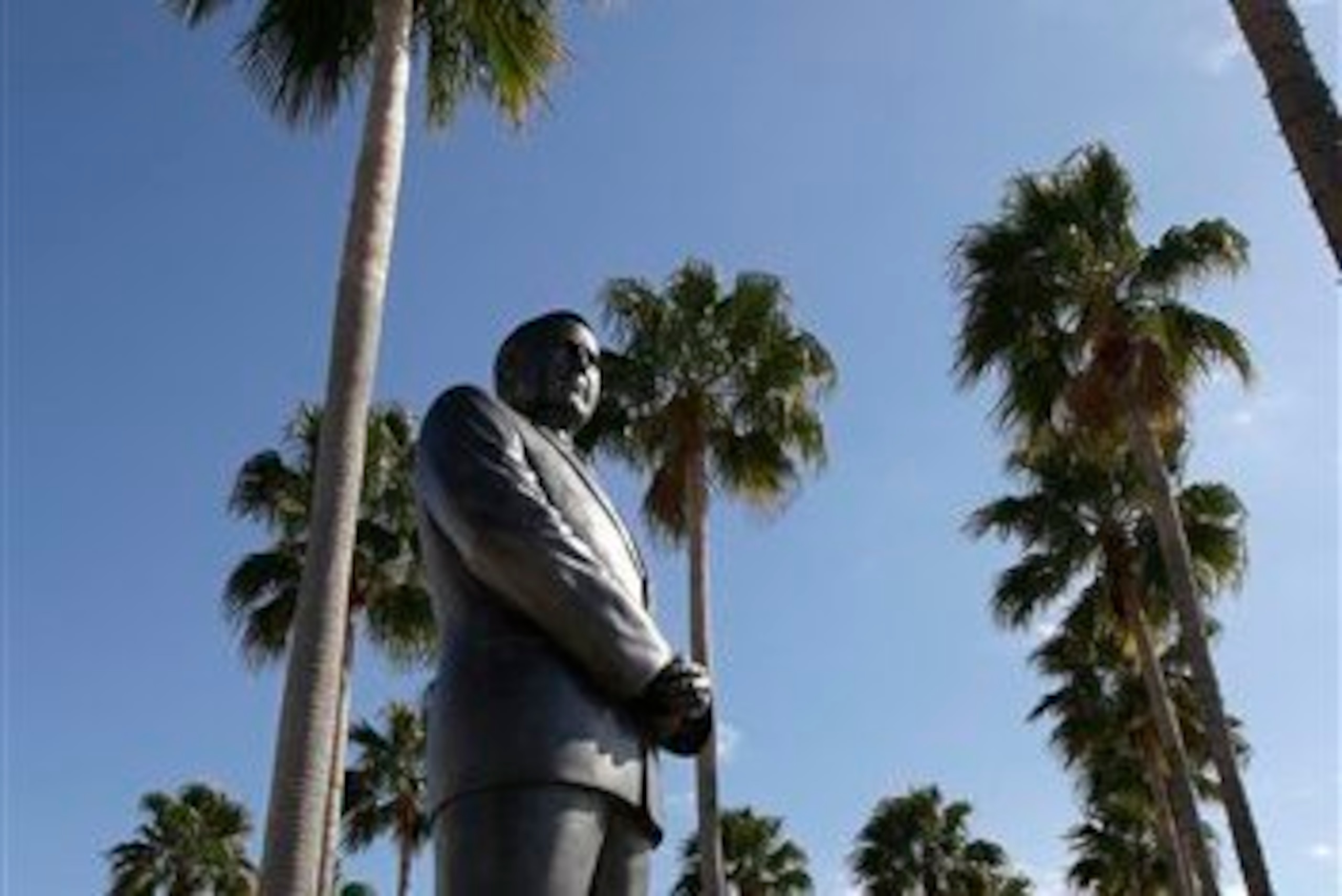
Searching for inspiration for his great journey, Albero (a New Jersey native and huge Yankees fan) found it unexpectedly while watching the Yanks during spring training. He was standing in front of George Steinbrenner’s statue at George M. Steinbrenner Field in Tampa when it hit him.
“Why not walk from Tampa to Yankee Stadium?”
His friends doubted that he would go through with it; his three children knew better. They knew their dad was ambitious enough, tough enough to pull the whole thing off. As the idea grew, it also quickly developed into far more than a bucket-list item.
“I wanted to dedicate it to someone,” Albero said. “And my nephew Gary came right to my mind.”
Gary Albero died in the 9/11 attacks. Before he passed, Gary and Richard shared a bond through Yankees baseball. They went to games together; they made long, impromptu drives to Fenway Park together; they drank Guinness at Stan’s Sports Bar in the Bronx together.
Albero decided to dedicate the walk to his nephew and the Wounded Warrior Project. Once the Yankees got on board—thanks in large part to the behind-the-scenes efforts of Andrew Levy of Wish You Were Here Productions—the trip was a go.
On March 2, with New York Yankees manager Joe Girardi and his team standing only a few feet away, Albero took his very first step from home plate in George M. Steinbrenner Field in Tampa.
“The first day was sidewalks, then a nice country road,” Albero said. “But I didn’t realize what was in store for me.”

The daily routine for the former military man looked something like this. Each day started at 4:30 a.m. with logistics and housekeeping. He would update his website—showing exactly where he was on the map—and send out thank-you notes to those who donated. If he needed a hotel to stay at that next night, he would book it then.
Next came an enormous breakfast—“anything for energy,” he said—before a support driver dropped him off where he stopped the day prior. He would then stretch as his driver for that day surveyed the terrain ahead.
He began by walking 15 miles per day but progressed to 20 miles by the very end. He would typically log 14 miles in the morning before soaking his feet in ice, eating lunch and swapping shoes. If the schedule allowed, he’d squeeze in a 20-minute nap before walking the final six miles.
His support driver would then pick him up and take him to a nearby hotel. He’d eat an even bigger dinner and then go to bed, usually around 7:30 p.m. The next morning, he would reboot the process.
“There wasn’t much of a social life on this trip,” he said.

This was the part of the journey he could prepare for—the part within his control. The rest was dependent on the weather, the state, the cars and the terrain.
He cherished the back roads, not just for the scenic beauty but for the absence of automobiles—his biggest enemy and threat over the past few months. As he maneuvered upward in his home state, he quickly realized what he was up against.
“There was hardly any room to walk in Florida on Route 301,” Albero said. “I almost got nailed a few times.”
Busy Florida roads gave way to the elements. The knee-high weeds, rain and wind of North Carolina tested his physical and emotional willpower. Although he never once thought about giving up, it was a grueling stretch to get through.
“Two hundred treacherous miles," he said.
When he powered past North Carolina and reached Virginia, he encountered a new kind of obstacle: elevation.
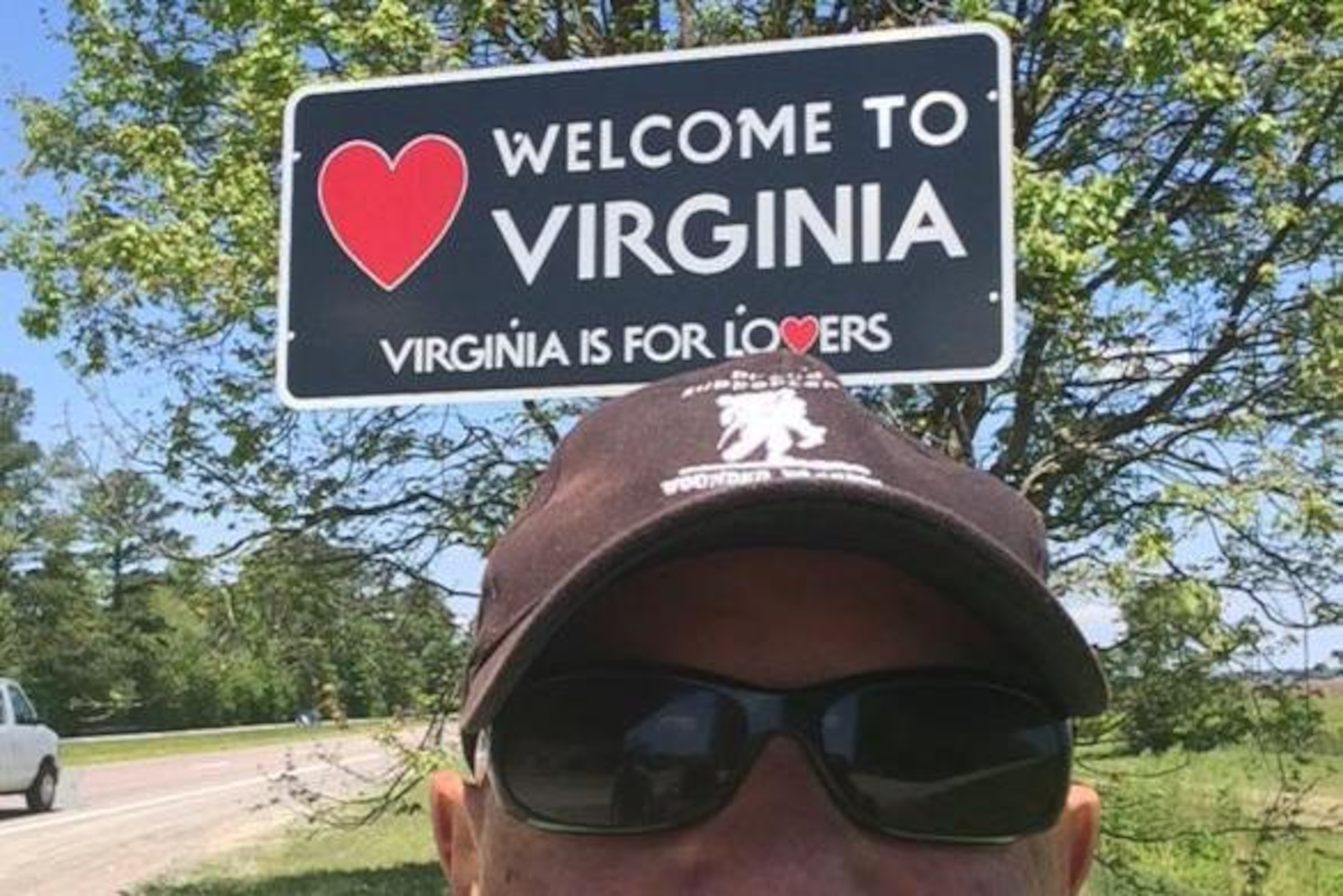
“I did 49 hills in two days, and I’m not talking the baby back hills,” Albero said on his travels through Virginia. “I went right through them. I don’t want to use the word possessed, but I was definitely focused.”
With so much of the spotlight put on the physical nature of this walk, it was the emotional toll—the day-in, day-out grind—that proved to be more challenging than any rainstorm or blister.
Albero needed to keep doubt out of his mind.
When his support drivers tried to alert him of potential weather ahead, he would cut them off shortly after they began. At one point, Albero’s sister called with concerns after watching the forecast on his behalf. He hung up on her.
“I couldn’t let anything disturb it,” Albero said. “I couldn’t hear any negativity. Even when I had a bad blister, I knew I would walk through it.”
At the end of a day’s walk, the support drivers often times had to throw themselves in front of Albero to get his attention. On one occasion, he walked right past his brother, who was shocked he was being ignored, because Albero was so focused on the task.

Walking alone each and every day, Albero’s mind wandered. He always immersed himself deep in his surroundings—to cherish the beauty and also to look for cars, construction or other items that could have an impact on his path.
He listened to music—from Van Morrison to Nina Simone to Christina Aguilera. It all depended on the day and his mood. He plowed through three books on tape and kept an audio journal of his own. He listened to New York sports talk radio. He also did occasional interviews with radio stations curious about his progress. It helped pass the time.
As he progressed deeper into his journey, however, he relied less on technology. Instead of firing up his music at the start of the day, he usually walked well over five miles before he ever considered plugging in. He didn’t need it anymore.
He wasn’t necessarily searching for anything, although he allowed himself to search. With a master's degree in psychology, he never looked at the walk as a way to find himself.
“Toward the end up the trip, when I realized it was coming, I did more reflections of where I was at and what I wanted to do with life,” Albero said. “I never really did any heavy-duty thinking. It just came in on its own.”
The monotony of his inner works was broken up by various encounters with friends old and new. During rainstorms, folks offered up shelter and assistance. Others handed him water or simply stopped to shake his hand as he passed by. One woman came out and gave him a plate of homemade biscuits.
One of his former students joined him for one morning. One of the sound technicians who interviewed him in Washington, D.C., greeted him in Baltimore, the man’s hometown.
A week removed from the riots that hit the city, the man gave Albero an in-depth 14-mile tour.
“It was like getting a history lesson,” he said.
From Baltimore, he moved past Philadelphia and eventually into New Jersey. As Yankee Stadium neared, Albero walked past towns he had known his entire life—past streets he knew by name, past Hackensack, the place he was born and past the high school football stadiums he played in decades ago.
On May 26, 86 days after he started, Albero arrived at Yankee Stadium. Before the game began, he went to Stan’s and had a Guinness for Gary, just like old times. He then stood up on the bar and toasted the Wounded Warrior Project, the Yankees and his nephew.
“That was a great moment,” Albero said.
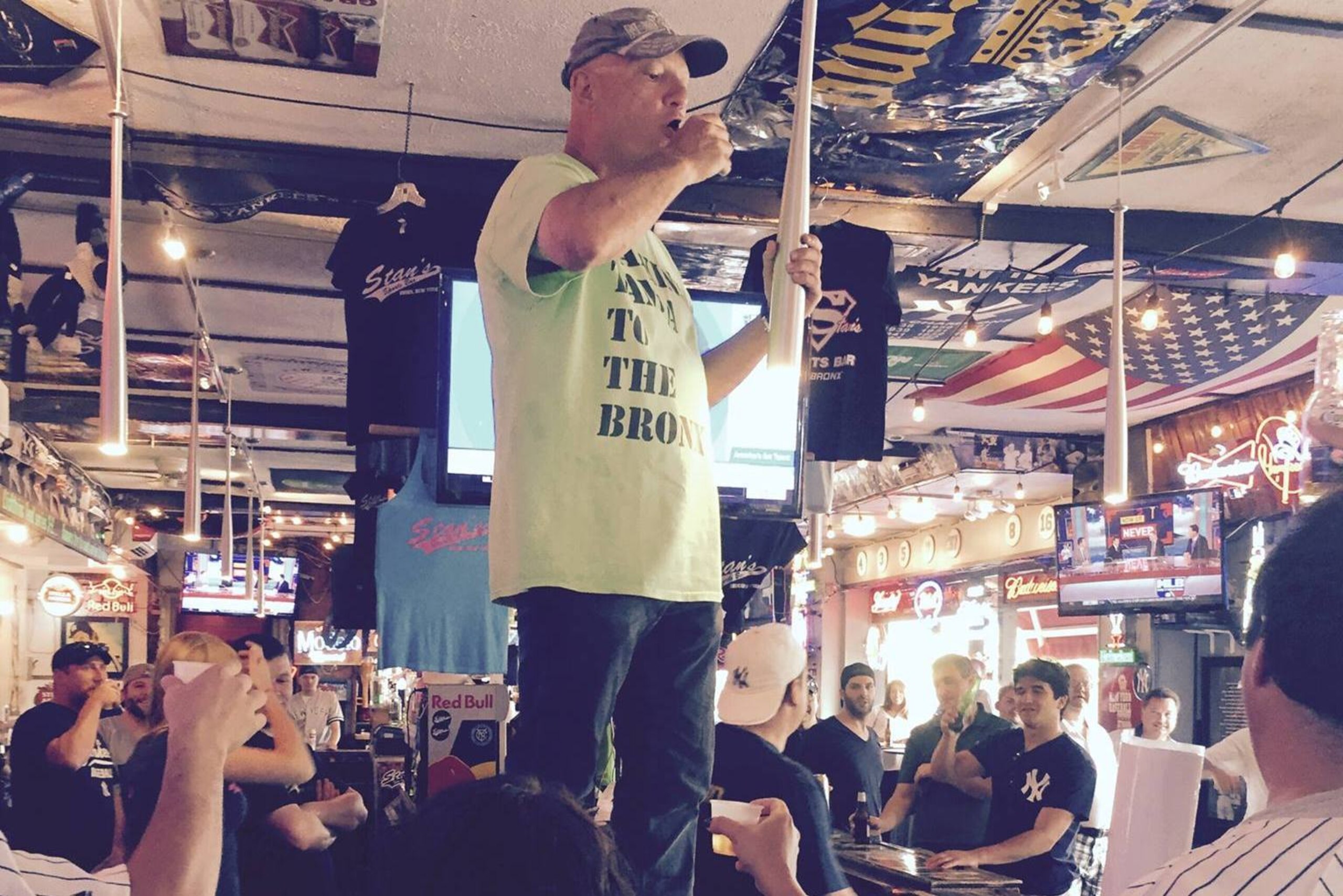
He entered the stadium from the outfield to applause; the final 300 feet of his journey now within reach. As he took each step, the magnitude of it all finally hit him. The weight of the walk came into focus.
“I looked up and I could imagine my grandparents, my parents and Gary sitting in the seats watching me.”
The man who applauded his first step, Joe Girardi, was there to greet him as he his foot touched home plate. He looked at the players and coaches he saw months ago before throwing a perfect strike with the first pitch of the game.
“I told you I’d be here,” he said.
Albero originally set out to raise $25,000, and accomplished that goal via a fundraiser on the Wounded Warrior Project website. The Yankees then helped him cruise past expectations by donating an additional $25,000.
Although his walk was complete and all miles were accounted for, Albero still had one more place to visit on his pilgrimage.
Before he returned to his life and his dog—to his future that includes writing a book about his travels and walking in general—Albero visited the National September 11 Memorial & Museum. He searched and eventually found the name he was looking for, the name he walked 86 days through rain, wind, blood, sweat and tears to see.
Gary Albero.
On top of his nephew's name he left a flower, a Wounded Warrior Project flag and a Yankees hat.
The journey had ended. He could go home.
.JPEG?w=2560 "Raiders Patriots Football")