

Carolina Panthers: Creating the Blueprint for Optimal Offense in 2015
What would the optimal offense look like for the Carolina Panthers in 2015? It all begins with keeping Cam Newton upright.
The Panthers had very poor pass protection in 2014. Football Outsiders ranked the offensive line 22nd in pass protection, while Pro Football Focus had them in dead last in terms of cumulative grade. They “only” allowed 42 sacks, which is within shouting distance of the league average, but that’s in large part to the mobility and improvisational skills of Cam Newton. Newton was third in the league in “Houdinis”—broken tackles behind the line of scrimmage. He turned 10 more probable sacks into extended plays last season, despite suffering early on in the year from the lingering aftereffects of a broken ankle.
.jpg?w=2560 "Commanders Eagles Football")
The good news is that the Panthers made strides towards the end of last season to fix their offensive-line problems. Opening-day starters Amini Silatolu, Fernando Velasco and Nate Chandler were replaced by Andrew Norwell, Trai Turner and Mike Remmers by the end of the season. Each and every one of those replacements was an improvement over the opening-day starters, and, as such, the amount of pressure Newton and Derek Anderson were under dropped significantly by the last quarter of the season.
| Games 1-4 | 11 | 11 | 27 | 49 |
| Games 5-8 | 9 | 7 | 44 | 60 |
| Games 9-12 | 15 | 3 | 52 | 70 |
| Games 13-16 | 3 | 6 | 27 | 36 |
Nine quarterback pressures a game still isn’t fantastic by any stretch of the imagination, but it’s a far cry from the double-digit number of plays Newton had to absorb earlier in the season. There are a number of interconnected factors that account for that drop in pressures, including a heightened running game and an easier schedule, but the offensive line changes fairly clearly had a positive impact, which in turn contributed to the success of the team at the end of the year.
| Amini Silatolu | 5.34% | Andrew Norwell | 3.88% |
| Fernando Velasco | 5.91% | Trai Turner | 2.78% |
| Nate Chandler | 6.98% | Mike Remmers | 2.70% |
| Byron Bell | 8.11% | Michael Oher | 8.59% |
| Ryan Kalil | 3.74% | No Replacement | -- |
So, should the Panthers be convinced that their pass protection woes are over, and that they can build their 2015 offense from a more stable foundation? Well, yes and no.
On the interior of the line, Trai Turner and Andrew Norwell impressed over a comparatively large sample size. The two 2014 additions each started more than half of the season last year, and while they had their down moments, they were more than solid against a variety of different defensive fronts and levels of talent. Pair them with Ryan Kalil, and I think the Panthers can definitely feel that the interior of their line is a strength going into 2015.
The tackle positions, are still in question. I don’t think there’s much doubt that they will be improved in 2015 as opposed to 2014, but there were points last season when it felt like a couple of cardboard cutouts could have given more protection than Byron Bell and Nate Chandler did. Question marks at the position are better than the performances they got last season.
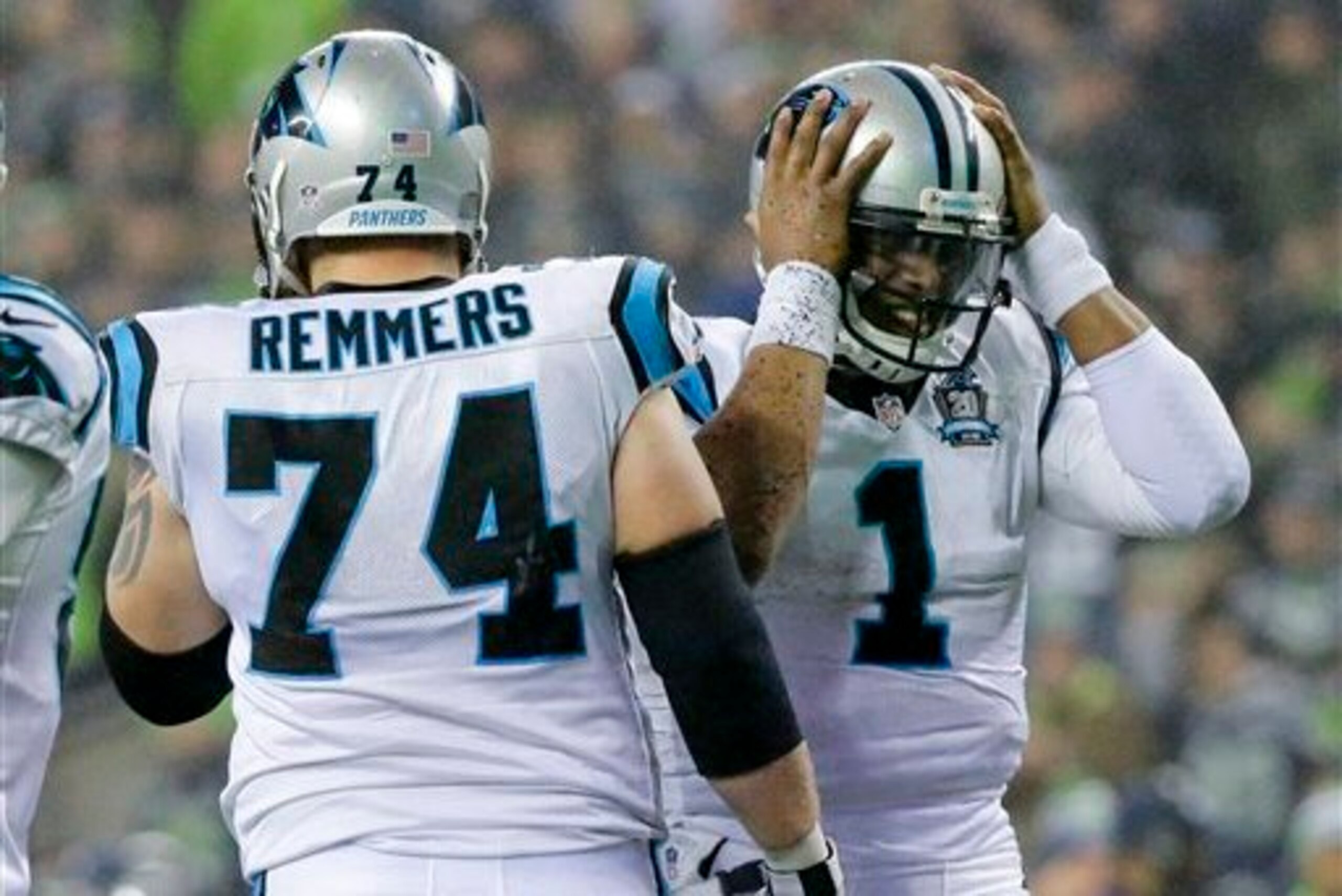
Question marks are still question marks, however. Mike Remmers played very well in his five regular-season starts, with Football Outsiders’ charting only charging him with two blown blocks, and Pro Football Focus only charging him with five regular-season pressures. That’s the second-best pass blocking efficiency of any tackle with more than 100 snaps last season. That’s good!
There is a reason why Remmers has bounced around from practice squad to practice squad, now on his sixth NFL team. He has some physical limitations, and struggles when moving laterally. His efficiency got worse as the season went on; he graded out negatively in three of his last four games, including the playoffs. Are the nine pressures he gave up in two postseason games indicative of difficulties handling postseason-level talent, or are they a result of teams having film on him and figuring out how to beat him? That’s a question Remmers is going to have to answer if he wants to hold on to his starting job. His regular season-resume is at least worth giving him the shot, however.
At least at right tackle, the Panthers have to decide between the small-sample size production of Remmers or fourth-round pick Daryl Williams, who I think has breakout potential. The odds that one or the other will at least be solid seems fair—or, at least, better than the performance Nate Chandler put up last season. Seeing as how neither of them are an ideal fit on the left, however, the Panthers are going to stick with Michael Oher there, and that’s where I think the offensive line still has issues.
Unlike Remmers or Williams, Oher has had a history of success on the offensive line. Specifically, that success came as a rookie right tackle in Baltimore in 2009. That year, he graded out as a top-15 tackle, especially starring in the run game. He was at least serviceable in 2010 and 2011 as well, including one season starting as a blindside protector, but he’s been a shadow of his former self the past three seasons.

He had the fifth-worst pass-blocking efficiency score last season, according to PFF, which is still better than Byron Bell, but only just. Football Outsiders had him 30th among 39 right tackles when it comes to blowing blocks, which is actually an improvement over the year before. This is not going to get easier for him on the left side.
Still, he’s a better option than Jonathan Martin, and I highly doubt he’d be worse than Bell was last season. Perhaps the change in scenery will help him recover some of his early-career form, but color me skeptical for now.
What will help the offensive line is a continued dedication to the run game. Only the Houston Texans ran the ball more often than Carolina did over the last four weeks of the regular season, and only San Francisco and Jacksonville had more yards per carry. Jonathan Stewart, especially, had a great last month of the year, averaging 5.08 yards per carry. The Panthers’ read-option-based attack worked well as the offensive line improved, with Andrew Norwell in particular showing unexpected mobility, getting to the outside to make blocks down field.
Offensive coordinator Mike Shula has made a wise choice by using the read option and triple option as his primary methods of attacking opposing defenses, and that should continue. Cam Newton is never going to be the most accurate quarterback in football—Football Outsiders charted him 32nd out of 36 quarterbacks when it comes to accuracy, including being worst in the league in overthrows—but what he can do with his legs is right up there with anyone else in league history.
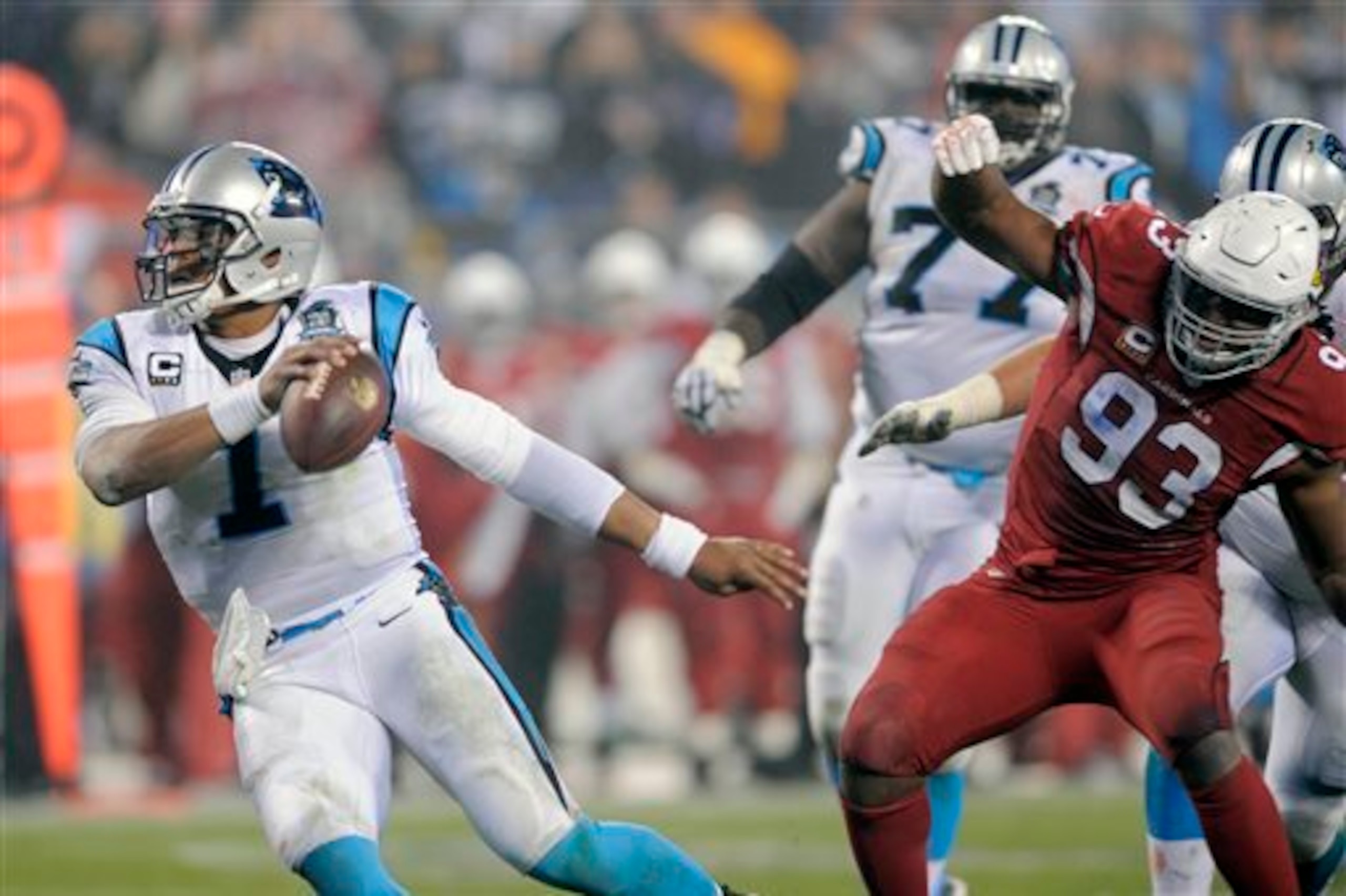
By using Newton’s speed and uncanny ability to read unblocked defenders, Carolina’s ideal offense is based on speed and misdirection more than the pass-happy schemes currently in vogue around the league. Considering the lack of a true game-breaking talent in the receiving game, so far, this plays perfectly to the Panthers’ strengths. It also helps mask the pass protection weaknesses, as teams have to respect the Panthers’ ability to dominate on the ground.
Considering Cam Newton isn’t recovering from offseason ankle surgery this time around, the biggest question mark when it comes to the running game this year might be the durability of Jonathan Stewart. He has never managed to handle a full workload, peaking at 221 carries in 2009. Now, he’s the main banana in the backfield, with DeAngelo Williams gone off to Pittsburgh.
Ron Rivera has said he wants to limit Stewart to 15 carries or so per game, which is a logical precaution considering Stewart’s injury history. That means the Panthers will need to find someone to step up to take the other handful of carries and spell Stewart from time to time. Stewart’s share of the workload went up to 68.6 percent of the snaps over the last six games of the season, which is about where the Panthers will hope it will be in 2015.
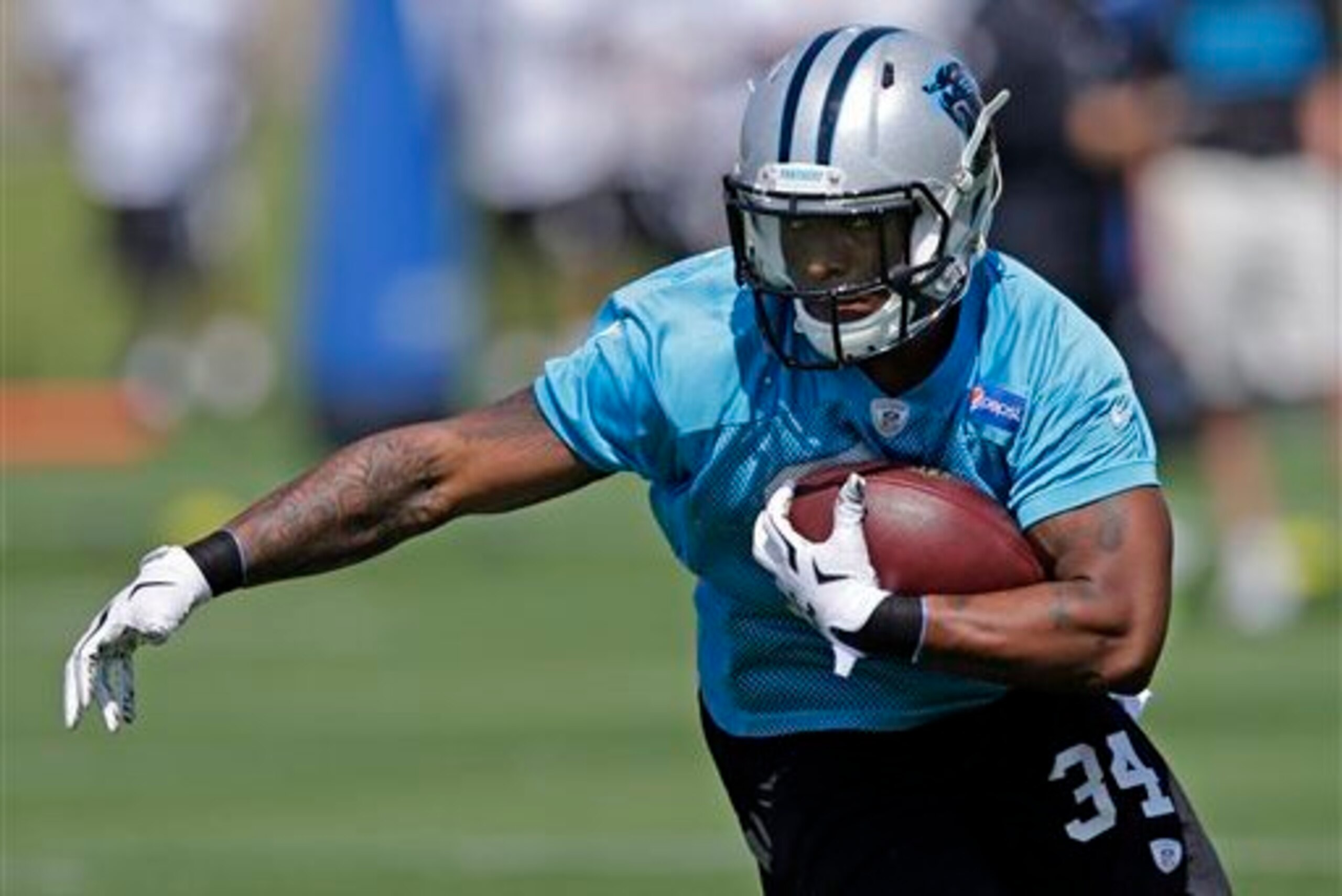
The Panthers do not have an automatic backup for him, however. Eventually, the odds are the role will go to fifth-round pick Cameron Artis-Payne, a patient runner with a notable burst of top-end speed. He’s not the most athletic back in the world, but has the potential to be a solid grinder and rotational back. With no NFL experience and less than 400 carries of experience in college, he might not be ready to take primary duties right off the bat.
That likely leaves Fozzy Whittaker as the secondary running back at the moment, which is underwhelming, but not terrible. Add in a fully healthy Mike Tolbert—the Panthers went 7-3 with Tolbert in the lineup and just 1-6-1 without him—and it’s clear that the Panthers need to continue to flex their running muscles if they’re going to compete this season. The Panthers ran the ball 46.4 percent of the time last season, and if anything, that frequency should increase for an ideal offense in 2015. Keeping a strong running game with plenty of option philosophies should keep the pass rushers honest and bring safeties up into the box, which in turn will spark the passing game.
The Panthers made a big investment in their passing game in the draft the past two years, bringing in Kelvin Benjamin and Devin Funchess in the first and second rounds. They are, in many ways, the same player—large, tantalizing targets with subpar hands and agility. Between Benjamin, Funchess and Greg Olsen, the Panthers have some skyscrapers to tower over the secondaries of the NFC South.
What they don’t really have, however, is a speedster to stretch the field. Considering Newton’s tendency to overthrow his targets, a speedster who could stretch the field feels like it would be the ideal complement to the Panthers’ offense. With defenses having to play a lot of eight-in-the-box coverages against a powerful running game, a speedster who could break the backs of defenses over the top could put up some great numbers.
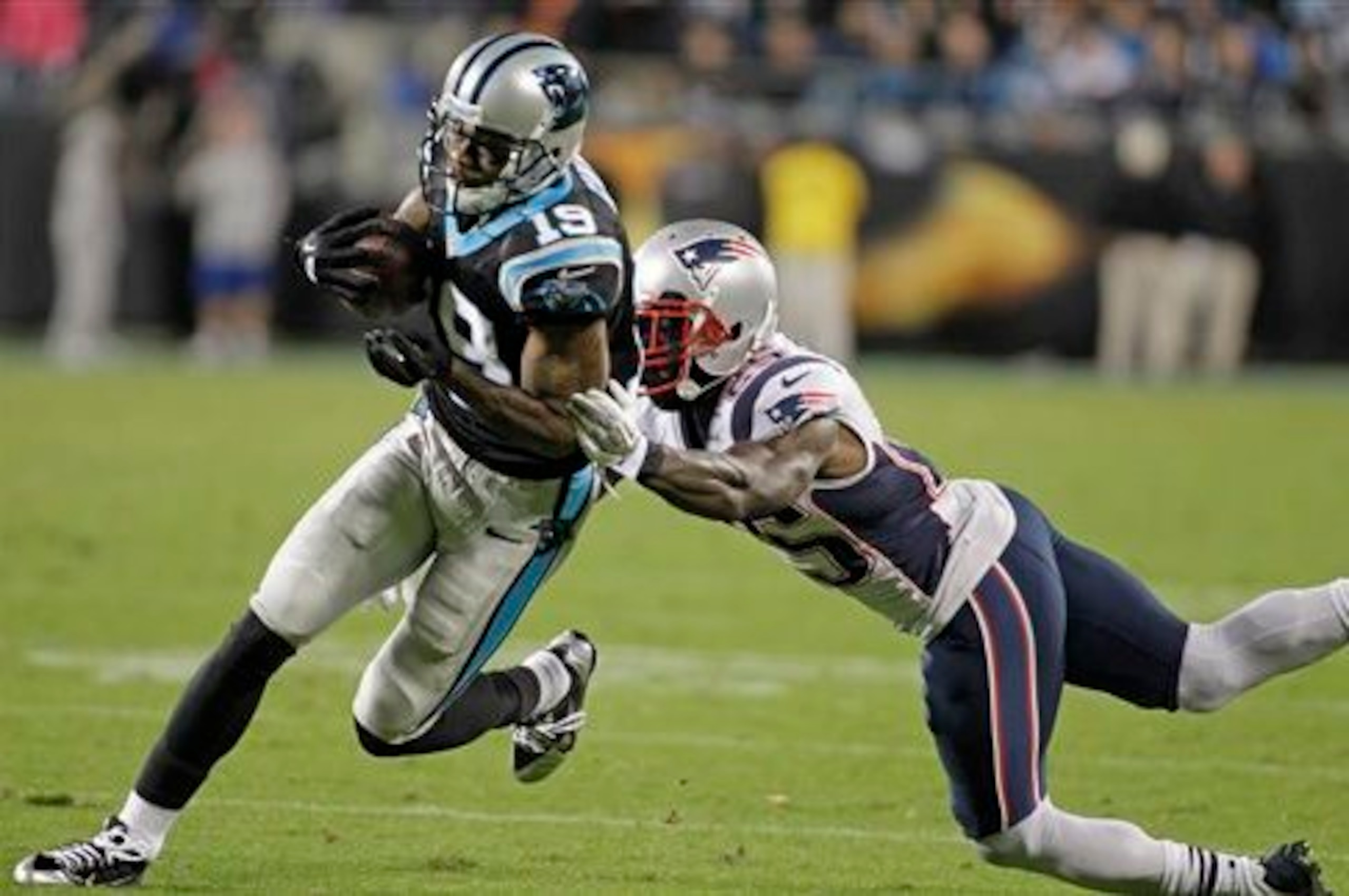
Ted Ginn was brought back as a free agent to try to fill that gap. In 2013, he did quite well with the Panthers, catching 36 passes for 556 yards, his largest total since the beginning of his career in Miami. Ginn’s not a spring chicken anymore, however, and isn’t as fast as he was just two years ago. If he can re-ignite his chemistry with Newton right away, there might be something there, but Ginn has never excelled as a pass catcher.
Philly Brown is the on-roster alternative for a deep threat, with a quarter of his targets happening more than 20 yards downfield. He’s not the fastest guy in the world—he only ran a 4.51 40-yard dash at the combine—but that’s still a full tenth faster than either Benjamin or Funchess. That’s not quite the 4.4 Ginn had as a rookie, but time has taken a tenth off of Ginn’s speed, so that’s actually quite an even matchup. I wouldn’t be so sure that, if all the Panthers are looking for is a deep threat, that Brown can’t beat out Ginn.
But neither Brown nor Ginn are the fastest receiver on the roster. That goes to undrafted free-agent Damiere Byrd out of South Carolina, who is your dark horse to make the roster and contribute in 2015. With all of Carolina’s prime receivers being big, tall, slow guys—at least, comparatively speaking—having a tiny speedster would give variety to the roster and another kind of player to work into the offense. Variety is a good thing to have at the receiver position.
Byrd is just 5’9” and 173 pounds, but he turned in a blistering 4.28-second 40-yard dash at South Carolina’s pro day, according to Gil Brandt. Yes, pro-day times are generally better than combine times thanks to hand-timing, but South Carolina’s pro day was held on grass, which slows down runners. That 4.28-second time is pretty legitimate. He also put up phenomenal performances in the shuttles and cone drills, showing agility and the ability to change direction in a flash.
Byrd was never a major weapon at South Carolina, catching just 68 passes for 1,275 yards over four seasons, but he was productive when he did get the ball. He averaged 18.8 yards per reception over his career at South Carolina. He’s also impressed during the rookie minicamp, according to ESPN, for all that’s worth.
Whether it’s the veteran Ginn, last year’s UDFA Brown or this year’s UDFA Byrd, the Panthers need to find a speedy threat to take the next step as an offensive unit. A speedster, combined with the big targets of Funchess and Benjamin, a continued commitment to the option-based running game and a step forward from the offensive line as a unit, is the best plan for the Panthers’ offense in 2015.
Bryan Knowles is a Featured Columnist for Bleacher Report, covering the Carolina Panthers. Follow him @BryKno on Twitter.
.jpg?w=2560 "Cowboys Giants Football")
.jpg?w=2560 "Grading WWE Raw 🔠")
.jpg?w=2560 "Follow WWE Raw 🇲🇽")
