Early Predictions for Minnesota Vikings' 2015 Training Camp Battles
Minnesota Vikings training camp won't begin for some time yet, but the competition for starting roles has already begun for a number of players working out at the team's facilities.
While rookies such as cornerback Trae Waynes and linebacker Eric Kendricks are busy learning the defensive playbook and becoming comfortable with head coach Mike Zimmer's defense, returning players like wide receiver Charles Johnson are working on perfecting techniques and building team chemistry.
The Vikings may have progressed in 2014, but there are still many areas on both sides of the football in dire need of improvement. Aside from quarterback Teddy Bridgewater and top veterans such as center John Sullivan, safety Harrison Smith and defensive end Everson Griffen, few Vikings players will enter training camp as locks to start Week 1 against the San Francisco 49ers on September 14.
With the additions of Waynes and Kendricks, the competitions for starting roles at cornerback and inside linebacker should be fierce. Minnesota also signed Anthony Harris—who "chose the Vikings with [an] eye on playing time," according to Brian Hall of Fox Sports North—as an undrafted free agent, and his presence should inspire a heated three-way competition for the starting safety spot opposite Smith.
On the offensive side of the ball, the wide receiver depth chart is far from definitive. It is assumed that offseason acquisition Mike Wallace will claim one of the starting outside receiver positions, but the order of the depth chart has yet to be written in ink.
Furthermore, the offensive line, with the exception of Sullivan, is far from set in stone. With at least three Week 1 starters from last season recovering from physical ailments, Day 3 selections T.J. Clemmings, Tyrus Thompson and Austin Shepherd, as well as versatile veteran Joe Berger, will have legitimate opportunities to earn playing time.
As a result, it should come as no surprise when a high volume of Vikings players are in attendance for the optional organized team activities scheduled to begin on May 26.
The competition for starting roles will not officially begin until late July, but early offseason battles are already being fought. Let's take a look at a few spots on Minnesota's depth chart that will likely be determined based on training camp performance later this summer.
5. Safety
1 of 5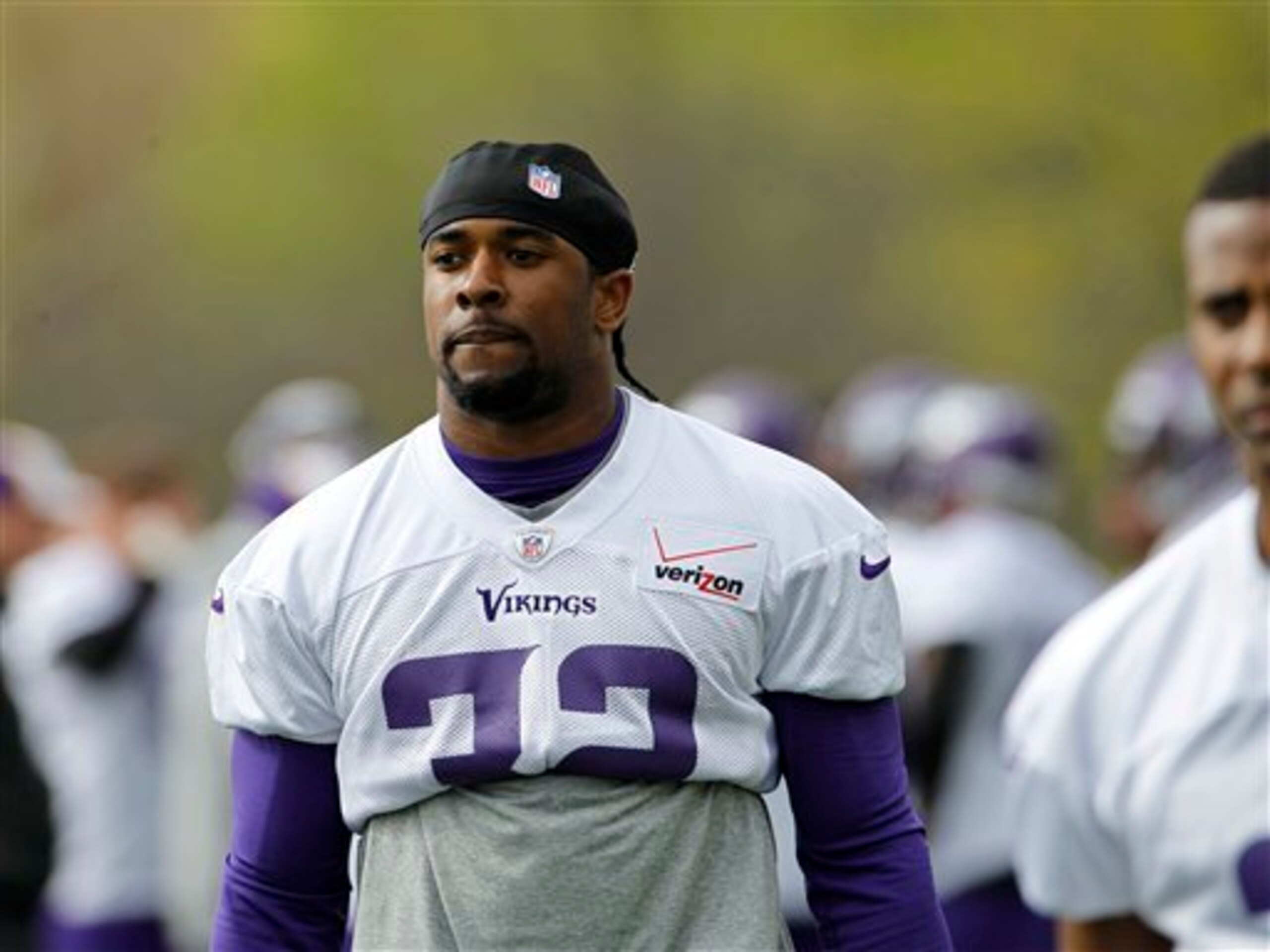
Safety Robert Blanton was very solid opposite Harrison Smith in 2014—according to Pro Football Focus—but his play was not consistent or dominant enough to warrant a guaranteed spot atop the depth chart to begin the 2015 season.
Vikings fans seemingly weren't the only ones displeased with Blanton's performance last season, as Mike Zimmer chose to test Andrew Sendejo in that role against the Chicago Bears during Week 17. Minnesota also brought in former Virginia standout Anthony Harris as an undrafted free agent.
Furthermore, 2014 Day 3 selection Antone Exum—who played almost exclusively on special teams this past season per Pro Football Focus—has received public praise from general manager Rick Spielman.
According to Chris Tomasson of the Saint Paul Pioneer Press, Spielman said the team was "very excited about the progress" Exum has made since joining the team and also noted that the coaching staff will be "keeping a close eye" on the former Virginia Tech defensive back.
Spielman did mention both Blanton and Sendejo in the same breath, but stating, "I think we know what those guys are," doesn't have the same ring to it as his glowing observations of Exum.
While Sendejo shouldn't be discounted, the true competition seemingly appears to be between the incumbent Blanton, the sophomore Exum and the undrafted rookie Harris, whom many analysts considered worthy of a fourth-round draft pick.
Given that Blanton and Exum were with the team in 2014, they should have a rather sizable advantage over Harris. The undrafted defensive back will need to spend countless hours studying Zimmer's defense just to be a realistic candidate in the battle for the open strong safety spot.
Blanton and Exum were both listed as cornerbacks during their collegiate tenures, while Harris, who thrived in zone coverage at Virginia, generally lined up far from the line of scrimmage as a deep safety. Their positions may have differed, but all three athletes possess the same dominant coverage trait and may actually be best suited for the responsibilities of a free safety in the NFL.
Harrison Smith, who is listed at free safety for the Vikings, was not limited to the positional alignment or responsibilities of a free safety in Zimmer's defensive scheme. The Minnesota head coach consistently asked him to line up at both safety spots, meaning his specified position isn't entirely accurate.
It's realistically more precise to refer to the vacant defensive back position as "the safety spot opposite Smith," as opposed to the general term of strong safety. Technicalities aside, there will almost certainly be a heated battle for this spot come training camp, but whether it is between two, three, four or five players remains to be seen.
Taylor Mays, the fourth potential candidate to overthrow Blanton, has the talent and natural ability to make this a five-player competition, but the former USC elite will need to come into training camp as a completely renewed player (since the last time Zimmer saw him) in order to be relevant in more than just the special teams conversation.
4. Cornerback
2 of 5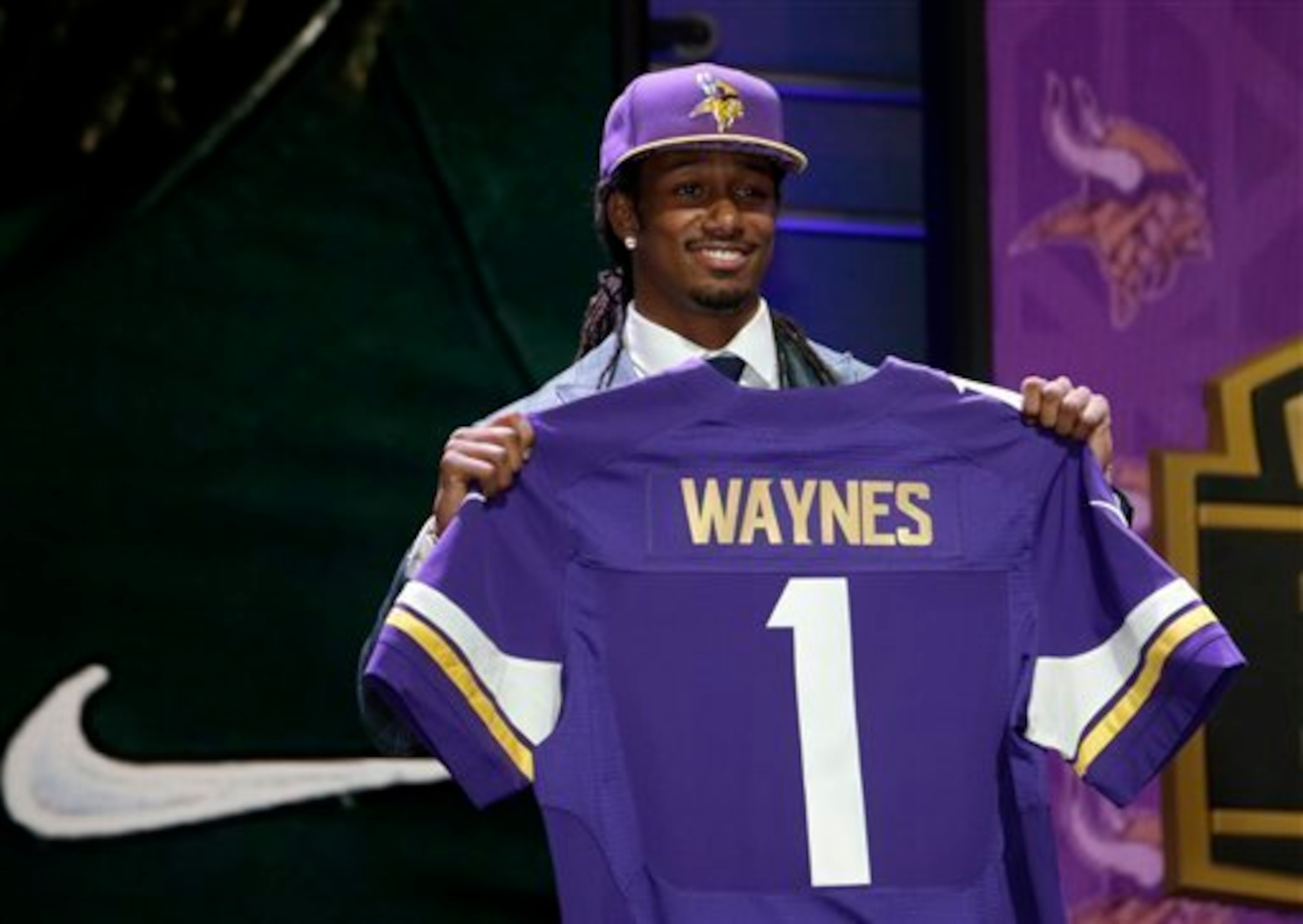
With the offseason signing of veteran Terence Newman, and later the selection of former Michigan State cover man Trae Waynes, the cornerback depth chart in Minnesota has become very crowded.
Xavier Rhodes, who began to put it all together in a big way during his sophomore year last season, stands to be the only guaranteed starter at the position. Josh Robinson and Captain Munnerlyn, who both struggled for extended periods last season, will have to again earn their roles during training camp against potentially the most talented and deep roster of cornerbacks in recent Vikings history.
Waynes, naturally, is the greatest threat of the newcomers. His makeup of high positional intelligence, strong work ethic, ridiculous speed and above-average height forms the Zimmer ideal at the position. The only thing that may hold him back is his unfamiliarity with the playbook, which he apparently is doing a great job of hiding, according to Tomasson.
Because of Waynes' inexperience and unrefined skill set, Newman, a multi-year veteran of the Zimmer defensive scheme, may have the inside track to start Week 1 opposite Rhodes. However, Robinson has athleticism and age on his side, which should close the gap significantly. The 24-year-old 2012 third-round pick is lightning fast, and he actually did a good job getting into position to defend passes in 2014, but his lack of height and timing ability cost him dearly against the NFC North's gigantic pass-catchers.
In addition, Canadian Football League sensation Jalil Carter, the ultra-fast DeMarcus Van Dyke and veteran Shaun Prater will compete for playing time on the outside. While none of these three coverage specialists is truly being given a chance to compete against the aforementioned group—and any one or all of the trio may not even make it to training camp—there is a considerable amount of talent present here, making them worth the mention.
Munnerlyn, who was noticeably better in slot coverage last season, is expected to play this role exclusively in 2015, as the additions of Waynes and Newman effectively relieve him of any need to line up on the outside against physical mismatches. With that said, however, undrafted signee Justin Coleman—who likely is the most talented of Minnesota's class of post-draft signings aside from Harris—could have both Munnerlyn and 2014 seventh-rounder Jabari Price on their heels this coming August.
Coleman, who projects better as a slot cornerback thanks to his size—per Mockdraftable—has plenty of talent and athleticism, but like Waynes, will have unfamiliarity with Zimmer's defense working against him. As a result, Coleman's best-case scenario is likely beginning the 2015 year as a backup. He could potentially replace Price, who has dealt with off-field issues since the regular season concluded.
It is possible that this deep and talented group forces Zimmer to release Newman in favor of a younger (and less NFL-ready) option. The guaranteed money in his contract suggests this is unlikely, but given his advanced age, anything is plausible.
The Vikings kept six cornerbacks on their rest roster to begin last season, according to Ourlads, but even this extensive total leaves three current Vikings without a team to begin the NFL season. Cutting Marcus Sherels, who is essentially just a glorified returner, Van Dyke and Prater would allow both Carter and Coleman to make the 53-man roster (in the event Zimmer keeps six cornerbacks), but Prater's status as a veteran likely demotes Coleman to the practice squad, barring a completely unexpected star training camp performance.
With nine talented cornerbacks currently listed on the 90-man roster, Zimmer, defensive backs coach Jerry Gray and the rest of Minnesota's defensive decision-makers will have multiple difficult calls to make regarding the cornerback depth chart.
3. Offensive Guard
3 of 5
With Minnesota's defensive secondary battles established and outlined, it's time to shift to arguably the most pressing issue on the depth chart—offensive guard.
Charlie Johnson is gone, and he isn't coming back. There was a gaping hole at left guard whether he was on the roster or not, but his departure has made it easier to see, especially prior to the results of the NFL draft.
Rick Spielman seemingly had the option to spend top dollar on an elite free-agent guard, but Minnesota's general manager elected not to get involved in a Clint Boling bidding war. This resulted in the Vikings' guard depth chart featuring Brandon Fusco—who missed the majority of this past season with a torn pectoral per Matt Vensel of the Minneapolis Star Tribune—starting on the right side and 2014 fifth-round selection David Yankey starting on the left with veteran Joe Berger listed as the backup to all three interior line positions.
This naturally raised some concerns. Following his selection, Yankey was tabbed as a bit of a project, but the constant reference to his lack of strength by Minnesota's head coach—per Tomasson—made the proposition of him starting Week 1 against a then-dangerous San Francisco 49ers front sound like a disaster waiting to happen.
In addition to Yankey starting at the guard spot opposite a currently rehabbing Fusco, it is not an absolute certainty starting right tackle Phil Loadholt, who suffered a similar injury to Fusco later on in the 2014 season, will be able to return for Week 1 action. While the likelihood of him being healthy by early September is probable, the sheer possibility of having another replacement player starting is enough to sound the alarm.
Add in the Vensel report that starting left tackle Matt Kalil had offseason arthroscopic surgery on both of his knees, and Teddy Bridgewater looked as good as dead prior to the NFL draft.
In a worst-case scenario, Minnesota's Week 1 starters on the offensive line would hypothetically have been Carter Bykowski, Yankey, John Sullivan, Joe Berger and Michael Harris. This is logical reason to panic.
Spielman, in his own way, did ultimately mask these concerns with a barrage of Day 3 offensive line selections. The first, and most promising, of the additions was Pittsburgh's T.J. Clemmings, who some analysts valued as a first-round pick before the circulation of injury rumors began.
Minnesota also added Oklahoma's Tyrus Thompson in the sixth round (another player who could have been drafted much higher) and Alabama's Austin Shepherd in the seventh round. All three players played tackle at the collegiate level, but at least Clemmings and Shepherd will begin their professional careers rotating in with the guards as well.
The recovery reports lately have seemingly been far more optimistic as well, which certainly helps ease the nerves of the Minnesota faithful. Recently, Zimmer reportedly told the media that Fusco could be effective at left guard, which he supplemented with the idea of the massive Clemmings being a potential candidate to start on the right side.
Clemmings is a raw talent who played two subpar seasons as a defensive lineman before shifting over to right tackle, which may have been the best thing to ever happen for his career.
In theory, forcing the veteran Fusco to learn the mirror image of his movements would yield better results than asking Clemmings to learn both an interior line position as well as a mirrored technique. It's certainly makes sense on paper, and NFL Network's Mike Mayock has adamantly argued in favor of the the 6'6" Pittsburgh product beginning his professional career at guard.
Simply, this is only one solution as to who starts where along the interior line, and it also doesn't account for the unlikely possibility of Loadholt missing time to begin the season. With so many possible "fix it" scenarios and a multitude of injury rumors floating around, the offensive line competitions—specifically at guard—should be thrilling.
The unpredictable nature of this competition to see who can best keep Bridgewater upright could ultimately result in an offensive line that nobody could have ever seen coming.
.jpg?w=2560 "Packers Vikings Football")

2. Inside Linebacker
4 of 5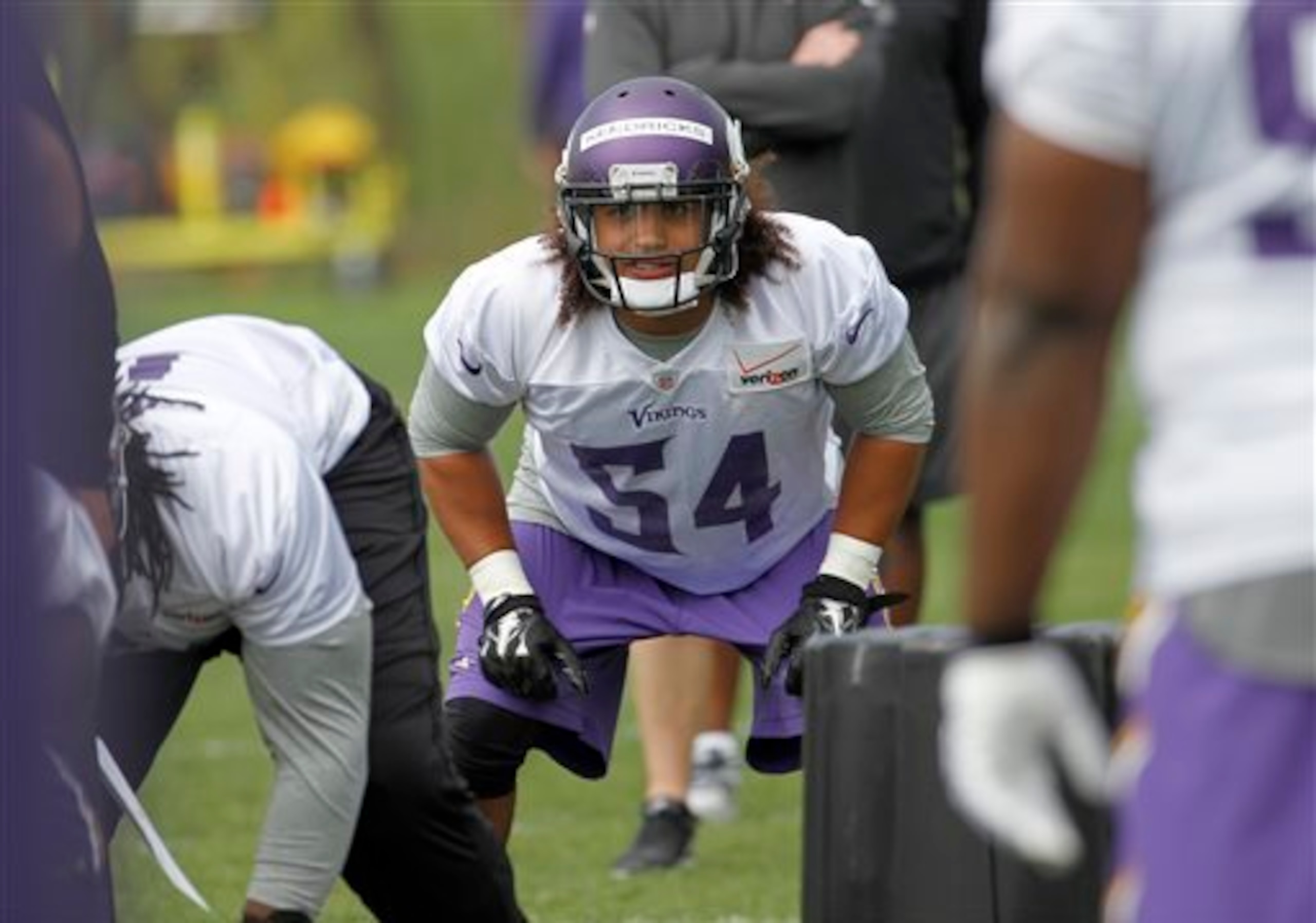
Strong offensive guard play can be very helpful—as proven by the Baltimore Ravens' All-Pro Marshal Yanda—but it is also a position that is inherently less valuable. The consensus responsibilities of a guard simply don't affect games at the same level that any other position (special teams excluded) does.
With that said, figuring out the best possible scenario at guard is key for Minnesota, but the impact of dynamic inside linebacker play could prove revolutionary. Mike Zimmer may not have used his 2014 starting middle linebacker Jasper Brinkley much last season, but Brinkley did not (and still does not) have the three-down capabilities of Eric Kendricks, Gerald Hodges or even, to some extent, Audie Cole and Casey Matthews.
Michael Mauti, the injury-prone Penn State product, rounds out the top five likeliest candidates for the job, but Brandon Watts, who had issues staying healthy throughout his rookie season, may also be given "test snaps" as well.
Of the six linebackers listed, Hodges and Watts are the most unlikely to be handed the starting gig. Hodges, who was successful when given the opportunity in 2014, has the ability to make a great impact at weak-side linebacker and almost certainly will be spending most of his training camp competing for that position against Chad Greenway.
Watts, similarly, has a skill set better geared toward an outside linebacker role, and he isn't nearly refined enough mentally or technically to play full-time at a key leadership position.
This leaves Kendricks, Cole, Matthews and Mauti as the main contestants for the starting middle linebacker spot. Mauti doesn't possess the athleticism (especially following his numerous injuries) to truly compete with the remaining trio, and he likely is a strong candidate to be cut altogether. His consistency on special teams may save him from that fate, however.
Cole, the only true candidate with experience playing in Zimmer's 4-3 scheme, should enter training camp at the top of the depth chart. Kendricks—and Matthews, for that matter—will be at a disadvantage to start because of their inexperience playing in the system, but Kendricks has the intelligence and work ethic to make up ground quickly.
Kendricks' 6'0", 235-pound frame raises some concerns, but—as reported by 1500 ESPN's Andrew Krammer—this isn't a concern of either Zimmer or the former UCLA standout.
Matthews should be expected to fizzle out at some point because of his lack of a dynamic skill set, especially when compared to his competition. In fact, Matthews may not even have a spot on the 53-man roster after the selection of Kendricks and presence of Cole.
Kendricks' instincts and coverage ability will allow Zimmer more chances to be creative—particularly in third-and-long situations—representing yet another major reason he should be favored to win the job over Cole.
This is essentially a mano-a-mano position battle with a couple players stealing snaps, and the former UCLA captain should win in a landslide, barring injury.
1. Wide Receiver
5 of 5
If nothing else, Minnesota's process of ordering its wide receiver depth chart will be extremely entertaining for its fans. With few facts and a grocery list of unknowns, there is a seemingly infinite number of ways this depth chart could look come Week 1.
There isn't a definitive No. 1 go-to option among the 11 wide receivers currently listed on the 90-man roster, but there are multiple candidates with the potential to become one.
Mike Wallace, who essentially was a subpar No. 1 receiver for the Miami Dolphins, has elite speed and the perfect skill set for offensive coordinator Norv Turner's offensive strategy. He is the most sure thing the Vikings have at wide receiver.
Cordarrelle Patterson, the once popular breakout candidate for the 2014 season, has the size, speed, elusiveness and overall athletic ability to be a No. 1 target. Unfortunately, his lack of refinement, positional intelligence and "want to" have held him back to date. All of these elements will be put to the test at the end of the summer, as Patterson—according to Hall and Tomasson—has been training diligently this offseason in order to engineer a bounce-back year.
It has admittedly become a bit of an "I'll believe it when I see it" type of thing, but in the midst of praising Patterson for his hard work this spring, Zimmer mentioned a noticeable improvement in his route running, per Hall.
Charles Johnson, a former seventh-round pick of the Green Bay Packers and Cleveland Browns practice squad member, burst onto the scene with his elite speed and separation skills. While he has the size, speed and athleticism to become the first No. 1 wide receiver drafted in the seventh round since Marques Colston, he lacks the physical "my ball" playing style that receivers his size (6'2", 215 lbs) generally invoke.
Jarius Wright, a relatively small wide receiver who has shown an expansive route tree, an ability to turn in game-breaking plays from the slot or the outside and versatility in a variety of different formations, enters a contract year in 2015. He doesn't have the size to meet the stereotype of a No. 1 wide receiver, but he has talents similar to both Steve Smith and Wes Welker; he just needs to show some consistency.
Outside of the consensus top four targets, Minnesota's depth chart hosts a variety of interesting subjects.
Stefon Diggs, a former 247Sports 5-star recruit and Maryland standout, has a Percy Harvin-like skill set without the dysfunctional personality. He, like Patterson, could use some refinement, but he plays physical with a chip on his shoulder. One can only wonder what round he may have been drafted in had he chosen a better college situation and/or played out his college eligibility.
Jordan Leslie, a 6'3", 215-pound monster who possesses above-average speed and an outstanding leaping ability, looks the part of the red-zone receiving threat Minnesota desperately needs. He forecasts as a fairly significant project, however, and the competition he played against in college at BYU was subpar to say the least.
Adam Thielen, "Mr. Mankato" and Vikings fan favorite, has the work ethic, motor and fundamentals to get the job done when called upon, but there is nothing truly dangerous about him. If it weren't for his elite special teams play, both as return man and coverage specialist, he would probably be a strong candidate for release.
The remaining four receivers are headlined by former Notre Dame standout DaVaris Daniels. He was developing into one of the most dangerous targets in college football before his college career was cut short by two significant academic suspensions. He flashed plenty of talent during his short tenure with the Irish, but his skills likely have diminished significantly after being out of football for a couple of years.
Donte Foster, Gavin Lutman and Minnesota Gophers standout Isaac Fruechte each possess one or two desirable traits, such as Lutman's height (6'4") or Foster's leaping ability (42")—per NFL Network draft analyst Lance Zierlein and Scout NFL Network analyst Dave-Te' Thomas—but all three would be surprise additions to the 53-man roster.
Not one of these three athletes possesses the all-around ability necessary to compete at the NFL level.
The Vikings may not have a definitive No. 1 wide receiver heading into the 2015 season, but they could have one by the time it's over, as there are multiple players on this list—specifically Wallace, Patterson and Johnson—who possess top-tier talent.
At this point in the offseason, however, there is just too much unknown regarding their year-to-year progression.
Both Patterson and Johnson could, in a perfect world, come into camp this season with their flaws ironed out, as their inadequacies can be fixed through good coaching and plenty of practice. On the other hand, it's far more realistic to suggest the exact opposite.
Assuming this to be the case, the competition for the No. 2 spot on the depth chart, presumably behind Wallace, will be far more interesting.
Prior to the Wallace trade, Turner reportedly spoke with ESPN Cleveland's Tony Grossi about Johnson's level of talent, referring to him as "far-and-away our best receiver." As secretive as this comes off, Turner has been very vocal about his impression of Johnson, which has led to him being widely considered Minnesota's No. 2 receiver.
There were times last season when it was hard to disagree with Turner's perception, but there were also moments that could lead one to believe the Vikings offensive coordinator is a little biased due to Johnson being a wide receiver he brought over to the organization.
Simply, Minnesota's wide receiver depth chart possesses a truckload of potential and a variety of rare skill set combinations. But—and this is a very big but—there isn't any guarantee of these players maximizing their potential. Without knowing where each wildly talented player stands following his offseason training, it's impossible to project who will line up across from Wallace at Levi's Stadium when September 14 rolls around.
Statistics courtesy of Sports-Reference.com, unless otherwise noted.
Find me on Twitter @RobertReidellBT to talk some Vikings football.

.jpg?w=2560 "Daniels Reacts to Diggs' Penalty")