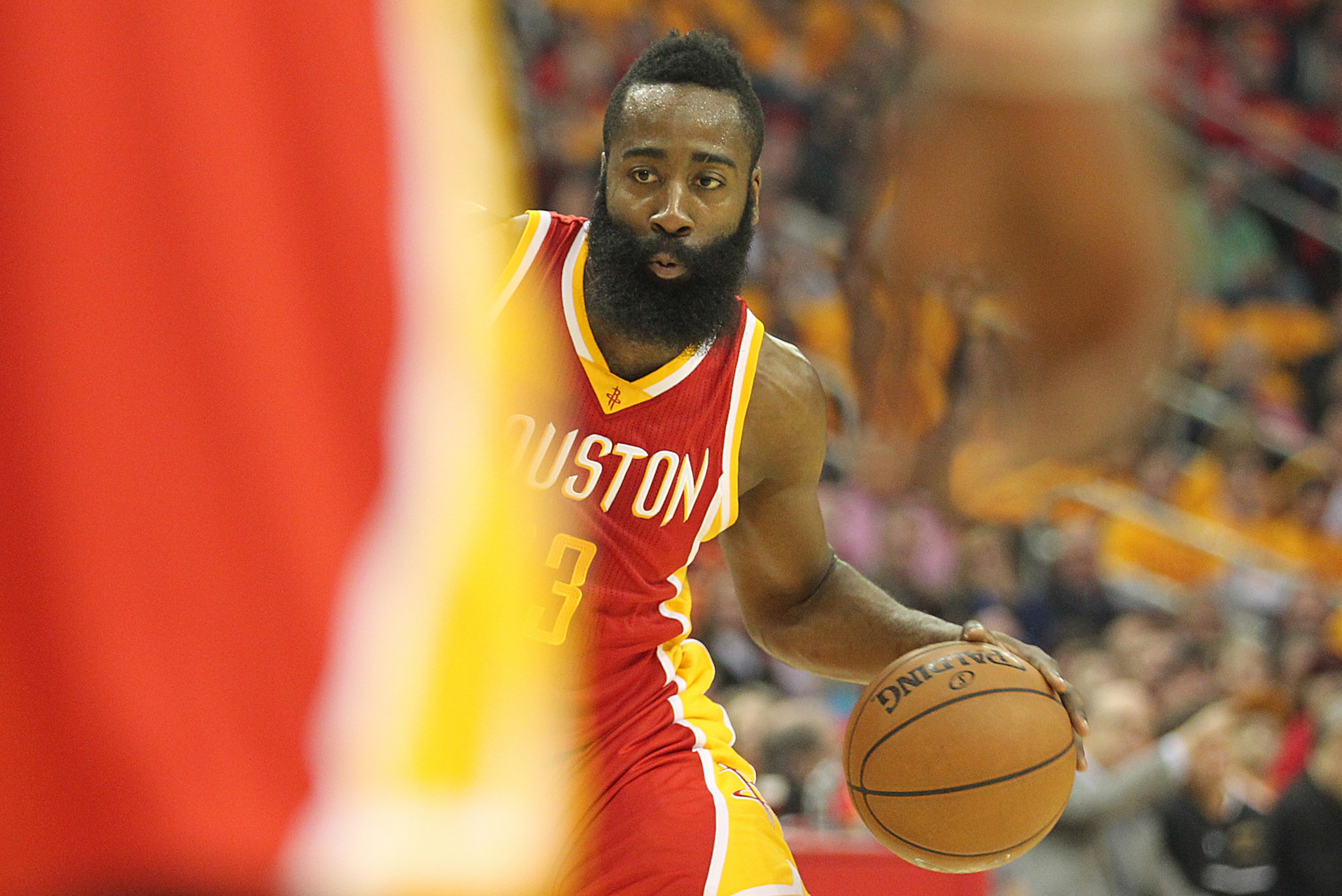

B/R NBA 200: Ranking NBA's Best Players of 2014-15 Season
Are the battles for positional supremacy fun and entertaining? Of course.
Debating between Stephen Curry and Chris Paul at point guard is always interesting, and the same can be said for DeMarcus Cousins, Marc Gasol and the rest of the best centers. But we're no longer interested in comparing players to others who suit up at the same spot.
In this final installment of the series, we're mixing them all together. The grades haven't changed, but it's now harder to finish at the very top.
The NBA 200 metric identifies the players who performed best during the 2014-15 season. Potential doesn't matter, and neither does reputation. It's all about what happened this season, and this season only. All positions are graded using the same criteria (rim protection was added into the equation for bigger positions), but the categories are weighted differently to reflect changing roles.
- Scoring
- Non-Scoring Offense: Facilitating and Off-Ball Offense
- Defense: On-Ball, Off-Ball and Rim Protection
- Rebounding
- Intangibles: Conduct and Durability
For a full explanation of how these scores were determined, go here. And do note these aren't your father's classification schemes for each position. Players' spots were determined by how much time they spent at each position throughout the season, largely based on data from 82games.com and Basketball-Reference.com, and we're expanding the traditional five to include four combo positions.
In the case of ties, we determined order in subjective fashion by ranking the more coveted player in the higher spot. That was done by a voting committee comprised of myself, two National NBA Featured Columnists (Grant Hughes and Dan Favale), two Associate NBA Editors (Ethan Norof and Joel Cordes) and an NBA Quality Editor (Jacob Bourne).
Note: All statistics come from Basketball-Reference.com unless otherwise indicated. In order to qualify for the rankings, players must have suited up in 20 games through March 10, the date of data collection. Text in this article is taken from the positional rankings, which are linked below.
Point Guard Rankings can be found here.
Combo Guard Rankings can be found here.
Shooting Guard Rankings can be found here.
Swingman Rankings can be found here.
Small Forward Rankings can be found here.
Combo Forward Rankings can be found here.
Power Forward Rankings can be found here.
Combo Big Rankings can be found here.
Center Rankings can be found here.
Notable Injured Players
1 of 97
In order to qualify for the rankings, players needed to suit up at least 20 times and spend 400 or more minutes on the court by March 10, the date of data collection.
That means that a few superstars were left out of the rankings, as well as a handful more notable players. Pinpointing where they would've ranked had they remained healthy is a futile task, but they deserve mention nonetheless.
With the qualifications out of the way, the following players would've had a solid chance of making the NBA 200, though nothing is actually guaranteed:
- Joel Embiid
- Paul George
- Josh McRoberts
- Julius Randle
- Ricky Rubio
200-196: Millsap, Jerebko, Young, Johnson, Boozer
2 of 97
200. Elijah Millsap, Utah Jazz
There's always a place in the league for a player who goes to work with enthusiasm on the defensive end. Elijah Millsap knows that tool is what got him out of D-League purgatory, and he's doing his best to prove it to everyone he's matched up against. But still, it should be rather telling that his overall grade is so low despite being tied for the highest point-preventing grade of any player in the B/R NBA 200.
199. Nick Young, Los Angeles Lakers
This season was a disaster for Nick Young, who was unable to do anything on the court that justified his habit of making boastful statements to the media. Without his shot falling from all areas of the half-court set, he simply didn't make an impact in enough areas to be a truly valuable player, even if his defense was better than expected.
198. Wesley Johnson, Los Angeles Lakers
Wesley Johnson was very much a role player for a struggling Los Angeles Lakers organization, but he failed to bring as much to the table as he should have. Normally, he's a bit more potent from the outside and can spend more time in front of his man. Without either of those tools at his disposal, he was receiving minutes more out of necessity than anything else.
197. Carlos Boozer, Los Angeles Lakers
Remember when Carlos Boozer was an All-Star? His last such honor came back in 2008, which now seems like an eternity ago. After all, Boozer has been declining for a while, and his playing time did the same during his first season with the Lakers. Even though he's only 33 years old, boasting the same bald-head-and-beard combination, he's not even close to the player he was in his prime.
196. Ersan Ilyasova, Milwaukee Bucks
Ersan Ilyasova certainly doesn't seem like the versatile future star of years past. There are no longer double-doubles popping up with extreme frequency, and he remains woefully inadequate on the defensive end—except when protecting the basket from close range. But fortunately for the Turkish forward, his returned shooting stroke salvaged some semblance of value, allowing him to continue receiving steady minutes when healthy.
195-191: Teletovic, Watson, Olynyk, Zeller, Clarkson
3 of 97
195. Mirza Teletovic, Brooklyn Nets
Though Mirza Teletovic didn't find as much success from downtown as he has in the past, improvements in other facets made him more of an asset for the struggling Brooklyn Nets. His work protecting the rim was solid, and the same can be said about his rebounding. He's still a three-point specialist, but at least Teletovic can make minor contributions in other areas now.
194. C.J. Watson, Indiana Pacers
C.J. Watson held his own for much of the year, running the show for the Indiana Pacers until George Hill was able to take the reins. But he was rarely anything more than a placeholder, remaining steady in most areas without standing out in either a positive or negative manner. Perhaps the biggest benefit of all is that he knows exactly what he's capable of and rarely tries to do too much.
193. Kelly Olynyk, Boston Celtics
Kelly Olynyk is clearly making strides in the right direction, but fundamental flaws in his game prevent him from looking like much more than a middling big man. When his three-point stroke is more reliable, he's more active on the glass and his on-ball defense catches up to his off-ball work and rim protection, he'll rocket up these rankings.
192. Cody Zeller, Charlotte Hornets
Still fighting to justify the No. 4 pick Charlotte used on him, Cody Zeller is starting to improve but still has a long road ahead. The 22-year-old big man looked much more comfortable lofting up shots from deep mid-range zones, which bodes well as he continues to expand his offensive arsenal in years to come.
191. Jordan Clarkson, Los Angeles Lakers
It appears as though Jordan Clarkson could emerge as a draft-day steal. He slipped past 15 teams in the second round before the Los Angeles Lakers snatched him up in 2014, and he used the team's dearth of talent to assert himself as a capable rotation guard. Clarkson needs to improve his defensive discipline and willingness to pass the rock if he's going to get minutes when the Lake Show are more competitive, but he has the upside necessary to stick around for a while.
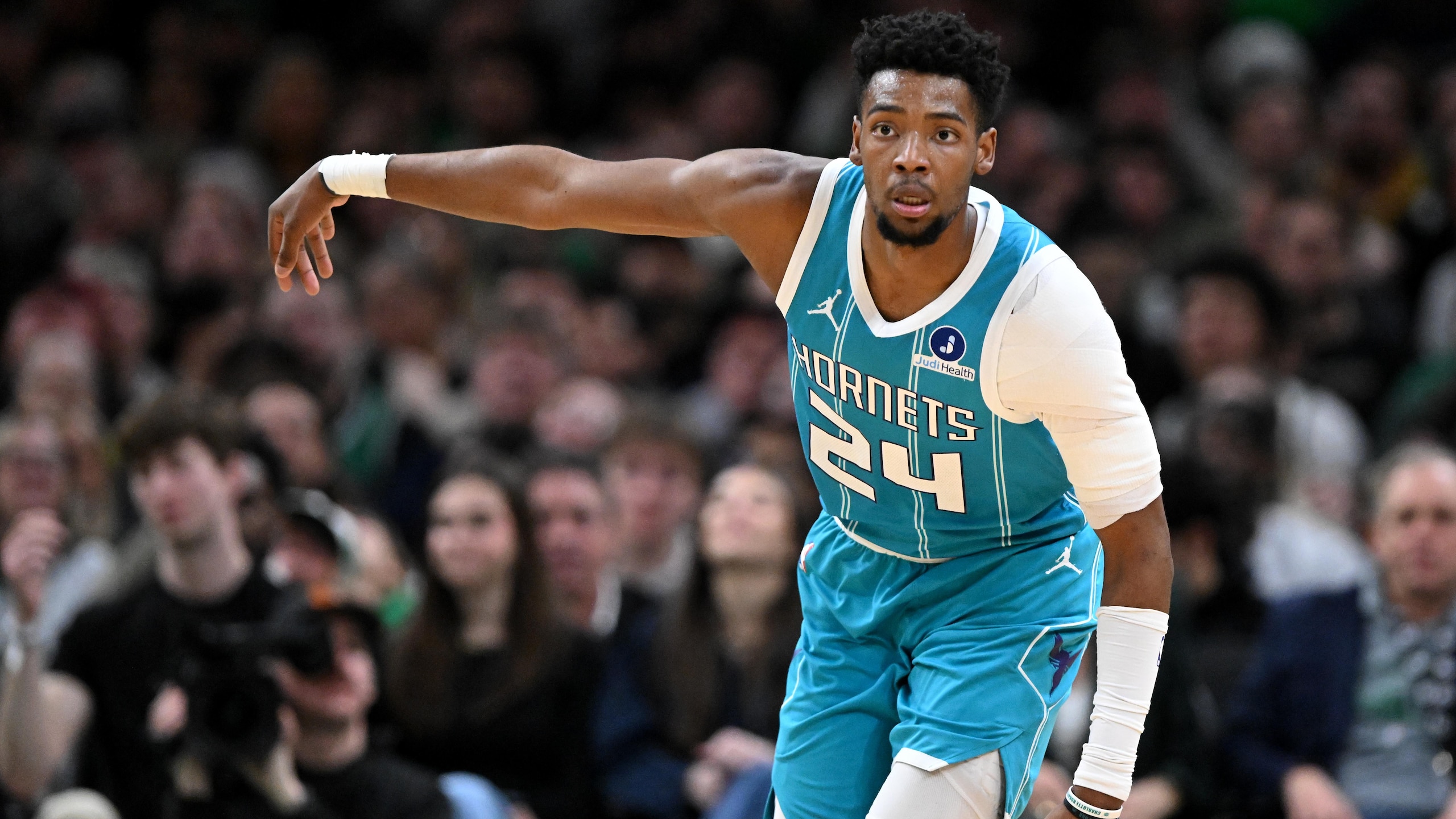
190-186: Aminu, Miles, Muhammad, Splitter, Nurkic
4 of 97
190. Al-Farouq Aminu, Dallas Mavericks
A defensive specialist through and through, Al-Farouq Aminu is strong enough on that end that he still registers as a top-200 player. It also helps that he does good work on the glass and stayed healthy throughout the season, though improving some facets of his offensive game would certainly elevate his standing even further. And by "some," I mean "all."
189. C.J. Miles, Indiana Pacers
Thanks to the many injuries suffered by seemingly everyone on the Indiana Pacers roster, C.J. Miles was thrust into a role too large for his talents. He did a decent job trying to fit in with his defense-first teammates and provided a nice scoring boost when his shot was falling, but he still belongs in a more minor role.
188. Shabazz Muhammad, Min. Timberwolves
It's not hard to see the potential here. Shabazz Muhammad is an athletic wing player with a potent jumper and strong post-up game, even if he's still adjusting to the professional game. If he can become less of a liability on the defensive end, stay healthy and figure out some way to function as anything other than a black hole when he has possession, he'll stick in this league for quite some time.
187. Tiago Splitter, San Antonio Spurs
Normally, Tiago Splitter is going to end up much higher in the rankings. Those balky calves cost him plenty of production, and not just in terms of missed games. He wasn't nearly as effective on defense or the boards as he typically is, and his scoring ability stagnated as well.
186. Jusuf Nurkic, Denver Nuggets
Jusuf Nurkic has the mentality of a star. He's unafraid of just about any matchup, to the point that he's willing to talk some trash after he makes a good play against a more established center. But his game doesn't exactly scream stardom at this stage of his career, and it won't until he becomes much more consistent on the offensive end.
185-181: Tucker, Brewer, Allen, Freeland, Seraphin
5 of 97
185. P.J. Tucker, Phoenix Suns
While P.J. Tucker spent the 2013-14 season excelling in obscurity, he failed to shine during the follow-up campaign. Suspensions for his poor decisions led to a rough beginning, and he never found his perimeter stroke or truly settled in on the defensive end, thereby limiting himself in two of his strongest areas. Fortunately for the Phoenix Suns, he'll now be trying to redeem himself next season while on a reasonable contract.
184. Corey Brewer, Houston Rockets
Whether he was with the Minnesota Timberwolves or Houston Rockets, Corey Brewer was basically the same player. He took risks on defense and needed rim-protecting presences to clean up behind him. Additionally, he thrived when he was able to get out and run in transition or attack the hoop in the half-court set.
183. Lavoy Allen, Indiana Pacers
Lavoy Allen is by no means a glamorous player, but he's a physical presence who thrived as an interior defender in 2014-15. He's always been an asset on the defensive side of the ball, but playing alongside so many other quality point-preventing presences brought out the best of him in that area. Just don't expect much offense out of this 26-year-old big.
182. Joel Freeland, Portland Trail Blazers
Though Joel Freeland doesn't spend much time on the court, he sticks to what he's good at. Whenever Terry Stotts calls out his number, he's going to provide a nice boost for Rip City with his work on the glass, his physical defensive play—especially right around the basket—and his tough screens. Self-awareness is a skill, and Freeland has it.
181. Kevin Seraphin, Washington Wizards
Kevin Seraphin flew under the radar for much of the year, as he doesn't provide many glamorous contributions. But between his deadly mid-range game, his athleticism and his work protecting the rim from the opposition's constant assaults, he was surprisingly valuable to the Washington Wizards in some areas. And lest we forget, this center is still only 25 years old, even if it feels like he's been around for much longer.
180-176: Ross, Leonard, Lin, Morris, Johnson
6 of 97
180. Terrence Ross, Toronto Raptors
Terrence Ross may not be progressing like the Toronto Raptors—and head coach Dwane Casey, who has consistently given him plenty of opportunities to succeed—may have hoped, but at least he has some tangible skills. He's a strong marksman from the outside who helps space out a defense, and he can be an asset in some point-preventing situations. His isolation work, for example, was strong all year.
179. Meyers Leonard, Portland Trail Blazers
Meyers Leonard, still just 23 years old, appears to have a high ceiling, even if he's still plodding away in a minor role for Rip City. He may not have taken many shots this year, but he still put up a 50/40/90 split, indicating that he can be a stretchy big man with skills from all over the court. And while he was a horrific defender outside the paint, he was a dominant rim-protecting presence, which gives him even more value.
178. Jeremy Lin, Los Angeles Lakers
We're a long way removed from Linsanity. Jeremy Lin is still a capable pick-and-roll ball-handler, but it's abundantly clear that he needs to be in the perfect situation in order to look like anything other than a decent backup or bottom-tier starter. He just doesn't bring enough to the table when his shots around the hoop aren't falling with unsustainable frequency.
177. Marcus Morris, Phoenix Suns
Clearly the lesser of the Morris twins, Marcus has some skills that still make him an intriguing player. Though not quite an asset on the glass, he's not a liability while playing either forward position. His three-point range and shot-creating ability make defenses have to actively think about slowing him down. He's far from being a star, but he's certainly a forward well worth rostering for a competitive squad.
176. James Johnson, Toronto Raptors
Would James Johnson have fared better if Dwane Casey didn't suddenly start keeping him on the bench during the middle of the season? Probably, as that stretch of inactivity kept him from building on his early-season momentum, which had seen him become a more dangerous contributor on the offensive end.
175-171: Morrow, Smart, Koufos, Payton, Stuckey
7 of 97
175. Anthony Morrow, Oklahoma City Thunder
A specialist through and through, Anthony Morrow can avoid being a liability on defense some nights, but the vast majority of his value comes from beyond the arc. He's one of the best shooters in the NBA, lofting up plenty of attempts and hitting at an impressive clip, which adds a new element to the Oklahoma City Thunder offense. Even on the rare occasions that his shot isn't falling, it's not as if defenses can ignore him on the wings.
174. Marcus Smart, Boston Celtics
The potential is there, and it isn't particularly hard to see, though Marcus Smart's inexperience shows up as a scorer and when working against more nuanced offensive sets from the opposition. The Boston Celtics should have confidence they've found a high-quality point guard for the future, but there will be plenty of growing pains as he continues transitioning to the style of play in the Association.
173. Kosta Koufos, Memphis Grizzlies
This 26-year-old 7-footer is never going to be a star or a starter on an above-average team. His offense is far too limited for that, as he's forced to rely on strong positioning just to avoid being a liability. But Kosta Koufos is a consistent presence who thrives on the defensive end, and that has allowed him to remain a key part of the Memphis Grizzlies rotation, minimizing the point-preventing drop-off when Marc Gasol goes to the bench.
172. Elfrid Payton, Orlando Magic
Elfrid Payton definitely progressed as the season did the same, developing as a mediocre scorer and impressive distributor. He likely won't be remembered down the road as having one of the NBA's better rookie seasons, but when his defense comes around—and it will—that won't matter.
171. Rodney Stuckey, Indiana Pacers
Rodney Stuckey isn't exactly an ideal top scoring option, as he's far better serving as a bench spark. But that's the situation that Indiana's injuries often forced him into, and he performed fairly well at times. Unfortunately, that was only on the offensive end, as his defense didn't exactly fit in with the point-preventing stylings of the Indiana Pacers.
170-166: Martin, Mbah a Moute, Bayless, Burke, Varejao
8 of 97
170. Kevin Martin, Minnesota Timberwolves
Kevin Martin is very much a specialist now. He's a tremendous scorer, but that's only one aspect of the game—there's so much more that goes into how those points are recorded than just the shooting that gives a player credit for scoring them. Martin has one of the league's largest disparities between the oft-misleading points-per-game stat and his overall value, thanks to abhorrent defense and a lack of impact in almost every other area.
169. Luc Richard Mbah a Moute, Phi. 76ers
The 28-year-old Luc Richard Mbah a Moute isn't just a veteran presence on the young Philadelphia 76ers roster. He's a standout defender who helped Brett Brown's squad develop into a mediocre unit on that end of the floor. He's also an adequate rebounder, even if he needs to focus more on the transition game rather than spend much of his time fruitlessly chasing caroms.
168. Jerryd Bayless, Milwaukee Bucks
When Jerryd Bayless is hitting his looks, he's a valuable commodity. Not too many guards bring his style of shot-creating ways to the table, and there certainly aren't many other presences like that in Milwaukee. But even when he's on, the Bucks have to live with his inability to contribute in many other areas, which severely limits his overall value.
167. Trey Burke, Utah Jazz
At this point, it's safe to say that the Utah Jazz have to be feeling a bit disappointed with what they've gotten from the No. 9 pick of the 2013 NBA draft, especially now that he's been moved into a bench role. Trey Burke has progressed to the point that he's a quality distributor who can hold his own in on-ball defensive situations, but the predraft comparisons to a poor man's Chris Paul—from yours truly, no less—are looking far from clairvoyant.
166. Anderson Varejao, Cleveland Cavaliers
Before he went down, Anderson Varejao was essentially a role player for the Cleveland Cavaliers. He used his tough screens and efficient but limited scoring while trying to make a defensive impact in areas away from the rim. The 32-year-old just can't stay healthy, though, and that's making it increasingly hard to think he's anything but far past his prime.
165-161: Vasquez, Kaman, Dunleavy, Green, Pekovic
9 of 97
165. Greivis Vasquez, Toronto Raptors
Greivis Vasquez's ability to play both guard positions came in handy when DeMar DeRozan was missing time early in the season, but he still had a fairly disappointing campaign. A floor-spacing shooter who can force defenses into paying attention to him, the Maryland product didn't bring enough to the table in order to mask his defensive inability on a regular basis.
164. Chris Kaman, Portland Trail Blazers
Quite obviously past his athletic prime, Chris Kaman is still a skilled big man who can provide quality production in the right system. He's a deft finisher around the basket who can ambidextrously put the ball through the twine in a limited role, and he was solid when asked to protect the rim. Unfortunately, that's about where the major positives dry up.
163. Mike Dunleavy, Chicago Bulls
Mike Dunleavy is one of those guys who's more important than the numbers give him credit for. Chicago's offense was significantly better with him on the court, if for no other reason than his ability to space out a defense and allow for single coverage and easier driving lanes. In some ways, it's a shame that Dunleavy is already 34 years old, because this newfangled NBA is becoming an increasingly strong fit for his skill set—when he's healthy, at least.
162. Gerald Green, Phoenix Suns
Last season, Gerald Green was one of the league's most underrated players. He was more engaged defensively, and the combination of his elite athleticism and three-point marksmanship made him into a dangerous and confident offensive commodity. But in 2014-15, he failed to replicate his breakout campaign, looking far more like the version of himself that previously struggled with the Indiana Pacers.
161. Nikola Pekovic, Minnesota Timberwolves
Even if Nikola Pekovic recovers fully from his debridement surgery, the Minnesota Timberwolves have to be kicking themselves for giving him a five-year, $60 million deal in the summer of 2013. It's looking like he'll be playing with an albatross of a contract, as he's failed to improve on the defensive end and is slipping on offense when healthy.
160-156: Mayo, Hill, Speights, Schroder, Thomas
10 of 97
160. O.J. Mayo, Milwaukee Bucks
Though O.J. Mayo has value as an offensive spark off the bench who's at least going to try on defense, it's hard to get particularly excited about his contributions to the Milwaukee Bucks. After all, the team was outscored while he was on the court and did the outscoring while he kept the pine warm, which isn't just a reflection on the four players who accompanied him when Jason Kidd called his number.
159. Jordan Hill, Los Angeles Lakers
On a better team, Jordan Hill would be an asset. He's miscast as a top player on a talent-devoid Los Angeles Lakers bunch, but his ability to crash the boards with ferocity and score in a variety of ways would look quite nice if he was a complementary piece. If all goes according to plan in Tinseltown, that's the type of role he'll be filling next year after a strong offseason.
158. Marreese Speights, Golden State Warriors
Marreese Speights was quite valuable as a sixth man for the Golden State Warriors, coming off the pine and providing immediate bursts of offensive contributions while relying on his teammates to negate his defensive inadequacies. He couldn't keep up his torrid pace from the beginning of the year, but he remained a vital part of Golden State's historic success levels.
157. Dennis Schroder, Atlanta Hawks
It's not hard to look at Dennis Schroder and see a developing star. The Rajon Rondo comparisons he drew so early in his professional career aren't necessarily accurate, but only because the rapid development of a jumper this season is lifting Schroder's ceiling even higher—amazing as that may be. Still, he struggled a bit at the beginning of the year and has some enduring notable flaws. He's by no means a polished product as a second-year player, though he appears to function as such for some lengthy stretches.
156. Isaiah Thomas, Boston Celtics
Certainly an adept scorer, Isaiah Thomas is more of a specialist than anything else at this stage of his career. He'd probably be best-served in a Nate Robinson/Jamal Crawford role off the pine—serving as an offensive spark in the right situation. Asking him to play "defense" for more than 30 minutes per game is a recipe for disaster without the right tools around him to pick up the slack.
155-151: Galloway, Stephenson, Snell, Barnes, Garnett
11 of 97
155. Langston Galloway, New York Knicks
What happens to an NBA dream deferred? Does it dry up like a raisin in the sun? Not for Langston Galloway, who went undrafted out of Saint Joseph's this summer, played in the D-League with the Westchester Knicks and then parlayed a series of 10-day contracts into a long-term deal with the NBA affiliate. His dream of playing at the sport's highest level may have been delayed, but it's working out nicely these days.
154. Lance Stephenson, Charlotte Hornets
Lance Stephenson was a disastrous acquisition for the Charlotte Hornets. He never figured out how to connect from the outside, and the chemistry he showed with his fellow backcourt members was virtually nonexistent, to the point that Charlotte shopped him early on in the season. But Stephenson was still far from worthless, if for no other reasons than his work on the glass and his defensive intensity. Still, this was quite the slide from a formerly up-and-coming star.
153. Tony Snell, Chicago Bulls
Tom Thibodeau normally doesn't throw young contributors onto the court, but his hand was forced in 2014-15. A litany of injuries thinned out his rotation, and Tony Snell responded with offensive improvements and solid two-way play as soon as he was given a chance to succeed. Had he spent the entire season on the floor rather than frequently warming the bench, he would likely only rise higher up the ranks.
152. Matt Barnes, Los Angeles Clippers
Small forward was supposed to be a huge liability for the Los Angeles Clippers, especially when Matt Barnes was stinking up the joint during the preseason. But he began to turn his year around rather quickly and settled in as a floor-spacing sniper who wasn't shy about playing physical defense. He's far from being a star, but he's at least an important part of a highly competitive squad.
151. Kevin Garnett, Minnesota Timberwolves
Kevin Garnett is merely a shell of himself, but he did provide the NBA with a massively nostalgic moment. Waiving his no-trade clause and going from the Brooklyn Nets to the Minnesota Timberwolves, where he started his career so long ago, Garnett reminded us of the beast he used to be—only because we saw highlights upon his return, not because his play on the court was turning back the clock.
150-146: Caldwell-Pope, Lee, Frye, Stoudemire, Adams
12 of 97
150. Kentavious Caldwell-Pope, Detroit Pistons
Kentavious Caldwell-Pope still has plenty of room left for further development, as he's not a particularly skilled passer and serves as an inconsistent defender who's not even that great at preventing points on his best nights. But he has the confidence of a go-to scorer, and that can end up being quite valuable if he continues to progress. And lest we forget, his sophomore season was significantly more impressive than his first stint in the NBA.
149. David Lee, Golden State Warriors
It's clear that David Lee is no longer the same standout he was in his prime. He's a talented offensive player and an effective rebounder, but his inability to stay healthy or play quality defense limits how much he's going to be used in a lineup. Steve Kerr had the right idea in both putting him closer to the basket and keeping him on the bench for far longer than normal.
148. Channing Frye, Orlando Magic
Channing Frye's first season with the Orlando Magic really didn't go as planned. Though his three-point stroke was perfectly fine, every other part of his game declined rather significantly. Without the ability to display any sort of offensive versatility as he struggled to play interior defense, it was tough to make use of his floor-stretching abilities all that often.
147. Amar'e Stoudemire, Dallas Mavericks
If the Dallas Mavericks thought they were getting a game-changing presence when they acquired Amar'e Stoudemire off waivers, they were sorely mistaken. Choosing to buy out his contract was a financial decision for the New York Knicks, but it's not as if this aged big man was going to have a significant impact in any location. On offense? Sure, but his efficient scoring was partially negated by his defensive inadequacy. He's become a great role player, although expecting anything more is foolish.
146. Steven Adams, Oklahoma City Thunder
Steven Adams remains a brutally physical presence in the Oklahoma City Thunder frontcourt. He's a solid rebounder who can protect the rim well and play strong on-ball defense while providing easy points around the basket, but he's still not exactly an asset in the finesse departments. Still only 21 years old, he has plenty of time to develop that part of his game.
145-141: Mirotic, Livingston, Faried, Chalmers, McDaniels
13 of 97
145. Nikola Mirotic, Chicago Bulls
Nikola Mirotic submitted his name as a secondary candidate for Rookie of the Year, but that was largely due to a burst of scoring around and after the All-Star break. The overall package was less stellar, and that applies to the rest of his scoring throughout the season, as well as his whole game. Until he improves defensively, it's going to be harder to maximize his crafty scoring abilities and ball-handling prowess out of the frontcourt. Also worth noting is the March 10 cut-off for our data collection and grading. Without the full second half of the season coming into play, Mirotic ranks far lower than his level at the end of his rookie season would dictate.
144. Shaun Livingston, Golden State Warriors
Though backup point guard has been a bit of a revolving door for the Golden State Warriors in recent years, they seem to have found a keeper. Shaun Livingston doesn't excel in too many areas at this stage of his career, but he's a valuable commodity because he's solid all around and intimately familiar with the positives and negatives of his own game. Plus, though he didn't spend enough time at the 2 to qualify as a combo guard, he's quite capable of thriving in a dual-PG set next to Stephen Curry.
143. Kenneth Faried, Denver Nuggets
What a disastrous season for Kenneth Faried, who completely failed to build upon his breakthrough at the FIBA Basketball World Cup or justify his massive contract extension. He remained quite poor on the defensive end and wasn't able to improve as a scorer, instead taking steps in the opposite direction. A lot of that stemmed from complete discomfort under the tutelage and instructions of Brian Shaw, however, so don't rule out a post-hype breakout next year, especially if his improvements at the end of the campaign hold true.
142. Mario Chalmers, Miami Heat
Mario Chalmers didn't have anyone to yell at him for every minor offense this season—as LeBron James departed for the Cleveland Cavaliers—and he might have missed the vocal abuse. Not because he likes being berated, but because it means there were more superstars around him trying to draw away defensive attention. His flaws were on display far more often this season than they were during the Miami Heat's "Big Three" era.
141. K.J. McDaniels, Houston Rockets
Don't let K.J. McDaniels' benching throw you off. It was simply harder to earn playing time in Houston while joining the roster midway through the season. This rookie 2-guard was still an impactful defensive player whose energy levels alone will guarantee that his preseason bet on himself (declining the typical team-friendly contract that second-round picks sign and opting to hit restricted free agency this summer instead) pays off in a big way.
140-136: O'Quinn, Joseph, Patterson, Dudley, Meeks
14 of 97
140. Kyle O'Quinn, Orlando Magic
Kyle O'Quinn's offensive profile isn't exactly a strong one, even though he improved his shooting from outside the paint. But he's a strong rebounder and an adept defender, giving him two tools that should allow him to find a bigger role in the future. The Orlando Magic may have too many young pieces to spend major minutes on this big man, but he deserves them elsewhere and should get some long looks as a free agent this summer.
139. Cory Joseph, San Antonio Spurs
Cory Joseph still has plenty of work to do on the offensive end of the court, but he's become a severely underrated defender who thrives in the San Antonio Spurs system. With Tony Parker's age climbing ever higher, the Spurs have to be evaluating what happens at point guard a few years down the road, and this season should give them confidence that Joseph can stick around—maybe not as a star, but as a rotation player with plenty of two-way responsibility. First, they just have to re-sign him.
138. Patrick Patterson, Toronto Raptors
Patrick Patterson has become a versatile commodity, able to score on the interior, space out the defense with his perimeter shooting ability and contribute in less noteworthy activities as well. Now 26 years old and five seasons removed from the University of Kentucky, he's created a nice, defense-less niche for himself. It's a pursuit that's only been aided by Patterson finally finding some continuity, as this was the first time in three years that he hasn't been traded.
137. Jared Dudley, Milwaukee Bucks
Jared Dudley has mired away in relative obscurity for a few years now, but the Boston College product was a solid two-way contributor for the Milwaukee Bucks. Not only did he make defenses pay whenever they neglected him on the perimeter, but he fit in with Kidd's defensive stylings. He's far from being a star, but he deserves a bit more recognition than he receives from casual fans.
136. Jodie Meeks, Detroit Pistons
Would the Detroit Pistons have been able to make the playoffs if Jodie Meeks were healthy from the start of the year? Perhaps, though his on-court performances don't offer all that much hope. Maybe if he were playing like he did in his last season with the Los Angeles Lakers, but not without some serious improvements from beyond the arc.
135-131: Henderson, Parker, Williams, Barnes, McLemore
15 of 97
135. Gerald Henderson, Charlotte Hornets
Gerald Henderson is an NBA dinosaur—a player who somehow gets by with his on-target mid-range shooting while staunchly refusing to either develop any other primary calling cards or figure out how to space the court. But it works for him, and it's allowed him to remain a valuable player for a Charlotte Hornets squad that often needs offensive production by any means necessary.
134. Jabari Parker, Milwaukee Bucks
Before he went down, Jabari Parker looked like a Rookie of the Year front-runner—one who would only keep improving as the season progressed. But sadly, this Milwaukee Buck didn't get a chance to build upon what he started, ultimately limiting how far he can rise up these rankings. Assuming he fully recovers and experiences no setbacks, this should be his worst spot in the B/R NBA 200 for years.
133. Mo Williams, Charlotte Hornets
Mo Williams gave the Charlotte Hornets more than they possibly could have hoped for, but he was still quite limited during the second half of his campaign. While shining on offense and making the Hornets just about forget Kemba Walker existed at times, he was still far too porous on the defensive end of the floor. And that was also true for the Minnesota Timberwolves before he was traded midway through the year, just without as much offensive firepower.
132. Harrison Barnes, Golden State Warriors
Harrison Barnes is a bit disadvantaged by the Golden State Warriors' propensity to use him at the 4 in small-ball lineups, as that means our scoring system places more importance on rim protection than he would presumably prefer. But even with that working against him, Barnes impressed in his minor role, excelling in many areas and showing that he could eventually be even more heavily involved on a great team.
131. Ben McLemore, Sacramento Kings
Improvement, improvement, improvement. Ben McLemore has a long road left while trying to justify the No. 7 pick the Sacramento Kings used on him in 2013, but he's at least traveling down it instead of treading water or moving in the wrong direction. He progressed almost across the board this year, only failing to build upon his rebounding work during his second professional season.
130-126: Wroten, Wright, Augustin, Len, Plumlee
16 of 97
130. Tony Wroten, Philadelphia 76ers
Tony Wroten was coming on strong before his season-ending injury. He'd already thrived in the starting lineup and had made a successful transition to a sixth-man role before he went down, though his aggressiveness wasn't exactly helping the Philadelphia 76ers win games. Nonetheless, he may be a forgotten-about keeper for this rebuilding franchise.
129. Brandan Wright, Phoenix Suns
Brandan Wright is always a bit of a statistical oddity, boasting a remarkably high player efficiency rating because he rarely misses any of his attempts from the field and converts his charity shots at a decent clip. This year was no different, as his PER was once more above 20, falsely indicating that he was a star player. Wright is far from earning that status; instead, he knows how to work the system and maximize his limited talents.
128. D.J. Augustin, Oklahoma City Thunder
It may be hard for fans to get excited about steady point guards without much upside, but it's far less difficult for those players to make an impact. Such is the case with D.J. Augustin, who has been a consistent—albeit limited—presence no matter where he's played. Adjusting to the Oklahoma City Thunder was a bit tough, but he managed that as well.
127. Alex Len, Phoenix Suns
Alex Len still has his work cut out for him if he hopes to live up to his lofty draft positioning. After all, the Phoenix Suns took him at No. 5 in 2013. That said, the 21-year-old center is moving closer to doing so as his offensive game expands and he becomes a much better defender and rebounder.
126. Mason Plumlee, Brooklyn Nets
Mason Plumlee benefited from Kevin Garnett's tutelage, as he developed a bit on the offensive end and displayed a better understanding of defensive sets throughout his sophomore campaign. During the middle of the season, he took over as the starting center when Brook Lopez was injured, playing well enough to hold onto his starting gig for a while. But that didn't last for the whole year, as the Brooklyn Nets realized that Plumlee was still a bit limited on both ends of the floor.
125-121: Henson, Anderson, Kanter, Iguodala, Williams
17 of 97
125. John Henson, Milwaukee Bucks
John Henson is now three seasons deep in his NBA career, but it still feels like he has so much untapped potential. He's always shown signs of developing into a deadly mid-range shooter, but that hasn't happened yet, partially because Jason Kidd was so hesitant to let him do anything from outside the paint. But even as he filled a role that was too small, Henson proved to be a decent offensive threat who thrived on the point-preventing end.
124. Ryan Anderson, New Orleans Pelicans
Ryan Anderson's shot was off during his age-26 season, but he still managed to remain a valuable commodity. Players who can stretch the floor are so vital to modern offenses, and defenses had to anticipate him doing exactly that, even as he found more rim than twine. Throw in some strong work on the boards and off-ball defensive involvement, and you still have a bona fide NBA starter—just one who came off the bench for the New Orleans Pelicans.
123. Enes Kanter, Oklahoma City Thunder
Hardly a two-way player, Enes Kanter is an asset on a team that can surround him with quality perimeter defenders who will lessen the need for a rim-protecting presence at the 5. In that situation, his rebounding and offensive ability are truly able to shine. But if he's going to be relied upon for defensive work, his value plummets. Now he's a free agent, and a third team could learn that simple truth after he enlightened both the Utah Jazz and Oklahoma City Thunder this year.
122. Andre Iguodala, Golden State Warriors
Andre Iguodala was not very good at the beginning of the Golden State Warriors' dream season. His shots simply weren't falling, and he was forcing the issue as Steve Kerr gradually lessened his role in the rotation. But Iguodala figured it out halfway through the year and ended up making Golden State all the more dangerous, serving as a two-way spark off the pine who could contribute in just about any way possible.
121. Lou Williams, Toronto Raptors
Talk about serving as a specialist. Lou Williams was a complete non-factor when his shot wasn't falling, as he failed to make an impact on the glass and was often a major liability on the defensive end of the floor. It may seem as if he was more valuable—even winning Sixth Man of the Year—but we're not in the habit of inordinately rewarding scorers who don't do anything else.
120-116: Crawford, Jackson, Zeller, Diaw, Turner
18 of 97
120. Jamal Crawford, Los Angeles Clippers
Jamal Crawford is quite valuable to the Los Angeles Clippers, but that doesn't help him grade out any higher. We're not giving extra points to him as a player because the LAC front office failed to assemble a roster with more capable ball-handlers, and there's no DeAndre Jordan to account for all of his defensive lapses here, as there is in real life. He's a commodity in the right situation (which he's in), but that doesn't make him an enduringly effective star at his position.
119. Reggie Jackson, Detroit Pistons
When Reggie Jackson's shot is falling and he's committed to making a positive impact on the defensive side, he's quite the asset in any backcourt. His shot-creating abilities alone are worth throwing him out on the court for 30 minutes per game. But Jackson spent the 2014-15 season prone to shooting slumps and defensive lapses, which severely depressed his value. His best hope in the future might not be as a No. 1 scoring option but as a complementary piece who can fill any role that's asked of a guard.
118. Tyler Zeller, Boston Celtics
If he received enough playing time, Tyler Zeller might be a double-double threat who protects the rim on the defensive end. Then again, he may also lose some of his effectiveness, given that natural trade-off between volume and efficiency. But right now, he is a strong per-minute scoring option who can make at least a limited impact in other areas, thus leaving little doubt that he belongs in an NBA rotation.
117. Boris Diaw, San Antonio Spurs
Boris Diaw had trouble following up his brilliant performance in last year's playoffs, but that's pretty understandable for the veteran power forward. Still, he remained a versatile asset for the San Antonio Spurs, dazzling with his passing savvy and making an impact even when the shots weren't falling. He may never again reach the level he hit in 2014, but that's totally fine.
116. Evan Turner, Boston Celtics
Evan Turner has been a rather strange player ever since leaving Ohio State, but he appears to have found his niche. He's a man who routinely lines up at both shooting guard and small forward while shouldering some primary ball-handling responsibilities, and he'll only be average as a rebounder, defender and scorer. Of course, he could showcase a late-developing jumper and completely change his course, but we'll believe that when we see it.
115-111: Green, Lee, Smith, Chandler, Gordon
19 of 97
115. Jeff Green, Memphis Grizzlies
Jeff Green hasn't exactly become the superstar many dreamed he could be during his days on the rise with the Boston Celtics. His offensive growth has stagnated, leaving him functioning as a deadly shooter who can both spot up and shoot off the bounce but only in a limited role. And on defense, he's still too inconsistent to be eligible for celestial status. That doesn't mean he's not a valuable contributor, of course.
114. Courtney Lee, Memphis Grizzlies
Courtney Lee could probably thrive in a bigger role with a less competitive team, but he's performing quite admirably with the Memphis Grizzlies. Serving as one of the rare floor-spacing options on Beale Street, he's been able to drill three-pointers left and right while conserving energy for other areas of the game. If the 29-year-old 2-guard is going to take the next step, though, he'll have to use that energy to be more active on the defensive end.
113. J.R. Smith, New York Knicks
It's amazing how much a situation can affect a player. The ever-mercurial J.R. Smith was poised to submit another forgettable campaign with the Knicks before a midseason swap sent him to the Cavaliers. All of a sudden, his game improved substantially, as he finally started to show more passion and smarts both on and off the court.
112. Wilson Chandler, Denver Nuggets
In the right system—one that allows him to spot up, has sets run that will distract defenders and boasts a defensive scheme that lets him gamble with rim protection behind him—Wilson Chandler can be a much better player. But he was often left out to dry this season, which exposed his defense and shooting a bit.
111. Eric Gordon, New Orleans Pelicans
Eric Gordon's contract still looks like an albatross, as he's failed to live up to the superstar status he once hinted at briefly, but that's not to say he's a useless player. His remarkably accurate three-point shooting made him into a useful offensive commodity by the bayou, especially in a version of the Association that prioritizes spacing so heavily.
110-106: Bradley, Carroll, Jack, Smith, Thompson
20 of 97
110. Avery Bradley, Boston Celtics
Avery Bradley's continued respectability from beyond the arc helps mask his overall offensive flaws. He's one of the worst backcourt distributors in the league, and his game from inside the three-point line isn't exactly something the Boston Celtics would like to brag about. But he'll have a place in the league for a long time all the same, if for no other reason than his one-way dominance when shutting down an opposing guard.
109. DeMarre Carroll, Atlanta Hawks
It's rare that you'll find someone who won a Player of the Month award this low in the rankings, but such is the case for DeMarre Carroll, who was part of the Atlanta Hawks' January crew that split the honor five ways. This underrated small forward would occasionally explode on the scoring column, but he normally served as the proverbial glue guy—a player who could do all the little things and do so without complaining. Fortunately for Atlanta, he was quite good in that role.
108. Jarrett Jack, Brooklyn Nets
Jarrett Jack probably has too large a role for his lingering skill set, but he's more than willing to try to prove otherwise. Every once in awhile, he can explode for a vintage performance and spark his team to victory, but the Brooklyn Nets simply have to live with the negatives—poor shooting nights, turnovers and shoddy defense—between those outbursts.
107. Josh Smith, Houston Rockets
Prior to a stellar series against the Los Angeles Clippers (which doesn't come into play in these rankings), Josh Smith seemed like one of the players who did the least with the most. Believe it or not, he's still only 29 years old, and he's only a few seasons removed from a time when he was constantly on the lists of biggest All-Star snubs. The talent and athleticism are still there, but his mental game is so horridly behind where it should be that he's become more of a punchline than a talented player. It's going to take a lot of time to salvage his reputation now, though these playoffs are certainly putting him on the right track.
106. Tristan Thompson, Cleveland Cavaliers
Tristan Thompson is someone who can thrive as a role player on a competitive team, just as he did with the Cleveland Cavaliers. No longer was he focused on expanding his offensive range and shoring up his weaknesses. Instead, he played to his strengths, which primarily involved finishing around the rim and wreaking absolute havoc on the offensive glass.
105-101: Allen, Batum, Nene, Young, Redick
21 of 97
105. Tony Allen, Memphis Grizzlies
At 33 years old, Tony Allen should be starting to decline. But his defense remains quite impressive, even as he failed to get much serious consideration for Defensive Player of the Year. Remember, games are won by scoring more points, but defense is still half the battle.
104. Nicolas Batum, Portland Trail Blazers
This was certainly a down year for Nicolas Batum, who regressed in just about every area save his work as a distributor. But he still managed to make a positive impact for Rip City. Even when he's fighting through injuries, he can play quality defense and display his well-rounded game. We've certainly seen more from him in the past, but his season would be a successful one by many other players' lower standards.
103. Nene, Washington Wizards
As an individual, Nene didn't do much to stand out during his latest campaign. Expanding his range took him away from his strengths on offense, and he was misplaced whenever head coach Randy Wittman asked him to serve as a primary rim protector. Nonetheless, the Washington Wizards were better on both ends of the floor with Nene on the court, and he continued to look good as a no-stats impact player.
102. Thaddeus Young, Brooklyn Nets
Thaddeus Young is back in a role that fits him rather well. He can act as a homing missile in transition while doing all the little things in the half-court set. Ideally, a team can use him on defense in a way that doesn't require him to hover right around the rim.
101. J.J. Redick, Los Angeles Clippers
Though he'll never achieve NBA superstardom like he enjoyed in Durham, J.J. Redick is becoming a rock-solid professional player. He's continued to improve throughout his career, learning how to read defenses with more speed. He's not a star, but his floor-spacing ways are still rather indispensable to the Los Angeles Clippers.
100-96: Ginobili, Valanciunas, Covington, Johnson, Williams
22 of 97
100. Manu Ginobili, San Antonio Spurs
Even though he's clearly starting to decline, Manu Ginobili's craftiness allows him to remain quite the useful commodity off Gregg Popovich's bench. He's a timely scorer and distributor rather than one who can be counted on for 30-plus minutes per game, and he has to be hidden on defense by the San Antonio Spurs system far more often. And all the same, he's respected by defenses, especially during the most important parts of both individual games and seasons as a whole.
99. Jonas Valanciunas, Toronto Raptors
Jonas Valanciunas hasn't improved all that much on the offensive end, as the absence of an improved jumper has lessened the impact of his strides in the post. But he's working hard to get better at defense and keeps trending up on the boards, which has made him a solid starting center for one of the better teams in the Eastern Conference. Still, he has a lot of work left to do if he hopes to realize his potential.
98. Robert Covington, Philadelphia 76ers
It's already been an interesting journey for Robert Covington, who went undrafted out of Tennessee State in 2013 and bounced around in the D-League afterward. After the Houston Rockets assigned him to and recalled him from the Rio Grande Valley Vipers multiple times throughout 2013-14, they waived him at the beginning of this season. The Philadelphia 76ers snatched him up off waivers, which worked out rather nicely for them during his sophomore season. Now, he appears to have a home after showing off his surprisingly well-rounded game and impressive shooting stroke.
97. Amir Johnson, Toronto Raptors
Amir Johnson is perennially undervalued, simply because he's not a volume scorer. Nevertheless, he's a great rebounder and solid defender who spends the year challenging for the NBA's best shooting percentages. This big man never takes shots that he's not confident in, and that hasn't changed as he works on slightly expanding his range.
96. Deron Williams, Brooklyn Nets
Oh, how the mighty have fallen. It may pain Brooklyn Nets fans to reminisce, but again, context matters so much and leaves us with the uneasy feeling that this 1-guard is only a mere shell of his old All-Star self. Deron Williams doesn't have the explosive crossover that he boasted in previous years, but at least he remained a stellar distributor and overall offensive threat.
95-91: Pierce, Lopez, Gibson, Morris, Dieng
23 of 97
95. Paul Pierce, Washington Wizards
The future Hall of Famer just kept churning along, faring rather well as he transitioned into his new role with the Washington Wizards. Even more so than in 2013-14 with the Brooklyn Nets, he was a glorified role player, and that's not necessarily an insult. After all, he's a defensive asset who can provide a nice scoring punch whenever he steps onto the floor.
94. Brook Lopez, Brooklyn Nets
Were we looking at only the end of the season, Brook Lopez would fare much better. During the second half, he broke out in a big way, becoming a valuable scorer and rebounder for Brooklyn as he increased his impact enough to look more tempting on the open market. Unfortunately for the big man, the whole year matters, and he struggled mightily for lengthy portions of it, even temporarily losing his starting job to Mason Plumlee.
93. Taj Gibson, Chicago Bulls
After breaking out in a big way during the 2013-14 campaign, Taj Gibson failed to build upon his success. His defense remained superb, but the Chicago Bulls simply didn't have to rely on him as much after acquiring both Pau Gasol and Nikola Mirotic. His offense took a step in the wrong direction as a result, and it's pretty tough to become a star without a two-way game.
92. Markieff Morris, Phoenix Suns
Transitioning from his role as a super sub into a full-time gig as a starter didn't really throw off this Morris twin much. His efficiency dropped a bit, but he was still able to produce offense in volume while remaining beneficial in plenty of other areas. Even if his name was no longer bandied about in award conversations, as it was for Sixth Man of the Year in 2013-14, it's tough to complain about his overall development.
91. Gorgui Dieng, Minnesota Timberwolves
Though the Minnesota Timberwolves were only slightly better with him on the court, Gorgui Dieng has proved that he's the team's center of the future. Unless, of course, an even more promising one falls into their lap (like with the No. 1 pick in the 2015 NBA draft), in which case he'll be transitioned to power forward. With two more seasons remaining on his rookie deal (assuming the Wolves pick up his cheap team option for 2016-17), Dieng is already productive and has plenty of upside on both ends of the floor.
90-86: Hibbert, Sullinger, Jennings, Afflalo, Kidd-Gilchrist
24 of 97
90. Roy Hibbert, Indiana Pacers
At this stage of his career, Roy Hibbert is still very much a specialist. Fortunately, his specialty is protecting the rim, and that's quite valuable from a 7-footer who lines up at the 5. But if Hibbert is going to justify his albatross-like max contract or opt out and get a similar deal, he'll have to make some serious strides in the scoring game, as he was woefully incompetent during some prolonged stretches.
89. Jared Sullinger, Boston Celtics
Jared Sullinger is developing nicely, especially because he's maintained his rebounding prowess and is steadily improving on the defensive end. But in order to take that proverbial next step, he desperately needs to shore up his outside shooting, as he was so ineffective from the perimeter that teams sometimes gave him the Josh Smith treatment and neglected to pay him any attention.
88. Brandon Jennings, Detroit Pistons
The southpaw was trending in the right direction before his season-ending Achilles injury. Receiving a perfect durability score actually would have lifted him past at least the next four point guards in the rankings—perhaps more if the tiebreakers had fallen in his favor. Nonetheless, the Detroit Pistons should be pleased with his developments, particularly those that came on the defensive end and when he was functioning as a pass-first floor general.
87. Arron Afflalo, Portland Trail Blazers
Arron Afflalo was a fringe All-Star while serving as the go-to scorer with the Orlando Magic in 2013-14, but he failed to capture lighting in a bottle twice. With a smaller role—and while spending much of the season in a scheme that didn't fit his talents—he regressed significantly but still remained a valuable 2-guard who could space the court, score out of the post and contribute on the less glamorous end.
86. Michael Kidd-Gilchrist, Charlotte Hornets
Has Michael Kidd-Gilchrist justified the No. 2 pick that the Charlotte Bobcats used on him in the 2012 NBA draft? Not yet, but let's not yet rule out him having a highly productive NBA career. Not only is he making substantial strides on the offensive end while displaying a healthy work ethic that allows hope for a potent jumper, but he's already one of the league's very best stoppers.
85-81: Parsons, Walker, Asik, Davis, Motiejunas
25 of 97
85. Chandler Parsons, Dallas Mavericks
Should the Dallas Mavericks be happy with their big offseason acquisition? Yes and no. Chandler Parsons has a lot of improving left to do if he hopes to live up to his contract—especially on the defensive end—but he did trend in the right direction during the second half of the season. And lest we forget, despite having been in the league for a while now, he's only 26 years old.
84. Kemba Walker, Charlotte Hornets
Kemba Walker is a valuable commodity at the point, but he hasn't developed into a superstar. There's still a chance he does one day, but that will require magical improvements to his shooting form. Shooting less than 40 percent in each of the last two seasons makes it rather tough for him to be much more than an inefficient source of offense with a decent amount of irrational confidence.
83. Omer Asik, New Orleans Pelicans
Omer Asik is very much a role player, but he's a good one, especially because he shows such a strong understanding of what exactly that role is composed of. If he can take just a few bunnies during his average outing while dominating on the glass and swatting shots away from the rim—or at least altering their angles—it will always be considered a good day's work.
82. Ed Davis, Los Angeles Lakers
If the Los Angeles Lakers were competitive, they might have played Ed Davis more, as his two-way contributions made him one of the most valuable commodities on the roster. Then again, they would have been more competitive if they played him more, so this is a bit of a vicious circle.
81. Donatas Motiejunas, Houston Rockets
Donatas Motiejunas was huge for the injury-riddled Houston Rockets, especially when both Terrence Jones and Dwight Howard were out of the lineup. With his floor-stretching abilities and creative finishes—as well as his underrated defense around the rim—Houston was able to put another quality piece around James Harden. This Western Conference squad has to be thrilled that the 24-year-old is still on a bargain of a contract for another year.
80-76: Beverley, Collison, Lopez, Ariza, Harris
26 of 97
80. Patrick Beverley, Houston Rockets
Patrick Beverley is very much a defensive specialist, but he's also continued to hone his shooting stroke and crash the boards with ferocity. While it's his point-preventing ability that stands out in a big way, it's now easier to view him as a well-rounded point guard who's usually quite beneficial to the Houston Rockets' efforts.
79. Darren Collison, Sacramento Kings
Replacing Isaiah Thomas with Darren Collison was an interesting decision for the Sacramento Kings this past offseason, but it seemed to work out nicely when the speedy floor general was healthy. Not only did he give more effort on the defensive end, but he thrived as a scoring point guard with a heavy dose of offensive responsibility. Collison, now 27 years old, is still squarely in the midst of his athletic prime, and further improvements would not be all that shocking.
78. Robin Lopez, Portland Trail Blazers
Robin Lopez is a bit more talented than your typical defense-first center. He's still quite good at rebounding, but he can also provide some steady offensive production, contributing in small spurts but never sacrificing his efficiency. It's not something that often gets discussed unless the opposite is true, but a point-preventing big man who can stay on the court at the end of the game without becoming a free-throw liability is quite valuable.
77. Trevor Ariza, Houston Rockets
Trevor Ariza ended up being a largely positive addition for the Houston Rockets even if he struggled with his shooting stroke for much of the year. When he wasn't finding the bottom of the net, he could still help space out defenses while locking down on the defensive end. Though he didn't have his best year, the Rockets wouldn't have finished near the top of the Western Conference if he weren't on the roster.
76. Tobias Harris, Orlando Magic
Considering the Orlando Magic acquired Tobias Harris—along with Doron Lamb and Beno Udrih—back in February 2013 for Gustavo Ayon, J.J. Redick and Ish Smith, they have to be thrilled with the production he's brought to the table. Whether he's a long-term keeper is a different question, though. Harris needs to improve significantly on the defensive end if he's going to hold off Aaron Gordon and the other young players on the Orlando roster, and that's assuming he re-signs with the team this summer.
75-71: Beal, Noel, Whiteside, Rose, Bryant
27 of 97
75. Bradley Beal, Washington Wizards
It's hard to tell if the Washington Wizards should be pleased with their investment quite yet. While Bradley Beal is a floor-spacing wizard—something that's increasingly valuable in the modern NBA—he hasn't progressed much in other areas and now has some serious injury concerns attached to him. If he can stay healthy for a full season, perhaps they'll feel much better about the seemingly inevitable long-term deal he'll sign soon enough.
74. Nerlens Noel, Philadelphia 76ers
Nerlens Noel is going to be a stud, as he improved throughout his true rookie season, developing into a fearsome defensive presence both on and off the ball, as well as a scoring threat who could put the ball through the hoop in many ways. He still has a long way to go in his quest to move up the NBA hierarchy, but this is an awfully good start for a first-year big.
73. Hassan Whiteside, Miami Heat
Talk about an out-of-nowhere breakout. Hassan Whiteside was waived by the Memphis Grizzlies before the start of this season, hadn't played an NBA game since appearing in 18 contests for the Sacramento Kings in 2011-12 and bounced between the D-League and the Association before bursting onto the scene. And boy did he burst, throwing up monstrous lines and record-setting triple-doubles when he was healthy. But there's still plenty of room for improvement, between his conduct, health, scoring involvement and horrific passing.
72. Derrick Rose, Chicago Bulls
Talking about Derrick Rose's career now almost has to be done while a tissue box is within arm's reach. He's worked so hard to rebound from multiple knee injuries, and they won't stop coming. Unfortunately, Rose didn't look like his old self even when healthy, taking a step back on the defensive end and failing to showcase his trademark explosiveness nearly as often. His form at the end of the regular season was terrifyingly far below where he was during his MVP days, though he did show off some of his palpable upside during the Chicago Bulls' playoff run. That doesn't help his grade here, but it might help soothe Bulls fans fearing for the future.
71. Kobe Bryant, Los Angeles Lakers
Was Kobe Bryant the superstar he's been in the past? Not exactly, as diminished defensive production and inefficient shooting numbers kept him from making too large an impact for the Purple and Gold. However, had he remained healthy and seen his production remain at the same level, he'd have graded out with a 78 and had a chance to move up one more spot at his position. The current version of Bryant is a lesser player than he was in his prime (obviously), but it's not as if he's a liability on the court. Far from it.
70. Timofey Mozgov, Center, Cleveland Cavaliers
28 of 97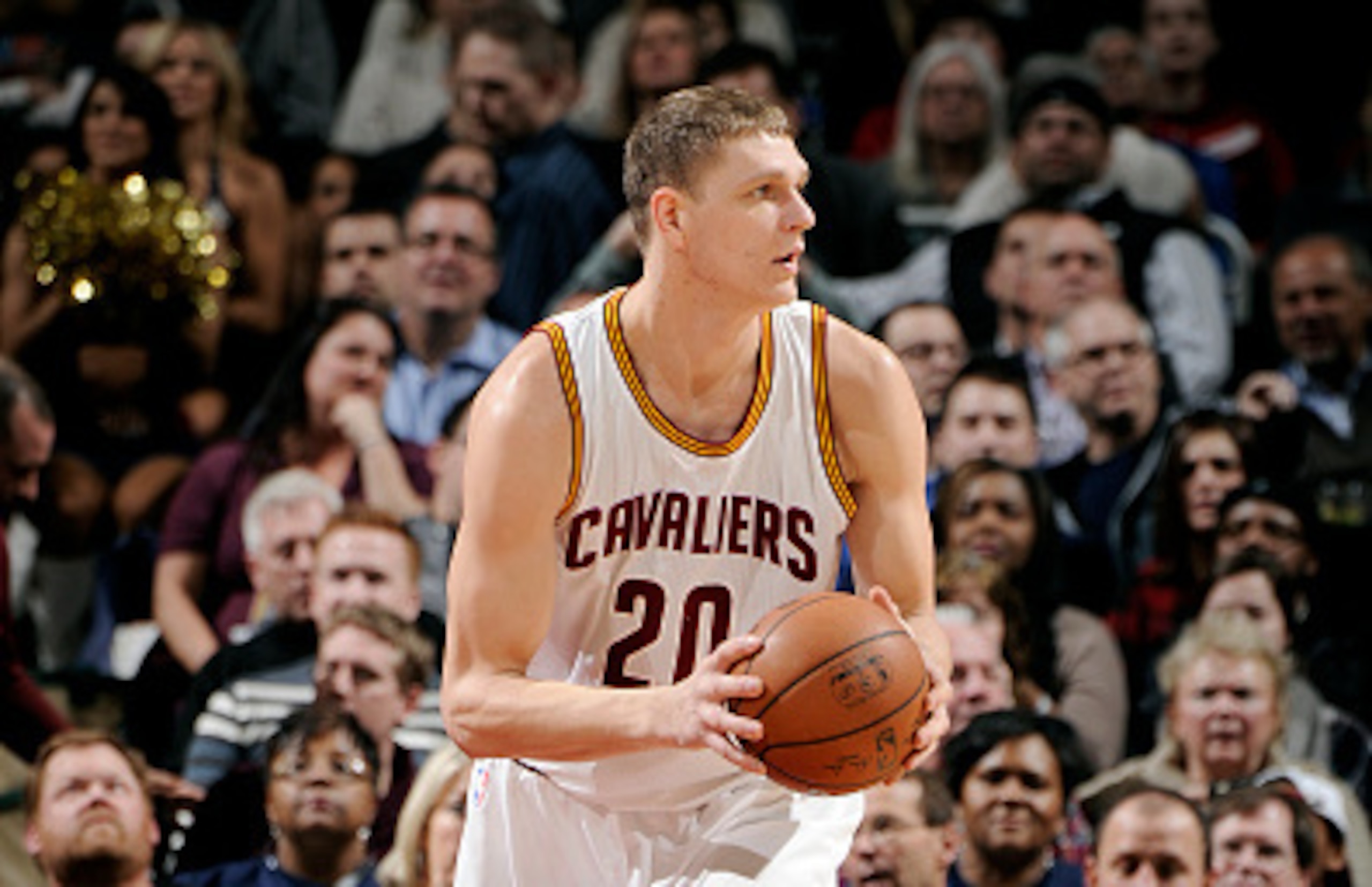
Scoring
Does Timofey Mozgov create many looks for himself? Nope. Does he shoot threes? That's a negative. Does he get to the free-throw line frequently? Not at all. Does he score in volume? Nyet. But Mozgov was efficient, especially after he joined the Cleveland Cavaliers, and he makes many of his shots from the charity stripe.
Non-Scoring Offense
Mozgov is a strong screener, but that's about all he has going for him in this category. Even though Brian Shaw urged him to try changing this in the Mile High City, he never became much of a floor-spacing threat, and he's a lackluster distributor at best.
Defense
A godsend for the Cavs, Mozgov could actually protect the rim quite well after he was traded to Northeast Ohio. He wasn't particularly strong on or off the ball, but Cleveland didn't often need him to be a plus player when he wasn't guarding the paint and serving as a last line of defense.
Rebounding
At 7'1", he should have a distinct advantage on the glass, but he can sometimes get pushed out of position when he fails to establish a strong center of gravity. He creates plenty of rebounding chances per game and grabs a decent number of contested boards, but the latter stat should see him post much more impressive marks.
Intangibles
How could you possibly complain about Mozgov's conduct? He's just a giant teddy bear with a penchant for wearing his jersey backward in commercials.
Overall
He was a beloved figure in the Denver organization, but the Cavaliers needed him even more. Once the eventual No. 2 seed in the Eastern Conference acquired him, he filled a role that was perfect for his skill set—providing nice defense around the rim while occasionally contributing on offense in efficient fashion. Mozgov is anything but glamorous, though that doesn't prevent him from making a big impact.
69. Joe Johnson, Swingman, Brooklyn Nets
29 of 97
Scoring
Even this late in his career, Joe Johnson is still an asset as a scorer. He's a creative shooter in isolation who can pull up for jumpers or use his strength to back down a defender, and he's equally adept working off the ball and raining in threes. Sure, he was less involved than he's been since his early days with the Boston Celtics and Phoenix Suns, but he usually made the touches count.
Non-Scoring Offense
Johnson truly thrived as a distributor this season, especially because he did such a good job cutting down on bad passes that led to turnovers. That, along with his ability to start moving the ball around the floor, racking up secondary assists and helping the Brooklyn Nets hit some corner threes, allowed him to complement his strong spot-up shooting rather nicely.
Defense
In his prime, Johnson was a standout defender who didn't get enough credit for his work. Now, at 33 years old, he's no longer in his prime. I'll let you connect the dots.
Rebounding
Johnson was quite good at figuring out how to attack the basket after a shot went up, reeling in a rebound in traffic. But he wasn't abundantly involved. It would be nice to see him chase down more missed shots, especially because the Nets aren't brimming with high-quality rebounders—they spent all season near the bottom of the pack in offensive and defensive rebounding percentage.
Intangibles
Other than a brief bout with the flu in December, Johnson was a model of good health and behavior throughout the season. No issues here.
Overall
Is Johnson an All-Star who would be considered a household name if he had a more vibrant personality? Not at all, even if we're only a few years removed from him serving as such with the Atlanta Hawks. Instead, he's a reliable player who can contribute on both ends of the floor and still thrives when his shot is connecting from the outside. Don't let his albatross of a contract convince you that he's out of enduring on-court value.
68. Terrence Jones, Combo Big, Houston Rockets
30 of 97
Scoring
Terrence Jones may rely on his teammates rather heavily when he's trying to score, but he does a nice job making Houston Rockets general manager Daryl Morey proud. He rarely lofts up those inefficient mid-range jumpers, instead focusing his efforts beyond the arc—where he's merely mediocre—and around the hoop.
Non-Scoring Offense
Even without a potent perimeter jumper, Jones can space out defenses and force them to be cognizant of his location at all times. After all, this southpaw is quite good at diving to the hoop and finishing in traffic, so long as there's not a body right in front of him.
Defense
If you expected this 6'9" power forward from Kentucky to struggle when he was filling in at the 5 and tasked with protecting the rim, you would be sorely mistaken. Maybe it was a bit fluky, driven by a relatively small sample size, but Jones was fantastic as the last line of defense. Not only was he highly involved in rim protection, but opponents also struggled to shoot better than 42 percent against him.
Rebounding
Playing big continued in this category, though it was a bit less surprising. After all, Jones had thrived on the glass during each of his first two seasons in the Association. That said, he could stand to tone down the aggression, as he put himself in too many situations that surely weren't going to result in a successful conversion, which means he would have been better served doing something else.
Intangibles
Health was a huge issue for Jones. First, nerve issues in his leg knocked him out for nearly three months. Then, he dealt with the flu over the All-Star break. After that, his lung collapsed, which he fought quite hard to recover quickly from. He missed so many games that he barely qualified for these rankings.
Overall
Don't be dissuaded by Jones' lackluster play down the stretch, as he recovered from a collapsed lung and then pushed himself to his physical limit as quickly as possible. The middle of his season was much more telling, as he was a flat-out revelation for the Rockets, given his expanded offensive arsenal and surprisingly excellent defensive efforts.
67. Andrew Bogut, Center, Golden State Warriors
31 of 97
Scoring
The Aussie center tends to make the shots he takes right around the hoop, but that's one of the few positives about his scoring profile. Andrew Bogut rarely lofts up attempts from outside the paint, struggles at the free-throw line and isn't heavily involved in the Golden State Warriors' offensive schemes.
Non-Scoring Offense
It's only floor-spacing ability that truly holds Bogut back in this category, but that's a big deal in the modern-day NBA. He's a brilliant—and sometimes dirty—screener who makes a big impact with his massive frame, and he's one of the more creative passers at his position. Not all of his passes result in assists, but they're nearly all spectacular.
Defense
Why do you think he is such an important piece for the Warriors? He's not too mobile on the perimeter and can get run right to the bench by stretchier bigs, but his work in the paint is fantastic. Whether he's helping off his man, coming through with a weak-side block or hedging and recovering on a pick-and-roll set, Bogut thrives when he's preventing points.
Rebounding
It's that pesky playing time again, as Bogut spent more minutes on the bench than on the court during the 2014-15 campaign. A smart rebounder who converts an impressive number of his chances, the Australian big man thrives when a shot goes up. He just isn't quite involved enough to stand out anymore, though that's admittedly no fault of his own.
Intangibles
Is Bogut allowed to stay healthy? This year, he missed nearly a month with a troublesome right knee, and he also lost time for various reasons during the rest of the season. It's that first injury that's most problematic to his durability score, though.
Overall
The Warriors wouldn't have enjoyed such a historic season without trotting out Bogut at the center position. Thanks to his creative passing, brilliant work as a screening big and knack for protecting the rim during his limited playing time, he elevated the ceiling of the Western Conference's best team, even without making much of a dent in the scoring column.
66. Michael Carter-Williams, Point Guard, Milwaukee Bucks
32 of 97
Scoring
Michael Carter-Williams' jumper still hasn't progressed much since he left Syracuse two years ago, and that ultimately limits what he can do as a scorer. Still dangerous in transition and quite good at penetrating into the teeth of the defense, thisf lanky floor general is disadvantaged by having to play against defenders who are constantly sagging off him.
Non-Scoring Offense
Though he's not even close to qualifying as a threatening spot-up shooter, Carter-Williams does have the size and athleticism to successfully convert some backdoor cuts. He just doesn't use them too often. As for his passing, it's quite good for a second-year player. His height (6'6") allows him to see over defenses, and though turnovers often plague him, he can fit the ball into nearly any nook or cranny.
Defense
Remarkably porous during his first season, Carter-Williams now has something to play for on the defensive end. No longer is he expending all his energy running a breakneck pace and trying to generate some sort of offense for the Philadelphia 76ers, and he's now learning from Jason Kidd, who can turn him into a defensive asset for the Milwaukee Bucks. Frankly, that's already happening, as this former Syracuse standout has shown some serious smarts off the ball.
Rebounding
A constant triple-double threat due to his impressive rebounding skills, Carter-Williams is no stranger to gaudy rebound totals. Few are better at using their length to pull in contested boards, though the second-year 1-guard still lags behind two floor generals having historic seasons on the glass.
Intangibles
A torn right labrum plagued Carter-Williams at the start of the season, but it was far from the only malady he suffered through. At various points throughout the campaign, this second-year guard dealt with illness, a sore right foot and a sprained ankle, all of which kept him out of the lineup.
Overall
Carter-Williams may have won Rookie of the Year in 2013-14, but that's largely because he played in a pace-inflated system, chased stats and faced a dearth of strong competition. But now he's shedding the "overrated" tag and becoming a quality point guard, still thriving on the glass but improving dramatically on the defensive end. With Kidd tutoring him for the Milwaukee Bucks, the sky is the limit, especially if he reworks his broken jumper.
65. Rajon Rondo, Point Guard, Dallas Mavericks
33 of 97
Scoring
Rajon Rondo still can't shoot from anywhere on the court, and he uncharacteristically struggled to finish his looks around the basket this year, whether he was playing for the Boston Celtics or Dallas Mavericks. Throw in one of the worst performances from the charity stripe in NBA history (39.7 percent), and it's not hard to see why the formerly elite point guard struggled so much in this category.
Non-Scoring Offense
Despite years of working on it, Rondo's jumper is still broken. But he can pass the ball as well as anyone, squeezing it into tight spaces and always trying to make his teammates better. Still an assist maestro, Rondo thrives as a "pure" point guard, even if that's an increasingly outdated position in the modern NBA that places such heavy import on spacing.
Defense
Why did the Mavericks part with so much of their depth to acquire Rondo midway through the season? Not because he was going to help their league-best offense, but because his wonderful defense was going to shore up an otherwise weak point-preventing unit. And it did, as his ability—when motivated, mind you—to lock down his man was quite valuable.
Rebounding
Had Rondo's season ended when he was traded away from Beantown, his average of 7.5 rebounds per game would easily have earned him a perfect score in the category. But his historic season dried up a bit in Dallas, where he spent more time on the perimeter and couldn't steal away easy rebounds from the bigs.
Intangibles
Getting in a verbal spat with your head coach and refusing to listen to his plays is not exactly a good thing. Nor is acting surly and clearly giving less than 100 percent when the games are less important. On the right team, Rondo can be an asset in the locker room, but it's hard to give him credit as such for his work in 2014-15.
Overall
Ever since suffering an ACL tear in 2012-13, Rondo simply hasn't been able to get back to an elite level. Though the court vision and lockdown defensive abilities are still there, he's lost so much of his explosiveness with the ball, and his shooting confidence is about as low as it gets. Sad as it may be for a 29-year-old point guard, we may have prematurely seen the last of elite Rondo, even when he's playing on a national stage.
64. Marcin Gortat, Center, Washington Wizards
34 of 97
Scoring
Though Marcin Gortat wasn't too heavily involved in the Washington Wizards offense, he thrived as an efficient roll man who could throw down some Polish Hammers whenever he got near the rim. In fact, Gortat nearly set a new career high in dunks, recording 58 and falling just two shy of the personal mark he established in 2010-11.
Non-Scoring Offense
Gortat's ability to set physical screens and terrify defenses with his knack for rolling into the paint helps him out. But unfortunately for this D.C.-based big man, passing matters here too. He could capably kick the ball out to the perimeter, but that was about it. There were no high-low passes from one big to another unless he was on the receiving end, and he rarely found flashing cutters.
Defense
The 31-year-old was fine when getting into passing lanes and helping off his man. But if he was left alone in isolation, asked to defend a back-to-the-basket stalwart or guard the rim with no one there to aid him, that was far more problematic.
Rebounding
Gortat grabs plenty of rebounds. He creates and converts a high percentage of his chances on the glass, which resulted in him averaging double-digit rebounds per 36 minutes for the second year in a row. However, he's not great when other players are fighting with him for the loose ball. He tallied far fewer contested boards than a man with his size and strength should record.
Intangibles
Though I was tempted to give him a one-point hit for shearing off his mohawk, that wouldn't be fair. The only true black mark on his 2014-15 resume is a $5,000 fine for flopping, but that's not enough to cost him a conduct point.
Overall
How did Gortat justify signing a five-year, $60 million extension with the Wizards over the summer? He went out and submitted a remarkably similar campaign to the one he'd produced in 2013-14, but while spending less time on the court. Gortat's defense slipped slightly, but he made up for it with his efficient bursts of scoring production, which allowed him to retain his value.
63. Danny Green, Swingman, San Antonio Spurs
35 of 97
Scoring
How did Danny Green have the best scoring season of his career? Well, he spent more time on the court and the San Antonio Spurs relied upon him more heavily for point-production. Plus, he managed to do so without plummeting percentages. Even while attacking the hoop and shouldering more offensive responsibilities, Green remained one of the NBA's most potent perimeter players.
Non-Scoring Offense
Surprised that Green earned one of the few perfect scores for off-ball offense? Don't be, as defenders simply can't give him any space when he's roaming the perimeter and waiting for a catch-and-shoot opportunity. Facilitating is what holds him back here, as he's rather uninvolved when the ball is in his hands and he's not letting fly with his sights set on the rim.
Defense
A true three-and-D wing, Green is nearly as adept serving as a stopper as he is when spacing the court. He's particularly terrifying while working off the ball, as he can mimic players moving around the perimeter and remain up in their jerseys all the while. His biggest weakness—and remember, it's only a relative one—comes when he's being posted up, which happens surprisingly often for a player who splits time at the 2 and 3.
Rebounding
Green is just better than average in most every area here—not quite to the point that he earns a fifth tick in rebounding. Perhaps the best part of his glass-eating game is his level of involvement, as he doesn't shy away from seeking out extra boards, especially on the offensive end.
Intangibles
The Spurs rarely have to deal with any conduct issues, as Gregg Popovich keeps a rather tight ship. However, injuries flared up rather often for a team with a rather significant number of veteran contributors. Luckily, Green somehow dodged any significant ailments throughout the season.
Overall
Green isn't exactly a specialist, though his perimeter marksmanship could easily fool you into thinking otherwise. His shooting will always be his forte, but he's one of the Spurs' top defenders and makes a significant impact on the glass as well. He's a true three-and-D wing, and even that doesn't fully describe what he brings to the table.
62. Luol Deng, Small Forward, Miami Heat
36 of 97
Scoring
It's always been in Luol Deng's best interest to play the part of third wheel in an offense. He got that chance for much of the year, coming in behind both Dwyane Wade and Chris Bosh when they were healthy. But Deng was also a bit less involved than he's been in the past, even when serving in that role. He made the most of his scoring opportunities, but it's hard for him to fare any better when he rarely created his own shots.
Non-Scoring Offense
If only Deng were a better passer. Granted, he averaged more assists (1.9) than turnovers (1.5), but not by a large margin. Even though he has ball-handling skills that allowed him to create shots and initiate offense during his time in the Windy City, those apparently don't allow him to keep his head up and look for open teammates. He's an off-ball threat, but he's significantly weaker when he's dribbling and not looking to score.
Defense
In his true athletic prime, Deng was one the league's premier defenders. But now, at 30 years old and with plenty of mileage on his legs (thanks, Tom Thibodeau), he's lost that quick first step and can't quite keep up with the NBA's better offensive players. Particularly off the ball, he falls just far enough behind that his contests are rendered ineffective against shooters with quick releases.
Rebounding
Deng has always been a tremendous rebounder for his position, and that remained true after he took his talents to South Beach. It's important to remember that, due to a combination of pace, shooting ability and defensive woes, the Heat were one of the worst teams at generating rebounding opportunities, which makes Deng's 5.2 boards per game look even more impressive.
Intangibles
A bit too often, this small forward had to exclaim, "Deng it!" after he suffered yet another injury. A troublesome wrist was the first part of his body to keep him out of the Heat lineup, but we can't forget about his bruised right hand, a brief bout with illness, a balky calf, a thigh contusion and a bruised right knee.
Overall
At this point in his career, it's clear that Deng is a bit run-down. Playing such heavy minutes under Thibodeau during his time with the Chicago Bulls has made him a rather creaky 30-year-old small forward, unable to exert his former scoring prowess or remain quite as great on the defensive end. He's no longer a star, but he's still an upper-tier starter.
61. Tyreke Evans, Swingman, New Orleans Pelicans
37 of 97
Scoring
Though Tyreke Evans still can't connect from the outside with any sort of frequency, this Eurostep disciple is quite adept at working his way past defenders and finishing plays around the rim. That said, it would be nice for Evans to attack the basket even more frequently, as he earned a trip to the charity stripe less often than he has since entering the league out of Memphis in 2009, taking only 3.7 attempts per game.
Non-Scoring Offense
Defenders certainly don't have to fear Evans' ability to space out a court, but he's a smart cutter with a head for worming his way through traffic. Even more impressive is his facilitating, as he compiled the top passer rating of any swingman in the NBA this season. Often serving as a de facto point guard while Jrue Holiday was injured, Evans was more heavily involved than ever, and he handled that extra burden without seeing his turnovers spike too dramatically.
Defense
Merely mediocre on the defensive end, Evans was slightly better off the ball than on it in 2014-15, though that's only because he was so heavily involved when his man didn't have possession. He darted between lanes and tried to make an impact in all situations, even if that left him susceptible to smart spot-up players.
Rebounding
Evans has always been a strong rebounder, and this year was no exception. Though he failed to increase his per-minute rate for the first time in five seasons, he was still a menace on the boards, regardless of whether he was lining up at the 2 or 3. Sometimes, it almost seemed as though Evans enjoyed fighting through traffic for a conversion more than he did chasing after a long carom.
Intangibles
Though the injury imp ravaged the New Orleans Pelicans throughout the season, Evans stayed pretty healthy all year long. A bruised right knee and some ankle issues kept him out for short stretches, but that's understandable given the heavy load he shouldered on a regular basis.
Overall
Evans still hasn't been able to replicate his phenomenal rookie season, when he entered the league as an oversized point guard and averaged 20.1 points, 5.3 rebounds and 5.8 assists. But now, blessed with continuity—both positional and on the coaching staff—he's finally started to rekindle the early-career fire and morph back into a star. He's not there yet, but he's getting closer and is still only 25 years old.
60. David West, Power Forward, Indiana Pacers
38 of 97
Scoring
The last time David West failed to average a dozen points per game, he was in his second NBA season, playing for the New Orleans Hornets and coming off the bench for much of the year. Obviously, a lot has changed since then. The 34-year-old is no longer asked to be a primary scoring option, as he's better served in a smaller role that can see him showcase his hard-nosed game from two-point zones.
Non-Scoring Offense
If you play against West, you're going to wake up with a bruised chest. Not just because he'll back you down, but because he sets devastatingly hard screens when he's not spotting up for quick mid-range jumpers. Additionally, he's a deft passer who rarely makes mistakes with the ball.
Defense
Though West is no longer able to protect the rim like he could during his athletic prime, he's a dominant stopper whenever he's not serving in that role. The big man still has the lateral quickness and defensive mentality to hang with any type of player, whether they're testing his speed out on the perimeter or his toughness closer to the basket.
Rebounding
For the second year in a row, West was less active on the offensive glass than he's been in previous years, but the overall rebounding profile was still strong. Much to the surprise of no one, he hauled in a high percentage of his individual rebounding opportunities and didn't decline when asked to grab a contested board.
Intangibles
A tremendous leader both on and off the court, West was only going to lose points here if he couldn't stay healthy. And he couldn't, missing nearly a month with a sprained ankle suffered at the very beginning of the season.
Overall
West is no longer a star. That much is abundantly clear, even if he hasn't lost his never-say-die mentality. Though he's still capable of providing glamorous production on both ends of the floor, West is increasingly willing to do all the little things, whether he's freeing teammates with off-ball screens or providing help defense in the blink of an eye. He's most assuredly a power forward you'd still want in your foxhole.
59. Tyson Chandler, Center, Dallas Mavericks
39 of 97
Scoring
When has Tyson Chandler ever been a volume scorer? He's filling the same role he always has—thriving on offensive rebounds that lead to putbacks when he's not rolling to the basket and throwing down a vicious slam, one complete with a slight hang on the rim that ends just before he'd receive a technical foul.
Non-Scoring Offense
Chandler's screens and rolls can only do so much for him. Though he's quite effective when serving in that capacity, his inability to serve as an off-ball threat or do much in the passing game is more than he can overcome in this category. For the 14th season in a row, he recorded more turnovers than assists. Note: Chandler has been in the NBA for 14 seasons.
Defense
Less mobile than he's been in previous years, Chandler had trouble in situations that required movement, though only relative to his former greatness. He was occasionally late in his rotations from the weak side, leading to ill-timed and futile contests around the rim. Plus, spot-up shooters could give him fits when they had quick releases. At least he was an absolute monster in on-ball situations, showing no mercy to those who tried to post up.
Rebounding
Were it not for the presence of a historically great rebounder, Tyson Chandler would be getting a perfect score. But since DeAndre Jordan was a god among mortals on the boards this season, the Dallas Mavericks center and all of his contested boards will have to settle for receiving the No. 2 score at his position.
Intangibles
It seemed reasonable to expect troublesome durability from Chandler, especially since he qualified as an aging big man (32) coming off a campaign filled with back trouble. However, he played in all but seven of Dallas' regular-season outings, fighting through back spasms in December, as well as a sprained left ankle and strained hip later in the year.
Overall
Though his playing style didn't change after making the transition from the New York Knicks to the Dallas Mavericks, Chandler appeared rejuvenated for much of the season. He attacked the rim ferociously on his rolls and worked to overcome his diminished lateral quickness with sheer intensity on the defensive end. His days of serving as a star are certainly over, but that's not going to keep him from having a celestial impact in short bursts.
58. Giannis Antetokounmpo, Combo Forward, Milwaukee Bucks
40 of 97
Scoring
Giannis Antetokounmpo still isn't a great NBA scorer, and he likely won't be until he can actually take and make shots from the outside. But with his stretchy arms, devastatingly long strides, work in transition and ability to finish plays at the rim, he's still at least a good one.
Non-Scoring Offense
Again, the lack of three-point ability is highly problematic, as Antetokounmpo's natural knack for cutting at the right times can only help him so much. The same is true of his passing, which is good enough to make Jason Kidd think about playing him at point guard but also not great enough for him to thrive in that role.
Defense
Antetokounmpo will eventually get better at protecting the basket when he's playing the 4, and he's only going to grow more disciplined while working off the ball. But for now, those are his biggest weaknesses, and they don't overshadow his lockdown skills against even the league's best players. This Milwaukee Buck doesn't seem to fear any matchup, and he's more than capable of using his length in suffocating fashion.
Rebounding
Apparently, long arms and a 7-footer's frame do wonders on the boards. Antetokounmpo was a solid rebounder during his rookie season, but he made major improvements during his sophomore go-round in Brewtown. Particularly impressive was his work when another player was within a normal wingspan of him, because it didn't seem to faze him in the slightest.
Intangibles
There are some young players who seem to exude a general joie de vivre when they're on the court, and Antetokounmpo is one of them. Couple that with a clean bill of health throughout the year, and you get a double-digit score.
Overall
One of the league's most exciting young players, Antetokounmpo is always good for a few jaw-dropping highlights that leave no doubt he has a bit of alien blood flowing through his veins. His physical profile is just too ridiculous, especially when he does something crazy—like Eurostep dunking while starting outside the three-point arc. But this 20-year-old is still extremely raw, and we can't be blinded by the upside when evaluating the present.
57. Khris Middleton, Combo Forward, Milwaukee Bucks
41 of 97
Scoring
Last season, 34 percent of Khris Middleton's attempts from the field came from beyond the arc. This year, that number dropped down to 30.8 percent, allowing him to showcase an even more well-rounded offensive game in addition to his potent deep shooting. As he continues to gain confidence off the dribble, he's only going to keep improving as a scorer.
Non-Scoring Offense
Leaving Middleton open beyond the arc is usually a bad idea, though he can be inconsistent in catch-and-shoot situations and doesn't yet cut with the best of 'em. Still, he draws plenty of attention from defenses when he's working on the wings, and he stands out there much more positively than he does for his limited passing.
Defense
Next to some of his teammates, Middleton doesn't look like a stellar defender. He's at least a good one, working on the ball quite nicely and struggling most when he's left attempting to protect the rim in a smaller lineup. He spent significant time at shooting guard, small forward and power forward this year, but qualifying as a combo forward above anything else ultimately hurts him, since rim protection saw him earn just two of five possible points.
Rebounding
Though Middleton certainly shouldn't be embarrassed by his work on the glass, he needs to do a better job rebounding in traffic if he's going to improve. A player who spends time at the 4 really shouldn't have trouble grabbing more than one contested board per game.
Intangibles
Although this forward had some trouble with his right knee early in the season, he stayed healthy afterward. Middleton ultimately played in nearly every game for the Bucks, keeping his nose clean all the while.
Overall
Middleton is no longer flying under the radar, and he has to be pleased with the timing. After all, he gets to follow up his breakout season by entering into restricted free agency, and he's sure to be paid a rather hefty sum. In 2015's NBA, players like this forward—ones who can space the court, play defense and serve as go-to options on some offensive possession—are quite valuable.
56. Andrew Wiggins, Swingman, Minnesota Timberwolves
42 of 97
Scoring
Andrew Wiggins can create his own shot with ease and score from just about anywhere on the court, but there are a couple of things he can certainly work on. First, he needs to get more consistent, though he was admittedly trending in the right direction throughout his rookie season. Second, his shot selection needs work, as he settles for contested mid-range jumpers far too often despite having the requisite skills necessary to either take a step back and beyond the three-point arc or keep attacking the hoop.
Non-Scoring Offense
Wiggins still isn't a terrifying off-ball presence because his shot often goes awry when he's waiting out on the perimeter, but his biggest issue remains a lack of passing chops. That was the case at Kansas, and it didn't change during his first professional season, as he routinely recorded more turnovers than assists.
Defense
Even though he was a first-year player, Wiggins was already incredibly good on the ball. He's able to mimic every move that an offensive player makes, routinely posing problems for even the most talented scorers. However, as you might expect from a rookie, the former Jayhawk is undisciplined at times, especially when he's trying to cheat off a spot-up shooter.
Rebounding
From a per-game or per-minute standpoint—4.6 per game and 4.5 per 36 minutes—Wiggins' rebounding numbers don't look as if they'd merit 6-of-8 in this category. But remember, these scores are objectively determined, and Wiggins' receives a huge boost because A) the Minnesota Timberwolves as a whole don't generate many rebounding chances, B) he converts a large percentage of his individual opportunities and C) only two other swingmen were better at grabbing contested boards.
Intangibles
The only time you'd talk about Wiggins' intangibles would be when you were trying to say something positive about him and had already exhausted topics about his on-court skills.
Overall
It's hard to classify Wiggins' first season in the NBA as anything other than a success, as he proved his defensive chops on multiple occasions and steadily improved as a scorer. He still has plenty of work to do, of course, and the beginning of his campaign is dragging his overall grade down a bit lower than if we only looked at his second half, but it's not hard to see a future superstar here.
55. Kyle Korver, Swingman, Atlanta Hawks
43 of 97
Scoring
All you need are three numbers: 50, 50 and 90. Kyle Korver may ultimately have fallen short of joining that ultra-exclusive club—so exclusive that it has zero qualified members—but he came so close in each of the three categories, finishing the season making 48.7 percent of his shots from the field, a league-best 49.2 percent of his triples and 89.8 percent at the stripe. To be this involved and still make nearly half of your shots from everywhere is absolutely remarkable.
Non-Scoring Offense
No player invokes so much fear while he's roaming the perimeter. Defenses have to scheme to stop Korver first, and that's despite the Atlanta Hawks offense boasting the services of plenty of other talented offensive players. The veteran swingman is also an underrated distributor who's capable of making outlet feeds and pinpoint entry passes, but he's still not involved enough to get more than four of those 10 points.
Defense
Korver is not an extreme defensive liability and actually spent much of the year serving as an underrated stopper. He's a liability in some on-ball situations, but his smarts and lateral quickness allow him to shut down passing lanes and diagnose plays before they fully develop. You'd never call him a defensive ace, but it's time to give him a bit of respect for his work on the less glamorous end.
Rebounding
Thoroughly average on the boards for years, Korver was no different in 2014-15. Though he'd go up in traffic and pull down a highlight-worthy contested rebound every once in a while, he was normally just good for four or five during a typical game, many of which came while he was the only man in the vicinity.
Intangibles
Have you heard Korver complain about anything? The Hawks were built upon their chemistry, and this sharp-shooting stud was very much a part of that. A broken nose in March was also the only injury that kept him out of the lineup, though Mike Budenholzer was cautious with his minutes all year.
Overall
If any player represents how much the NBA has changed, it's Korver. Heading into the All-Star break, the swingman was averaging 12.7 points, 4.3 rebounds and 2.7 assists while shooting 51.2 percent from the field, 52.3 percent from beyond the arc and 91.1 percent at the free-throw line. Then he got to participate in the New York City festivities' main event. Why? Because the NBA is starting to recognize the value of players like Korver—shooters with gravitational pulls so strong that they completely alter defensive schemes.
54. Al Jefferson, Center, Charlotte Hornets
44 of 97
Scoring
When Al Jefferson sets up on the left block—make no mistake about it: that space on the court belongs to him—he's awfully difficult to stop, thanks to a dizzying array of post moves and touch shots with both hands. But even while remaining effective from his primary area, the big man was less involved than he's been in years, and that prevented him from standing out as one of the true premier scorers at his position.
Non-Scoring Offense
If Jefferson is feeling it, entire defensive schemes revolve around pushing him away from his favorite spot on the court. That's one unique way to have an impact off the ball, but it's what Jefferson has been doing for years. The biggest issue here comes from his passing, as he's a capable distributor but hardly functions as a frontcourt playmaker for the Charlotte Hornets.
Defense
He has never been a particularly strong defender, but Steve Clifford's teachings have at least milked some positive production out of him. Now, he's about average in most facets of the point-preventing game, whether he's guarding a man with possession, rotating and helping off his charge or serving as the last line of defense.
Rebounding
This was only the second time in Jefferson's career that he failed to record double-digit rebounds per 36 minutes, though he only missed by 0.1. That, along with the fact that he strangely had trouble recording contested boards, doesn't exactly curry favor for him.
Intangibles
Only health works against Jefferson here. A strained adductor muscle in his left groin kept the center out of action for a few weeks at the end of 2014, but that was by no means the only injury. Even before a sore right knee in early April knocked him out for the rest of the season, he dealt with a strained right knee and an irksome calf malady.
Overall
You know what you're going to get from Jefferson. He's no longer an explosive source of points or rebounds but instead a consistent producer whose specialty—working from the left block—is so lethal that defenses know it's coming and still can't stop it. Mere adequacy on defense was enough for him to remain a valuable contributor to the former Bobcats, even if he regressed slightly in his strongest areas.
53. George Hill, Point Guard, Indiana Pacers
45 of 97
Scoring
Though George Hill struggled with his perimeter shot, a combination of aggressiveness and previously unseen shot-creating abilities made 2014-15 arguably his best season yet as a scorer. The Indiana Pacers desperately needed someone to step up in the points column, and Hill took it on himself to be that guy as soon as he was fully healthy.
Non-Scoring Offense
Hill created far more of his shots than ever before, but he was still at his best when working without the ball. Despite his low overall percentages, he fared quite well spotting up and waiting for a pass to hit him between the numbers, and he was similarly adept with his well-timed cuts to the hoop.
Defense
On the ball, Hill is an absolute force. Whether he's shadowing a player over, around or under a screen or trying to lock him down in isolation, it's generally quite difficult to score against this big-shouldered point guard. His only major weakness comes off the ball, where he can get caught watching the action unfold around him before he realizes that he's out of position.
Rebounding
Hill is one of the best at converting the opportunities he receives, but many of them are of the uncontested variety. Plus, he doesn't spend an inordinate amount of time wandering into the painted area, so those opportunities are already limited.
Intangibles
Durability isn't helping Hill's case here. Problems with his left knee kept him from making his season debut until Dec. 23, and he missed extended time shortly thereafter with a left groin injury, possibly due to overcompensating for the problematic knee. The combination isn't a good one.
Overall
Hill has morphed into one of the more underrated 1-guards in basketball. He doesn't play a glamorous game, but he's quite effective on both ends of the court, doing all the little things necessary to help his team. He's best-served in a non-starring role, but it says something that he's willing to try taking on that extra responsibility when his team needs it most.
52. Joakim Noah, Center, Chicago Bulls
46 of 97
Scoring
Joakim Noah really just isn't a scorer. It's not his game. The bun-boasting big man is always looking to pass before he calls his own number, though he's adept at getting his shots off when he does drive to the hoop and fights off the reaches of a defender.
Non-Scoring Offense
The strengths? Rolling to the hoop, setting beautiful screens and displaying passing skills that should embarrass just about every other center in the game. He's almost uniquely capable of serving as a point center in Tom Thibodeau's offensive schemes. The weaknesses? Well, don't ask him to space the floor all that often.
Defense
Normally, Noah is a strong Defensive Player of the Year candidate, making a huge impact for his Bulls in just about every area. He can protect the rim on one possession and then switch onto a smaller perimeter player if he needs to. But due to some nagging injuries, the former Gator struggled around the basket, was late on some of his rotations and failed to elevate quickly enough to contest every shot he faced.
Rebounding
Noah didn't decline on the boards as much as it might appear if you look solely at his per-game numbers; he just spent less time on the floor. He still grabbed plenty of missed shots, didn't care if he had to box someone out and exert energy, was always involved and genuinely thrived off making a rebounding impact.
Intangibles
In November, he dealt with an illness and an eye abrasion. In December, a sprained right ankle. In January, the ankle problems flared up again. Then, in March and April, he had to work through recurring knee problems.
Overall
Noah never seemed to be playing at full strength. Even when he was in the lineup, he was dealing with some lingering nuisance that left him unable to make the same impact he has in years past. A less-than-100 percent Noah is still a great center, but without submitting his name in the Defensive Player of the Year conversation or scoring at respectable levels, he was unable to remain in contention for the top spot at his position.
51. DeMar DeRozan, Swingman, Toronto Raptors
47 of 97
Scoring
There's only so much you can do when your offensive arsenal revolves around mid-range jumpers that you create for yourself. There's no worse shot commonly used in the NBA, but DeMar DeRozan keeps insisting on having it serve as his offensive staple. That's why, despite always being a threat to go for 20 points, he fares worse in this category than a handful of other supposedly—and falsely—lesser scorers at his position.
Non-Scoring Offense
Though he is best while working off the dribble, DeRozan can score in a variety of ways when he doesn't start with possession. His spot-up jumper is just dangerous enough that it commands a bit of respect, but defenders can't forget about his athleticism when he's cutting to the hoop and catching the ball on the run.
Defense
He may have trouble tracking defenders through traffic and can often be taken out of his stride by a well-timed screen, but DeRozan is a stellar defender who often takes on some of the Toronto Raptors' hardest defensive assignments. Though some metrics don't view him too favorably, he passes the eye test due to his level of involvement and willingness to accept matchups that will only depress his individual numbers. It shouldn't be at all surprising that the Canadian representatives are better at preventing points when he's on the floor.
Rebounding
DeRozan is great at turning his rebounding opportunities into actual rebounds, regardless of who's in his way. Whether it's a contested or uncontested try, he's coming away with the ball far more often than not. Now, he needs to assert himself on the glass a bit more frequently, even if the Toronto Raptors are a team that doesn't lend itself to an abundance of opportunities on a regular basis.
Intangibles
This was a rough season for DeRozan, and not just because the NBA fined him $15,000 for a flagrant foul against Bojan Bogdanovic. That's not a serious enough offense to lose a conduct point, as we're intentionally making those hard to give away. A thigh injury suffered at the end of November cost him a significant portion of his season, as he wouldn't return until a Jan. 14 contest against the Philadelphia 76ers—more than 20 games after he was originally hurt.
Overall
DeRozan is an exceptionally talented two-way player who isn't making the sort of impact he should. Until he changes his playing style and starts accepting that the overall trends of the NBA aren't going to change anytime soon—cough, fewer mid-range jumpers, cough—he won't be maximizing what he can bring to the proverbial table.
50. Rudy Gobert, Center, Utah Jazz
48 of 97
Scoring
Rudy Gobert might be quite limited in the half-court set, bursting to the hoop on rolls and clearing out if he doesn't get a lob thrown up in his direction. He also can't make free throws with any sort of efficiency, connecting on just 62.3 percent of them during his breakout season—that was still a marked improvement from his 49.2 percent clip as a rookie. But the French phenom is remarkably self-aware, and shooting 60.4 percent from the field is a great way to partially overcome lackluster per-game numbers.
Non-Scoring Offense
At this stage of his career, Gobert still tends to clog up the paint when he's on the court. Defenses don't have to respect his jumper at all, and that prevents him from spacing out the court. Throw in some adequate but unspectacular passing skills, and it's obvious which area needs to see the most improvement from this 22-year-old center.
Defense
During the second half of the season, Gobert was the best defender in the NBA. He was a force to be reckoned with—and then some—around the rim. His long arms engulfed everything that came in his general vicinity, even if he wore out a bit during the final games of the campaign. Once he gets a bit more comfortable rotating and recovering to stretchier bigs, he'll be a perennial Defensive Player of the Year front-runner.
Rebounding
If we were only grading the post-All-Star-break portion of the year, Gobert would fare even better. After all, he averaged a ridiculous 13.4 rebounds after the Utah Jazz returned from the brief recess, even posting three outings with at least 20 boards.
Intangibles
There's not even a tiny blemish to gripe about. Gobert's conduct was squeaky clean all season long, whether he was starting or coming off the bench. He also played in all 82 games.
Overall
Talk about a breakout. During the second half of the season, Gobert became one of the very best centers in basketball, rendering Enes Kanter completely expendable thanks to his improved offense and remarkable point-preventing skills. It was just about impossible to score on this lanky big man right around the basket, and it seems almost certain that he's going to spend years as a dominant defensive presence who contributes a respectable number of points and thrives on the glass.
49. Victor Oladipo, Combo Guard, Orlando Magic
49 of 97
Scoring
Kudos to Victor Oladipo for spending so much time with his jumper ever since leaving Indiana. He's turned a weakness into a minor strength over the last two years, allowing him to put a much more complete scoring arsenal on display. Driving to the hoop and finishing is still this combo guard's biggest asset on the offensive end, but the respect defenders now have to give to his jumper makes his first step all the more deadly.
Non-Scoring Offense
The combination of savvy/athletic cutting and a working spot-up jumper makes Oladipo a player who must be monitored on the wings. But his improvements in the passing department also help his score a bit, as he's no longer turning the ball over nearly as often from bad-pass cough-ups.
Defense
This was supposed to be Oladipo's calling card. When he left the Hoosiers as a raw offensive product, it was his point-preventing ability that was supposed to ensure he remained valuable right off the bat. But Oladipo hasn't been nearly as good as expected, struggling to grasp the nuances of NBA play on many occasions, especially when he's in off-ball mode.
Rebounding
Only one qualified combo guard was better at pulling down contested rebounds this season, and that's not just because Oladipo spent a lot of time on the court. He's not afraid of contact, which shows when he dashes into the lane and attempts to parlay his hops into an unexpected board.
Intangibles
A facial injury that led to a mask and a delayed debut is the only reason he's losing a point here. Oladipo has otherwise been healthy, and he's a great teammate who never takes himself too seriously.
Overall
Oladipo isn't there yet, but he's on the verge of becoming a true star. As his defense improves, he's gaining even more value, though we already have to be impressed by the offensive strides he's made. His jumper doesn't hold him back any longer, and he seems to love attacking the basket in crunch-time situations. This Indiana product is starting to morph into a go-to player, regardless of the situation he finds himself in.
48. Andre Drummond, Center, Detroit Pistons
50 of 97
Scoring
Andre Drummond is by no means a polished product on the offensive end, but he's starting to discover some scoring touch around the basket. That said, he still spent much of the season serving as less than a secondary scoring option, and free-throw shooting continues to trouble him. When you're only hitting 38.9 percent of your tries from the charity stripe, going to the line 4.5 times per game is problematic.
Non-Scoring Offense
Drummond may set hard screens. He also forces defenders to get early rebounding position to keep him off the glass. But he can't space the court or pass with any sort of consistency. He turned the ball more than twice as many times as he recorded assists during his third professional go-round. Even more troubling was how it came without too much offensive involvement.
Defense
Improvement is the key here, as Drummond is beginning to gain some discipline on the less glamorous end. He was a great protector of the rim all year, and his rotations are starting to become timelier. Smart offensive players can throw him off balance or create just enough space to get off an easy shot that he can't alter, but that might not be true for much longer.
Rebounding
Most any other season, he would have received a perfect score here. He's a tremendous rebounder, especially when he's going over other players on the offensive glass to create second-chance opportunities. But even given his unabashed dominance and the league's second-best rebounder rating, regardless of position, he was just that far behind DeAndre Jordan.
Intangibles
Playing 82 games in an NBA season, as Drummond did, is not an easy task. It's even tougher still when you're a big man who takes a beating whenever you step onto the floor.
Overall
Drummond began to showcase some substantial offensive improvement late in the season, but his full body of work is impressive regardless. The 21-year-old center is getting better on both ends of the floor, and he's already a durable player who flat-out dominates on the glass. If he can ever figure out his free-throw stroke, he's going to have a serious chance to become the best true center in basketball. Frankly, he may get there even if he continues throwing up bricks at the stripe.
47. Monta Ellis, Shooting Guard, Dallas Mavericks
51 of 97
Scoring
Though it would be nice if Monta Ellis could develop a three-point stroke that actually worked on a consistent basis, it's still hard to poke too many holes in his scoring output. After all, the Dallas Mavericks still rely upon him rather heavily, as he thrives in late-game situations and does a great job creating shots for himself around the basket. He's playing in the wrong era and hasn't been able to adjust, but he's still making it work.
Non-Scoring Offense
Ellis is more of a cutting threat than a spot-up shooting one. And he's even deadlier still with the ball in his hands, as he's able to keep his head up while driving and hit the open man on the perimeter. This was actually his worst distributing season since 2008-09, and he still emerged as one of the better dime-droppers at his position, averaging 4.1 assists.
Defense
Never known as a stopper, Ellis didn't do much this year to sway that general line of thought. He was merely adequate in most point-preventing settings, though it's worth noting that he excelled when an opposing guard tried to get around him in a pick-and-roll situation. Of course, playing with Tyson Chandler behind him might help as well.
Rebounding
This was strange. Ellis had never before averaged fewer than 3.1 rebounds per 36 minutes, and even that mark—produced in 2010-11, his last full season with the Golden State Warriors—seemed like an aberration. But this year, he struggled his way to a 36-minute average of 2.5, even while playing fewer minutes.
Intangibles
Though Ellis' attitude was questionable at times late in the season, particularly as he struggled to mesh with Rajon Rondo in the Dallas backcourt, there's no real reason to dock him more than one point for his conduct. Nor is there any reason to question his durability, as he was a model of good health throughout the season.
Overall
Ellis is by no means a perfect player, but he's a valuable one for the Mavericks. Especially now that he's displaying more effort on the defensive end, Dallas can live with his poor shooting nights and wait for the next big offensive explosion. Because with Ellis, one is always coming, whether it's achieved by scoring, passing or some combination of the two.
46. Ty Lawson, Point Guard, Denver Nuggets
52 of 97
Scoring
Ty Lawson knows that he's quicker than virtually anyone who ever guards him, and this year he really started taking advantage of that. Defenders are aware that he loves to get by them and pull up for a mid-range jumper, so he expanded his arsenal by head-faking and then continuing to drive for an uncontested look. Lawson, now 27 years old, did score in less volume than he has since he was 23, but that should change in a system he's more comfortable running.
Non-Scoring Offense
Few players in the NBA are better at distributing, as Lawson routinely challenges double-digit assist totals while keeping his turnovers under control. Though he doesn't get too many secondary dimes, he records more assist opportunities than anyone else in the Association. Now, he just needs to get some of those passes a bit more on target so that his teammates have a better chance of converting each time he feeds them.
Defense
Size works against Lawson (5'11"). He can be a pest off the ball, darting around to get his hands in on the action before recovering to his man, but he's overmatched in isolation and doesn't handle screens particularly well. Far too often, he goes under picks against great shooters or tries to use his speed to trail a ball-handler before finding himself boxed out.
Rebounding
Speed matters here, just as it always does for Lawson. He's able to dash his way to long caroms quite well, and he shows good vision for bounces. Just don't expect him to do much damage among the trees, as that's where his diminutive frame works against him most.
Intangibles
Lawson had some minor conduct issues this season. He was arrested on suspicion of a DUI (note: this is a huge deal in real life, especially as it's not Lawson's first brush with the law, but it has a minimal impact on his basketball prowess) and failed to return on time from a Las Vegas trip during All-Star Weekend, leading to a benching by then-head coach Brian Shaw.
Overall
Perhaps Lawson will look even better when he's playing in an uptempo system that caters to him. He rebelled against Shaw on and off the court throughout the season—or so it seemed at times—and he was less involved as a scorer than he should have been. Still, if for no reason other than his heavy involvement as a distributor, he remained a high-quality point guard.
45. Dirk Nowitzki, Power Forward, Dallas Mavericks
53 of 97
Scoring
This was rather easily Dirk Nowitzki's worst scoring season in over a decade. Not just because of his declining per-game marks, but because his efficiency waned from all areas of the court. And beyond that, he created his shot with less frequency, requiring assists on well over 60 percent of his makes from two-point range for the first time since 2003-04.
Non-Scoring Offense
Defenses still aren't going to let Nowitzki roam unchecked. There's always a threat of him heating up, and there's no way he's going to be neglected while trying to find the right spot on the perimeter. Even during a down season, he's still such a threatening presence that he received the only 10-of-10 score for off-ball offense among all power forwards.
Defense
Nowitzki has never been a particularly strong defender, but he actually performed admirably in some areas during his age-36 season. Yes, I'm talking about his work around the rim. Though he wasn't too heavily involved, Nowitzki kept opponents' shooting percentage right around 50 percent throughout the season, and that was enough for him to impress in our rim-protecting metric.
Rebounding
The German 7-footer hasn't been a stud on the glass in years, so why was that going to change in this post-prime season? Nowitzki spends a lot of time on the perimeter, which depresses the number of opportunities for rebounds he receives during any given game. But at least he's pretty good at grabbing boards when he's in the vicinity of a missed shot.
Intangibles
Have you ever heard a negative headline about Nowitzki? I didn't think so.
Overall
The future Hall of Famer may be one of the 20 best players in the history of the NBA, but he's clearly in the tail end of his career. For the first time, he failed to defy Father Time night in and night out, suffering through slipping shooting percentages and struggling to make a major impact when his shot was off. And still, he put together yet another impressive season, finishing well within the top 10 at a deep position. That alone should speak volumes.
44. Tony Parker, Point Guard, San Antonio Spurs
54 of 97
Scoring
Tony Parker may have had his best season ever from downtown, but he doesn't fire away from long range enough for that to matter. Without his trademark mid-range jumpers falling for much of the season and with an inability to work his way to the line very often, Parker was less impressive as a scorer than he's ever been since entering into the realm of stars back in 2005.
Non-Scoring Offense
Though he's not a deadly shooter from the outside, Parker is so smart that he still receives a perfect grade in off-ball offense. He's a master of using multiple screens to free himself for an elbow jumper, and his cuts to the hoop are always perfectly timed. If only his passing hadn't fallen off a bit...
Defense
Parker doesn't necessarily have the physical tools many top-notch defenders possess, but he's an absolute master of the San Antonio system. He knows when to force his man in a certain direction, and he rarely finds himself out of position when his mark doesn't have the rock. A bit vulnerable in isolation, Parker has remained one of the league's better defensive point guards for yet another year.
Rebounding
Never a particularly strong crasher of the boards, Parker had more trouble than ever before hauling in rebounds. It was rare to see him post gaudy totals in that particular column, and most nights he was essentially serving as a non-factor when a shot went up from either team.
Intangibles
Only health concerns come into play here, which shouldn't be all that surprising for a point guard who turned 33 in mid-May. Hamstring issues were the main problem in 2014-15, and even when they weren't keeping him in street clothes, they certainly sapped a bit of his quickness.
Overall
It's worth noting that this French point guard is one of the players most affected by the timing of our data collection, which took place with a March 10 cutoff date. Shortly after it occurred, he went on quite the tear, asserting himself as a dominant individual and boosting the Spurs back up the standings. It won't help Parker in these rankings, but do realize that we're well-aware we're selling this 1-guard a bit short.
43. Brandon Knight, Point Guard, Phoenix Suns
55 of 97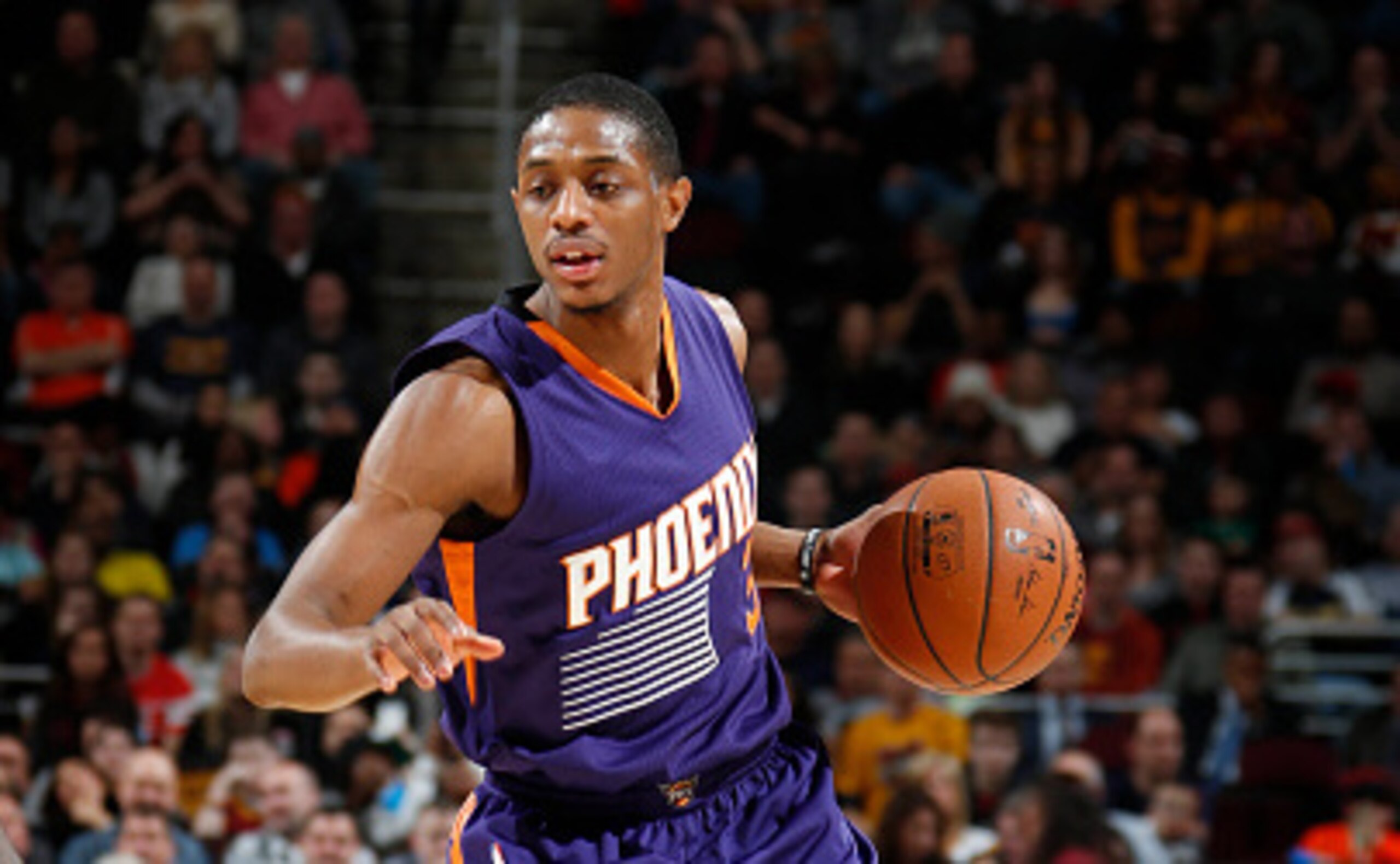
Scoring
Brandon Knight finally figured out how to make himself into an elite floor-spacing point guard, firing away 5.1 times per game and flirting with 40 percent shooting from beyond the arc all season before finishing at 38.9 percent. He wasn't particularly effective after being traded to the Phoenix Suns in mid-February, but his scoring wasn't anything to scoff at before he left the Milwaukee Bucks.
Non-Scoring Offense
Perhaps because he creates so much offense for himself, Knight can still struggle at times as a spot-up shooter. He's quite good in that role, but defenses could sometimes get away with sagging off to prevent a fellow guard's penetration. More consistency and fewer turnovers in the passing game would do him wonders.
Defense
Knight has the physical tools necessary to be a lockdown defender, but he's still too undisciplined. He flits around the court and wreaks havoc off the ball, but he gambles a bit much when his man has the rock, leading to a decent amount of steals but lackluster on-ball numbers. Knight simply shouldn't struggle in isolation nearly as much as he does.
Rebounding
Just on the verge of earning four of five points as a rebounder, Knight is held back by a relative lack of opportunities on the glass. When he does go after a loose ball, he's quite good at successfully converting the rebound, regardless of who else is in the vicinity, but he's passive a bit too often.
Intangibles
Before he was forced to have arthroscopic surgery on his left ankle, there wasn't much to complain about here, as Knight was quite durable throughout most of the season—a sprained ankle in the early days of March notwithstanding. Prior to his season-ending injury in early April, he played heavy minutes and fought his way through minor aches and pains all year.
Overall
It's not particularly difficult to see why the Suns are investing in Brandon Knight. Though he struggles more than he should in some basic defensive situations, he has the tools necessary to be a two-way floor general, especially now that his shot is finding itself on target increasingly often. Knight should have received strong All-Star consideration while he was with the Bucks, and it wouldn't be surprising for that to be true in Phoenix down the road.
42. Rudy Gay, Small Forward, Sacramento Kings
56 of 97
Scoring
Rudy Gay still fired away from beyond the arc quite often during his first full season with the Sacramento Kings, but he also played to his strengths with increasing frequency. He worked out of the post and attacked the hoop, trying to find his way to the free-throw line as often as possible. Obviously, it was a positive change.
Non-Scoring Offense
Thanks to one of the best shooting seasons of his career, Gay excelled as a spot-up threat. That was doubly true because he could also use his athleticism to burst to the basket and make a defender pay as soon as his head swiveled. His passing was lackluster—at best—but he still earns a solid score here for his overall non-scoring offense.
Defense
Gay (6'8") might have the physical profile of a defensive stopper, but that's not exactly how he plays. Though he graded out quite nicely for his work trailing shooters who were attempting to extricate themselves from the defense, the same was not true for his on-ball work. For whatever reason, it was inexplicably easy to score on Gay in isolation settings, as players constantly caught him leaning the wrong way.
Rebounding
Hooray for hops—the kind that help Gay elevate above the outstretched arms of other players and pull down a contested board. It isn't easy for a wing player to grab two of those during his average outing.
Intangibles
Can we quit with the idea that Gay's departure makes teams better? That's been true in the past, but he's a changed player who now spends his time actively working to improve, both physically and mentally. A handful of maladies kept him out in 2014-15, preventing him from showcasing those strides on the court for more than 68 games, but that's all that held him back.
Overall
Kudos to Gay for making the necessary improvements to his game and starting to justify his exorbitant salary. He gained self-awareness in 2014-15, realizing that he should attack more and use his post-up skills to his advantage, and the rest of his game fell into place. Now, defensive focus is the next step in the ongoing development of this 28-year-old small forward.
41. Greg Monroe, Combo Big, Detroit Pistons
57 of 97
Scoring
Greg Monroe may be a plodding, paint-bound big man who would fit better in the NBA of the 1980s and 1990s, but he was still quite good as a scorer for the Detroit Pistons. Whether he's facing up from the elbows and attacking the paint, dazzling with his back to the basket or doing some combination of the two, he has a vast array of moves without sacrificing his efficiency.
Non-Scoring Offense
A smart cutter with great hands, Monroe is another one of those nontraditional off-ball threats who still manages to excel. He's by no means a standout in that area, but he's at least competent enough to draw attention. Interestingly enough, his passing falls into the same category.
Defense
Slow feet and limited athleticism don't normally go hand-in-hand with solid defensive play. Monroe is able to use his size to his advantage when working against post-up players or attempting to protect the rim, but that's often all he has going for him.
Rebounding
Throughout his career, Monroe has steadily improved on the glass, learning the nuances of positioning and using them advantageously. This year, his line was something special, as he was seemingly involved in every rebounding opportunity while on the court and did a remarkable job of pulling in contested boards. Only two players at his position managed to beat him in that category.
Intangibles
This season could have gone a lot differently after an offseason battle that resulted in Monroe accepting a qualifying offer and showing no desire to remain in the Motor City. But he remained professional throughout the year, only losing points for other reasons. One stemmed from a two-game suspension for his offseason DUI. The other resulted from right knee trouble that limited him for much of March.
Overall
Monroe was quite impressive after all the offseason drama, working nicely in head coach Stan Van Gundy's offense and opening up the possibility of a return to the Detroit Pistons. Without Josh Smith's presence clogging up the paint, he excelled on offense and was quite good on the boards as well. Defense will always be an issue, but the man fondly known as "Moose" has plenty of other redeeming traits.
39(tie). Goran Dragic, Combo Guard, Miami Heat
58 of 97
Scoring
Though Goran Dragic resonated on a historical scale for his 2013-14 scoring efforts—his combination of efficiency and shot-creating ability was quite unique over the last few decades—he took a step backward this season. The slithery guard's true shooting percentage dropped from 60.4 percent in 2013-14 to 57.7 percent this year, and he spent far less time working off the bounce during his partial season with the Phoenix Suns. And he's still the top-rated scorer at his position.
Non-Scoring Offense
If there's one combo guard you don't want to neglect when he's working without the ball, it's Dragic. He's quite good at spotting up on the wings and draining perimeter jumpers, but he also has the body control necessary to slip through tight openings and free himself while cutting to the hoop. Giving him any space is asking for trouble.
Defense
Not a particularly active defender, Dragic truly struggles when screens are involved. Not only can his marks use them to gain separation off the ball, but he has trouble making the proper on-the-fly decisions when guarding a pick-and-roll ball-handler. He's not atrocious in either area, but the Heat would probably prefer for him to keep out of those situations as much as possible going forward—assuming he re-signs with them this summer.
Rebounding
Dragic isn't your typical rebounder out of the backcourt. He's better than most at working through contact and hauling in a board with players in his general vicinity, but he's not as skilled when reading bounces off the rim. For a shifty player with great spatial awareness, Dragic struggles far more than one might expect when chasing uncontested rebounds.
Intangibles
Though this guard left the Phoenix Suns in a lurch when he declared that he wanted out right before the deadline, he still played his heart out on the court. Feeling betrayed by the team's management is not a conduct issue, so there's no reason to penalize Dragic for thinking that he was misled and still trying to compete.
Overall
Dragic's follow-up to last year's breakout campaign wasn't nearly as impressive, but he remained a high-quality guard who's capable of either running the show from the point or thriving as a spot-up shooter on the wings. He's turned into a "true" combo guard, even if he may be under the impression that he belongs as a 1-guard only—his work at the 2 simply screams otherwise.
39(tie). Kevin Love, Power Forward, Cleveland Cavaliers
59 of 97
Scoring
It took a while for Kevin Love to adjust to his new teammates. Rather than serving as the No. 1 option, as he did throughout the last few years with the Minnesota Timberwolves, he was playing third fiddle to LeBron James and Kyrie Irving. But after an early-season slump, Love started to figure out how to handle declining touches in the post and ended up with at least a solid scoring season.
Non-Scoring Offense
Passing is the only weakness here, and that's largely a function of his role on the team. Love was an adept distributor during his time in Minnesota, but he didn't handle the rock often enough to rack up gaudy assist totals during the 2014-15 campaign.
Defense
Even though he had to expend less energy on offense, Love didn't exactly make major defensive strides. He was quite porous in most areas, especially struggling when he was working off the ball, as he'd get caught watching the proceedings and give up either an easy jumper or deep positioning for a post play. And once the ball was in the post, he still wasn't very good at the whole defense thing.
Rebounding
When Love gets a player on his back, that player ain't grabbing the rebound. His lower body is way too strong, and he understands exactly how to get position when a shot goes up, even if he begins the play on the perimeter. And this was during a slight down season on the glass.
Intangibles
Love may not have been in the featured role he was accustomed to, but he still went about his business in a professional manner and tried to adapt. All the while, he stayed fairly healthy, as his recurring back injury didn't quite force him out of enough games to see a point docked. A Kelly Olynyk-caused shoulder surgery knocked him out of the playoff proceedings, but that doesn't factor into our analysis.
Overall
It's a bit strange to see Love, a 26-year-old star just entering into his athletic prime, declining so much. But this was a new experience for him, and it'll all be worth it if the Cleveland Cavaliers manage to win a title. Plus, as we've seen from Chris Bosh in the past, early struggles don't necessarily rule out a return to prominence in coming seasons, as Love should be even more comfortable next to James and Irving next year—assuming he chooses to return to Northeast Ohio for another go-round.
38. Zach Randolph, Power Forward, Memphis Grizzlies
60 of 97
Scoring
Though he tried expanding his range at various points throughout the season, Zach Randolph was still best when sticking to his bread and butter. Bread: dazzling with his post moves from the blocks. Butter: going after offensive rebounds and then sticking the putback attempts.
Non-Scoring Offense
Randolph isn't a floor-spacing option, but he's a big, immovable body. As he should, he sets plenty of brutal screens that open things up for his teammates. Unfortunately, his passing skills are still pretty nonexistent, as he had trouble outdoing his turnover numbers with his assists.
Defense
Even if he doesn't have the athletic tools necessary to be a great defender—it's hard to protect the rim when it's tough to slide a piece of paper under your vertical leap—Randolph is a smart one. He knows when to jump into passing lanes, and he understands positioning in just about every situation imaginable.
Rebounding
Randolph is a force to be reckoned with on the glass, even while playing for a Memphis Grizzlies squad that produces an average number of rebounding opportunities during a typical game. He creates an insane number of chances for himself, and no player at his position is even close to matching his work in the contested department.
Intangibles
A right knee injury shortly before Christmas knocked Randolph out of the lineup for nearly three weeks, and that's obviously not a good thing for his durability. At least it was the only major negative during the 2014-15 season.
Overall
Randolph is the same player he's been for years—a smart, physical, chippy and passionate big man who's going to score out of the post and dominate on the glass. Expecting him to become a dominant defender, a dynamic distributor or a floor-spacing phenom is ill-advised at this point, but the Grizzlies are surely more than happy with what they're already getting from this 33-year-old veteran.
37. Chris Bosh, Combo Big, Miami Heat
61 of 97
Scoring
No longer a tertiary option behind LeBron James and Dwyane Wade, Chris Bosh took on significantly more responsibility this season. But as the Miami Heat increased their reliance upon him, he didn't revert back to his Toronto Raptors days and establish himself in the post all that frequently. Instead, he was still a stretch big, and that cost him some efficiency, despite the abundance of points he provided in South Beach.
Non-Scoring Offense
Only two combo bigs received perfect 10-of-10 scores for off-ball offense, and thanks to his penchant for drilling spot-up triples while terrifying defenses with his sheer presence on the perimeter, Bosh was one of them. Passing was the only thing holding him back here. Though heavily involved in the game at all times, he did record an identical number of assists and turnovers.
Defense
Bosh is an adept defender in most situations, but he's misplaced when head coach Erik Spoelstra asks him to serve as the last line of defense. It just isn't going to work, as he's a rather lackluster rim protector. Allowing the opposition to shoot over 55 percent there isn't exactly something you want to brag about.
Rebounding
Bosh's rebounding skills have been much maligned during his time with the Heat, but that's largely due to how much time he spends out on the perimeter, whether he's spacing the court for his team or avoiding rim protection. He actually grabs a high percentage of his available chances, and it doesn't help that Miami produces some of the least team opportunities per game.
Intangibles
The strained left calf was minor. The blood clots in his lungs were not, to the point that the first priority was making sure Bosh would be healthy in the coming years—not days or weeks. Fortunately, he should recover fully, even if he's losing two durability points this season.
Overall
Bosh was having yet another strong season before his unfortunate hospitalization and subsequent diagnosis after the All-Star break. Thriving on offense as the go-to option and holding his own on the defensive end—when away from the rim, of course—he cemented himself as an All-Star for the 10th consecutive season and seemed as if he'd lead Miami back into the playoffs. Now, he has all of our best wishes as he tries to make the journey back for next season.
36. Kawhi Leonard, Small Forward, San Antonio Spurs
62 of 97
Scoring
Remember, we're looking at the sum total of the season, not the level at which a player finished the year. If that were the case, Kawhi Leonard would end up receiving a handful more points in this category, thanks to his remarkable improvements as a go-to scorer who could rely on his touch shots and jumpers to churn out 20-point outings. Sadly, that's not what's going to happen here.
Non-Scoring Offense
If Leonard has one area in which he needs to improve, it would be this one. He can sometimes struggle in catch-and-shoot situations, preferring instead to attack the basket, and he's not a particularly skilled passer. Both of those should come with time, especially because the constraints of Gregg Popovich's offense are constantly being lifted for this burgeoning superstar.
Defense
Of course Leonard, the 2014-15 Defensive Player of the Year, is going to receive one of the NBA's top marks for his defense. He's as good as it gets, using his long arms and active hands to wreak havoc in just about any situation while displaying the perfect type of stopper mentality. We're admittedly picking at nits here, but the only thing holding him back from a score of 40 is his work off the ball—a natural byproduct of gambling in the passing lanes so frequently.
Rebounding
No player at the position received a higher rebounder rating, though Leonard's wasn't impressive enough on the position-less scale to merit a perfect score. Still, he's unbelievably good at recording contested boards, and he grabs a remarkably high percentage of his opportunities: more than 70 percent, which is incredible for someone so involved.
Intangibles
If you're worried about Leonard's conduct, just remember that he would have to talk in order to say something stupid. Even the words that do escape his vice-like lips aren't ever negative. And it's not as if he's done anything foolish while he's keeping his mouth shut and maintaining a vacant expression on his face. Only injuries are troublesome here, as his eye issue kept him out at the beginning of the year, and his right hand did the same later on.
Overall
The San Antonio Spurs are unfair. Tim Duncan is finally moving toward the end of his career, while Tony Parker spent much of the season declining. Rather than looking as if they're going to fade away into the morass of mediocre teams, the Spurs just hand more responsibility to this rising superstar. For what it's worth, Leonard also would have fared much better if we compiled grades based only on what transpired at the end of the season. Were that the case, his grade would've finished in the 87-89 range.
35. Wesley Matthews, Shooting Guard, Portland Trail Blazers
63 of 97
Scoring
When you're this good from beyond the arc, you're going to fare well as a scorer. Wesley Matthews was averaging 7.4 attempts per game from downtown and connecting at a 38.9 percent clip when he went down for the season with a torn left Achilles, and that puts him in rarefied air. Over the last 10 years, there have only been 12 instances of a player attempting more than seven triples per game in a qualified season; just eight been more efficient than this Portland Trail Blazers 2-guard.
Non-Scoring Offense
The only thing holding Matthews back here is a lack of passing chops, which isn't particularly unusual for a shooter who thrives off the ball. This Rip City shooting guard did manage to record more assists than turnovers, but he assisted just 10.8 percent of his teammates' made shots when he was on the court.
Defense
Matthews lived up to his three-and-D label by thriving both on and off the ball during the 2014-15 season. Going against this 2-guard in a one-on-one situation usually didn't turn out very well for whoever was foolish enough to make that decision.
Rebounding
Just as has been the case for much of his career, Matthews was quite average on the glass. He rarely made a huge impact on the boards, topping out at eight on four separate occasions. But he also rarely laid on egg, going without a single rebound in only two of his 60 appearances.
Intangibles
Is Rip City ever going to get a prolonged break from the pesky clutches of the injury imp? Matthews was the victim this season, tearing his Achilles during a March 5 contest against the Dallas Mavericks. He hadn't missed a game prior to the injury, but it still limited him to only 60 appearances.
Overall
Portland was significantly better on both ends of the court when Matthews played in 2014-15, and that's largely because he's the best example we have of a true three-and-D wing player. The 2-guard thrives as a spot-up marksman, but he's equally adept at shutting down the opposition, both on and off the ball. In a league that values spacing more than ever before, it's only appropriate that Matthews is shooting his way up the rankings, even with his season-ending injury factored in.
34. Jrue Holiday, Point Guard, New Orleans Pelicans
64 of 97
Scoring
Jrue Holiday hasn't been the same since he was traded away from the Philadelphia 76ers after the 2012-13 season. Though he's becoming a better floor-spacing option, he struggles inside the arc and doesn't attack the basket with nearly the same ferocity. Finding it hard to earn even two free throws per game isn't a recipe for efficiency when you're normally a player who struggles to make anything close to half of your shots from the field.
Non-Scoring Offense
When Holiday is on the floor, teammates have to keep their heads on a swivel. He's more than capable of finding open men through traffic, whether he's running the break or operating in one of Monty Williams' half-court sets for the New Orleans Pelicans. Though shot selection is occasionally an issue, passing selection typically isn't.
Defense
Few players are better at defending than Holiday while simultaneously failing to get much widespread credit. Though this point guard is quite adept at shutting down his man and equally strong working off the ball, his work often seems to get overlooked. Probably not by the Pellies themselves, though, as having him on the court leaves the bigs free to patrol more territory.
Rebounding
Holiday doesn't get too many rebounding opportunities, but he sure makes the most of them. Not only is he good at reading where the ball will end up, but he has strong hands that allow him to make sure it looks like he's wearing sticky gloves in traffic.
Intangibles
Is Holiday ever going to stay healthy? After playing just 34 games during his first season by the bayou, the point guard was similarly limited this year. A stress reaction in his lower right leg kept him out for a huge chunk of the season, forcing the Pelicans to fight for a playoff spot without his services.
Overall
Let's pretend that Holiday had stayed healthy, played a full season and still managed to keep the rest of his numbers right where they are now. If that were the case, he'd receive an 84 grade, which would leave him in a tiebreaker for the No. 5 spot at his position. Holiday is that good when he's healthy, even if that's a huge conditional for this fragile floor general.
33. Derrick Favors, Power Forward, Utah Jazz
65 of 97
Scoring
Derrick Favors flew below the radar all year as a scorer, and that's largely because he was so consistently good without being truly great. Though he only broke the 30-point barrier once—32 against the Phoenix Suns at the very beginning of the season—and rarely scored even 25, he averaged 16 points per game in highly efficient fashion. Thriving as a roll man and scoring out of the post might not earn national recognition, but it certainly helped the Utah Jazz.
Non-Scoring Offense
Favors isn't much of a floor-spacing threat, but he's a tremendous roller who can finish around the rim, and he sets great screens that free up his teammates. Getting over half the available points for off-ball offense isn't an easy task for a power forward who took only slightly more than 10 percent of his shots from beyond 16 feet, but that's exactly what this Georgia Tech product did.
Defense
Good luck finding a major weakness here. Favors was one of the better rim-protecting presences at his position, and he fared quite nicely both on and off the ball. There were some occasional mental lapses against spot-up shooters—as Favors preferred to work on the interior and hedged over there—but his biggest issue came when he found himself in an isolation setting, which didn't happen all that often.
Rebounding
In terms of per-minute numbers, this was actually Favors' worst season on the NBA glass, and he was still quite good, hauling in nearly 10 boards per 36 minutes. Beyond that, he was one of the league's few power forwards capable of grabbing four contested boards in a typical game, as he thrived off physical play and spent a lot of time right around the basket.
Intangibles
Favors played in just enough games to avoid losing a point, though back spasms, the flu and a sprained right ankle almost pushed him down to 9-of-10 here.
Overall
One of the most underrated players in the league, Favors deserved to be getting attention all year long. His name simply wasn't mentioned alongside Gordon Hayward and Rudy Gobert for much of the season, but he thrived in relative obscurity. He's a tremendous asset on both ends who can become a true household name if he adds some jump-shooting range and frees up the paint.
32. Mike Conley, Point Guard, Memphis Grizzlies
66 of 97
Scoring
Mike Conley's shooting just keeps getting better. For the first time since gaining heavy involvement in the Memphis Grizzlies' scoring column, he flirted with 40 percent from long range before finishing at 38.6 percent. Similarly, he made more shots per game from the charity stripe than he ever had (3.1, which ties his 2013-14 mark for a career high) by virtue of attacking the basket and converting at an impressive clip (85.9 percent). Now, he just needs to get more accurate from inside the arc.
Non-Scoring Offense
That improved shooting has made Conley into a dangerous off-ball threat who demands constant defensive attention. However, the same improvements didn't apply to his passing, as the southpaw stopped recording assists as often as he did last year and struggled with turnovers more than ever before. Time to tighten up those handles.
Defense
Conley wasn't quite as dominant as we're used to seeing him on the less glamorous end this year. Not only did he struggle in isolation, but he fared poorly in pick-and-roll sets. For whatever reason, he was far less special in that area during the 2014-15 campaign, sometimes getting blindsided by screens and not recovering to his man in time to make a play.
Rebounding
About as average as it gets on the glass for a point guard, the lefty generally contributes with a few boards but rarely posts big rebounding numbers. He tends to earn a healthy mix of the uncontested and contested varieties.
Intangibles
Though an ankle injury kept him out for a few games in March, Conley nearly spent enough time on the court—as a heavily featured, two-way player, no less—throughout the season to remain perfect in this category. A right foot strain was his undoing in that quest.
Overall
If Conley is trying to shake the "underrated" tag once and for all, this was not the season with which he'll do so. Though he improved his shooting stroke—and his confidence in the motion—the rest of his game was filled with slight regressions that just kept him from joining the class of truly elite floor generals.
31. Gordon Hayward, Swingman, Utah Jazz
67 of 97
Scoring
Gordon Hayward can score from nearly anywhere in the half-court set, and he does so while creating 70.1 percent of his makes from inside the arc. Unlike last year, when he was still figuring out how to play without Al Jefferson and Paul Millsap drawing away defensive attention, the Butler product thrived as a No. 1 option. Night in and night out, he was a reliable and versatile scoring presence.
Non-Scoring Offense
There's no major weakness here, as Hayward is quite adept at feeding his teammates and spacing out the court when someone else is handling the rock. Keep in mind that many of his turnovers come because he lost his handle while dribbling; his bad passes came quite infrequently when compared to his assists.
Defense
Though Hayward isn't a great defender, he's at least a solid one who can hold his own while some great interior presences protect him. It's a bit easier to gamble on the ball or cheat away from cutters when Rudy Gobert is guarding the rim behind you, for example. But if this swingman is going to improve, it's going to be by showing more discipline when guarding a spot-up shooter, as he was prone to opening up too large a space between himself and his man, especially when the bigs already had the help defense covered.
Rebounding
Hayward's defensive rebounding percentage remained at 14.0 this year, proving that his massive jump in 2013-14 was no mere fluke. Even more impressively, this proof came despite spending a lot of time on the court with big men who inhale rebounds like kids do candy on Halloween. He could stand to get a bit stronger so that he can grab more contested boards, but it's hard to knock him too much given his situation.
Intangibles
A back injury and some shoulder trouble kept him out of the lineup for small bits of March, but there was never anything serious enough for him to miss substantial time. Given his heavy involvement and massive amount of minutes, Hayward was quite durable.
Overall
The baby-faced boy who missed the game-winning attempt against Duke is all grown up now. He's a seasoned basketball player who's comfortable in a lead role for a team on the rise. He's no longer rocking the bowl cut. He's put on significant amounts of muscle to help him endure the grind of the 82-game season. And if he keeps trending in this direction, he'll soon have a chance to play more than 82 times in a season.
30. Serge Ibaka, Power Forward, Oklahoma City Thunder
68 of 97
Scoring
Throughout the first five years of his career, Serge Ibaka took a total of 123 three-point attempts in the regular season. This year, he took 205 before he was lost to injury, and he hit them at a 37.6 percent clip. Adding that into his offensive arsenal meant that he was an even more valuable scorer, even if he yet again failed to up his per-game average while stars were missing from the Oklahoma City Thunder lineup.
Non-Scoring Offense
If only Ibaka could pass. His ability to serve as an off-ball threat was better than ever this year, thanks to the aforementioned development of his three-point stroke, but he couldn't distribute the rock out to his teammates with any sort of accuracy. Not once did he record more than three assists in a game, and he only managed to do that on three separate occasions.
Defense
Only one power forward received a perfect 10-of-10 for his rim-protecting work, and that would be this Congolese big man. After all, he held opponents to 40.8 percent shooting right at the basket, a number that came while he faced 9.3 shots per game in the closest zone. Only Andrew Bogut, Roy Hibbert and Rudy Gobert graded out higher at any position.
Rebounding
Another strong player when rebounds are contested, Ibaka struggles most as a volume glass-eater, and that's largely because of his role on the Thunder. He's often asked to spread out the defense, which prevents him from earning easier offensive rebound opportunities, and his versatility on defense sometimes pulls him away from the hoop as well.
Intangibles
Ibaka stayed quite healthy throughout much of the year—a rarity in OKC this season—but only until the middle of March. At that point, he was shut down to have surgery on his sore right knee, knocking him out for the remainder of the campaign with only 64 games played.
Overall
For years, the Thunder have presumably hoped that Ibaka would blossom into a go-to offensive player, but that seems just about hopeless now. He's developed, but only because he's expanded his range, not because he's added to his role or level of responsibility as a scorer. Even still, it's hard to complain about a yearly Defensive Player of the Year candidate gaining some three-point ability at the 4.
29. Nikola Vucevic, Center, Orlando Magic
69 of 97
Scoring
There are few situations in which Nikola Vucevic can't score, thanks to his growing number of post moves, a strong mid-range jumper and his ability to put the ball on the floor against any type of defender. The next step of this 7-footer's development will involve taking and making some three-point attempts—he went 2-of-6 from downtown this season—but it's not as if he needs any massive improvement to fare well as a frontcourt scorer.
Non-Scoring Offense
Vucevic developed a potent mid-range jumper this season, but he's far deadlier when he begins with the ball in his hands. He has plenty of room for improvement as an off-ball threat, and the same is true of his passing, since he often misses the mark when trying to hit players who are spotting up on the perimeter, forcing them to adjust to his feed and taking precious time away before the contest comes.
Defense
Though he did improve throughout the season—especially when James Borrego replaced Jacque Vaughn as the Orlando Magic head coach—Vucevic shouldn't brag about his defensive abilities. He's not particularly mobile, and his timing is often slightly delayed as he figures out how he should react to the play that's developing.
Rebounding
Vucevic doesn't explode for 20-rebound games quite as often as some of the other best glass-eaters in the league—his only such contest was a season-opening 23-board performance—but he's consistent. While he could stand to grab a few more contested rebounds, that's about the only gripe about his game after a shot goes up.
Intangibles
Back spasms limited Vucevic at the beginning of the season, and a sprained ankle kept him out briefly in early March. But even combined, they weren't enough to force him out of more than eight games, so he just barely avoids losing a durability point.
Overall
Was this the season that Vucevic became more than an underrated center who was beloved by fantasy basketball owners all over the world? He's not exactly providing meaningless production as he throws up double-doubles, and he should function as a centerpiece of the Magic rebuild, despite the prominence of other young players.
28. Pau Gasol, Combo Big, Chicago Bulls
70 of 97
Scoring
Does Pau Gasol sometimes interrupt the flow of the Chicago Bulls offense with his methodical approach? Sure, but it works for him. The 34-year-old Spaniard turned back the clock throughout the 2014-15 season, averaging 18.5 points per game, making nearly half of his shots from the field and getting to the charity stripe more than he had since the 2010-11 campaign. His offensive arsenal is brimming over with accurate jumpers and crafty moves in the paint, and he's prepared to use any of them at any given moment.
Non-Scoring Offense
Though Gasol doesn't spread the court as well as he does for Spain during FIBA play and rarely makes aggressive cuts toward the hoop, he's still always going to draw some defensive attention. His passing is also a positive, though it might not seem quite as impressive next to Joakim Noah's distributing brilliance.
Defense
Gasol is the Derek Jeter of NBA defense. Many of his metrics look quite good, but they're misleadingly strong because he has such limited range, preferring to pick and choose his spots and often letting ground balls driving ball-handlers blow right by him en route to the basket. It shouldn't be surprising that his off-ball score is what's holding him back here.
Rebounding
Where in the world did this come from? Prior to this season, Gasol's career high was 11.3 rebounds per game back in 2009-10, and he was at 11.8 during his first go-round with the Chicago Bulls. He also set new high-water marks in rebounds per 36 minutes (12.3), total rebounding percentage (18.6) and defensive rebounding percentage (27.6) during his...wait for it...age-34 season.
Intangibles
Even though he falls squarely into the "aging veteran" category, Gasol stayed quite healthy and happy throughout the year. A strained calf gave him some trouble in November, but that issue went away nearly as quickly as it popped up.
Overall
It's safe to say that Gasol isn't washed up. He wasn't particularly motivated during his final season with the Los Angeles Lakers, nor was he completely healthy, and he proved just how much he has left in the tank after signing with the Bulls. Though his defense was spotty, he was a huge asset to a team ravaged by injuries, recording more double-doubles than anyone else in the league and helping his squad remain near the top of the Eastern Conference.
27. Dwight Howard, Center, Houston Rockets
71 of 97
Scoring
Even without developing new post moves or showcasing his pre-injury explosiveness from the blocks, Dwight Howard still excelled as a roll man and scorer right around the basket, so long as he wasn't fouled and sent to the charity stripe. It's a shame that he hasn't developed more over the years, but that's irrelevant to his score here.
Non-Scoring Offense
Howard is a brutal screener who thrives in the roll game, to the degree that it's almost pointless to complain about his lack of floor-spacing ability. The Houston Rockets are still a better offensive team with him on the court, and it's because defenses have to do a lot to deny him the ball right around the hoop. Plus, it helps that his passing isn't as atrocious as that of his positional counterparts.
Defense
At the beginning of the season, Howard had to take more time to gather himself before exploding up to contest a shot around the rim. That changed, but not until the end of the regular season, and at that point, it was too late for his defensive score. This Houston center was still a game-changing presence who thrived as the last line of defense and when rolling with other bigs, but he wasn't the transcendent defender he had been when healthy.
Rebounding
In previous years—sensing a theme?—Howard was fully capable of averaging more than five contested boards per game, but he was more hesitant to go up in traffic this season. That was understandable, given his fragile state and the seemingly never-ending stream of injuries, but it didn't help him stand out as one of the game's best rebounders in 2014-15.
Intangibles
It's all about injuries here, even if Howard still rubs many fans the wrong way and was fined $15,000 in January for shoving Kevin Garnett. Between dealing with the flu and his trouble with both his right knee and right ankle, he missed an awful lot of time.
Overall
This was not vintage Howard. But in a way, that's a compliment to the Rockets big man, because he was still darn good when he was healthy. Despite playing through the injuries and clearly operating at less than 100 percent for much of the year, he would have graded out with 85 of the possible 100 points if he'd stayed on the court all season.
26. DeAndre Jordan, Center, Los Angeles Clippers
72 of 97
Scoring
Efficiency helps. DeAndre Jordan is by no means a volume scorer, and his performances at the free-throw line are uninspiring. However, no player in the league is better at ensuring that all of his shots come from right at the rim, and as a result, Jordan shot a staggering 71 percent from the field. Throughout all of NBA history, Wilt Chamberlain's 72.7 percent in 1972-73 is the only one to beat that mark.
Non-Scoring Offense
Passing? Jordan isn't going to do much of it, unless he's kicking the ball out to reset the play after a failed post-up situation. Spacing? Hah. Rolling? Now we're talking, as the athletic center is one of the best pick-and-roll finishers in the Association.
Defense
Jordan may not be a legitimate Defensive of the Year candidate, but that doesn't mean he's anything less than excellent on the point-preventing end. He's fantastic at deterring post-up shooters and roll men. He's quite adept at dealing with stretchier bigs and using his springs to contest mid-range jumpers. But his weakness comes right at the rim, where his vicious rejections have masked some occasionally porous defense and poorly timed rotations.
Rebounding
Easily the best rebounder in basketball, Jordan was a flat-out monster whenever a shot went up and failed to find the twine. Whether he was crashing the offensive or defensive boards, he just inhaled rebounds, and it didn't matter who was in his way en route to his league-high 15 rebounds per game. Rebounder rating, our basis for these scores, essentially shows that at the time of our data collection (March 10), Jordan would have grabbed nearly 12 boards per game if every opportunity was contested. No other player in the league finished in double digits.
Intangibles
It's almost inconceivable that a 7-footer who spends so much time above the rim can play nearly 35 minutes per game and suit up in every single contest. In many ways, Jordan deserves a 6-of-5 for his durability this season, though that's against our rules.
Overall
If any player could dominate a game without scoring this season, it would be Jordan. Of course, he still provided plenty of efficient points for the Clippers, but his knack for dominating the rebounding column and anchoring the LAC defense made him far more valuable in other areas. His rise when Blake Griffin was recovering from his staph infection was no mere fluke, as he proved after the return of his frontcourt mate.
25. Paul Millsap, Power Forward, Atlanta Hawks
73 of 97
Scoring
Paul Millsap might not be a 20-point scorer for the balanced Atlanta Hawks, but he doesn't need to put up gaudy totals in order to thrive. He can score from just about any area of the half-court set, whether he's spacing out a defense with his distance shooting, attacking on the baseline or using his devastating pump fake to free up space.
Non-Scoring Offense
The versatility continues. Millsap isn't a strong enough outside shooter to truly thrive as an off-ball threat, but he makes up for it with his impressive passing. While keeping his mistakes under control, Millsap was more than capable of making just about any feed that Mike Budenholzer's offense required—entry passes, swings into the corners or tough bounce passes to cutters.
Defense
Millsap is a smart defender, but his undersized nature can sometimes hold him back, both when he's defending the post and attempting to protect the rim. It's worth noting that he's not terrible in either area, but those are two of his biggest weaknesses on the less glamorous end.
Rebounding
Though he's short of stature, Millsap has long arms that make up for his height disadvantage. That shows up quite nicely on the glass, where he plays far bigger than most 6'8" players. This power forward is extremely aggressive when going for rebounds, to the point that he could probably stand to leak out in transition a bit more often, rather than going for boards he doesn't really have a chance at.
Intangibles
A sprained right shoulder near the end of the season almost pushed Millsap into the 9-of-10 category, but it's important to remember that a handful of his missed games came because Budenholzer was keeping him fresh after the Hawks had locked up the No. 1 slot in the Eastern Conference.
Overall
Millsap was the glue guy for the Hawks throughout the 2014-15 campaign, but he was also so much more. What couldn't this forward do? Though he has limited upside on any given night, he can also do whatever Budenholzer asks of him, especially on the offensive end of the court. And somehow, defenders still haven't caught on to the deception of his lethal pump fake from the perimeter.
24. Carmelo Anthony, Small Forward, New York Knicks
74 of 97
Scoring
Carmelo Anthony isn't quite efficient enough to merit a perfect score here, but he does just about everything else you could want. He knocks down threes but also gets to the charity stripe and hits his freebies at a solid clip. He's a volume shooter who spends his time near the league lead in points per game, and he also has no trouble creating his own shot in the face of constant defensive attention.
Non-Scoring Offense
Defensive schemes are built to stop Anthony from exploding in the points column, and that remains true even when his shot is awry for an entire 48 minutes. No defender wants to be the one who finally assumes this former scoring champ is ice-cold and then gets torched. His passing isn't nearly on that level, but for the second season in a row, it's underrated, held back by a set of teammates who squander far too many of his on-target feeds.
Defense
Anthony will never be a defensive stopper, but at least he's willing to put in the effort. On the ball, he's surprisingly adept at navigating through pick-and-roll sets, shutting down isolation scorers and guarding a back-to-the-basket scorer in the post. It's off the ball where he loses focus and is prone to making positioning mistakes that leave the New York scheme extremely vulnerable to probing.
Rebounding
Though he wasn't quite as dominant on the glass as he was in 2013-14, Anthony remained a stellar rebounder who almost seems to enjoy when he draws contact in the air. He's in no way afraid of fighting for a missed shot in traffic, nor should he be. After all, he converts those chances quite nicely.
Intangibles
Anthony's knee gave him trouble all season long, ultimately limiting him to just 40 games played. Obviously, that doesn't speak too kindly about his durability, though he does get looked upon favorably for trying to gut it out before the post-All-Star break shutdown.
Overall
Even though he didn't play during the second half of the season, Anthony remains a bona fide superstar who's been dealt a terrible supporting cast. Granted, he put himself in this position by choosing to stay with the New York Knicks instead of leaving for a contending squad, but even he couldn't have imagined that his team would be this bad.
23. Jeff Teague, Point Guard, Atlanta Hawks
75 of 97
Scoring
Jeff Teague's floater game is often immaculate, as he's able to turn a little bit of space into a successful conversion after using his speed to gain that small piece of separation. He's also able to create his own shot shockingly often, given that he plays in a Mike Budenholzer system that prioritizes assists. But one enduring weakness remains—an inconsistent perimeter stroke.
Non-Scoring Offense
Even though his overall perimeter shooting is weak, Teague excels as a spot-up marksman when he's allowed to do so, and his off-ball cuts seem eerily reminiscent of the work done by a certain point guard Budenholzer coached while he was an assistant for the San Antonio Spurs. Nonetheless, it's passing that helps Teague stand out most, as he's the primary reason Atlanta's ball-movement-heavy system hums to such a strong degree.
Defense
Good but not great—that sums up just about every aspect of Teague's defense, save one. It's impossible to post him up successfully. Twenty-one players tried throughout the season, and they scored only 0.29 points per possession.
Rebounding
Partially because the Hawks always get back in transition rather than crash the offensive glass, Teague doesn't get many rebounding opportunities. But he tends to convert a large percentage of them, even when other players are within an arm's reach and fighting for the missed shot.
Intangibles
There's no reason to complain about Teague's conduct or durability. A hamstring injury briefly kept him out of action in December, but he's been healthy and fought through the minor maladies during the rest of the season.
Overall
If you're looking for one of the biggest reasons for the Hawks' flight to the top of the Eastern Conference, you've found him. Though depth, the system and the rest of the starters all had massive impacts, Teague's improvement—developing from a solid starter into a star who could carry the team in crunch-time situations—was unbelievably crucial.
22. Draymond Green, Combo Forward, Golden State Warriors
76 of 97
Scoring
Draymond Green is by no means a top-notch scoring threat, but he's a self-aware player who rarely tries to make an impact outside his skill set. He can knock down some three-pointers even if he's not particularly efficient from beyond the arc, and he's also able to put the ball on the floor and go to work from inside the arc. There's not much to write home about here, but there's also not much to complain about.
Non-Scoring Offense
Green doesn't thrive as an off-ball threat, often drawing rim in catch-and-shoot scenarios that require a quick release. He's not a terrific cutter either, as it's physicality that typically allows him to stand out. At least his passing is quite good for a combo forward, thanks to a third straight season of significant improvement.
Defense
This tough-nosed Michigan State product is everything you want in a defender, as evidenced by his second-place finish in this season's Defensive Player of the Year voting. He seeks out the toughest matchups and thrives in just about any spot on the court. He's incredibly impactful against anyone and always seems capable of helping off and recovering to his man if the need arises. The only reason why he's not receiving a perfect score is that he's not a remarkably involved rim protector when he plays at the 4.
Rebounding
Green is a truly great rebounder, one who basically seeks out contact so that he can elevate above bigger players and grab an unexpected board. No other combo forward hauled in even 2.5 contested rebounds per game; Green finished the year at 3.3.
Intangibles
Other teams may hate his brash attitude and willingness to get under an opponent's skin, but the Warriors have to love his intensity. They're probably also glad he has a knack for avoiding any major injuries that would keep him out for more than a few games.
Overall
The fact that Green is a legitimate candidate for a max contract speaks highly about the league's ability to evolve. He's not a scorer, but rather a player who thrives on the defensive end—receiving 39-of-40 in that category, which ties him with five others for the best mark in the NBA—and does all the little things. Green has now established himself as a draft-day steal, all while competing for—but not winning—both Most Improved Player and Defensive Player of the Year.
21. Dwyane Wade, Shooting Guard, Miami Heat
77 of 97
Scoring
Dwyane Wade wasn't able to remain quite as efficient without LeBron James—and for a portion of the season, Chris Bosh—drawing away defensive attention, but he still submitted yet another excellent scoring campaign. Thanks to his savvy veteran tricks, he remains fantastic at creating space and converting, maintaining high levels of volume and efficiency even as he continues to avoid hoisting up outside shots.
Non-Scoring Offense
Is Wade a deadly spot-up shooter who's going to stretch out defenses on a regular basis? Nope, but he's still quite good at finding cutting lanes and attacking them, even if his athletic slashing doesn't appear to be as explosive as it was in his pre-knee-problems prime. That said, his passing skills haven't diminished much. Though turnovers were often an issue, Wade dished out dimes at a higher rate than he has since 2009-10.
Defense
Though Wade is no longer a standout stopper, he's still an above-average defender when he puts his mind to it. Not only was he quite good in isolation settings, but he was among the league's best qualified players when sticking with pick-and-roll ball-handlers. Basically, Wade was nearly always impressive when directly involved in the action, but he didn't try to stick his nose into as many plays as he has in years past.
Rebounding
Wade may have grabbed the fewest rebounds per game of his career (3.5), but he also spent less time on the court than ever before and played for a Miami Heat squad that had very few team rebounding opportunities during the average contest. In that context, his work on the glass looks a lot better, especially because he was one of the best 2-guards at pulling down boards in traffic.
Intangibles
Conduct has never been an issue for Wade, and it likely won't be in the future. Durability, however, paints a different picture. This season, he dealt with yet another laundry list of injuries that kept him out for short stretches: hamstring troubles (on three separate occasions), a bruised right knee, a hip injury and a left knee contusion.
Overall
Wade is no longer vintage Wade. Resulting from so many years of stress on his joints, he's changed his playing style to rely more on his smarts than his sheer athleticism, and he's also taken more plays off on the defensive end. That doesn't mean he's washed up, though. Nothing could be further from the truth, as Wade was still a high-quality contributor for the Heat and an unmitigated superstar for some stretches of his age-33 season.
20. Blake Griffin, Power Forward, Los Angeles Clippers
78 of 97
Scoring
Blake Griffin spent much of the season proving that he could thrive as a mid-range marksman. And though he didn't devote nearly as much of his time to attacking the basket, it worked for him. Despite taking so many more shots from these ranges, Griffin hovered right around 40 percent from both 10 to 16 feet and between 16 feet and the three-point arc. Those are solid numbers for a player who seems to add new tools each year.
Non-Scoring Offense
The addition of a potent mid-range stroke has made Griffin even tougher for defenses to cover when he's not working with the ball. Now, they have to worry about the athletic cuts that result in thunderous slams and him spacing the court. Beyond that, he's the best passing 4 in the game, averaging so many assists that some uniformed fans looking only at box scores may think he runs the point some games.
Defense
Griffin isn't a true defensive asset, but he's slowly—and somewhat quietly—improving on that end of the floor. Rim protection is still a problem that often plagues him, but he's an intelligent enough player to find passing lanes, and his discipline in the post is only getting better.
Rebounding
Though he's continued to decline since his stellar rookie rebounding season, Griffin is still a solid player on the boards. After all, his numbers are depressed by two important pieces of context. First, the Clippers as a whole don't produce many rebounding chances, so his work is even better. Second, DeAndre Jordan exists and spends a lot of time eating boards next to Griffin.
Intangibles
Griffin's penchant for flopping and whining is annoying to the opposition and ultimately beneficial to the Clippers, unsavory as that may seem. It's only his health that forces him to lose points here, as surgery to fix a staph infection in his elbow knocked him out of the lineup for 15 games.
Overall
In 2013-14, Griffin was a top-10 player in the Association. He took a slight step backward this year, but that was largely due to injuries and the emergence of Jordan. Even though he started expanding his range—which will give him plenty of long-term benefits as his athleticism starts to decline—and became a better basketball player, he had a worse season. Still, it seems highly probable that Griffin will leave no doubt about his status as the league's best power forward in the future. Had he received a perfect durability score and maintained the rest of his numbers, he'd already be there.
19. Eric Bledsoe, Combo Guard, Phoenix Suns
79 of 97
Scoring
Few players are quicker when creating their own shots, as Eric Bledsoe has a blazing first step and the athleticism necessary to control his body and maximize the space he's given. That allows him to score in plenty of ways, though he's ultimately held back by both a lack of elite-level scoring volume and a three-point stroke that was more inconsistent than in years past.
Non-Scoring Offense
Bledsoe was only an average spot-up shooter for much of the year, but he excelled when cutting to the hoop—something he didn't do too often in Jeff Hornacek's offensive schemes. That said, he was a fantastic distributor all year, dealing with some turnover issues but largely keeping his teammates involved with passes they could actually convert into buckets.
Defense
Smart offensive players can catch Bledsoe ball-watching when he's guarding away from the possession, but it's quite difficult to score on this combo guard in an on-ball setting. He's tough, physical and athletic, which is always a dangerous combination. At this point, players should stop trying to score on him in isolation, even if nearly two try per game.
Rebounding
No combo guard was better at hauling in contested boards. In fact, Bledsoe converts a remarkably high percentage of the rebounds that are in his area, regardless of how many other players have a chance at snatching the ball. Now, he needs to get even more involved rather than sitting back on some plays and failing to use his athletic gifts.
Intangibles
Though injuries have plagued the explosive Bledsoe in the past, that wasn't the case in 2014-15. In fact, there wasn't a single physical malady that kept him out of the lineup during the season, despite the immense burdens he took on throughout the year.
Overall
It's a bit strange given how quick the NBA world was to anoint Bledsoe as the next star when he was earning LeBron James comparisons and nicknames with the Los Angeles Clippers. But now, despite serving as the best player on the Suns throughout the entire season, even when Dragic was in town, he's failing to get the credit he deserves from far too many casual fans. Bledsoe doesn't have name recognition working in his favor, but he plays like a superstar.
18. Kyle Lowry, Point Guard, Toronto Raptors
80 of 97
Scoring
After carrying the Toronto Raptors early in the season, Kyle Lowry cooled down a bit and never quite regained that magic. He was still a valuable volume scorer for the Canadian representatives, but with waning efficiency and an inconsistent stroke from the perimeter, he's not as close to a perfect score as he could've been earlier.
Non-Scoring Offense
While Lowry is on the court, the Raptors don't often score when he's not involved. He's the unquestioned offensive maestro—except for when DeMar DeRozan is launching mid-range jumpers off the bounce—and his passes help everything go in Toronto. Given that heavy involvement, his ability to minimize bad-pass turnovers is pretty darn impressive.
Defense
Lowry's bulldog mentality shows up on this end of the floor quite often, as he's always willing to put his body on the line while stepping over to take a charge. The Raptors are noticeably better at preventing points when he's on the floor, and there aren't many areas of the defensive game that Lowry struggles in. You can throw him off course by setting an off-ball screen, but that's one of the few major weaknesses. And it's not like this point guard typically finds himself covering players like Kyle Korver.
Rebounding
That tough mentality pops up again here. Not only is Lowry a strong triple-double threat because he constantly crashes the glass and tries to create extra possessions, but he's also one of the better point guards at hauling in rebounds in traffic. He knows how to use that derriere to create space.
Intangibles
Remember when there were maturity concerns about Lowry in non-contract years? So much for that, as he's developed into a strong leader north of the border, one who's always willing to hold himself accountable and attempt to inspire his teammates.
Overall
Lowry began the year as a fringe MVP candidate, and though he wasn't able to remain in that upper echelon throughout the year, he still enjoyed a fine season. He's matured tremendously, both mentally and on the court, allowing him to become one of the league's better two-way players.
17. Kyrie Irving, Point Guard, Cleveland Cavaliers
81 of 97
Scoring
Few players have ever possessed such marvelous control over the ball, as Kyrie Irving can weave his way through packs of defenders with the rock on a string. He's capable of flat-out exploding, as he did during his 57-point performance in a comeback victory over the San Antonio Spurs—and he's developed into one of the league's most dangerous single-game scorers. There's really nothing to complain about here, as Irving actually has the No. 3 scorer rating among all point guards.
Non-Scoring Offense
Don't leave Irving open beyond the arc when he's working without the ball. Seriously, just don't. Unfortunately, that accounts for just five of the possible 25 points, and the Duke product is by no means a perfect distributor.
Defense
For Irving, shoddy defense was always more a product of lackluster effort levels than an absence of pure physical talent. Now that he's playing on a competitive team which demands a stronger point-preventing mentality, that's more obvious than ever. Irving is still becoming a consistently beneficial defender, but he's certainly held his own throughout the year.
Rebounding
A mediocre rebounder, Irving is closer to earning a 2-of-5 than a 4-of-5 in this category. His saving grace, despite a lack of volume, is that he plays in a system that doesn't afford him many rebounding opportunities, allowing his conversion percentage to look more impressive.
Intangibles
There were no spats with teammates this year. There hasn't been any pouting or lackluster showings in meaningless games. Irving has been motivated, and he's stayed healthier than he has during any season of his career in the spotlight, whether at the collegiate or professional level.
Overall
Irving is becoming the point guard he was supposed to be when the Cavs made him the No. 1 pick of the 2011 NBA draft. He's unstoppable with the ball in his hands, bursting his way into the paint with dribbles that look like he's controlling a yo-yo, and his jumper is undeniably smooth. But now, he's more consistent than ever and exerting himself on defense as well. His rise is only beginning.
16. Al Horford, Center, Atlanta Hawks
82 of 97
Scoring
Al Horford's mid-range jumper looks awkward, with his elbow cocked out to the side as he releases. But it works, and it was one of the deadliest weapons the Atlanta Hawks had at their disposal throughout the best regular season in franchise history. Though the big man didn't score many more than 15 points during his average outing, he didn't need to in the pass-happy offense Mike Budenholzer employed.
Non-Scoring Offense
Horford is a brilliant passer who is capable of serving as a hub in the Hawks' schemes as he hits backdoor cutters and open shooters. That's his primary strength in this category, but it's not as if he's a shabby floor-spacing option. The only issue is that his range doesn't often extend beyond the three-point arc, even if he more than doubled his career triples total this season.
Defense
An underrated defender because he's undersized at 6'10", 250 pounds, Horford makes a far bigger impact than his frame would indicate. He's not a rim-protecting stud, but his lateral quickness and anticipation skills allow him to thrive outside the paint and on the blocks. All season long, posting up against this center was an ill-advised idea.
Rebounding
Horford has never posted gaudy figures on the glass, but he didn't need to this season, especially because the Hawks system asked players to sprint back in transition rather than attempt to create second-chance opportunities. Between that and the limited number of contested rebounds, this was the weakest part of his game.
Intangibles
There were no more pectoral tears this season. Horford did sit out six games, but those largely stemmed from Budenholzer attempting to keep his star player as healthy as possible in advance of the playoffs, holding him out of the lineup solely for rest-related purposes.
Overall
Horford was the linchpin for the No. 1 seed in the Eastern Conference, excelling in just about every area while functioning as the glorified glue guy. Normally, that's a role reserved for a lesser player, but this star center did whatever his team needed, even if that meant sacrificing his level of production in more glamorous areas.
15. Damian Lillard, Point Guard, Portland Trail Blazers
83 of 97
Scoring
Even though Damian Lillard's three-point shot abandoned him at times this year, you don't really want to pick against his scoring prowess. The former Weber State star has every trick in the book, whether he's pulling up off the dribble for a deep jumper or driving into the teeth of a defense and still finding a way to finish the play. Had his shot fallen from the perimeter more often, he'd earn a score even closer to perfection.
Non-Scoring Offense
Lillard keeps getting better and better as a distributor. His sophomore season saw him cut down on the turnovers but also become a bit less involved in the passing game. Now, he's still avoiding those pesky cough-ups but reasserting himself as a dominant assist-man. It also helps that he's quite good at swinging the ball around the horn quickly, which allows for more secondary dimes.
Defense
This is still rather easily the biggest hole in Lillard's game. He's making strides as an off-ball defender, rarely finding himself too out of position, but screens can still act like brick walls when he runs into them. In that regard, he's only improved slightly since entering the league.
Rebounding
On March 4, in a matchup against the Los Angeles Clippers, Lillard managed to pull down a remarkable 18 boards, which shattered his previous career high of 10. In fact, each of Lillard's three best single-game rebounding performances have come this year, which has seen him crash the glass with much more intensity than ever before.
Intangibles
If only we could give bonus points for excelling in close games, as Lillard was nearly perfect during the first half of the season, refusing to turn the ball over in crunch time and consistently knocking down big shots. We can't, but he still gets a perfect score, with no conduct mishaps or serious injuries to speak of.
Overall
Lillard is by no means a perfect player—he really needs to keep working on his defense above all else—but he's a cold-blooded killer who won't ever shy away from the big moment. That game-winner he hit to advance past the Houston Rockets in last year's playoffs was more a sign of things to come than a fluke, and he seems intent on proving that every night he steps onto the floor for Rip City.
14. LaMarcus Aldridge, Power Forward, Portland Trail Blazers
84 of 97
Scoring
The master of mid-range masterpieces, this power forward torched plenty of mediocre defenders this season—and plenty of more talented ones, for that matter. LaMarcus Aldridge's premier talent was on full display once again in 2014-15, as his high-release jumper is just about unblockable. This is a power forward who can score in plenty of ways, and only his low percentages, as well as some reliance on others to create shots for him, holds him back.
Non-Scoring Offense
Aldridge does everything you could want in a big man when he's working without the ball, except he doesn't stretch the floor all the way out beyond the arc too often. He's a tough screener, a player who must be monitored all over the floor and an athletic roll man. Unfortunately, he's not much of a passer, preferring to contribute with his scoring above all else.
Defense
The Portland Trail Blazers love to leave one big isolated in the paint so that they can shut down the perimeter, and Aldridge has given them reason to feel secure when he's the lone man in the middle. He's not a true defensive stalwart by any stretch of the imagination, but he's smart and more than able to hold his own in most situations.
Rebounding
Aldridge is well on his way to proving that his success on the glass in 2012-13 was anything but a fluke. Terry Stotts' willingness to leave him alone on the interior means that he received many more opportunities to end possessions, and he capitalized on those quite often.
Intangibles
Kudos to Aldridge for choosing to stay on the court instead of going under the knife when he tore a ligament in his thumb. His willingness to play through pain gets him arbitrary bonus points that don't actually count for much here. Still, it's irrefutable that he missed more than a handful of games, even if that decision paid off quite nicely.
Overall
Asserting himself as the top player at his position, Aldridge put together a fantastic all-around season. It's almost impossible to pick out one thing he didn't do well, even if you're digging into nitty-gritty details like his ability to fight off pain or loft up triples with some semblance of frequency for the first time in his career. He's every bit a franchise player, and he's still only 29 years old.
13. Tim Duncan, Combo Big, San Antonio Spurs
85 of 97
Scoring
This was unquestionably one of Tim Duncan's worst scoring seasons since leaving Wake Forest behind in 1997. He took on a much more minor role with the San Antonio Spurs, and—of course—he managed to excel in it, making over half his shots from the field and still breaking the hearts of countless opponents by banking in his trademark mid-range jumpers.
Non-Scoring Offense
What doesn't Tim Duncan do well? He sets perfect screens and forces defenses to pay attention to him on the elbows at all times. He's also a brilliant passer within the Spurs system, though he's not involved enough to merit a perfect score under head coach Gregg Popovich's supervision.
Defense
The one major award eluding Tim Duncan is a Defensive Player of the Year trophy, and he deserved some serious consideration for it this year. Across the board, he stood out positively, displaying an unquestioned mastery over his positioning off the ball, thriving when he was taken one-on-one and protecting the basket with aplomb.
Rebounding
Only once has Duncan failed to average 11 rebounds per 36 minutes, and it was not this year. That aberration actually came all the way back in 1998-99—the big man's second year in the pros. He still does everything well on the glass, and he's one of the few players at his position capable of pulling in more than four contested boards during the average game.
Intangibles
As if we'd ever say something negative about Duncan's conduct and leadership abilities. He also didn't suffer any major injuries during the 2014-15 season, only sitting out for rest purposes, as mandated by San Antonio's legendary head coach.
Overall
Duncan might have access to the Fountain of Youth. He almost certainly has a weekly standing appointment to get couples massages with Father Time. Then again, we've known that for years. Another season is in the books, and the legendary big man thrived once again, playing great two-way ball and taking on a smaller role—and a smaller salary—in order to maximize the success of the Spurs. Yawn (but not really, because Duncan's play is anything but boring).
12. Jimmy Butler, Swingman, Chicago Bulls
86 of 97
Scoring
Remember when Jimmy Butler had trouble shooting consistently from the perimeter and didn't create many looks for himself? That seems like a long time ago now. Butler experienced a huge scoring breakout for the Chicago Bulls, becoming one of the team's top options and still improving from just about everywhere on the court.
Non-Scoring Offense
If there's one area in which Butler needs to improve most, it's as a passer. He received only five of the 10 possible points for facilitating, which was rather easily his worst category out of any of the eight subsections for swingmen. Ideally, that will come next year, now that he's more accustomed to serving as such a central offensive figure.
Defense
Even though he was expending a lot of energy trying to put up points for the Bulls, Butler remained a standout defender. After all, that was his primary skill coming out of Marquette, and he's not suddenly going to forget how to settle into that stance. At times, his effort levels slipped, leaving him prone to mistakes, but the overall product was still exemplary.
Rebounding
Butler ferociously attacked the glass whenever he saw an opening. But what makes him most impressive is that he rather easily paced players at his position in contested boards. While some swingmen struggle to record one contested rebound every other game, he was routinely grabbing two in a single 48-minute stretch.
Intangibles
Fortunately, the many blows that Butler suffered throughout the season kept him out for only a few games—except for the left elbow injury that knocked him from Tom Thibodeau's lineup card for most of March. But between the thumb problem, illness, back spasms and mid-February shoulder trouble, the minor maladies still added up.
Overall
Butler was one of this season's biggest breakout stars, going from a much-hyped youngster (who failed to live up to the attention) to a flat-out stud in just one year and winning Most Improved Player for his efforts. Why? He developed tremendously as a scorer, raining in jumpers, creating more shots for himself and routinely posting 20-spots for a Chicago team that often had to deal with injuries. This 25-year-old is going to be at or near the top of his position for a long time.
11. Kevin Durant, Small Forward, Oklahoma City Thunder
87 of 97
Scoring
This should be pretty obvious. When Kevin Durant was shut down for the season, he was averaging 25.4 points per game while shooting 51 percent from the field, 40.3 percent from downtown and 85.4 percent from the charity stripe. Oh, and he was doing so while creating plenty of his own looks, though admittedly fewer than he has in the past, and playing at less than 100 percent health.
Non-Scoring Offense
As if defenses would ever forget where Durant is when he's on the floor. Only passing causes the league's 2013-14 MVP to take a step back in this category, as he failed to build upon—or even match—the work he did during his award-winning campaign when he was looking to feed his teammates.
Defense
Somewhat surprisingly, Durant graded out as arguably the league's best on-ball defender. He allowed only 0.5 points per possession in isolation, held pick-and-roll ball-handlers to 0.49 points and thrived in the post as well. If you wanted to score against this long-armed small forward, you basically had to do so after starting the play without possession and hoping to get off a quick release.
Rebounding
Given the physical limitations that plagued him throughout the year, it shouldn't be very surprising that Durant wasn't up there with the small forward leaders for contested rebounds. He was involved and converted a high percentage of his chances, but he was a bit too passive on the glass for a team that produced nearly as many overall opportunities as any other.
Intangibles
Only injuries are problematic here, and they're very problematic. Durant only barely qualified for the rankings, playing in just 27 games as his Jones fracture kept giving him trouble. There were plenty of setbacks and surgeries, ultimately knocking him out for the year during OKC's failed stretch run toward the playoffs.
Overall
Durant obviously still proved that he was a dominant player, thriving in just about every area when he was healthy enough to suit up. But his lower extremities ultimately held him back, preventing us from seeing the fireworks sure to take place in the follow-up campaign to his MVP season. Still, think about it this way: If Durant had maintained his level of performance and played in every game, he'd be graded at 89 and slide up a few more spots in the overall NBA 200 rankings.
10. Klay Thompson, Shooting Guard, Golden State Warriors
88 of 97
Scoring
Hello, breakout. Klay Thompson no longer had to rely on his teammates for setup passes with such frequency, nor was he as limited to contributing from beyond the arc. His ability to work into the lane and score improved drastically, and that, coupled with his incredible work as a three-point marksman, allowed him to function as not just one of the league's best scoring shooting guards, but as one of the league's best scorers regardless of position. Thirty-seven points in a quarter, anyone?
Non-Scoring Offense
Thompson is a Splash Brother. Defenses aren't going to leave him open on the perimeter at any point in the proceedings. Unlike last year, though, Thompson was significantly more dangerous as a distributor, keeping his head up as he handled the ball more and often finding open players as the defense sucked in around him.
Defense
On the ball, Thompson is absolutely phenomenal, and his ability to guard dangerous wing players is a major reason that the Golden State Warriors were so adept at preventing points. However, the 25-year-old shooting guard can still be a bit sloppy when guarding someone without possession, as he's particularly prone to giving up buckets against spot-up shooters and marksmen curling off screens.
Rebounding
Despite playing on a team that produced plenty of rebounding opportunities by virtue of its incredible defense, Thompson didn't truly stand out on the glass. He was slightly better than mediocre most nights and will only improve substantially when he makes a more concerted effort to attack the boards.
Intangibles
What exactly would you complain about here? Always going to work with the right attitude? Never taking possessions off? Staying almost completely healthy, save for a hand injury in early November and a sprained ankle in late March?
Overall
Thompson was unquestionably one of this season's biggest breakout stars. A bit overrated in the past, as he relied on his teammates to help with nearly all of his scoring and couldn't contribute much else on the offensive end, that all changed in 2014-15. He blossomed into an unquestioned two-way stud who could contribute in any way the Warriors needed, so long as they didn't require great work on the glass.
9. John Wall, Point Guard, Washington Wizards
89 of 97
Scoring
Until John Wall develops a working jumper, he's never going to be one of the very best scorers at his position. Unfortunately, it seems like last year's development from beyond the arc was a tad fluky, as Wall spent the follow-up campaign firing away less frequently and seeing his percentages regress to less respectable levels. He remains unstoppable in transition, but sagging off him in the half-court set is still a bit too easy.
Non-Scoring Offense
How do you not get excited about Wall's work as a distributor? He's a true master of keeping his head up while he drives and finding an open teammate for a corner three, and no one uses eye fakes better than this former Kentucky Wildcat. Some players make fancy passes for the sake of highlights, but Wall's fakes are akin to a quarterback looking off a safety for an easier feed.
Defense
Wall's defensive style is quite unorthodox. He constantly plays more upright than you typically see from NBA defenders, but he's able to recover and swat away plenty of shots from behind. He's become a fearsome presence, picking his spots wisely and wreaking havoc all over the court without allowing his original assignment to do much damage. He's not as consistent as someone like Patrick Beverley, but at his best, he's just as impactful.
Rebounding
Given his size (6'4", 195 lbs), speed, athleticism and willingness to sacrifice his body for the betterment of the Washington Wizards, it's a little surprising that Wall isn't an elite rebounder. He does end up getting plenty of boards on a nightly basis (4.6), but so few are of the contested variety that he still doesn't grade out in elite fashion.
Intangibles
Though Wall seemed to slow down midway through the season, he recovered nicely after the Washington schedule allowed for a few days of rest. Outside of a fine he received just after Christmas for an extracurricular shove, he was a model of good behavior and always seemed to fight off exhaustion and minor injuries.
Overall
Wall keeps trending in the right direction, even if his jumper is frustratingly undeveloped. That's really the last remaining piece of the puzzle now that he's begun to assert himself as one of the league's premier defensive players while maintaining his ability to challenge the 20/10 threshold. He's going to be gunning for the positional crown before too long, hopefully while, well, gunning from beyond the arc.
8. Marc Gasol, Center, Memphis Grizzlies
90 of 97
Scoring
Marc Gasol was more involved in the scoring game than he's ever been in his impressive NBA career, but he still wasn't one of the best point-producing players at his position. Why? Even with the heavier volume, the Spanish 7-footer didn't create an inordinate number of his own looks and failed to make half of his shots from the field, all without a three-point stroke to boost his efficiency.
Non-Scoring Offense
This is where Gasol truly thrives, as the crafty big man is still one of the leaders of the no-stats All-Stars. He's a brilliant passer who can make nearly any feed in the book, especially when he's relying on a keen understanding of his teammates' locations. But beyond that, he's a capable shooter and terrific screener. All that's missing is that three-point ability.
Defense
It seems as if Gasol always knows exactly where he needs to be. His rotations are as close to flawless as you'll see, and he's quite good at diagnosing action before the opposing players even begin to move. Holding him back was some iffy work protecting the rim, as he was prone to allowing a few easy finishes and couldn't deter attempts quite as well as he could in his Defensive Player of the Year days.
Rebounding
Gasol has to play many of his minutes alongside Zach Randolph, so that works against him on the glass. So too does the fact that the Memphis Grizzlies don't provide an inordinate number of opportunities for rebounds. But that can't completely mask his relative inadequacy when other players are in the vicinity, as that's when it's most apparent that this Gasol brother is a good rebounder but not a great one.
Intangibles
Complaining about Gasol's conduct would be foolish. Just injuries are capable of hurting him here, but the only time he missed a game was in the middle of March, when David Joerger decided to give him a rest day.
Overall
Gasol doesn't provide the glamorous per-game numbers boasted by some of the Association's biggest stars, but he makes a huge impact for the Grizzlies. He can do almost everything on the court, whether he's feeding the rock to his teammates and hitting them right between the numbers, doing the scoring by himself, pulling down rebounds or living up to the grit-and-grind mentality on Beale Street with some fantastic defense.
7. DeMarcus Cousins, Center, Sacramento Kings
91 of 97
Scoring
On one hand, DeMarcus Cousins shoots a low percentage from the field for a center and doesn't space the court out beyond the three-point arc. However, he averaged more than nine trips to the charity stripe and converted at a 78.2 percent clip, so it's tough to complain about his overall scoring efficiency. Cousins is simply the most unstoppable player at his position, thanks to a unique combination of brutalizing power and dazzling finesse.
Non-Scoring Offense
As if a defense is going to neglect Cousins when he's working without the ball. He's quite comfortable drilling catch-and-shoot jumpers from mid-range zones, and he's a constant threat to crash into the paint. Plus, he's a gifted passer who's actually capable of serving as a point center when the Sacramento Kings want to use a non-traditional lineup.
Defense
Cousins should have received more credit for his improved defense, as he was fearsome when motivated and healthy. Unfortunately, that wasn't the case for the duration of his fifth professional season, especially while the Kings were playing musical chairs with the coaching staff. Cousins can have trouble in one-on-one situations, whether he's being worked against in isolation or in the post, but he's a competent rim protector who reads passing lanes quite well.
Rebounding
Though he's a strong offensive rebounder, Cousins' true strength comes on the other end. When the opposing team puts up a shot, he's going to grab the carom if it doesn't fall through the net, so long as he's in close proximity to the hoop. It doesn't matter if he's fighting air or a whole host of enemies.
Intangibles
Both durability and conduct were issues for Cousins. For the former, he dealt with viral meningitis, bad ankles, a sore calf and a hurt foot. For the latter, he spent too many possessions pouting, making boneheaded decisions that led to technicals and pouting some more. To be fair, his behavior was better this season, but Sacramento's choice to fire Mike Malone, who got along swimmingly with his star center, seemed to exacerbate previous above-the-neck issues.
Overall
When Cousins has his head screwed on straight, he's one of the most dominant bigs the NBA has produced in years. Not only is he an improving defender who eats rebounds for breakfast, lunch and dinner, but he's a gifted passer and an unstoppable scoring threat. The only player who can corral Cousins is, well, Cousins.
6. Russell Westbrook, Point Guard, Oklahoma City Thunder
92 of 97
Scoring
Sure, Russell Westbrook can post low field-goal percentages while calling his own number far too often and settling for ill-advised mid-range jumpers with plenty of time left on the shot clock. He still more than makes up for that with his ability to post monstrous scoring numbers and work his way to the stripe so often that his overall efficiency numbers remain strong. Few in the NBA are truly unstoppable, but Westbrook may qualify as such when he turns on the jets with only one man between himself and the rim.
Non-Scoring Offense
Even though he's merely a decent spot-up shooter, Westbrook's cutting and athleticism make him a dangerous off-ball threat who can't ever be ignored. His passing is also fantastic, especially because so many of his turnovers come from him losing the handle or trying to do too much as a scorer, not because he's throwing the ball away.
Defense
It's understandable that Westbrook's defensive intensity slipped a bit in 2014-15. He was asked to expend ridiculous amounts of energy while carrying the Oklahoma City Thunder offense, and the team couldn't afford for him to join what seemed like everyone else on the injured list during the stretch run. He's still great both on and off the ball, though he needed to take the occasional possession off.
Rebounding
This is pretty obvious, as Westbrook was rather easily the best rebounding 1-guard in the game. You don't post so many triple-doubles without constantly seeking out boards and actually winding up with the ball in your hands.
Intangibles
Westbrook's competitive spirit has to be inspiring to his teammates, even if his decision-making can sometimes be rather questionable. He's only losing points for his durability here, as a fractured right hand kept him out for an extended portion of the early season.
Overall
A force to be reckoned with in February and March, Westbrook was a history-making wrecking ball who couldn't help but throw up triple-doubles with remarkable frequency. He's by no means a flawless player, falling in love with his shot too often and commandeering the OKC offense at the expense of his teammates, but you have to respect the heart he showed throughout the season. We've never really seen anyone like this point guard.
5. Chris Paul, Point Guard, Los Angeles Clippers
93 of 97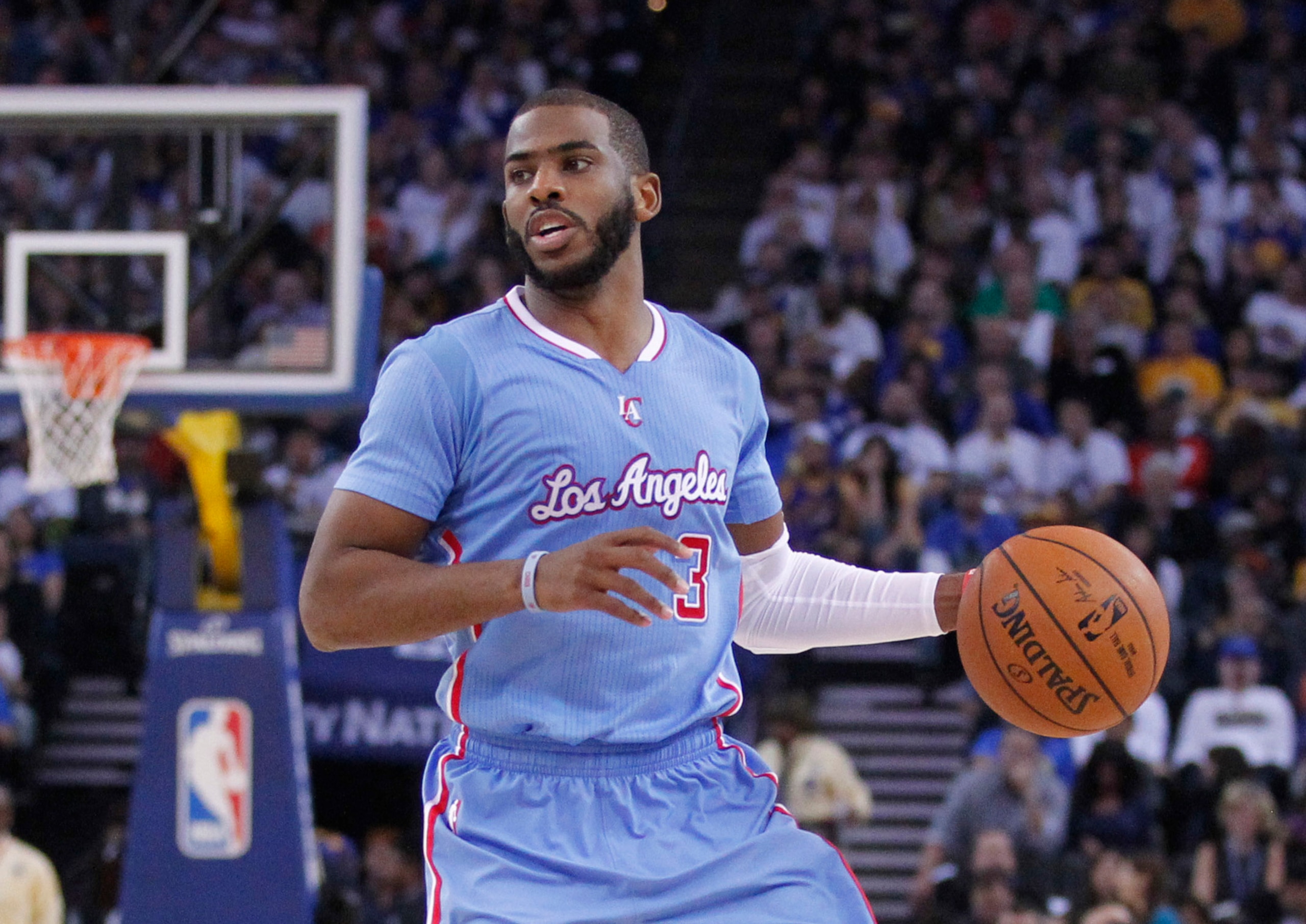
Scoring
There were a few signs that age was catching up—by a bit, not entirely—to the scorer known as Chris Paul. He settled for threes rather than using his quick first step on his patented pull-up jumpers from the elbows, as he couldn't afford to tax his body with the latter play all that often. Additionally, he didn't attack the basket quite as often, taking fewer shots per game from the charity stripe than he has since leaving Wake Forest (3.9). And still, he was quite the threat in the points column night in and night out.
Non-Scoring Offense
Paul was the only point guard to receive a perfect score for his facilitating, as he's a master of racking up assists without coughing up the ball. No one displays this type of command over an offense, using every bit of motion to open up opportunities for his teammates. He's only losing a single point for his work off the ball, as he's not quite deadly enough as a spot-up shooter to earn perfection, nor does he spend enough time cutting to make up for it.
Defense
Thanks to his smarts and undying intensity, Paul remains one of the very best defenders at his position. Going up against him in an isolation setting is a terrible idea, but it's not like it's much easier to confuse him in a pick-and-roll situation. Paul has seen all the tricks, and he knows how to control a game while his team is on defense as well as anyone, even if his off-ball work was a bit more undisciplined than normal this year.
Rebounding
Paul has always been a phenomenal pound-for-pound rebounder, and this year was no exception. Though he doesn't post an inordinate number of opportunities, he makes the most of them and isn't afraid to weasel away the ball from an unsuspecting frontcourt player who doesn't realize this pesky rebounder is waiting for the right opportunity to strike.
Intangibles
Does Paul's constant berating of officials, complaining and doing everything possible to gain an advantage annoy members of other teams and some fans? Absolutely, but it also helps his team out. He may not be warm and cuddly on the court, but his teammates certainly have to respect his willingness to do what it takes—and then some.
Overall
Paul remains the NBA's resident point god, even if his positional crown was taken away from him in 2014-15. He still plays like a reincarnation of Isiah Thomas, though it often looks as if he can do even more with the ball in his hand. Though this LAC standout may not have the highest grade at his position, he's still the one you want to watch if looking for a textbook example of how to thrive at the 1.
4. James Harden, Shooting Guard, Houston Rockets
94 of 97
Scoring
The standard-setter for shooting guards, James Harden spent much of the season pacing the league in scoring, even if he ultimately ceded that title to Russell Westbrook. And why wouldn't he reign supreme in this category? Thanks to his penchant for drawing contact and finishing plays at the rim, draining three-pointers and finding creative ways to finish plays around the basket, he was virtually unstoppable, even while serving as a de facto one-man offense for the Houston Rockets in Dwight Howard's absence.
Non-Scoring Offense
The offensive perfection continues. Harden was embarrassingly far ahead of everyone else at his position when it came to passing the rock, as he routinely posted double-digit assists and finished the year with a 34.6 assist percentage. Those are insane numbers for a 2-guard, especially when he's also the constant subject of defensive attention while working without the ball.
Defense
Harden was rightfully criticized for his defensive—how do we put this politely?—disappearances during the 2013-14 season, but that narrative didn't hold true in the follow-up campaign. Though the bearded 2-guard was prone to charging past spot-up shooters and letting them have easy paths to the lane, he made a concerted effort throughout the year and didn't need to be hidden at all times. Harden isn't—and won't ever be—a defensive star, but he actually spent the year serving as an asset, not a liability.
Rebounding
Posting the No. 3 rebounder rating at his position, behind only Kobe Bryant and Tony Allen, Harden was quite strong on the glass this year. It was rather easily his best rebounding season yet, especially because he was more involved on the defensive end, thus bringing him closer to the basket and putting him in position to end a possession before starting the ensuing fast break.
Intangibles
Though he was suspended by the league one game for kicking LeBron James in the groin, that was more of an aberration than anything else. He's on the verge of losing a conduct point, but let's also give him credit for keeping a level head in spite of A) the weight of his beard, B) the sheer levels of public scrutiny and C) the immense number of fouls he deals with on a daily basis.
Overall
For whatever reason, Harden still inspires way too much undeserved criticism. He spends a lot of time baiting officials, but it works and makes him one of the league's most dangerous—and consistent—offensive players. He actually plays defense now, though he's found it unnecessarily hard to shed his sieve-like reputation. But above all else, the one thing no one should be arguing about now is that Harden is going to spend the next few years, and potentially more, in the thick of the MVP conversation.
3. LeBron James, Small Forward, Cleveland Cavaliers
95 of 97
Scoring
Even during a season in which he was unable to meet his typical standards for shooting efficiency, LeBron James was still just about unstoppable in the scoring department. After all, he rained in plenty of triples, worked his way to the line quite often and spent the year serving as a fringe contender in the scoring race. All the while, he only required assists on 31.5 percent of his two-point makes and 46.7 percent of his triples.
Non-Scoring Offense
The perfection continues. James is both a potent spot-up threat and a deadly cutter, but he also serves as one of the league's best distributors. Turnovers were still problematic for the four-time MVP during his 2014-15 campaign, but he more than made up for them with heavy involvement in the passing game and a steady stream of performances that saw him rack up dimes.
Defense
James' defensive intensity slipped this year, as he was far too passive in some situations and seemed to be conserving energy. However, it's not as if he was a lackluster stopper, still excelling in both on- and off-ball play. His days of Defensive Player of the Year contention may be over, but let's not allow the slippage to become overblown.
Rebounding
It's still a bit amazing that one of the best athletic specimens in NBA history, a small forward who stands a chiseled 6'8", 250 pounds, can't dominate on the glass. But this was James' worst season in a long time after a shot went up, as he averaged fewer rebounds per 36 minutes (6.0) than he had since 2006-07.
Intangibles
If only James hadn't called plays instead of David Blatt. Kidding. That was one of the more stupid storylines of the season, and the 30-year-old is only being docked a point here for the two-week rest he took in the middle of the season. It turns out he is human after all.
Overall
While this wasn't a vintage season from James, who spent much of the year adjusting to his new teammates on the Cleveland Cavaliers, it's hard to argue that he was anything less than exemplary. His two-way presence turned the Eastern Conference's No. 2 seed into an entirely different squad when he was on the court, and he'd have spent the campaign playing front-runner in the MVP race if that acronym was actually interpreted literally.
2. Stephen Curry, Point Guard, Golden State Warriors
96 of 97
Scoring
Did you really expect anything else? Stephen Curry's ability to create his own shot off the bounce, score more than 20 points seemingly every night and still remain one of the league's more efficient players makes him a completely unique commodity. He puts on shows with his scoring ability and often seems like the NBA's most flammable star, capable of lighting it up whenever his three-point stroke is honed in. Oh, and that happens more often than not. Curry didn't just have the top scorer rating among point guards; he had the No. 4 mark in the league.
Non-Scoring Offense
Few players require as much defensive attention as Curry. Anyone who leaves him alone on the perimeter should pretty much pack his bags, because he shouldn't last long with his current team. But this Splash Brother has also gotten his turnovers under control and continued developing into an assist maestro, one who remains arguably the league's best at throwing one-handed passes off the dribble and finding his target through traffic.
Defense
This was a huge weakness of Curry's last year, but he's put in the work necessary to become a plus defender. Though he's far better off the ball than on it, he now holds his own by understanding the system he's operating in. Curry is quite adept at pushing his man into traps and ensuring that a help defender is in place to aid the cause.
Rebounding
No guard in the NBA is better at anticipating caroms, and that allows the otherwise slight Curry to rack up rebounds on the defensive end. Other players will be running after a loose ball, only to watch as Curry cooly collects it with no one around him, appearing there so quickly it almost seems as if he's learned how to teleport.
Intangibles
You couldn't find something negative about Curry's conduct if you spent 100 hours going through his tape with a fine-tooth comb and also stalked him away from Oracle Arena. So during a season in which only a minor sprained ankle has kept him out of the lineup, he's not getting anything less than a perfect score.
Overall
Curry was a one-man show at times for the Golden State Warriors, lighting up the scoreboard with his remarkable shooting and dazzling crowds with his crafty handles. But he was also so much more than that during his MVP campaign. He constantly set up his teammates, and his effort on the less glamorous end helped set the tone for one of the NBA's most suffocating units. This may as well have been the year of Curry, and not just because he broke his own single-season three-point record.
1. Anthony Davis, Combo Forward, New Orleans Pelicans
97 of 97
Scoring
Adding a deadly jumper from the free-throw line has made Anthony Davis just about unstoppable, even if he hasn't yet emerged as a three-point threat. And yes, that would be "yet." The list of things, other than hitting triples, that Davis can't do as a scorer now is basically empty.
Non-Scoring Offense
Davis, along with Chris Bosh, was one of only two combo bigs to receive a perfect 10-of-10 in off-ball offense. He's the constant subject of attention. Defenses can't leave him open anywhere inside the arc and have to guard against his deadly cuts to the hoop, accounting for his ability to pull down lobs that would soar over the outstretched arms of anyone else. And if former head coach Monty Williams had given him the freedom to showcase his point guard vision throughout the season, as he did in the second half of the year, he could have received a perfect facilitation score as well.
Defense
Though he's by no means a perfect defender, Davis is at least getting closer to earning that status. He sometimes struggles to cover players rolling to the hoop, and he strays too far from stretch bigs, failing to recover in time to affect their shots. But all in all, he's damn good for a young man who just turned 22.
Rebounding
Davis may have trailed the league leaders in rebounds by a fairly significant margin, but his per-game (10.2) and per-minute (10.2 per 36) numbers are misleadingly low—and they're already impressive. First, the New Orleans Pelicans as a whole offer fewer rebounding opportunities per game than most other NBA squads. Second, Davis paced his position in contested rebounds and would have done even more if he wasn't so vitally involved in stretching the floor and switching out to the perimeter to engulf smaller players.
Intangibles
If there's one flaw on Davis' resume, it's his durability. This season brought about another laundry list of injuries, even if none of them were truly major. He suffered a chest contusion, toe injury, strained groin, sprained right shoulder, resprained right shoulder, sprained left ankle and many more in-game maladies (even a throat contusion).
Overall
There's not much more we can say about Davis. He's at a level reached by so few players in NBA history that they can be counted with your hands and feet, and he's still only 22. Even the sky may not be the limit for this up-and-coming stud, especially when—again, when, not if—he learns how to shoot triples and continues gaining comfort with the nuances of defense at the professional level. In far too many games, he was the human manifestation of basketball perfection as he carried the Pelicans into the Western Conference playoffs.
_0.jpg?w=2560)
.jpg?w=2560 "Rush Named Week 2 Starter")
.jpg?w=2560 "Jameis Auditions for 'Hamilton' 🗣️")
.jpg?w=2560 "Grading Tonight's SmackDown 🔠")

.jpg?w=2560 "Breaking News")