
B/R NBA 200: Ranking the Top Swingmen of 2014-15 Season
The swingman position is host to a whole bunch of intriguing players who can line up either at shooting guard or small forward during any given game.
We have former All-Stars who are still contributing to their teams (Joe Johnson and Andre Iguodala), up-and-coming players who have already reached varying levels of stardom (Jimmy Butler, Andrew Wiggins and Gordon Hayward), sharpshooters galore (Anthony Morrow, Danny Green and Kyle Korver) and plenty more.
There's no way to boil this group of players down into a single overarching role. Some stand out because of their versatility, while others fall more into the realm of specialists.
The only thing they all have in common is that they spent a significant amount of time at both the 2 and 3 during this campaign.
Now, we have to put the league's best swingmen in a definitive order.
The NBA 200 metric identifies the players who performed best during the 2014-15 season. Potential doesn't matter, and neither does reputation. It's all about what happened this season, and this season only. All positions are graded using the same criteria (though rim protection was added into the equation for bigger positions), but the categories are weighted differently to reflect changing roles, with max scores in parentheses:
- Scoring (22)
- Non-Scoring Offense: Facilitating (10) and Off-Ball Offense (10)
- Defense: On-Ball (20) and Off-Ball (20)
- Rebounding (8)
- Intangibles: Conduct (5) and Durability (5)
For a full explanation of how these scores were determined, go here. And do note these aren't your father's classification schemes for each position. Players' spots were determined by how much time they spent at each position throughout the season, largely based on data from 82games.com and Basketball-Reference.com, and we're expanding the traditional five to include four combo positions.
In the case of ties, the order is determined in subjective fashion by ranking the more coveted player in the higher spot. That was done by a voting committee comprised of myself, two National NBA Featured Columnists (Grant Hughes and Dan Favale), two Associate NBA Editors (Ethan Norof and Joel Cordes) and an NBA Quality Editor (Jacob Bourne).
Note: All statistics come from Basketball-Reference.com unless otherwise indicated. In order to qualify for the rankings, players must have suited up in 20 games through March 10, the date of data collection.
Point Guard Rankings can be found here.
Combo Guard Rankings can be found here.
Shooting Guard Rankings can be found here.
18. Shabazz Muhammad, Minnesota Timberwolves
1 of 18
Scoring
It's amazing what a bit of support from the coaching staff can do. After he was glued to the bench during his rookie season with the Minnesota Timberwolves (under Rick Adelman), Shabazz Muhammad was allowed to go out and put up points (under Flip Saunders, who traded for him on draft night). He did so rather nicely, converting quite well in the paint and beyond the arc, though he didn't venture into three-point territory as often as he should going forward.
Non-Scoring Offense
Muhammad was a dangerous enough sniper that opponents had to pay attention to where he was, but they could also attempt to jump passing lanes whenever the ball was in his hands. This young swingman doesn't have any impressive skills as a distributor, rarely deciding to involve his teammates when he sets his sights on the basket.
Defense
It wasn't pretty on this end of the court for Muhammad, who often appears too slow of foot to hang with competent NBA wings. He was disastrous both when trying to stick with spot-up shooters and chasing a ball-handler around a screen, and that's not a good combination for someone who was routinely asked to guard—well, attempt to guard—fellow wings.
Rebounding
This shouldn't be entirely unexpected. Muhammad was a plus rebounder at UCLA, thrived in limited action during his rookie season and has continued to grow on the boards as a sophomore. He's extremely aggressive on the glass, and he could truly be one of the best wing rebounders in the future if he gets just a bit better at positioning.
Intangibles
An abdominal injury kept Muhammad out for nearly a month in January and the beginning of February, and then he went under the knife to repair a ruptured ligament in his left middle finger. That was it for the 22-year-old, who finished his second professional go-round with only 38 games under his belt—interestingly enough, only one more than he played as a rookie, though he missed NBA action for entirely different reasons then.
Overall
It's not hard to see the potential here. Muhammad is an athletic wing player with a potent jumper, even if he's still adjusting to the professional game. If he can become less of a liability on the defensive end, stay healthy and figure out some way to function as anything other than a black hole when he has possession, he'll stick in this league for quite some time.
17. Terrence Ross, Toronto Raptors
2 of 18
Scoring
We're now a long way removed from Terrence Ross' random 51-point outburst against the Los Angeles Clippers during his sophomore season. Throughout his third go-round with the Toronto Raptors, he topped out at just 23 points in a loss to the Brooklyn Nets, and he broke past the 20-point barrier only five times. Ross may have the athleticism and three-point stroke necessary to be dangerous, but that doesn't make him a great scorer.
Non-Scoring Offense
Defenses do have to fear his work off the ball, as that same combination of skills makes him a threatening presence. But the same simply cannot be said of his passing. Far too often, he spent a significant amount of time on the court without recording even a single assist. Twenty-five times this season, in fact.
Defense
Defense is Ross' bread and butter at this stage of his career, though he's still not exactly a lockdown stopper. Better on the ball than off it, Ross can use his timing and lateral quickness to stay in front of most wings, but relatively basic plays can still throw him off. He spent much of the season cheating off his marks excessively, and he was bamboozled whenever he ended up guarding a post-up situation.
Rebounding
As a 6'7" swingman with the requisite hops to play well above the rim, Ross should be significantly better at rebounding in traffic. However, he doesn't spend much time venturing in among the trees, instead preferring to use his speed to attack long caroms and get the fast break started.
Intangibles
Nothing to be concerned about here. Though Ross had his bouts with ineffectiveness, he never displayed detrimental conduct and stayed quite healthy throughout the season, playing in all 82 games for the first time in his career.
Overall
Ross may not be progressing like the Raptors—and head coach Dwane Casey, who has consistently given him plenty of opportunities to succeed—may have hoped, but at least he has some tangible skills. He's a strong marksman from the outside who helps space out a defense, and he can be an asset in some point-preventing situations. His isolation work, for example, was strong all year.
16. Anthony Morrow, Oklahoma City Thunder
3 of 18
Scoring
Slightly more than half of Anthony Morrow's shots come from another zip code, but that's perfectly fine. He's not a volume shooter or a man who creates many of his own looks. He's just a marksman, one capable of firing away with high volume and still connecting on 43.4 percent of his attempts.
Non-Scoring Offense
As you may have guessed from the description of Morrow's scoring, he's a strong threat to space out a defense. In fact, he's one of just three of all swingmen—including the 11 who qualified but didn't make the cutoff for the top 200 overall—who received a 10-of-10 in off-ball offense. However, his passing is basically nonexistent.
Defense
Morrow has never been a particularly strong defender, but he held his own on some nights within the Oklahoma City Thunder schemes. Though the 29-year-old can be misplaced in one-on-one situations or sets that require him to be the primary stopper, he's involved off the ball and can use his space-creating skills on offense to anticipate what his man may do to work himself free.
Rebounding
Without the physical skills necessary to be a great rebounder, Morrow simply isn't one. He pulls down a high percentage of his opportunities, but those are extremely limited—especially while playing for an OKC team that generates more chances per game than most of the Association's 30 squads.
Intangibles
A sprained left knee delayed Morrow's debut with his new franchise. Rather than step onto the court during the opening game of the season, he was out of the lineup until a Nov. 11 contest against the Milwaukee Bucks, when he played only 14 minutes in a losing effort.
Overall
A specialist through and through, Morrow can avoid being a liability on defense some nights, but the vast majority of his value comes from beyond the arc. He's one of the best shooters in the NBA, lofting up plenty of attempts and hitting at an impressive clip, which adds a new element to the OKC offense. Even on the rare occasions that his shot isn't falling, it's not as if defenses can ignore him on the wings.
15. O.J. Mayo, Milwaukee Bucks
4 of 18
Scoring
At this point in his career, O.J. Mayo is best served functioning as an offensive spark off the bench. He's not particularly efficient, but he does the two things that you always want in that role—he can put up points in bunches, and he's adept at creating shots for himself, even if he did the latter less often than ever before.
Non-Scoring Offense
Though Mayo can create his own looks, he often served as a spot-up threat during his second campaign with the Milwaukee Bucks. But that's not all he could do when he wasn't firing away, as this 27-year-old is a surprisingly solid facilitator. He'll never blow you away with his passing, but he doesn't hesitate to hit the open man with an on-target feed.
Defense
On the ball, Mayo was quite weak. But off of it, he was more involved than he's been in previous seasons, going out of his way to pretend his wingspan matches up with the long ones his teammates boast and trying to wreak havoc in passing lanes. Of course, that did leave him susceptible to savvy spot-up shooters.
Rebounding
Mayo didn't snag as high a percentage of his chances as many other swingmen, and that's not because he was always going for contested boards. In fact, he was still pretty weak in that area, as he didn't often display the strong hands necessary to keep possession in traffic.
Intangibles
If Mayo didn't have hamstrings, he would've stayed much healthier this season. Well, he wouldn't have been able to play basketball either, but that's beside the point. On four separate occasions, hammy problems knocked him out of the lineup after he'd attempted to step back onto the court.
Overall
Though Mayo has value as an offensive spark off the bench who's at least going to try on defense, it's hard to get particularly excited about his contributions to the Bucks. After all, the team was outscored while he was on the court and did the outscoring while he kept the pine warm, which isn't just a reflection on the four players who accompanied him when Jason Kidd called his number.
14. Lance Stephenson, Charlotte Hornets
5 of 18
Scoring
Struggling your way to 37.6 percent shooting from the field? Failing to hit more than 17.1 percent of your attempts from three-point territory while taking 1.7 per game? Connecting on just 62.7 percent of your freebies? None of that bodes well for Lance Stephenson, who had a historically awful jump-shooting season.
Non-Scoring Offense
Defenders routinely ignored Stephenson when he was spotting up on the perimeter, but he was at least a smart cutter who could use his athleticism and hard-nosed mentality to finish plays around the rim. That, plus his impressive passing, salvages his score in this category. This swingman has continuously improved as a distributor over the last few years, and he made quite the effort to involve his teammates on most nights, averaging 3.9 assists.
Defense
Stephenson's defense still looks fairly strong, even as he struggles offensively. He's a tenacious ball hawk who can gamble excessively on some possessions but still use his quickness and aggressiveness to get back in position. Once he gets stronger in pick-and-roll situations, he'll begin living up to his lofty point-preventing potential.
Rebounding
At the beginning of the season, Stephenson was rebounding at historic levels. Through his first nine outings, he was actually hauling in 10.6 boards per game and looking like he could go down as one of the better wing rebounders in NBA history. But that didn't last, as he spent the rest of the season serving as a mediocre player on the glass who could occasionally explode for a gaudy figure.
Intangibles
There were no antics this year. Stephenson didn't act like a clown, spurring negative headlines for his behavior and penchant for blowing in ears. He's actually only losing a point here because of his durability, as a bruised pelvis kept him out for nearly a month in December and early January.
Overall
Stephenson was a disastrous acquisition for the Charlotte Hornets. He never figured out how to connect from the outside, and the chemistry he showed with his fellow backcourt members was virtually nonexistent, to the point that Charlotte shopped him early on in the season. But Stephenson was still far from worthless, if for no other reasons than his work on the glass and his defensive intensity. Still, this was quite the slide from a formerly up-and-coming star.
13. Tony Snell, Chicago Bulls
6 of 18
Scoring
Tony Snell was a limited scorer for much of the year, but he'd fare much better if we looked only at the second half of his season. Beginning with a blowout victory over the New Orleans Pelicans on Feb. 7, the second-year swingman went on quite the tear. Over his next 15 appearances, he averaged 11.9 points while shooting 49.6 percent from the field and 49.3 percent from beyond the arc.
Non-Scoring Offense
If there's one glaring weakness in this up-and-comer's game, it's his complete inability to distribute the rock. Though he improved slightly throughout the year, he's about as uninvolved as possible when he's not scoring or spotting up, recording a grand total of zero assists in 34 of his 72 appearances.
Defense
This is where Snell often makes his mark, as he's become a terrifying off-ball presence. Though his steal totals aren't very impressive and he rarely comes through with a weak-side block, he's almost always involved in the action and does a tremendous job sticking with his man. Spot-up shooters occasionally made him pay, but they had quite a bit of trouble freeing themselves.
Rebounding
Snell may be 6'7", but he doesn't have much meat on his bones. That makes it quite tough for him to go up against bigger players—or similarly sized ones—and emerge with a successful conversion on the glass.
Intangibles
It's hard to find flaws here, as Snell is a hard-working player who keeps his mouth shut, goes to work and does what his coaching staff asks of him. Plus, he stayed quite healthy all season.
Overall
Tom Thibodeau normally doesn't throw young contributors onto the court, but his hand was forced in 2014-15. A litany of injuries thinned out his rotation, and Snell responded with offensive improvements and solid two-way play as soon as he was given a chance to succeed. Had he spent the entire season on the floor rather than frequently warming the bench, he would likely only rise higher up the ranks.
12. Jared Dudley, Milwaukee Bucks
7 of 18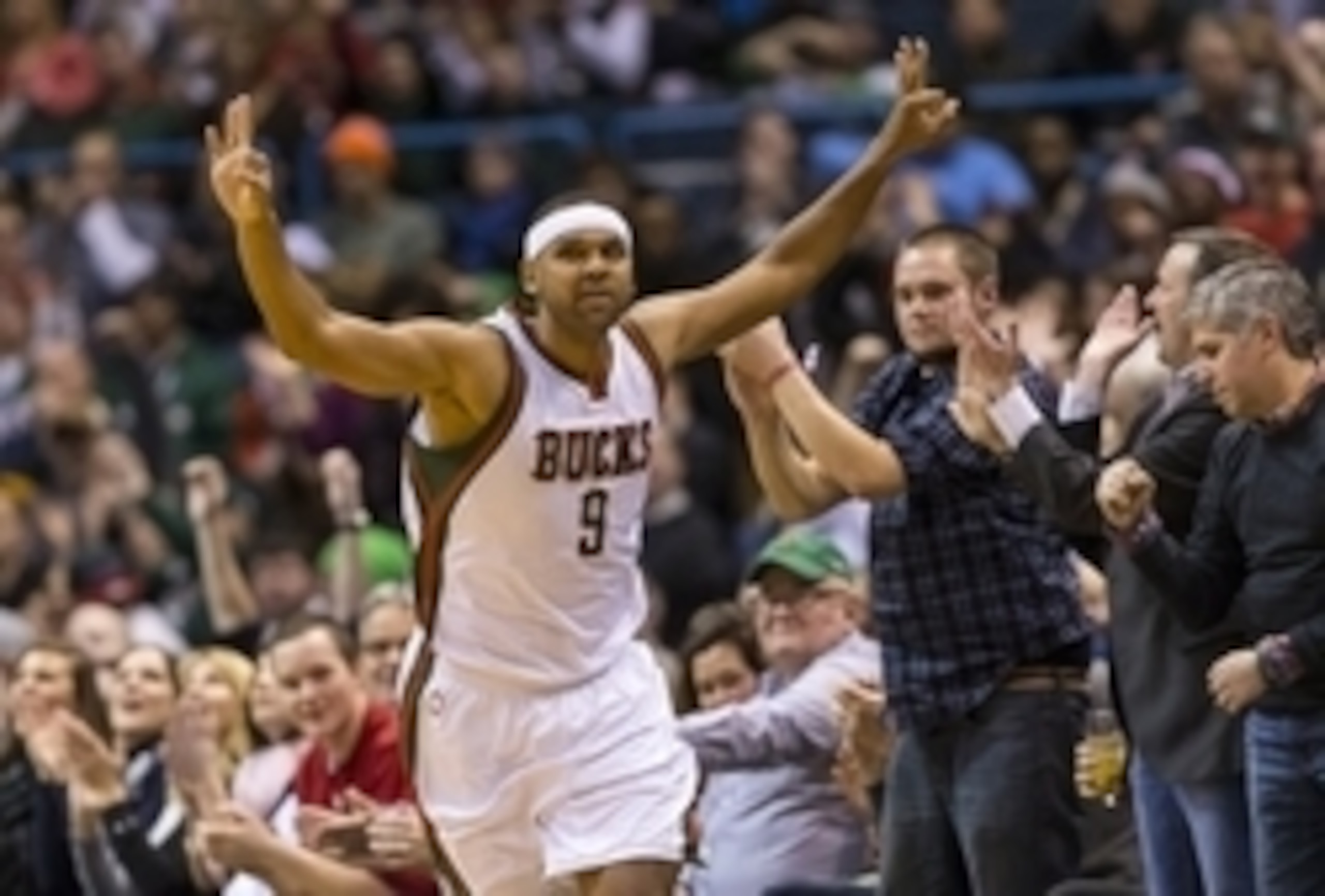
Scoring
Jared Dudley isn't relied upon for volume scoring. Instead, he's supposed to be a consistent contributor who can shoot efficiently from all areas of the court in small doses and provide the Milwaukee Bucks with around seven or eight points during his typical outing. And that's exactly what he was.
Non-Scoring Offense
As a spot-up shooter, Dudley inspires some level of fear. He doesn't have the name recognition of many other prominent marksmen in the Association, but his numbers speak for themselves, especially now that he's posted at least a 38 percent clip from downtown in six of his last seven seasons.
Defense
Dudley doesn't have much of a defensive reputation, and he's been a weak stopper in years past. But that wasn't the case under Jason Kidd, who milked some solid play out of this 29-year-old on both ends of the floor. Equally adept both on and off the ball, Dudley was especially strong when asked to guard a pick-and-roll, as he could adequately stick with either the ball-handler or roll man.
Rebounding
It would be nice if Dudley got a bit smarter on the glass. He crashes in recklessly and attempts to insert himself in the action, but it's often a failed attempt. And in this case, that's not hyperbolic, as he was one of the few who managed to successfully convert fewer than half of his rebounding chances.
Intangibles
Knee injuries and a balky back toward the end of the year pushed Dudley close to losing a durability point, but he can count his blessings here. He didn't miss enough action to actually be docked, if only barely.
Overall
Dudley has mired away in relative obscurity for a few years now, but the Boston College product was a solid two-way contributor for the Bucks. Not only did he make defenses pay whenever they neglected him on the perimeter, but he fit in with Kidd's defensive stylings. He's far from being a star, but he deserves a bit more recognition than he receives from casual fans.
11. Gerald Henderson, Charlotte Hornets
8 of 18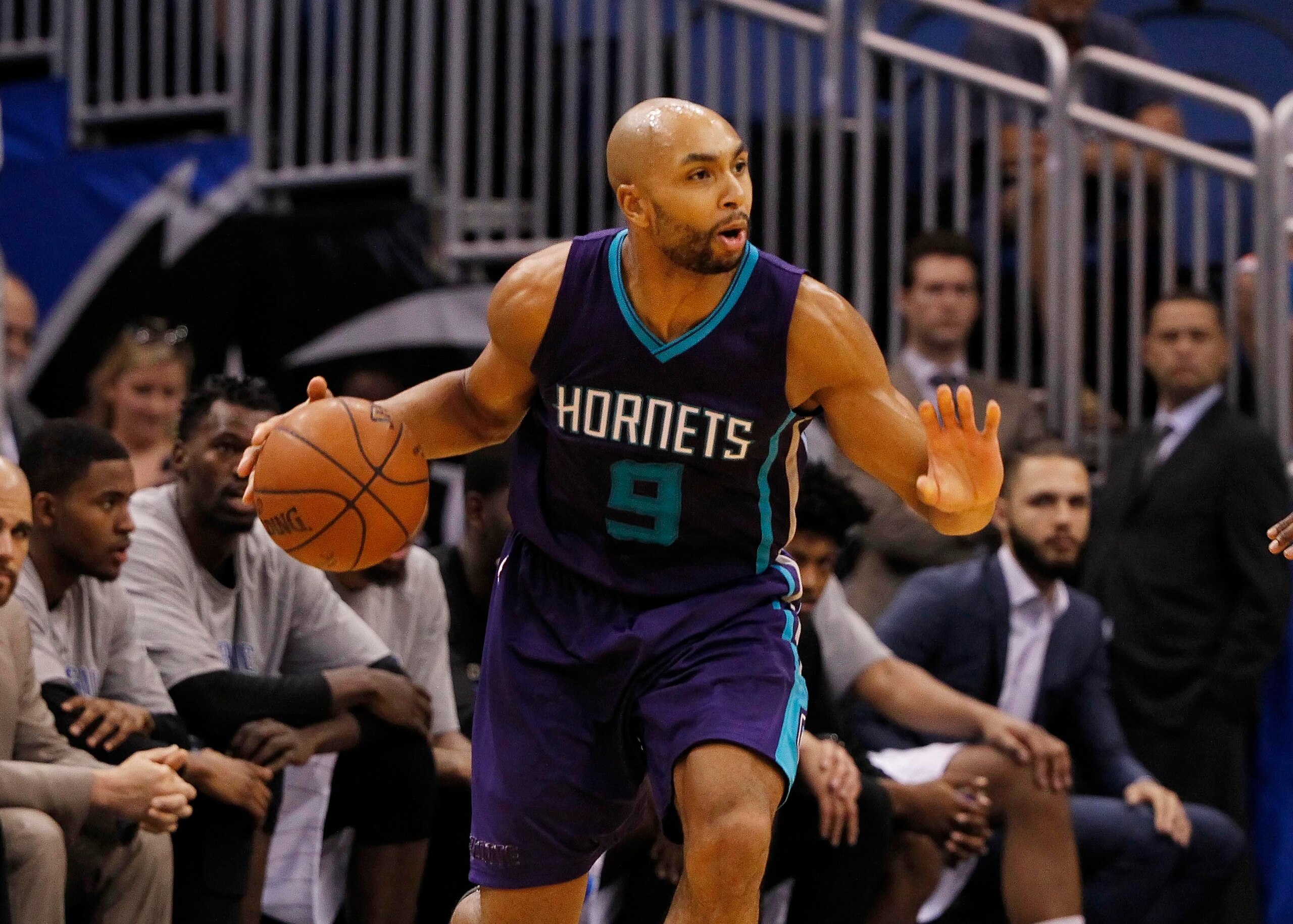
Scoring
Gerald Henderson is a '90s-era shooting guard trapped in a game that no longer requires his set of skills. He's still able to put up points with his slashes to the basket and mid-range looks, but his continued lack of effectiveness from behind the arc limits what he can do for the Charlotte Hornets.
Non-Scoring Offense
As both a floor-spacing threat and a distributor, Henderson is good but not great. The former is because he can't shoot from the perimeter and instead relies on well-timed cuts to the basket. The latter is because he's not heavily involved in the passing game but still manages to minimize his mistakes when attempting to put his teammates in good situations.
Defense
If only Henderson could be a bit more disciplined off the ball. He simply gambles too often, leaving him vulnerable to offensive players who actually know what they're doing. Spotting up, coming off a screen, receiving a handoff...you name it. Henderson probably struggled a bit in that area.
Rebounding
Henderson is nothing if not consistent. Year in and year out, he grabs a little more than four rebounds per 36 minutes, many of which are of the uncontested variety.
Intangibles
A clean bill of health and a spotless record in the conduct department leave us no reason to give Henderson anything less than the full 10 points.
Overall
Henderson is an NBA dinosaur—a player who somehow gets by with his on-target mid-range shooting while staunchly refusing to either develop any other primary calling cards or figure out how to space the court. But it works for him, and it's allowed him to remain a valuable player for a Charlotte squad that often needs offensive production by any means necessary.
10. Andre Iguodala, Golden State Warriors
9 of 18
Scoring
Until the stretch run, when Andre Iguodala decided to turn back the clocks, this 31-year-old swingman was having a rough go as a scorer. Not only was he less involved than he's been since joining the NBA as the No. 9 pick out of Arizona in the 2004 draft, but he also attacked the basket with less enthusiasm than we've seen in years.
Non-Scoring Offense
Iguodala can space out the court with his decent three-point stroke or attack via a backdoor cut, but it's still his passing that gets him the most credit here. Though the veteran didn't spend as much time showing off his passing chops, he can still run the point in certain situations and did a fantastic job minimizing his mistakes for the Golden State Warriors.
Defense
It's an enduringly poor idea to test Iguodala on the defensive end. Particularly in isolation settings, he made it rather difficult for players to score against him. After all, this season more so than many in the past, he realized he was on a team with plenty of offensive options and conserved much of his energy for point-preventing purposes.
Rebounding
This was rather easily the worst rebounding season of Iguodala's career. He pulled in far fewer per game than ever before (3.3), and the rate at which he accumulated them fell into a similar, career-worst category. The issue? For the first time, well, ever, Iguodala was virtually unable to secure rebounds in traffic, as he couldn't rely on his elevation quite so often as he has in the past.
Intangibles
Few former stars would accept such a minor roll with nary a fuss, but Iguodala simply went about his business with the goal of making the most of his minutes. Healthy all the while, he continuously improved throughout the season, to the point that he finished the year in contention for Sixth Man of the Year, even after his rough start.
Overall
Iguodala was not very good at the beginning of the Warriors' dream season. His shots simply weren't falling, and he was forcing the issue as Steve Kerr gradually lessened his role in the rotation. But Iguodala figured it out halfway through the year and ended up making Golden State all the more dangerous, serving as a two-way spark off the pine who could contribute in just about any way possible.
9. Evan Turner, Boston Celtics
10 of 18
Scoring
Is Evan Turner a dangerous scorer? Not really, as he isn't used very often and can't shoot jumpers to save his life, somehow failing to develop what was a weakness when he entered the league five seasons ago. But he's remarkably good at getting up shots off the bounce, which at least helps mitigate some of the damage done by this category to his overall score.
Non-Scoring Offense
Among the 29 swingmen who qualified for this article—not just the 18 who made the cut—only one had a higher passer rating than Turner, who served as a de facto point guard for the Boston Celtics when injuries flared up or there just weren't any better options. He's more than capable of handling that role, as his court vision is superb for a player with so many inches on his frame.
Defense
Throughout his career, Turner's defensive abilities have fluctuated. This was one of the better years, as Brad Stevens milked some high-quality point-preventing work out of him, especially when he was working on the ball. Few players throughout the Association were better at shutting down ball-handlers in the pick-and-roll, especially given how involved Turner was in those situations.
Rebounding
Turner isn't exceedingly involved on the glass, but he does tend to assert himself whenever possible. He was one of the better players at his position when rebounding in traffic, though it would behoove him to spend some more time reading bounces and getting to spots quicker than other players for below-the-rim boards.
Intangibles
Health issues? What are those? Conduct problems? See previous answer.
Overall
Turner has been a rather strange player ever since leaving Ohio State, but he appears to have found his niche. He's a man who routinely lines up at both shooting guard and small forward while shouldering some primary ball-handling responsibilities, and he'll only be average as a rebounder, defender and scorer. Of course, he could showcase a late-developing jumper and completely change his course, but we'll believe that when we see it.
8. Joe Johnson, Brooklyn Nets
11 of 18
Scoring
Even this late in his career, Joe Johnson is still an asset as a scorer. He's a creative shooter in isolation who can pull up for jumpers or use his strength to back down a defender, and he's equally adept working off the ball and raining in threes. Sure, he was less involved than he's been since his early days with the Boston Celtics and Phoenix Suns, but he usually made the touches count.
Non-Scoring Offense
Johnson truly thrived as a distributor this season, especially because he did such a good job cutting down on bad passes that led to turnovers. That, along with his ability to start moving the ball around the floor, racking up secondary assists and helping the Brooklyn Nets hit some corner threes, allowed him to complement his strong spot-up shooting rather nicely.
Defense
In his prime, Johnson was a standout defender who didn't get enough credit for his work. Now, at 33 years old, he's no longer in his prime. I'll let you connect the dots.
Rebounding
Johnson was quite good at figuring out how to attack the basket after a shot went up, reeling in a rebound in traffic. But he wasn't abundantly involved. It would be nice to see him chase down more missed shots, especially because the Nets aren't brimming with high-quality rebounders—they spent all season near the bottom of the pack in offensive and defensive rebounding percentage.
Intangibles
Other than a brief bout with the flu in December, Johnson was a model of good health and behavior throughout the season. No issues here.
Overall
Is Johnson an All-Star who would be considered a household name if he had a more vibrant personality? Not at all, even if we're only a few years removed from him serving as such with the Atlanta Hawks. Instead, he's a reliable player who can contribute on both ends of the floor and still thrives when his shot is connecting from the outside. Don't let his albatross of a contract convince you that he's out of enduring on-court value.
7. Danny Green, San Antonio Spurs
12 of 18
Scoring
How did Danny Green have the best scoring season of his career? Well, he spent more time on the court and the San Antonio Spurs relied upon him more heavily for point-production, and he managed to do so without plummeting percentages. Even while attacking the hoop and shouldering more offensive responsibilities, Green remained one of the NBA's most potent perimeter players.
Non-Scoring Offense
Surprised that Green earned one of the few perfect scores for off-ball offense? Don't be, as defenders simply can't give him any space when he's roaming the perimeter and waiting for a catch-and-shoot opportunity. Facilitating is what holds him back here, as he's rather uninvolved when the ball is in his hands and he's not letting fly with his sights set on the rim.
Defense
A true three-and-D wing, Green is nearly as adept serving as a stopper as he is when spacing the court. He's particularly terrifying while working off the ball, as he can mimic players moving around the perimeter and remain up in their jerseys all the while. His biggest weakness—and remember, it's only a relative one—comes when he's being posted up, which happens surprisingly often for a player who splits time at the 2 and 3.
Rebounding
Green is just better than average in most every area here—not quite to the point that he earns a fifth tick in rebounding. Perhaps the best part of his glass-eating game is his level of involvement, as he doesn't shy away from seeking out extra boards, especially on the offensive end.
Intangibles
The Spurs rarely have to deal with any conduct issues, as Gregg Popovich keeps a rather tight ship. However, injuries flared up rather often for a team with a rather significant number of veteran contributors. Luckily, Green somehow dodged any significant ailments throughout the season.
Overall
Green isn't exactly a specialist, though his perimeter marksmanship could easily fool you into thinking otherwise. His shooting will always be his forte, but he's one of the Spurs' top defenders and makes a significant impact on the glass as well. He's a true three-and-D wing, and even that doesn't fully describe what he brings to the table.
6. Tyreke Evans, New Orleans Pelicans
13 of 18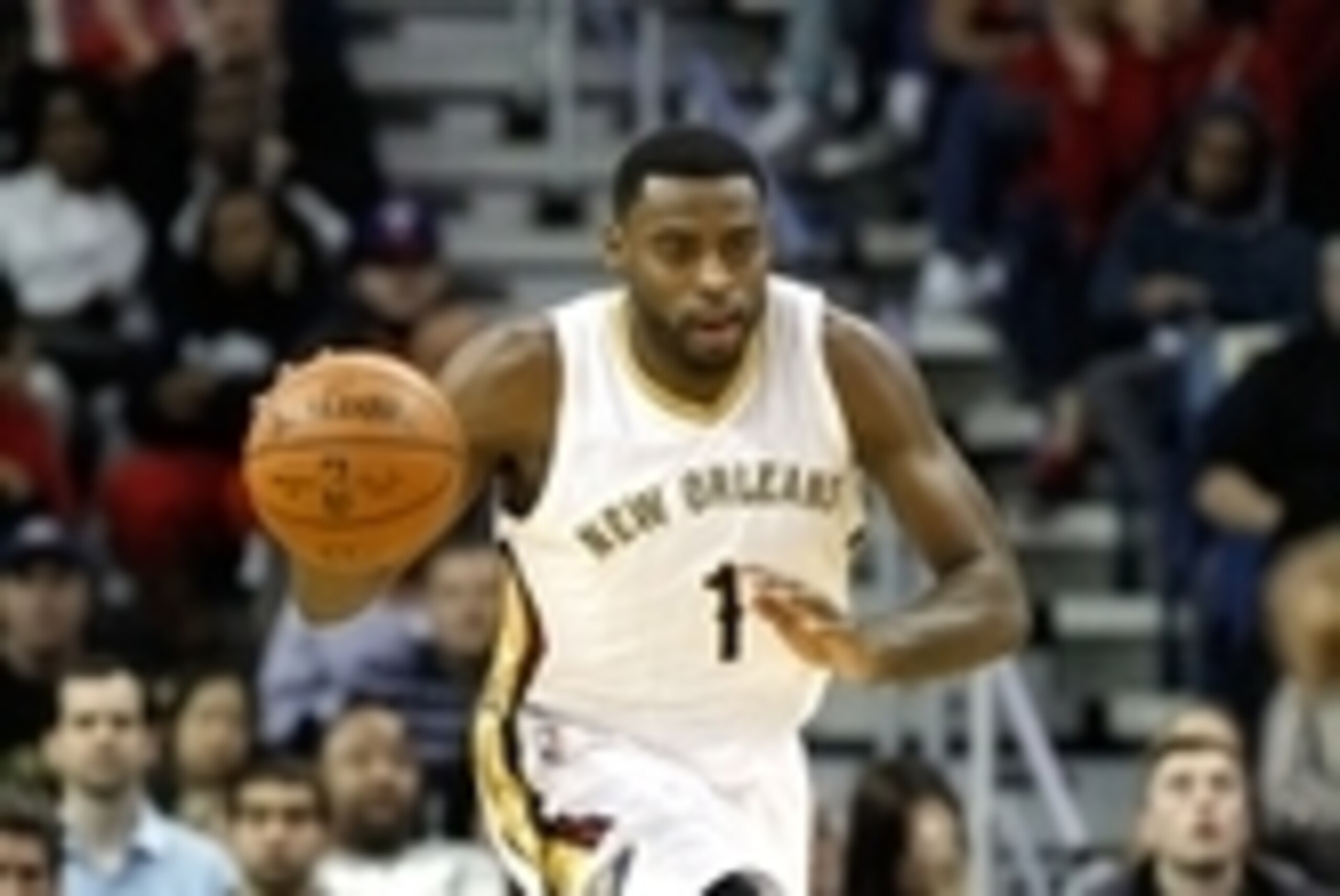
Scoring
Though Tyreke Evans still can't connect from the outside with any sort of frequency, this Eurostep disciple is quite adept at working his way past defenders and finishing plays around the rim. That said, it would be nice for Evans to attack the basket even more frequently, as he worked his way to the charity stripe less often than he has since entering the league out of Memphis in 2009, taking only 3.7 attempts per game.
Non-Scoring Offense
Defenders certainly don't have to fear Evans' ability to space out a court, but he's a smart cutter with a head for worming his way through traffic. Even more impressive is his facilitating, as he compiled the top passer rating of any swingman in the NBA this season. Often serving as a de facto point guard while Jrue Holiday was injured, Evans was more heavily involved than ever, and he handled that extra burden without seeing his turnovers spike too dramatically.
Defense
Merely mediocre on the defensive end, Evans was slightly better off the ball than on it in 2014-15, though that's only because he was so heavily involved when his man didn't have possession. He darted between lanes and tried to make an impact in all situations, even if that left him susceptible to smart spot-up players.
Rebounding
Evans has always been a strong rebounder, and this year was no exception. Though he failed to increase his per-minute rate for the first time in five seasons, he was still a menace on the boards, regardless of whether he was lining up at the 2 or 3. Sometimes, it almost seemed as though Evans enjoyed fighting through traffic for a conversion more than he did chasing after a long carom.
Intangibles
Though the injury imp ravaged the New Orleans Pelicans throughout the season, Evans stayed pretty healthy all year long. A bruised right knee and some ankle issues kept him out for short stretches, but that's understandable given the heavy load he shouldered on a regular basis.
Overall
Evans still hasn't been able to replicate his phenomenal rookie season, when he entered the league as an oversized point guard and averaged 20.1 points, 5.3 rebounds and 5.8 assists. But now, blessed with continuity—both positional and on the coaching staff—he's finally started to rekindle the early-career fire and morph back into a star. He's not there yet, but he's getting closer and is still only 25 years old.
5. Andrew Wiggins, Minnesota Timberwolves
14 of 18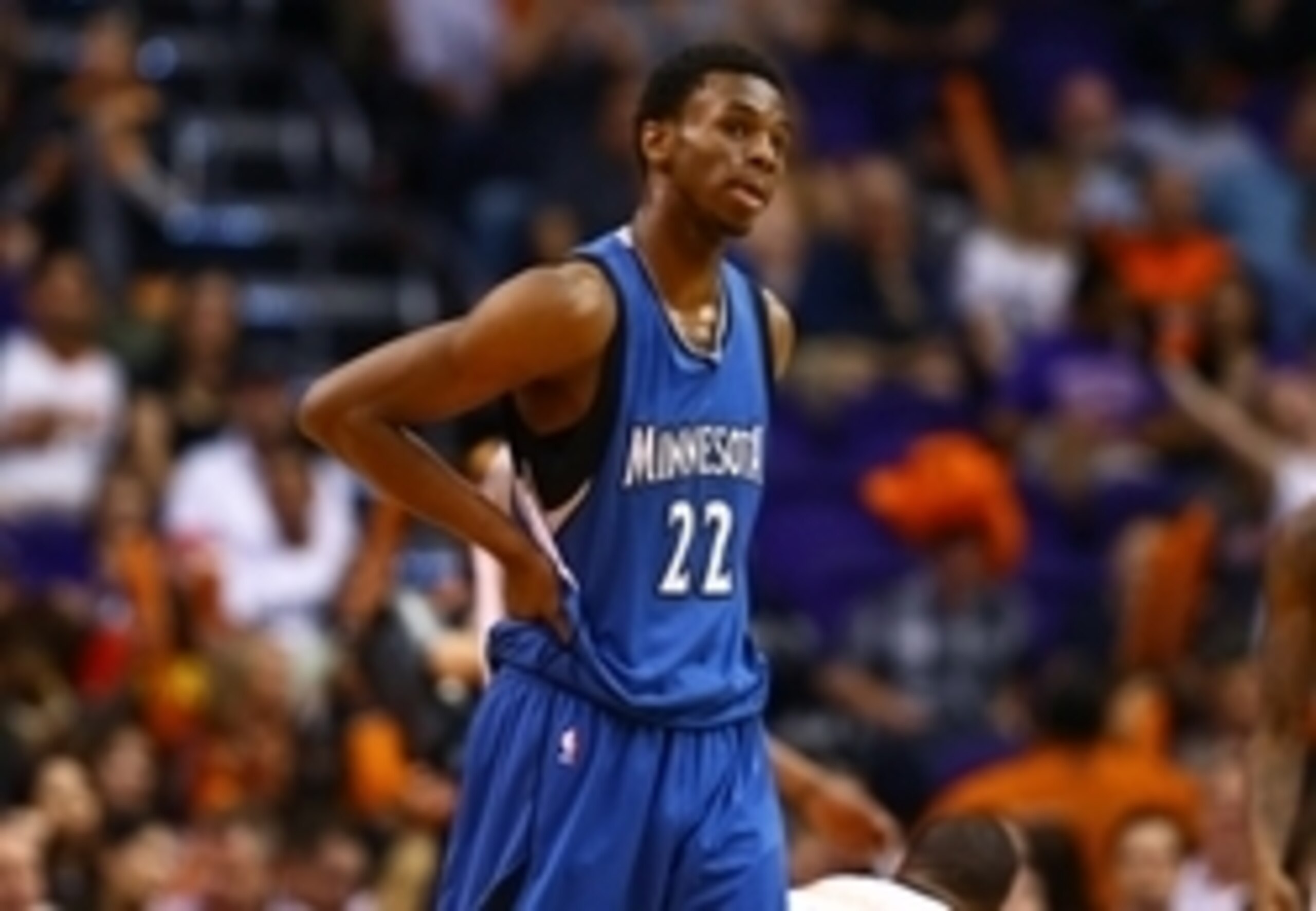
Scoring
Andrew Wiggins can create his own shot with ease and score from just about anywhere on the court, but there are a couple of things he can certainly work on. First, he needs to get more consistent, though he was admittedly trending in the right direction throughout his rookie season. Second, his shot selection needs work, as he settles for contested mid-range jumpers far too often despite having the requisite skills necessary to either take a step back and beyond the three-point arc or keep attacking the hoop.
Non-Scoring Offense
Wiggins still isn't a terrifying off-ball presence because his shot often goes awry when he's waiting out on the perimeter, but his biggest issue remains a lack of passing chops. That was the case at Kansas, and it didn't change during his first professional season, as he routinely recorded more turnovers than assists.
Defense
Even though he was a first-year player, Wiggins was already incredibly good on the ball. He's able to mimic every move that an offensive player makes, routinely posing problems for even the most talented scorers. However, as you might expect from a rookie, the former Jayhawk is undisciplined at times, especially when he's trying to cheat off a spot-up shooter.
Rebounding
From a per-game or per-minute standpoint—4.6 per game and 4.5 per 36 minutes—Wiggins' rebounding numbers don't look as if they'd merit 6-of-8 in this category. But remember, these scores are objectively determined, and Wiggins' receives a huge boost because A) the Minnesota Timberwolves as a whole don't generate many rebounding chances, B) he converts a large percentage of his individual opportunities and C) only two other swingmen were better at grabbing contested boards.
Intangibles
The only time you'd talk about Wiggins' intangibles would be when you were trying to say something positive about him and had already exhausted topics about his on-court skills.
Overall
It's hard to classify Wiggins' first season in the NBA as anything other than a success, as he proved his defensive chops on multiple occasions and steadily improved as a scorer. He still has plenty of work to do, of course, and the beginning of his campaign is dragging his overall grade down a bit lower than if we only looked at his second half, but it's not hard to see a future superstar here.
4. Kyle Korver, Atlanta Hawks
15 of 18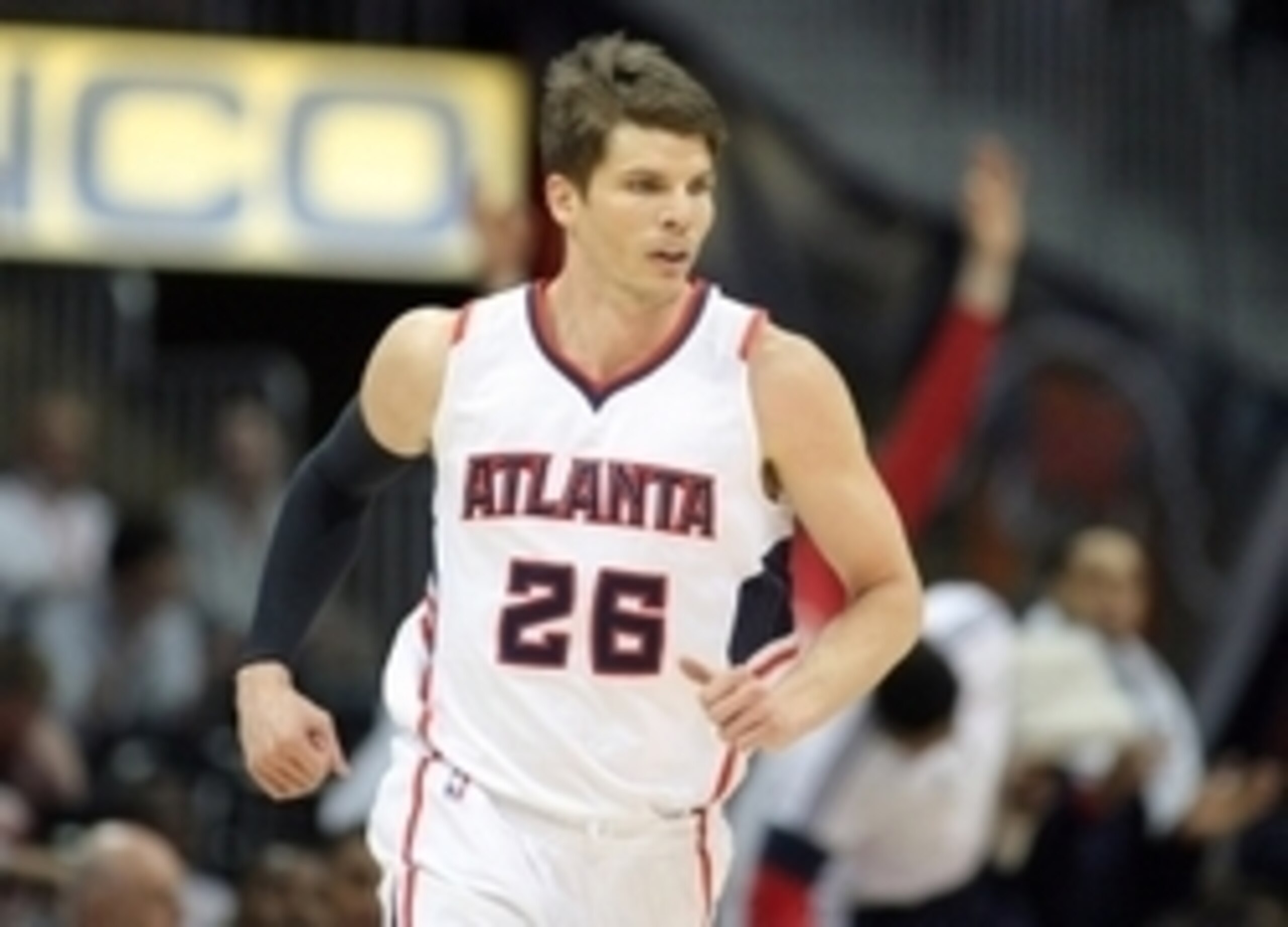
Scoring
All you need are three numbers: 50, 50 and 90. Kyle Korver may ultimately have fallen short of joining that ultra-exclusive club—so exclusive that it has zero qualified members—but he came so close in each of the three categories, finishing the season making 48.7 percent of his shots from the field, a league-best 49.2 percent of his triples and 89.8 percent at the stripe. To be this involved and still make nearly half of your shots from everywhere is absolutely remarkable.
Non-Scoring Offense
No player invokes so much fear while he's roaming the perimeter. Defenses have to scheme to stop Korver first, and that's despite the Atlanta Hawks offense boasting the services of plenty of other talented offensive players. The veteran swingman is also an underrated distributor who's capable of making outlet feeds and pinpoint entry passes, but he's still not involved enough to get more than four of those 10 points.
Defense
Korver is not an extreme defensive liability and actually spent much of the year serving as an underrated stopper. He's a liability in some on-ball situations, but his smarts and lateral quickness allow him to shut down passing lanes and diagnose plays before they fully develop. You'd never call him a defensive ace, but it's time to give him a bit of respect for his work on the less glamorous end.
Rebounding
Thoroughly average on the boards for years, Korver was no different in 2014-15. Though he'd go up in traffic and pull down a highlight-worthy contested rebound every once in a while, he was normally just good for four or five during a typical game, many of which came while he was the only man in the vicinity.
Intangibles
Have you heard Korver complain about anything? The Hawks were built upon their chemistry, and this sharp-shooting stud was very much a part of that. A broken nose in March was also the only injury that kept him out of the lineup, though Mike Budenholzer was cautious with his minutes all year.
Overall
If any player represents how much the NBA has changed, it's Korver. Heading into the All-Star break, the swingman was averaging 12.7 points, 4.3 rebounds and 2.7 assists while shooting 51.2 percent from the field, 52.3 percent from beyond the arc and 91.1 percent at the free-throw line. Then he got to participate in the New York City festivities' main event. Why? Because the NBA is starting to recognize the value of players like Korver—shooters with gravitational pulls so strong that they completely alter defensive schemes.
3. DeMar DeRozan, Toronto Raptors
16 of 18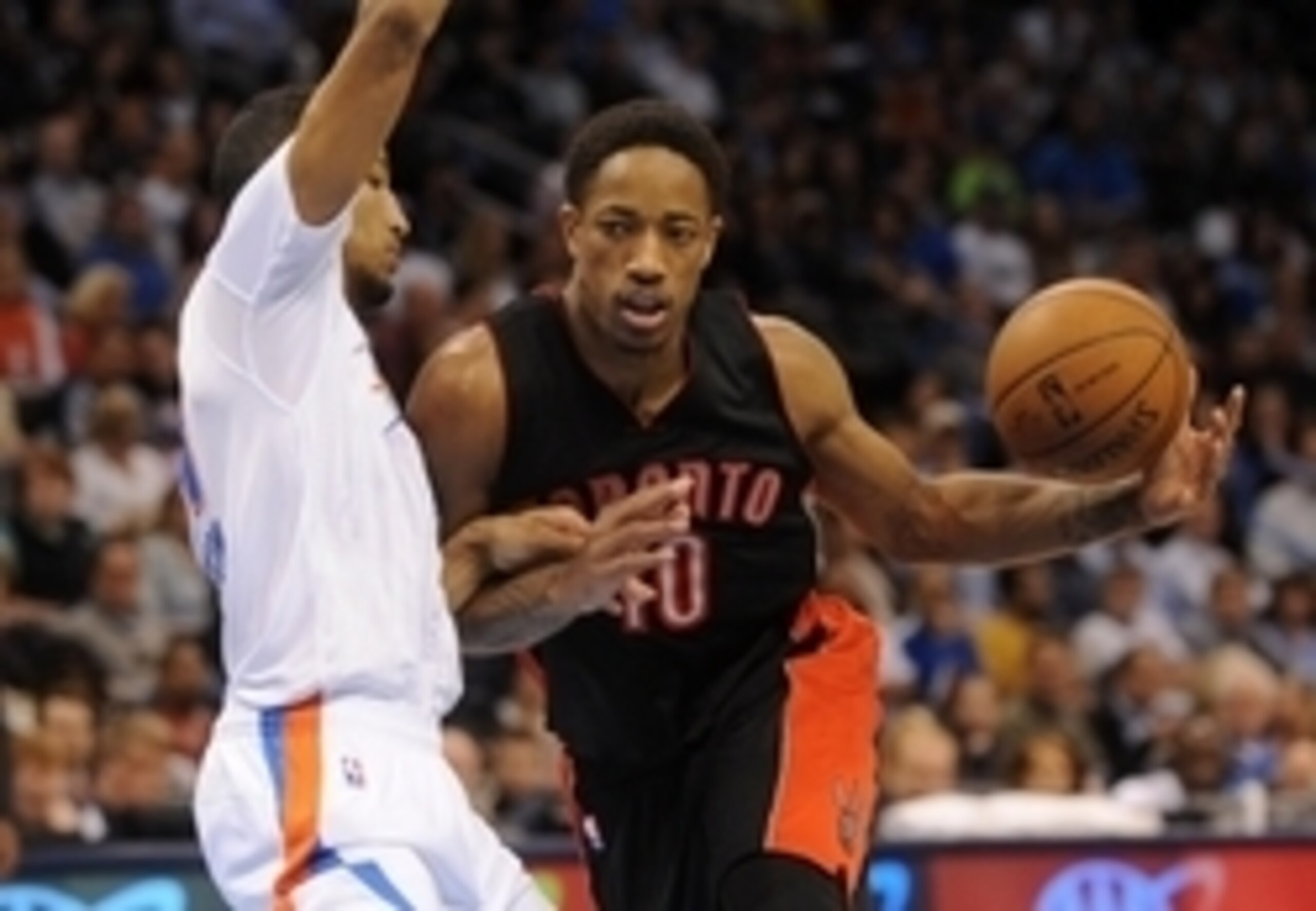
Scoring
There's only so much you can do when your offensive arsenal revolves around mid-range jumpers that you create for yourself. There's no worse shot commonly used in the NBA, but DeMar DeRozan keeps insisting on having it serve as his offensive staple. That's why, despite always being a threat to go for 20 points, he fares worse in this category than a handful of other supposedly—and falsely—lesser scorers at his position.
Non-Scoring Offense
Though he is best while working off the dribble, DeRozan can score in a variety of ways when he doesn't start with possession. His spot-up jumper is just dangerous enough that it commands a bit of respect, but defenders can't forget about his athleticism when he's cutting to the hoop and catching the ball on the run.
Defense
He may have trouble tracking defenders through traffic and can often be taken out of his stride by a well-timed screen, but DeRozan is a stellar defender who often takes on some of the Toronto Raptors' hardest defensive assignments. Though some metrics don't view him too favorably, he passes the eye test due to his level of involvement and willingness to accept matchups that will only depress his individual numbers. It shouldn't be at all surprising that the Canadian representatives are better at preventing points when he's on the floor.
Rebounding
DeRozan is great at turning his rebounding opportunities into actual rebounds, regardless of who's in his way. Whether it's a contested or uncontested try, he's coming away with the ball far more often than not. Now, he needs to assert himself on the glass a bit more frequently, even if the Toronto Raptors are a team that doesn't lend itself to an abundance of opportunities on a regular basis.
Intangibles
This was a rough season for DeRozan, and not just because the NBA fined him $15,000 for a flagrant foul against Bojan Bogdanovic. That's not a serious enough offense to lose a conduct point, as we're intentionally making those hard to give away. A thigh injury suffered at the end of November cost him a significant portion of his season, as he wouldn't return until a Jan. 14 contest against the Philadelphia 76ers—more than 20 games after he was originally hurt.
Overall
DeRozan is an exceptionally talented two-way player who isn't making the sort of impact he should. Until he changes his playing style and starts accepting that the overall trends of the NBA aren't going to change anytime soon—cough, fewer mid-range jumpers, cough—he won't be maximizing what he can bring to the proverbial table.
2. Gordon Hayward, Utah Jazz
17 of 18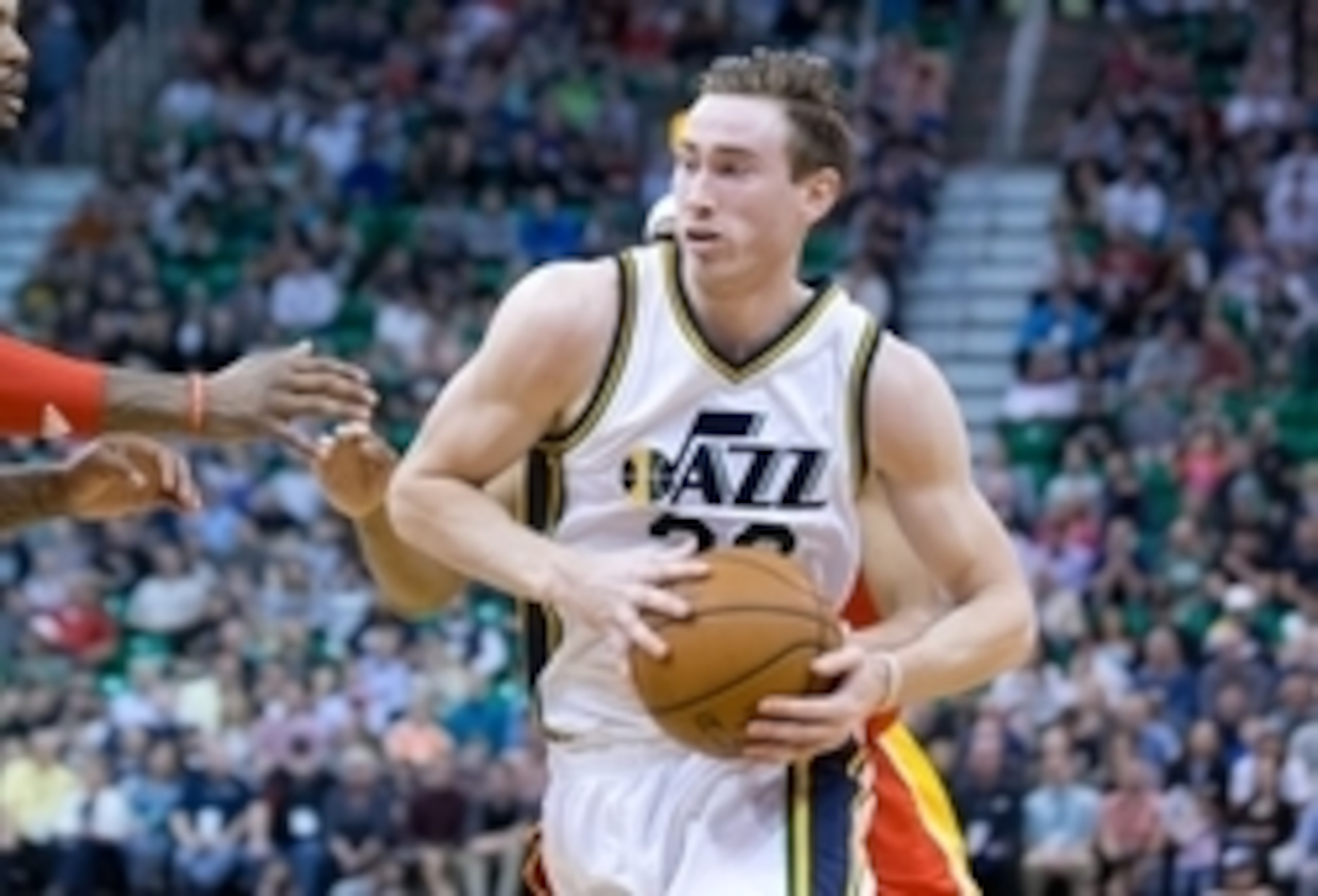
Scoring
Gordon Hayward can score from nearly anywhere in the half-court set, and he does so while creating 70.1 percent of his makes from inside the arc. Unlike last year, when he was still figuring out how to play without Al Jefferson and Paul Millsap drawing away defensive attention, the Butler product thrived as a No. 1 option. Night in and night out, he was a reliable and versatile scoring presence.
Non-Scoring Offense
There's no major weakness here, as Hayward is quite adept at feeding his teammates and spacing out the court when someone else is handling the rock. Keep in mind that many of his turnovers come because he lost his handle while dribbling; his bad passes came quite infrequently when compared to his assists.
Defense
Though Hayward isn't a great defender, he's at least a solid one who can hold his own while some great interior presences protect him. It's a bit easier to gamble on the ball or cheat away from cutters when Rudy Gobert is guarding the rim behind you, for example. But if this swingman is going to improve, it's going to be by showing more discipline when guarding a spot-up shooter, as he was prone to opening up too large a space between himself and his man, especially when the bigs already had the help defense covered.
Rebounding
Hayward's defensive rebounding percentage remained at 14.0 this year, proving that his massive jump in 2013-14 was no mere fluke. Even more impressively, this proof came despite spending a lot of time on the court with big men who inhale rebounds like kids do candy on Halloween. He could stand to get a bit stronger so that he can grab more contested boards, but it's hard to knock him too much given his situation.
Intangibles
A back injury and some shoulder trouble kept him out of the lineup for small bits of March, but there was never anything serious enough for him to miss substantial time. Given his heavy involvement and massive amount of minutes, Hayward was quite durable.
Overall
The baby-faced boy who missed the game-winning attempt against Duke is all grown up now. He's a seasoned basketball player who's comfortable in a lead role for a team on the rise. He's no longer rocking the bowl cut. He's put on significant amounts of muscle to help him endure the grind of the 82-game season. And if he keeps trending in this direction, he'll soon have a chance to play more than 82 times in a season.
1. Jimmy Butler, Chicago Bulls
18 of 18
Scoring
Remember when Jimmy Butler had trouble shooting consistently from the perimeter and didn't create many looks for himself? That seems like a long time ago now. Butler experienced a huge scoring breakout for the Chicago Bulls, becoming one of the top options and still improving from just about everywhere on the court.
Non-Scoring Offense
If there's one area in which Butler needs to improve most, it's as a passer. He received only five of the 10 possible points for facilitating, which was rather easily his worst category out of any of the eight subsections for swingmen. Ideally, that will come next year, now that he's more accustomed to serving as such a central offensive figure.
Defense
Even though he was expending a lot of energy trying to put up points for the Bulls, Butler remained a standout defender. After all, that was his primary skill coming out of Marquette, and he's not suddenly going to forget how to settle into that stance. At times, his effort levels slipped, leaving him prone to mistakes, but the overall product was still exemplary.
Rebounding
Butler ferociously attacked the glass whenever he saw an opening. But what makes him most impressive is that he rather easily paced players at his position in contested boards. While some swingmen struggle to record one contested rebound every other game, he was routinely grabbing two in a single 48-minute stretch.
Intangibles
Fortunately, the many injuries that Butler suffered throughout the season kept him out for only a few games—except for the left elbow injury that knocked him from Tom Thibodeau's lineup card for most of March. But between the thumb injury, illness, back spasms and mid-February shoulder trouble, the minor maladies still added up.
Overall
Butler was one of this season's biggest breakout stars, going from a much-hyped youngster (who failed to live up to the attention) to a flat-out stud in just one year and winning Most Improved Player for his efforts. Why? He developed tremendously as a scorer, raining in jumpers, creating more shots for himself and routinely posting 20-spots for a Chicago team that often had to deal with injuries. This 25-year-old is going to be at or near the top of his position for a long time.

.jpg?w=2560 "Grading Tonight's SmackDown 🔠")
.jpg?w=2560 "Rush Named Week 2 Starter")


.jpg?w=2560 "Joey Porter Jr. Trade Fits 🧩")