B/R NBA 200: Ranking the Top Combo Bigs of 2014-15 Season
What an intriguing blend of players we have before us.
There's the young basketball god known as Anthony Davis. A certain grizzled veteran on the San Antonio Spurs joins him as a standout who plays both power forward and center. Plenty of former All-Stars as well as a number of up-and-coming studs have already achieved various levels of success.
The combo bigs may not provide as many players to the overall NBA 200 field as other positions do, but there's certainly a healthy mix of ages and playing styles.
Are you a scorer through and through? Come on in. Feel like playing defense and contributing little on the offensive end? Welcome to the club. Do both? Even better.
Everyone is welcome, so long as his performance this year was solid enough. And now, it's time to put the league's best combo bigs into a definitive order.
The NBA 200 metric identifies the players who performed best during the 2014-15 season. Potential doesn't matter, and neither does reputation. It's all about what happened this season, and this season only. All positions are graded using the same criteria (though rim protection was added into the equation for bigger positions), but the categories are weighted differently to reflect changing roles, with max scores in parentheses:
- Scoring (20)
- Non-Scoring Offense: Facilitating (5) and Off-Ball Offense (10)
- Defense: On-Ball (12), Off-Ball (15) and Rim Protection (13)
- Rebounding: (15)
- Intangibles: Conduct (5) and Durability (5)
For a full explanation of how these scores were determined, go here. And do note that these aren't your father's classification schemes for each position. Players' spots were determined by how much time they spent at each position throughout the season, largely based on data from 82games.com and Basketball-Reference.com, and we're expanding the traditional five to include four combo positions.
In the case of ties, the order is determined in subjective fashion by ranking the more coveted player in the higher spot. That was done by a voting committee comprised of myself, two National NBA Featured Columnists (Grant Hughes and Dan Favale), two Associate NBA Editors (Ethan Norof and Joel Cordes) and an NBA Quality Editor (Jacob Bourne).
Note: All statistics come from Basketball-Reference.com unless otherwise indicated. In order to qualify for the rankings, players must have suited up in 20 games through March 10, the date of data collection.
Point Guard Rankings can be found here.
Combo Guard Rankings can be found here.
Shooting Guard Rankings can be found here.
Swingman Rankings can be found here.
Small Forward Rankings can be found here.
Combo Forward Rankings can be found here.
Power Forward Rankings can be found here.
18. Cody Zeller, Charlotte Hornets
1 of 18
Scoring
The biggest difference between Cody Zeller's rookie and sophomore go-rounds was his confidence on long two-pointers. During his first year with the Charlotte Bobcats, he connected on only 27.3 percent of his shots from between 16 feet and the three-point arc; this season with the Hornets, he raised that clip nearly eight full percentage points.
Non-Scoring Offense
When Zeller doesn't have the ball in his hands, he's not really a huge factor in the proceedings. Then again, he's not really a huge factor when he has possession and is looking to pass, either.
Defense
Zeller doesn't exactly thrive in on-ball situations. On the rare occasions when he ended up in an isolation setting, it didn't go well for him. And the same was true when guarding the post, though that happened significantly more frequently.
Rebounding
It's time to start squeezing some grip-strength instruments. Zeller put himself in position for plenty of rebounds on both ends of the court, but he was quite prone to seeing a smaller player snatch the ball away or watching it squirm out of his grasp. The tools are there, but he can be so much better on the boards.
Intangibles
Though his right shoulder gave him trouble at various points in 2015, he never missed a truly significant amount of action and spent the majority of the season healthy.
Overall
Still fighting to justify the No. 4 pick Charlotte used on him, Zeller is starting to improve but still has a long road ahead. The 22-year-old big man looked much more comfortable lofting up shots from deep mid-range zones, which bodes well as he continues to expand his offensive arsenal in years to come.
17. Lavoy Allen, Indiana Pacers
2 of 18
Scoring
Nothing about Lavoy Allen's scoring game stands out. The Indiana Pacers rarely call upon him, and his levels of efficiency are totally unnoteworthy without three-point range or quality work at the charity stripe. But at least Allen is able to create some of his own looks from inside and outside the paint, which gives him some semblance of value in the category.
Non-Scoring Offense
The only saving grace here is that Allen isn't a terrible distributor. He's by no means a point guard masquerading as a big man, but he can make easy passes without turning the ball over—and he isn't afraid to squeeze it into tight spaces while seeking out cutters. That's more than many players who occasionally line up at the 5 can claim.
Defense
Protecting the hoop was easily Allen's best asset this year, though he was often left out of place when drawn outside of the paint. He spent many of his minimal minutes guarding the rim, and he was quite good at doing so, holding the opposition slightly below 49 percent shooting when he was there.
Rebounding
Though Allen doesn't spend enough time on the court to post gaudy rebounding totals, he was effective whenever head coach Frank Vogel called his number. His ratio of contested-to-uncontested rebounds was one of the best at his position, as he never feared contact or having to make a tough box-out against a bigger player.
Intangibles
A strained right knee kept Allen out of the lineup for nearly a month in late January and early February, but that was his only notable injury of the season. Beyond that, there were no health concerns or conduct issues to speak of.
Overall
Allen is by no means a glamorous player, but he's a physical presence who thrived as an interior defender in 2014-15. He's always been an asset on the defensive side of the ball, but playing alongside so many other quality point-preventing presences brought out the best of him in that area. Just don't expect much offense out of this 26-year-old big.
16. Kevin Garnett, Minnesota Timberwolves
3 of 18
Scoring
Long gone are the days when Kevin Garnett could serve as a go-to option or a threatening presence in the pick-and-roll game. His impact is largely limited to those patented mid-range jumpers, and few of those are even dropping through the hoop at this stage in his career.
Non-Scoring Offense
Garnett still inspires some fear, largely due to reputation and the occasional sequence of consecutive swishes from outside the paint. He's also remained a savvy passer, even if the ball doesn't end up in his hands often enough for him to rack up the dimes.
Defense
Though The Big Ticket no longer has excellent lateral quickness and is left trying to expend less energy in his old age, he's still a master of defensive positioning. That kept him from putting up inadequate numbers while he aided both the Brooklyn Nets and Minnesota Timberwolves in 2014-15. Just don't ask him to be left alone around the rim too often anymore.
Rebounding
Even if Father Time has sapped much of his athleticism, Garnett is still a hard-nosed 6'11" mass of muscle who has a certain knack for reading bounces. He's going to get a fair number of rebounds whenever he's on the court, though precious few qualify as contested boards at this stage of his career.
Intangibles
No sane person would knock Garnett's leadership abilities, as everything he does is intended to inspire his teammates, and he even softened up this season in his mentor role. But durability is another beast, and trouble with his enduringly sore left knee kept him out for some time. That, along with a one-game suspension for an ill-advised head-butt of Dwight Howard, hurts him here.
Overall
Garnett is merely a shell of himself, but he did provide the NBA with a massively nostalgic moment. Waiving his no-trade clause and going from the Nets to the Wolves, where he started his career so long ago, Garnett reminded us of the beast he used to be—if only because we saw highlights upon his return, not because his play on the court was turning back the clock.
15. David Lee, Golden State Warriors
4 of 18
Scoring
This is more opportunity- than skill-driven. David Lee still has great touch around the basket and can knock down short jumpers with the best of them, but there wasn't a huge place for him in the Golden State Warriors lineup—not with a potent offense that featured so many unique and deadly weapons.
Non-Scoring Offense
Lee's passing is what stood out most here. Without turning the ball over often, he was able to make the tough passes that head coach Steve Kerr's offense sometimes requires, as the Warriors run plenty of backdoor cuts and plays that require bigs to hit moving targets after they curl around a screen.
Defense
Why didn't teams use Lee as a center sooner? Though he was a horrific defender in most every other area, he actually fared quite well when serving as the last line of defense, no longer needing to use any sort of mobility to stop his man. Not only was he quite involved, but he also held opponents to around 47 percent shooting throughout the year.
Rebounding
Another year, another average of double-digit rebounds per 36 minutes. That's something Lee has now achieved during seven of his 10 professional seasons, the exceptions coming during his rookie year (9.7) and during his first two campaigns with the Warriors (9.8 and 9.3, respectively). The problem here is that he played just over half of those 36 minutes during his typical appearance.
Intangibles
Lee has never been the most durable player, and that didn't change in 2014-15. This year, a balky hamstring gave him trouble, knocking him out of the lineup at the start of the season and then pushing him back to the bench for an even longer stretch in November and December.
Overall
It's clear that Lee is no longer the same standout he was in his prime. He's a talented offensive player and an effective rebounder, but his inability to stay healthy or play quality defense limits how much he's going to be used in a lineup. Kerr had the right idea in both putting him closer to the basket and keeping him on the bench for far longer than normal.
14. Amar'e Stoudemire, Dallas Mavericks
5 of 18
Scoring
Amar'e Stoudemire may be 32 years old now and on the tail end of his impressive career, but he's not exactly washed up in the scoring department. Though he isn't a first or second option, he's quite efficient, hovering around the top of the field-goal-percentage leaderboard and creating a surprising number of his own looks. Especially on the New York Knicks, he put the ball on the floor and then through the twine quite often, not needing a feed from a teammate.
Non-Scoring Offense
Still a roll threat who can use athletic burst to create easy looks around the rim, Stoudemire is held back by an inability to create easy looks for the rest of his team. That was doubly true on the Dallas Mavericks, as his assist percentage dropped to a career low, and he couldn't even average one dime per 36 minutes.
Defense
Fuhgeddaboudit. Stoudemire was solid when he was asked to protect the rim and do nothing else. He was atrocious in virtually every situation that didn't take place in the paint, and it's not like he was much better at preventing post-up scores that occurred in the colored area.
Rebounding
Freed from too much offensive responsibility, Stoudemire was able to put more effort into his glass-eating ways, and that worked out rather nicely. Though he was overly aggressive at times and subsequently grabbed a low percentage of his individual opportunities, he was a great through-contact rebounder who recorded nearly as many contested boards as he did uncontested.
Intangibles
First, a sore right knee nearly kept him out for a month with the Knicks. Then, a wrist injury knocked him out for a few more weeks. He stayed much healthier in Dallas, but he still suffered a sprained left ankle—one that admittedly wasn't too severe.
Overall
If the Mavericks thought they were getting a game-changing presence when they acquired Stoudemire off waivers, they were sorely mistaken. Choosing to buy out his contract was a financial decision for the Knicks, but it's not as if this aged big man was going to have a significant impact in any location. On offense? Sure, but his efficient scoring was partially negated by his defensive inadequacy. He's become a great role player, although expecting anything more is foolish.
13. Brandan Wright, Phoenix Suns
6 of 18
Scoring
Brandan Wright really must hate missing shots. He rarely takes anything away from the basket, preferring to finish the easy dink-and-dunk looks that result in high field-goal percentages. He wasn't quite as uber-efficient as he was for the Dallas Mavericks (74.8 percent shooting) once he arrived at a new location, but it's hard to maintain that scorching number anyway.
Non-Scoring Offense
Wright is always a threat to finish plays around the hoop, as he has a good understanding of body control and timing. That's enough for him to be slightly threatening, especially when he's screening and rolling. But passing? One word: yikes.
Defense
It's all about that ability to deter shots around the basket. No matter where Wright was located this season—whether with the Mavericks, Boston Celtics or Phoenix Suns—he was quite good at keeping opponents from posting impressive totals around the tin. That ability didn't extend far outside the paint, but Wright was perfectly fine sticking close to the hoop when he received minutes.
Rebounding
Wright has never been a stellar rebounder, and that didn't change in any of his three locations during the 2014-15 season. In fact, he topped out at just 8.1 rebounds per 36 minutes while he was in the desert, and that's not something to boast about for a man who spent time at both the 4 and 5.
Intangibles
It would have been easier for Wright to protest after he was shipped from one city to another. But he didn't, instead going to work with a professional demeanor and remaining healthy all the while.
Overall
Wright is always a bit of a statistical oddity, boasting a remarkably high player efficiency rating because he rarely misses any of his shots from the field and converts his charity shots at a decent clip. This year was no different, as his PER was once more above 20, falsely indicating that he was a star player. Wright is far from earning that status; instead, he knows how to work the system and maximize his limited talents.
12. Mason Plumlee, Brooklyn Nets
7 of 18
Scoring
It would do wonders for Mason Plumlee's scoring ability if he could knock down foul shots with any sort of consistency. He's already an efficient player who specializes in reverse dunks, but he has a mental block at the stripe. After shooting 62.6 percent during his rookie season, he struggled to make even half of his looks as a sophomore.
Non-Scoring Offense
Defenders can often forget that Plumlee is on the court, so long as someone in the paint is already waiting to turn away any attempts from the restricted area. His jumper has limited range, and he's simply not enough of a scoring threat to alter the formation and intentions of the opposition.
Defense
Unlike many bigs who are only decent on the defensive end, Plumlee's primary strength comes because he's able to affect the game when his man doesn't have possession, and not just around the hoop. Throughout the season, he did a nice job of grabbing steals in the passing lanes while still displaying enough spatial awareness to recover to his man.
Rebounding
Plumlee has some serious hops, and they help him out on the glass more so than anywhere else. He's not always able to establish strong positioning after a shot goes up, but he can outjump and outhustle plenty of frontcourt players to the ball. Then again, it would be nice if he knew when to pick his spots better and sometimes leaked out or got back to stop an easy transition opportunity.
Intangibles
There were absolutely no concerns here, whether we're talking about conduct or durability.
Overall
Plumlee benefited from Kevin Garnett's tutelage, as he developed a bit on the offensive end and displayed a better understanding of defensive sets during his sophomore season. During the middle of the season, he took over as the starting center when Brook Lopez was injured, playing well enough to hold onto his starting gig for a while. But that didn't last for the whole season, as the Nets realized that Plumlee was still a bit limited on both ends of the floor.
11. Tristan Thompson, Cleveland Cavaliers
8 of 18
Scoring
Though he began expanding his range in the first few years of his professional career and even experimented with switching his shooting hand, Tristan Thompson had a much more limited arsenal during the 2014-15 season. The Cleveland Cavaliers no longer needed much offense from him, so he reverted to picking up trash and finishing plays around the basket in a limited manner.
Non-Scoring Offense
Defenses have to be aware that Thompson is going to attack after a shot goes up, as he strives for an easy tip-in or second-chance attempt. But not much else that he does is going to scare a team, as he's an inept passer with limited range on what he calls a jumper. Thompson's assist percentage was one of the worst ever by a player who spent more than 2,000 minutes on the court.
Defense
Heading into the season, one of the biggest concerns for the Cavaliers was that they didn't have any rim protectors. They remedied that with the trade for Timofey Mozgov, not because Thompson suddenly made strides forward in that area—or any other on defense, for that matter.
Rebounding
It's impossible to keep Thompson off the offensive glass. He's a relentless ball of energy who will fight through plenty of contact to create second-chance opportunities, and few are better in that role. That said, his ridiculous talent doesn't extend to the defensive end yet, though it might in the near future.
Intangibles
Though two other Thompsons—Klay and Hollis—were bitten by the injury bug at various points during the season, it avoided Tristan throughout the year.
Overall
Thompson is someone who can thrive as a role player on a competitive team, just as he did with the Cavaliers. No longer was he focused on expanding his offensive range and shoring up his weaknesses. Instead, he played to his strengths, which primarily involved finishing around the rim and wreaking absolute havoc on the offensive glass.
10. Nene, Washington Wizards
9 of 18
Scoring
Though Nene is far more comfortable taking mid-range jumpers than he was earlier in his career, he's been forced into that type of role by declining effectiveness right around the hoop. Gone are the days when his physicality allowed him to position himself right around the basket and take around 65 percent of his looks from the restricted area. And in this case, versatility hasn't made him a more prolific producer of points.
Non-Scoring Offense
Passing helps out the Brazilian big man here, as his touch hasn't abandoned him in that area now that he's well into his 30s. Nene's assist totals may not seem inordinately impressive, and they aren't. But a meager amount of his turnovers are classified as bad passes, and we can't discount the number of secondary assists he records during any given game.
Defense
Only his work right around the basket keeps Nene from looking like an elite defender. He's remarkably tough to score on in on-ball situations, and he doesn't make many off-ball mistakes, either. But he's not particularly good at deterring shots at the rim, and opponents routinely took advantage of that when they could get past the Washington Wizards perimeter defenders.
Rebounding
Spending 25.3 minutes per game on the court, playing the biggest positions in a lineup and failing to record even two contested boards during a typical game don't make for a good combination.
Intangibles
Between his recurring foot trouble, a sore right knee and a bothersome shoulder, Nene wasn't exactly a picture of perfect health during his age-32 season. And, no, we're not holding his one-game suspension for leaving the bench during preseason action against him.
Overall
As an individual, Nene didn't do much to stand out during his latest campaign. Expanding his range took him away from his strengths on offense, and he was misplaced whenever head coach Randy Wittman asked him to serve as a primary rim protector. Nonetheless, the Wizards were better on both ends of the floor with Nene on the court, and he continued to look good as a no-stats impact player.
9. Jared Sullinger, Boston Celtics
10 of 18
Scoring
Once Jared Sullinger's three-point stroke gets better, he's going to be far more dangerous. After all, he took 3.2 triples per game this year and made just 28.3 percent of them, but he still managed to make up for his misfires by thriving closer to the basket. The tools are there, and it's only a matter of time before he puts them together.
Non-Scoring Offense
Sullinger's inability to knock down deep shots kept defenses from paying too much attention to him out on the perimeter, thus negating some of his off-ball value. However, he was a gifted passer during his third professional season, recording plenty of assists on an offensively challenged Boston Celtics squad.
Defense
Though his lack of size—he's only 6'9"—and limited athleticism make it tough for him to shine on the defensive end, Sullinger soldiers on. He wasn't particularly impressive as an interior defender, but he moved well and managed to disrupt passing lanes while shutting down many a spot-up shooter.
Rebounding
Not much has changed since Sullinger thrived on the Ohio State glass, as he displays a keen understanding of positioning and box-out techniques. He seems to enjoy going after every missed shot, and it doesn't bother him in the slightest if another player is in the vicinity.
Intangibles
Remember the medical red flags surrounding his back that depressed his draft stock and let him fall to the C's? Well, those didn't pop up in 2014-15. Instead, a stress injury to his left foot supposedly knocked him out for the year, though he would return to the lineup with a few games to play in the regular season.
Overall
Sullinger is developing nicely, especially because he's maintained his rebounding prowess and is steadily improving on the defensive end. But in order to take that proverbial next step, he desperately needs to shore up his outside shooting, as he was so ineffective from the perimeter that teams sometimes gave him the Josh Smith treatment and neglected to pay him any attention.
8. Ed Davis, Los Angeles Lakers
11 of 18
Scoring
Ed Davis is another one of those players who won't take a bad look. If he's not firing away from right around the rim, chances are that he's going to look off the shot and either push closer to the hoop or pass to an open teammate. On one hand, this makes him efficient. On the other, it limits what he brings to the table for the Los Angeles Lakers offense.
Non-Scoring Offense
In this particular category, Davis has one primary positive: He's always a threat to crash the paint and finish plays at the rim, as his long arms and athleticism allow him to finish through traffic. For that reason alone, he can't be neglected when he's standing outside of the paint.
Defense
Davis was a rare high-quality defender in purple and gold this season, as he did most things well on the less glamorous end. Not only did he grade out with 11 of the 12 points available for on-ball defense and receive 13-of-15 off the ball, but he also only lost two of the 13 points for rim protection. No one else on the Lakers can claim anything like that.
Rebounding
If Davis got a bit more run, he'd assert himself as one of the better rebounders at his position. After all, everything checks out nicely: He gets plenty of per-minute boards, loves fighting through contact and creates plenty of opportunities. We'll blame head coach Byron Scott for this score, even if it's still a strong one.
Intangibles
Even though he didn't receive nearly as much playing time as he should, Davis kept his mouth shut and sought to maximize the minutes he did receive.
Overall
If the Lakers were competitive, they might have played Davis more, as his two-way contributions made him one of the most valuable commodities on the roster. Then again, they would have been more competitive if they played him more, so this is a bit of a vicious circle.
7. Donatas Motiejunas, Houston Rockets
12 of 18
Scoring
Donatas Motiejunas loves live action and hates stoppages in play. He was quite good from the field and beyond the three-point arc, shooting 50.4 and 36.8 percent, respectively. But he seemed to have a mental block at the stripe, connecting on just over 60 percent of his supposed freebies. If that part of his game develops, he'll become so much better—both because he'll be making those shots and because he'll likely be more aggressive when attacking the hoop.
Non-Scoring Offense
He's not a strong enough cutter to receive top marks as an off-ball threat, but having a consistent three-point stroke did wonders for him. The Lithuanian big man also managed to record more assists than turnovers for the first time in his NBA career, so he deserves some props for the improvement there.
Defense
Though Motiejunas isn't strong enough to avoid being bullied in the post, he does have the requisite size to function as a quality rim-protecting option. The 7-footer could capably slide into the paint and deter shots, holding opponents below 50 percent even if he didn't reject many of them.
Rebounding
With plenty of strong rebounders at smaller positions in the Houston lineup, it was harder for Motiejunas to record gaudy figures on the glass. Then again, he played for a Rockets squad that produced plenty of opportunities during an average game, so that factor just about negated the other. All in all, he didn't do much to stand out in either direction.
Intangibles
Until March 27, it looked like Motiejunas was going to make it through the season without suffering a single significant ailment. But then he suffered a back injury that caused him to be ruled out for the rest of the season.
Overall
Motiejunas was huge for the injury-riddled Rockets, especially when both Terrence Jones and Dwight Howard were out of the lineup. With his floor-stretching abilities and creative finishes—as well as his underrated defense around the rim—Houston was able to put another quality piece around James Harden. This Western Conference squad has to be thrilled that the 24-year-old is still on a bargain of a contract for another year.
6. Terrence Jones, Houston Rockets
13 of 18
Scoring
Terrence Jones may rely on his teammates rather heavily when he's trying to score, but he does a nice job making Houston Rockets general manager Daryl Morey proud. He rarely lofts up those inefficient mid-range jumpers, instead focusing his efforts beyond the arc—where he's merely mediocre—and around the hoop.
Non-Scoring Offense
Even without a potent perimeter jumper, Jones can space out defenses and force them to be cognizant of his location at all times. After all, this southpaw is quite good at diving to the hoop and finishing in traffic, so long as there's not a body right in front of him.
Defense
If you expected this 6'9" power forward from Kentucky to struggle when he was filling in at the 5 and tasked with protecting the rim, you would be sorely mistaken. Maybe it was a bit fluky, driven by a relatively small sample size, but Jones was fantastic as the last line of defense. Not only was he highly involved in rim defense, but opponents also struggled to shoot better than 42 percent against him.
Rebounding
Playing big continued in this category, though it was a bit less surprising. After all, Jones had thrived on the glass during each of his first two seasons in the Association. That said, he could stand to tone down the aggression, as he put himself in too many situations that surely weren't going to result in a successful conversion, which means he would have been better served doing something else.
Intangibles
Health was a huge issue for Jones. First, nerve issues in his leg knocked him out for nearly three months. Then, he dealt with the flu over the All-Star break. After that, his lung collapsed, which he fought quite hard to recover quickly from. He missed so many games that he barely qualified for these rankings.
Overall
Don't be dissuaded by Jones' lackluster play down the stretch, as he recovered from a collapsed lung and then pushed himself to his physical limit as quickly as possible. The middle of his season was much more telling, as he was a flat-out revelation for the Rockets, given his expanded offensive arsenal and surprisingly excellent defensive efforts.
5. Greg Monroe, Detroit Pistons
14 of 18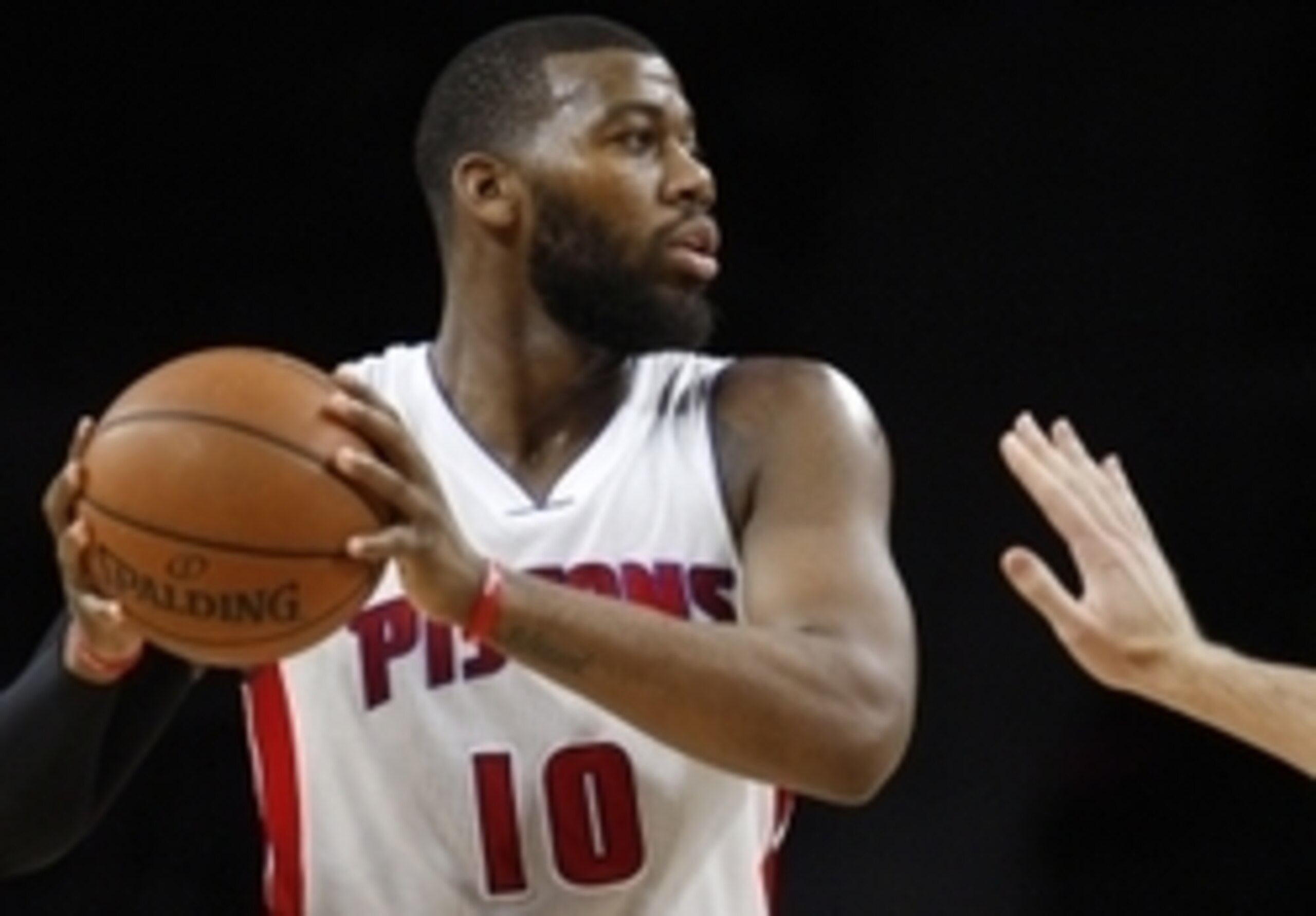
Scoring
Greg Monroe may be a plodding, paint-bound big man who would fit better in the NBA of the 1980s and 1990s, but he was still quite good as a scorer for the Detroit Pistons. Whether he's facing up from the elbows and attacking the paint, dazzling with his back to the basket or doing some combination of the two, he has a vast array of moves without sacrificing his efficiency.
Non-Scoring Offense
A smart cutter with great hands, Monroe is another one of those nontraditional off-ball threats who still manages to excel. He's by no means a standout in that area, but he's at least competent enough to draw attention. Interestingly enough, his passing falls into the same category.
Defense
Slow feet and limited athleticism don't normally go hand-in-hand with solid defensive play. Monroe is able to use his size to his advantage when working against post-up players or attempting to protect the rim, but that's often all he has going for him.
Rebounding
Throughout his career, Monroe has steadily improved on the glass, learning the nuances of positioning and using them advantageously. This year, his line was something special, as he was seemingly involved in every rebounding opportunity while on the court and did a remarkable job of pulling in contested boards. Only two players at his position managed to beat him in that category.
Intangibles
This season could have gone a lot differently after an offseason battle that resulted in Monroe accepting a qualifying offer and showing no desire to remain in the Motor City. But he remained professional throughout the year, only losing points for other reasons. One stemmed from a two-game suspension for his offseason DUI. The other resulted from right knee trouble that limited him for much of March.
Overall
Monroe was quite impressive after all the offseason drama, working nicely in head coach Stan Van Gundy's offense and opening up the possibility of a return to the Detroit Pistons. Without Josh Smith's presence clogging up the paint, he excelled on offense and was quite good on the boards as well. Defense will always be an issue, but the man fondly known as "Moose" has plenty of other redeeming traits.
4. Chris Bosh, Miami Heat
15 of 18
Scoring
No longer a tertiary option behind LeBron James and Dwyane Wade, Chris Bosh took on significantly more responsibility this season. But as the Miami Heat increased their reliance upon him, he didn't revert back to his Toronto Raptors days and establish himself in the post all that frequently. Instead, he was still a stretch big, and that cost him some efficiency, despite the abundance of points he provided in South Beach.
Non-Scoring Offense
Only two combo bigs received perfect 10-of-10 scores for off-ball offense, and thanks to his penchant for drilling spot-up triples while terrifying defenses with his sheer presence on the perimeter, Bosh was one of them. Passing was the only thing holding him back here. Though heavily involved in the game at all times, he did record an identical number of assists and turnovers.
Defense
Bosh is an adept defender in most situations, but he's misplaced when head coach Erik Spoelstra asks him to serve as the last line of defense. It just isn't going to work, as he's a rather lackluster rim protector. Allowing the opposition to shoot over 55 percent there isn't exactly something you want to brag about.
Rebounding
Bosh's rebounding skills have been much maligned during his time with the Heat, but that's largely due to how much time he spends out on the perimeter, whether he's spacing the court for his team or avoiding rim protection. He actually grabs a high percentage of his available chances, and it doesn't help that Miami produces some of the least team opportunities per game.
Intangibles
The strained left calf was minor. The blood clots in his lungs were not, to the point that the first priority was making sure Bosh would be healthy in the coming years—not days or weeks. Fortunately, he should recover fully, even if he's losing two durability points this season.
Overall
Bosh was having yet another strong season before his unfortunate hospitalization and subsequent diagnosis after the All-Star break. Thriving on offense as the go-to option and holding his own on the defensive end—when away from the rim, of course—he cemented himself as an All-Star for the 10th consecutive season and seemed as if he'd lead Miami back into the playoffs. Now, he has all of our best wishes as he tries to make the journey back for next season.
3. Pau Gasol, Chicago Bulls
16 of 18
Scoring
Does Pau Gasol sometimes interrupt the flow of the Chicago Bulls offense with his methodical approach? Sure, but it works for him. The 34-year-old Spaniard turned back the clock throughout the 2014-15 season, averaging 18.5 points per game, making nearly half of his shots from the field and getting to the charity stripe more than he had since the 2010-11 campaign. His offensive arsenal is brimming over with accurate jumpers and crafty moves in the paint, and he's prepared to use any of them at any given moment.
Non-Scoring Offense
Though Gasol doesn't spread the court as well as he does for Spain during FIBA play and rarely makes aggressive cuts toward the hoop, he's still always going to draw some defensive attention. His passing is also a positive, though it might not seem quite as impressive next to Joakim Noah's distributing brilliance.
Defense
Gasol is the Derek Jeter of NBA defense. Many of his metrics look quite good, but they're misleadingly strong because he has such limited range, preferring to pick and choose his spots and often letting ground balls driving ball-handlers blow right by him en route to the basket. It shouldn't be surprising that his off-ball score is what's holding him back here.
Rebounding
Where in the world did this come from? Prior to this season, Gasol's career high was 11.3 rebounds per game back in 2009-10, and he was at 11.8 during his first go-round with the Chicago Bulls. He also set new high-water marks in rebounds per 36 minutes (12.3), total rebounding percentage (18.6) and defensive rebounding percentage (27.6) during his...wait for it...age-34 season.
Intangibles
Even though he falls squarely into the "aging veteran" category, Gasol stayed quite healthy and happy throughout the year. A strained calf gave him some trouble in November, but that issue went away nearly as quickly as it popped up.
Overall
It's safe to say that Gasol isn't washed up. He wasn't particularly motivated during his final season with the Los Angeles Lakers, nor was he completely healthy, and he proved just how much he has left in the tank after signing with the Bulls. Though his defense was spotty, he was a huge asset to a team ravaged by injuries, recording more double-doubles than anyone else in the league and helping his squad remain near the top of the Eastern Conference.
2. Tim Duncan, San Antonio Spurs
17 of 18
Scoring
This was unquestionably one of Tim Duncan's worst scoring seasons since leaving Wake Forest behind in 1997. He took on a much more minor role with the San Antonio Spurs, and—of course—he managed to excel in it, making over half his shots from the field and still breaking the hearts of countless opponents by banking in his trademark mid-range jumpers.
Non-Scoring Offense
What doesn't Tim Duncan do well? He sets perfect screens and forces defenses to pay attention to him on the elbows at all times. He's also a brilliant passer within the Spurs system, though he's not involved enough to merit a perfect score under head coach Gregg Popovich's supervision.
Defense
The one major award eluding Tim Duncan is a Defensive Player of the Year trophy, and he deserved some serious consideration for it this year. Across the board, he stood out positively, displaying an unquestioned mastery over his positioning off the ball, thriving when he was taken one-on-one and protecting the basket with aplomb.
Rebounding
Only once has Duncan failed to average 11 rebounds per 36 minutes, and it was not this year. That aberration actually came all the way back in 1998-99—the big man's second year in the pros. He still does everything well on the glass, and he's one of the few players at his position capable of pulling in more than four contested boards during the average game.
Intangibles
As if we'd ever say something negative about Duncan's conduct and leadership abilities. He also didn't suffer any major injuries during the 2014-15 season, only sitting out for rest purposes, as mandated by San Antonio's legendary head coach.
Overall
Duncan might have access to the Fountain of Youth. He almost certainly has a weekly standing appointment to get couples massages with Father Time. Then again, we've known that for years. Another season is in the books, and the legendary big man thrived once again, playing great two-way ball and taking on a smaller role—and a smaller salary—in order to maximize the success of the Spurs. Yawn (but not really, because Duncan's play is anything but boring).
1. Anthony Davis, New Orleans Pelicans
18 of 18
Scoring
Adding a deadly jumper from the free-throw line has made Anthony Davis just about unstoppable, even if he hasn't yet emerged as a three-point threat. And yes, that would be "yet." The list of things, other than hitting triples, that Davis can't do as a scorer now is basically empty.
Non-Scoring Offense
Davis, along with Chris Bosh, was one of only two combo bigs to receive a perfect 10-of-10 in off-ball offense. He's the constant subject of attention. Defenses can't leave him open anywhere inside the arc and have to guard against his deadly cuts to the hoop, accounting for his ability to pull down lobs that would soar over the outstretched arms of anyone else. And if former head coach Monty Williams had given him the freedom to showcase his point guard vision throughout the season, as he did in the second half of the year, he could have received a perfect facilitation score as well.
Defense
Though he's by no means a perfect defender, Davis is at least getting closer to earning that status. He sometimes struggles to cover players rolling to the hoop, and he strays too far from stretch bigs, failing to recover in time to affect their shots. But all in all, he's damn good for a young man who just turned 22.
Rebounding
Davis may have trailed the league leaders in rebounds by a fairly significant margin, but his per-game (10.2) and per-minute (10.2 per 36) numbers are misleadingly low—and they're already impressive. First, the New Orleans Pelicans as a whole offer fewer rebounding opportunities per game than most other NBA squads. Second, Davis paced his position in contested rebounds and would have done even more if he wasn't so vitally involved in stretching the floor and switching out to the perimeter to engulf smaller players.
Intangibles
If there's one flaw on Davis' resume, it's his durability. This season brought about another laundry list of injuries, even if none of them were truly major. He suffered a chest contusion, toe injury, strained groin, sprained right shoulder, resprained right shoulder, sprained left ankle and many more in-game maladies (even a throat contusion).
Overall
There's not much more we can say about Davis. He's at a level reached by so few players in NBA history that they can be counted with your hands and feet, and he's still only 22. Even the sky may not be the limit for this up-and-coming stud, especially when—again, when, not if—he learns how to shoot triples and continues gaining comfort with the nuances of defense at the professional level. In far too many games, he was the human manifestation of basketball perfection as he carried the Pelicans into the Western Conference playoffs.
Note: All statistics come from Basketball-Reference.com or NBA.com, unless otherwise indicated.

.jpg?w=2560 "Grading Tonight's SmackDown 🔠")
.jpg?w=2560 "Rush Named Week 2 Starter")


.jpg?w=2560 "Joey Porter Jr. Trade Fits 🧩")