
B/R NBA 200: Ranking the Top Combo Forwards of 2014-15 Season
Combo forward served as a rather strange position this year.
Last season, LeBron James and Carmelo Anthony both qualified here, but that wasn't the case in 2014-15. James largely stuck at the 3 for David Blatt's Cleveland Cavaliers, and New York Knicks head coach Derek Fisher basically refused to use his star at power forward. And as a result, the position is significantly weaker now, though it's still boasting the services of a number of interesting players.
The Milwaukee Bucks dominate with three ranked players and another standout who used to be on the Brewtown roster. But will they take home the No. 1 spot at this nontraditional spot in the lineup?
To qualify, a player has to spend time at both small forward and power forwards, but neither can completely overshadow the other.
Now, we have to put the league's best combo forwards in a definitive order.
The NBA 200 metric identifies the players who performed best during the 2014-15 season. Potential doesn't matter, and neither does reputation. It's all about what happened this season and this season only. All positions are graded using the same criteria (though rim protection was added into the equation for bigger positions), but the categories are weighted differently to reflect changing roles, with max scores in parentheses:
- Scoring (20)
- Non-Scoring Offense: Facilitating (7) and Off-Ball Offense (10)
- Defense: On-Ball (18), Off-Ball (17) and Rim Protection (5)
- Rebounding (13)
- Intangibles: Conduct (5) and Durability (5)
For a full explanation of how these scores were determined, go here. And do note these aren't your father's classification schemes for each position. Players' spots were determined by how much time they spent at each position throughout the season, largely based on data from 82games.com and Basketball-Reference.com, and we're expanding the traditional five to include four combo positions.
In the case of ties, the order is determined in subjective fashion by ranking the more coveted player in the higher spot. That was done by a voting committee comprised of myself, two National NBA Featured Columnists (Grant Hughes and Dan Favale), two Associate NBA Editors (Ethan Norof and Joel Cordes) and an NBA Quality Editor (Jacob Bourne).
Note: All statistics come from Basketball-Reference.com unless otherwise indicated. In order to qualify for the rankings, players must have suited up in 20 games through March 10, the date of data collection.
Point Guard Rankings can be found here.
Combo Guard Rankings can be found here.
Shooting Guard Rankings can be found here.
Swingman Rankings can be found here.
Small Forward Rankings can be found here.
7. Marcus Morris, Phoenix Suns
1 of 7
Scoring
Though Marcus Morris isn't nearly as talented in the scoring column as his twin brother, Markieff (also of the Phoenix Suns), he's still quite adept at both putting up points off the bounce and knocking down three-pointers. The latter usually comes after an assist from one of his teammates, but that combination is still potent enough for him to make some noise when he gets significant minutes.
Non-Scoring Offense
His strength? The ability to spot up from the perimeter and space out a defense with his fairly quick release. His weakness? The passing, as he rarely racked up assists and normally limited himself to hitting one of the guards at the top of the key and waiting for something new to be set up.
Defense
Phoenix couldn't often count on positive defensive production from this particular twin. His 6'9" frame should've helped him against power forwards, but he was pushed around by bigger and stronger players while simultaneously failing to showcase enough lateral quickness against speedy 3s. Both on and off the ball, he struggled mightily.
Rebounding
Morris has been a consistently adept per-minute rebounder ever since completing his rookie season with the Houston Rockets, and this year was no different. A respectable number of his successful ventures on the glass came with a player in his vicinity, and he also grabbed a high percentage of his chances. But without an inordinate amount of playing time, it's hard for him to stand out any more.
Intangibles
There's no reason for Morris to lose points here, as he spent the entire season healthy and out of Jeff Hornacek's desert-based doghouse. An alleged assault could change that, but only if the "alleged" descriptor is dropped in favor of a conviction.
Overall
Clearly the lesser of the Morris twins, Marcus has some skills that still make him an intriguing player. Though not quite an asset on the glass, he's not a liability while playing either forward position. His three-point range and shot-creating ability make defenses have to actively think about slowing him down. He's far from being a star, but he's certainly a forward well worth rostering for a competitive squad.
6. Jabari Parker, Milwaukee Bucks
2 of 7
Scoring
Even if his shot wasn't falling as frequently as the Milwaukee Bucks would've liked, Jabari Parker was still showing off solid scoring tools during his rookie season before tearing his ACL in mid-December. He's a crafty player who can use his athleticism and finesse to embarrass many an opponent, and more experience should only bring a higher level of consistency—as well as a more potent stroke from the outside.
Non-Scoring Offense
Parker wasn't a skilled distributor at Duke, and that didn't change during his rookie season. On the year, he recorded 42 assists (1.7 per game) and 47 turnovers, though only 18 of the cough-ups were of the bad-pass variety. Those aren't numbers to boast about, and that's arguably what needs to be his biggest area of improvement as a sophomore.
Defense
It seems as if Parker knows where he should be on the defensive end of the court. Actually getting there and making an impact is a different story. At 6'8" and with 240 pounds on his frame, he's not quite big enough to body up against power forwards, and small forwards are often too fleet of foot for him to hold in check.
Rebounding
Lest we forget, Parker averaged 8.7 rebounds per game while under Mike Krzyzewski's supervision at Duke. As a result, it shouldn't be all that surprising that he fared rather well on the NBA glass as a rookie. Neither his per-game mark (5.5) nor his per-36-minute average (6.7) stood out all that much, but he was great at pulling in contested rebounds while playing on a team that didn't offer too many chances on a nightly basis.
Intangibles
Parker tore the ACL in his left knee midway through a Dec. 15 contest against the Phoenix Suns, and the injury knocked him out for the rest of the season. Having finished his rookie year with only 25 games played, he didn't fare particularly well in the durability category.
Overall
Before he went down, Parker looked like a Rookie of the Year front-runner—one who would only keep improving as the season progressed. But sadly, this Buck didn't get a chance to build upon what he started, ultimately limiting how far he can rise up these rankings. Assuming he fully recovers and experiences no setbacks, this should be his worst spot in the B/R NBA 200 for years.
5. Robert Covington, Philadelphia 76ers
3 of 7
Scoring
Robert Covington emerged out of nowhere and became a potent scoring option, though his numbers are likely inflated due to the sheer lack of viable options on a Philadelphia 76ers offense that, by adjusted offensive efficiency, was the fourth-worst in NBA history. Undrafted out of Tennessee State, this 24-year-old displayed a healthy knack for raining in deep jumpers. Now, he just needs to add other moves to his limited arsenal.
Non-Scoring Offense
Even though he entered the season with no offensive reputation whatsoever, Covington quickly proved that defenses had to respect his outside shooting, knocking down 37.4 percent of his deep tries. But the same cannot be said for his passing, as he often failed to make even the simplest feeds to his lackluster teammates.
Defense
Covington was one of the respectable defenders on the Sixers throughout the season, though he still didn't exactly stand out in a positive way. He was simply mediocre in most areas—pick-and-roll sets serving as the major exception. Both when covering the roll man and when hounding the ball-handler, he was quite effective.
Rebounding
At 6'9", Covington has the requisite size necessary to be a legitimate factor on the boards. Once he learns how to control his aggression, he'll be even better, as he recklessly crashed the glass after a shot went up, leading to many rebounding opportunities but a rather low conversion percentage.
Intangibles
A bruised right shoulder and an elbow injury both kept Covington out of the lineup, but not for very long. His games played are only lower because it took a while for him to move into the Philly rotation, and that's hardly a reason to knock his durability.
Overall
It's already been an interesting journey for Covington, who went undrafted out of Tennessee State in 2013 and bounced around in the D-League afterward. After the Houston Rockets assigned him to and recalled him from the Rio Grande Valley Vipers multiple times throughout 2013-14, they waived him at the beginning of this season. The Sixers snatched him up off waivers, which worked out rather nicely for them during his sophomore season.
4. Tobias Harris, Orlando Magic
4 of 7
Scoring
Tobias Harris finally figured out how to shoot from downtown, and that drastically increased his level of overall offensive effectiveness. Through his first three seasons at the professional level, the former Volunteer took 1.6 three-point attempts per game and connected at a 28 percent clip. But this year, he more than doubled his average number of tries and also knocked down 36.4 percent of them.
Non-Scoring Offense
As a result of his increased performance from beyond the arc, Harris started drawing more attention when he worked off the ball. His primary offensive strength remains his ability to create shots for himself and carve up a defense with his nose for working his way into traffic, but this was still a positive change.
Defense
The Orlando Magic really can't count on much from Harris when they're trying to prevent the other team from scoring. Not only is he thoroughly average when working out on the perimeter, but he's not exactly a strong rim-protecting presence, which matters for players who routinely suit up at the 4. Not only was he often uninvolved, but that was usually a good thing.
Rebounding
Harris might not use his physical tools well on the defensive end, but he's used them to become a plus rebounder. This was rather easily the worst he's fared on the glass since leaving Knoxville behind, and he still hauled in 6.5 rebounds per 36 minutes while playing on a team that nearly allowed the league's fewest chances per game.
Intangibles
It seemed like there was a new minor injury every month. A strained right calf in November. A significant ankle sprain in January. Trouble with his right knee in February. Another ankle malady in March. It adds up.
Overall
Considering the Magic acquired Harris—along with Doron Lamb and Beno Udrih—back in February of 2013 for Gustavo Ayon, J.J. Redick and Ish Smith, they have to be thrilled with the production he's brought to the table. Whether he's a long-term keeper is a different question, though, as Harris needs to improve significantly on the defensive end if he's going to hold off Aaron Gordon and the other young players on the Orlando roster.
3. Giannis Antetokounmpo, Milwaukee Bucks
5 of 7
Scoring
Giannis Antetokounmpo still isn't a great NBA scorer, and he likely won't be until he can actually take and make shots from the outside. But with his stretchy arms, devastatingly long strides, work in transition and ability to finish plays at the rim, he's still at least a good one.
Non-Scoring Offense
Again, the lack of three-point ability is highly problematic, as Antetokounmpo's natural knack for cutting at the right times can only help him so much. The same is true of his passing, which is good enough to make Jason Kidd think about playing him at point guard but also not great enough for him to thrive in that role.
Defense
Antetokounmpo will eventually get better at protecting the basket when he's playing the 4, and he's only going to grow more disciplined while working off the ball. But for now, those are his biggest weaknesses, and they don't overshadow his lockdown skills against even the league's best players. This Milwaukee Buck doesn't seem to fear any matchup, and he's more than capable of using his length in suffocating fashion.
Rebounding
Apparently, long arms and a 7-footer's frame do wonders on the boards. Antetokounmpo was a solid rebounder during his rookie season, but he made major improvements during his sophomore go-round in Brewtown. Particularly impressive was his work when another player was within a normal wingspan of him, because it didn't seem to faze him in the slightest.
Intangibles
There are some young players who seem to exude a general joie de vivre when they're on the court, and Antetokounmpo is one of them. Couple that with a clean bill of health throughout the year, and you get a double-digit score.
Overall
One of the league's most exciting young players, Antetokounmpo is always good for a few jaw-dropping highlights that leave no doubt he has a bit of alien blood flowing through his veins. His physical profile is just too ridiculous, especially when he does something crazy—like Eurostep dunking while starting outside the three-point arc. But this 20-year-old is still extremely raw, and we can't be blinded by the upside when evaluating the present.
2. Khris Middleton, Milwaukee Bucks
6 of 7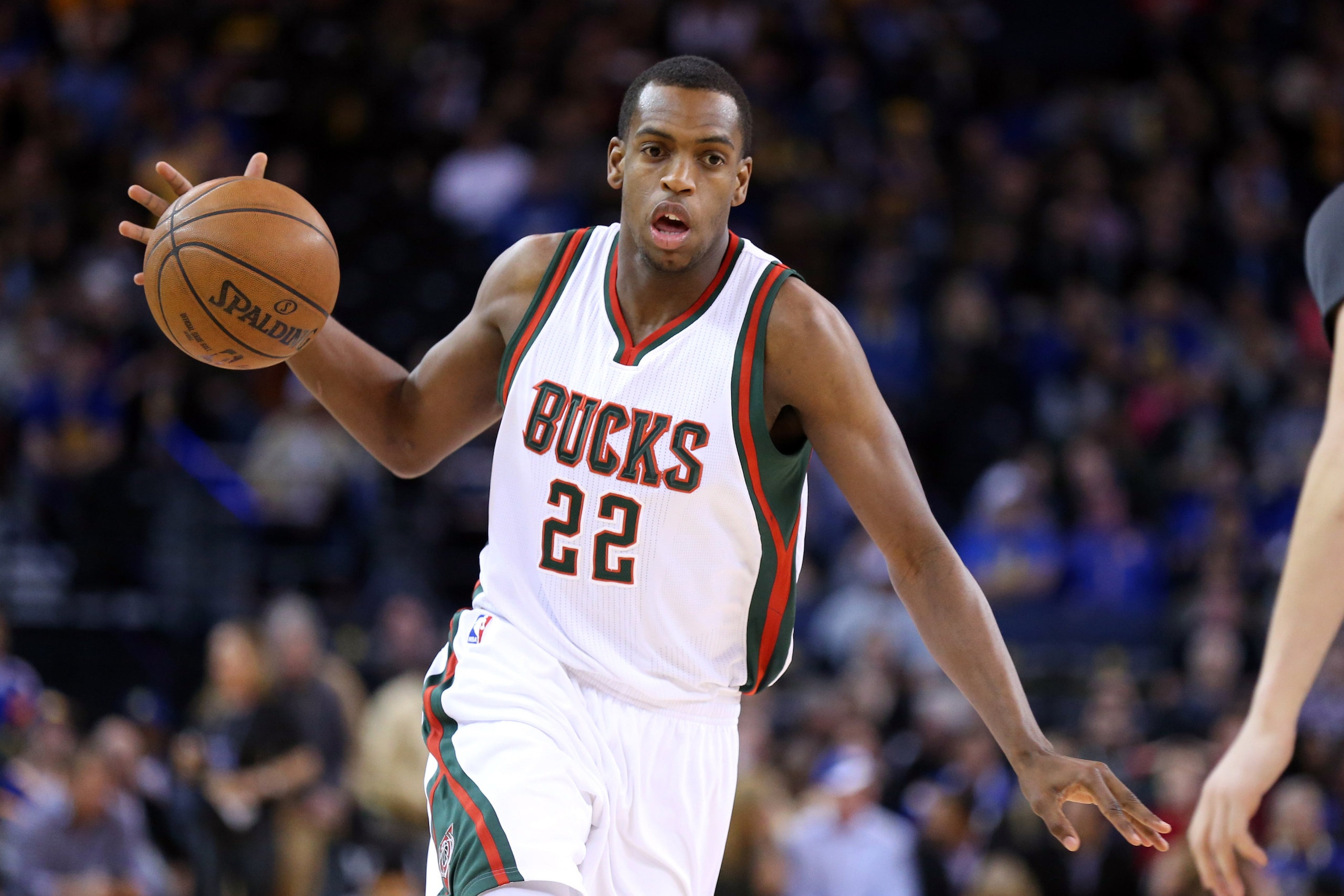
Scoring
Last season, 34 percent of Khris Middleton's attempts from the field came beyond the arc. This year, that number dropped down to 30.8 percent, allowing him to showcase an even more well-rounded offensive game in addition to his potent deep shooting. As he continues to gain confidence off the dribble, he's only going to keep improving.
Non-Scoring Offense
Leaving Middleton open beyond the arc is usually a bad idea, though he can be inconsistent in catch-and-shoot situations and doesn't yet cut with the best of 'em. Still, he draws plenty of attention from defenses when he's working on the wings, and he stands out there much more positively than he does for his limited passing.
Defense
Next to some of his teammates, Middleton doesn't look like a stellar defender. He's at least a good one, working on the ball quite nicely and struggling most when he's left attempting to protect the rim in a smaller lineup. He spent significant time at shooting guard, small forward and power forward this year, but qualifying as a combo forward above anything else ultimately hurts him, since rim protection saw him earn just two of five possible points.
Rebounding
Though Middleton certainly shouldn't be embarrassed by his work on the glass, he needs to do a better job rebounding in traffic if he's going to improve. A player who spends time at the 4 really shouldn't have trouble grabbing more than one contested board per game.
Intangibles
Although this forward had some trouble with his right knee early in the season, he stayed healthy afterward. Middleton ultimately played in nearly every game for the Bucks, keeping his nose clean all the while.
Overall
Middleton is no longer flying under the radar, and he has to be pleased with the timing. After all, he gets to follow up his breakout season by entering into restricted free agency, and he's sure to be paid a rather hefty sum. In 2015's NBA, players like this forward—ones who can space the court, play defense and serve as go-to options on some offensive possession—are quite valuable.
1. Draymond Green, Golden State Warriors
7 of 7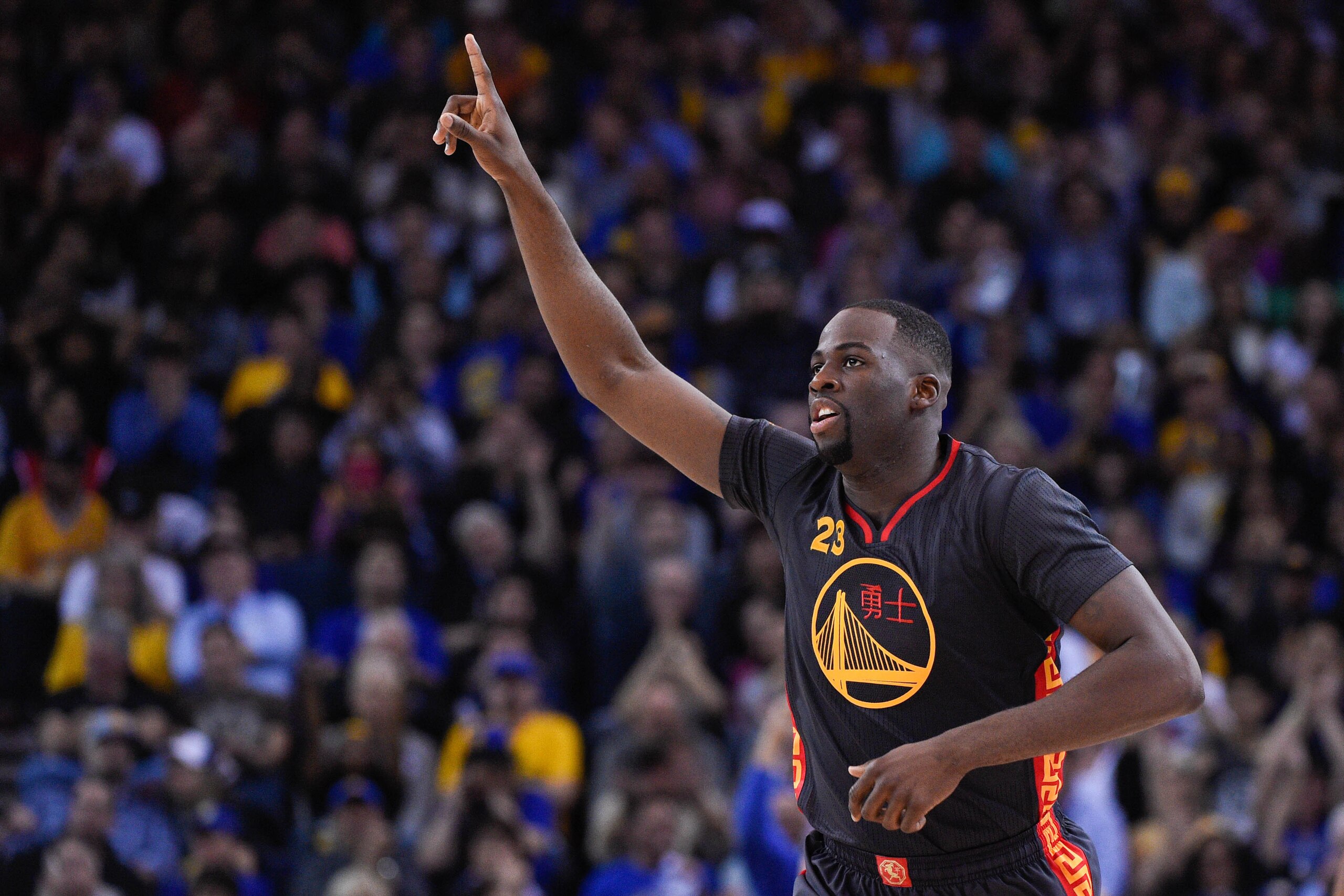
Scoring
Draymond Green is by no means a top-notch scoring threat, but he's a self-aware player who rarely tries to make plays outside his skill set. He can knock down some three-pointers even if he's not particularly efficient from beyond the arc, and he's also able to put the ball on the floor and go to work from inside the arc. There's not much to write home about here, but there's also not much to complain about.
Non-Scoring Offense
Green doesn't thrive as an off-ball threat, often drawing rim in catch-and-shoot scenarios that require a quick release. He's not a terrific cutter either, as it's physicality that typically allows him to stand out. At least his passing is quite good for a combo forward, thanks to a third straight season of significant improvement.
Defense
This tough-nosed Michigan State product is everything you want in a defender, as evidenced by his second-place finish in this year's Defensive Player of the Year voting. He seeks out the toughest matchups and thrives in just about any spot on the court. He's incredibly impactful against anyone and always seems capable of helping off and recovering to his man if the need arises. The only reason why he's not receiving a perfect score is that he's not a remarkably involved rim protector when he plays at the 4.
Rebounding
Green is a truly great rebounder, one who basically seeks out contact so that he can elevate above bigger players and grab an unexpected board. No other combo forward hauled in even 2.5 contested rebounds per game; Green finished the year at 3.3.
Intangibles
Other teams may hate his brash attitude and willingness to get under an opponent's skin, but the Warriors have to love his intensity. They're probably also glad he has a knack for avoiding any major injuries that would keep him out for more than a few games.
Overall
The fact that Green is a legitimate candidate for a max contract speaks highly about the league's ability to evolve. He's not a scorer, but rather a player who thrives on the defensive end—receiving 39-of-40 in that category, which ties him with five others for the best mark in the NBA—and does all the little things. Green has now established himself as a draft-day steal, all while competing for—but not winning—both Most Improved Player and Defensive Player of the Year.

.jpg?w=2560 "Grading Tonight's SmackDown 🔠")
.jpg?w=2560 "Rush Named Week 2 Starter")


.jpg?w=2560 "Joey Porter Jr. Trade Fits 🧩")