
B/R NBA 200: Ranking the Top Small Forwards of 2014-15 Season
Injuries destroyed the small forward position for much of the 2014-15 season, but many of those who were ruled out for the year long ago can now come back to play. Welcome, Kevin Durant and Carmelo Anthony.
Paul George, it's worth noting, will still not be ranked. He didn't play the necessary 20 games by March 10, leaving him ineligible for this year's countdown. As a result, the Indiana Pacers star, along with the players this position is losing to the swingmen and combo forwards, is one of the reasons that this powerhouse spot in the lineup now appears a little bit weaker.
But between LeBron James, the aforementioned injury returnees and plenty of other standouts, it's not as if we're devoid of talent here. From defensive specialists to snipers to all-around studs, we're looking at the players who spent the vast majority of their time at the 3 this season.
And now, we have to put the league's best small forwards in a definitive order.
The NBA 200 metric identifies the players who performed best during the 2014-15 season. Potential doesn't matter, and neither does reputation. It's all about what happened this season and this season only. All positions are graded using the same criteria (though rim protection was added into the equation for bigger positions), but the categories are weighted differently to reflect changing roles, with max scores in parentheses:
- Scoring (20)
- Non-Scoring Offense: Facilitating (10) and Off-Ball Offense (10)
- Defense: On-Ball (20) and Off-Ball (20)
- Rebounding (10)
- Intangibles: Conduct (5) and Durability (5)
For a full explanation of how these scores were determined, go here. And do note these aren't your father's classification schemes for each position. Players' spots were determined by how much time they spent at each position throughout the season, largely based on data from 82games.com and Basketball-Reference.com, and we're expanding the traditional five to include four combo positions.
In the case of ties, the order is determined in subjective fashion by ranking the more coveted player in the higher spot. That was done by a voting committee comprised of myself, two National NBA Featured Columnists (Grant Hughes and Dan Favale), two Associate NBA Editors (Ethan Norof and Joel Cordes) and an NBA Quality Editor (Jacob Bourne).
Note: All statistics come from Basketball-Reference.com unless otherwise indicated. In order to qualify for the rankings, players must have suited up in 20 games through March 10, the date of data collection.
Point Guard Rankings can be found here.
Combo Guard Rankings can be found here.
Shooting Guard Rankings can be found here.
Swingman Rankings can be found here.
23. Nick Young, Los Angeles Lakers
1 of 23
Scoring
Nick Young can be a talented scorer, but he had trouble showcasing those skills for much of the season. Often overconfident in his own abilities, he struggled tremendously when trying to finish plays inside the arc, especially from those pesky mid-range zones. To his credit, though, he did remain aggressive, attacking the hoop and hitting his free throws at an impressive 89.2 percent clip.
Non-Scoring Offense
Although he's dangerous when spotting up and letting fly from the perimeter, Young is allergic to passing. When the ball is in his hands, it's usually either going to be swung around to reset the offense, end up arcing toward the basket or wind up in the opposition's possession. For a player with backcourt experience, recording more turnovers than assists is never going to earn you much credit.
Defense
Young actually fared surprisingly well in our metrics, as his defensive numbers are largely dragged down by the putridity of the Los Angeles Lakers' stoppers who surround him on the court. The Purple and Gold were significantly better when he played, and it's notable that he was adept at both avoiding detrimental on-ball situations and inserting himself in the action when his man didn't have possession.
Rebounding
Rebounding does not involve scoring. I'll leave you to make the logical assumption.
Intangibles
Young's penchant for bizarre headlines isn't going to hold him back here, as those don't have an on-court impact. His relationship with Iggy Azalea is utterly irrelevant, as is his fear of murderous dolphins. What actually matters is his lack of durability, since injuries to his thumb and ankle, as well as a fracture in his kneecap, prevented him from playing in many more than half of his team's games.
Overall
This season was a disaster for Young, who was unable to do anything on the court that justified his habit of making boastful statements to the media. Without his shot falling from all areas of the half-court set, he simply didn't make an impact in enough areas to be a truly valuable player, even if his defense was better than expected.
22. Wesley Johnson, Los Angeles Lakers
2 of 23
Scoring
Two things hold Wesley Johnson back in the scoring column. First, he's not heavily involved in the Los Angeles Lakers offense, failing to average double-digit points for his fifth consecutive season since leaving Syracuse. Second, he doesn't create many looks for himself, which is particularly problematic for a player who isn't solely a three-point specialist.
Non-Scoring Offense
Though Johnson isn't a great distributor, he's at least an adequate one on some nights. He even had one six-assist showing against the Minnesota Timberwolves early in the season, though it was the only time he broke past the five-dime barrier. Remember, Johnson isn't extremely involved in the passing game. But his per-game numbers are misleadingly low due to limited run, and he also rarely turns the ball over with a bad pass.
Defense
Johnson should be a better defender given his athletic tools and physical traits. However, he was brutalized in on-ball situations during the 2014-15 season, coming in among the worst isolation and pick-and-roll defenders throughout the entire NBA. This, of course, is partially due to having little help behind him, but it's still not a good look.
Rebounding
Though he doesn't come away with an abundance of rebounding opportunities, sometimes remaining on the perimeter too long to take advantage of a lane to a missed shot, Johnson is adept at converting the chances he does create. Then again, it helps that many are of the uncontested variety.
Intangibles
A hip flexor bothered Johnson in January, but that's really the only notable injury during his second go-round with the Purple and Gold. There were no conduct issues to speak of either.
Overall
Johnson was very much a role player for a struggling Lakers organization, but he failed to bring as much to the table as he should have. Normally, he's a bit more potent from the outside and can spend more time in front of his man. Without either of those tools at his disposal, he was receiving minutes more out of necessity than anything else.
21. Al-Farouq Aminu, Dallas Mavericks
3 of 23
Scoring
There's not much to write home about here. Al-Farouq Aminu is one of those players who scores largely because he's picking up trash, not because Rick Carlisle is drawing up sets that lead to him getting shots. Nor is he going to create his own looks very often, except for when he grabs a rebound and hits the follow-up attempt.
Non-Scoring Offense
Is any defensive scheme going to focus on shutting Aminu down? Not really, and defenders often cheat away from him when he's standing on the perimeter for the Dallas Mavericks. Between that and a dearth of passing skills, there's not much going for him on the offensive end.
Defense
This would be why Aminu is making the cut. He's a true lockdown defender who can routinely take on the toughest wing assignments, especially because he's so good at preventing points while working on the ball. His off-ball work can be a bit sloppy, but you're not going to score against him in a one-on-one situation unless you manage to work your way into the post.
Rebounding
Aminu has been better in years past, but he's still quite dangerous on the glass in a per-minute setting. Very active as soon as a shot goes up, he seeks out as many opportunities as possible and isn't afraid to fight through contact. Even though he spent less than 20 minutes per game on the court, he was still one of the top per-minute contested rebounders at his position.
Intangibles
It's hard to complain about a man who accepts his role and goes out each night willing to make the biggest impact possible with limited minutes and touches, especially when he also stayed quite healthy throughout the year. A bruised shoulder was his most severe injury.
Overall
A defensive specialist through and through, Aminu is strong enough on that end that he still registers as a top-200 player—if only barely. It also helps that he does good work on the glass and stayed healthy throughout the season, though improving some facets of his offensive game would certainly elevate his standing even further. And by "some," I mean "all."
20. P.J. Tucker, Phoenix Suns
4 of 23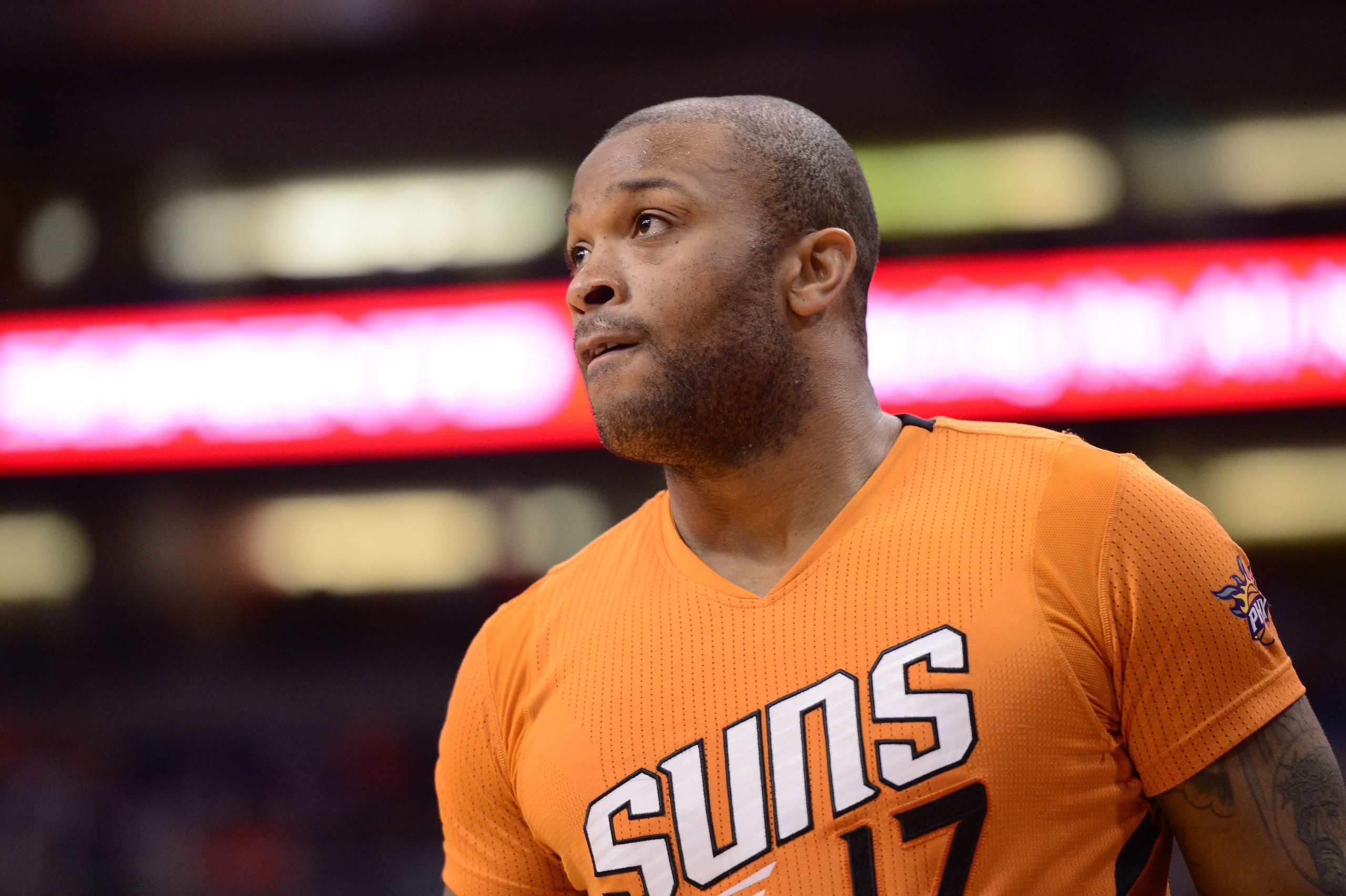
Scoring
P.J. Tucker's three-point stroke slipped throughout the year, and he wasn't as aggressive as he's been in years past when attacking the basket. That combination didn't exactly allow him to shine as a scorer in his limited role with the Phoenix Suns.
Non-Scoring Offense
Though Tucker struggled to make threes with any sort of consistency this season, he still has a decent spot-up reputation and can make defenders pay for giving him too much space. He might not be a dominant floor-spacing option, but he at least draws attention and can't be neglected, which is more positive than anything we can say about his passing chops.
Defense
Tucker was slightly better off the ball than on it, thanks to his habit of allowing players to score in isolation settings. To his credit, he was much better when navigating pick-and-rolls, but his level of involvement off the ball and knack for chasing shooters through screens still reigned supreme.
Rebounding
Tucker has always been a strong rebounder, and that was the case once more. It's a rare small forward who can pull down at least a pair of contested boards during his average outing, and this member of the Suns managed to do exactly that. Now, just imagine what he could do with even more time on the floor.
Intangibles
Starting off your season suspended for three games after pleading guilty to a "super extreme DUI" is not a good idea. Neither is receiving a second suspension less than a month after you're reinstated from the first one, even if it's only for missing a team flight and lasted just a single game.
Overall
While Tucker spent the 2013-14 season excelling in obscurity, he failed to shine during the follow-up campaign. Suspensions for his poor decisions led to a rough beginning, and he never found his perimeter stroke or truly settled in on the defensive end, thereby limiting himself in two of his strongest areas. Fortunately for the Suns, he'll now be trying to redeem himself next season while on a reasonable contract.
19. Corey Brewer, Houston Rockets
5 of 23
Scoring
Corey Brewer has never been a particularly skilled scorer in the half-court set, largely because his jumper remains broken. However, he's an aggressive cutter and transition threat who can still put up points in efficient fashion. The majority of his looks come from right around the basket, and that's exactly how he likes it.
Non-Scoring Offense
Though Brewer doesn't have impressive passing skills or the outside shot necessary to space out a defense, he can never be neglected on the perimeter. His body control while cutting to the basket allows him to create easier passing lanes for his teammates, and giving him any significant amount of room lets him work up a head of steam before finishing at the rim.
Defense
Gambling is dangerous, and Brewer loves to do it. Sometimes, it works out quite nicely, as he can record an easy steal and get a quick two points before jogging back to set up for his next risk-taking move. But far too often, he's left vulnerable, either to offensive players who blow by him or spot up and wait for him to stray too far away.
Rebounding
Frankly, more should be expected of a 6'9" athlete who enjoys spending time above the rim. A large percentage of Brewer's boards come with someone else right around him, but he doesn't commit to the glass often enough. Why? One reason is that he constantly leaks out in transition, which prevents him from crashing the boards.
Intangibles
There's nothing to complain about here. Not only did Brewer keep a clean slate in the conduct department, but he remained quite healthy throughout the year.
Overall
Whether he was with the Minnesota Timberwolves or Houston Rockets, Brewer was basically the same player. He took risks on defense and needed rim-protecting presences to clean up behind him, and he thrived when he was able to get out and run in transition or attack the hoop in the half-court set.
18. Luc Richard Mbah a Moute, Philadelphia 76ers
6 of 23
Scoring
Somebody had to score for the Philadelphia 76ers and their putrid offense...and that somebody was not Luc Richard Mbah a Moute. Out of sheer necessity, he had the best point-producing season of his seven-year career (9.9 points per game), but his woes at the charity stripe and inability to hit jumpers with any sort of consistency kept him from doing anything more than putting up empty and uninspiring point totals.
Non-Scoring Offense
Scoring is not Mbah a Moute's primary weakness; offense is. Not only did he struggle as a spot-up player, failing to threaten defenses because he rarely made them pay for their negligence, but he also didn't make a significant impact in the passing department. At least he broke his four-season streak of recording more turnovers than assists.
Defense
Mbah a Moute has value as a mentor to Joel Embiid, but he's also vitally important to the Philly defense—a surprisingly effective unit during the second half of the season. The Sixers were quite clearly better at preventing points when he was on the floor, thanks in large part to his tremendous work on the ball.
Rebounding
Many small forwards aren't active enough on the glass. Mbah a Moute falls into the opposite category, as he's overly aggressive and often finds himself out of position in the transition game because he's pursuing a board he can get to but can't actually corral. The effort is nice, but he has to get smarter as a rebounder in order to keep improving his overall game.
Intangibles
Mbah a Moute is as close to losing a point as you can get, but he ultimately played in enough games to retain all 10 durability ticks. Throughout the year, he was plagued by all sorts of minor afflictions: a back injury, calf trouble, turf toe, a sprained left knee and a sore left shoulder.
Overall
The 28-year-old Mbah a Moute isn't just a veteran presence on the young 76ers roster. He's a standout defender who helped Brett Brown's squad develop into a mediocre unit on that end of the floor. He's also an adequate rebounder, even if he needs to focus more on the transition game rather than spend much of his time fruitlessly chasing caroms.
17. Mike Dunleavy, Chicago Bulls
7 of 23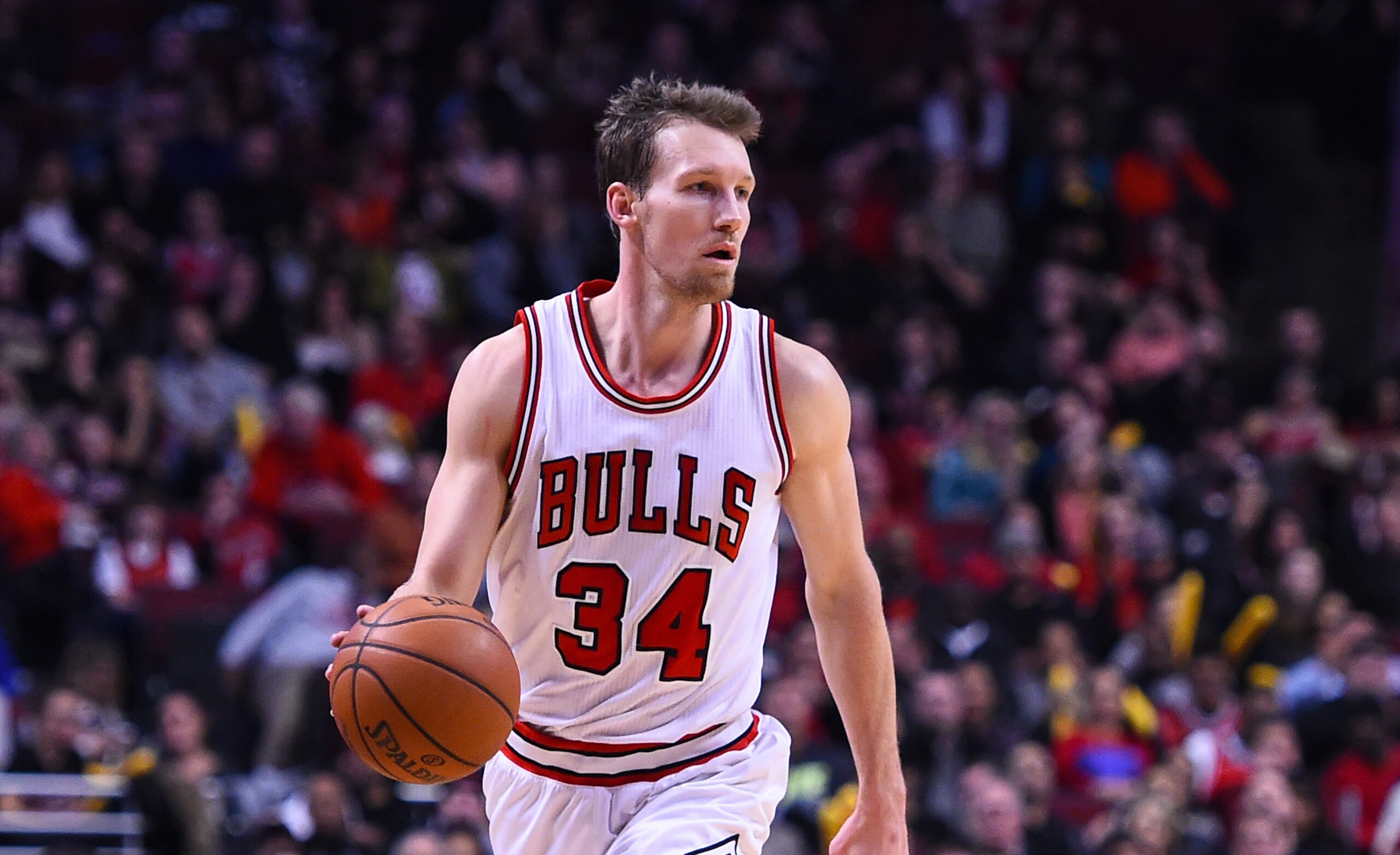
Scoring
Mike Dunleavy does not score in volume, and the vast majority of his points come from a certain area of the court. That would be beyond the three-point arc, where he launched 54.7 percent of his shots from the field during the 2014-15 season. Dunleavy is efficient and quite good at this one facet of scoring, but he's not involved enough to receive any more points in the category, especially since he almost never creates for himself.
Non-Scoring Offense
Though he doesn't score many points, Dunleavy is one of the engines that makes the Chicago offense go. As a result of his floor-spacing ability and constant work drawing attention from the defense, he's one of just five players at his position to earn a perfect 10-of-10 in the off-ball offense subsection.
Defense
As a defender, Dunleavy is usually fairly neutral. He's not a standout presence on that end of the court, but he can also hold his own in most situations. His best? When he was tracking players who received handoffs. His worst? Attempting to stop players who posted him up.
Rebounding
Dunleavy may be 6'9", but he certainly doesn't play like it when a shot goes up. He manages to grab a respectable number of rebounds for the time he spends on the court (3.9 per game), but you can basically forget about him hauling many in through traffic.
Intangibles
Trouble with his right ankle kept Dunleavy out of the lineup for nearly all of January and the very beginning of February. And the Bulls suffered while he was out, as losing one floor-spacing presence hurt them quite a bit. At least his behavior was never detrimental.
Overall
Dunleavy is one of those guys who's more important than the numbers give him credit for. Chicago's offense was significantly better with him on the court, if for no other reason than his ability to space out a defense and allow for single coverage and easier driving lanes. In some ways, it's a shame that Dunleavy is already 34 years old because this newfangled NBA is becoming an increasingly strong fit for his skill set—when he's healthy at least.
16. Gerald Green, Phoenix Suns
8 of 23
Scoring
After his breakout season in 2013-14, Gerald Green found himself glued to the bench for lengthy stretches, and it wasn't just because of his defensive lapses. Without the ability to knock down 40 percent of his triples or convert from ease within the arc, it was tougher to justify letting him out on the court to loft up 19.4 shots per 36 minutes.
Non-Scoring Offense
Green is still a viable off-ball threat, as he can hit catch-and-shoot jumpers from all over the floor and torture negligent defenders with the springs in his legs as he cuts to the hoop. Even though he struggled to score as efficiently this year, he still drew defensive attention. Unfortunately, the same positives don't apply to his passing, which saw him record more turnovers than assists.
Defense
The physical tools are there, and Green actually fared rather well in on-ball situations. But when he was asked to pay attention to the proceedings and keep his mark from getting open, he often fell asleep on the job. Sometimes, it even appeared as if he was learning from Otto Porter.
Rebounding
With a 6'8" frame and hops that would make kangaroos jealous, Green should be an adept rebounder through contact. Sadly, the opposite is true, as he was thoroughly uninvolved on the glass and had trouble recording even a single contested rebound every other game.
Intangibles
Apparently, staying on the bench for longer stretches helps with durability. Throughout the season, Green maintained quite the clean bill of health, and not just because the Suns training staff is typically a magical unit.
Overall
Last season, Green was one of the league's most underrated players. He was more engaged defensively, and the combination of his elite athleticism and three-point marksmanship made him into a dangerous and confident offensive commodity. But in 2014-15, he failed to replicate his breakout campaign, looking far more like the version of himself that previously struggled with the Indiana Pacers.
15. Matt Barnes, Los Angeles Clippers
9 of 23
Scoring
It seems like a long time ago that Matt Barnes spent the preseason playing as if he was thoroughly incapable of throwing a basketball through a hula-hoop-sized rim. After all, this small forward found his stroke early in the year and kept hitting throughout the regular season, posting respectable shooting percentages from all areas of the court in his minor role.
Non-Scoring Offense
For whatever reason, defenses refused to show proper respect to Barnes. Even when he was raining in triples on spot-up attempts, he often found himself open. And as a result, Barnes' score for off-ball offense—7-of-10—is a bit lower than it would be otherwise, leaving him needing his modest passing skills to get into double digits for this category.
Defense
Barnes receives heavy minutes because he's able to turn on the toughness and slow down the opposing team's best wing player night in and night out. He wasn't quite a lights-out defender throughout the year, struggling to keep some spot-up shooters he faced in check, but he still partially lived up to that defensive reputation.
Rebounding
After posting a career-best 8.6 rebounds per 36 minutes with the Los Angeles Lakers in 2011-12, Barnes has seen his rate decline each season. In 2012-13, it fell to 6.4 during his first go-round with the Clips. Last year, it dropped to 6.1. And this campaign, he couldn't even keep it above five, finishing with a career-worst 4.8.
Intangibles
Though his calves and hamstrings bothered him on occasion, Barnes was almost always active and ready to contribute in a positive way. He was fined $25,000 in January for swearing at a fan, who he claims was Phoenix Suns owner Robert Sarver. But regardless of whether it was Sarver and which man initiated the yelling match, that's not worthy of losing a conduct point.
Overall
Small forward was supposed to be a huge liability for the Clippers, especially when Barnes was stinking up the joint prior to the season's opening tip. But he began to turn his year around rather quickly and settled in as a floor-spacing sniper who wasn't shy about playing physical defense. He's far from being a star, but he's at least an important part of a highly competitive squad.
14. Jeff Green, Memphis Grizzlies
10 of 23
Scoring
Jeff Green may not be a volume scorer, but he's quite skilled with the ball in his hands, allowing him to create his own shots on a consistent basis. Though he required assists on 50.3 percent of his two-point makes with the Boston Celtics, that changed for the better while he was playing for the Memphis Grizzlies, as he took defenders off the bounce or pulled up even more often.
Non-Scoring Offense
It's passing that holds Green back here, as he rarely engages in such activities. Thanks to his time on Beale Street, his dimes outdid his cough-ups, but not by a significant margin. Only once did he record even five assists in a single game; on the flip side, he posted goose eggs 15 times.
Defense
As soon as Jeff Green joined the Grizz, it seemed like he was constantly seeking out ways to involve himself in the defensive proceedings. Whether he was trying to jump passing lanes or help off his man to slow down a drive toward the basket, he was inserting himself. The only problem was that this left him vulnerable in plenty of situations, and he was often out of position.
Rebounding
Even though Green has served as a combo forward in the past, he still doesn't stand out on the glass when compared to his peers at small forward. The issue isn't being averse to contact or grabbing a low percentage of his opportunities. Instead, Green was just disinterested too often to be anything more than average.
Intangibles
There were no issues to report here. Green didn't draw any negative headlines, and the only time he missed action came when he was transitioning from the C's to the Grizzlies.
Overall
Green hasn't exactly become the superstar many dreamed he could be during his days on the rise in Beantown. His offensive growth has stagnated, leaving him functioning as a deadly shooter who can both spot up and shoot off the bounce but only in a limited role. And on defense, he's still too inconsistent to be eligible for celestial status. That doesn't mean he's not a valuable contributor, of course.
13. Wilson Chandler, Denver Nuggets
11 of 23
Scoring
Wilson Chandler's game as a scorer is rather similar to Jeff Green's, except he's slightly less efficient and creates more of his own shots. However, this Denver Nugget spent most of the season in a system that didn't best utilize his talents, and that became quite clear toward the end of the campaign, when his three-point stroke magically improved. Except it wasn't just magic, as Chandler was in an offense that actually created space for him on the perimeter.
Non-Scoring Offense
Chandler wasn't very good at picking his opportunities during the first half of the season, but a coaching change brought out the best of his spot-up prowess later in the year. This small forward has plenty of range and a consistent stroke from the perimeter, but his passing and shooting slumps ultimately hold him back.
Defense
Though he has the two-way reputation, Chandler certainly didn't seem to deserve it in 2014-15. He was quite good when his man didn't have possession, thrusting himself into passing lanes and generally affecting the flow of the game all over the half-court set, but he was rather porous when playing on-ball defense. Pick-and-rolls in particular gave him loads of trouble.
Rebounding
Chandler may create more rebounding chances for himself than all but three players at his position, but he doesn't convert an inordinately high percentage of them and doesn't always go to work on the glass when there are players in the vicinity. We're looking at far more than the raw per-game and per-minute numbers here, after all.
Intangibles
Despite finding his name in trade rumors throughout the year, Chandler remained professional and showed a steady effort level for the Nuggets, who never ended up dealing him. A groin injury and some knee trouble that flared up twice during the season did knock him out of the lineup for short stretches, but he retains the perfect 10 in durability.
Overall
In the right system—one that allows him to spot up and has sets run that will distract defenders as well as a defensive scheme that lets him gamble with rim protection behind him—Chandler can be a much better player. But he was often left out to dry this season, which exposed his defense and shooting a bit.
12. DeMarre Carroll, Atlanta Hawks
12 of 23
Scoring
When you're the fifth option in a potent starting five that prides itself on extreme ball movement, there's only so much you can do. DeMarre Carroll made the most of his opportunities, limited though they were, largely serving as an off-ball presence and waiting to show that "Junkyard Dog" mentality.
Non-Scoring Offense
Even though he plays on a team that prioritizes unselfishness and free-flowing movement, Carroll rarely asserts himself as a distributor. He's more than willing to swing the ball around the perimeter, but he generally isn't the man who makes the last pass before a shot goes up. That was reflected in his thoroughly subpar assist numbers (1.7 per game).
Defense
Carroll's primary role was often serving as a shutdown defender who was willing to take on tough matchups, but that didn't mean he was perfect on the less glamorous end. Especially when he was attempting to shut down the passing lanes and deny kick-out opportunities, he cheated away from his man and failed to recover in time.
Rebounding
If you're the proud owner of the Junkyard Dog moniker and are known for your gritty intensity and willingness to do the little things, you better be at least adequate on the boards. And that's exactly what he was.
Intangibles
Only injuries came into play here. Between the pulled groin he suffered in the middle of November and the strained Achilles as the calendar flipped over from January to February, he spent just enough time in street clothes to lose a point.
Overall
It's rare that you'll find a player who won a Player of the Month award this low in the rankings, but such is the case for Carroll, who was part of the Hawks' January crew that split the honor five ways. This underrated small forward would occasionally explode on the scoring column, but he normally served as the proverbial glue guy—a player who could do all the little things and do so without complaining. Fortunately for Atlanta, he was quite good in that role.
11. Nicolas Batum, Portland Trail Blazers
13 of 23
Scoring
Trying to fight through injuries for much of the year, Nicolas Batum saw his scoring ability decline rather drastically. He had trouble getting separation from defenders, and his shots were often awry, leading to many a single-digit output while he struggled to hit even 40 percent of his looks from the field. Scoring has never been Batum's forte, but it was a distinct weakness in 2014-15.
Non-Scoring Offense
Though Batum wasn't a huge threat off the ball, he retained his knack for distributing the rock and racking up assists. For the third season in a row, he posted an assist percentage on the right side of 20, which is rather impressive for a small forward on a team with a shot-creating threat at the point. Plus, the number of bad-pass turnovers he recorded dipped rather dramatically and not just because he was spending less time on the floor.
Defense
Defense has always been Batum's bread and butter, and it was no different in 2014-15. Even while fighting through some nagging health issues, he remained a lockdown threat on most nights. Regardless of the situation, it was tough for even the more potent offensive players to rack up gaudy point totals against him.
Rebounding
The versatility continues. Batum's raw numbers, however, are misleadingly high. Not only does he record a less impressive number of opportunities, hinting at a slight lack of involvement on the glass when the boards aren't coming right to him, but he was surprisingly ineffective with other players in the area.
Intangibles
It's somewhat astounding that Batum managed to spend so much time on the court. At various points throughout the season, he injured both knees, his wrist (twice) and his back. Somehow, he still missed under 10 games.
Overall
This was certainly a down year for Batum, who regressed in just about every area save his work as a distributor. But he still managed to make a positive impact for Rip City. Even when he's fighting through injuries, he can play quality defense and display his well-rounded game. We've certainly seen more from him in the past, but his season would be a successful one by many other players' lower standards.
10. Paul Pierce, Washington Wizards
14 of 23
Scoring
Is Paul Pierce scoring like prime Paul Pierce? Absolutely not, but he can still provide some efficient points while knocking down triples and creating plenty of mid-range looks for himself. Pierce's scoring game has never been predicated on elite athleticism but instead his savvy understanding of space and body control. Shockingly (read in a sarcastic tone), that hasn't gone away.
Non-Scoring Offense
Pierce has done a wonderful job transitioning into a non-star role, and that's largely involved him gaining even more proficiency as a spot-up shooter. However, he's still a lackluster passer who rarely racks up big assist totals. He even posted fewer dimes per 36 minutes (2.7) than he has since his rookie season out of Kansas, all the way back in 1998-99.
Defense
Throughout his entire career, Pierce has been an underrated defender, one who's capable of providing quality work both on and off the ball. That didn't change in 2014-15, as he made the Washington Wizards significantly better whenever he played. Well, almost whenever, as he had trouble playing against forwards who could handle the rock in pick-and-roll scenarios.
Rebounding
Don't expect Pierce to grab many contested boards. He had trouble snagging even one per game, which isn't exactly something for a 6'7" forward with experience at the 4 to brag about. At least he's able to use his veteran savvy to read caroms quickly.
Intangibles
Old man Pierce is a nice veteran leader for a young squad, and he also managed to stay rather healthy during his age-37 season. His toes and knees gave him brief spots of trouble, but neither forced him to miss substantial time.
Overall
The future Hall of Famer just kept churning along, faring rather well as he transitioned into his new role with the Wizards. Even more so than in 2013-14 with the Brooklyn Nets, he was a glorified role player, and that's not necessarily an insult. After all, he's a defensive asset who can provide a nice scoring punch whenever he steps onto the floor.
9. Michael Kidd-Gilchrist, Charlotte Hornets
15 of 23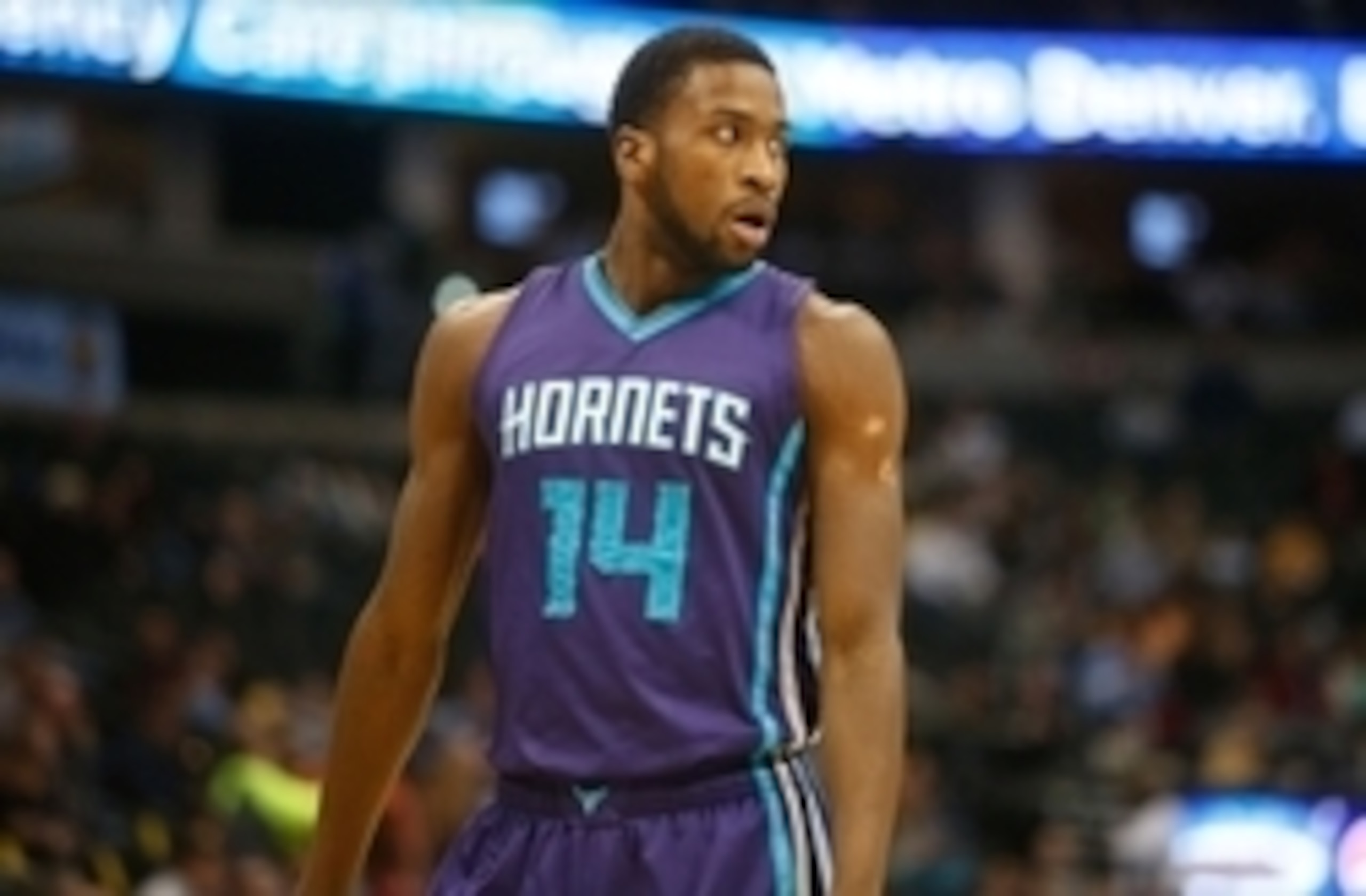
Scoring
At times, Michael Kidd-Gilchrist's broken jumper appeared to be, well, not broken. He's clearly put in a significant amount of work trying to change his form and develop a better motion that lends itself to some sort of consistency, but there's still a long road ahead of him. Scoring remains a rather definitive weakness.
Non-Scoring Offense
Spot-up shooting? Fuhgeddaboudit. Cutting? That's much better. But if he's going to improve in this category, he has to do more than work on his jumper; he has to figure out how to thrive as a passer, since there are far too many games in which he records more turnovers than assists.
Defense
One of six NBA players to receive the top defensive score in these rankings, Kidd-Gilchrist submitted a serious case to be named the league's best defensive player. He may not have garnered much support for Defensive Player of the Year, as he's a perimeter stopper on a team that was far from elite in the Eastern Conference, but that shouldn't diminish his stock. This is a guy who consistently sought out the toughest matchup, whether he was sticking with Chris Paul or bodying up against Blake Griffin in the same game.
Rebounding
No small forward earned more rebounding opportunities per game. Only two players at the position were able to grab more contested boards during the average contest. There's little doubt that Kidd-Gilchrist has emerged as a star rebounder, though he's still not quite the top contributor at the 3. That honor is reserved for two players who have yet to appear.
Intangibles
There's no need to poke holes in Kidd-Gilchrist's conduct, as he's a quiet player who always goes about his business peacefully while trying to improve. That said, he had trouble remaining healthy throughout the year between his bruised ribs, bad right foot, strained hamstring and sprained ankle.
Overall
Has Kidd-Gilchrist justified the No. 2 pick that the Charlotte Bobcats used on him in the 2012 NBA draft? Not yet, but let's not yet rule out him having a highly productive NBA career. Not only is he making substantial strides on the offensive end while displaying a healthy work ethic that allows hope for a potent jumper, but he's already one of the league's very best stoppers.
8. Chandler Parsons, Dallas Mavericks
16 of 23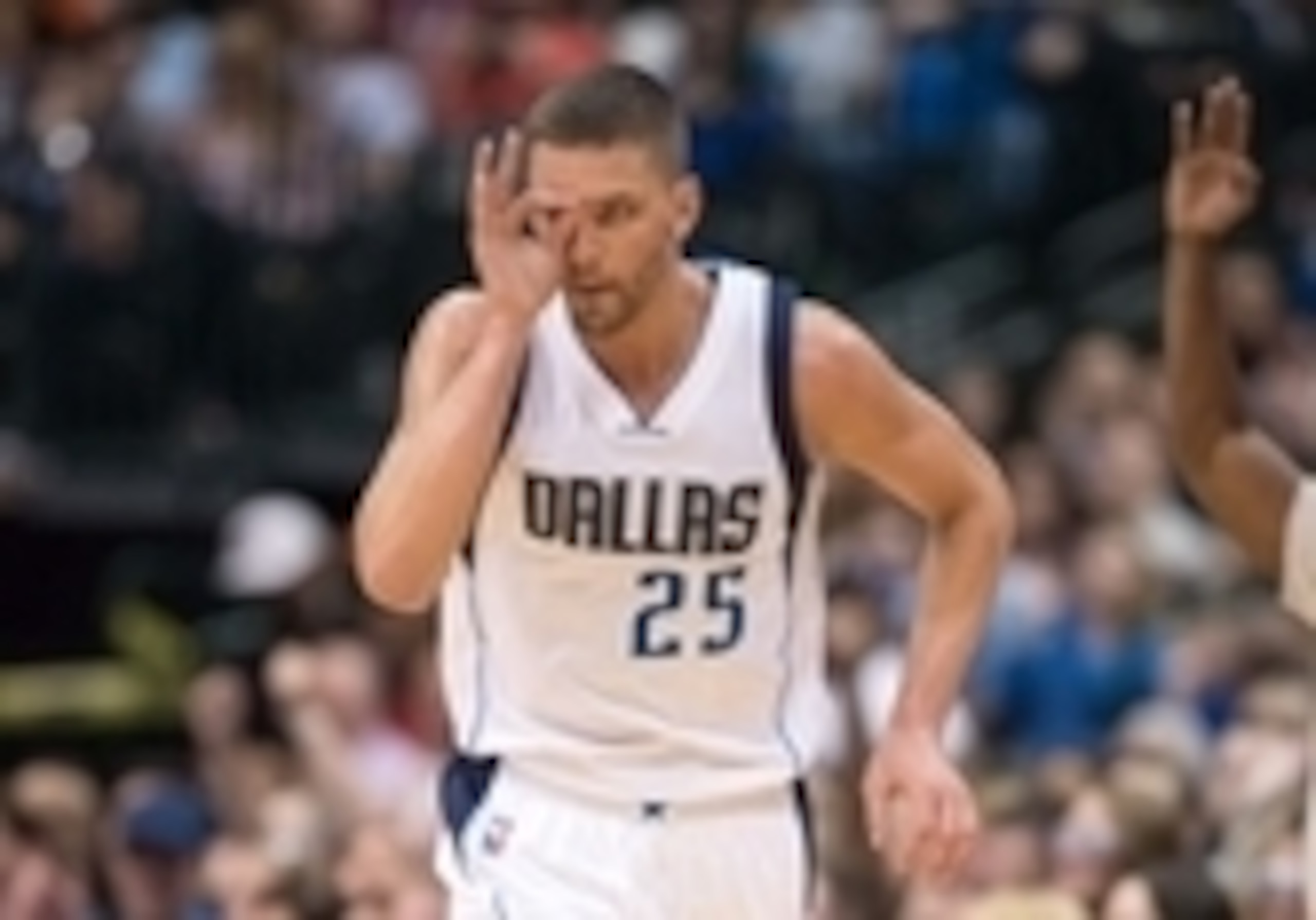
Scoring
When Chandler Parsons is feeling it, he can light up a scoreboard. But that wasn't the case early in the year, as shooting woes plagued him and depressed his season-long numbers. Through the end of November, he was hitting only 41.2 percent of his shots from the field and 32.4 percent of his deep tries, and that was actually a slight step up from his very first few weeks with the Dallas Mavericks.
Non-Scoring Offense
Despite the early-season struggles, Parsons didn't exactly lose his reputation as a great spot-up shooter. He's always going to generate defensive attention and schematic shifts, as leaving him free on the perimeter is a recipe for disaster. However, reputation wouldn't save his passing. Playing in a new system with more ball-dominant players, Parsons wasn't able to remain as involved in the distributing game as he was with the Houston Rockets.
Defense
Parsons' defensive prowess has always been up for debate. He has the look of a stellar defender and often struts his stuff during the course of action, but he's so prone to mental lapses and poor possessions that the numbers don't follow in the same pattern. The issue is always the same: undisciplined off-ball work, which may admittedly still be a systemic problem.
Rebounding
He wouldn't be a jack-of-all-trades forward if he wasn't able to pull down rebounds at an average level (at the very least). And that's exactly what Parsons did, failing to stand out on the boards in either a positive or negative way.
Intangibles
Injuries are the only reason to criticize Parsons here. Between his back injury in December, a brief spat with illness at the end of January and a severely sprained ankle a bit later on, he missed too many games to enjoy a perfect durability score.
Overall
Should the Mavericks be happy with their big offseason acquisition? Yes and no. Parsons has a lot of improving left to do if he hopes to live up to his contract—especially on the defensive end—but he did trend in the right direction during the second half of the season. And lest we forget, despite having been in the league for a while now, he's only 26 years old.
7. Trevor Ariza, Houston Rockets
17 of 23
Scoring
The issue here is that Trevor Ariza wasn't able to maintain his scorching start to the season. Though the sharpshooting small forward made his Houston Rockets debut by knocking down 60 percent of his seven three-point attempts per game through his first five appearances, he still needed to ride some hot shooting at the end of the year just to post a full-season mark of 35 percent. For a player who's very much a perimeter specialist, that's not going to cut it.
Non-Scoring Offense
Ariza may not have knocked down his shots as consistently this season, but there was still no chance that a defense would willingly neglect him out on the perimeter. He's earned that type of reputation by thriving as a spot-up shooter for years, especially when he's in the corners. Now, his passing just needs to catch up to speed.
Defense
Perhaps the biggest reason Ariza was an upgrade over Chandler Parsons in the Houston lineup was his defensive ability. The Rockets were actually slightly worse at preventing points while he was on the floor, but that needs some context. After all, Ariza spent much of his time covering up for the mistakes of a certain 2-guard who, while improved, was still fairly porous.
Rebounding
Ariza spends too much time on the perimeter to be a true asset after a shot goes up. In fact, he was slightly below-average on the glass, posting misleadingly high per-game totals (5.6) that reflected his massive amount of playing time and covered up his relative inability to rebound in traffic or pull down a truly high percentage of the missed attempts that wound up in his vicinity.
Intangibles
There were neither conduct concerns nor durability problems in 2014-15 for this veteran small forward.
Overall
Ariza ended up being a largely positive addition for the Rockets even if he struggled with his shooting stroke for much of the year. When he wasn't finding the bottom of the net, he could still help space out defenses while locking down on the defensive end. Though he didn't have his best year, the Rockets wouldn't have finished near the top of the Western Conference if he weren't on the roster.
6. Luol Deng, Miami Heat
18 of 23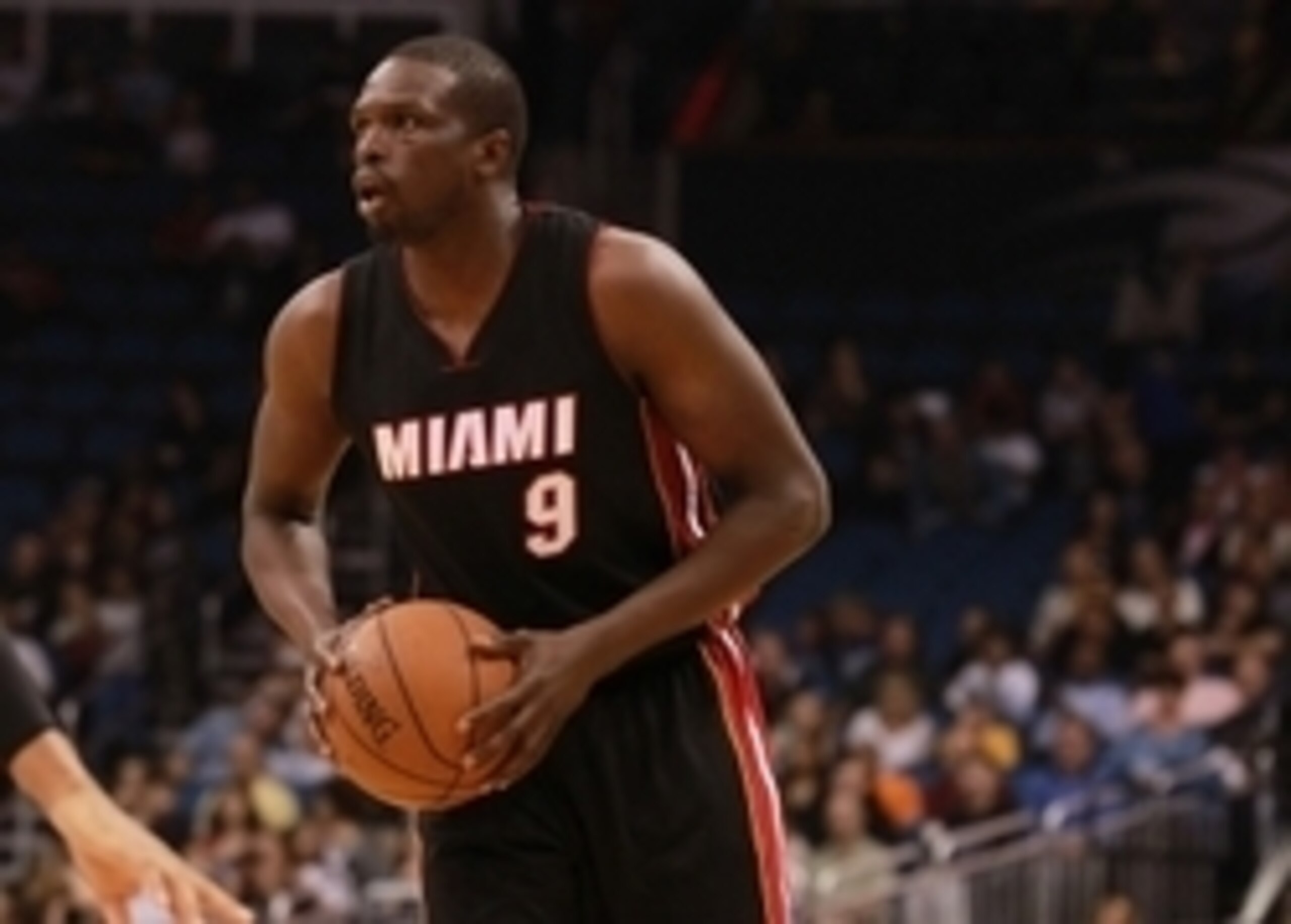
Scoring
It's always been in Luol Deng's best interest to play the part of third wheel in an offense. He got that chance for much of the year, coming in behind both Dwyane Wade and Chris Bosh when they were healthy. But Deng was also a bit less involved than he's been in the past, even when serving in that role. He made the most of his scoring opportunities, but it's hard for him to fare any better when he rarely created his own shots.
Non-Scoring Offense
If only Deng were a better passer. Granted, he averaged more assists (1.9) than turnovers (1.5), but not by a large margin. Even though he has ball-handling skills that allowed him to create shots and initiate offense during his time in the Windy City, those apparently don't allow him to keep his head up and look for open teammates. He's an off-ball threat, but he's significantly weaker when he's dribbling and not looking to score.
Defense
In his true athletic prime, Deng was one the league's premier defenders. But now, at 30 years old and with plenty of mileage on his legs (thanks, Tom Thibodeau), he's lost that quick first step and can't quite keep up with the NBA's better offensive players. Particularly off the ball, he falls just far enough behind that his contests are rendered ineffective against shooters with quick releases.
Rebounding
Deng has always been a tremendous rebounder for his position, and that remained true after he took his talents to South Beach. It's important to remember that, due to a combination of pace, shooting ability and defensive woes, the Heat were one of the worst teams at generating rebounding opportunities, which makes Deng's 5.2 boards per game look even more impressive.
Intangibles
A bit too often, this small forward had to exclaim, "Deng it!" after he suffered yet another injury. A troublesome wrist was the first part of his body to keep him out of the Heat lineup, but we can't forget about his bruised right hand, a brief bout with illness, a balky calf, a thigh contusion and a bruised right knee.
Overall
At this point in his career, it's clear that Deng is a bit run-down. Playing such heavy minutes under Thibodeau during his time with the Chicago Bulls has made him a rather creaky 30-year-old small forward, unable to exert his former scoring prowess or remain quite as great on the defensive end. He's no longer a star, but he's still an upper-tier starter.
5. Rudy Gay, Sacramento Kings
19 of 23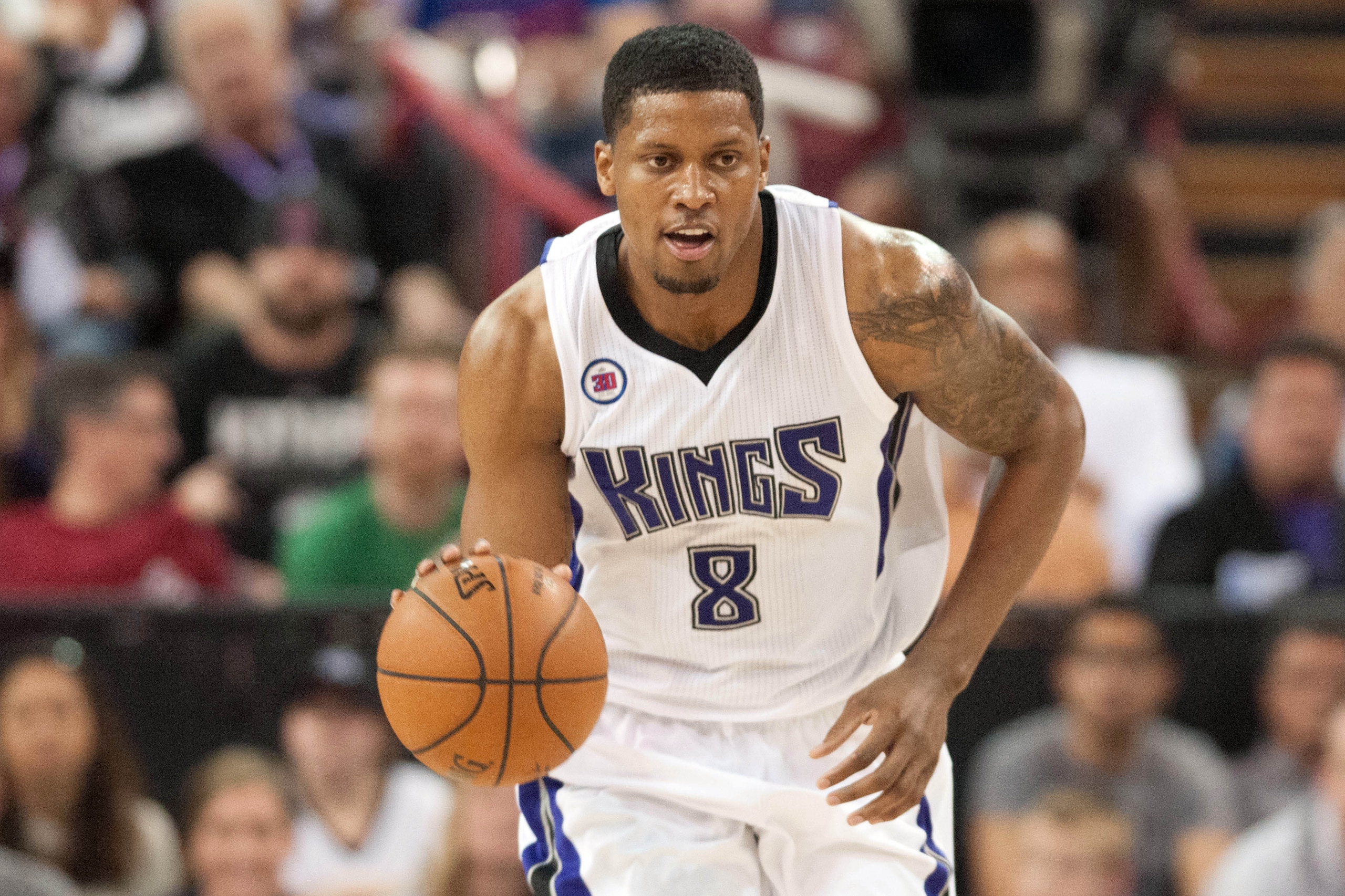
Scoring
Rudy Gay still fired away from beyond the arc quite often during his first full season with the Sacramento Kings, but he also played to his strengths with increasing frequency. He worked out of the post and attacked the hoop, trying to find his way to the free-throw line as often as possible. Obviously, it was a positive change.
Non-Scoring Offense
Thanks to one of the best shooting seasons of his career, Gay excelled as a spot-up threat. That was doubly true because he could also use his athleticism to burst to the basket and make a defender pay as soon as his head swiveled. His passing was lackluster—at best—but he still earns a solid score here for his overall non-scoring offense.
Defense
Gay (6'8") might have the physical profile of a defensive stopper, but that's not exactly how he plays. Though he graded out quite nicely for his work trailing shooters who were attempting to extricate themselves from the defense, the same was not true for his on-ball work. For whatever reason, it was inexplicably easy to score on Gay in isolation settings, as players constantly caught him leaning the wrong way.
Rebounding
Hooray for hops—the kind that help Gay elevate above the outstretched arms of other players and pull down a contested board. It isn't easy for a wing player to grab two of those during his average outing.
Intangibles
Can we quit with the idea that Gay's departure makes teams better? That's been true in the past, but he's a changed player who now spends his time actively working to improve, both physically and mentally. A handful of maladies kept him out in 2014-15, preventing him from showcasing those strides on the court for more than 68 games, but that's all that held him back.
Overall
Kudos to Gay for making the necessary improvements to his game and starting to justify his exorbitant salary. He gained self-awareness in 2014-15, realizing that he should attack more and use his post-up skills to his advantage, and the rest of his game fell into place. Now, defensive focus is the next step in the ongoing development of this 28-year-old small forward.
4. Kawhi Leonard, San Antonio Spurs
20 of 23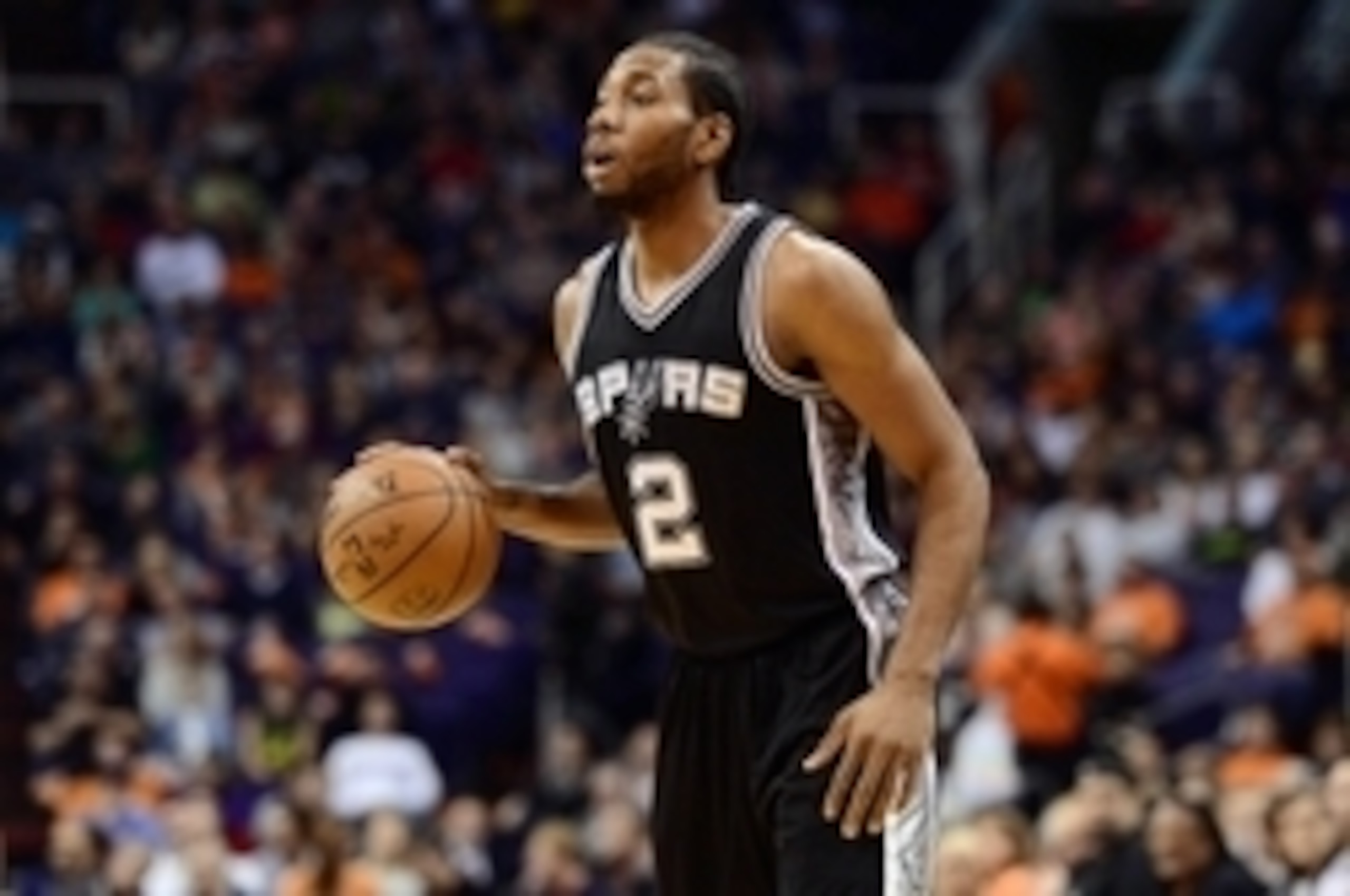
Scoring
Remember, we're looking at the sum total of the season, not the level at which a player finished the year. If that were the case, Kawhi Leonard would end up receiving a handful more points in this category, thanks to his remarkable improvements as a go-to scorer who could rely on his touch shots and jumpers to churn out 20-point outings. Sadly, that's not what's going to happen here.
Non-Scoring Offense
If Leonard has one area in which he needs to improve, it would be this one. He can sometimes struggle in catch-and-shoot situations, preferring instead to attack the basket, and he's not a particularly skilled passer. Both of those should come with time, especially because the constraints of Gregg Popovich's offense are constantly being lifted for this burgeoning superstar.
Defense
Of course Leonard, the 2014-15 Defensive Player of the Year, is going to receive one of the NBA's top marks for his defense. He's as good as it gets, using his long arms and active hands to wreak havoc in just about any situation while displaying the perfect type of stopper mentality. We're admittedly picking at nits here, but the only thing holding him back from a score of 40 is his work off the ball—a natural byproduct of gambling in the passing lanes so frequently.
Rebounding
No player at the position received a higher rebounder rating, though Leonard's wasn't impressive enough on the position-less scale to merit a perfect score. Still, he's unbelievably good at recording contested boards, and he grabs a remarkably high percentage of his opportunities: more than 70 percent, which is incredible for someone so involved.
Intangibles
If you're worried about Leonard's conduct, just remember that he would have to talk in order to say something stupid. Even the words that do escape his vice-like lips aren't ever negative. And it's not as if he's done anything foolish while he's keeping his mouth shut and maintaining a vacant expression on his face. Only injuries are troublesome here, as his eye issue kept him out at the beginning of the year, and his right hand did the same later on.
Overall
The San Antonio Spurs are unfair. Tim Duncan is finally moving toward the end of his career, while Tony Parker spent much of the season declining. Rather than looking as if they're going to fade away into the morass of mediocre teams, the Spurs just hand more responsibility to this rising superstar. For what it's worth, Leonard also would have fared much better if we compiled grades based only on what transpired at the end of the season. Were that the case, his grade would've finished in the 87-89 range.
3. Carmelo Anthony, New York Knicks
21 of 23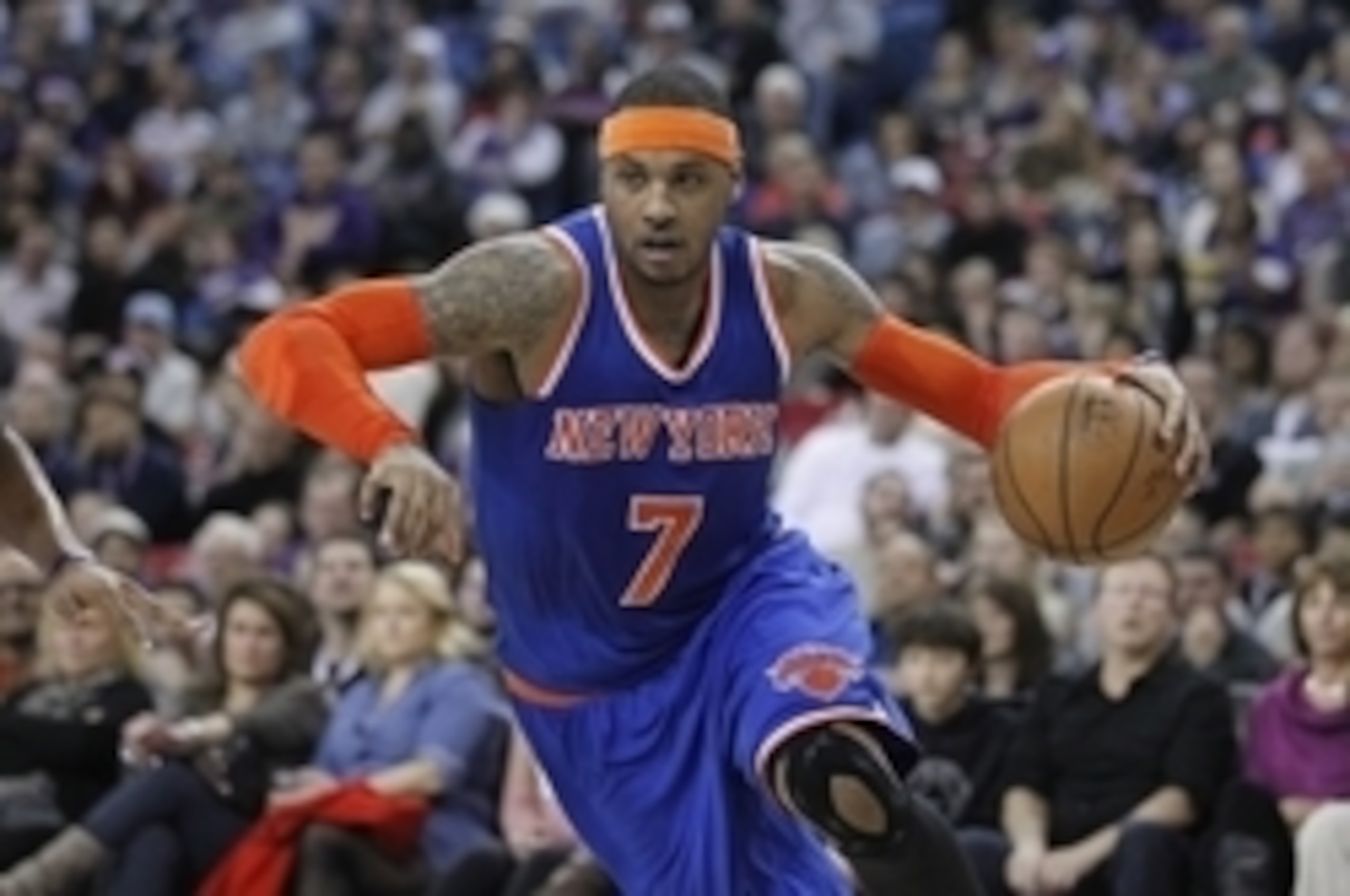
Scoring
Carmelo Anthony isn't quite efficient enough to merit a perfect score here, but he does just about everything else you could want. He knocks down threes but also gets to the charity stripe and hits his freebies at a solid clip. He's a volume shooter who spends his time near the league lead in points per game, and he also has no trouble creating his own shot in the face of constant defensive attention.
Non-Scoring Offense
Defensive schemes are built to stop Anthony from exploding in the points column, and that remains true even when his shot is awry for an entire 48 minutes. No defender wants to be the one who finally assumes this former scoring champ is ice-cold and then gets torched. His passing isn't nearly on that level, but for the second season in a row, it's underrated, held back by a set of teammates who squander far too many of his on-target feeds.
Defense
Anthony will never be a defensive stopper, but at least he's willing to put in the effort. On the ball, he's surprisingly adept at navigating through pick-and-roll sets, shutting down isolation scorers and guarding a back-to-the-basket scorer in the post. It's off the ball where he loses focus and is prone to making positioning mistakes that leave the New York scheme extremely vulnerable to probing.
Rebounding
Though he wasn't quite as dominant on the glass as he was in 2013-14, Anthony remained a stellar rebounder who almost seems to enjoy when he draws contact in the air. He's in no way afraid of fighting for a missed shot in traffic, nor should he be. After all, he converts those chances quite nicely.
Intangibles
Anthony's knee gave him trouble all season long, ultimately limiting him to just 40 games played. Obviously, that doesn't speak too kindly about his durability, though he does get looked upon favorably for trying to gut it out before the post-All-Star break shutdown.
Overall
Even though he didn't play during the second half of the season, Anthony remains a bona fide superstar who's been dealt a terrible supporting cast. Granted, he put himself in this position by choosing to stay with the New York Knicks instead of leaving for a contending squad, but even he couldn't have imagined that his team would be this bad.
2. Kevin Durant, Oklahoma City Thunder
22 of 23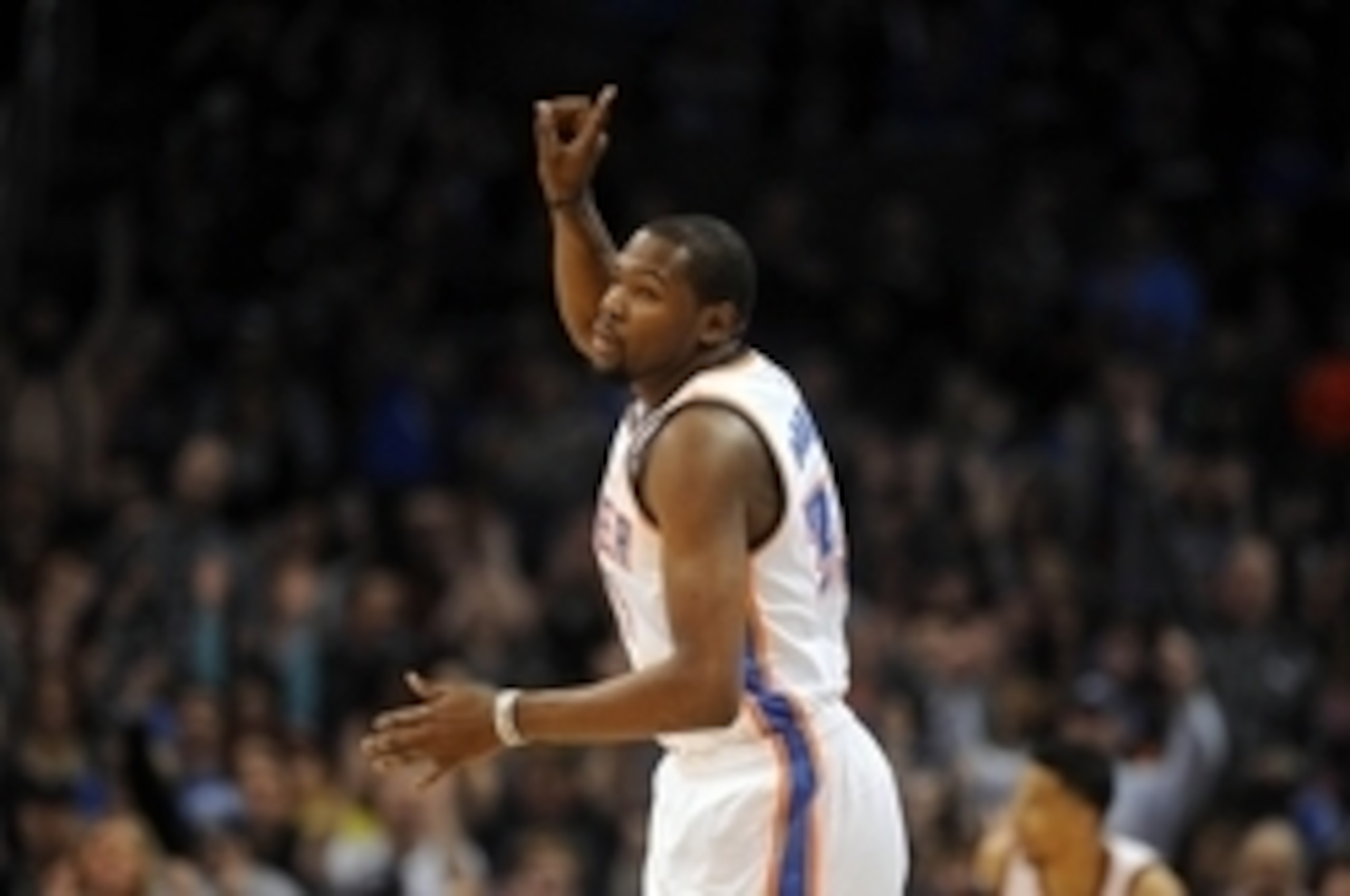
Scoring
This should be pretty obvious. When Kevin Durant was shut down for the season, he was averaging 25.4 points per game while shooting 51 percent from the field, 40.3 percent from downtown and 85.4 percent from the charity stripe. Oh, and he was doing so while creating plenty of his own looks, though admittedly fewer than he has in the past, and playing at less than 100 percent health.
Non-Scoring Offense
As if defenses would ever forget where Durant is when he's on the floor. Only passing causes the league's 2013-14 MVP to take a step back in this category, as he failed to build upon—or even match—the work he did during his award-winning campaign when he was looking to feed his teammates.
Defense
Somewhat surprisingly, Durant graded out as arguably the league's best on-ball defender. He allowed only 0.5 points per possession in isolation, held pick-and-roll ball-handlers to 0.49 points and thrived in the post as well. If you wanted to score against this long-armed small forward, you basically had to do so after starting the play without possession and hoping to get off a quick release.
Rebounding
Given the physical limitations that plagued him throughout the year, it shouldn't be very surprising that Durant wasn't up there with the small forward leaders for contested rebounds. He was involved and converted a high percentage of his chances, but he was a bit too passive on the glass for a team that produced nearly as many overall opportunities as any other.
Intangibles
Only injuries are problematic here, and they're very problematic. Durant only barely qualified for the rankings, playing in just 27 games as his Jones fracture kept giving him trouble. There were plenty of setbacks and surgeries, ultimately knocking him out for the year during OKC's failed stretch run toward the playoffs.
Overall
Durant obviously still proved that he was a dominant player, thriving in just about every area when he was healthy enough to suit up. But his lower extremities ultimately held him back, preventing us from seeing the fireworks sure to take place in the follow-up campaign to his MVP season. Still, think about it this way: If Durant had maintained his level of performance and played in every game, he'd be graded at 89 and slide up a few more spots in the overall NBA 200 rankings.
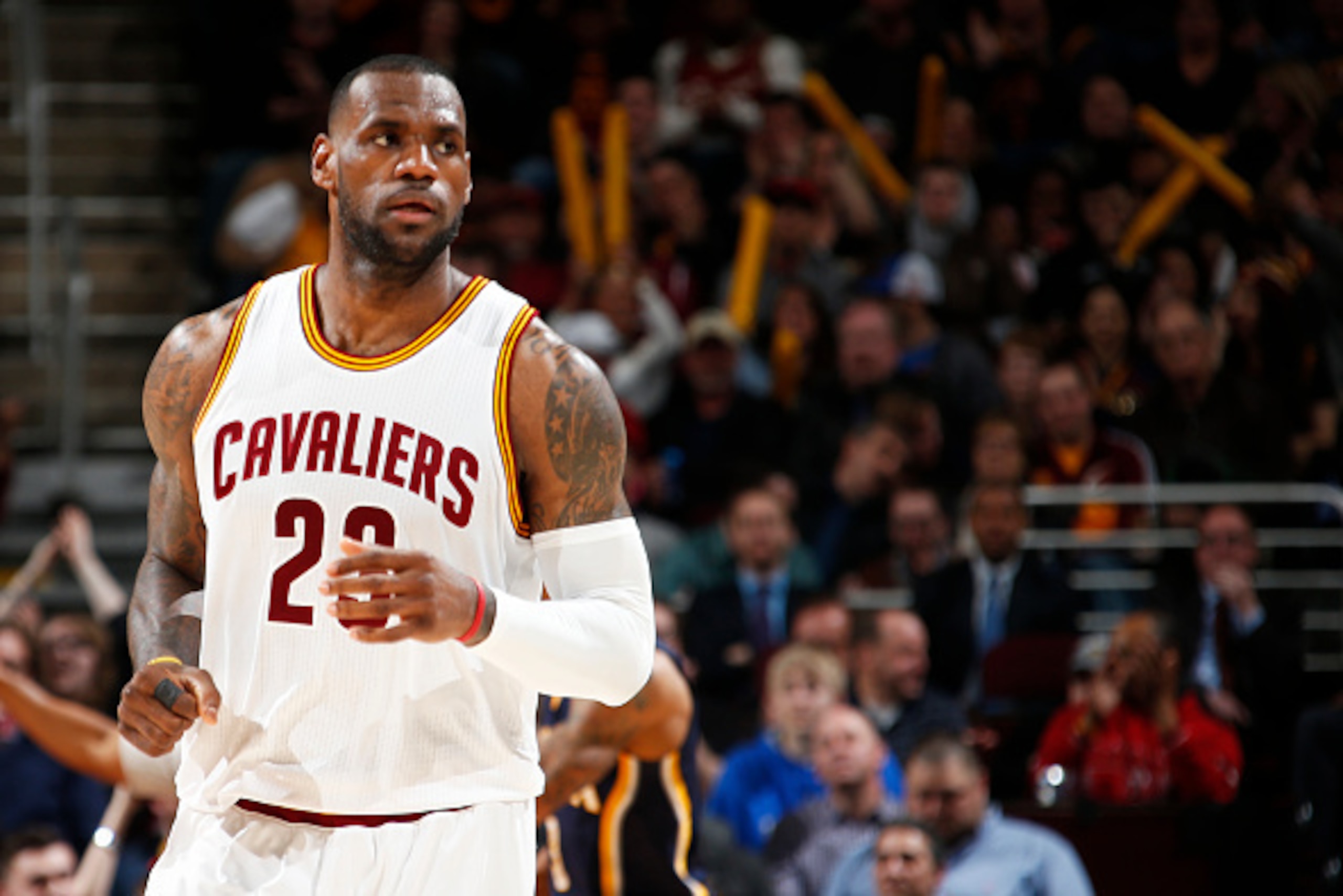
1. LeBron James, Cleveland Cavaliers
23 of 23
Scoring
Even during a season in which he was unable to meet his typical standards for shooting efficiency, LeBron James was still just about unstoppable in the scoring department. After all, he rained in plenty of triples, worked his way to the line quite often and spent the year serving as a fringe contender in the scoring race. All the while, he only required assists on 31.5 percent of his two-point makes and 46.7 percent of his triples.
Non-Scoring Offense
The perfection continues. James is both a potent spot-up threat and a deadly cutter, but he also serves as one of the league's best distributors. Turnovers were still problematic for the four-time MVP during his 2014-15 campaign, but he more than made up for them with heavy involvement in the passing game and a steady stream of performances that saw him rack up dimes.
Defense
James' defensive intensity slipped this year, as he was far too passive in some situations and seemed to be conserving energy. However, it's not as if he was a lackluster stopper, still excelling in both on- and off-ball play. His days of Defensive Player of the Year contention may be over, but let's not allow the slippage to become overblown.
Rebounding
It's still a bit amazing that one of the best athletic specimens in NBA history, a small forward who stands a chiseled 6'8", 250 pounds, can't dominate on the glass. But this was James' worst season in a long time after a shot went up, as he averaged fewer rebounds per 36 minutes (6.0) than he had since 2006-07.
Intangibles
If only James hadn't called plays instead of David Blatt. Kidding. That was one of the more stupid storylines of the season, and the 30-year-old is only being docked a point here for the two-week rest he took in the middle of the season. It turns out he is human after all.
Overall
While this wasn't a vintage season from James, who spent much of the year adjusting to his new teammates on the Cleveland Cavaliers, it's hard to argue that he was anything less than exemplary. His two-way presence turned the Eastern Conference's No. 2 seed into an entirely different squad when he was on the court, and he'd have spent the campaign playing front-runner in the MVP race if that acronym was actually interpreted literally.

.jpg?w=2560 "Grading Tonight's SmackDown 🔠")
.jpg?w=2560 "Rush Named Week 2 Starter")


.jpg?w=2560 "Joey Porter Jr. Trade Fits 🧩")