March Madness Bracket 2015: Betting Advice, Historical Trends and Predictions
Betting on March Madness is a rite of passage for most Americans. For some odd reason, I still remember filling out my first bracket. I was nine. My mom brought home her bracket for her office pool and allowed me to fill it out because there are few things on this planet she cares less about than college basketball.
As for me, I was hooked. The subsequent 15 Marches of my life have been filled with voracious bracket-filling—starting with my mom's yearly bracket and then graduating to my own. One of the most vivid memories of my high school days is having the money for the bracket pool I was running stolen while I was in gym class. I'm still upset about having to use my birthday money to cover the payouts.
And I'm sure many of you have similar stories. We spend an insane amount of time researching upsets, analyzing title contenders and sussing out the overrated high seeds only to have the whole thing crash down on us by Thursday afternoon. Then ladies like my mother fill something out just to fit in and wind up making us all feel stupid.
I hate this and love this process with every fiber of my being. With Selection Sunday deciding the 68 teams that will be vying for a national championship, let's take a look at some historical trends we can use to fill out our bracket.
All Your Bracket Essentials
Historical Bracket Trends/Advice
- No. 1 Seeds Don't Lose: It's going to happen eventually. We all know it will. It just hasn't happened yet. And more importantly, your odds on predicting when it'll happen and to which team is nearly impossible. The first thing everyone should do when filling out their bracket is move the No. 1 seeds to the round of 32; 120-0 does not lie.
- No. 5 Seeds Do Lose: The No. 5 vs. No. 12 upset is the most classic one we have on the board. There has been at least one such upset in the last seven tournaments. Overall, there is roughly a one-in-three chance the No. 12 will pull off an opening-round victory.
- Don't Forget About the No. 6 vs. No. 11 Upset: While it doesn't get nearly as much play, No. 11 seeds defeat No. 6 seeds just as often as No. 12s defeat No. 5s. There's been at least one of those upsets for the last decade. In four of the last five years, there have been multiple No. 11s to advance to the round of 32.
- No. 13s and No. 14s Are Becoming More Dangerous: Overall historical trends would indicate it's smart to just advance the top four seeds into the next round and avoid the headache of poring over their opponents. Recent trends indicate that would be a mistake. Last year was the first time a No. 13 did not defeat a No. 4 since 2007. Each of the last two seasons have seen a No. 14 take down a No. 3.
- Be Wary of Chalk In Later Rounds: We're not about to see a No. 7 and No. 8 seed in the Final Four as we did a year ago, but one or the other isn't out of the question. There have not been multiple No. 1 seeds in the Final Four since 2009.
- If You Pick a No. 1, Make It the South: Since returning to the East/West/North/South labels in 2007, six South No. 1 seeds have made the Final Four. No other region comes close to matching that figure. It could be a massive coincidence, but it's nonetheless worth noting.
- Don't Be Silly, Use KenPom: We should all know by now that per-game stats are borderline useless. They're easy markers, but they're wholly inadequate for judging a team's true efficiency. VMI scores 80.5 points per game, fifth in the nation. It ranks No. 297 in offensive efficiency. Be a smarter, better fan and use efficiency metrics; it can go a long way toward identifying overrated teams.
Predictions/Advice
Don't Be Afraid to Take Stephen F. Austin to the Sweet 16
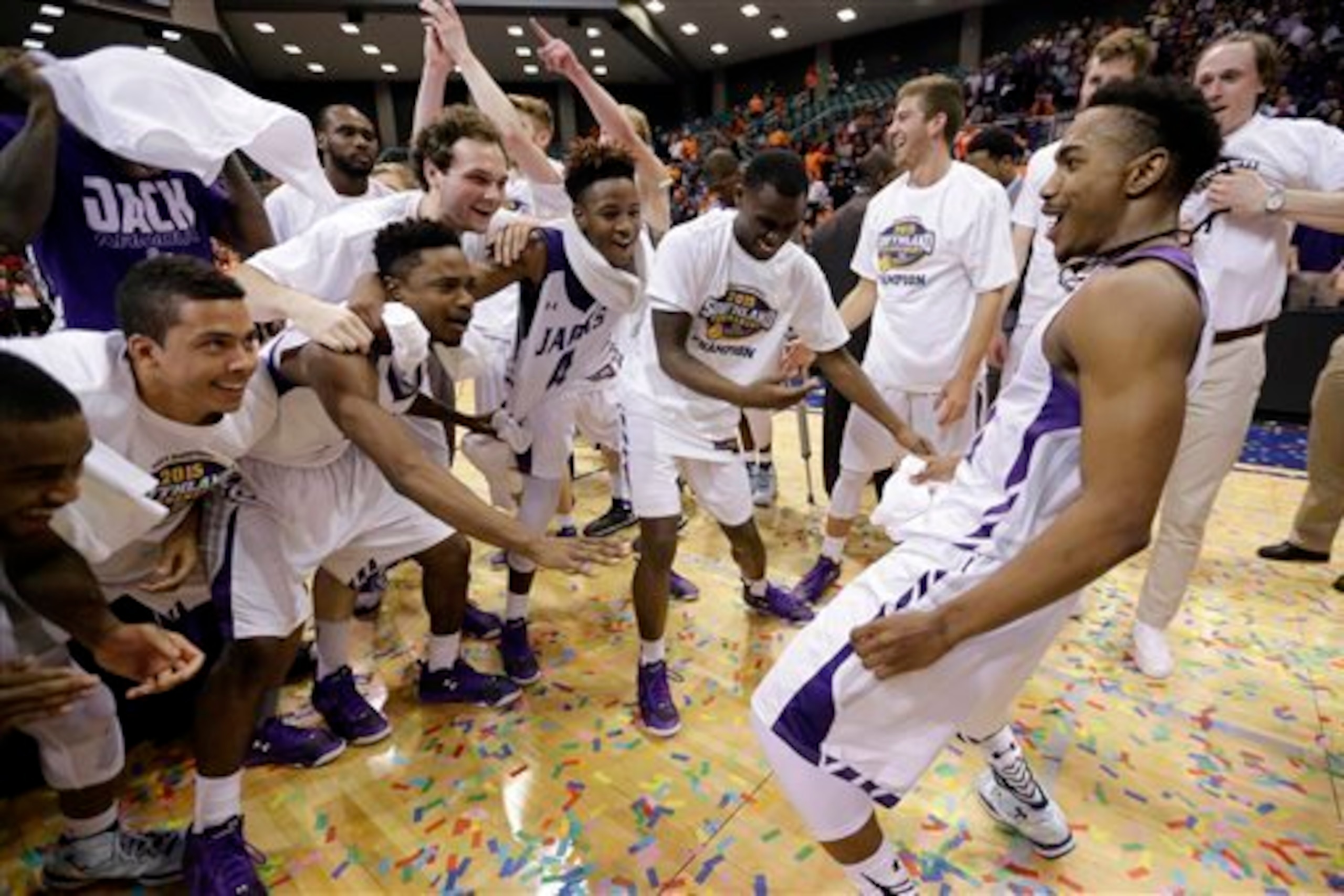
Brad Underwood took the Lumberjacks to the round of 32 in his first season and will have a good chance to go one step farther in 2014. Team leaders Thomas Walkup and Jacob Parker return from last year's squad, leading five Stephen F. Austin players who average at least eight points per game. Ken Pomeroy ranks them 19th in offensive efficiency, which will be key against a Utah team that's vastly underrated as a No. 5.
The Utes are not an insignificant obstacle. They're eighth in overall pythagorean rating, a top-20 squad on both ends of the floor and a bleed-you-dry defense that forces downtempo play. Delon Wright is also the type of guard who tends to ascend in March.
If Stephen F. Austin pulls off that upset, though, it'll have an easier time in the following round. Georgetown coach John Thompson III hasn't led the Hoyas to the second weekend since 2007; he's been quietly among the worst tournament coaches in the nation for a while now.
Eastern Washington, Georgetown's opening opponent, frankly isn't all that good. KenPom ranks the Eagles No. 136 in the country. They play a fun, uptempo brand of basketball that would make for a fun deep run, but they're probably overseeded as a No. 13.
I Don't Have An Answer on Kentucky; Sorry
Kentucky is the best team in the country. Actually, correction: Kentucky is by far the best team in the country. John Calipari has built the Monstars. No team has a remotely similar talent level. No team has a remotely similar size profile. Play out the NCAA tournament in a best-of-seven series, and Kentucky probably wins 9.5 out of 10 times.
The issue is banking on history. It makes no sense, but you'd almost feel better if Kentucky had lost in the regular season or conference tournament. The looming spectre of becoming the first undefeated team since 1976 informs everything this team does. They left the nets hanging after taking the SEC tournament, for goodness sakes.
"Those aren't the nets we're really looking to cut down," junior forward Willie Cauley-Stein told reporters. "It's just a milestone. It's just part of the process for us winning and everything, but we're looking for something bigger. We're looking to cut down a couple more nets in the tournament."
On my brackets, Kentucky will be the national champion. It's only that way because I cannot think of any other feasible answer. This team is too good, too deep for me to go in another direction. No other team could have possibly moved on from an Alex Poythress-level talent without missing a beat.
That said, the Wildcats are far from infallible. They don't shoot well from outside, can look a little strained against zone defenses and are still an extremely young team. The pressure of going undefeated was enough to help topple Tom Brady and Bill Belichick in New England; it could do the same for Kentucky.
For Funsies, Here Is a Complete List of Potential Upsets Ranked By Their Likelihood
- Oklahoma State over Oregon
- LSU over North Carolina State
- Texas over Butler
- St. John's over San Diego State
- Purdue over Cincinnati
- Ohio State over VCU
- Davidson over Iowa
- Boise State/Dayton over Providence
- BYU/Ole Miss over Xavier
- Stephen F. Austin over Utah
- Buffalo over West Virginia
- UCLA over SMU
- Indiana over Wichita State
- Georgia over Michigan State
- Valparaiso over Maryland
- Wyoming over Northern Iowa
- Eastern Washington over Georgetown
- Georgia State over Baylor
- Wofford over Arkansas
- Harvard over North Carolina
- Albany over Oklahoma
- UC Irvine over Louisville
- UAB over Iowa State
- New Mexico State over Kansas
- Northeastern over Notre Dame
- North Dakota State over Gonzaga
- Belmont over Virginia
- Texas Southern over Arizona
- Lafayette over Villanova
- North Florida/Robert Morris over Duke
- Coastal Carolina over Wisconsin
- Manhattan/Hampton over Kentucky
Follow Tyler Conway (@tylerconway22) on Twitter
Seeding information via Bracket Science.


.jpg?w=2560 "Jonathan Taylor Landing Spots")
.jpg?w=2560 "NFL House in Paris Closes for Protests (AP)")
.jpg?w=2560 "Trevon Diggs Cut by Seahawks")