Bleacher Report's Rankings of the 25 Greatest Aces of the Last 25 Years
There is a marked difference between a pitcher who is the ace of his respective staff and a legitimate ace-caliber pitcher.
They can be one in the same, but at any given time, only a handful of pitchers truly deserve the title of "ace." The following will look at some of the best of the past 25 years.
The following criteria went into compiling these rankings:
- Rank Among Peers: In order for a pitcher to be considered one of the best aces in recent memory, it's reasonable to think that he had to rank among the game's elite pitchers at some point in his career.
- Peak Performance: We're looking at peak performance here as opposed to sustained success. A pitcher who is solid year in, year out is invaluable to a staff, but that doesn't necessarily make him an ace. As such, you won't see the likes of Mark Buehrle, Tim Hudson and Andy Pettitte on the following list. All three were very good pitchers, but they were never among the game's elite.
- Track Record: The first two bullet points helped trim the list to 25 guys. After that is when career numbers and overall track record started being taken into account to determine where everyone fell in the rankings.
Other notes:
- Only Stats Since 1990: Since this list is focusing on the past 25 years, only statistics compiled since 1990 were considered. That means someone like Roger Clemens, who did a decent amount of damage in the 1980s, might not be as high as he would be if this were simply a best-of-all-time list.
- 1,250-plus Innings: An innings minimum seemed necessary here, so we set the cut line at 1,250 innings.
With the specifics out of the way, let's kick things off with some honorable mentions before diving into the 25 greatest aces of the past 25 years.
Honorable Mentions
1 of 26
First Five Out
- Kevin Appier
- Josh Beckett
- Chuck Finley
- Zack Greinke
- Javier Vazquez
Honorable Mentions
- Mark Buehrle
- Matt Cain
- Bartolo Colon
- Johnny Cueto
- Doug Drabek
- Dwight Gooden
- Dan Haren
- Pat Hentgen
- Livan Hernandez
- Tim Hudson
- Darryl Kile
- John Lackey
- Al Leiter
- Jon Lester
- Derek Lowe
- Ramon Martinez
- Jack McDowell
- Matt Morris
- Jamie Moyer
- Charles Nagy
- Kevin Millwood
- Andy Pettitte
- Brad Radke
- Kenny Rogers
- Jason Schmidt
- Ben Sheets
- James Shields
- David Wells
- Carlos Zambrano
- Barry Zito
Notable Exclusions Due to Innings Limit
- Madison Bumgarner (952.2 IP)
- Jack Morris (1,031.0 IP)
- David Price (1,222.1 IP)
- Jose Rijo (1,205.0 IP)
- Chris Sale (674.2 IP)
- Max Scherzer (1,239.1 IP)
- Dave Stewart (1,068.2 IP)
- Dontrelle Willis (1,221.2 IP)
25. Brandon Webb
2 of 26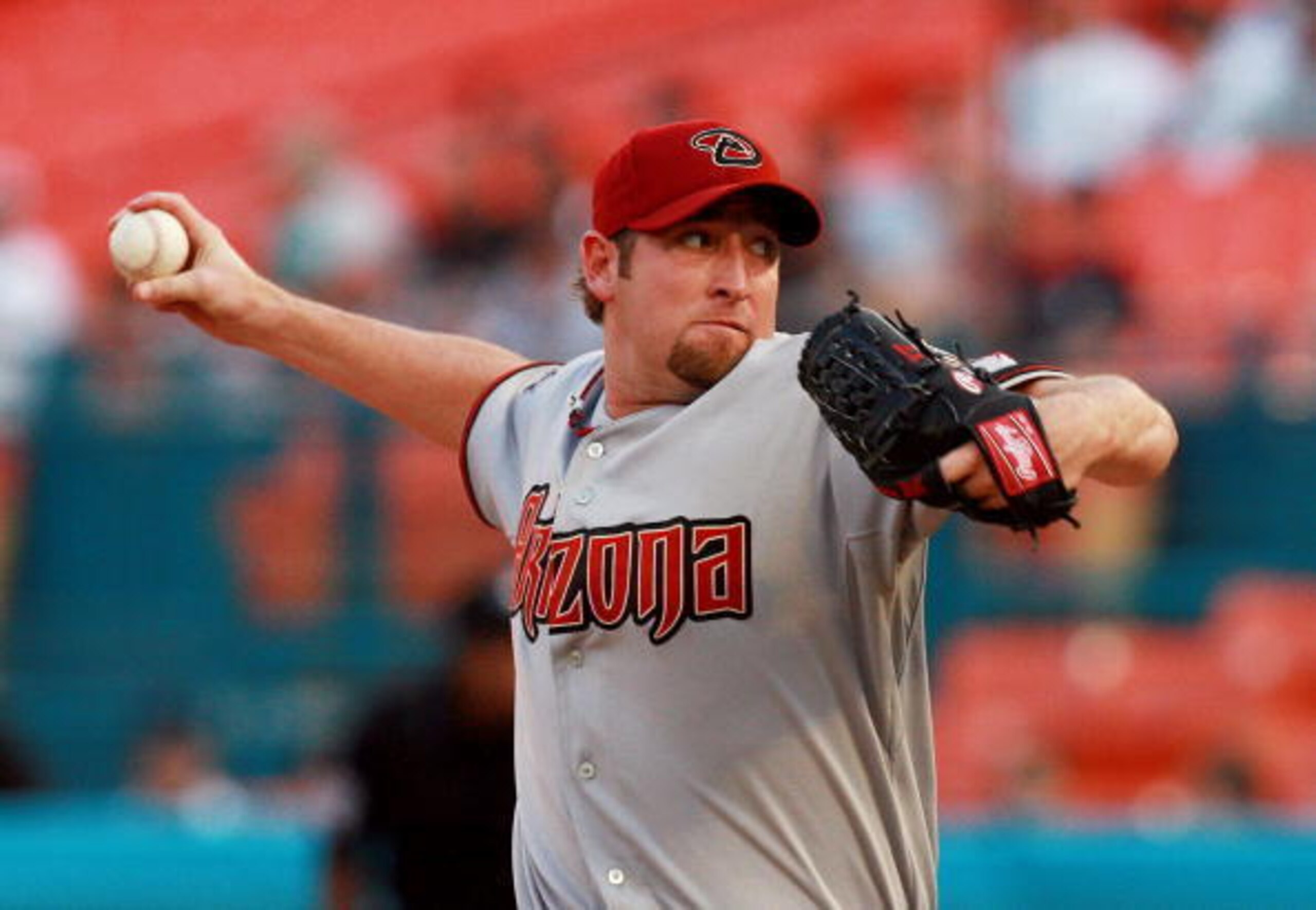
Stats (2003-09)
| 199/198 | 87-62 | 3.27 | 142 | 1.239 | 1,065 | 1,319.2 | 33.3 |
3-Year Peak (2006-08)
- Total: 56-25, 3.13 ERA, 150 ERA+, 1.172 WHIP, 555 K, 698.0 IP
- Avg: 34 GS, 19-8, 3.13 ERA, 185 K, 233.0 IP, 6.4 WAR
Player Overview
Brandon Webb may not have the overall numbers to stack up to the rest of the greats on this list, but at his best, he more than earned a spot in these rankings.
The sinkerballer won NL Cy Young honors in 2006 when he went 16-8 with a 3.10 ERA and 1.132 WHIP, and he finished second in voting in each of the following two seasons.
He was 18-10 with a 3.01 ERA and 194 strikeouts in 2007, and he led the NL in wins in 2008 at 22-7 with a 3.30 ERA and 183 strikeouts.
However, Webb would make just one start during his age-30 season in 2009 before landing on the disabled list with a labrum injury.
A series of comeback attempts from there were unsuccessful, and he last pitched for the Texas Rangers' Double-A affiliate for four starts in 2011 before calling it a career.
24. Chris Carpenter
3 of 26
Stats (1997-2012)
| 350/332 | 144-94 | 3.76 | 116 | 1.276 | 1,697 | 2,219.1 | 35.5 |
3-Year Peak (2004-06)
- Total: 51-18, 3.10 ERA, 139 ERA+, 1.083 WHIP, 549 K, 645.1 IP
- Avg: 31 GS, 17-6, 3.10 ERA, 183 K, 215.0 IP, 4.7 WAR
Player Overview
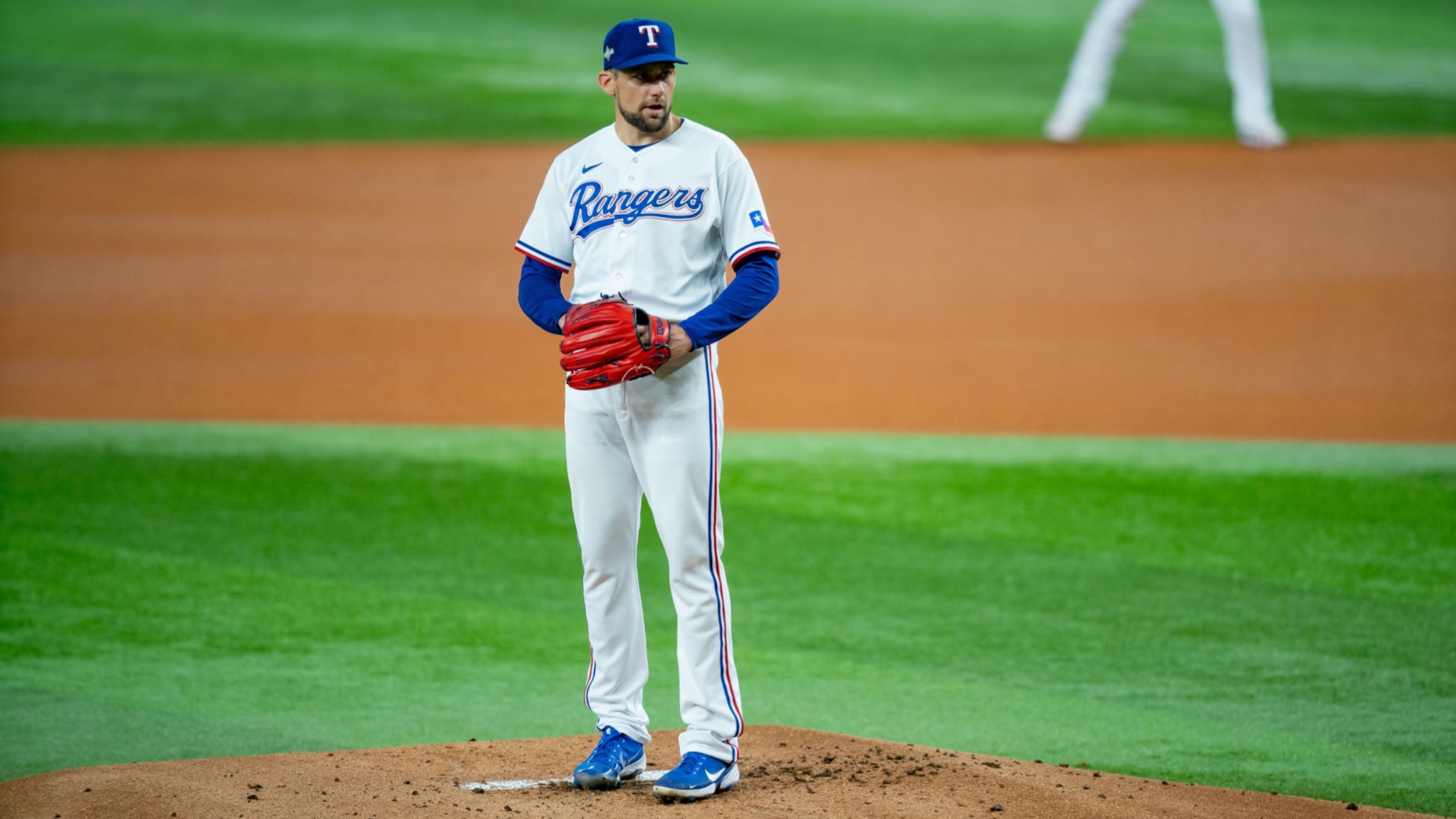
The No. 15 pick in the 1993 draft, Chris Carpenter had a career record of 49-50 and a 4.83 ERA through six seasons when he joined the St. Louis Cardinals prior to the 2004 season.
Little was expected of the then-29-year-old, as he was coming off of surgery to repair a torn labrum in his shoulder and had been signed for just $300,000, but he quickly proved to be one of the best signings in franchise history.
The big right-hander was 15-5 with a 3.46 ERA in his first season in St. Louis, and the following year he emerged as a bona fide ace, going 21-5 with a 2.83 ERA and 213 strikeouts to win NL Cy Young honors in 2005.
Elbow problems limited him to just four total starts in 2007 and 2008, but he rebounded in 2009 to go 17-4 with an NL-best 2.24 ERA, earning him NL Comeback Player of the Year honors. He also played a big role in the development of Adam Wainwright.
Throw in a 10-4 record and 3.00 ERA in 18 career playoff starts, including going 3-0 with a 2.00 ERA in three World Series appearances, and there is no question Carpenter earns a place in these rankings.

23. Tim Lincecum
4 of 26
Stats (2007-Present)
| 254/246 | 101-79 | 3.59 | 108 | 1.258 | 1,644 | 1,567.1 | 22.6 |
3-Year Peak (2008-10)
- Total: 49-22, 2.83 ERA, 148 ERA+, 1.161 WHIP, 757 K, 664.2 IP
- Avg: 33 GS, 16-7, 2.83 ERA, 252 K, 222.0 IP, 6.4 WAR
Player Overview
Tim Lincecum has fallen a long way over the past three seasons, but back when he was "The Freak," he was squarely in the conversation for the title of best pitcher in baseball.
Lincecum won NL Cy Young honors during his first full season in the San Francisco Giants rotation in 2008 (18-5, 2.62 ERA, 1.172 WHIP, 265 K), and added another to his trophy case the following year with an even better season (15-7, 2.48 ERA, 1.047 WHIP, 261 K).
He settled for a 10th-place finish in voting the following year, but still led the NL in strikeouts with 231 and went 16-10 with a 3.43 ERA.
More importantly, he went 4-1 with a 2.43 ERA in six postseason appearances, helping the Giants to the first World Series title in their recent run of success.
He was fantastic again in 2011 (13-14, 2.74 ERA, 220 K), but he hasn't been the same since, going a combined 32-38 with a 4.76 ERA over the past three seasons.
22. Cole Hamels
5 of 26
Stats (2006-Present)
| 275/274 | 108-83 | 3.27 | 125 | 1.142 | 1,707 | 1,801.1 | 40.4 |
3-Year Peak (2010-12)
- Total: 43-26, 2.97 ERA, 134 ERA+, 1.095 WHIP, 621 K, 640.0 IP
- Avg: 32 GS, 14-9, 2.97 ERA, 207 K, 213.0 IP, 5.5 WAR
Player Overview
Cole Hamels has been one of the most talked-about trade chips of the offseason, and while he is still a member of the Philadelphia Phillies for the time being, it may not be long before he's checking in as the ace of a different staff.
The left-hander first joined the ranks of the game's elite in 2008, when he was 14-10 with a 3.09 ERA, 1.082 WHIP and 196 strikeouts in 227.1 innings of work.
However, it was his performance in October that season that made him a household name, as he went 4-0 with a 1.80 ERA and 0.914 WHIP in five starts on his way to Championship Series and World Series MVP honors.
He's consistently been among the game's best in the years since, and heading into his age-31 season, he's coming off what may have been the best season of his career.
Despite going just 9-9 over 30 starts, he had a career-best 2.46 ERA and a 151 ERA+, both marks good for fifth in the National League.
21. Jered Weaver
6 of 26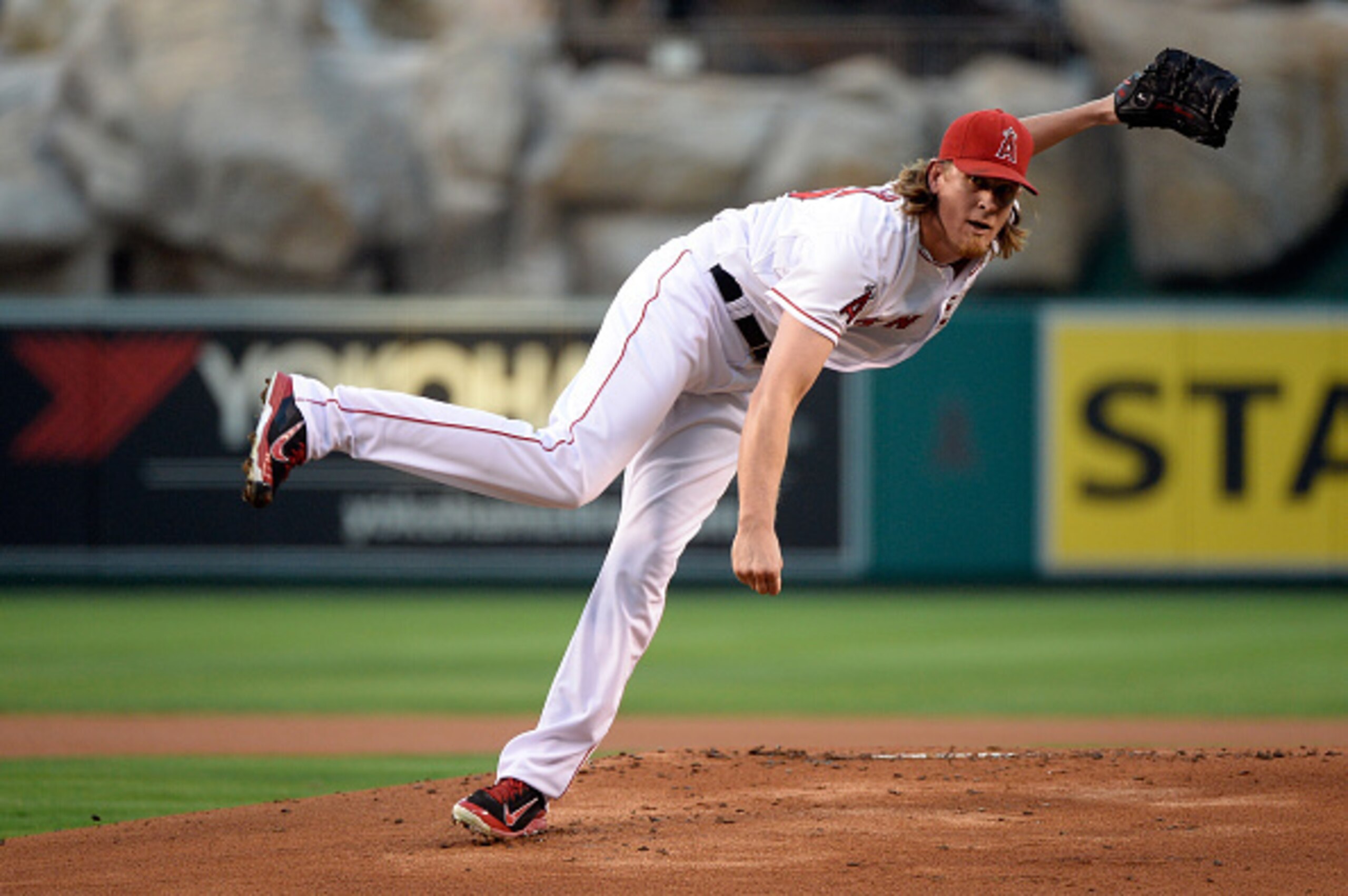
Stats (2006-Present)
| 265/265 | 131-69 | 3.28 | 124 | 1.152 | 1,405 | 1,688.0 | 36.4 |
3-Year Peak (2010-12)
- Total: 51-25, 2.73 ERA, 141 ERA+, 1.034 WHIP, 573 K, 648.2 IP
- Avg: 32 GS, 17-8, 2.73 ERA, 191 K, 216.0 IP, 5.5 WAR
Player Overview
He's not the same strikeout artist he was back when he led the AL with 233 punchouts in 2010, but Jered Weaver is still very much the ace of the Los Angeles Angels staff.
Since breaking into the league in 2006 and going 11-2 with a 2.56 ERA, Weaver has consistently been one of the best pitchers in the American League.
He was second in AL Cy Young voting in 2011 when he went 18-8 with a 2.41 ERA, and he finished third in the balloting the following year when he led the AL with 20 wins, a 1.018 WHIP and 7.0 H/9 to go along with a 2.81 ERA.
The 32-year-old heads into the 2015 season ranked third on the Angels' all-time list in wins (131), strikeouts (1,405) and WAR (36.4).
The Angels are expected to be one of the best teams in the American League once again in 2015, and they will again be counting on Weaver to anchor the staff.
20. Jake Peavy
7 of 26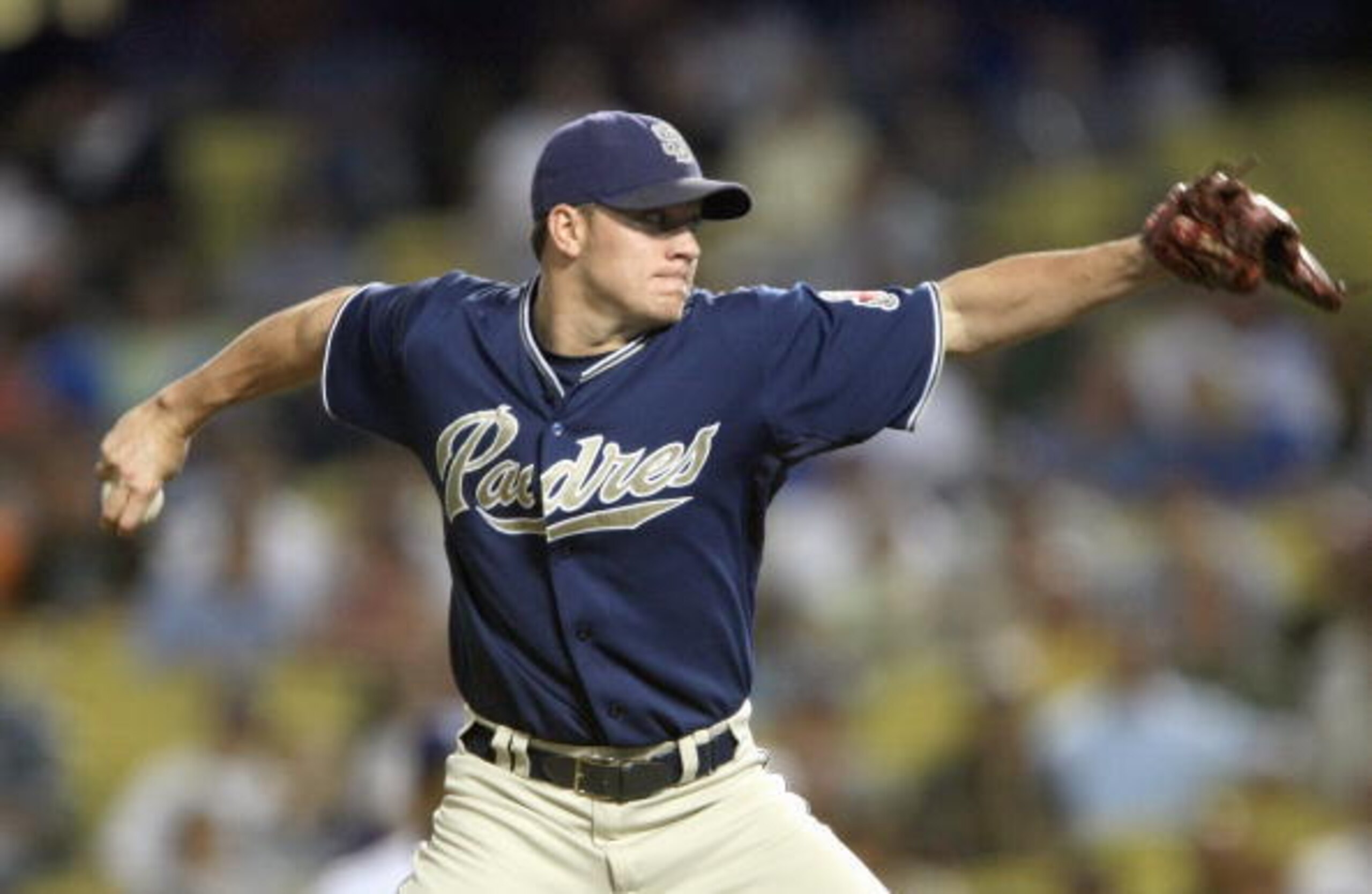
Stats (2002-Present)
| 338/337 | 139-111 | 3.53 | 113 | 1.186 | 2,027 | 2,147.2 | 37.2 |
3-Year Peak (2007-09)
- Total: 38-23, 2.83 ERA, 138 ERA+, 1.115 WHIP, 516 K, 498.2 IP
- Avg: 26 GS, 13-8, 2.83 ERA, 172 K, 166.0 IP, 3.9 WAR
Player Overview
After some ups and downs in his first two seasons in the majors, Jake Peavy took a huge step forward as a 23-year-old in 2004.
The right-hander won the NL ERA title that season with a 2.27 mark while also striking out 173 batters in 166.1 innings.
He was an All-Star for the first time the following season, and by 2007, he was unquestionably one of the best pitchers in the game, as he took home NL Cy Young honors with a dominant all-around season.
Peavy finished the year at 19-6 with a 2.54 ERA, 1.061 WHIP and 240 strikeouts, leading the National League in each of those categories to win the award unanimously over Brandon Webb.
He enjoyed one more terrific season in 2008 before injuries became an issue and the San Diego Padres traded him to the Chicago White Sox.
Peavy has bounced around over the past few years, but he has contributed to a World Series winner in each of the past two seasons as a deadline pickup for the Boston Red Sox in 2013 and San Francisco Giants in 2014.
19. Cliff Lee
8 of 26
Stats (2002-Present)
| 328/324 | 143-91 | 3.52 | 118 | 1.196 | 1,824 | 2,156.2 | 43.3 |
3-Year Peak (2008-10)
- Total: 48-25, 2.98 ERA, 142 ERA+, 1.122 WHIP, 536 K, 667.1 IP
- Avg: 31 GS, 16-8, 2.98 ERA, 179 K, 222.0 IP, 5.7 WAR
Player Overview
Cliff Lee was a staple of the Cleveland Indians rotation from 2004-06, going 46-24 with a 4.50 ERA, but he struggled to a 6.29 ERA over 97.1 innings in 2007 and wound up being demoted to the minors.
That would prove to be a turning point in his career, as Lee returned the following season as a 29-year-old and went 22-3 with a 2.54 ERA and 170 strikeouts in 223.1 innings to win AL Cy Young.
Since that season, the left-hander has gone 89-55 with a 2.93 ERA, 1.102 WHIP, 1.3 BB/9 and 8.1 K/9 while spending time with the Indians, Philadelphia Phillies, Seattle Mariners, Texas Rangers and Phillies again.
Lee rejoined the Phillies in 2011 on a five-year, $120 million deal, and went 17-8 with a 2.40 ERA, 1.027 WHIP and 238 strikeouts in 232.2 innings that year.
He's also been fantastic in the postseason, going 7-3 with a 2.52 ERA and 0.927 WHIP and three complete games over 11 starts, though he has yet to win a World Series ring.
18. Adam Wainwright
9 of 26
Stats (2005-Present)
| 280/217 | 119-66 | 3.01 | 132 | 1.162 | 1,306 | 1,541.2 | 32.5 |
3-Year Peak (2008-10)
- Total: 50-22, 2.68 ERA, 151 ERA+, 1.142 WHIP, 516 K, 595.1 IP
- Avg: 29 GS, 17-7, 2.68 ERA, 172 K, 198.0 IP, 5.0 WAR
Player Overview
Adam Wainwright joined the St. Louis Cardinals prior to the 2004 season in the five-player trade that sent outfielder J.D. Drew to the Atlanta Braves.
He first made an impact pitching out of the bullpen in 2006, posting a 3.12 ERA in 61 games during the regular season and then saving four games over 9.2 scoreless innings during the team's postseason run to a World Series title.
He joined the rotation the following season, but it was not until 2009 that he truly broke out, going 19-8 with a 2.63 ERA and 212 strikeouts in 233 innings to finish third in Cy Young voting.
That was followed by a 20-11 and 2.42 ERA season and a second-place Cy Young finish in 2010, but he would miss the entire 2011 season after undergoing Tommy John surgery.
After shaking off the rust in 2012, he's returned to form the past two years and has again been one of the elite starters in the National League.
Even with his struggles last October, Wainwright is still 4-4 with a 3.12 ERA in 83.2 postseason innings.
17. Roy Oswalt
10 of 26
Stats (2001-13)
| 365/341 | 163-102 | 3.36 | 127 | 1.211 | 1,852 | 2,245.1 | 49.9 |
3-Year Peak (2004-06)
- Total: 55-30, 3.14 ERA, 138 ERA+, 1.207 WHIP, 556 K, 699.1 IP
- Avg: 34 GS, 18-10, 3.14 ERA, 185 K, 233.0 IP, 5.2 WAR
Player Overview
One of the best late-round steals in MLB draft history, the Houston Astros selected Roy Oswalt in the 23rd round of the 1996 draft out of Holmes Community College in Ridgeland, Mississippi.
After a slow start to his pro career, he went 15-7 with a 2.21 ERA and 9.7 K/9 between High-A and Double-A in 2000 and entered the following season as the No. 13 prospect in the league, according to Baseball America.
He was 14-3 with a 2.73 ERA and 144 strikeouts in 141.2 innings as a rookie in 2001, finishing fifth in NL Cy Young voting and second to Albert Pujols in Rookie of the Year balloting.
From there, he would quickly become one of the best pitchers in the NL, going 115-61 with a 3.17 ERA over the next seven seasons and finishing in the top five in Cy Young voting four different times.
He never won a ring, but he was 5-2 with a 3.73 ERA in 72.1 postseason innings, winning Championship Series MVP in 2005.
16. David Cone
11 of 26
Stats (1990-2003)
| 349/345 | 155-109 | 3.55 | 123 | 1.270 | 2,176 | 2,325.2 | 53.8 |
3-Year Peak (1992-94)
- Total: 44-29, 3.04 ERA, 143 ERA+, 1.207 WHIP, 584 K, 675.1 IP
- Avg: 30 GS, 15-10, 3.04 ERA, 195 K, 225.0 IP, 6.4 WAR
Player Overview
David Cone had already established himself as a front-line starter when the 1990s rolled around, as he went 20-3 with a 2.22 ERA and 213 strikeouts to finish third in the Cy Young voting with the New York Mets in 1988.
He would then open the 1990s with back-to-back NL strikeout titles in 1990 (233) and 1991 (241) before helping lead the Toronto Blue Jays to a World Series title in 1992 as the marquee pickup of the trade deadline.
Cone added to his accolades during the strike-shortened 1994 season, winning AL Cy Young honors while pitching for the Kansas City Royals by going 16-5 with a 2.94 ERA and 1.072 WHIP.
He was again a key deadline pickup in 1995 when he joined the New York Yankees, and he would wind up being a big part of their World Series-winning teams in 1996, 1998, 1999 and 2000.
The biggest individual highlight of his career came in 1999, when he threw a perfect game against the Montreal Expos as a 36-year-old, striking out 10 and needing just 88 pitches to accomplish the feat.
15. Felix Hernandez
12 of 26
Stats (2005-Present)
| 303/303 | 125-92 | 3.07 | 130 | 1.170 | 1,951 | 2,060.2 | 45.4 |
3-Year Peak (2012-14)
- Total: 40-25, 2.73 ERA, 136 ERA+, 1.059 WHIP, 687 K, 672.1 IP
- Avg: 33 GS, 13-8, 2.73 ERA, 229 K, 224.0 IP, 5.6 WAR
Player Overview
Signed to a $710,000 bonus as a 16-year-old in 2002, Venezuelan-born Felix Hernandez quickly emerged as a pitching prodigy in the Seattle Mariners organization.
He would make just 58 minor league appearances before earning the call to Seattle at the age of 19, going 30-10 with a 2.59 ERA and 10.7 K/9 over the course of his 306.1 minor league innings.
After showing flashes of his vast potential over his first four seasons, he officially emerged as the "King Felix" we know today in 2009. He went 19-5 with a 2.49 ERA and 217 strikeouts in 238.2 innings to finish second in Cy Young voting.
He was even better the following season, going 13-12 with an AL-best 2.27 ERA and 232 strikeouts in 249.2 innings—and this time, he was rewarded with the AL Cy Young.
While he's consistently been one of the league's best pitchers for years now, he may still be getting better entering his age-29 season, as his 2014 performance was his best to date.
Though he lost out to Corey Kluber in Cy Young voting, he did lead the AL in ERA (2.14), WHIP (0.915), H/9 (6.5) and struck out a career-high 248 batters in 236 innings.
14. CC Sabathia
13 of 26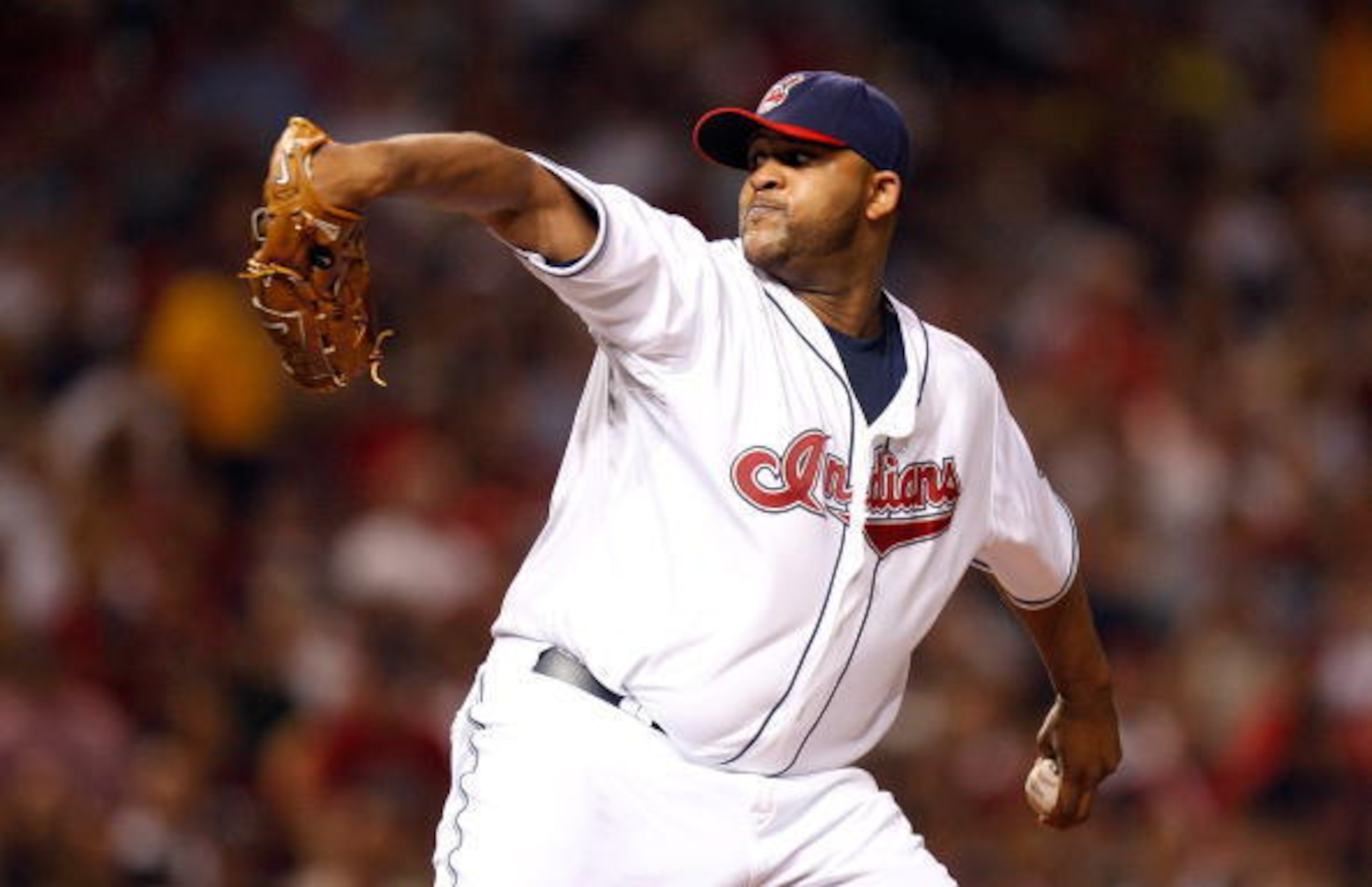
Stats (2001-Present)
| 423/423 | 208-119 | 3.63 | 120 | 1.236 | 2,437 | 2,821.1 | 53.9 |
3-Year Peak (2007-09)
- Total: 55-25, 3.08 ERA, 144 ERA+, 1.134 WHIP, 657 K, 724.0 IP
- Avg: 34 GS, 18-8, 3.08 ERA, 219 K, 241.0 IP, 6.4 WAR
Player Overview
A workhorse from the get-go, CC Sabathia broke into the league as a 20-year-old in 2001 and went 17-5 with a 4.39 ERA and 171 strikeouts in 180.1 innings, finishing second to Ichiro Suzuki in AL Rookie of the Year voting.
He would go on to throw at least 180 innings and win at least 11 games in each of his first 13 seasons, before making just eight starts in 2014 prior to undergoing knee surgery.
His best season as a member of the Cleveland Indians came in 2007, as he went 19-7 with a 3.21 ERA, 1.141 WHIP and 209 strikeouts in a league-high 241 innings to capture the AL Cy Young.
The following season, Cleveland shipped him off to the Milwaukee Brewers at the deadline, where he went 11-2 with a 1.65 ERA in 17 starts. He threw seven complete games and three shutouts during his time in Milwaukee, helping lead the team to the postseason.
From there, he signed a big-money deal with the New York Yankees, then finished in the top four in Cy Young voting during each of his first three seasons in the Bronx.
He's a wild card heading into the 2015 season as he looks to make a comeback from a lost 2014, but there is no doubt he was one of the game's best throughout the 2000s.
13. Mike Mussina
14 of 26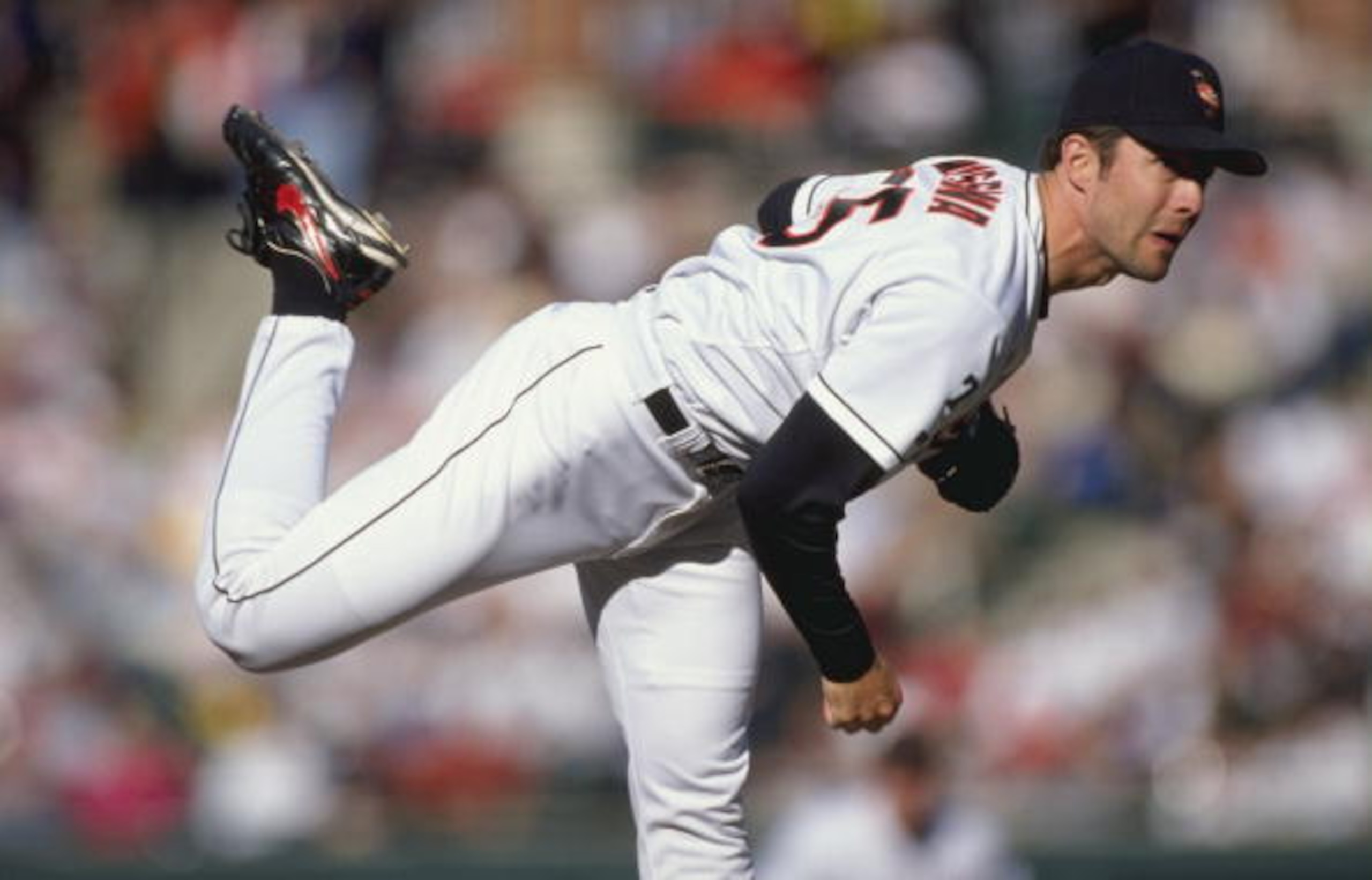
Stats (1991-2008)
| 537/536 | 270-153 | 3.68 | 123 | 1.192 | 2,813 | 3,562.2 | 82.7 |
3-Year Peak (1997-99)
- Total: 46-25, 3.39 ERA, 133 ERA+, 1.167 WHIP, 565 K, 634.1 IP
- Avg: 31 GS, 15-8, 3.39 ERA, 188 K, 211.0 IP, 5.0 WAR
Player Overview
Mike Mussina was a staple at the top of the Baltimore Orioles rotation for a decade, and he continued to pitch at a high level into his late-30s as a member of the New York Yankees.
After an impressive 12-start debut in 1991, Mussina went 18-5 with a 2.54 ERA to finish fourth in AL Cy Young voting during his first full season in the majors.
All told, he wrapped up his 10 seasons in Baltimore at 147-81 with a 3.53 ERA and 1.175 WHIP, finishing in the top 10 in Cy Young voting seven different times and making five All-Star appearances.
He then joined the Yankees heading into his age-32 season, winning another 123 games over the course of eight seasons while posting a 3.88 ERA and 1.212 WHIP.
Mussina finally won 20 games for the first time in his career as a 39-year-old in 2008, going 20-9 with a 3.37 ERA in what would be the final season of his impressive 18-year career.
12. Justin Verlander
15 of 26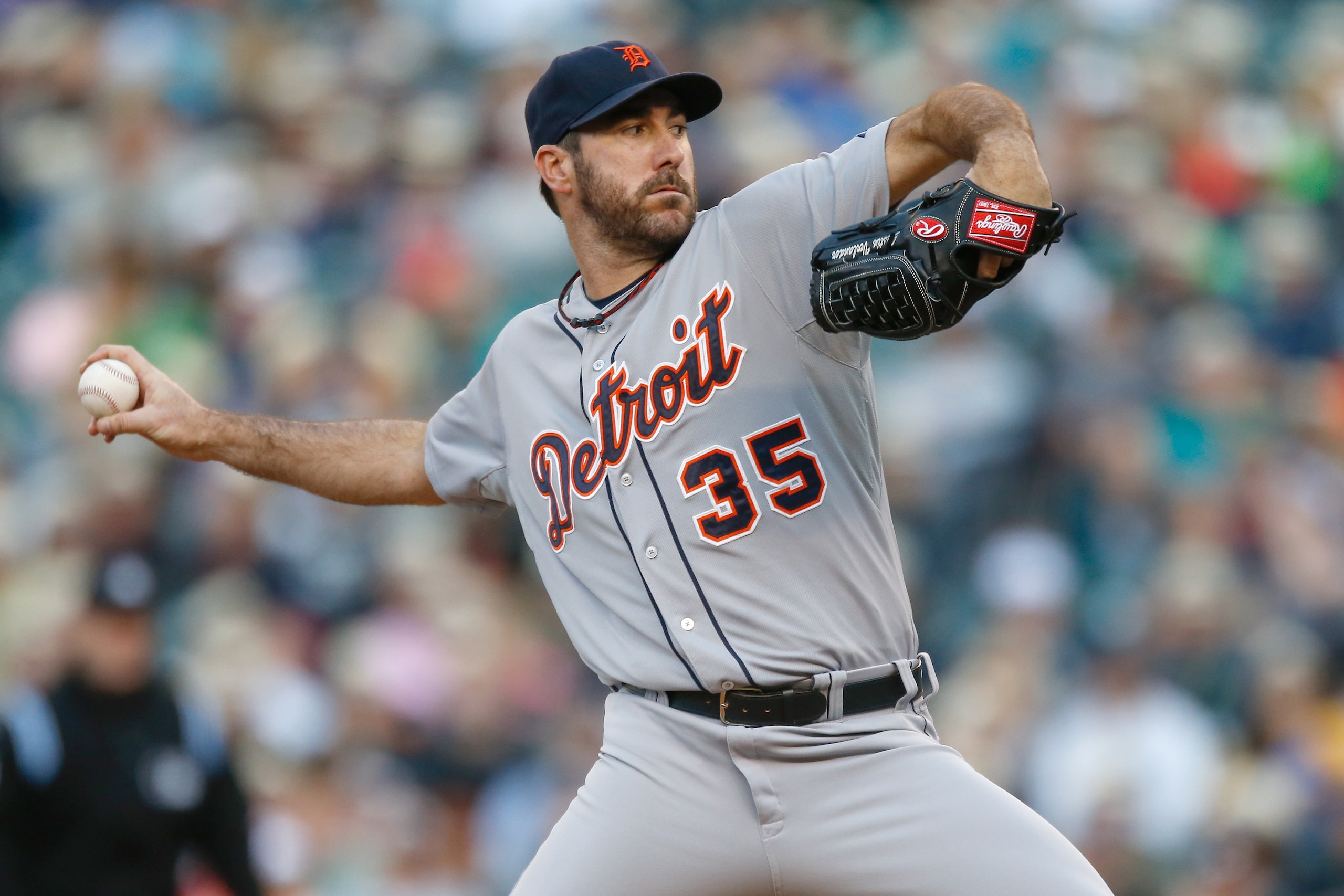
Stats (2005-Present)
| 298/298 | 152-89 | 3.53 | 122 | 1.212 | 1,830 | 1,978.0 | 41.7 |
3-Year Peak (2010-12)
- Total: 59-22, 2.79 ERA, 150 ERA+, 1.043 WHIP, 708 K, 713.2 IP
- Avg: 33 GS, 20-7, 2.79 ERA, 236 K, 238.0 IP, 6.8 WAR
Player Overview
The Detroit Tigers selected Justin Verlander with the No. 2 pick in the 2004 draft after the San Diego Padres passed on him at No. 1 overall in favor of high school shortstop Matt Bush.
Two years later, the hard-throwing righty was a full-time member of the big league rotation, going 17-9 with a 3.63 ERA to win AL Rookie of the Year and finish seventh in Cy Young balloting.
He continued to climb the ranks of the game's best pitchers in the years to come, until he reached his peak in 2011 with one of the better single-season pitching performances in recent memory.
On the strength of 28 quality starts in 34 games, Verlander went 24-5 with a 2.40 ERA, 0.920 WHIP and 250 strikeouts in 251.0 innings. That earned him the pitching Triple Crown, AL Cy Young and AL MVP.
After another year as arguably the best pitcher in baseball in 2012 (17-8, 2.64 ERA, 239 K), the 32-year-old has dropped off a bit over the past two seasons.
He has still been dominant at times, though, and with Max Scherzer and Rick Porcello gone, the Tigers are banking on his return to form in 2015.
11. Curt Schilling
16 of 26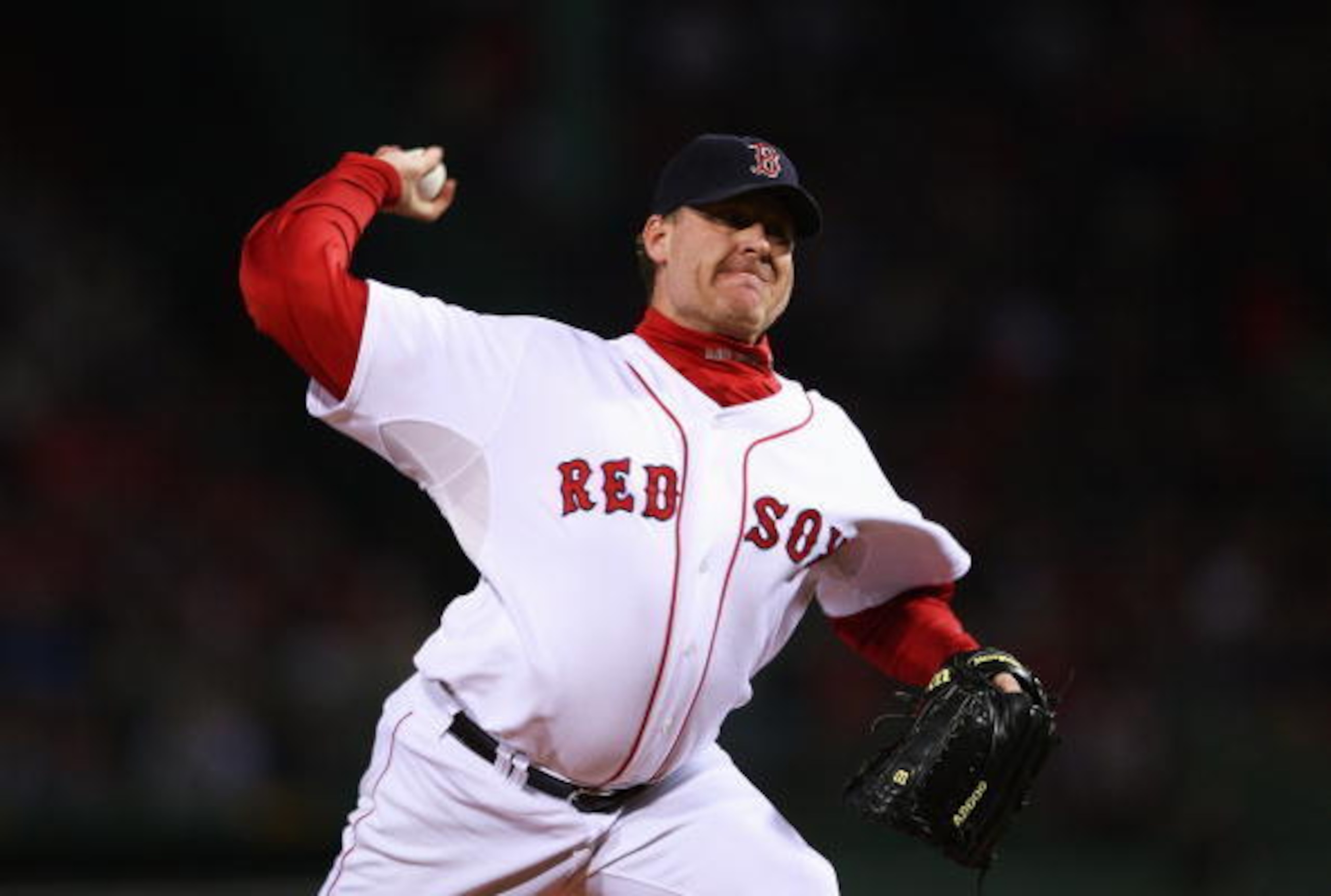
Stats (1990-2007)
| 560/431 | 216-142 | 3.42 | 129 | 1.132 | 3,106 | 3,237.2 | 81.6 |
3-Year Peak (2001-03)
- Total: 53-22, 3.07 ERA, 151 ERA+, 1.028 WHIP, 803 K, 684.0 IP
- Avg: 31 GS, 18-7, 3.07 ERA, 268 K, 228.0 IP, 7.8 WAR
Player Overview
A late bloomer of sorts, Curt Schilling did not really break out as a starter until his age-30 season in 1997, when he went 17-11 with a 2.97 ERA and an NL-best 319 strikeouts in 254.1 innings.
He would go a combined 47-31 with a 3.22 ERA and 771 strikeouts in 703.1 innings in his final three full seasons with the Philadelphia Phillies, before being traded to the Arizona Diamondbacks at the deadline in 2000.
The D'Backs did not reach the postseason that year, but the following season, Schilling teamed with Randy Johnson to lead them to a World Series title. After going 22-6 with a 2.98 ERA and 293 strikeouts during the regular season, he was 4-0 with a 1.12 ERA in six postseason starts, sharing World Series MVP honors with Johnson.
He wrapped up his three-plus seasons in Arizona at 58-28 with a 3.14 ERA and 875 strikeouts in 781.2 innings, finishing second to Johnson in Cy Young voting twice.
From there, he joined the Boston Red Sox, where he helped lead the team to the World Series in 2004 and 2007.
Schilling finished his postseason career at 11-2 with a 2.23 ERA and 0.968 WHIP over 133.1 innings, and his "bloody sock game" goes down as one of the most memorable moments in Red Sox history.
10. John Smoltz
17 of 26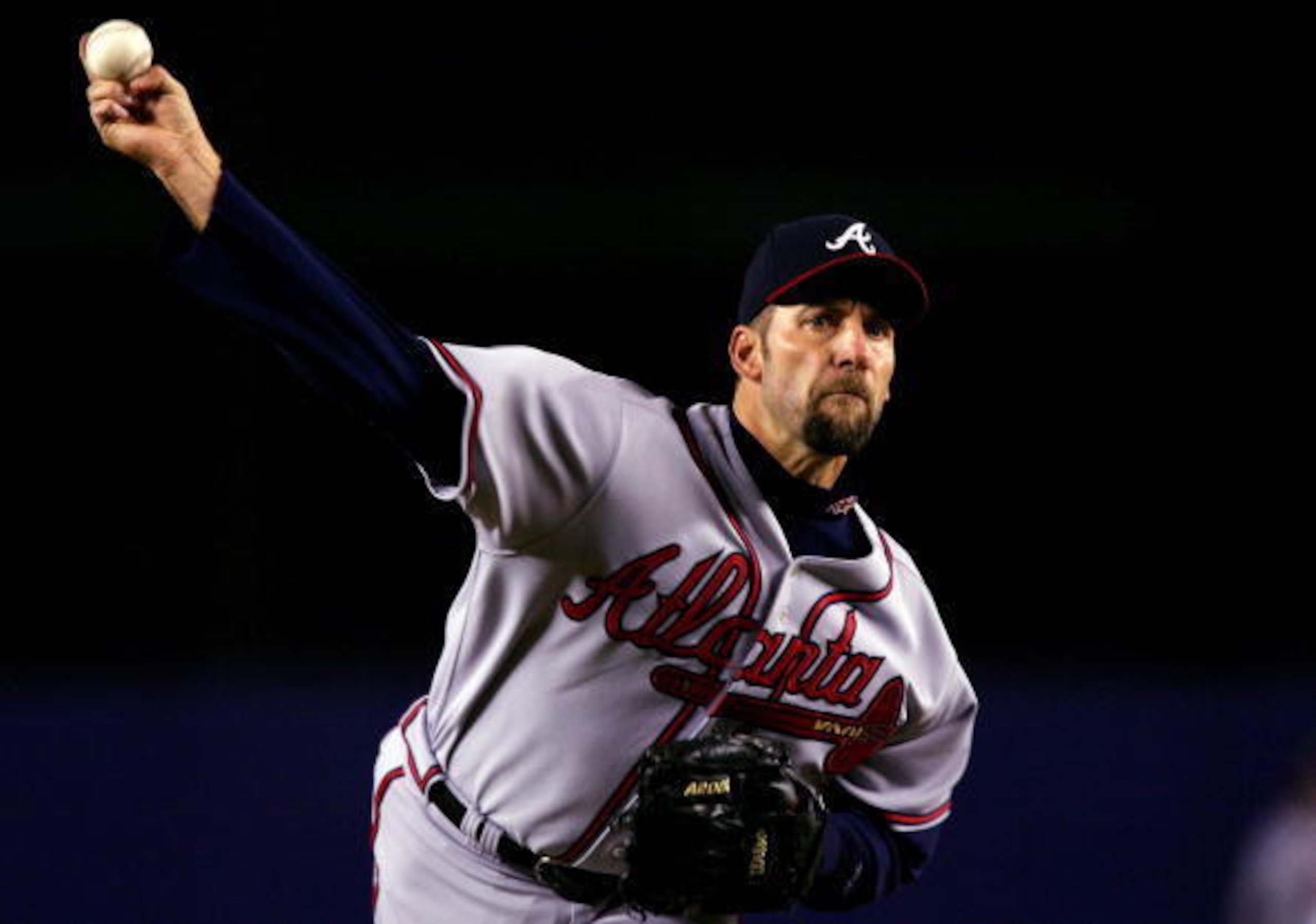
Stats (1990-2009)
| 682/440 | 199-137 | 3.31 | 127 | 1.170 | 2,879 | 3,201.0 | 63.0 |
3-Year Peak (1996-98)
- Total: 56-23, 2.96 ERA, 144 ERA+, 1.093 WHIP, 690 K, 677.1 IP
- Avg: 32 GS, 19-8, 2.96 ERA, 230 K, 226.0 IP, 5.1 WAR
Player Overview
Despite the fact that two of his teammates rank ahead of him on this list, and even with four seasons spent in the bullpen in the later stages of his career, John Smoltz was still an ace in his own right for much of his career.
Though he was an All-Star in 1989, Smoltz first really made a name for himself during the 1991 postseason. In four starts, he posted a 1.52 ERA over 29.2 innings, and he matched Jack Morris pitch-for-pitch for 7.1 shutout innings in Game 7 of the World Series.
The next season, he led the NL in strikeouts (215) and helped the Braves return to the World Series by winning Championship Series MVP honors.
All told, he would wrap up his postseason career at 15-4 with a 2.67 ERA and 1.144 WHIP in 209 innings, putting him among the best October performers of all time.
His best regular season as a starter came in 1996, when he went 24-8 with a 2.94 ERA, 1.001 WHIP and 276 strikeouts in 253.2 innings as he edged out Florida Marlins ace Kevin Brown for the NL Cy Young.
Ten years later, he was once again the ace of the Braves staff after Greg Maddux and Tom Glavine had departed, as he went 16-9 with a 3.49 ERA and 211 strikeouts in his age-39 season.
9. Tom Glavine
18 of 26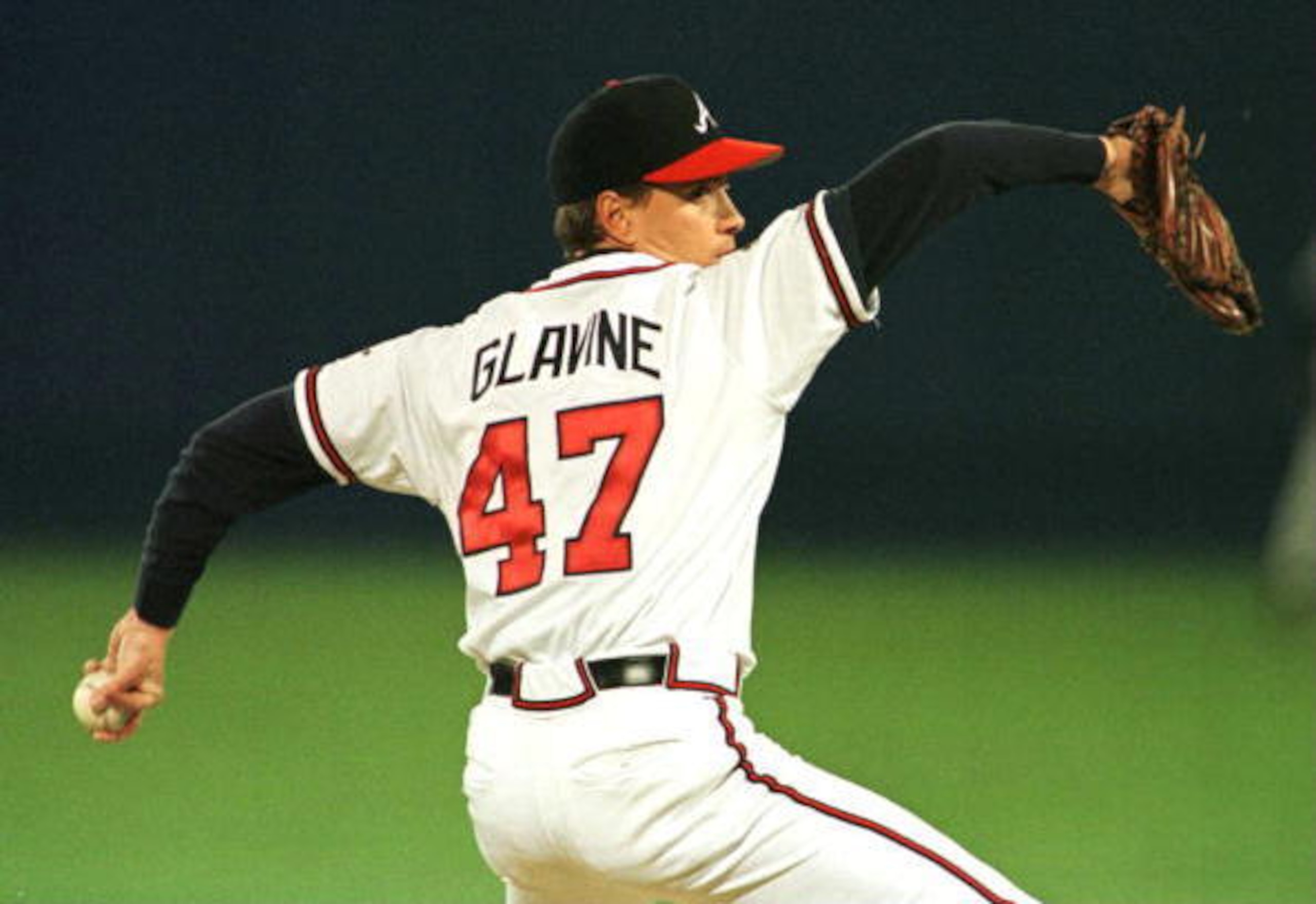
Stats (1990-2008)
| 610/610 | 282-174 | 3.45 | 122 | 1.315 | 2,413 | 3,981.2 | 72.6 |
3-Year Peak (1996-98)
- Total: 49-23, 2.81 ERA, 151 ERA+, 1.219 WHIP, 490 K, 704.2 IP
- Avg: 34 GS, 16-8, 2.81 ERA, 163 K, 235.0 IP, 5.8 WAR
Player Overview
Tom Glavine took some time to adjust to life in the big leagues, going 33-41 with a 4.29 ERA over his first four seasons, and that included a 17-loss season in 1988.
Everything clicked in 1991, though, as he went 20-11 with a 2.55 ERA, 1.095 WHIP and a league-high nine complete games to win NL Cy Young honors.
Over the next 12 seasons, he would go 209-102 with a 3.15 ERA, 1.275 WHIP and average 225 innings per season. He was undoubtedly one of the best pitchers in the league, despite the fact that he was not even the best pitcher on his own team most years.
He would win another NL Cy Young in 1998, going 20-6 with a 2.47 ERA and 1.203 WHIP, and he finished in the top three in voting four others times in his career.
Throw in a 14-16 record with a 3.30 ERA and 1.273 WHIP over 218.1 postseason innings, including a 2-0 record and 1.29 ERA during the 1995 World Series to win MVP honors, and Glavine no doubt earned his place among the generation's top starters.
8. Kevin Brown
19 of 26
Stats (1990-2005)
| 453/443 | 197-134 | 3.26 | 128 | 1.217 | 2,277 | 3,037.0 | 64.9 |
3-Year Peak (1996-98)
- Total: 51-26, 2.33 ERA, 172 ERA+, 1.064 WHIP, 621 K, 727.1 IP
- Avg: 33 GS, 17-9, 2.33 ERA, 207 K, 242.0 IP, 7.8 WAR
Player Overview
At first blush, this may seem a bit high for Kevin Brown to be ranked, but it's easy to forget just how good he was during his time with the Florida Marlins and San Diego Padres in the late-1990s.
After a solid eight-year run with the Texas Rangers (78-64, 3.81 ERA) and a year with the Baltimore Orioles (10-9, 3.60 ERA), Brown joined the Marlins as a free agent prior to the 1996 season.
The right-hander immediately benefited from switching leagues, going 17-11 with an NL-best 1.89 ERA and 0.944 WHIP to finish second in Cy Young voting.
Brown followed that up by going 16-8 with a 2.69 ERA and 205 strikeouts in 1997, helping lead a surprise Marlins team to a World Series title.
Florida then traded him to the San Diego Padres in the ensuing fire sale, where he went 18-7 with a 2.38 ERA and made another surprising trip to the World Series before hitting free agency once again.
The Los Angeles Dodgers made him the first $100 million man in baseball that offseason, giving him a seven-year, $105 million deal that landed him on the cover of Sports Illustrated.
After two more terrific seasons in Los Angeles, injuries started to take their toll, and Brown finished out his career with the New York Yankees.
7. Johan Santana
20 of 26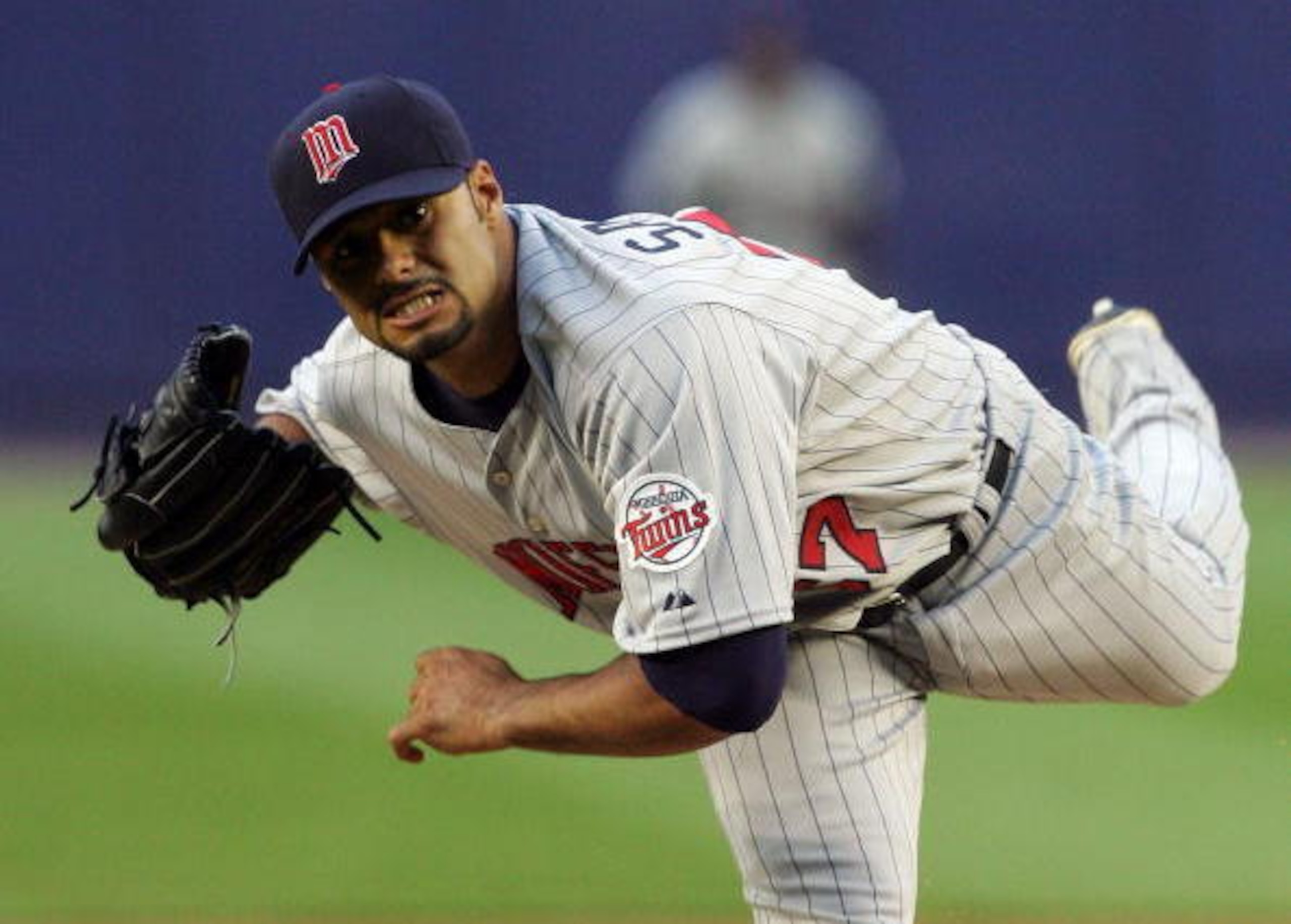
Stats (2000-12)
| 360/284 | 139-78 | 3.20 | 136 | 1.132 | 1,988 | 2,025.2 | 50.7 |
3-Year Peak (2004-06)
- Total: 55-19, 2.75 ERA, 166 ERA+, 0.963 WHIP, 748 K, 693.1 IP
- Avg: 34 GS, 18-6, 2.75 ERA, 249 K, 231.0 IP, 7.8 WAR
Player Overview
Arguably the greatest player in Rule 5 draft history, the Florida Marlins selected Johan Santana from the Houston Astros and then immediately shipped him to the Minnesota Twins prior to the 2000 season.
He had a 6.49 ERA in 86 innings of work out of the bullpen in his first season with the Twins, but the team stuck it out for the duration of the season to secure his rights.
In the 2002 and 2003 seasons, he emerged as a valuable swingman, going 20-9 with a 3.04 ERA while making 40 relief appearances and 32 starts. He was good enough in the role in '03 to finish seventh in AL Cy Young voting, and that earned him a full-time spot in the rotation the following year.
From there, Santana would go 86-39 with a 2.82 ERA, 1.022 WHIP and 1,189 strikeouts in 1,146.2 innings over the next five seasons, finishing in the top five in Cy Young voting each year.
He won the award in 2004 (20-6, 2.61 ERA, 265 K) and 2006 (19-6, 2.77 ERA, 245 K), and the Twins shipped him to the New York Mets prior to the 2008 season.
After one great season in New York, injuries took their toll and he has not pitched in the majors since 2012. However, the 36-year-old is currently trying to make a comeback with the Toronto Blue Jays.
6. Roy Halladay
21 of 26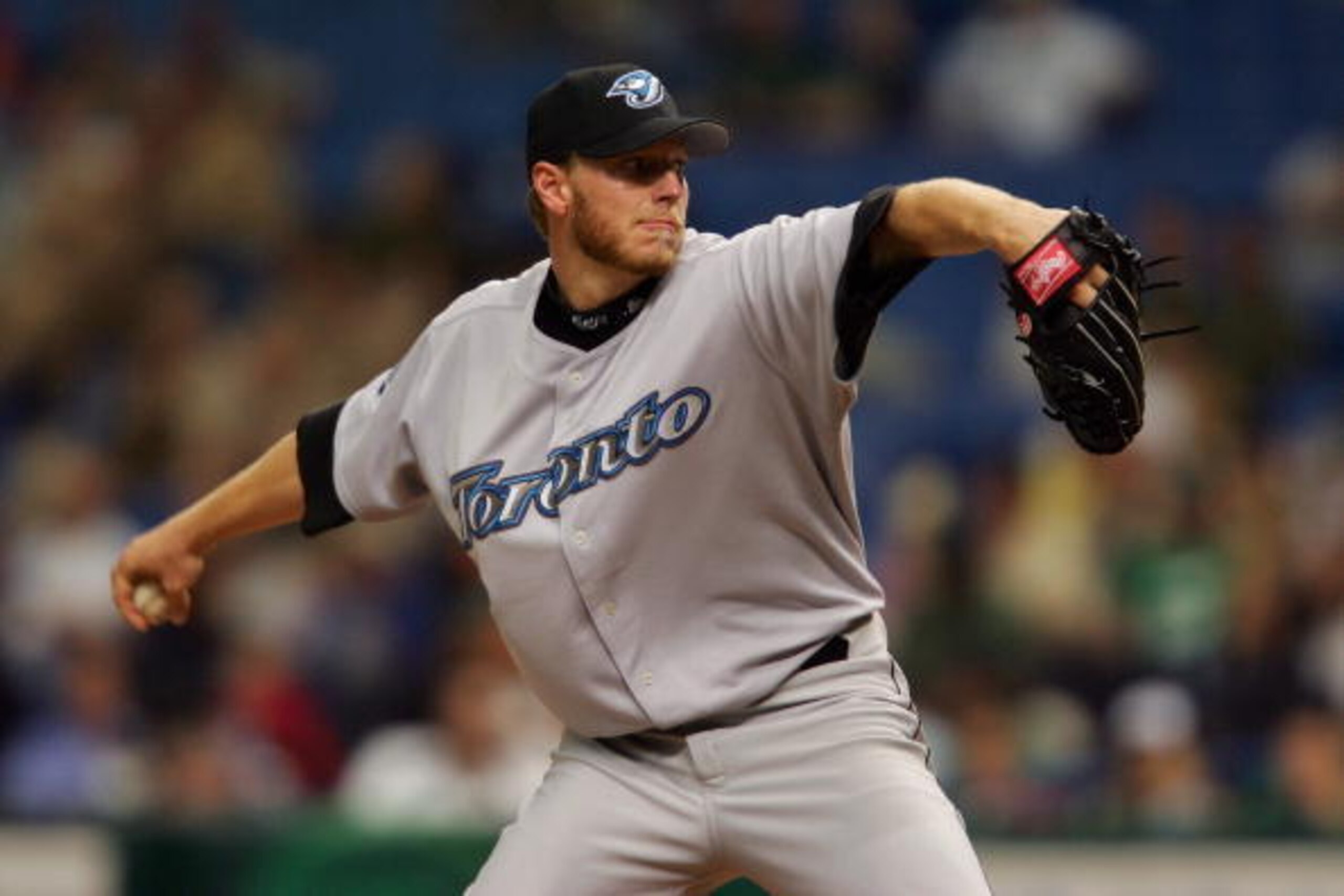
Stats (1998-2013)
| 416/390 | 203-105 | 3.38 | 131 | 1.178 | 2,117 | 2,749.1 | 65.6 |
3-Year Peak (2009-11)
- Total: 57-26, 2.53 ERA, 163 ERA+, 1.069 WHIP, 647 K, 723.1 IP
- Avg: 32 GS, 19-9, 2.53 ERA, 216 K, 241.0 IP, 8.0 WAR
Player Overview
Another ace who took some time to establish himself, Roy Halladay went 18-17 with a 4.95 ERA in 74 games (49 starts) over the course of his first four seasons in the big leagues.
Everything fell into place in 2002, though, as he went 19-7 with a 2.93 ERA and 168 strikeouts in an AL-high 239.1 innings.
The following year, he took home the AL Cy Young, going 22-7 with a 3.25 ERA and 204 strikeouts while again leading the league with 266 innings pitched.
All told, he would go 148-76 with a 3.43 ERA and 1.198 WHIP in 12 years with the Toronto Blue Jays, before being traded to the Philadelphia Phillies for the 2010 season.
His first season in Philly would be the finest of his career, as he was 21-10 with a 2.44 ERA and 219 strikeouts in 250.2 innings. He threw a perfect game against the Florida Marlins in May and capped it all off with a no-hitter in his first career postseason start against the Cincinnati Reds.
He retired with 67 complete games, 20 shutouts and a 162-game average of 232 innings pitched, as he was one of the last true workhorse starters the game will ever see.
5. Clayton Kershaw
22 of 26
Stats (2008-Present)
| 211/209 | 98-49 | 2.48 | 151 | 1.059 | 1,445 | 1,378.1 | 39.7 |
3-Year Peak (2012-14)
- Total: 51-21, 2.05 ERA, 176 ERA+, 0.935 WHIP, 700 K, 662.0 IP
- Avg: 31 GS, 17-7, 2.05 ERA, 233 K, 221.0 IP, 7.2 WAR
Player Overview
Five years from now, it could be Clayton Kershaw who sits atop this list, but with just six full seasons under his belt, it's hard to rank him any higher than No. 5 at this point.
The No. 7 pick in the 2006 draft, Kershaw debuted two years later as a 20-year-old, going 5-5 with a 4.26 ERA and 100 strikeouts in 107.2 innings.
The following season, he was fifth in the NL with a 2.79 ERA, and by 2011, he was arguably the best pitcher in baseball at the age of 23.
That year, Kershaw took home his first NL Cy Young award, going 21-5 with a 2.28 ERA, 0.977 WHIP and 248 strikeouts in 233.1 innings to win the Triple Crown.
The scary part is he's gotten even better in the three seasons since, as he enters the 2015 season with four straight ERA titles and three Cy Young awards in four years.
His 2014 performance goes down as one of the greatest single-season pitching performances of all time. He was 21-3 with a 1.77 ERA, 0.857 WHIP and 239 strikeouts in 198.1 innings, as he ran away with NL MVP honors.
Entering his age-27 season, there is still an awful lot of baseball remaining in the left arm of Clayton Kershaw.
4. Roger Clemens
23 of 26
Stats (1990-2007)
| 534/533 | 259-139 | 3.15 | 144 | 1.186 | 3,457 | 3,632.0 | 103.6 |
3-Year Peak (1990-92)
- Total: 57-27, 2.34 ERA, 180 ERA+, 1.067 WHIP, 658 K, 746.1 IP
- Avg: 33 GS, 19-9, 2.34 ERA, 219 K, 249.0 IP, 9.1 WAR
Player Overview
Roger Clemens was already 95-45 with a 3.06 ERA when the 1990 season rolled around, and he had a pair of AL Cy Young awards and an AL MVP to his credit.
Just entering his prime at the age of 27, he would lead the AL in ERA in 1990 (1.93), 1991 (2.62) and 1992 (2.41), winning his third Cy Young award in '91 when he was also 18-10 with an AL-best 241 strikeouts.
His production leveled off a bit from there until he joined the Toronto Blue Jays as a free agent in 1997.
He spent just two seasons north of the border, but he won the Cy Young both years, going a combined 41-13 with a 2.33 ERA, 1.061 WHIP and 563 strikeouts in 498.2 innings.
From there, Toronto traded him to the New York Yankees, where he would win back-to-back World Series titles in 1999 and 2000 and then add another Cy Young to his trophy case in 2001 (20-3, 3.51 ERA, 213 K).
Still pitching at a high level, he joined the Houston Astros as a 41-year-old, where he would win his seventh Cy Young in 2004 (18-4, 2.98 ERA, 218 K) and an ERA title in 2005 (13-8, 1.87 ERA, 185 K).
His image has obviously been tarnished since his playing days wrapped up following the 2007 season, but there is little question based on performance that he's one of the best the game has ever seen.
3. Randy Johnson
24 of 26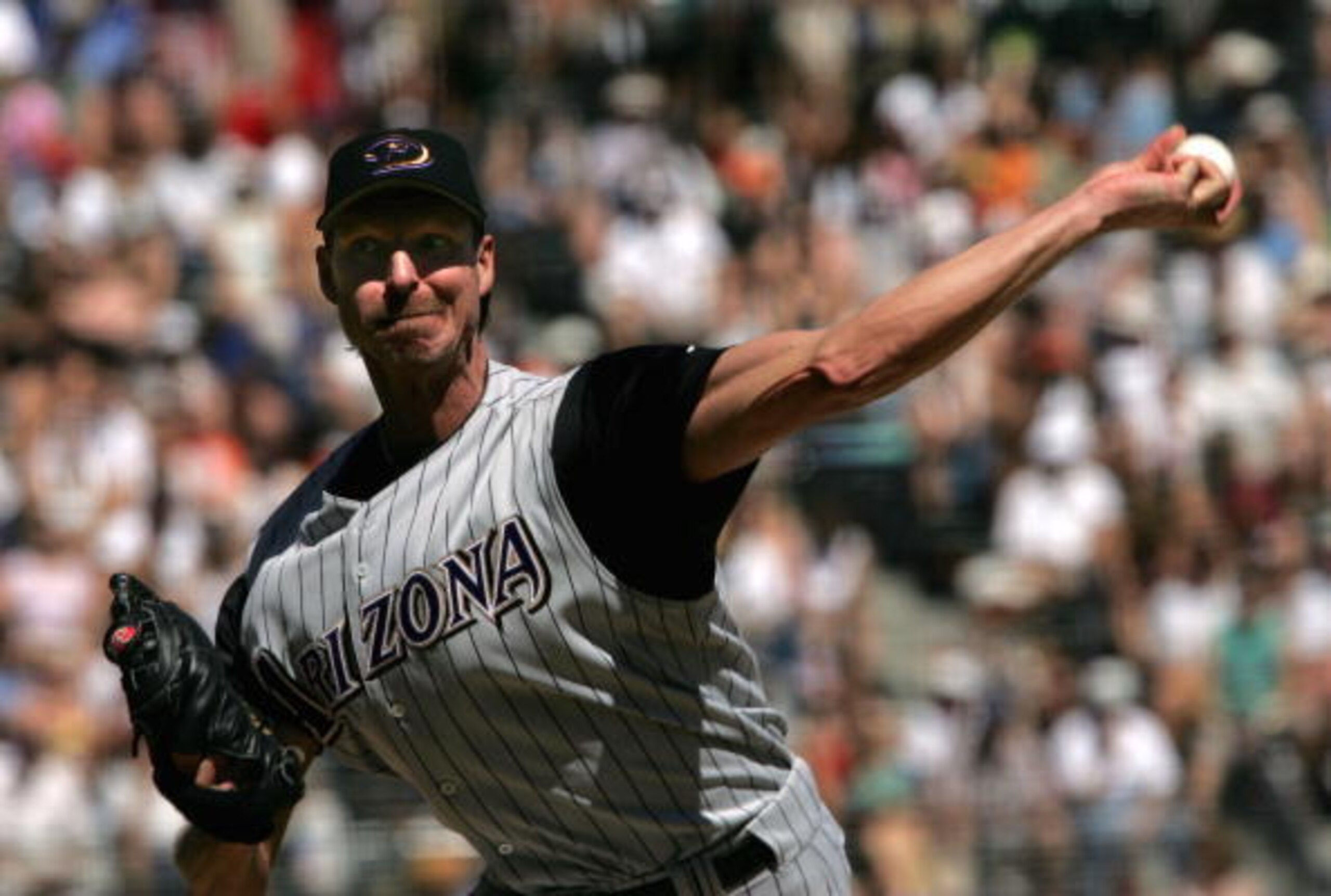
Stats (1990-2009)
| 585/571 | 293-153 | 3.24 | 138 | 1.157 | 4,720 | 3,948.2 | 104.2 |
3-Year Peak (2000-02)
- Total: 64-18, 2.48 ERA, 188 ERA+, 1.052 WHIP, 1,053 K, 758.1 IP
- Avg: 35 GS, 21-6, 2.48 ERA, 351 K, 253.0 IP, 9.7 WAR
Player Overview
Traded to the Seattle Mariners at the deadline in 1989 for fellow lefty Mark Langston, a 26-year-old Randy Johnson was still very much a work in progress heading into the 1990 season.
He managed to go 14-11 with a 3.65 ERA and 194 strikeouts to make his first All-Star appearance, but he also led the AL in walks (120), the first of three straight seasons he would pace the league in that category.
Then it all came together in 1993, and he would go 175-58 with a 2.73 ERA, 1.083 WHIP and 2,928 strikeouts in 2,190.1 innings over the next 10 seasons, winning five Cy Young awards in the process.
The Mariners finally cut ties with him in 1998, shipping him to the Houston Astros at the trade deadline, where he went 10-1 with a 1.28 ERA in 11 starts to help them reach the postseason.
After that, he joined the Arizona Diamondbacks in free agency, and it's there that he rattled off four straight Cy Young awards from 1999-2002, going 81-27 with a 2.48 ERA and 1,417 strikeouts in 1,030 innings.
He retired as arguably the greatest left-handed pitcher the game has ever seen, ranked second all time in strikeouts with 4,875.
2. Greg Maddux
25 of 26
Stats (1990-2008)
| 639/639 | 310-189 | 3.06 | 137 | 1.107 | 2,975 | 4,334.1 | 94.8 |
3-Year Peak (1993-95)
- Total: 55-18, 1.90 ERA, 219 ERA+, 0.930 WHIP, 534 K, 678.2 IP
- Avg: 30 GS, 18-6, 1.90 ERA, 178 K, 226.0 IP, 8.0 WAR
Player Overview
One of the 10 best starting pitchers the game has ever seen, no one was more consistently great than Greg Maddux over the past 25 years, and a strong case can certainly be made for him to be No. 1 anyway.
He won the NL Cy Young four straight years from 1992-95, with the first coming as a member of the Chicago Cubs and the other three with the Atlanta Braves after he signed with them as a free agent.
- 1992: 20-11, 2.18 ERA, 1.011 WHIP, 199 K, 268.0 IP
- 1993: 20-10, 2.36 ERA, 1.049 WHIP, 197 K, 267.0 IP
- 1994: 16-6, 1.56 ERA, 0.896 WHIP, 156 K, 202.0 IP
- 1995: 19-2, 1.63 ERA, 0.811 WHIP, 181 K, 209.2 IP
During his 11 seasons with the Braves, he was a combined 194-88 with a 2.63 ERA and 1.051 WHIP.
All of that being said, if I have one game to play and can take any pitcher from the past 25 years at his peak to take the ball, Maddux is not the choice...
1. Pedro Martinez
26 of 26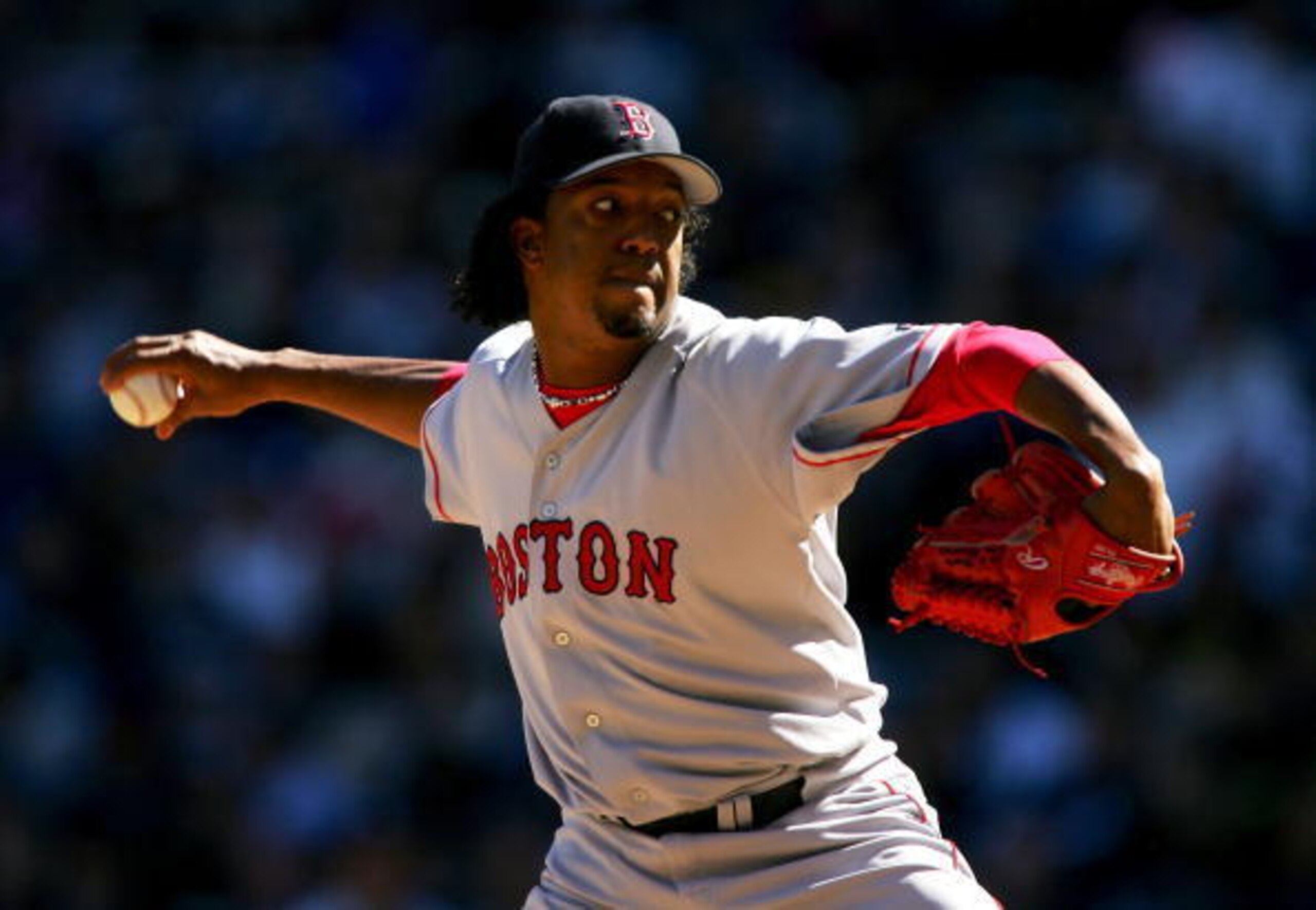
Stats (1992-2009)
| 476/409 | 219-100 | 2.93 | 154 | 1.054 | 3,154 | 2,827.1 | 86.0 |
3-Year Peak (1998-2000)
- Total: 60-17, 2.25 ERA, 219 ERA+, 0.922 WHIP, 848 K, 664.0 IP
- Avg: 30 GS, 20-6, 2.25 ERA, 283 K, 221.0 IP, 9.5 WAR
Player Overview
He may not have done it for as long as some of the other guys on this list, but at his peak, Pedro Martinez was the most dominant pitcher the game has seen over the past 25 years.
The following seven-year stretch speaks for itself:
- 1997: 17-8, 1.90 ERA (4.38), 0.932 WHIP, 305 K, 241.1 IP
- 1998: 19-7, 2.89 ERA (4.42), 1.091 WHIP, 251 K, 233.2 IP
- 1999: 23-4, 2.07 ERA (4.70), 0.923 WHIP, 313 K, 213.1 IP
- 2000: 18-6, 1.74 ERA (4.76), 0.737 WHIP, 284 K, 217.0 IP
- 2001: 7-3, 2.39 ERA (4.41), 0.934 WHIP, 163 K, 116.2 IP
- 2002: 20-4, 2.26 ERA (4.27), 0.923 WHIP, 239 K, 199.1 IP
- 2003: 14-4, 2.22 ERA (4.39), 1.039 WHIP, 206 K, 186.2 IP
The league-average ERAs during that span, which are noted in parentheses after his ERA, really put into perspective just how dominant he truly was.
His 2000 season, at the height of the steroid era, may be the greatest single-season pitching performance the game has ever seen.
If this was simply a list of the greatest pitchers of all time and we were going on overall body of work, Martinez would rank behind Clemens, Johnson and Maddux.
However, with the focus here being on peak performance and who the best ace was of the past 25 years, the choice has to be Pedro Martinez for the No. 1 spot.
All stats courtesy of Baseball-Reference, unless otherwise noted.