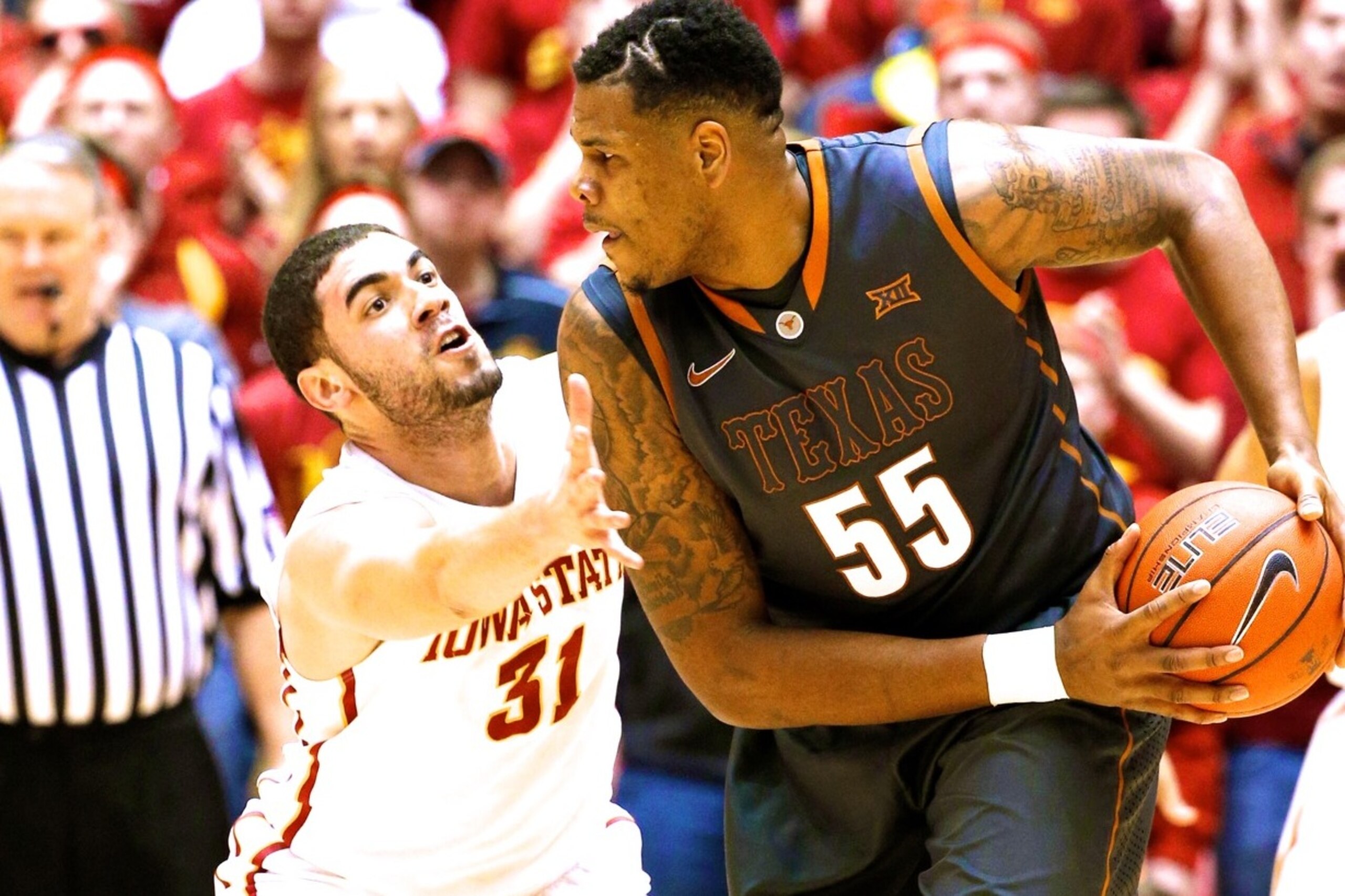

Struggling Texas on the Verge of Missing Out on NCAA Tournament
Austin, we have a problem.
The Texas Longhorns are loaded with talent and potential. Execution, though, has been a different story, and it could be what ultimately keeps them from participating in the 2015 NCAA tournament.
That's a pretty bold assertion about a team that the Associated Press ranked No. 19 in the country on Monday morning, but after an 89-86 loss to Iowa State on Monday night, it's beyond time to start asking just how good this team actually is.

.jpg?w=2560)

The score doesn't even begin to tell you how ugly the first 80 percent of this game was. Iowa State led by 21 points with eight minutes remaining before Texas caught fire, and the Cyclones decided to start missing free throws left and right.
The final margin was three, but it looked for most of the night like it should have been 30.
Just another blown opportunity for the Longhorns.
This team doesn't have any bad losses, but where are the quality wins? The miracle road victory over Connecticut isn't looking so great anymore, which means a come-from-behind, neutral-court win over Iowa is about as good as it gets for the first two months of Texas' season—and who knows if that will still be an RPI Top 50 win when all is said and done?
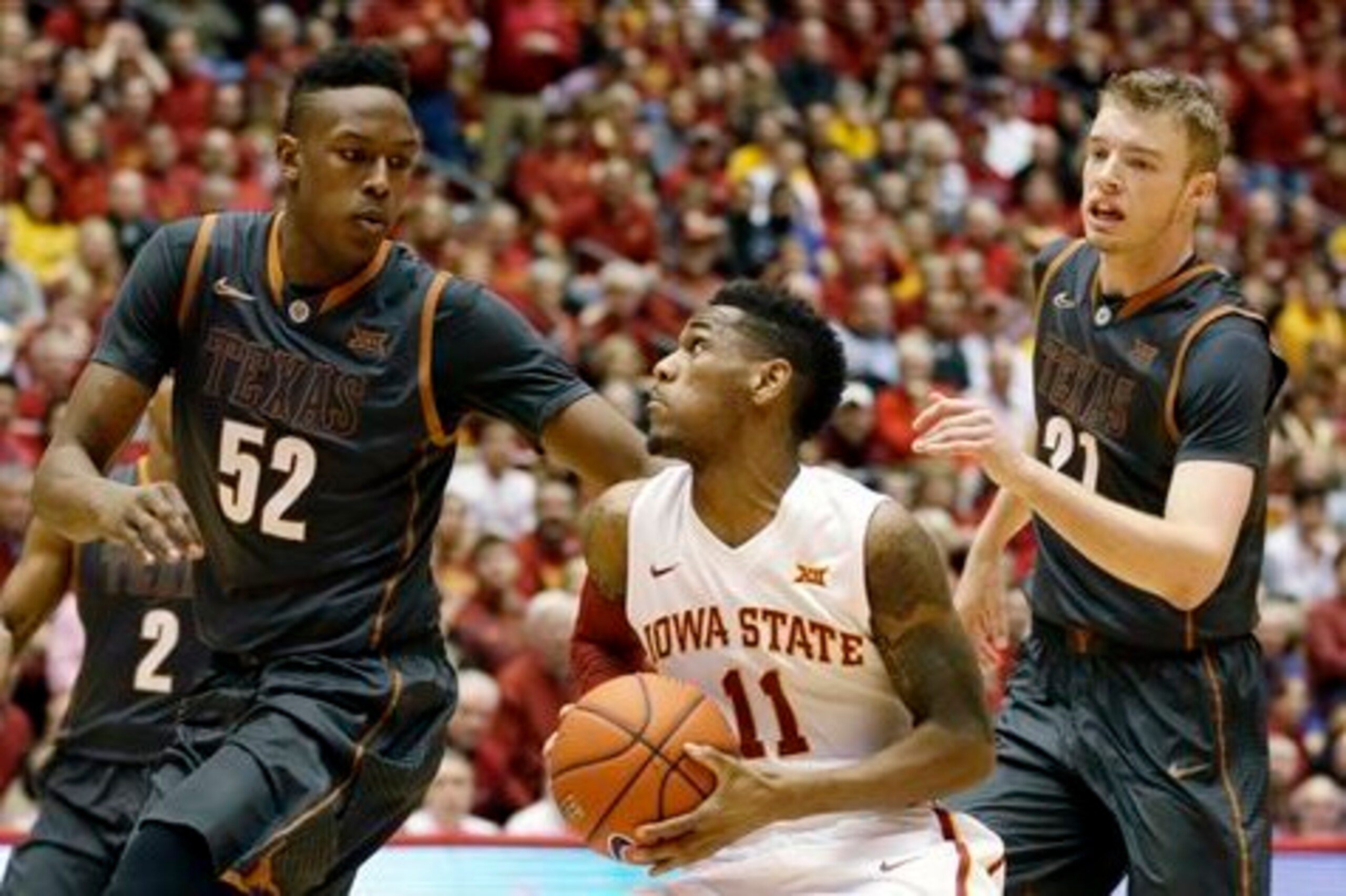
The Longhorns are absolutely still in the projected field at the moment, but they have been steadily slipping since plateauing at the fringe of the No. 1-seed discussion before the home loss to Stanford.
How much further might they slide?
With Monday night's loss, Texas is now 4-5 in its last nine games—and only one of those four wins (at home against West Virginia) came against a team with any realistic shot at an at-large bid to the tournament.
It's more than just the losses, though. It's how hopelessly lost they have looked for long stretches of those games.
The biggest issue on display for Texas on Monday night was the complete inability and unwillingness to run a half-court offense.
Time and again, some combination of Isaiah Taylor, Javan Felix, Demarcus Holland, Kendal Yancy and Jonathan Holmes passed the ball around the perimeter with no purpose whatsoever. According to ESPN.com's Myron Medcalf's assessment, the players are simply not "trusting each other or their roles":
They weren't looking to drive. Until the final few minutes, they weren't looking to shoot, either. They were just waiting for one of the big men to establish position for an entry pass before inevitably getting double-teamed.
It wasn't exactly a new phenomenon, either. Coming into the game, Texas was averaging 6.0 made three-pointers per game and only attempting 32.8 percent of its shots from beyond the arc.
As Fran Fraschilla noted during ESPN's broadcast of the game, their inability and lack of desire to shoot three-pointers "allows the defense to play five against two in the paint, because they don't have to worry about perimeter players making shots. It shrinks the floor, and they don't have an answer for that right now."
It's been big men or bust all season long, and that's been readily apparent when you look at the production from their frontcourt in losses—as well as the game against Connecticut that would have been a loss were it not for Holmes' clutch three-pointer in the final seconds.
Note: Though Holmes is technically a forward, we're counting the frontcourt in this chart as Myles Turner, Cameron Ridley, Connor Lammert and Prince Ibeh.
| Game | Points | Margin |
| at Kentucky | 18 | -12 |
| at Connecticut | 16 | +1 |
| vs. Stanford | 19 | -3 |
| vs. Oklahoma | 9 | -21 |
| at Oklahoma State | 27* | -11 |
| vs. Kansas | 19 | -13 |
| at Iowa State | 26 | -3 |
| Other Games | 32.0 | +22.4 |
*Turner had 18 points in this game, but Holmes was held scoreless.
Long story short, Texas has had a lot of trouble against teams that are big enough to force Ridley and Turner out of the lane and savvy enough to constantly double the big men as soon as they touch the ball.
Play zone or pack-line defense against the Longhorns and you can hold them to 60 points.
But if you think Texas' execution on offense is hard to watch, you may want to avert your eyes when this team is on defense. Man-to-man clearly wasn't working for Rick Barnes' squad, so he's been experimenting with a 2-3 zone as of late.
Iowa State tore that thing to shreds on Monday night.
Granted, the Cyclones possess quite possibly the best ball movement in the entire country. They had 20 assists on 29 made field goals. But they did so by finding holes in the zone over and over again. Georges Niang and Dustin Hogue kept flashing to the free-throw line for entry passes before quickly finding someone else—either on a backdoor cut or simply on a defensive breakdown.
Here's a Vine of such a play from midway through the first half, courtesy of Iowa State Athletics:
Monday night was the fifth time in the past nine games—all losses—that Texas allowed at least one point per possession on defense, according to KenPom.com. No matter what the Longhorns try, it isn't working.
This comes in stark contrast to what we were led to believe in November.
In terms of points allowed, the Longhorns had one of the best defenses in the country for the first few weeks of the season. They held each of their first seven opponents to 57 points or less, allowing a combined total of 0.81 points per possession.
As it turns out, though, there's a pretty big difference between Alcorn State and Iowa State.
The Longhorns were able to get by on defense with sheer athleticism during nonconference play, but now they're getting into trouble by frequently being out of position and overcommitting against much better opponents.
These aren't quick-fix problems, and this isn't a quick-fix coach.

Over the years, Barnes has earned one heck of a reputation for doing less with more than any other coach. We're not even remotely prepared to start the near-annual "Fire Rick Barnes" campaign, but that flame will rage hotter than ever before if he fails to coach this group of talented players to the NCAA tournament.
However, they may never properly jell on defense, and it's not often that guys suddenly develop a reliable three-point stroke in February. They need to run better sets on offense and communicate better on defense, and they needed to start doing so a few weeks ago, because the schedule isn't getting any easier anytime soon.
The Longhorns still have a pair of games against both Baylor and Kansas State, road games against Kansas, Oklahoma and West Virginia and a home game against Iowa State—and they're already just 3-4 in conference play.
If they keep playing like they have been, they'll be lucky to win any of those games, and they'll need at least three of them—plus home wins over Oklahoma State, TCU and Texas Tech—to get to .500 in Big 12 play.
Eight of the 10 teams in the Big 12 are legitimately vying for a trip to the Big Dance, but they won't all finish above .500. And if the Longhorns are one of the unlucky teams that fails to do so, the end of Turner's one season of college basketball could be spent chasing an NIT championship.
Kerry Miller covers college basketball for Bleacher Report. You can follow him on Twitter: @kerrancejames.
.jpg?w=2560 "Rams Eagles Football")

.jpg?w=2560 "Injury-stricken Seahawks signing veteran RB")
.jpg?w=2560 "Bijan's INSANE 1st Half 🤩")

.jpg?w=2560 "2 NFL Officials Suspended")
