

Why Isn't the Houston Rockets' Contemporary Offense More Dangerous?
The Houston Rockets are famously at the forefront of analytics, with general manager Daryl Morey being the author of their strategy. Yet they are a middling 14th in offensive rating. Why is an offense designed to be efficient so average?
Morey Ball, as we know it, concludes there are basically three areas of the court where scoring is efficient: near the rim, at the charity stripe and behind the three-point line. Everywhere else is bad.
Based on data from NBA.com, a shot attempted from within five feet of the rim is worth 1.17 points. A three-point toss will get you 1.05 points. A typical trip to the free-throw stripe will be worth 1.56 points.
TOP NEWS

LeBron's Special Helicopter Deal

MJ Makes Record-Setting Donation 🙌
Shams: KAT, Hart Could Be Trade Names
Meanwhile, virtually any shot between six feet and straddling the three-point line is worth somewhere around .8 points, give or take a few hundredths. Bear in mind, these are league averages, and the player shooting matters. A mid-range shot from Dirk Nowitzki is better than a three-point attempt by Josh Smith.
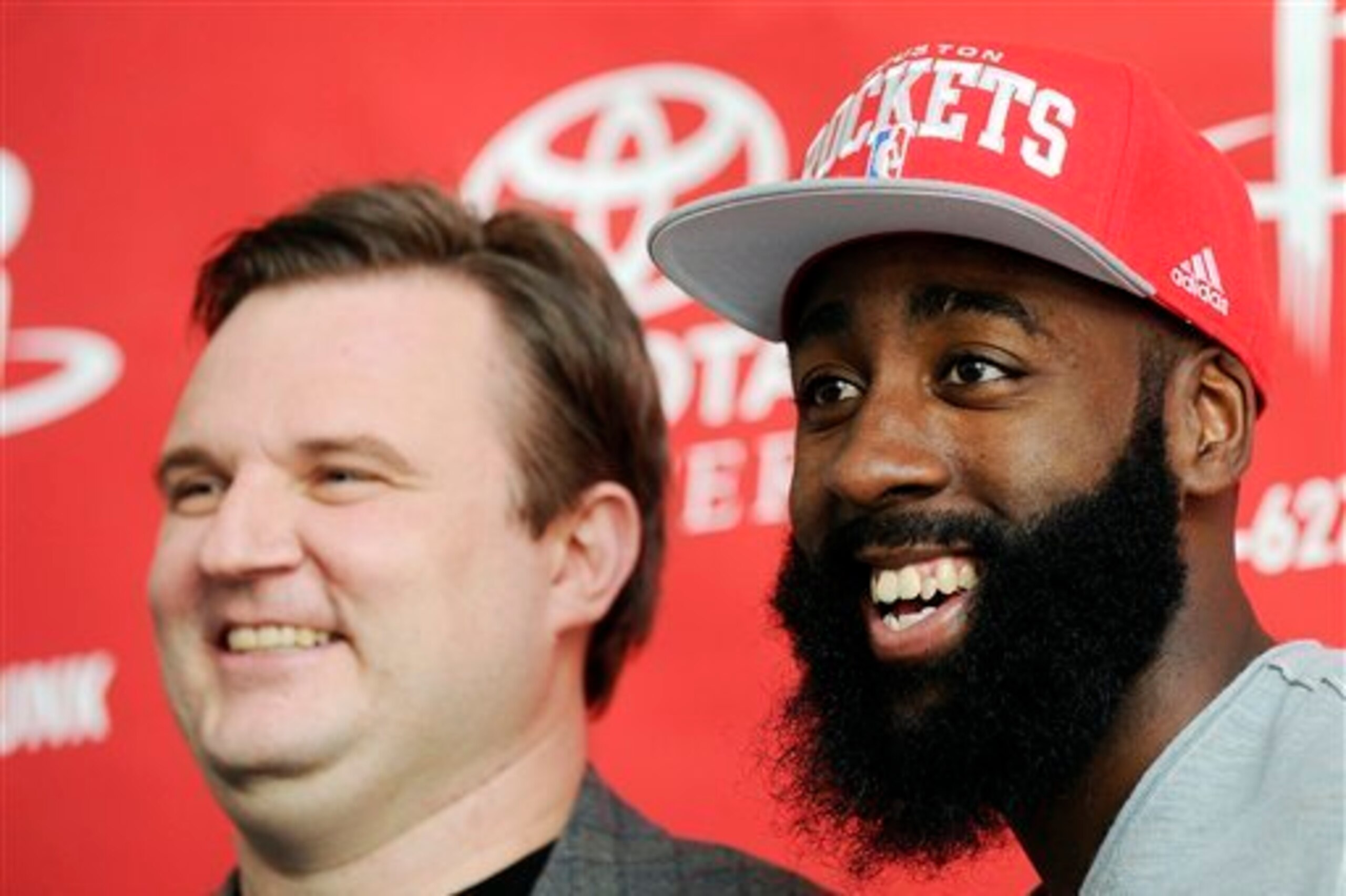
The philosophy of Morey Ball is that the key to a great offense is to minimize the inefficient areas and maximize the efficient ones, and the Rockets do this to more of an extreme than anyone else in the league. Why, then, isn’t their analytically driven offense more effective?
The Ambergris Effect
Ambergris is the pretty word for whale vomit, and it’s also my favorite analogy for the mid-range shot. Ambergris is foul-smelling stuff; it literally smells like poop. But, it once had a surprising use as a fixative in perfumes.
It has a pungent odor. So, when you add a little of it to more aromatic things, it has the effect of intensifying those pleasing scents without overpowering them. Similarly, the mid-range game “stinks,” so to speak, but a little is necessary to maximize the use of Morey Ball shots.
Focusing too much on the Morey zones allows offenses to become predictable. It ends up forcing contested shots when a more efficient, open shot might be available from the long-two range. Adding just enough “stinky” shots improves the efficiency of already-efficient shots because it forces defenses to account for them—at least in theory.
Saying that is the easy part. Substantiating that statement and quantifying just how much “ambergris” is needed, though, are another.
In order to define that, I split every team’s points into “Morey Points” and “Long Twos,” with the latter being any two-point field goal from further than five feet. I then saw how the percentage of a team’s Morey Points was reflected in its offensive rating (hover over the dots for specific details):
The x-axis is the percentage of points a team derives from Morey zones. The y-axis is its offensive rating. If more Morey points means better offense, we should see a slope going upwards and to the right.
And here is a definite correlation between Morey Points and offensive rating, but only to a point. There’s also a diminishing-return effect.
Teams that virtually eliminate the long twos tend to have weaker offenses. The Philadelphia 76ers (30th), Detroit Pistons (23rd) and Utah Jazz (16th) all have below-average offenses in spite of being second through fourth in percentage of their points coming from Morey zones.
The top nine offenses, and 10 of the top 12, have between 74.6 percent and 78.1 percent of their shots come from Morey Points. Only two teams (the Milwaukee Bucks and Denver Nuggets) are within that range without being in the top half of the league. Therefore, the target rate for long twos should be between 22 and 25 percent of points. The Rockets are only at 13.6 percent.
If you dig a little deeper, there’s even a correlation between making long twos and offensive efficiency:
The top 10 offenses range from just below 40 percent (Chicago Bulls) to 43.3 percent (Golden State Warriors).
However, there are also teams, such as the Miami Heat, who shoot well from mid-range but are inefficient offensively. That’s because they pretty much ignore the Morey zones. The key is balance: You don’t want to shoot from mid-range, but you better have that ability when you need it.
Overreliance on James Harden
Another factor is that the Rockets depend so heavily on Harden to generate offense for them. Essentially, there are three ways a player can generate points for his team: He can create off the dribble, set the table for his teammates or get to the line. Harden does all three for the Rockets.
I looked at the point-generators for each team, adding points scored on unassisted field goals, points generated off assists and free throws made (obtained from Basketball-Reference.com). Harden, at 38.6 per game, leads the NBA, which is great when you’re making a case for MVP but not in terms of what it says about the rest of the team.
As you can see, similar to the Morey Ball effect, having a guy who can generate helps, but only up to a point. Just one team in the top 10 offenses has a player who generates more than a third of its points: the Cleveland Cavaliers and LeBron James. And that comes with the caveat that Kyrie Irving is pretty good at creating shots too.
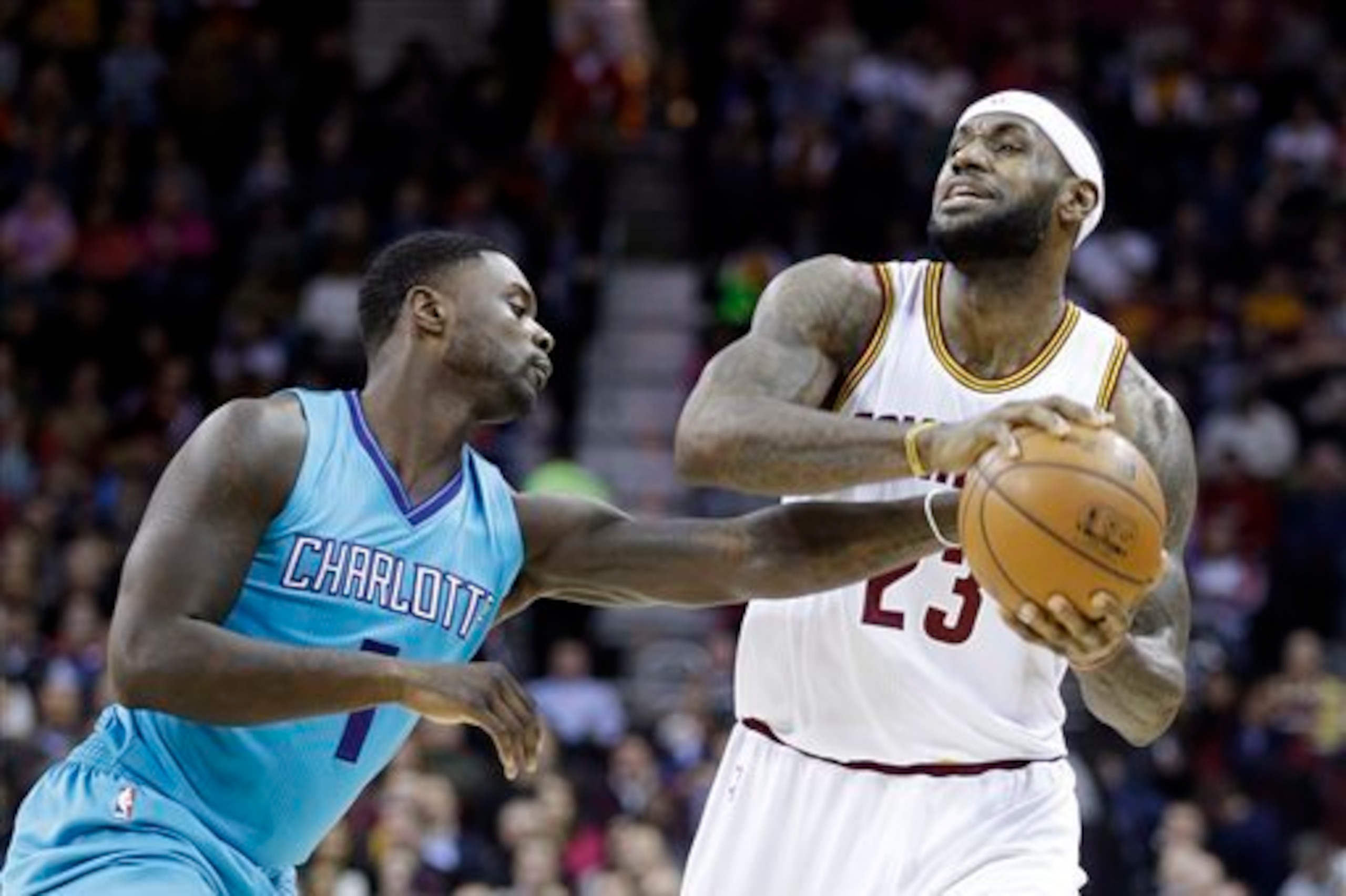
There are four teams with a player who accounts for 35 percent of their points, and none of them are higher than 13th in offensive rating.
With that in mind, it’s little wonder that the Rockets’ offensive rating with Harden on the court is higher and absolutely free-falls to 91.4 when he takes a seat.
The Rockets need another shot creator to help balance their offense. Harden is great, but they can't overuse him.
Turnovers
It’s probably not a shock that there is also a relationship between turnovers and offensive efficiency, regardless of who is taking shots or where they’re taking them from. Donating possessions to your opponent is a surefire way to lower your offensive rating.
Here’s how turnover rate (turnovers per 100 possessions) affects offensive rating:
Notice that almost all the elite offenses have a turnover rate below 15. Also note that the teams with a turnover rate over 15 are those such as the Sixers or Jazz, who also oversaturate the Morey Zones, or else ones like the Thunder with Russell Westbrook or the Miami Heat and Dwyane Wade who lean heavily on one player.
The Rockets are unique in the sense that they are extreme on both counts. That makes them predictable, and predictability makes them turnover-prone, which explains why only the Sixers and Milwaukee Bucks are more generous than the Rockets.
Whether it’s too many Morey shots or too much Harden, the Rockets’ lack of offensive success is best summed by the adage: You can have too much of a good thing. They don’t need to overhaul their philosophy, but they would be well-served to tweak it so it’s not so extreme.
All stats for this article were obtained from Basketball-Reference.com or NBA.com/Stats.

.jpg?w=2560 "Grading WWE Raw 🔠")

.jpg?w=2560 "Viral Rams Coach Vid 🖕")
.jpg?w=2560 "Bijan's INSANE 1st Half 🤩")
.jpg?w=2560 "Injury-stricken Seahawks signing veteran RB")

.jpg?w=2560 "2 NFL Officials Suspended")