NBA Draft Notebook: Better Wing Prospect, Justise Winslow or Stanley Johnson?
Big men have dominated most of the 2015 NBA draft conversation, but there's a fascinating battle happening amongst the wings. Four wing players could be vying for lottery or even top-five consideration as we march closer to June.
Right now, however, of those playing at the Division I level, it's Duke freshman Justise Winslow and Arizona freshman Stanley Johnson who've stood out most under the NBA lens.
As two-way small forwards, each actually brings many of the same strengths to the table.
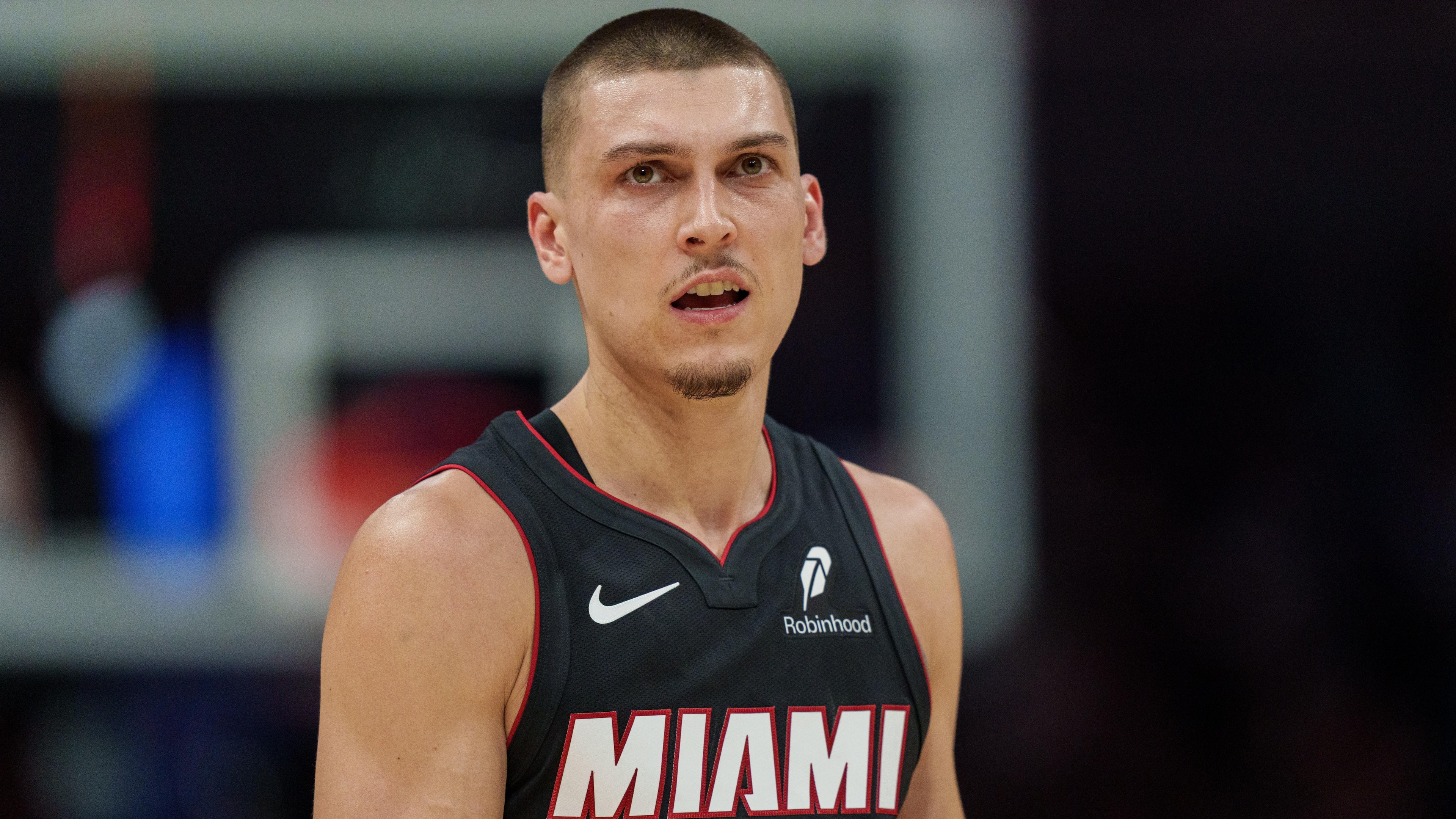
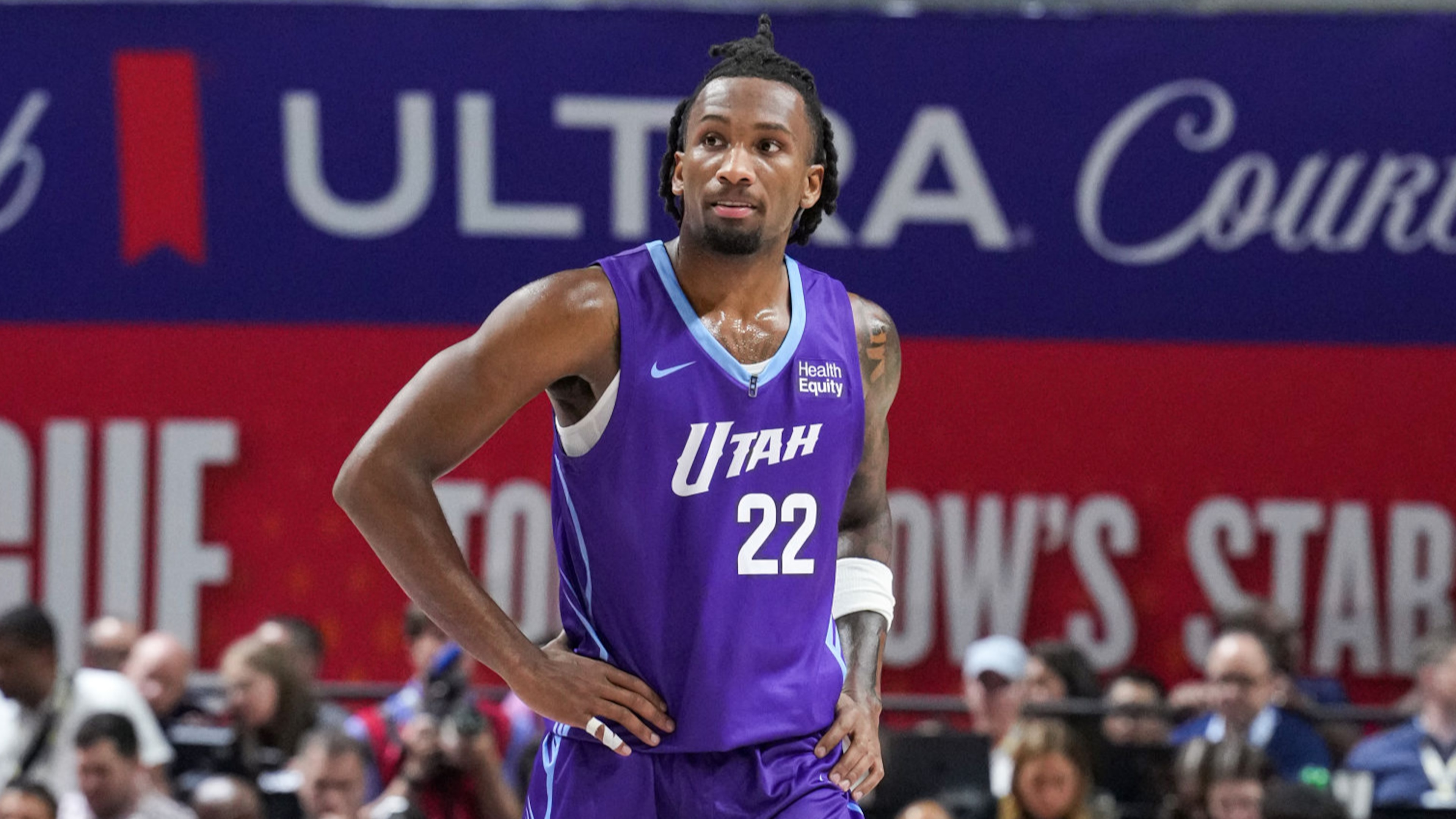
Over the next few months, there's bound to be plenty of good debate within NBA scouting departments over which 18-year-old is the better prospect.
Stanley Johnson vs. Justise Winslow
Physical Tools, Athleticism
There isn't much to criticize regarding either of their physical profiles. Both Johnson and Winslow have rock-solid builds and next-level athleticism that play to the safety they offer as prospects.
| Size | Weight | Wingspan | |
| Winslow | 6'6" | 225 pounds | 6'10" |
| Johnson | 6'7" | 245 pounds | 6'11.5" |
Johnson's diesel frame ultimately separates him at the position. He's got 45 pounds on a kid like Andrew Wiggins, a fellow wing and last year's No. 1 overall pick.
While Johnson is more of a power wing, he's not as explosive as Winslow, who's got bouncier above-the-rim springs, a quality that helps drive his captivating upside.
Winslow blends lightning quickness and electric burst, and so far it's translated to much better numbers in the drive-and-slash game.

He's finishing at a far superior rate at the rim than Johnson, who's had to rely on transition opportunities for 54.2 percent (subscription required) of his shots made there. In the half court, Johnson is just 11-of-32 at the rim for an alarming 34.4 percent. Winslow is 25-of-42 for 59.3 percent.
| FGM/A at the rim in the half court | FG Percentage at the rim in the half court | Percentage of made FGs at the rim that come in transition | |
| Johnson | 11-of-32 | 34.4 percent | 54.2 percent |
| Winslow | 25-of-42 | 59.3 percent | 37.5 percent |
Johnson's struggles at the rim have raised some eyebrows, according to ESPN's Chad Ford (subscription required).
On one hand, he's taking 6.1 free-throw attempts per game to Winslow's 4.3, which is encouraging. On the other, you'll often see Johnson try harder to seek out contact and draw the foul than actually score the bucket.
They've both been strong finishers in transition; Winslow is slightly better, having shot 15-of-19 at the rim (78.9 percent) to Johnson's 13-of-18 (72.2 percent). But against set defenses in the half court, it's Winslow who's been more effective finishing off drives, slashes and cuts.
Offensive Attack

Despite their production, Johnson and Winslow both lack offensive polish in terms of one-on-one shot creativity. Neither quite projects as a go-to option.
They're similar in that they each thrive as opportunistic scorers—wings capable of finishing the plays that find them in the offense as opposed to wings whom you'd feature in isolation.
Check out their stats as of January 12 (16 games for Johnson, 15 for Winslow):
| FG Percentage | Points | Free-Throw Attempts | 3PT Percentage | |
| Johnson | 48.3 percent | 13.9 | 6.1 | 42.9 percent |
| Winslow | 44.4 percent | 12.5 | 4.3 | 37 percent |
Based on the numbers early on, Johnson has looked like the more complete overall scorer. It's not just the higher field-goal percentage and point-per-game average—it's how he's achieved them.
Winslow might be more threatening as a finisher on the move, but Johnson has been much sharper in between the three-point arc and basket. He's shooting a terrific 52.9 percent in that range to Winslow's scary 13.8 percent on just four made two-point jumpers through 15 games.
Johnson has shown the ability to stop-and-pop or convert using runners and floaters within the second level of the defense. His offensive attack is a lot more balanced than Winslow's, whose scoring versatility has been limited to just shooting and finishing.
| Johnson | Winslow | |
| Percentage of shots taken at the rim | 35 percent | 42.4 |
| Percentage of shots taken on two-pointers away from rim | 35.7 percent (27 made shots) | 20.1 percent (Four made shots) |
| Percentage of shots taken from behind the arc | 29.4 percent | 37.5 |
As the more accurate shooter and diverse scorer, you'd imagine Johnson would have an easier time with the transition. It wouldn't be too surprising if Winslow struggled offensively as an NBA rookie.
Defense, Intangibles

In terms of defensive tools, both guys offer lockdown potential and valuable versatility, which speaks to their two-way appeal.
Between their size, length, strength and foot speed, they project as wings who could guard top perimeter scorers and up to three positions on the floor.
Johnson has been the bigger playmaker, averaging 1.6 steals a game (to Winslow's 0.9). He's made it a habit of jumping passing lanes or swooping in as a thief off the ball.
On the ball, he's had a few impressive showings playing quality competition.
Against Michigan on December 13, Johnson held potential lottery pick Caris LeVert to just three points while guarding him. Despite the loss to UNLV on December 23, he held potential first-rounder Rashad Vaughn to two points while sticking to him as well (though Vaughn drew other defenders throughout the game).
Winslow has also been outstanding at the defensive end, where he can apply suffocating pressure in the full and half court. Coach Mike Krzyzewski recently told ESPN's Jeff Goodman that Winslow is the best wing defender "out of the gate" he's had since Grant Hill.
From an individual matchup standpoint, his most notable performance came against Wisconsin's Sam Dekker, an athletic 6'9" wing who scored just five points in a loss to Duke back on December 3.

Winslow's motor and activity level are nonstop, yet he still operates with discipline at both ends of the floor, a testament to his intangibles.
He averages 2.2 assists to just 1.5 turnovers per game, and though not the most threatening playmaker, he's been a good decision-maker and passer.
Meanwhile, some folks have questioned Johnson, with ESPN's Chad Ford recently noting, "It appears that there have been some concerns about Johnson's defensive effort."
Though I wouldn't get too carried away or worried, given the intensity and fire he plays with, his tendency to lose control or develop offensive tunnel vision does seem like something to look into.
He's averaging more turnovers (2.6 per game) than assists (1.7 per game), which translates to an ugly minus-5.21 pure point rating, per RealGM.
Overall
These two tremendously talented wings will enter the draft as priority targets.
Based on the numbers and eye test, we'd suspect that it's Johnson who's more ready to compete at the NBA level. He's got the body to defend and the shooting stroke to score off the ball, as well as the more polished skill set when it comes to capitalizing as an in-between scorer.
However, if you're swinging for upside, then it's Winslow who's your answer. He's got the more potent athletic ability that leads to uncontested buckets, along with the "team-player intangibles" you just can't teach. Winslow's offensive attack isn't as refined, but he's has a promising jumper and plenty of time to sharpen his skills.
Realistically, I'm not sure you could go wrong with either Johnson or Winslow, whether you're picking at No. 10 overall or No. 5.
But they're not the only wings making a case as top-10 options in 2015. Croatia's Mario Hezonja and Kansas' Kelly Oubre are two guys quietly on the rise.
The Top-Five International Dark Horse
Mario Hezonja has been on the radar since winning MVP honors at the Under-16 European Championships back in 2011. Only having signed with Barcelona over a year ago, his role has been limited as a teenager on a senior pro team.
However, over the past six weeks, Hezonja's minutes and production have been up, and it's allowed scouts to get a much better look at one of the most naturally gifted prospects overseas.
At 6'8", Hezonja has a textbook basketball body (for a wing) to match breathtaking athleticism.
And he continues to showcase his sweet three-point stroke, having hit 17 of 39 attempts (43.5 percent) over his last 10 games. Against Unicaja Malaga on Sunday, he lined up a shot (up one, 20 seconds left in the third quarter) from about six feet behind the arc and nailed it with comfort and confidence.
In between, he's made a few plays as a driver that highlight his eye-opening NBA potential.
Though Hezonja doesn't get the chance to create much for Barcelona, he has shown the ability to separate into jumpers at the junior level.
With Hezonja, there are some questions about his style of play, like if he can score without holding on to the ball. And without the opportunity to see him in a featured role, he's become one of the tougher prospects to project.
Regardless, if we're just talking about sheer upside here, Hezonja might ultimately pack the most of any wing in the 2015 field, thanks to his mismatched two-way physical tools and potentially lethal offensive game.
He'll be more of a risk-reward option for whoever's interested, but the reward could be worth a top-five pick if it ever comes to fruition.
Kelly Oubre Making a Push
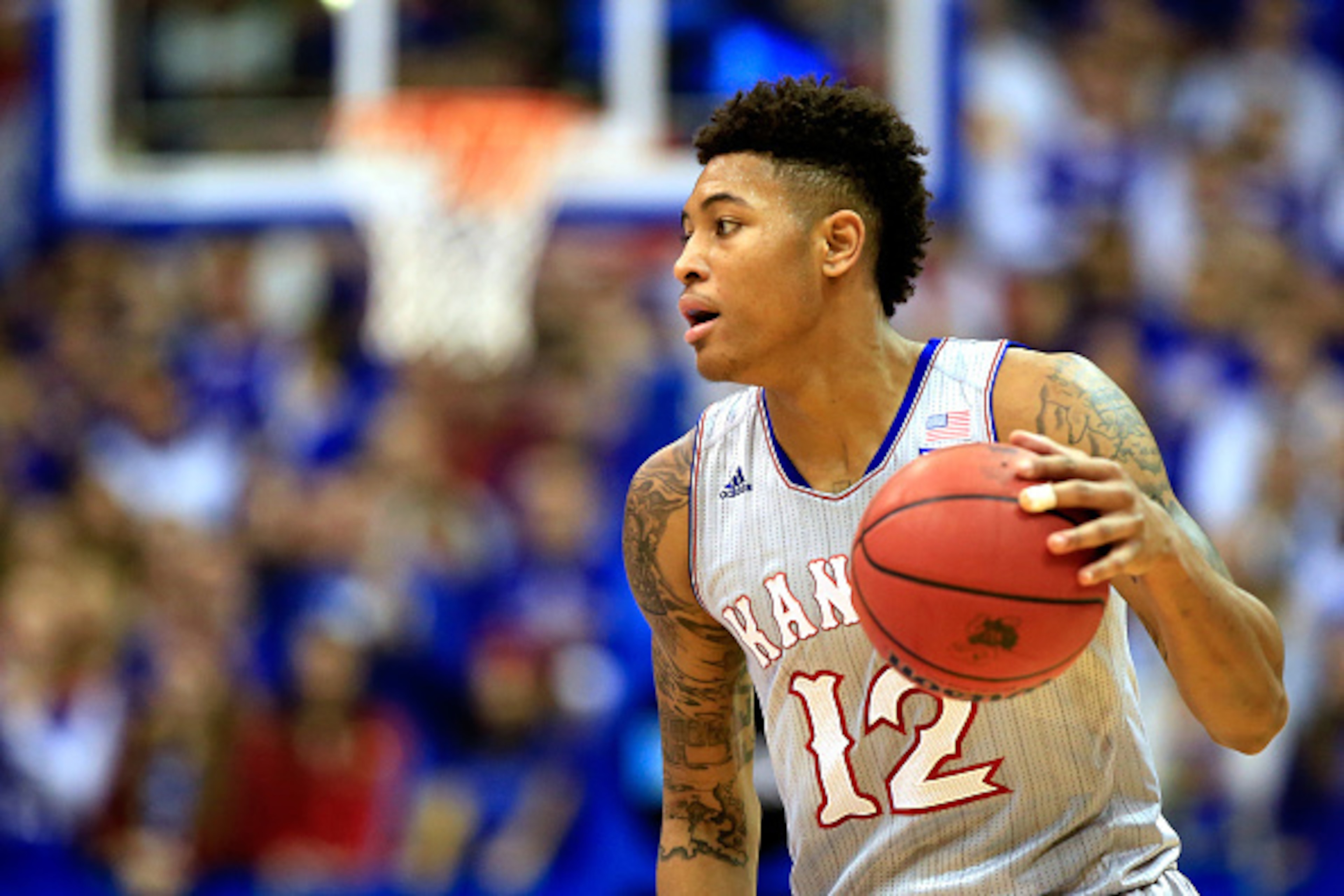
After playing sparingly through the first month of the season, Kansas freshman Kelly Oubre has finally found his way into the rotation, having scored in double figures during four of the Jayhawks' last six games.
Oubre was a big-time recruit out of high school, and we're just starting to see why. At 6'7", he's a sensational athlete who can handle the ball and score off the dribble as well as stretch the floor as a shooter.
He's actually shooting it nearly the same from downtown (45.7 percent) as he is inside the arc (46.8 percent).
Oubre also has all the defensive tools to eventually pose as an asset, though defense doesn't quite come as naturally to him as it does to Johnson and Winslow.
Even after the slow start, the top-10 conversation should remain open to Oubre, whose upside is still intact. He's just a little bit further behind. The more he plays, the better chance he'll have to catch up.
"If you were to look at it now, he went from probably being the guy that looked the least ready a month ago, to now he looks like he's by far the most advanced," coach Bill Self said on January 2. "And that's the way it is with young kids. Sometimes, the light comes on at different times."
Notables
Syracuse freshman forward Chris McCullough will miss the rest of the season after tearing his ACL Sunday night against Florida State. Obviously, the news is devastating. I'm not sure he did enough to make a 2015 draft case, meaning he'll likely have to return to school and possibly not until the middle of the season, depending on rehab and his recovery.
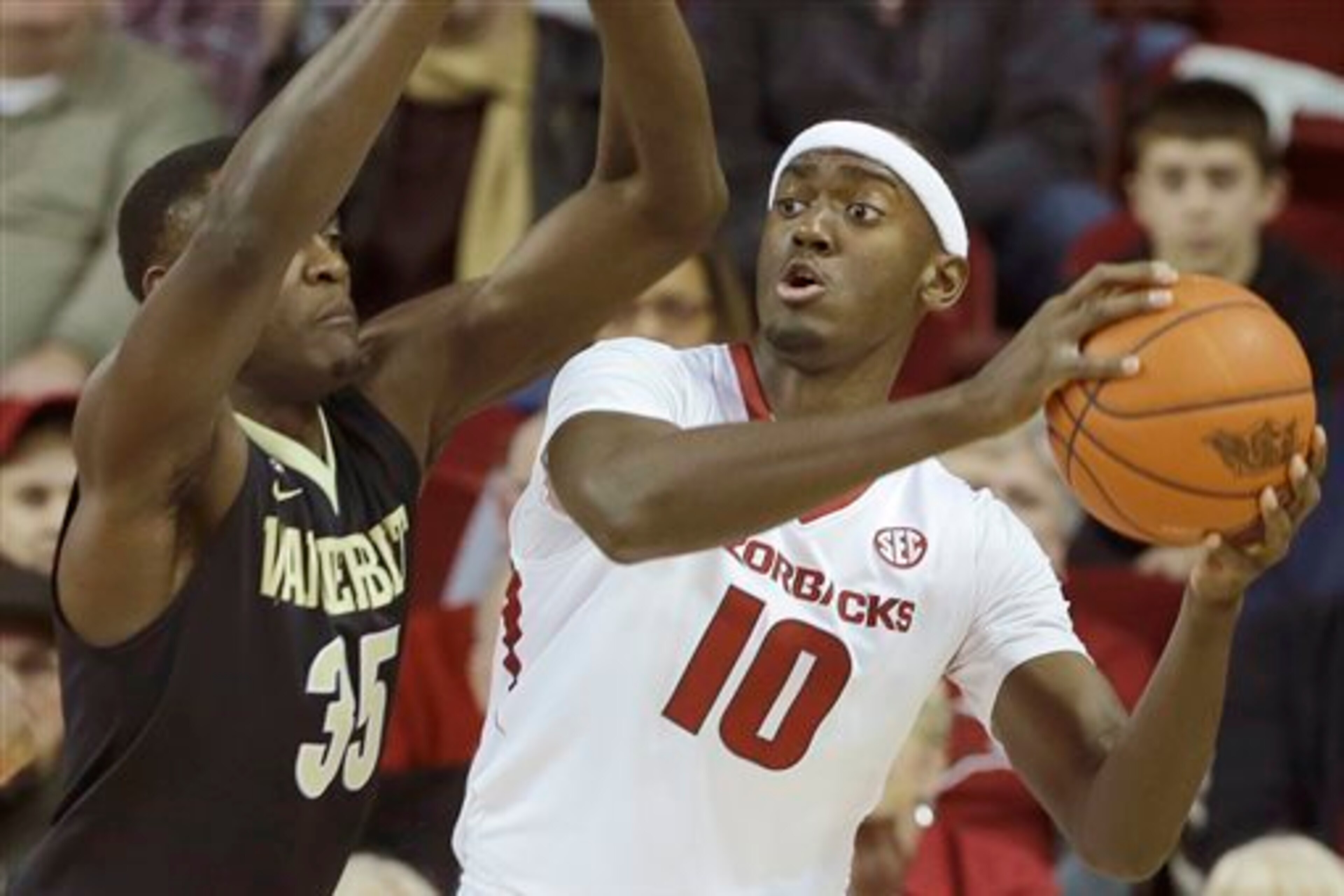
Arkansas sophomore power forward Bobby Portis made his strongest NBA pitch of the season Saturday with a 32-point, 11-rebound line over Vanderbilt's Damian Jones. He looked like a pro playing amongst college students. Portis grabbed nine offensive boards and showed off his high skill level in the post and dangerous finishing length inside.
He isn't the greatest athlete, which makes him tougher to reach on, but I could already see Portis as a value pick in 2015, assuming nobody takes him in the top 10.
UCLA freshman forward Kevon Looney put up his signature game of the year in a double-overtime win over Stanford on Thursday night. He finished with 27 points and 19 boards on 12 shots, having flashed some of the versatility and instincts on the glass that fuel his enticing mismatch potential. Ten of those rebounds were at the offensive end, where he also added two threes and 11 made free throws.
Believe it or not, Looney is still a raw offensive player, but at 18 years old, you have to expect teams to chase the upside tied to his physical tools and skill set, the way the Charlotte Hornets did last year with Noah Vonleh at No. 9.
We've seen a couple of breakout guards actually hit a wall recently. California junior Tyrone Wallace is shooting just 34.4 percent over his last six games, with his team losing five of them. Notre Dame senior Jerian Grant had trouble scoring against North Carolina and Virginia, combining to shoot 3-of-16 for a total of 14 points. It shouldn't take too much away from what they've done so far early on, but it's a reminder not to completely jump the gun before conference play even heats up.
All advanced stats courtesy of Hoop-Math.com, realgm.com and Sports-Reference.com. Basic stats courtesy of ESPN.com.
Jonathan Wasserman is Bleacher Report's NBA draft expert. Follow him on Twitter at @NBADraftWass.