
Projecting the Boston Red Sox's 5-Man Rotation for 2015
The biggest questions surrounding the Boston Red Sox in 2015 concern the starting rotation.
Is pitching coach Juan Nieves' staff good enough as presently constructed to contend for a World Series?
Can top prospect and left-handed pitcher Henry Owens be an impact midseason call-up?
Will general manager Ben Cherington acquire an ace to anchor the five-man unit?
Given the curiosity, let's project the rotation for the coming season with a rundown of each starter.
No. 5: Joe Kelly
1 of 5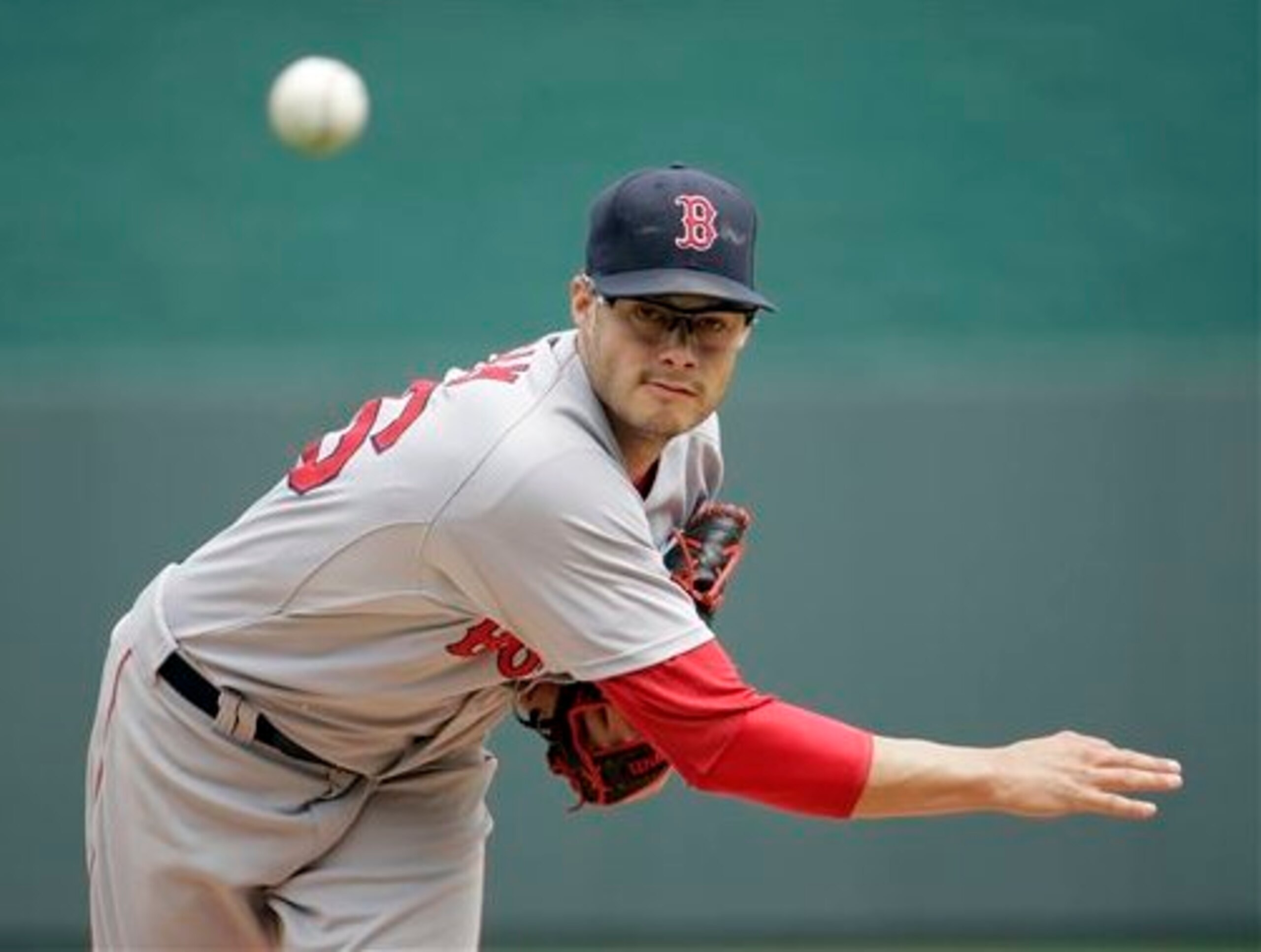
Right now, I'll take the 26-year-old righty as the caboose to Boston's rotation, narrowly edging out Justin Masterson. The reasoning is simple: reliability.
Joe Kelly won't wow you with his strikeout rate (6.0 Ks per nine innings) and his career WHIP is certainly cause for concern (1.363). The fielding independent pitching metric suggests a regression to the mean is inevitable, as Kelly's ERA has outperformed his FIP in each of his first three MLB seasons (3.41 career ERA, 4.11 career FIP).
Then again, some pitchers defy FIP thanks to good defense behind them and an uncanny ability to consistently wiggle out of jams (such as three-time All-Star Matt Cain).
Masterson certainly has more upside than Kelly, but the volatile nature of the 2013 All-Star's delivery makes him a riskier proposition.
If I were a team that's expected to have a struggling offense like the Tampa Bay Rays, I would opt for the Masterson dice roll. The allure of the 29-year-old is understandable given the way he performed when everything was clicking in 2011 and 2013 (3.32 ERA in 409 innings).
But since many project the Red Sox to have an upper-echelon offense this year, I'd prefer to go with Kelly out of the gate.
Masterson is more likely to implode and pitch his team out of a game in the early going. In 10 of his 25 starts last season, Masterson failed to finish five innings (not counting a rain delay-shortened outing on May 27), and he allowed five runs or more in 13 starts.
So I would enter spring training with the No. 5 job being Kelly's to lose. It may be unspectacular, but you know what you're getting every fifth day: a starter who'll provide a solid six innings and won't tax the bullpen too much.
To overtake him, Masterson has to prove in spring training that his three-quarter arm delivery is in order and he's over knee issues that bothered him in 2014.
No. 4: Wade Miley
2 of 5
The December acquisition of the left-hander from Arizona didn't elicit a raucous reaction from fans who hoped to get an ace at the winter meetings. However, turning expendable pieces into a dependable starter was quietly a very solid move.
FanGraphs shows us that Wade Miley has a five-pitch repertoire but relies heavily on three offerings: his two-seam fastball, fastball and slider. He's found success attacking batters down in the zone with those pitches over the past two seasons, posting ground-ball rates over 50 percent in both campaigns.
That fact, paired with his success in one of MLB's most hitter-friendly ballparks during his big league tenure (according to ESPN's Park Factors), suggests he can transition well to Fenway.
Red Sox faithful can take solace in the fact that while Miley's ERA increased for the third straight season (4.34), his 3.98 FIP was identical to his 2013 mark when he posted a 3.55 ERA.
His expected fielding independent pitching (xFIP) was also a career-best 3.50 in 2014, providing further evidence that the 28-year-old was simply unlucky last year.
One thing Miley can do to help himself is get a better handle on his walks. He allowed 3.35 free passes per nine innings in 2014, the highest mark since his rookie season.
He would also benefit from working to refine his changeup. After serving as a solid fourth offering to keep hitters off balance for three years, opposing batters hit .361 off Miley's changeup last season (according to FanGraphs).
Miley won't draw comparisons to fellow former Diamondback Randy Johnson, and fans shouldn't expect him to replicate his 2012 All-Star season. The good fortune the LHP benefited from in home-run-to-fly-ball ratio that year (6.9 percent) indicates that was his career year.
Nonetheless, Miley's a quality starter who'll shore up the middle of the rotation and provide 190-plus innings, something he's done each of the past three seasons. Just don't ask him to go gluten-free.
No. 3: Clay Buchholz
3 of 5
Many people would classify Clay Buchholz as an enigma. They are confused by how quickly he can oscillate from an All Star-caliber starter (complete-game shutout with 12 strikeouts vs. the Astros) to a total bum (22 earned runs, 44 base runners in his next four starts post-shutout) in the blink of an eye.
However, the key to the 30-year-old's success is no mystery. Over the course of his career, Buchholz has only been as good as his fastball and his health.
During his first All-Star season in 2010, Buchholz threw nearly 1,500 fastballs, and opposing batters managed to hit just .230 against the pitch (according to FanGraphs). His average fastball velocity that season was a career-best 94.1 miles per hour.
In his second All-Star campaign of 2013, Buchholz continued to find success despite a decrease in average fastball velocity (91.9 MPH) thanks to pinpoint command and the development of a strong cutter.
Opponents batted .211 and .151 against those offerings in 2013. But one of Buchholz's recurring issues reared its head, as a neck injury sidelined him for months and limited him to 108.1 innings pitched.
Sandwiched in between his career-best seasons, Buchholz posted a solid 3.48 ERA in an injury-plagued 2011. Batters hit .301 against the RHP's traditional fastball in the 82.2 innings he managed.
But Clay was able to offset that by finding success in his first year with a cut fastball (.217 batting average against) and two-seam fastball (.167 BAA).
When Buchholz struggled mightily in 2012 (4.56 ERA), he was victimized by the long ball, surrendering a career-high 25 home runs. Of those, 20 came against fastballs: 15 versus his traditional fastball (.281 BAA), three versus his cutter (.261 BAA) and two versus his two-seamer (.304 BAA).
He had given up 16 home runs on fastballs in the previous three seasons combined, spanning 348.1 innings.
Which finally brings us to 2014, when the lanky right-hander's ERA (5.34) and WHIP (1.39) ballooned to unseemly highs. Buchholz's opponents hit .322 against the 912 traditional fastballs he hurled, and he allowed 11 home runs across his full assortment of fastballs.
The good news is that the advanced metrics point to this most recent season being a rather unlucky one for Buchholz. His FIP (4.01) and xFIP (4.04) were both nearly a run and a half lower than where his ERA ended up. He also managed to stay healthy and pitch 170-plus innings for just the third time in his career.
As we look toward 2015, Buchholz has to be more successful with good old No. 1. 2013 showed he can have success even without the top-notch velocity he once possessed. His changeup has remained devastating (.207 career BAA) despite the unreliability of his fastball and can continue to serve as his primary out pitch.
If he can mix his three fastball variations well while being judicious with his command, then he can become a strong top-of-the-rotation starter again.


No. 2: Rick Porcello
4 of 5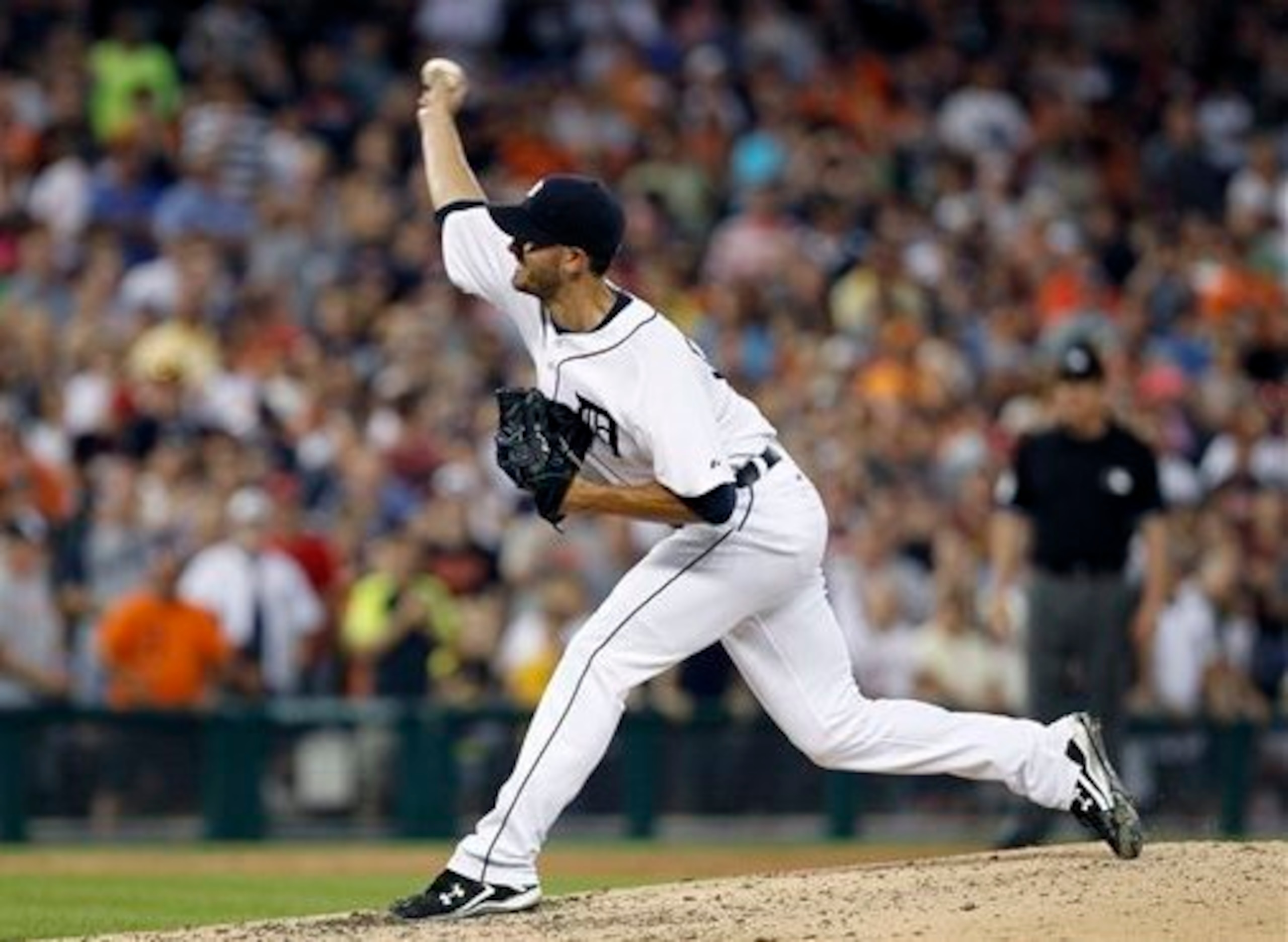
I keep trying to talk myself into Rick Porcello.
I want to say that the Red Sox bought in at the perfect time as the 26-year-old ascends into his prime.That 2014 wasn't a fluke and the right-hander's FIP and xFIP in 2012 (3.91, 3.89) and 2013 (3.53, 3.19) are more reflective of the type of pitcher he was in those seasons than the uninspiring ERA marks he posted (4.59 and 4.32, respectively).
I want to write off the fact that a sinkerball pitcher allowing an average of 18.5 home runs per season isn't concerning. But the more I look at what general manager Ben Cherington acquired in exchange for Yoenis Cespedes, the more I feel like the Red Sox got the short end of the deal.
That's not to say I'm totally against Porcello and he has nothing to offer. Cherington was adamant he would try to return Boston to contender status this year, and to do that, Boston needed more reliable starting pitching.
Despite only being in his mid-20s, Porcello has six years of MLB experience to his name. He's also thrown 176-plus innings in each of the past four seasons.
He's been pitching in the American League his entire career, so while the lifetime 4.30 ERA and 1.36 WHIP are underwhelming, a drop-off in production shouldn't be expected.
There is a line of thinking that since Porcello went through his growing pains at the MLB level instead of in the minors that some of his earlier numbers should be discounted. I can see the point for pre-2011 production, but I can't excuse the fact he allowed the most hits in baseball (226) and posted a hideous 1.53 WHIP in 2012.
In defense of Porcello, he has matured by transitioning away from being a primary sinkerballer to featuring the full array of his repertoire.
In 2014, the former first-round pick threw his sinker a career-low 917 times and expanded to toss all five pitches in his arsenal at least 350 times apiece (according to FanGraphs). His changeup has been the most consistent off-speed pitch of his career, while his erratic slider has ranged from highly successful to incredibly ineffective.
However, the most encouraging sign for Porcello is that he's shown good curveball development in recent years. After throwing just 229 hooks from 2010-12, Porcello has fired off 948 curveballs since. Opposing batters have struggled to handle the pitch, hitting .225 against it in 2013 and just .205 last season.
In the immediate future, Porcello can serve as a No. 2 or No. 3 starter who will help protect the bullpen and keep a potent Red Sox offense within striking distance at all times.
But unless he's willing to take a team-friendly deal, I see him more as a one-year stopgap than a long-term Fenway fixture.
The upcoming free-agent pitching class is flush with talent, which should create a buyer's market. At this point, I'd rank Porcello behind fellow 2016 free agents David Price, Jordan Zimmermann, Johnny Cueto, Jeff Samardzija, Mat Latos, Ian Kennedy and Yovani Gallardo.
Ace: Cole Hamels
5 of 5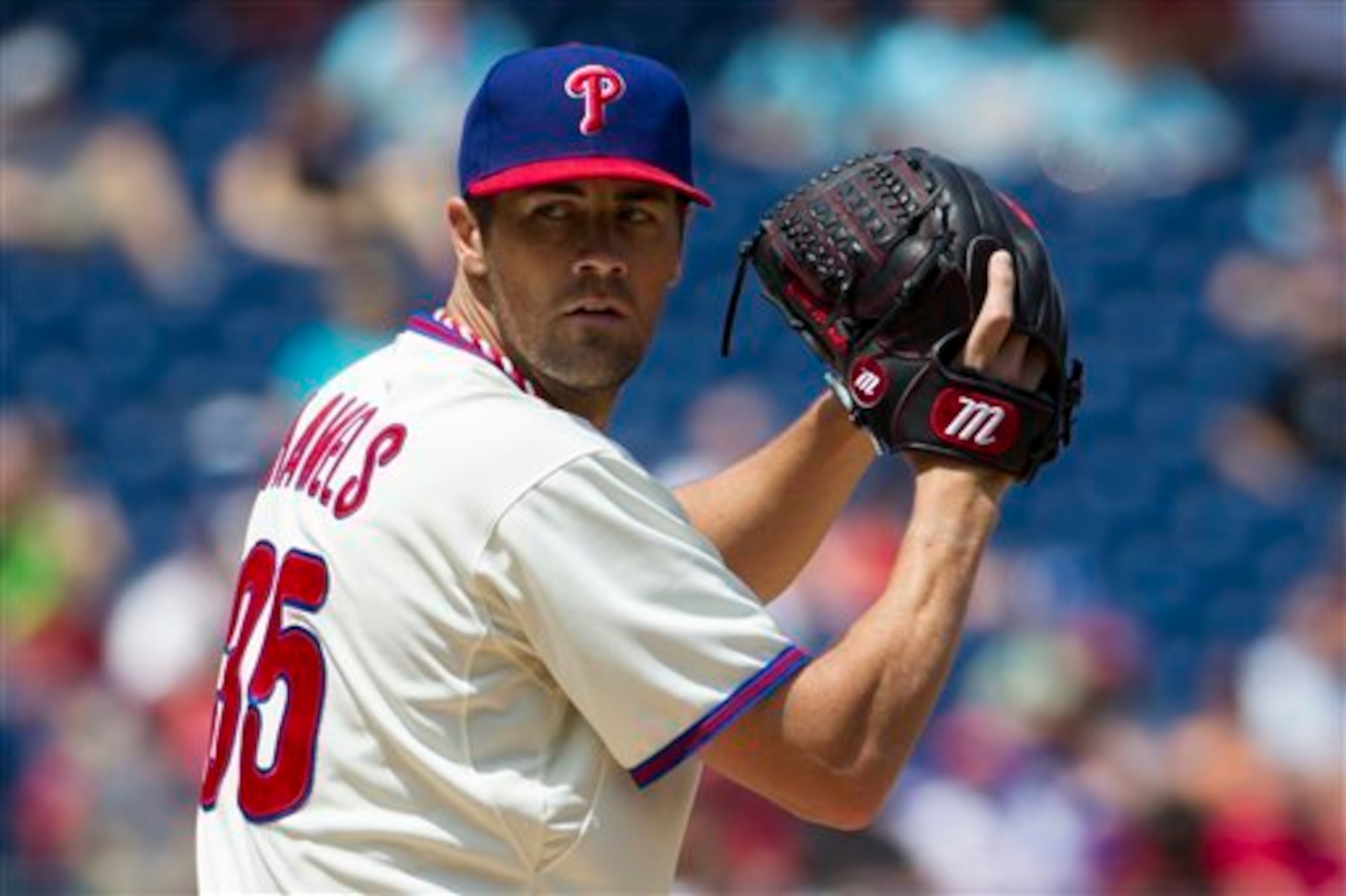
I strongly believe the Red Sox will acquire an ace for this staff, despite Ben Cherington's public claims that he's "not actively engaged" in looking for another starter, per ESPN.com's Gordon Edes.
They've done too much in an attempt to win now to roll with the current rotation. They thought it was going to be Jon Lester, but now that he spurned Boston for the Cubs, the cream of the free-agent crop is Max Scherzer and James Shields.
The buzz on Scherzer has been minimal, and that probably has something to do with the insane asking price for a pitcher in his 30s. As long as his agent, Scott Boras, refuses to come down from the $200 million range, which FOX Sports' Jon Morosi reports is where the Scherzer camp stands, Boston won't get involved.
Meanwhile, FOX Sports' Ken Rosenthal reports it's now "highly unlikely" the Red Sox will sign Shields (YAY!) after early reports they were the favorites to land him.
So that leaves the trade market. I maintain that I'd rather acquire Jordan Zimmermann or Johnny Cueto if Boston can lock them up long-term, but I see roadblocks with both. I don't think the Nationals are going to hurt their title chances this season by dealing arguably their best starting pitcher.
As for Cueto, his agent told CBS Sports' Jon Heyman that he'll be looking for a contract between Lester's $155 million and the $200 million Scherzer is asking for. If the Red Sox wouldn't go there for a homegrown guy in Lester, it's hard to envision them exceeding that for Cueto as he enters his 30s in 2016.
A positive note on the 2014 NL Cy Young runner-up would be FOX Sports' Jon Morosi's latest report that Cueto and the Reds have made "no recent progress" on an extension.
There remains a possibility Boston can acquire the RHP in a panic trade scenario, in which Cincinnati looks to dump payroll and get something in return before Cueto exits stage right. If the Red Sox can deal for Cueto without giving up a top-shelf prospect, they can have his fellow countrymen David Ortiz and Hanley Ramirez sell him on Boston while hoping the asking price comes down.
But with that seeming like a longshot, things circle back to where the offseason pitching rumors began: Cole Hamels. Since Boston was willing to go to $22.5 million on Lester, it's fair to assume the $23.5 million salary Hamels commands is doable.
There's been a lot of negative fan chatter about Hamels with the usual "NL pitcher moving to the AL" concerns. But to Cole's credit, Citizens Bank Park is a bandbox that's remained a good hitter's haven, despite the dreadful Phillies offense dragging down the ESPN Park Factor score in recent years.
He's also as reliable as they come, with six 200-plus innings seasons in the past seven years (and a 193.2 innings campaign mixed in). His career 3.27 ERA would be far and away the best of any Red Sox starter, and he has good postseason experience to boot (3.09 ERA, 1.05 WHIP in 81.2 playoff innings with an NLCS and World Series MVP).
The Phillies are in full-blown rebuilding mode, and dumping Hamels' salary while acquiring a trio of prospects makes too much sense not to happen. Naturally, with a player of Hamels' stature there are reportedly other teams interested, so Cherington needs to scrap the laissez-faire attitude and get to wheeling and dealing.
Note: Stats courtesy of Baseball-Reference.com or FanGraphs unless otherwise noted/linked.

.jpg?w=2560 "Grading WWE Raw 🔠")


.jpg?w=2560 "Viral Rams Coach Vid 🖕")

.jpg?w=2560 "Injury-stricken Seahawks signing veteran RB")
