How Juan Manuel Marquez's Knockout Punch Changed Everything for Manny Pacquiao
On one level it was nothing special. Just a single punch—one of thousands Manny Pacquiao had taken over the course of his 19-year career as a professional prizefighter. In the simplest and most reductive way of looking at things, it was just a punch.
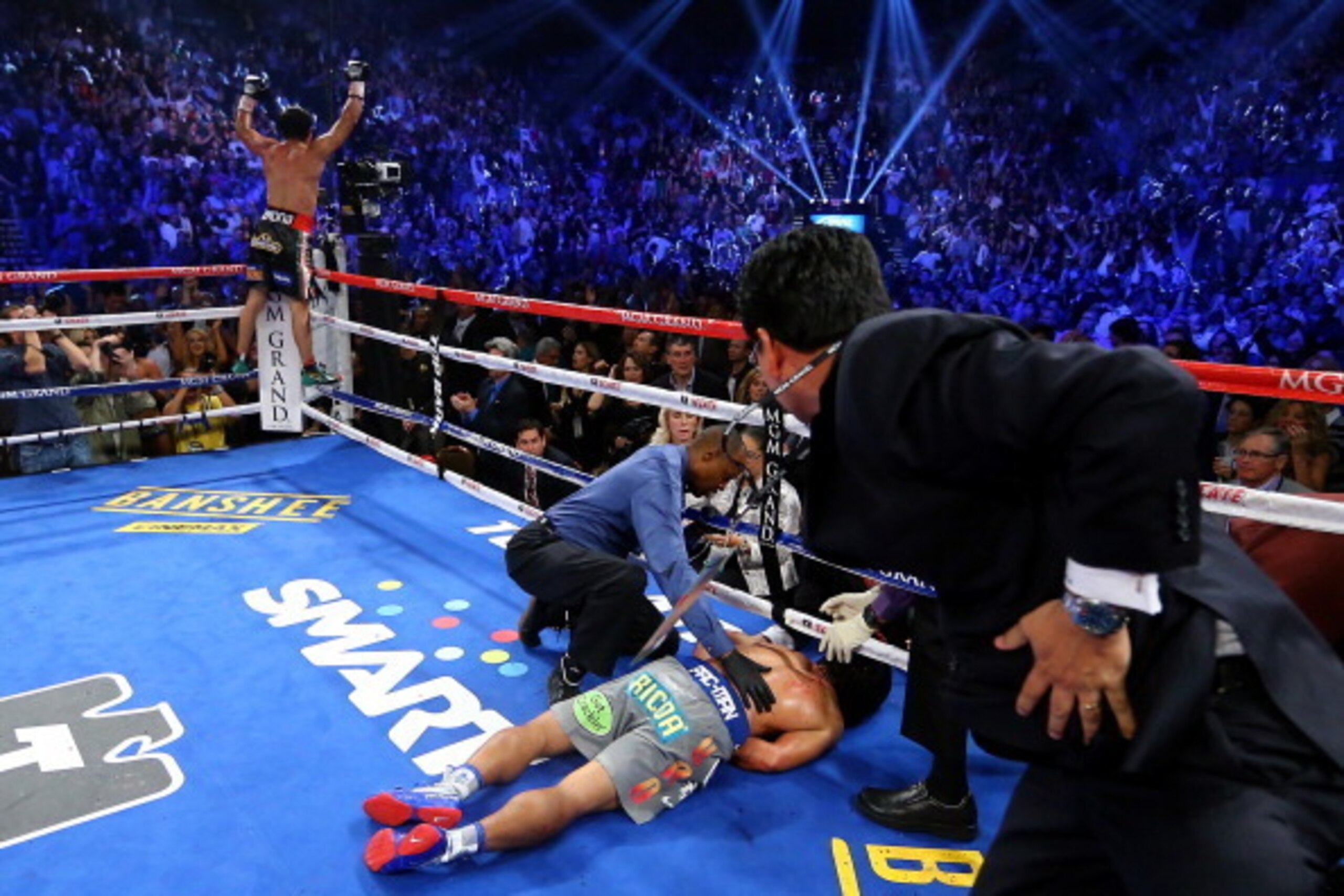
Of course calling Juan Manuel Marquez's fistic masterpiece "just a punch" is like calling Beyonce "just a singer" or suggesting Mozart was "just a composer." It was, as punches go, pretty remarkable, a short right hand that sent Pacquiao collapsing to the mat, his body so still, his posture so rigid, that many feared for his life.
.jpg?w=2560 "Colts Chiefs Football")
"I saw the replay and it just happened. That’s boxing," Pacquiao, who fights unknown Chris Algieri Saturday in Macau on HBO pay-per-view for the WBO Welterweight Championship, told the press last year of Marquez's December 2012 knockout. "That’s boxing. Sometimes you win and sometimes you lose."
That's boxing indeed. And in the history of the sweet science there have been plenty of one-punch knockouts. But something about Pacquiao's shrugging acceptance and pure nonchalance rings false.
Because there has never been a knockout quite like that.
It was a punch that sent Pacquiao, before then mentioned in the same breath as pound-for-pound great Floyd Mayweather Jr., into what may be a spiral of decline he'll never escape.
"Jersey" Joe Walcott dropping champion Ezzard Charles with a perfectly timed uppercut comes closest to matching its impact and relevance, Charles landing face first before struggling in vain to regain his feet.
Pacquiao's own destruction of Ricky Hatton is another that resonates, his left hand darting out to steal the Brit's soul, cracking faster than a whip and louder than a shotgun blast. Poor Hatton's eyes, lifeless and lost, staring at the ceiling, his body no longer his to command, were haunting.
But this was Manny Pacquiao.
Considered by many the best fighter of his era, Ring Magazine's Fighter of the Decade for the aughts, Pacquiao wasn't supposed to be the victim. Not like that, his body awkwardly akimbo, motionless. It was unreal, like watching a David Lynch movie come to life.
We had seen him dozens of times, darting into and out of danger, his fast hands wreaking havoc, a blur of action that his opponents simply couldn't process. All awkward angles and feints, he took the initiative in a fight and never gave it back. A whirling dervish, a tiny tornado, a force of nature like nothing boxing had seen since Roberto Duran stalked to America from Panama to leave his own mark on the sport.
But face down on the ground, unconscious for more than two minutes?
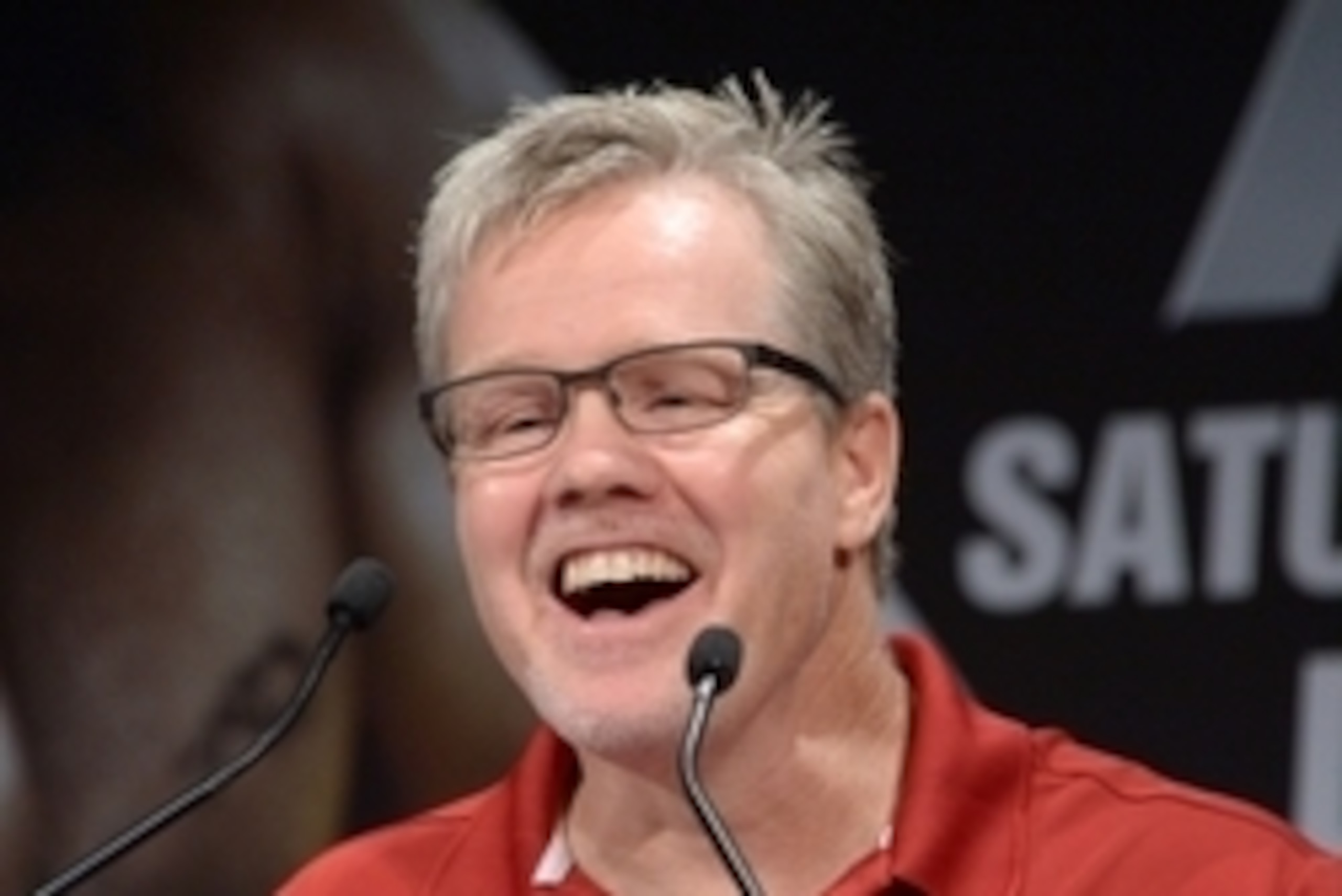
"He never saw it coming," trainer Freddie Roach said at the post-fight press conference. "If you watch the replay, it's about a two-inch punch. Manny got caught swinging a little bit wild. We got caught. It was a great knockout."
Our Manny? A victim?
"I threw a perfect punch," Marquez said by way of explanation in the ring after the fight. By then, just minutes later, it was already iconic, an image that stuck. With the fans and with the fighter himself. And how could it not?
For years Pacquiao defied all logic and expectations. Weight classes were just suggestions to him. Eight of them were conquered on his march toward immortality. The bout prior to his 2008 fight with Oscar De La Hoya, Pacquiao had weighed just 129 pounds. Yet he stepped fearlessly into the mix at 147, not just making the Golden Boy look like a mere sparring partner but dispatching the likes of Miguel Cotto and Antonio Margarito as well.
| Year | Weight |
| 1995 | 108 |
| 1998 | 113 |
| 2001 | 121 |
| 2004 | 125 |
| 2007 | 129 |
Speed and ferocity had never been combined in such an intoxicating brew. It wasn't just that Pacquiao was accomplishing all these grand feats. It was the manner in which he did so that was special. There was none of the caution that characterized the career of his rival, Mayweather Jr.
Pacquiao's greatest attribute, ESPN.com's Nigel Collins explains, was his willingness to risk all:
"Pacquiao was a kid from the streets who fought with an abandon born of desperation. He flung himself into battle with little or no regard for his personal safety, overwhelming opponents with sheer aggression and a left hand from hell. It was a style that Filipino fans adored and one that would eventually carry him to the pinnacle of his profession. His cavalier attitude had its roots in his poverty-stricken childhood -- he had nothing to lose and fought accordingly.
"
What happens then, when a god finds out he's mortal? When a man suddenly has millions and more on the line? With a flash of the right hand Pacquiao was gone. Even against an overmatched Brandon Rios the fear lingered, unspoken but present, a pall over what was once the greatest show in boxing.
Former champion Tim Bradley saw it, noting to the press, "Manny didn't look the same against Rios. He didn't have his usual killer instinct. That's the first thing I noticed. I don't think he has the hunger anymore, and it’s never coming back."
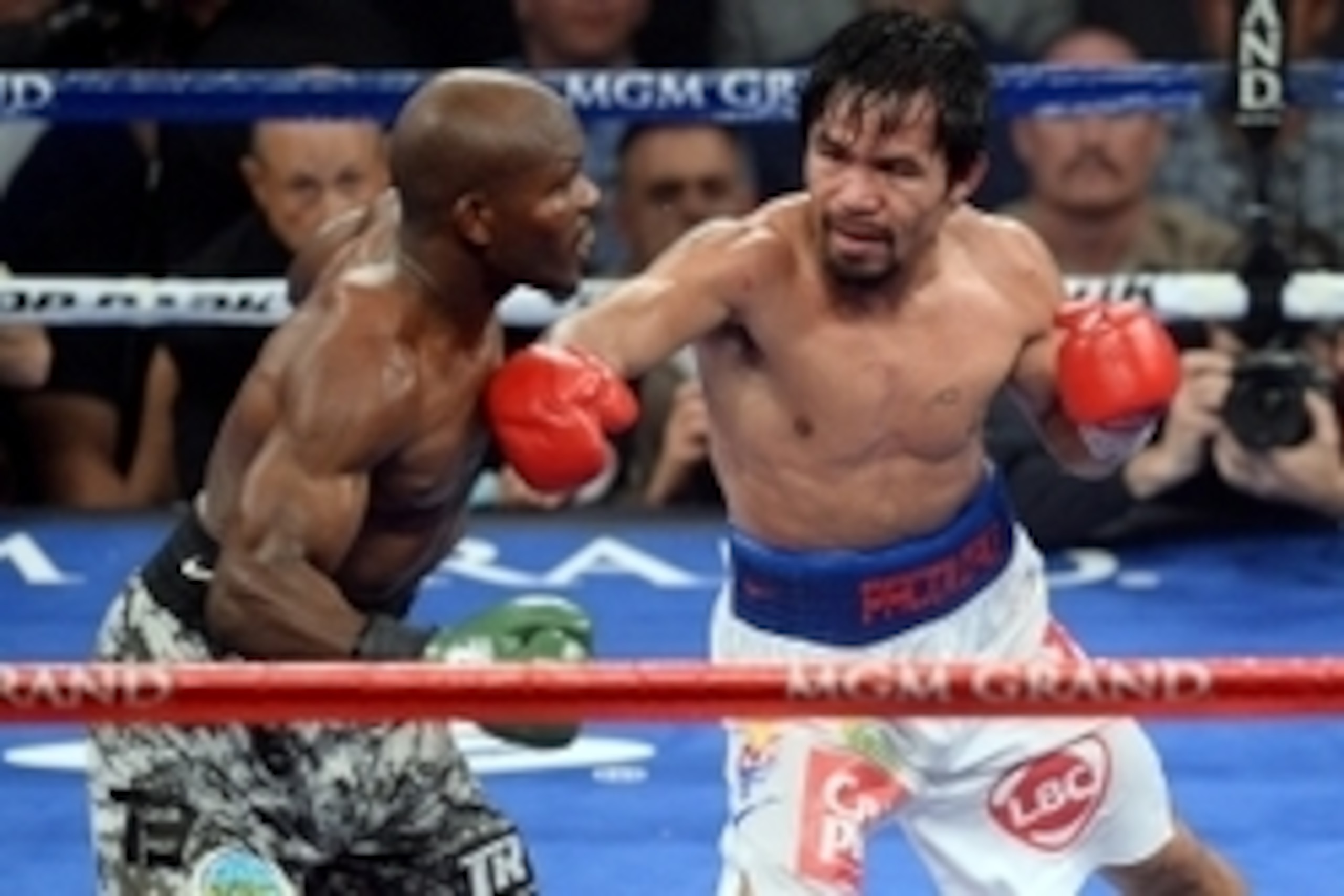
Pacquiao beat Bradley in a rematch too. But he never once looked "back." He's a fighter in decline. Those memories we treasure belong to another age, that fighter a different man. Now we watch Pacquiao, not to see what kind of magic he will create, both hands flying free on a hapless foe, but hoping he simply survives. Pacquiao, whether he knows it or not, is no longer the king of boxing's jungle.
Our ultimate predator, thanks to the ravages of age, has become prey.
It's a little hard to watch a great fighter age, especially one whose game is built on speed. Roy Jones Jr., the light heavyweight kingpin of the 1990s, lost three steps seemingly overnight. When it happens it is stark—and the fighter always seems to be the last to know. Watching Pacquiao no longer feels like a celebration of his greatness.
Pacquiao, of course, can't consider stopping. His lavish spending, much of it in the service of the Filipino people, requires his constant presence in the ring, even if he's no longer "Manny Pacquiao." There are simply too many people in his orbit, too many people relying on him, to go quietly into that good night.

It's hard to explain exactly how much Pacquiao means to his countrymen. The Telegraph's Oliver Brown gave it a shot, focusing on just how devastating his retirement would be for a nation in such desperate need of a hero:
"To describe Manny Pacquiao as a demigod is a touch dicey, given that 10 world titles in boxing do not technically confer divine status. But then even Pindar, Thebes’s greatest poet and a figure with the most steadfast faith in the great deeds that man could accomplish, was known to play fast and loose with such a label, co-opting it as a synonym for hero.
And to almost 97 million people in the Philippines, the skinny son of General Santos City has for two decades been their encapsulation of heroism: from the teenage peso-pincher desperate to make more porridge for his mother to survive on, to the nonpareil whose genius in the ring would yield world champion belts in eight divisions.
"
And so, Pacquiao fights on. And every time he does it's still an event. It still matters. The lights shine and the stars come out. But it's a relevance that won't last forever. Even the box-office immortals, men like Mike Tyson, Ray Leonard and Julio Cesar Chavez, reach the point where even their most ardent fans can no longer ignore they are just shells of the titans they once were.
Pacquiao may not be—not yet. It's hard to say when any potential weakness is hidden against toothless lions like Algieri.
It's not clear how far Manny has fallen. But one thing is undeniable: It was Marquez's right hand that knocked him off the top of the mountain.
Jonathan Snowden is Bleacher Report's Lead Combat Sports Writer. Unless otherwise noted, all quotes acquired firsthand.
.jpg?w=2560 "Bengals Steelers Football")