

Louis Williams Can Be Sixth Man Toronto Raptors Have Been Desperately Missing
After securing the No. 3 seed in the East and subsequently pushing the Brooklyn Nets seven games in the opening round of the playoffs, the Toronto Raptors suddenly face expectations.
They're the kind of expectations that were nowhere to be found during the franchise's five-year absence from those playoffs.
This summer was primarily about keeping a good thing going. The organization re-signed in-house free agents Kyle Lowry, Greivis Vasquez and Patrick Patterson in a bid to preserve a promising young core that also includes DeMar DeRozan, Jonas Valanciunas, Amir Johnson and Terrence Ross.
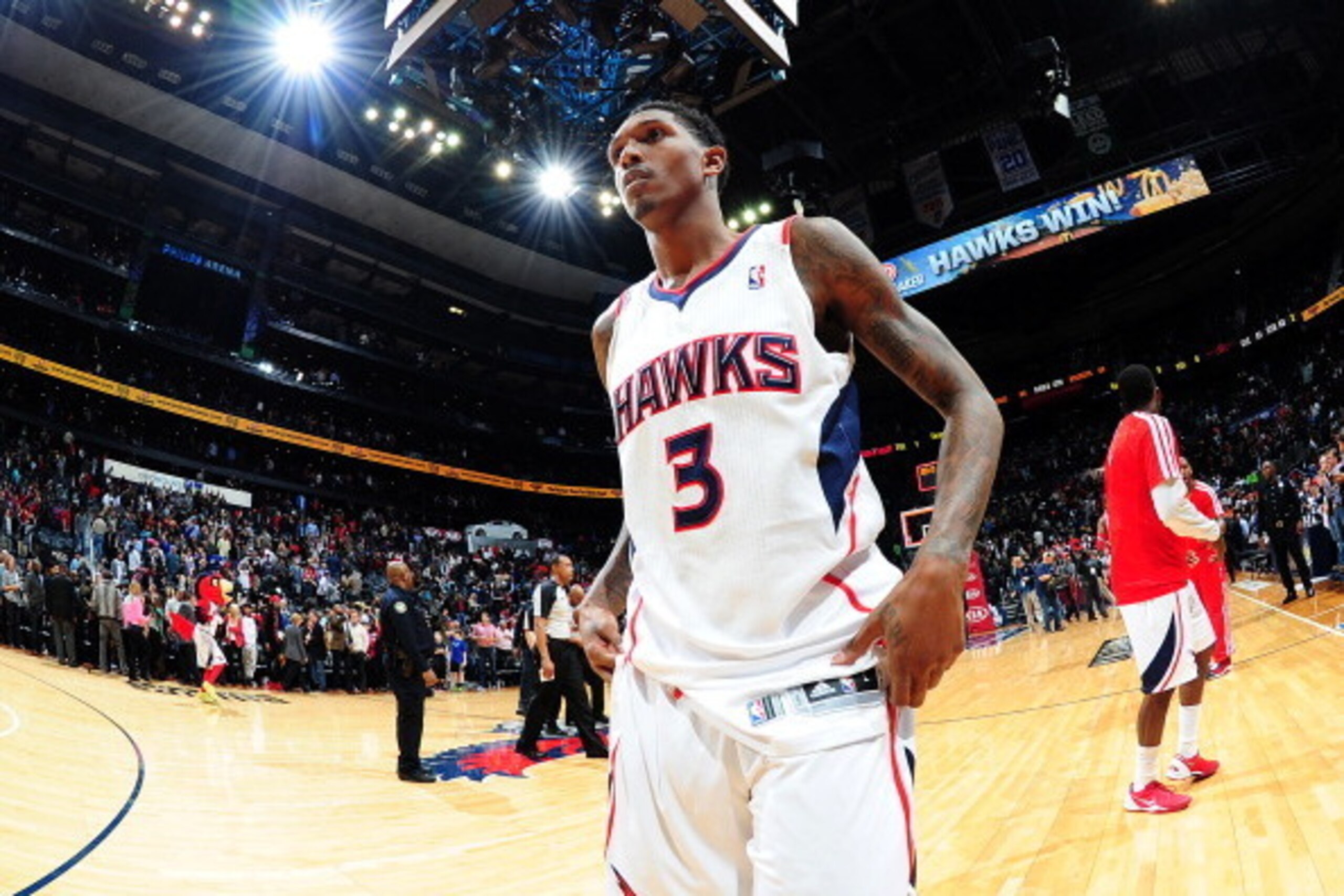
But Toronto needed additional firepower, trading veteran John Salmons (and a second-round pick) to the Atlanta Hawks in exchange for Louis Williams and 21-year-old prospect Lucas Nogueira.
The 27-year-old Williams was the centerpiece of the deal, a dynamic scorer with a long history as a talented sixth man with the Philadelphia 76ers. Toronto is banking on the nine-year veteran to regain that Philly form after two injury-marred seasons with the Hawks, who were—as Williams himself suggests—heading in a different direction.
"I am excited to be part of a young core, I am excited be on a team that wants me, that has a high expectation level for me," Williams told reporters in August:
"My time here in Atlanta, I realized that they were going in a direction that probably didn't fit my style of play and I probably didn't fit Coach Bud’s style of play.
I'm a guy that needs the ball to be effective and they really didn't need that from me. They were building a different core of a basketball team. I felt like it worked out for both sides, they got some talented guys in making moves this offseason and I feel great about the fit that I'm in.
"
The Raptors did need someone who could inject some scoring into the second unit. Toronto's reserves averaged just 26.1 points per game last season, a mark that ranked 27th in the league according to HoopsStats.com.
After four straight seasons averaging at least 13.7 points per contest, Williams tallied just 10.4 per game a season ago—a function of recovery from ACL surgery and uneven opportunities.
"The worst year of my career, without a doubt, was this past season,” Williams told media in September. "Just playing inconsistent minutes, I had career lows in every category, it was just difficult to try to get my legs back under me after taking 10 months off. That's 10 months off of not touching a basketball."
Williams is hoping this summer's change of scenery coincides with a change of luck.
"I've played basketball all my life, and I know in the back of my mind what I'm capable of doing and just having that confidence in myself," he added, "knowing at one point that light bulb is going to click back on and I'm going to be back to my normal self, that's what kept me going."
At his best, the Georgia native averaged 14.9 points through 64 games during the 2011-12 season. He can get to the free-throw line (3.5 attempts per game for his career) and has made a solid 34.2 percent of his career three-point attempts.
And while he's also averaged at least three assists per game since 2007-08, Williams' best plays tend to be the ones he creates for himself.
His comeback tour will be judged first and foremost by his ability to score buckets. So far, so good.
Williams has scored double-figures in three of his first four preseason games, including a 21-point outburst against the New York Knicks. He appears to be rediscovering his comfort zone, and not a moment too soon.
"I'm getting my quickness back, getting the explosion back," he said in August. "...I feel like I'm at 90 percent or higher—I'm attacking in transition again, I'm playing with a lot of confidence, I'm not even thinking about my knee when I play basketball. The sky is the limit right now."

Later in September, he told media, "I'm ready. I'm back to 100 percent now. Last year was probably one of the more difficult seasons I have had in my career. I'm excited to get this season going and get back on track."
It's good news, but our predictions for Williams' season should be sober ones.
As the National Post's Eric Koreen recently noted, "The Hawks allowed 5.5 more points per 100 possessions than they scored when Williams on the floor [last season]. They were a defensive mess with him out there."
Williams isn't much of a two-way player—at least not yet.
"We expect him to come back and have a good year this year from an offensive standpoint," head coach Dwane Casey told reporters this month. "He has to, again, give it to us on the defensive side. That's his biggest challenge, because that hasn't been his reputation and his resume. He can do it. I've seen him do it in practice."
To remain a prominent fixture on a team with postseason ambitions, Williams still has to round out his game. He's only averaged over 25 minutes per game in three of his nine seasons—and never averaged more than 29.9 minutes in a season (2009-10).
Maybe his one-dimensionality has become something of a self-fulfilling prophecy, the result of a part-time role with a narrow job description. If Williams keeps Casey happy and steps up his defensive game, he just might stay on the floor long enough to make a career-best impact—perhaps one that qualifies him for Sixth Man of the Year consideration.
Health, rhythm, chemistry, defensive engagement: They aren't guaranteed, but they are not unattainable either.

And even as Williams finds his work cut out for him, the Raptors will be better off almost regardless of the progress he makes. This roster needed depth. It needed a jolt. The jump from playoff regular to legitimate contender may depend upon having that extra weapon, a third or fourth option leading the second unit.
Williams will be just that at the very least. He's a proven commodity in his prime—even if it sort of sounds like he's making a comeback.
As he put it in September, "I was an undersized two guard, came right out of high school, second-round pick; to be in this business 10 years and to be respected for what I do I think is a huge accomplishment."
Indeed, the 6'1", 175-pound combo guard has overcome plenty of odds already—and the fight has only begun.
Williams will earn $5,450,000 in the final season of his contract, leaving Toronto with some decisions to make in the summer of 2015. If the organization likes what it sees this season, it could make a lucrative, long-term commitment to him—one that would likely result in a raise.
This season will be about more than just winning for Williams, a reality in a business that always asks what you've done for it lately. His looming free agency offers all the more incentive for Williams to make the most of his minutes in 2014-15.
The Raptors can live with that agenda.
.jpg?w=2560 "Seahawks CB sets NFL record with new deal")
.jpg?w=2560 "Titans CB Explains Suspension")
.jpg?w=2560 "Jaxson Dart Takes BIG Hit 😬")