Los Angeles Lakers Can't Afford to Take Old-School Approach
There's something respectable about the throwback spirit Byron Scott is bringing to the Los Angeles Lakers, but respectable won't win games on its own.
The two most publicized (and ruthlessly scrutinized) prongs of Scott's preferred approach are these: The Lakers won't shoot many threes, and they won't hesitate to foul on defense. Per Eric Pincus of the Los Angeles Times, Scott broke down those principles after the Lakers' preseason opener against the Denver Nuggets on Oct. 6.
The threes: "Our game plan is really to get to that basket. I like the fact that we only shot 10 threes. If we shoot between 10 and 15, I think that's a good mixture of getting to that basket and shooting threes."
TOP NEWS
Brunson Debunks Fake Rumor 😅
Mock Expansion Draft Protections 🔮
Trade Idea to Get Spurs Title-Ready 💡
The fouls:
"The aggressiveness is one thing I want us to keep our mind on. I think for the first three or four preseason games, teams are going to average shooting 37 free throws against us—because that's how I want us to play. Once we get that established, the referees around the league will know that we're going to play a physical brand of basketball and some of those things will go away.
"
Those old-school ideas, both very much opposed to trends that have developed over the past decade or so, were met with predictable derision on NBA Twitter:
"Someone tell Byron Scott that 1.14 is bigger than .90
— Haralabos Voulgaris (@haralabob) October 8, 2014"
"You aren’t gonna win many (any) NBA games only taking 3 3 point attempts. #Lakers.
— Haralabos Voulgaris (@haralabob) October 13, 2014"
We'll get into the flaws in Scott's plans shortly, though you probably have some idea of what they are after seeing the above criticism. Before that, we have to acknowledge Scott is fulfilling the role L.A.'s front office must have wanted.
Scott is the Lakers' current coach largely because he's about as different from the guy who used to hold down that job, Mike D'Antoni, as anyone on the planet. MDA was a free-thinking offensive futurist. He had his greatest successes by letting go of the reins, ignoring things like size and physicality and encouraging his players to fire away as quickly as possible—often from as far as possible.
Scott, in addition to having deep roots in the L.A. dirt, shares none of D'Antoni's basketball philosophy. The front office wanted an old-school chaser to wash down the bitter results D'Antoni's new-school approach brought about.
Makes sense in a reactionary way, right? New school was bad. Old school must be good.
All that's a long way of saying that even if Scott is submarining the Lakers' chances to succeed this season with his outdated approach, the team's front office is getting what it signed up for.
Old-School Mistakes
So, about those threes...
To Scott's credit, the Lakers are listening to him. They tried 10 triples in the above-referenced contest against Denver, then attempted a mere 11 (making one) in their second preseason game against the Golden State Warriors.
Game No. 3, a 116-75 thrashing at the hands of the Dubs on Oct. 12, featured only three triple tries.
All told, the Lakers got less offense from long range and the foul line than any other NBA team through three preseason games.
That's startling stuff.
The Memphis Grizzlies shot 14 threes per game last year, the fewest in the league by nearly two attempts per game. So far, Scott's Lakers look like they'll fall well short of that mark.
If the Lakers were totally bereft of perimeter threats, Scott's idea would be more easily defensible. But Steve Nash, fragile as he may be, can still stripe it. Wesley Johnson shot a respectable 36.9 percent from distance last season, and the injured Nick Young hit 38.6 percent of his long-range tries. Even Xavier Henry shot 34.6 percent—not great but good enough.
And I'm guessing if you challenged Kobe Bryant to step it up from the outside, he could better his career mark of 33.5 percent.
The Lakers aren't loaded with marksmen, but they have enough threats to justify shooting threes at least as often as the league average (21.5 attempts per game last season). Scott's strategy is made worse by the shots with which the Lakers seem to be replacing their threes.
There is no reason for Johnson's shot chart to look like it did against the Warriors on Oct. 12:
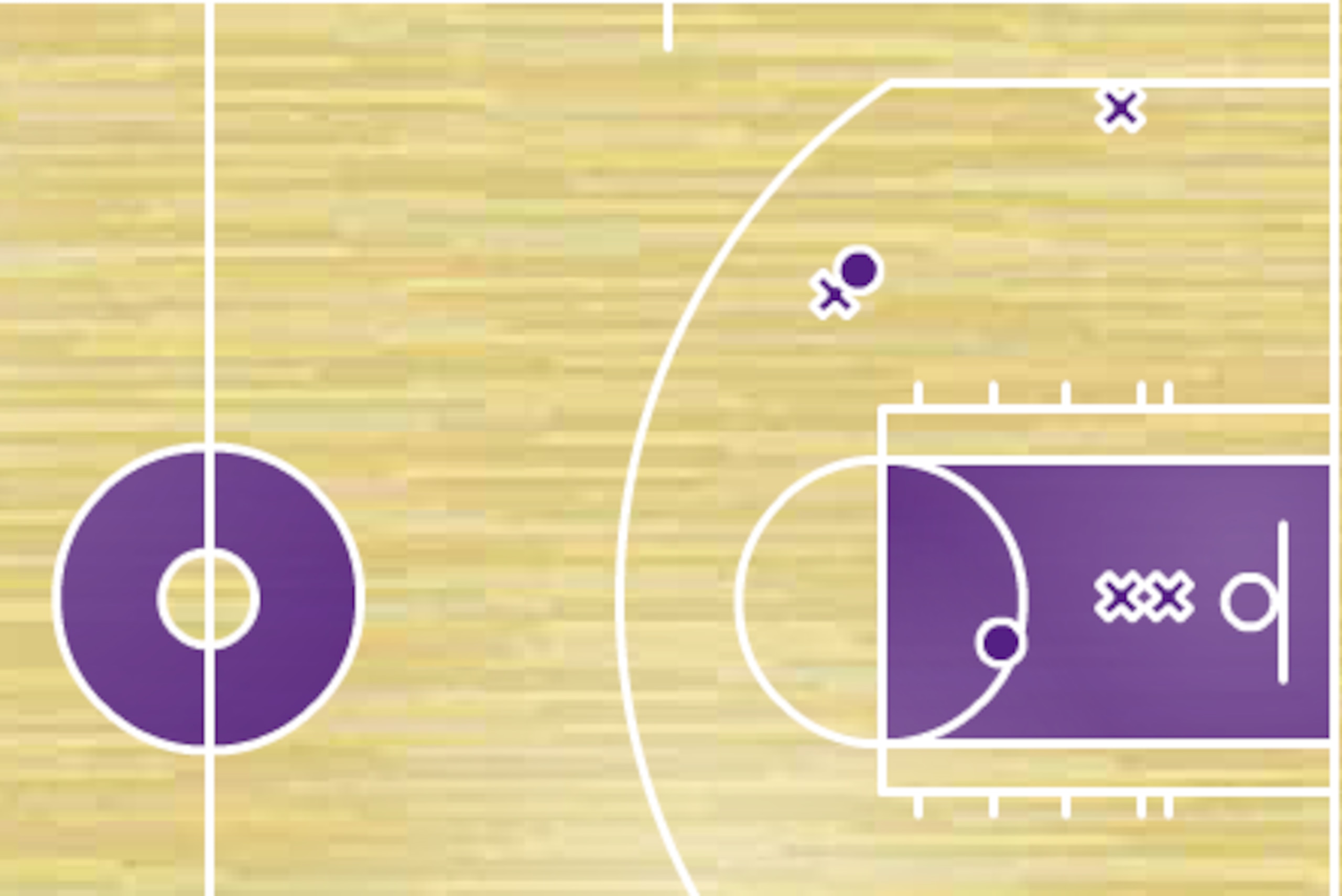
L.A. has been firing off a boatload of long two-point shots during the preseason, effectively dooming itself to comical offensive inefficiency. By way of illustration, consider this: The Lakers shot 37.5 percent on long twos last season (defined as the area from 16 feet to the inside edge of the three-point line), per Basketball-Reference.com.
They shot 38.1 percent from three.
You don't have to do a ton of math to determine the right statistical play there. And even if L.A. doesn't shoot better from beyond the arc than inside it this year, it would still make sense to take more than 10-15 threes. If you can hit a third of your triples, it's the same as hitting half of your two-point shots. And nobody hits half of his long twos.
A key point here is that Scott wants to get the ball to the hole instead of shooting threes. So it's not totally fair to compare the value of long twos to threes. Chances at the rim are still the best ones.
But if defenses know you're not interested in taking threes, they're going to pack the paint, making it virtually impossible to create consistently high-yield looks inside. As valuable as shooting threes is to an offense's perimeter efficiency, the practice might be even more important because it creates space, which allows other high-efficiency chances.
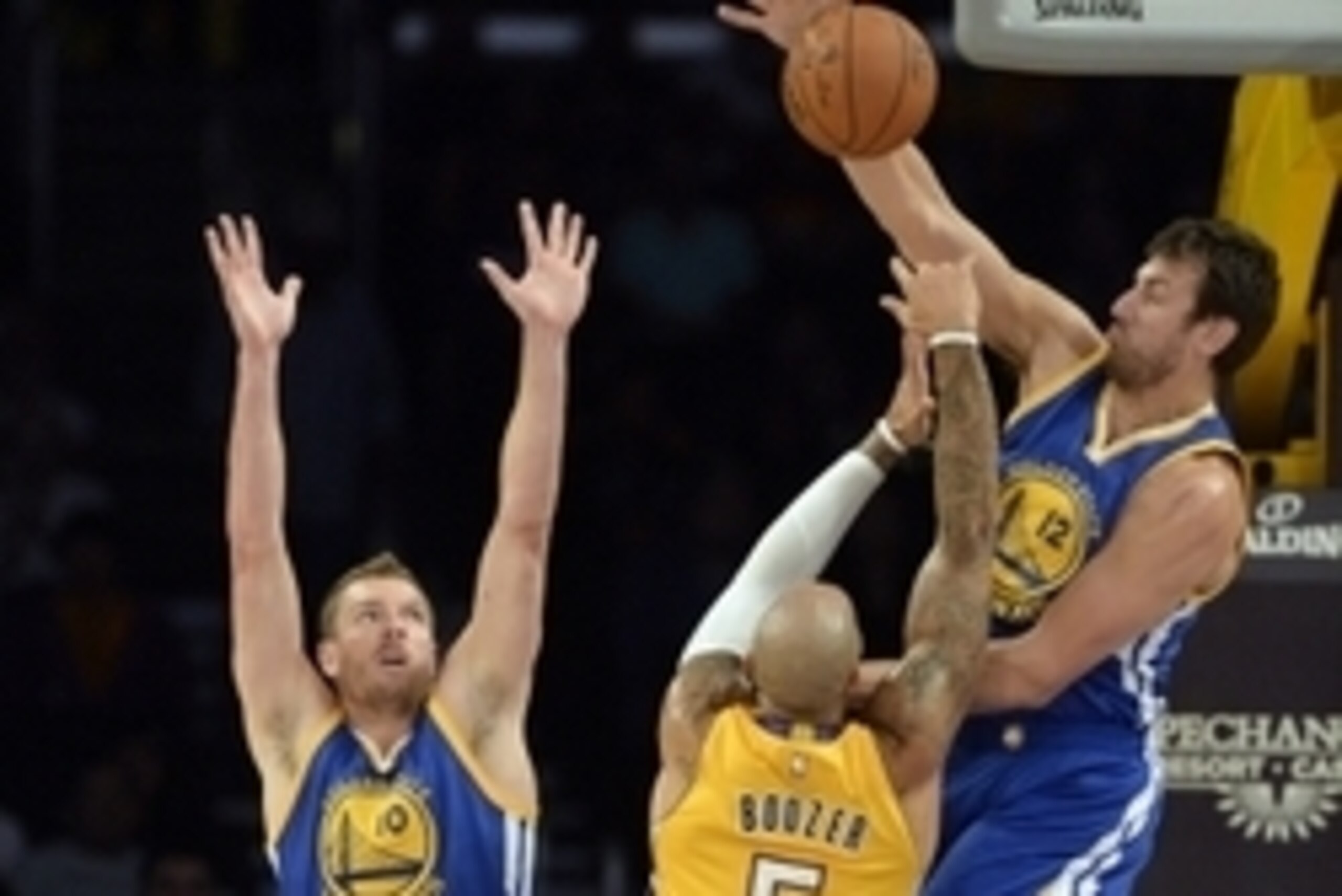
There's no logical defense for shooting 10-15 threes per game in today's NBA. Ignoring the long-distance stripe to the degree Scott suggests will cripple an already underwhelming offense.
On its own, Scott's commitment to limiting threes is a bad idea. But as part of a larger scheme that also includes liberal use of fouls on defense and a dogged commitment to conditioning (as other teams turn their focus to preserving their players' legs), the whole package is an even bigger mistake.
Fouling, in Scott's mind, sets the tone for a good defense that will get the benefit of the doubt during the year. Perhaps someone should tell him that last season's San Antonio Spurs fouled less often than anyone in the league, per NBA.com.
Or maybe he should take note of the Memphis Grizzlies and Chicago Bulls, two of the most fearsome and consistent defenses in today's NBA. They each fouled at a bottom-five rate last season while finishing in the top eight in defensive efficiency.
Setting a tone, sending a message, establishing physicality and whatever other old-timey cliche that applies sound like good ideas in theory. In practice, there's no correlation between extreme physicality and defensive success. If anything, the opposite has been proved true.
Spreading the Blame
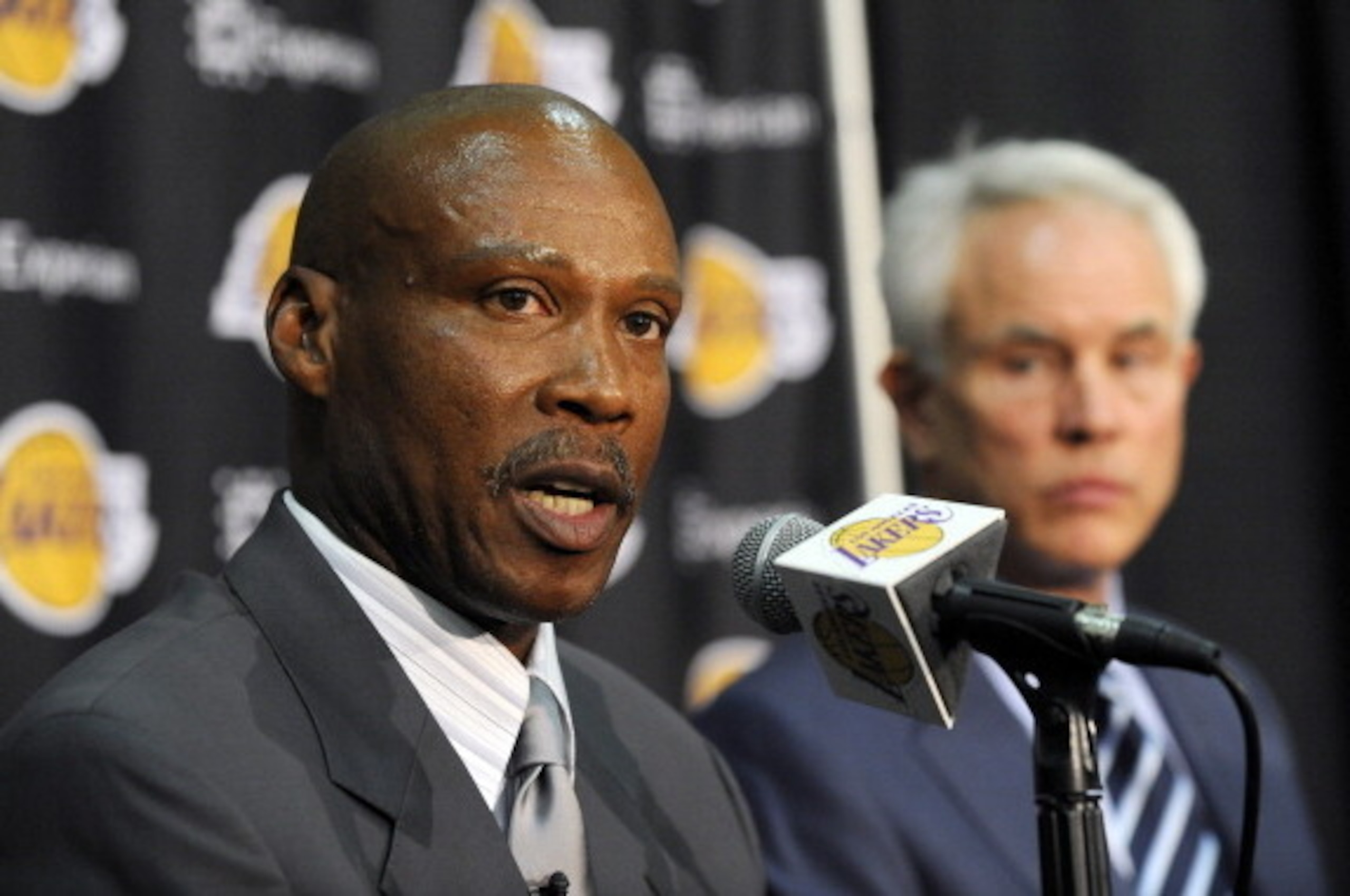
Scott's ideas are outdated, and they're going to exacerbate the skill deficit L.A. will be up against in almost every game this year.
When you have less talent than the opponent, you should be looking for edges, gimmicks and statistical efficiencies to exploit. It's the only way to compete.
But here's the problem: The roster Scott will coach this year isn't equipped to do any of those things. There is no magic fix-it-all style for this personnel group. Shooting 30 threes a game would be better than 30 long twos, but the Lakers will still struggle to score at an above-average rate if they fire off that many triples.
And no defensive approach will save this bunch from a bottom-five fate.
Yes, the jabs from know-it-all Twitter ring mostly true when it comes to Scott's philosophies. But what's he supposed to do? Obviously, Scott is decreasing his team's odds of success by marrying stale ideas to underwhelming personnel. He should be trying to outthink opponents because the Lakers won't outplay them.
Scott is stuck, and if he's going down, it appears he's going down clinging to the principles he's always believed in. There's a nobility in that.
But it's not going to be pretty.
.jpg?w=2560)

.jpg?w=2560 "Gonzo Talks Trade Rumors 🗣️")

.jpg?w=2560 "Projecting NFL Win Totals")