Why Mercedes Are Worthy Winners of Formula 1's Constructors' Championship
When the W05 cars of Lewis Hamilton and Nico Rosberg crossed the finish line in Sunday's Russian Grand Prix to take their ninth one-two finish of the 2014 Formula One season, Mercedes were crowned constructors' champions for the first time in their history.
The German manufacturer had raced with considerable success in the mid-1950s—Juan Manuel Fangio, the Argentinian driver, claimed two of his five world titles behind the wheel of the iconic W196 in 1954 and 1955—but the absence of a teams' championship in that period meant the Silver Arrows have had to wait 60 years to get their hands on some silverware.

.png?w=2560)
.jpg?w=2560)
But when it did arrive, there was a certain inevitability about it.
The 2014 car, in the hands of Hamilton and Rosberg, has been one of the most dominant in the history of F1. It has won all but three of the campaign's 16 races thus far, while it has missed out on pole position on only one occasion.
And even on the days when it didn't take one of its drivers to the top step of the podium or to the summit of the qualifying time sheets, it was not through a lack of performance, with circumstances such as misfortune, unreliability and, in some cases, human error preventing Mercedes from blowing their opposition—their highly-accomplished opposition—away.
Yet it would be to do the team a disservice to suggest that the W05 is the sole reason behind the Silver Arrows' success when the Brackley-based team have outperformed their peers in every single department, on and off-track, in 2014.

This year's success is the result of an extended period of planning, with BBC Sport's Andrew Benson writing that the team's rise to prominence in 2014 was in the pipeline for "at least three years."
The huge regulation changes that came into effect across the winter of 2013 were recognised as an opportunity, the opportunity, for the three-pointed star to rise as a major force in Formula One, with huge effort and resources going into performance quirks such as the revolutionary split turbo design, which was reported by Sky Sports' Pete Gill and Mike Wise earlier this year.
Such a large focus on 2014, though, meant Mercedes were sacrificing short-term pain for long-term gain.
As a result, Rosberg and Michael Schumacher, the man who came out of retirement in the hope of adding to his seven world titles, were left to trundle around with only one race win between them over the course of the 2010, 2011 and 2012 seasons—with that famine leaving the organisation, as Dr Dieter Zetsche admitted to Sky Sports' Mike Wise at May's Monaco Grand Prix, contemplating their future in the sport.
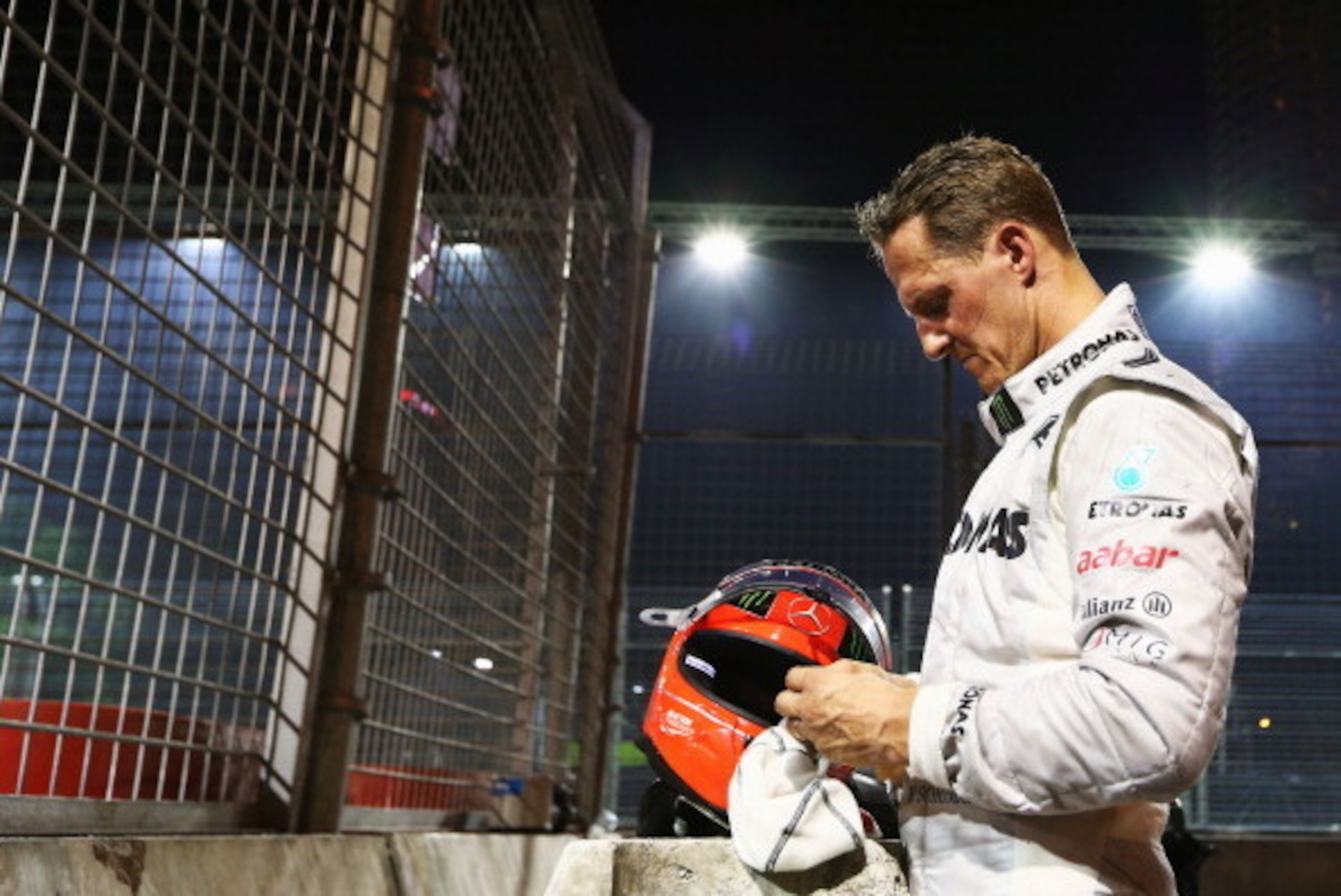
If there were concerns behind the scenes, however, you would never have sensed it.
The Silver Arrows rigidly and confidently stuck to their plans to the point where, after Hamilton's timely Hungarian Grand Prix win seemed to put the British driver in contention for last year's title, then-team principal Ross Brawn refused to mount a serious challenge against Red Bull and Sebastian Vettel for fear of, as he told ESPN F1, "compromising our 2014 programme."
Hamilton, indeed, was the most high-profile signing made by the Brawn-led team across 2012 and 2013, with Toto Wolff and Paddy Lowe also arriving from Williams and McLaren respectively as Mercedes embarked upon an aggressive recruitment process, putting the building blocks in place for this year's title challenge.
Wolff and Lowe's handling of the outfit following Brawn's resignation at the end of last season is a victory for the snazzy new boardroom dynamic in Formula One, which sees the role of team principal effectively shared by a number of people.

The risks attached to this method are clear, with one too many egos leaving a team divided at the top—yet Wolff, the business executive director, and Lowe, his technical equivalent, have along with Niki Lauda, the non-executive chairman, established a working relationship which has seen Mercedes, and F1 itself, come first.
And that approach, above all else, is the defining quality of the Silver Arrows' championship victory.
With the fastest car by a distance sitting in their garage, it would have been all too easy for the team to declare Hamilton, Mercedes' marquee signing, as the lead driver and instruct Rosberg to play the role of the wingman in the hope of securing the title in the most routine, efficient fashion.
Their willingness, however, to allow both drivers to fight on even ground for the world championship has seen Mercedes single-handedly produce one of the most intense title battles in the sport's history, as well as the most exciting races in recent memory.
Even on the occasions when that philosophy was to their own detriment—in Hungary, where Hamilton refused to let Rosberg pass when the German was on a different strategy, and most certainly at Spa, where Rosberg hit the British driver on the second lap—Mercedes have remained true to their values under the belief that it is "the right way to win world championships."
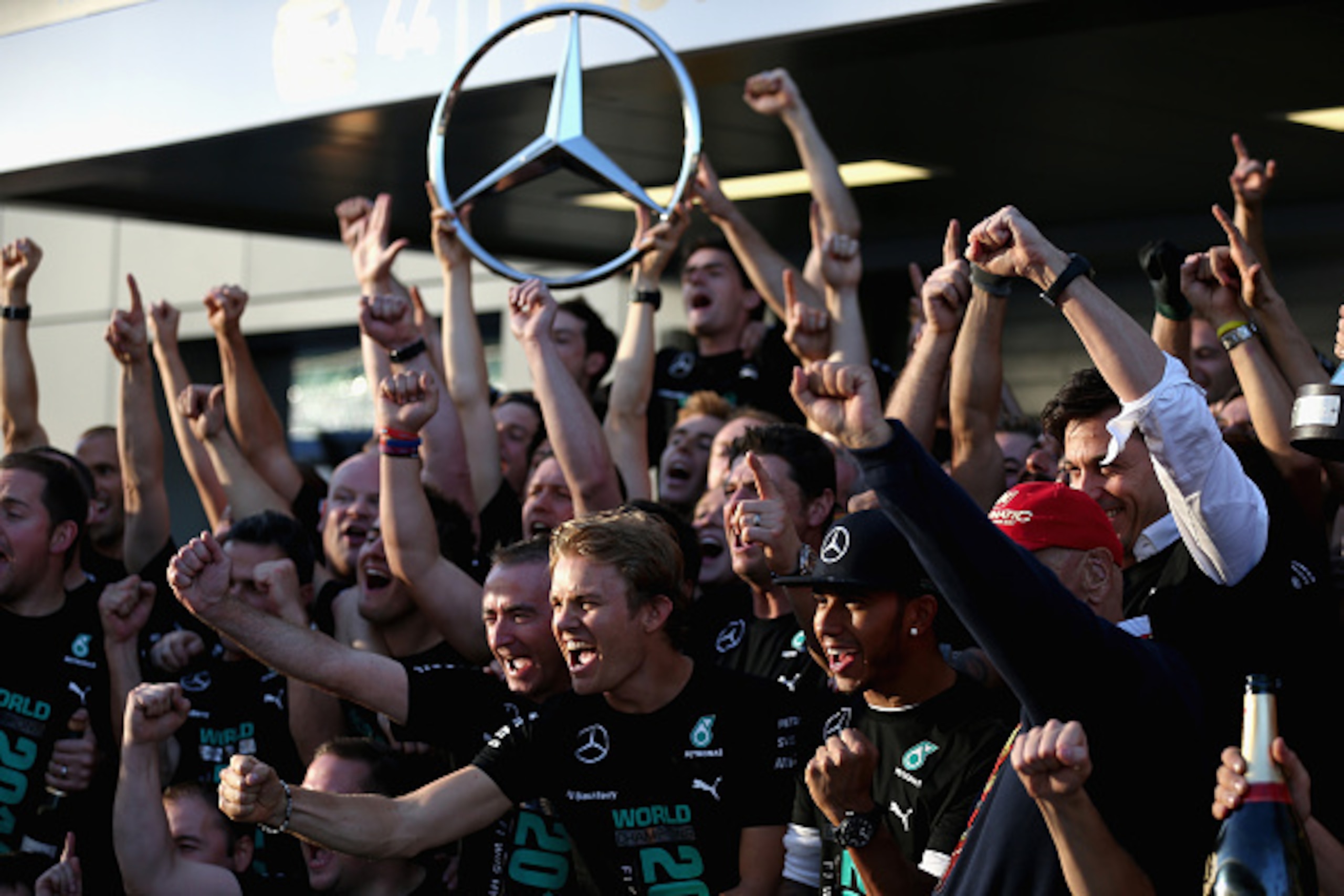
Whether Mercedes remain committed to that ideology when in the coming years the likes of Red Bull, Ferrari, McLaren-Honda and Williams close the performance gap—as you must assume they will—remains to be seen, but the team has transformed what on paper should have been a relatively dull, lifeless campaign into one of vitality.
In 2014, Mercedes have been servants to Formula One—and the sport has now rewarded the team for it.
.jpg?w=2560 "WWE Raw Results 📝")