Baseball and Tragedy: The Game Defined By Anticlimax and Failure
Question: What do Hooks Wiltse, Tommy Bridges, Billy Pierce, Milt Pappas, Milt Wilcox, Ron Robinson, Dave Stieb, Brian Holman, and Mike Mussina all have in common (other than the fact that they were MLB pitchers)?
Those of you who said that all of these men lost "perfect games" with two outs in the ninth inning, you are correct! And you also probably looked it up (admit it).
Other than Mussina's, and even then only because it was recent, how many of these did you honestly know off the top of your head? These nine men were oh-so-close to immortality...Only to watch it slip away.
.png?w=2560)
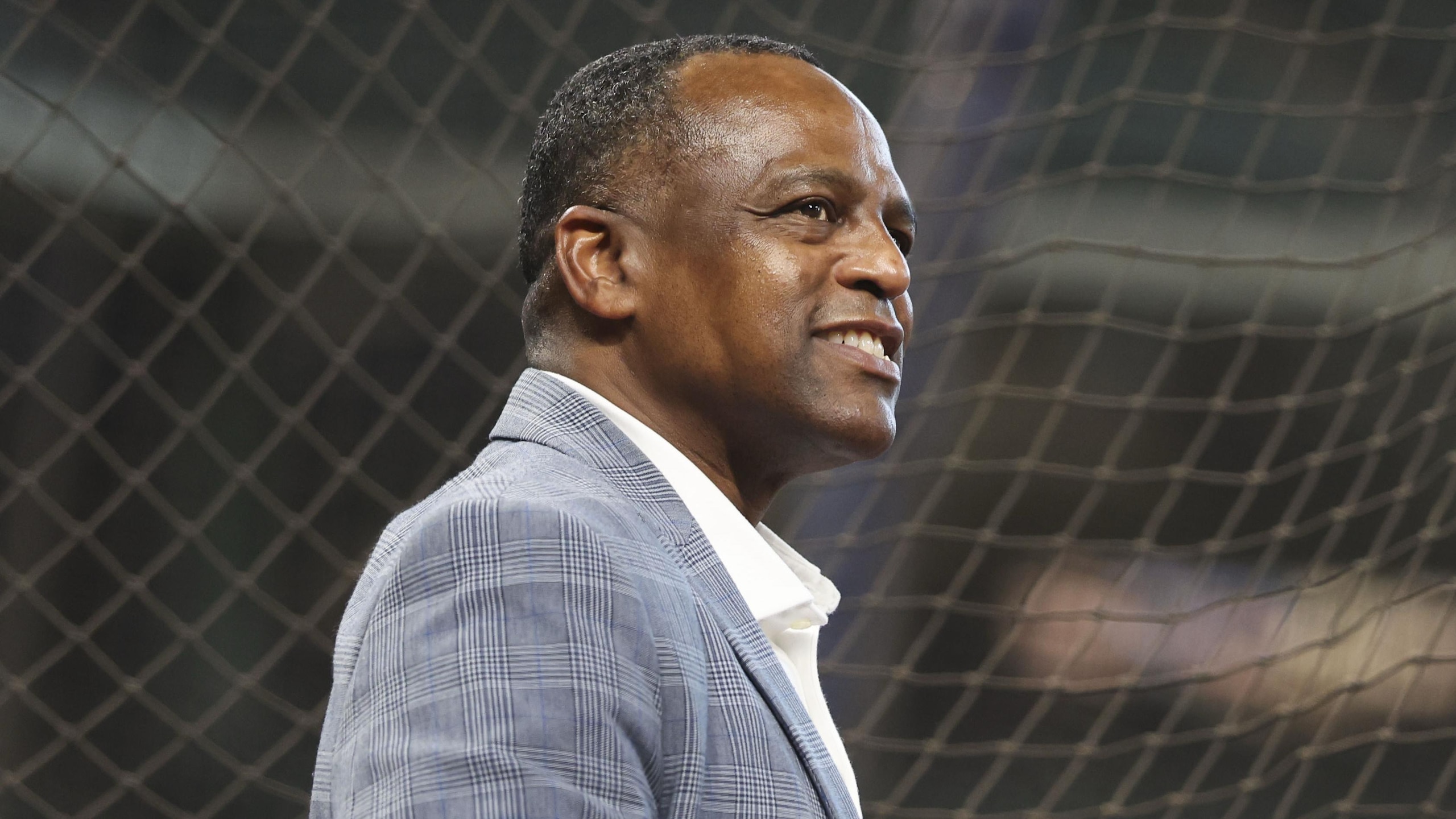
The most famous man to hurl an almost-perfect game is, without a doubt, Harvey Haddix, who threw what many regard as the most perfect game ever—and then got the loss.
Lady Luck is a fickle mistress indeed...Especially if your tax forms list your occupation as "MLB Pitcher."
If you really think about it, it's fairly astonishing that baseball ever became so popular.
Somehow, in the Land of Opportunity, the home of the "American Dream," baseball—the game that espouses shortcomings—became the national pastime.
Each spring, 30 teams set their eyes on the ultimate prize: The World Series. 28 of those teams will fall short of the goal, and one of the lucky two remaining will have it's [collective] heart broken.
Obviously, this is true for all major sports, but how many other sports have fans that are content to "wait 'til next year?"
I can't think of any. It's hard to picture the die-hard fans of the Cleveland LeBr...err, Cavaliers, dismissing their loss to the Magic with a whimsical "wait 'til next year!"
**Fun Fact:This particular mantra was created by Brooklyn Dodger supporters, lamenting that their "Bums" could not beat the rival Yankees in the World Series (five trips, five losses, from 1941 to 1953). Anyone who lived in Philadelphia, then home to the perennial also-rans Phillies and A's, should have had a major bone to pick with the 'whiny' Dodger fans who coined this phrase. But I digress.**
Heck, even baseball's statistics have the pretext of failure ingrained in them—seeing as how baseball statistics are compiled in zero-sum form (for every positive statistic someone acquires, there is a corresponding negative statistic for someone else).
Take batting average into consideration—a player is (generally) regarded as a good hitter if his batting average is .300—if his batting average is .333, then he had a fantastic season at the dish. But the acme of accomplishment is the legendary .400 plateau—only one man (something about a Splinter? I don't remember) has crested it in the last ~80 years.
Think about this for a moment.
A "good" hitter (.300) fails to hit safely in seven-out-of-10 at-bats. In the course of a .333 season, the hitter will be set down in two-out-of-three at-bats—and that wonderful accomplishment, .400, still implies failure in three-fifths of their times at bat.
**Another Fun Fact: In the modern era, there have been a few players that reached base in the majority of their plate appearances during one season—an OBP over .500—and it has been done only 13 times. That list looks something like this: Bonds, Bonds, Williams, Ruth, Bonds, Ruth, Williams, Bonds, Williams, Mantle, Ruth, Ruth, Ruth. These guys must be pretty good.**
Sure, baseball has statistics such as home runs, runs batted in, stolen bases, and strikeouts—quantifiable statistics, like points in basketball, or yards gained in football.
However, baseball also has stats like losses, grounded into double plays, errors, runners left on base, and blown saves—stats to show how many times a particular player screwed up. Encouraging, no doubt.
Note to the reader: I am not promoting the removal of these statistics, but rather just remarking on baseball's focus on the bad events rather than the good.
Speaking of good events (what a convenient intro!), I have realized that baseball has a notable dearth of these. "Cinderella" stories such as the "Amazin' Mets" of 1969 are great...But they just don't happen that often.
The Tampa Bay Rays seemed destined to defy the odds last year—a Hollywood-esque "worst to first" storyline, coming from nowhere, culminating with the franchise's first World Series appearance—in which the Rays lost.
This was not the first time a great storyline was interrupted by the harsh realities of baseball; in fact some of the most iconic baseball moments were not actually the culmination of that particular story:
- 1975 World Series, Game Six—Carlton Fisk "waving the ball fair" to win it in extra innings...But Cincinnati won Game Seven, and the series.
- 1951 National League Playoff—Bobby Thomson hits the "Shot Heard Round the World" against the Dodgers, culminating the Giants unbelievable comeback in the standings and winning the pennant...But the Yankees defeated the Giants in the World Series.
- 2002 All-Star Game—"This time it counts". Never mind that a game was played.
- 2008 Home Run Derby—The Josh Hamilton Power Display at Yankee Stadium—26 homers in the semifinals...But Justin Morneau would ultimately be the actual winner in the final round.
This is not to say that the events are any less astounding because of the aftereffects, but to note that what came afterward doesn't seem to fit the mold.
Even when everything comes together, and an iconic play fits an equally iconic ending, all is still not well—such situations are extremely conducive to the creation of baseball's infamous "goats."
You know who I'm talking about (restricted to on-field events), and baseball has the "best" of them. Football has a few, but most are kickers (with the notable exception of Leon Lett).
The sad thing is, the "goats" that we all remember are most of the time not even necessarily deserving of their titles—but now they are remembered chiefly for that one mistake.
Some of more notable immortal names in ignominy are Fred Merkle, Mitch Williams, Bill Buckner, and Dennis Eckersley—none of these men were bad players (in fact, Eckersley is probably the best reliever ever), but all of them will be associated with something (or someone) that doesn't indicate what occurred over the course of their careers.
Merkle had his "Boner" (that preposterous sequence of events is the ACTUAL cause of the Cubbies curse—click here for more on that); Williams gave up Joe Carter's walk-off* homer to end the '93 Series; Buckner, well, we all know what happened in the '86 Series (it still isn't fair to blame Buckner for what happened, blaming Calvin Schiraldi for giving up all the hits prior to the error would be more appropriate); Eckersley gave up that completely inexplicable walk-off* home run to a hobbled Kirk Gibson in the '88 WS.
**Final Fun Fact: Eckersley is actually the one who started the "walk-off" description, when talking about the '88 Series. Ironically, the initial meaning of "walk-off" was the pitcher and defensive players 'walking off' the field in defeat.**
If everything written above still hasn't convinced that baseball is a tragic, cruel, and disappointing game, then I ask you to explain this—
In baseball, there is a position that was created for the express purpose of eradicating hope and crushing dreams—a "demon of the ninth," the closer (how else would you explain Trevor Hoffman's theme being Hell's Bells).
The best part about baseball is that, despite knowing everything mentioned here, it has not diminished my love of the game, nor should it yours. Chiefly consider everything I've written above as food for thought, and nothing more.
Remember, hope springs eternal—even for you, Nationals fans.

.jpg?w=2560 "Predicting NFL Roster Cuts ✂️")
.jpg?w=2560 "Browns Name Deshaun Watson QB1")
.jpg?w=2560 "Look: Ravens Reveal 'White Noise' Unis")
.jpg?w=2560 "Shedeur's Reaction to Browns' QB Decision")
.jpg?w=2560 "Report: Saints Trade for 49ers RB")
.jpg?w=2560 "49ers Owner Pleads No Contest to Misdemeanors")