
Formula 1 Will Remain a Team Sport Despite Need for Drivers as Stars of the Show
It's official: Formula One is coming back to the people.
The 2014 season has generally produced the most exciting, tense, fight-to-the-flag races in many a year, with the new regulations and the resultant loss of downforce making drivers prone to mistakes.
The decision made by Pirelli, the sport's sole tyre supplier, to stiffen each of their compounds for this year has reeled in those who turned away when rubber management became the aim of the game, with grands prix now decided on the track instead of the pit lane.
TOP NEWS
Jets Owner Buys F1 Team Stake 🏎️
Top Trade Candidates Before Roster Cuts ☎️

Peyton's Son's 1st HS Pass
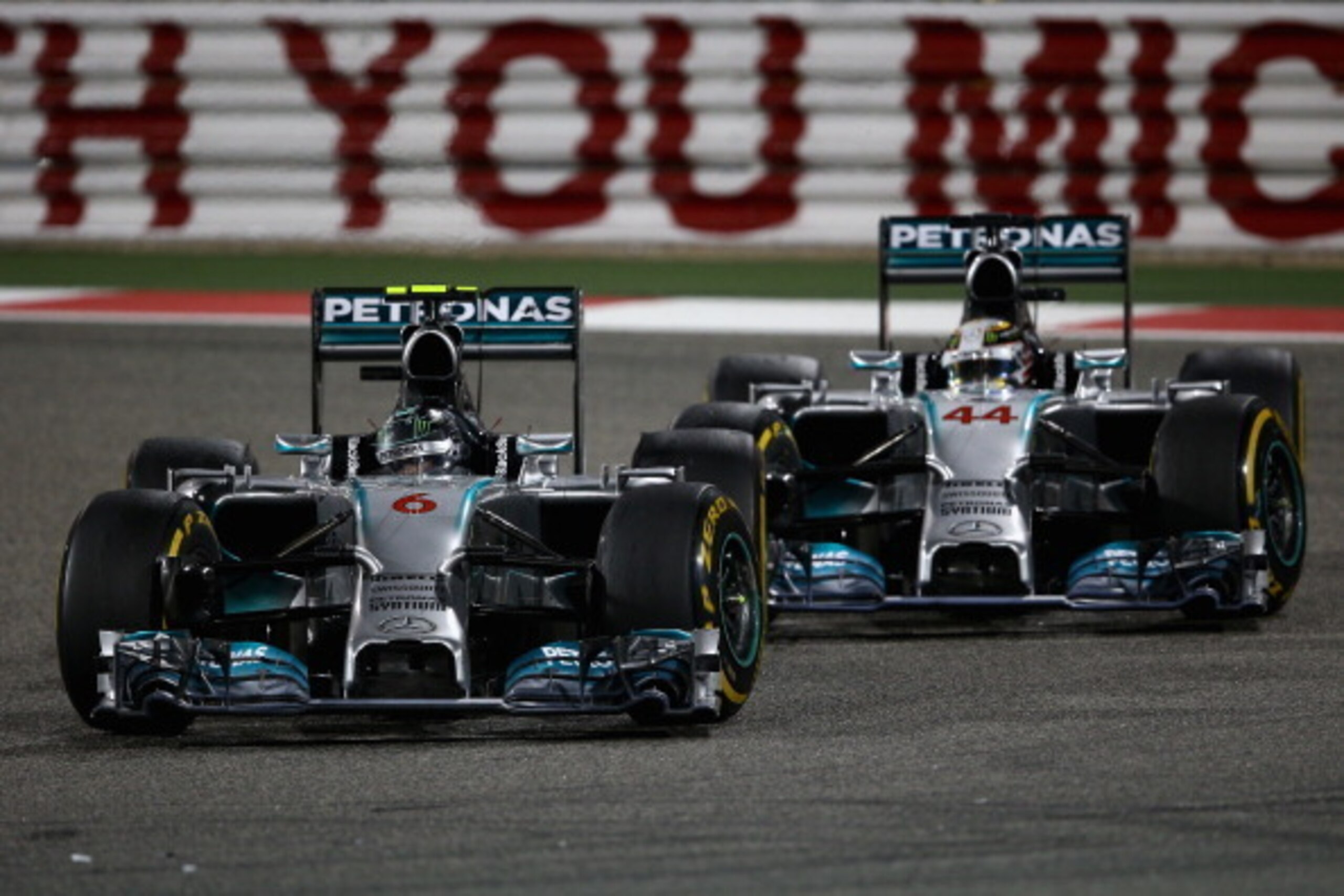
Bernie Ecclestone, F1's ringmaster, was quoted by the Daily Mail's Ian Parkes over the Singapore Grand Prix weekend as describing his desire to make drivers' jobs "more difficult" in the near future, which would only heighten the levels of drama—and, therefore, enjoyment—for the sport's onlookers.
Ecclestone had, by that point, already begun the process of making their lives harder, with a partial ban on pit-to-car radio messages designed to force drivers into playing a race by ear as opposed to being fed constant—and often unhelpful, as Kimi Raikkonen proved in 2012—nuggets of information throughout a grand prix.
The rule change was introduced to give drivers extra responsibility and make them seem, to the wider world, like sportsmen to be admired rather than mere puppets sitting behind a steering wheel—although any superfans of Sebastian Vettel are unlikely to have a poster of Guillaume Rocquelin, the four-time world champion's race engineer, plastered to their bedroom wall.
With the directive only initially announced 10 days ahead of the Singapore event, however, a handful of teething troubles emerged as both teams and drivers got to grips with what they could and could not say.
The most memorable incident occurred in the third practice session when a Force India engineer had to stop himself mid-sentence from blurting out some sector one-related information to Sergio Perez.
And in Formula One, where there is confusion, there is suspicion—and where there is suspicion, there are usually arguments.
The Singapore Grand Prix, then, could not have passed by without at least one team appealing against another.

It was left to Eric Boullier, McLaren's racing director, to adopt the role of troublemaker, with the former Lotus team principal questioning the legality of Red Bull's messages to Daniel Ricciardo, who, per F1 Fanatic, received the note, "OK Daniel, avoiding exit kerbs may help your issue. Avoiding exit kerbs may help the problem with the car," from Simon Rennie, his race engineer, on Lap 33.
On the effects of the radio restrictions, Boullier told Jonathan Noble of Autosport:
"It makes us more busy listening to the others to see they are not doing anything like Red Bull did twice on Ricciardo.
I think it was coded, yes. It is up to the FIA to investigate, so it is not for me to say anything.
But it was a strange message. Once would have been OK, but twice or three times is a bit strange.
"
Although Red Bull do have a track record of trying to take advantage of any uncertainty over the regulations—take the fallout following Ricciardo's exclusion from the season-opening Australian Grand Prix for breaching fuel-flow restrictions as an example—the FIA, according to Noble, informed the Milton Keynes-based outfit that they were content with their handling of the problem suffered by Ricciardo, who told Red Bull's official website that "brakes and some power issues" were causing concern.
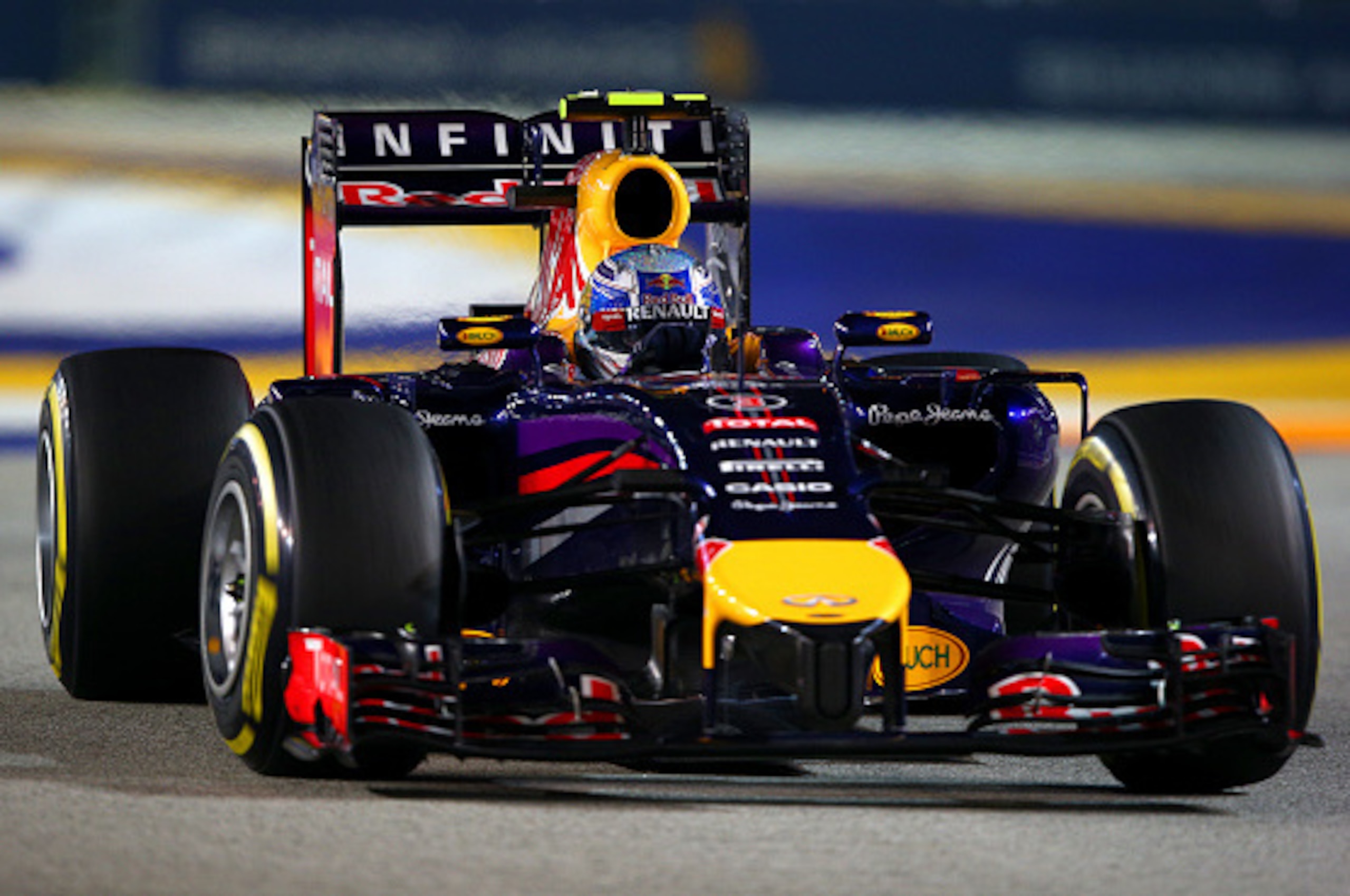
Boullier's comments, at a time when Formula One is genuinely and consciously taking steps to make itself more appealing for fans, were as sad as they were predictable.
Only in F1, after all, could a rule change designed to raise the profile of the sport's competitors result in a bout of finger-pointing between team officials.
"“@autosport: Did Red Bull use coded radio messages in Singapore?Eric Boullier thinks so: http://t.co/VRit1M6inq pic.twitter.com/lThikOxev0”
— Mark Webber (@AussieGrit) September 22, 2014"
And as long as outfits remain oblivious to the need for collective thinking and action—instead of focusing exclusively and selfishly on their own interests, often to the detriment of the sport they supposedly serve—it is difficult to envisage how F1 can operate as a dynamic, relevant and, perhaps above all, popular sport.
Soon after July's German Grand Prix at Hockenheim—a popular circuit but one that this year resembled a ghost town due to the stacks of empty grandstand seats—Niki Lauda, who, as a three-time world champion and the current non-executive chairman at the Mercedes team, has experience of life on both sides of the pit wall, offered his explanation on why interest in F1 has dropped.
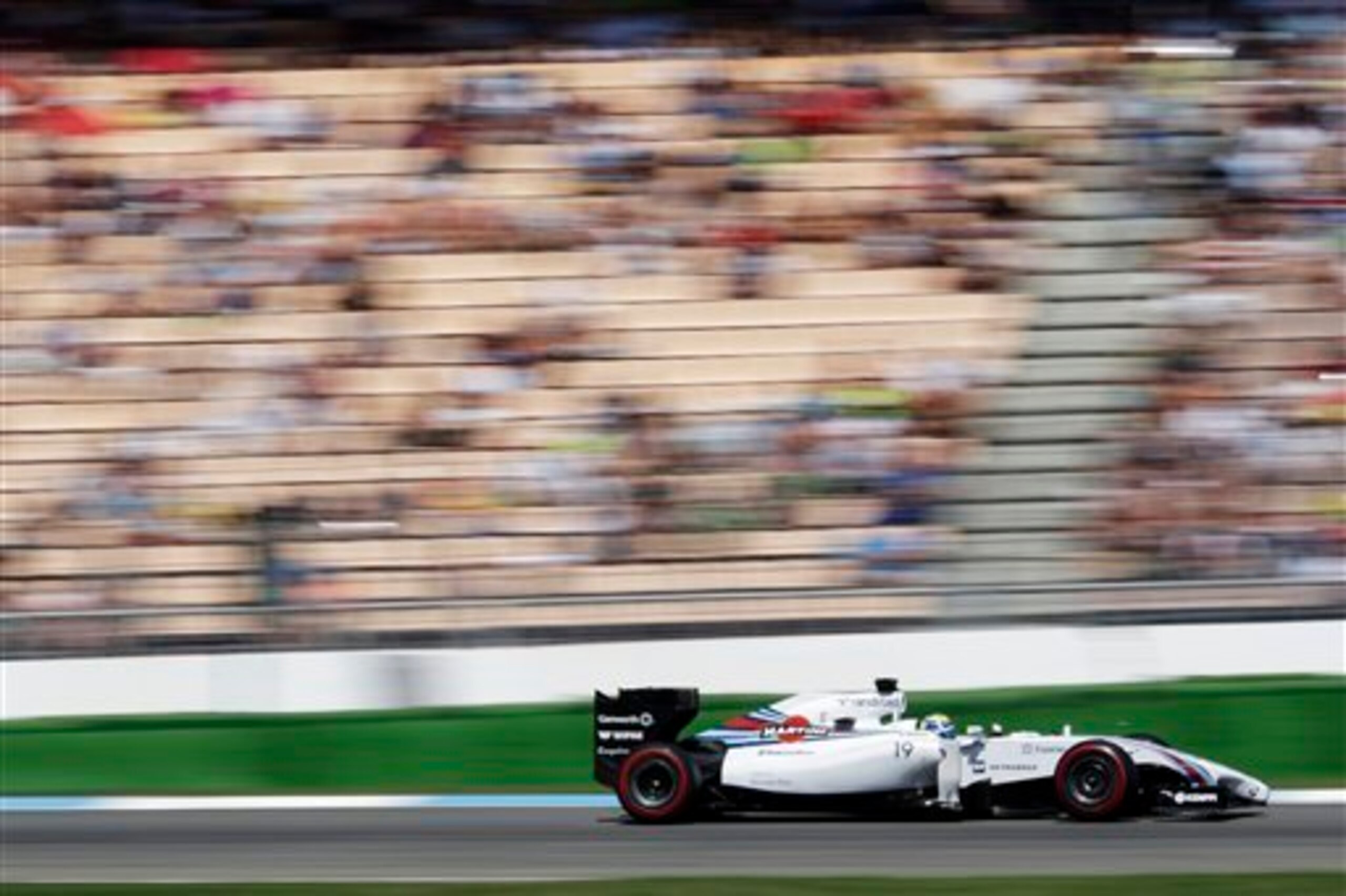
The Austrian was quoted by German publication Die Welt (h/t JamesAllenOnF1.com) as stating:
"We have a generation of drivers that, if they were not wearing their racing overalls, you would simply walk past some of them and not notice. The "Formula One system" is to supervise, monitor, regulate. But we must again have the drivers, not the bureaucrats, in the foreground.
"
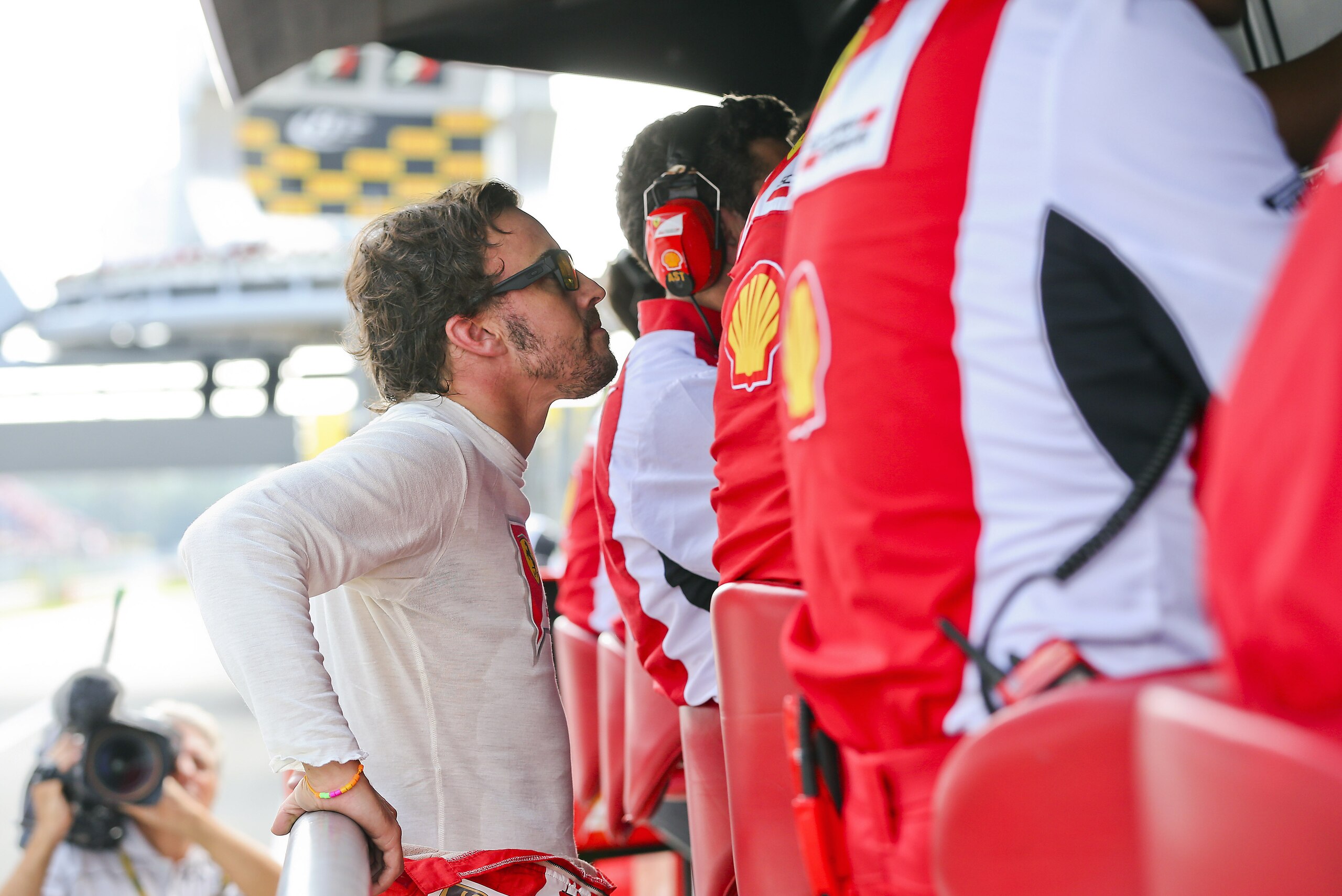
Formula One, to its credit, is beginning to work on returning drivers to the heroic status of previous eras, but to do so, it must have the full cooperation of the teams.
And for all the flak that Ecclestone and his fellow rule-makers have received for disastrous moves such as handing double points in the final race of the season, there are certain instances where they simply cannot win.

.jpg?w=2560 "Saquon Rips Joint Practices")